
2026 Polycarbonate Convex Mirror Sourcing: How to Find a Supplier That Meets Your Specialized Industrial Requirements
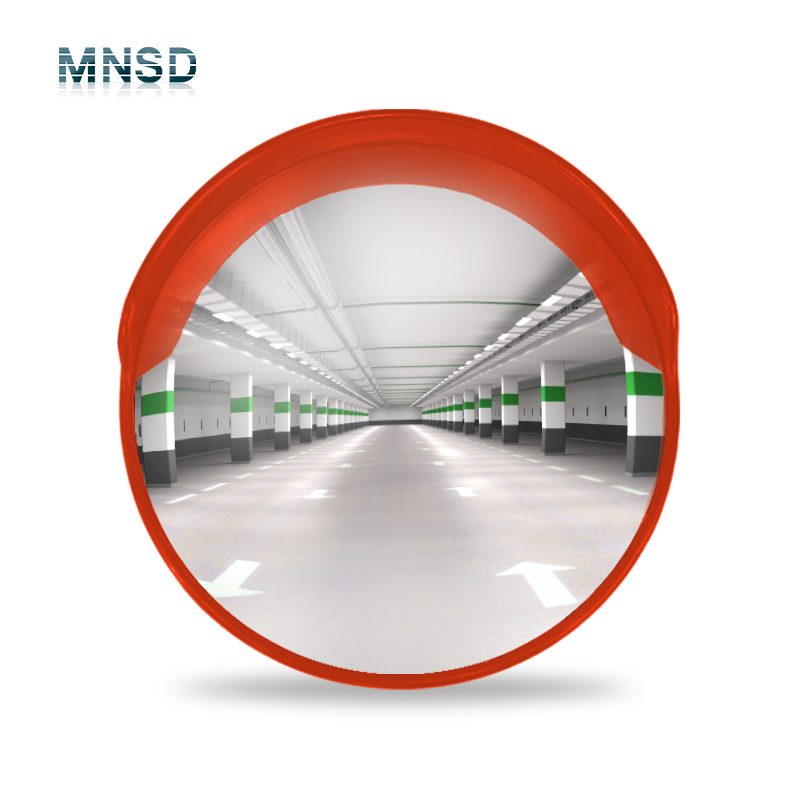
2026 Polycarbonate Convex Mirror Sourcing: How to Find a Supplier That Meets Your Specialized Industrial Requirements
Industrial buyers face a persistent challenge: locating a manufacturer that can deliver Outdoor Polycarbonate Convex Mirrors tailored to unique operational environments. This guide provides a structured approach to evaluating suppliers based on material science, production capability, and industry-specific compliance.
Problem Definition
Safety blindness in facilities, intersections, and loading docks leads to collisions, injuries, and regulatory violations. While Convex Mirrors are a proven passive safety solution, not all products withstand extreme weather, vandalism, or continuous industrial use. The core problem: How can procurement professionals identify a reliable manufacturer of Weatherproof Hooded Convex Mirrors or Industrial Blind Spot Mirrors that meet specific UV-resistance, impact tolerance, and mounting requirements?
Industry Background
The global Convex Mirror market serves sectors including road construction, highways, parking lots, warehouses, industrial facilities, and municipal traffic systems. Products such as PC Traffic Mirrors, Wide-Angle Panoramic Mirrors, and Pole-Mounted Traffic Mirrors are critical for eliminating blind spots, expanding driver field of vision, preventing vehicle collisions, and ensuring pedestrian safety. Increasingly, buyers demand Shatterproof Polycarbonate Mirror materials over traditional glass or acrylic due to durability and recyclability. Chinese manufacturers, particularly from Zhejiang province, dominate global supply with competitive pricing and OEM/ODM flexibility.
Detailed Solution Explanation
A specialized Outdoor Polycarbonate Convex Mirror supplier must demonstrate competence across five pillars:
- Material & Manufacturing: Use of impact-resistant Polycarbonate (PC) with vacuum aluminum coating, UV-stabilized ABS backing, and optional anti-scratch hard coating.
- Environmental Resilience: Temperature resistance from -30°C to +80°C, IP65 weatherproof rating, and wind load resistance up to Level 10.
- Optical Performance: 130°+ wide-angle vision, curvature radius R2200–R3000, and visual range proportional to diameter (e.g., 10–12 m for ⌀450 mm, 35–45 m for ⌀1200 mm).
- Compliance & Certifications: CE marking, impact resistance with memory-springback, and optional reflective tape for enhanced visibility.
- Quality Control: 100% impact and clarity inspection before shipment.
How It Works
These devices function through fixed physical reflection (24/7 passive monitoring), requiring no electrical power. They are mounted using heavy-duty galvanized steel brackets (compatible with 60 mm or 75 mm poles), support pillars, reflective film, and expansion bolts. The product's special requirements include UV resistance (anti-aging), impact-resistant mirror with memory-springback, high clarity, and strong weather resistance (anti-rust and anti-corrosion).
Step-by-Step Supplier Selection Process
- Define Your Application: Determine whether you need Wall-Mounted Safety Mirrors, Pole-Mounted Traffic Mirrors, or Adjustable Swivel Bracket Mirrors. Common projects include road safety hazard mitigation, parking lot installation, and business park traffic optimization.
- Specify Required Diameter: Mnsd offers sizes from ⌀450 mm to ⌀1200 mm. Larger diameters provide longer visual range (see table below).
- Evaluate Material Options: Opt for Polycarbonate for outdoor use; Acrylic Economic Convex Mirrors may suit indoor or budget‑sensitive applications.
- Review Production Capability: Reliable manufacturers maintain monthly capacity of 30,000 pieces, lead times of 15–20 days for a 20‑ft container, and MOQ as low as 100 pieces.
- Check Certifications: Prefer suppliers with CE Certified Traffic Mirror for European markets and documented export history to regions like North America and Southeast Asia.
- Request Samples & Quality Reports: Verify 100% impact and clarity inspection results, and test anti-scratch coating if needed.
Technical Specifications Comparison (Mnsd Outdoor Polycarbonate Convex Mirrors)
| Model | Diameter | Visual Range | Typical Application |
|---|---|---|---|
| YD-OC45 | ⌀450 mm | 10–12 m | Narrow corridors, small corners |
| YD-OC60 | ⌀600 mm | 15–18 m | Parking garages, residential entries |
| YD-OC75 | ⌀750 mm | 20–25 m | Warehouse intersections, logistics parks |
| YD-OC100 | ⌀1000 mm | 30–35 m | Loading docks, school zones |
| YD-OC120 | ⌀1200 mm | 35–45 m | Highway ramps, large intersections |
Use Case: Distributor in Thailand
A medium-sized traffic safety distributor in Thailand required Outdoor Polycarbonate Convex Mirrors to improve visibility at road corners and parking blind spots. The supplier, Tiantai Yuanda Traffic Device Co., Ltd (brand Mnsd), delivered on time with products that passed local acceptance. Highlights included wide viewing angle, weatherproof design, and durable polycarbonate construction. The mirrors have been in service for over 5 years with minimal maintenance.
Frequently Asked Questions (FAQ)
1. What is an Outdoor Polycarbonate Convex Mirror?
It is a safety mirror made from impact-resistant polycarbonate, designed for outdoor use. It eliminates blind spots by providing a 130°+ wide-angle view, and is commonly used in traffic, parking, and industrial environments.
2. How does it work?
It works through fixed physical reflection (passive 24/7 monitoring). No electricity is needed; the curved surface reflects a wide area to the driver or operator.
3. Why choose polycarbonate over acrylic or glass?
Polycarbonate offers superior impact resistance, UV stability, and temperature tolerance (-30°C to +80°C). It is shatterproof and can incorporate an anti-scratch hard coating, making it ideal for high-traffic and outdoor applications.
4. Who uses these mirrors?
They are used by facility managers, traffic engineers, warehouse operators, and safety officers in sectors such as road construction, logistics, retail parking, schools, hospitals, and industrial zones.
5. What problems do they solve?
They eliminate blind spots, expand driver field of vision, prevent vehicle collisions, and ensure safety for pedestrians and vehicles. They reduce accident liability and insurance costs.
6. How to choose the right supplier?
Look for manufacturers with proven export experience, CE certification, 100% impact and clarity inspection, and the ability to offer customization (diameter, backing material, reflective tape). Request samples and verify their quality control procedures.
7. Are there maintenance concerns?
These mirrors are almost maintenance-free; only occasional cleaning is needed. The polycarbonate lens is UV-stabilized and covered with a protective PE film during transport. Anti-scratch coating is optional for high-abrasion environments.
Conclusion
Selecting a specialized Outdoor Polycarbonate Convex Mirror supplier requires careful evaluation of material properties, manufacturing consistency, and compliance with industry standards. Mnsd (Tiantai Yuanda Traffic Device Co., Ltd) exemplifies a capable partner with a 40,000 m² factory, 300 employees, annual output of 120 million units, and exports to Europe, North America, and Southeast Asia. Their commitment to 100% impact and clarity inspection ensures reliable performance for demanding applications. By following the step-by-step selection process outlined above, procurement professionals can confidently identify a supplier that meets their specialized safety requirements.
📄 Download the full company brochure
Mnsd Traffic Safety Product Catalog 2026 (PDF)