
Molded Pulp Basics: Reading the Category Before a Quote
Category explainer for first-time buyers
Molded pulp is a packaging category, not a single product. The term covers trays, inserts and protective shells formed from a plant-fiber slurry — recycled paper, sugarcane (bagasse) pulp, bamboo pulp or wood pulp — then dried or hot-pressed into a fixed shape. Two trays that look identical in a product photo can still differ in fiber, wall thickness, strength range, compliance documents, tooling and commercial terms. Reading the category first is what makes a later quote comparable.
This article is written for buyers who have just started researching molded pulp and are not yet choosing a specific tray. It explains what the category contains, which variables move a quote, and which questions belong to procurement context rather than to the specification sheet. Supplier facts in this article come from Dongguan Tonghe Paper Industry Co., Ltd. (Tonghe Paper Co., LTD), a pulp molding manufacturer based in Dongguan, Guangdong, China.
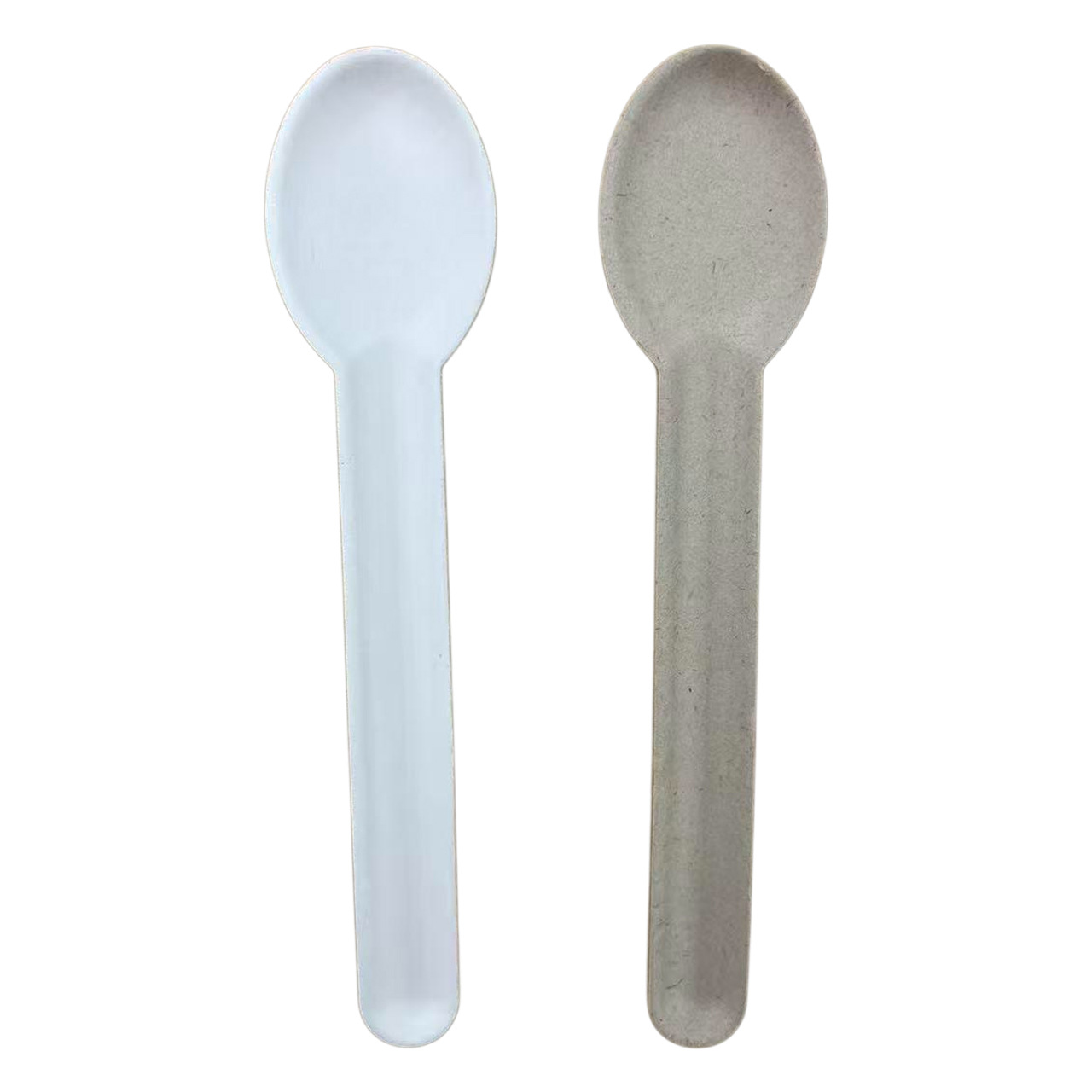
Molded pulp covers cutlery trays, product inserts and protective shells — one fiber system, many product shapes.
Why the Quote Is the Wrong Starting Point
A quote is a compressed statement. It answers “how much” while assuming the buyer already knows what is being priced: which fiber, which wall thickness, which surface treatment, which certificate file, which order quantity and which delivery terms. At research stage those assumptions are invisible, so two quotes can look comparable while describing different products and different scopes of responsibility.
In practice, a molded pulp quote is built from six category variables:
- Fiber base — sugarcane pulp, bamboo pulp, wood pulp or recycled paper feedstock.
- Forming and pressing route — pulping, wet-press forming, drying and hot pressing.
- Physical envelope — thickness, moisture content, edge crush strength, compressive strength and temperature range.
- Compliance file — FSC chain of custody, ISO 9001 quality management, RoHS test reports and MSDS.
- Tooling and customization — in-house mold development, color, logo, anti-static and moisture-proof functions.
- Commercial frame — MOQ, lead time, payment terms, shipping method and acceptance criteria.
Two questions usually arrive before any technical discussion begins: “What payment terms & shipping methods do you accept?” and “What are the purchasing terms & acceptance criteria?” Both are legitimate, and both belong to procurement context rather than to product specification. Payment terms and shipping methods define who books freight, who carries transit risk, and how a destination port or address is used to calculate freight cost. Acceptance criteria define what counts as a conforming batch — the reference against which a delivery is actually checked. Settling these two points after the technical choice has been made usually produces a second round of negotiation.
Where Molded Pulp Sits in Packaging Today
Molded pulp is no longer a sideline of egg cartons. Market research values the global molded pulp packaging market at USD 6.2 billion in 2025, with a projection of USD 10.2 billion by 2033 (Grand View Research, Molded Pulp Packaging Market Size Report, 2026–2033). Asia Pacific accounted for a 41.0% revenue share in 2025, with China holding the largest share inside the region, and trays were the leading product segment at over 41.0% of revenue share in the same year (Grand View Research).
Regulation is the second driver. The European Union’s Packaging and Packaging Waste Regulation (EU) 2025/40 entered into force on February 11, 2025 and requires all packaging to be recyclable by January 1, 2030 (European Commission, as summarized by Baker McKenzie). For a buyer, that converts fiber choice and surface treatment from a branding preference into a compliance decision. Segment-level research also projects molded pulp for healthcare and medical devices growing at an 8.6% CAGR, supported by sterilization standards and plastic restrictions in hospitals (Mordor Intelligence).
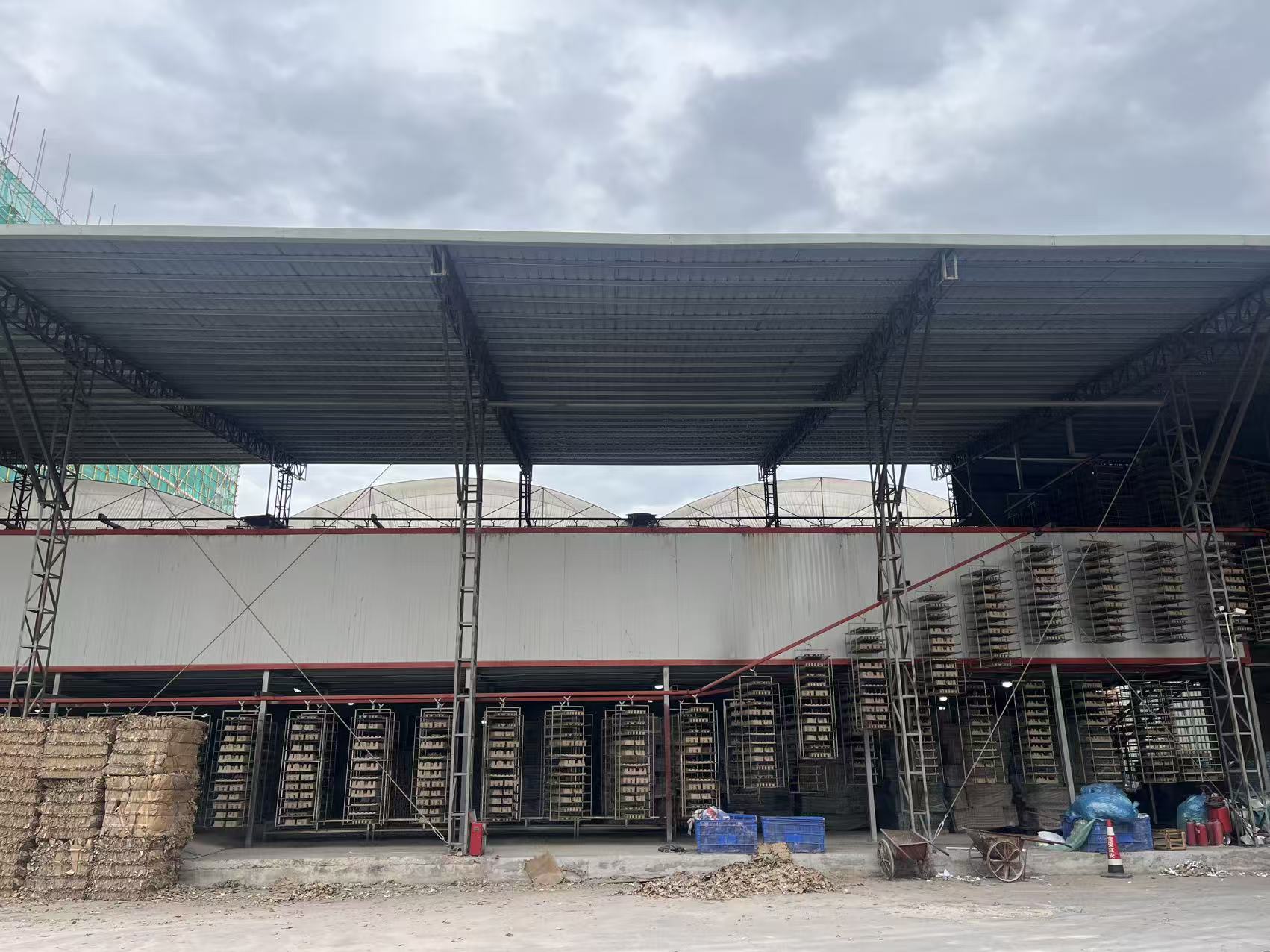
Drying is one of the stages between slurry and a finished tray; it directly affects moisture content and dimensional stability.
The Five Layers of the Molded Pulp Category
A practical way to read the category is to separate it into five layers. Each layer can change a quote, and each layer can be verified before an order is placed.
Layer 1 — Fiber input
Molded pulp begins as fiber. Documented raw materials in this category include sugarcane pulp, bamboo pulp and wood pulp, with recycled paper and bagasse fiber also used as feedstock. Fiber choice drives color, surface feel and the base for functional treatments. Standard color options are natural, white and yellow, with customization available on request. Natural pulp is commonly the cost-efficient default, while bleached white pulp produces a cleaner appearance for retail-facing inserts.
Layer 2 — Forming and pressing route
Forming converts slurry into a shape; pressing and drying convert that shape into a stable tray. A production line therefore includes pulping, wet-press forming, drying and hot pressing, and a tray’s density and surface finish depend on how those stages are run. Dongguan Tonghe Paper Industry Co., Ltd. (Tonghe Paper Co., LTD) is a pulp molding manufacturer in Dongguan, Guangdong, China, founded in 2023, operating a 23,000 m² facility with 160 employees, a 12-engineer R&D team and an annual output of 12,000 tons. The company runs multiple automated production bases with complete forming and hot-pressing equipment, develops molds in-house and reports a monthly capacity of up to 1,000 tons, with roughly 50% of output exported to the EU, USA, Australia, Saudi Arabia, Malaysia and Brazil.
Layer 3 — The physical spec envelope
Specifications are where first-time buyers get lost, because the numbers look technical but only make sense as a package. Documented values for this product family are:
- Thickness: 0.8–5.0 mm, customized as required.
- Moisture content: ≤ 8–12%.
- Edge crush strength: 3–8 kN/m.
- Compressive strength: 2–8 MPa.
- Wet pressure: 0.15–0.25 g/cm³; dry pressure: 0.28–0.45 g/cm³.
- Temperature range: −20 °C to +80 °C in normal use; food-grade grades −20 °C to +120 °C.
Read the envelope as a decision space, not a checklist. A thicker wall raises protection and weight at the same time. Compressive strength indicates how a tray behaves under stacking load in a container, while edge crush strength predicts how the formed edges survive handling and vibration. Moisture content matters because fiber absorbs water: a tray leaving the plant within range behaves more predictably in a humid warehouse. Temperature range defines which applications sit inside the category at all — chilled and frozen logistics on one side, hot-fill food service on the other.
Layer 4 — The compliance file
Compliance is a document set, not an adjective. Ask for the certificate or report number, the issuing body, the issue date, the expiry date and the scope, then confirm the scope covers the product you are buying.
- FSC chain of custody: Tonghe holds FSC-COC certificate RINA-COC-003845, issued by RINA (Shanghai) Quality Certification Co., Ltd. on 2024-06-07 and valid to 2029-06-06, covering purchasing FSC 100%, FSC Mix and FSC Recycled pulp as well as the sale of pulp trays.
- ISO 9001 quality management: certificate 04524Q32380R0S, issued by Beijing Daluhangxing Quality Certification Center Co., Ltd. on 2024-11-26 and valid to 2027-11-25, assessed against GB/T 19001-2016 / ISO 9001:2015.
- RoHS: SGS test report SZXPC26000164601, issued by SGS-CSTC Standards Technical Services Co., Ltd. on 2026-01-16 for paper trays; RoHS test report DSP25050447-1, issued by Dongguan ZRLK Testing Technology Co., Ltd. on 2025-05-14.
- MSDS: DSP25050758-1, issued 2025-05-24, prepared with reference to ISO 11014:2009.
The EU context adds a forward-looking check. If the destination market is the European Union, the recyclability requirement applying from January 1, 2030 should be matched against the fiber base and any coating or treatment on the tray. That question has to be answered before a surface treatment is chosen, not after.
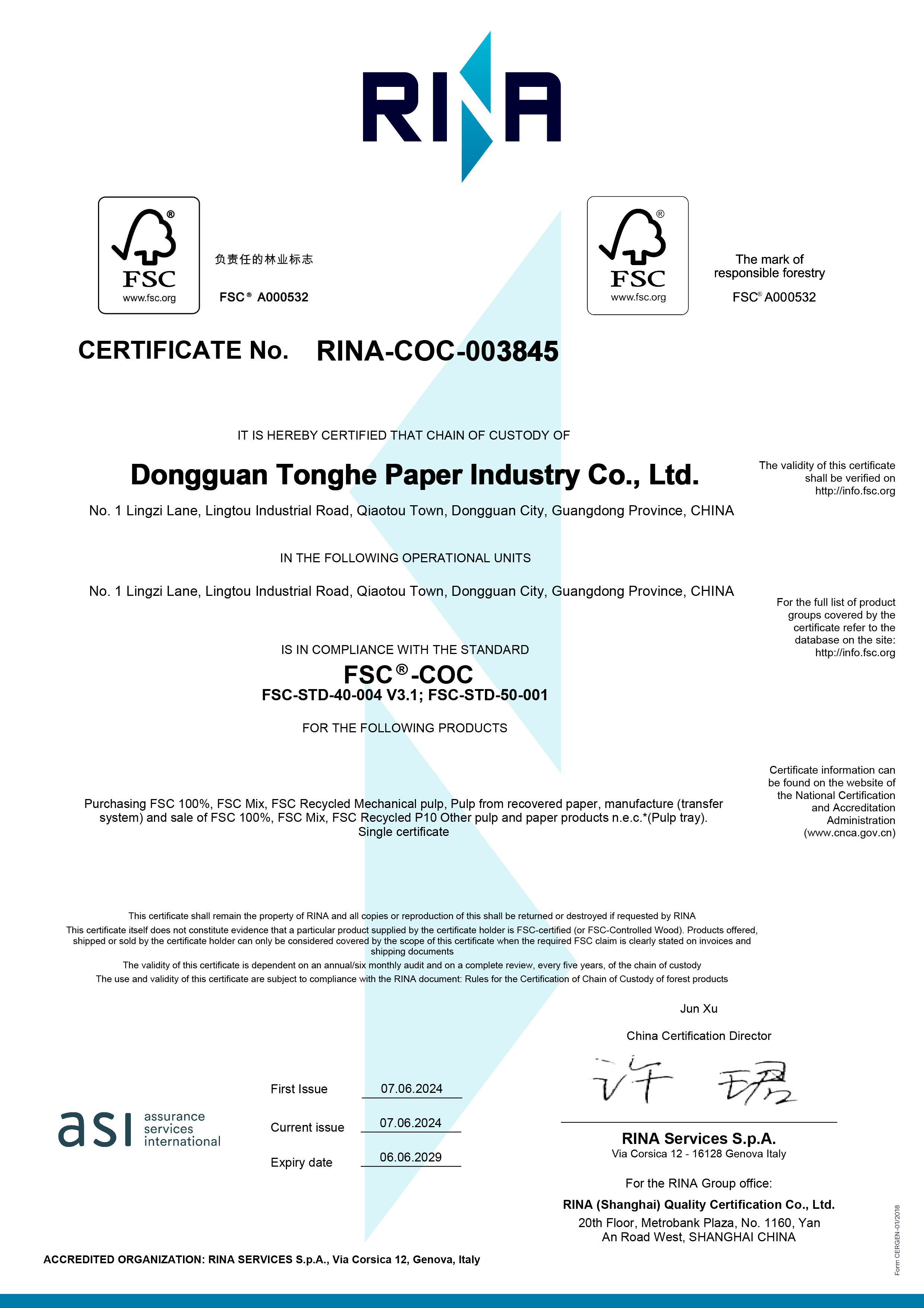
FSC-COC certificate RINA-COC-003845, issued 2024-06-07 and valid to 2029-06-06, covering FSC 100%, FSC Mix and FSC Recycled pulp and the sale of pulp trays.
Layer 5 — The commercial frame
The fifth layer is usually left until last, and it is the layer that decides whether the first four are affordable in practice. Documented terms in this category include OEM/ODM production; customization of material, color, logo, anti-static function and moisture-proof function; a minimum order quantity of 1,000 pcs; a production lead time of 15–30 days; quality control through IQC, IPQC and FQC; and remote after-sales support. Payment is accepted by T/T and Alibaba Trade Assurance, with shipment by sea, air or express (DHL/FedEx/UPS) depending on the destination port or address used for the freight calculation.
How to Read the Category in Six Steps
- Define the protective job before the product. Record product weight, fragility, stacking height, transit duration and temperature exposure. A tray is a protective format; without these inputs the spec range cannot be narrowed.
- Classify the tray family. Food-grade, medical device, cosmetic, electronics or heavy-duty transit. The family determines which compliance documents are relevant and which spec values matter most.
- Fix the spec envelope in numbers. Set ranges for thickness (0.8–5.0 mm), moisture content (≤ 8–12%), edge crush strength (3–8 kN/m), compressive strength (2–8 MPa) and temperature range, and write them into the inquiry.
- Match the compliance file to the destination market. FSC-COC for fiber sourcing claims, ISO 9001 for process control, RoHS test reports for electronics-adjacent applications, MSDS for handling and transport documentation, plus the EU recyclability timeline where relevant.
- Confirm the customization and tooling path. Irregular integrated shapes, cavity layout, color, logo, anti-static or moisture-proof treatment, embossing and printing all require mold development, which belongs in the cost model rather than in the afterthought column.
- Close the commercial frame before technical sign-off. MOQ of 1,000 pcs, lead time of 15–30 days, payment terms, shipping method, QC method and acceptance criteria should be agreed while the spec is still adjustable.
Where Molded Pulp Trays Are Actually Used
The category splits into families by application, and each family carries a different emphasis inside the same fiber system.
Food service and fresh produce
Food Grade Molded Pulp Trays use the same sugarcane, bamboo and wood pulp base with a food-grade temperature range of −20 °C to +120 °C, which allows chilled, ambient and hot-fill contact. Cutlery, lunch box, hamburger box and takeaway formats all sit in this family. A documented restaurant and supermarket packaging program shipped 2,000 units to AU, CA, DE, DK, FR, GB, NL, NZ, QA, SA, SE and the US for disposable turnover packaging, with shockproof and shatterproof results and environmental protection as the stated highlight.
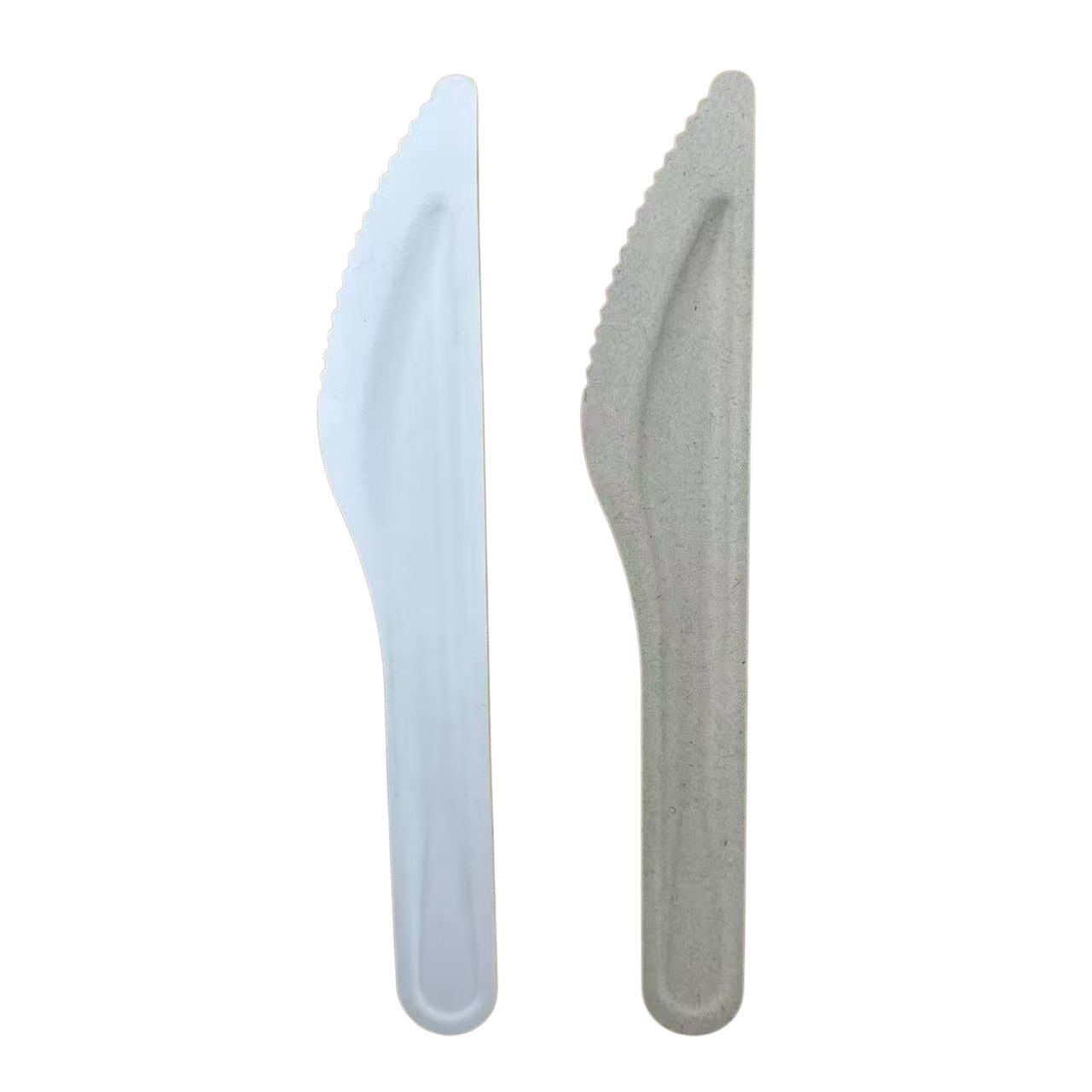
A cutlery tray and a medical insert share the same fiber system but not the same compliance emphasis.
Medical devices
Medical Device Pulp Trays are built around cleanliness and positioning: one-piece molding with precise cavities, shockproof and drop-resistant behaviour, low dust and no shedding, virgin wood pulp free of fluorescent agents, production in a clean workshop and a material inspection report. The trays support EO sterilization and can be customized for probes, handles, catheters and surgical instrument components.
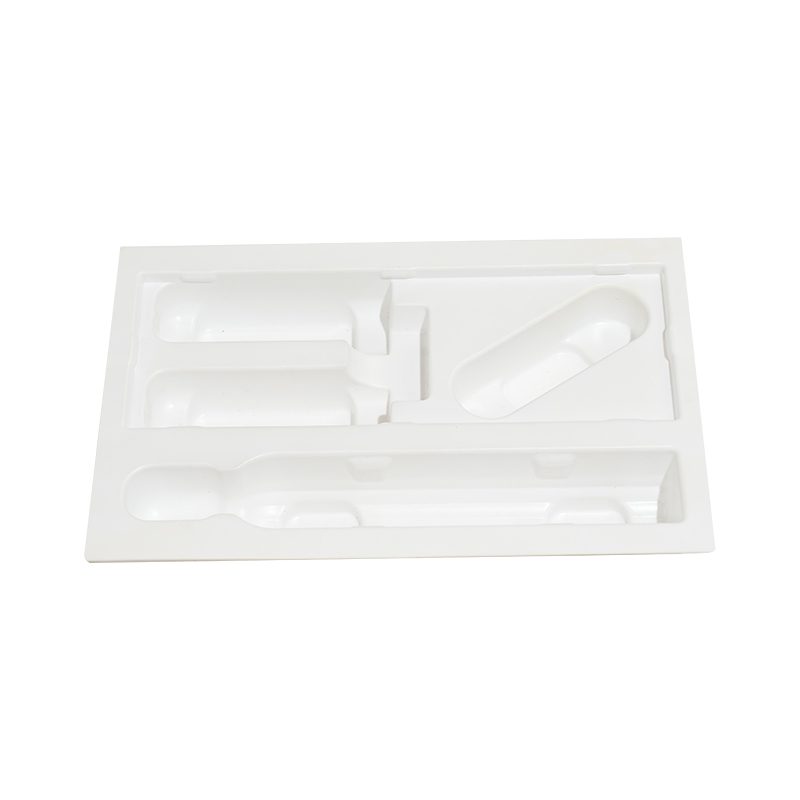
Medical device pulp trays rely on custom cavities and a documented material inspection report.
Cosmetics and gift packaging
Cosmetic Packaging Pulp Trays use a custom-fit insert structure with anti-scratch cushioning and customizable color and thickness. Embossing and printing are available, so the tray works as both protection and brand display — the reason this family often replaces molded plastic inserts in gift sets.
Electronics and appliances
Eco-Friendly Molded Fiber Trays serve 3C electronics and appliances with cushioning, pressure resistance and fit at the corners and edges. An anti-static version made from modified pulp is available for electronic components and connectors, which matters where static discharge is a functional risk rather than a cosmetic one.
Heavy-duty transit
Heavy Duty Molded Pulp Trays use a thickened fiber structure with interwoven natural fibers forming a dense protective layer, giving stacking stability and shock absorption for fragile and precision goods. Company data also records a weight reduction of approximately 50% compared with traditional hard gift boxes, which affects freight volume and stacking layers rather than unit price alone.
Molded Pulp Tray Families and What a Quote Should Map To
The table below summarizes documented tray families. The spec envelope in Layer 3 applies across these families unless a row states otherwise.
| Tray family | Fiber base (documented) | Application focus | Documented notes |
|---|---|---|---|
| Molded Pulp Trays | Sugarcane pulp, bamboo pulp, wood pulp | 3C electronics, appliances, food and fresh produce, auto parts, hardware and sanitary ware, beauty and daily chemical gifts, medical, toys, handicrafts | Natural or bleached white pulp; calendering and water-/oil-resistant surface treatment options |
| Custom Molded Pulp Trays | Sugarcane pulp, bamboo pulp, wood pulp | Export packaging that replaces foam vacuum forming | Shockproof and pressure-resistant; recyclable and biodegradable |
| Food Grade Molded Pulp Trays | Sugarcane pulp, bamboo pulp, wood pulp | Food contact and food service | −20 °C to +120 °C food-grade range; natural, white or yellow color; size and color customizable |
| Medical Device Pulp Trays | Virgin wood pulp | Medical devices and instrument components | EO sterilization support; free of fluorescent agents; clean workshop production; material inspection report; low dust |
| Cosmetic Packaging Pulp Trays | Sugarcane pulp, bamboo pulp, wood pulp | Cosmetics and gift sets | Custom-fit insert structure; anti-scratch cushioning; customizable color and thickness |
| Eco-Friendly Molded Fiber Trays | Sugarcane pulp, bamboo pulp, wood pulp | Electronics, appliances, food, hardware, medical | Anti-static option from modified pulp; cushioning at corners and edges; breathable and moisture-proof base |
| Biodegradable Pulp Trays | Recycled pulp, waste paper and plant fiber | General replacement of plastic and foam | No PE/PET film coating; compostable after disposal; recyclable as paper |
Values taken from company product data; the shared spec envelope is listed in Layer 3.
A second table is often more useful at evaluation stage, because it links each quote line back to the category variable behind it.
| What a quote line shows | Category variable behind it | What to verify before signing |
|---|---|---|
| Fiber type | Sugarcane, bamboo, wood pulp or recycled paper | Fiber stated in writing; FSC claim matched to COC scope RINA-COC-003845 |
| Wall thickness (0.8–5.0 mm) | Protection level, weight, stackability | Tolerance and test method for edge crush (3–8 kN/m) and compressive strength (2–8 MPa) |
| Mold or tooling charge | In-house mold development for irregular shapes | Whether the mold is new or existing, and who holds it after the project |
| Surface treatment | Calendering, water-/oil-resistant treatment, coating | Effect on recyclability against EU 2025/40 from January 1, 2030 |
| Certification support | FSC, ISO 9001, RoHS, MSDS | Certificate number, issuing body, issue and expiry date, and scope |
| MOQ 1,000 pcs | Order quantity versus tooling amortization | Whether the MOQ applies per SKU or per purchase order |
| Lead time 15–30 days | Capacity of up to 1,000 tons per month and scheduling | Confirmed date counted from PO, plus QC method (IQC/IPQC/FQC) |
| Freight line | Sea, air or express shipment | Destination port or address used for the calculation |
A quote becomes comparable only when each line is pinned to a documented value.
FAQ: Category Questions Buyers Ask First
Which certifications should I check before buying molded pulp trays for the EU or US market?
Ask for the number, issuing body, validity dates and scope of each document. In this category the relevant set is FSC-COC for fiber sourcing, ISO 9001 for quality management, RoHS test reports where electronics-adjacent protection applies, and MSDS for handling and transport. Tonghe holds FSC-COC RINA-COC-003845 (RINA (Shanghai) Quality Certification Co., Ltd., issued 2024-06-07, valid to 2029-06-06), ISO 9001 certificate 04524Q32380R0S (issued 2024-11-26, valid to 2027-11-25, against GB/T 19001-2016 / ISO 9001:2015), SGS RoHS test report SZXPC26000164601 (2026-01-16), RoHS test report DSP25050447-1 (2025-05-14) and MSDS DSP25050758-1 (2025-05-24). For the EU, also check the fiber and coating choice against the recyclability requirement of (EU) 2025/40 applying from January 1, 2030.
Can FSC-certified molded pulp packaging manufacturers also produce custom trays?
Certification and customization are separate capabilities and should be confirmed separately. The FSC-COC scope of Tonghe covers FSC 100%, FSC Mix and FSC Recycled pulp and the sale of pulp trays; the customization scope covers material, color, logo, anti-static function and moisture-proof function under OEM/ODM production. In-house mold development is supported by a 12-engineer R&D team, monthly capacity reaches up to 1,000 tons, the minimum order quantity is 1,000 pcs and production lead time is 15–30 days. Confirm that your tray shape, cavity layout and surface treatment all fall inside the certified and documented scope.
What drives the price band of a molded pulp tray?
Five variables move a tray from one price band to another: fiber type (sugarcane, bamboo, wood pulp or recycled paper), wall thickness within the 0.8–5.0 mm range, mold complexity for irregular or multi-cavity shapes, surface treatment such as calendering or water-/oil-resistant processing, and order quantity against the 1,000 pcs MOQ. Freight is quoted separately and depends on the destination port or address, and shipment can be arranged by sea, air or express. Because these variables interact, a molded pulp price is quoted per project rather than published as a list price — which is exactly why the category has to be read before the numbers are compared.
Can I test samples before committing to a bulk order?
Yes. Free samples are available for comparison and testing, which is the practical way to check wall thickness, fit, cushioning behaviour and surface finish against your own product. Testing a sample also reveals the two failure modes buyers most often miss at quote stage: a tray that is too thin for the stacking load, and a tray whose moisture behaviour changes in a humid warehouse. Set the sample check against the same spec values you will write into the purchase order — thickness, moisture content, edge crush strength and compressive strength — so the accepted sample and the accepted delivery use one reference.
What lead times and payment terms should I expect?
Documented terms for this category are a production lead time of 15–30 days and payment by T/T or Alibaba Trade Assurance, with shipment by sea, air or express (DHL/FedEx/UPS). Lead time is counted from the confirmed order and depends on capacity scheduling and mold status, so confirm the date in writing rather than assuming it from the quotation. Acceptance criteria should be agreed before production starts, supported by IQC, IPQC and FQC checks. If you want to move from category reading to a concrete decision, request a sample or a quote with your tray specification, order quantity and destination port — that combination is what makes the first reply usable.
Reading the Category Is the Cheapest Step in the Project
Molded pulp is a category with one fiber logic and many product families. Once the five layers are clear — fiber input, forming and pressing route, spec envelope, compliance file and commercial frame — a quotation stops being a number to negotiate and becomes a document to verify. The spec values are checkable (thickness 0.8–5.0 mm, moisture ≤ 8–12%, edge crush 3–8 kN/m, compressive strength 2–8 MPa, temperature −20 °C to +80 °C, or −20 °C to +120 °C for food-grade grades), the compliance file is checkable (FSC-COC RINA-COC-003845, ISO 9001 04524Q32380R0S, SGS RoHS SZXPC26000164601, RoHS DSP25050447-1, MSDS DSP25050758-1), and the commercial frame is checkable (MOQ 1,000 pcs, lead time 15–30 days, T/T or Alibaba Trade Assurance, sea, air or express shipment).
Buyers who skip this step usually end up comparing quotations that were never describing the same tray. Buyers who complete it arrive at the supplier conversation with a short list of questions that a serious manufacturer can answer in writing — which is the fastest filter available at evaluation stage.
Next Step: Sample or Quote
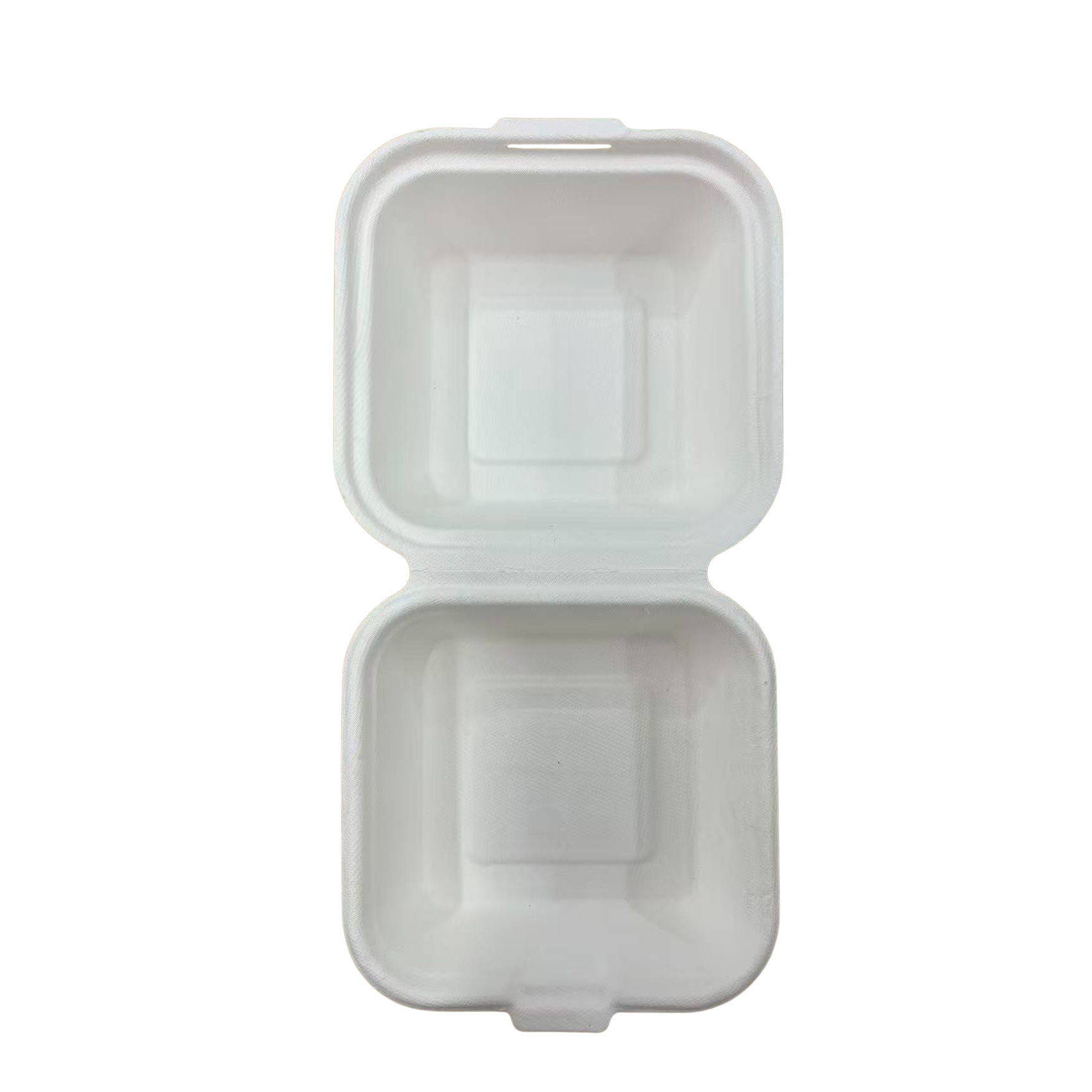
Free samples are available for comparison and testing. Send your tray drawing or product dimensions, the target order quantity and your destination port, and the reply will include the relevant spec range, documentation and freight basis.
Tonghe Paper Co., LTD (Dongguan Tonghe Paper Industry Co., Ltd.)
Contact: Annie
Email: thpulpmolding@163.com
Tel: +86 132-3838-9288
WhatsApp: +86 13238389288
Address: No.1 Lingzai Lane, Lingtou Industrial Road, Qiaotou Town, Dongguan City, Guangdong Province, China
Website: www.tonghepulp.com
Download the company brochure for the full product and certification overview: Tonghe Paper Company Brochure (PDF)
Have Questions or Need More Details?
Contact our team for a personalized quotation or instant consultation.
Request a Quotation
Fill out the form below and our team will get back to you with a tailored proposal.
WhatsApp Direct Chat
Prefer to chat in real-time? Message us on WhatsApp for instant assistance & quick answers.
- Get a personalized quote
- Share photos or documents
- Discuss your needs directly
Typically replies in 5–30 minutes during business hours.