
How to Verify Molded Pulp Trays Before Ordering: Certifications, Specs & Cost Drivers
How to Verify Molded Pulp Trays Before Ordering: Certifications, Specs & Cost Drivers
Molded pulp trays are specified across food, medical, cosmetic, and industrial packaging because they are formed from biodegradable plant fibers and can be shaped to protect specific products. For procurement and R&D teams, the real task is not simply selecting a tray shape; it is verifying whether a tray meets raw material, physical, compliance, and ordering constraints. This article uses published product and company data from Dongguan Tonghe Paper Industry Co., Ltd. (Tonghe Paper) to build a molded pulp tray verification checklist for 2026.
Why Molded Pulp Tray Evaluation Needs a Constraint-Based Checklist
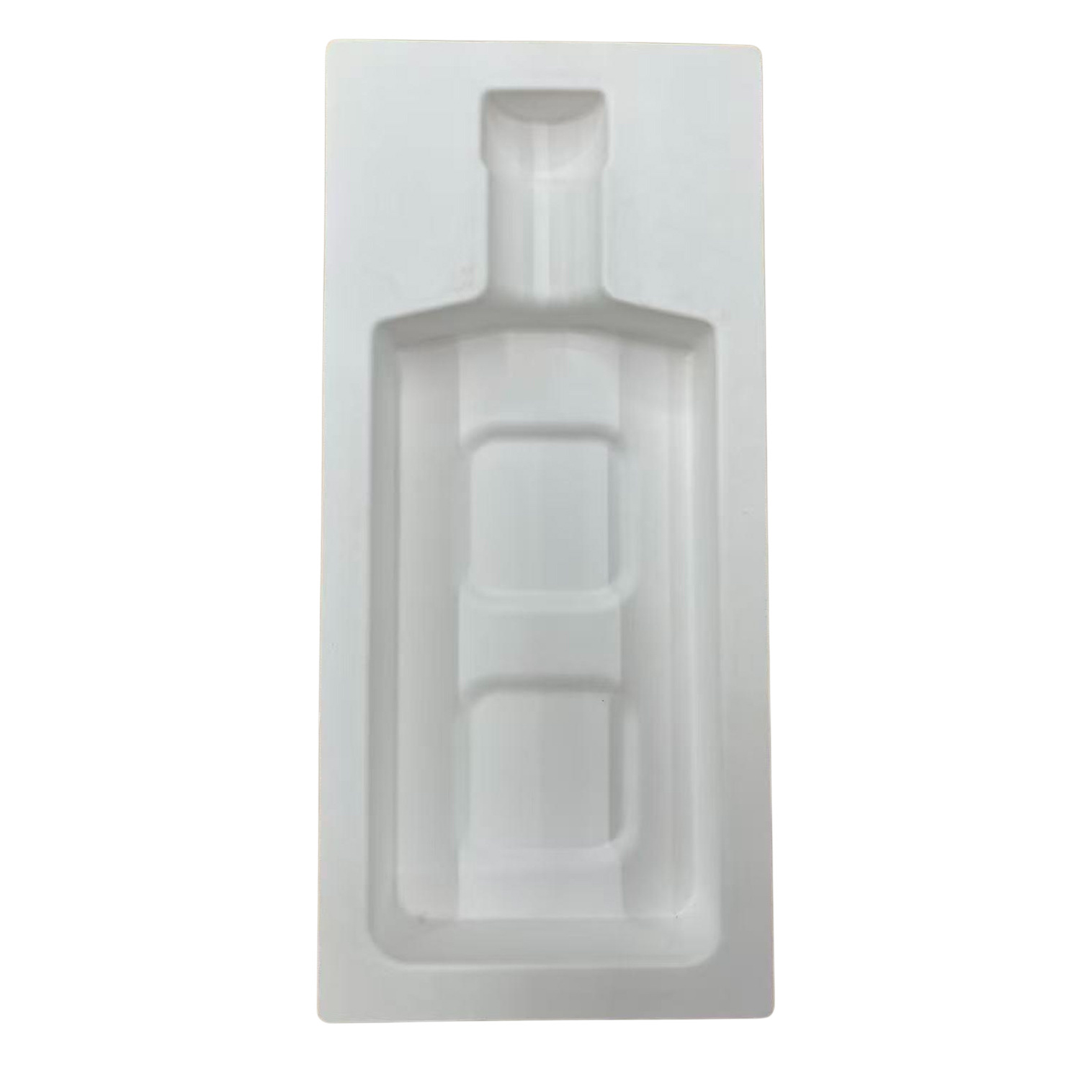
Molded pulp trays can look similar across suppliers because they are all produced from fiber, water, pressure, and heat. The differences only appear when product requirements are matched against measurable specifications. Tonghe Paper’s published profile notes that many molded fiber products on the market share limitations such as mixed recycled waste paper with impurities, relatively high self-weight, weak protection, monotonous shapes, and limited adaptability to different industries.
For a buyer, this means the evaluation should be organized around five constraint areas: raw material traceability, physical parameters, compliance documents, customization capability, and order conditions such as MOQ, lead time, and shipping.
Market and Regulatory Context for Molded Pulp in 2026
The molded pulp packaging market is growing while recyclability requirements become stricter. Grand View Research estimates the global molded pulp packaging market at USD 6.2 billion in 2025 and projects it to reach USD 10.2 billion by 2033. Asia Pacific accounted for 41.0% of revenue in 2025, and trays were the largest product segment at over 41.0% of revenue share.
Regulatory change is especially visible in Europe. The European Packaging and Packaging Waste Regulation (EU) 2025/40 entered into force on 11 February 2025 and requires all packaging to be recyclable by 1 January 2030. In the healthcare segment, Mordor Intelligence projects molded pulp for medical devices to grow at an 8.6% CAGR, partly driven by ISO sterilization standards and plastic restrictions in hospitals.
These conditions make documented evidence more important than generic environmental claims.
Molded Pulp Tray Verification Framework
Raw Material and Compostability
Raw material selection determines how a tray behaves in composting and how it is accepted in regulated markets. Tonghe Paper states that it selects raw wood pulp, bamboo pulp, sugarcane pulp, and other natural plant fibers. No harmful chemical additives are used. In a natural composting environment, the material is reported to reach 100% biodegradation in 28 days, and the raw materials support recycling and circulation.
Physical and Performance Specifications
Before placing an order, compare the supplier’s published specification sheet with your product weight, fragility, stack height, and shipping route. Tonghe Paper’s molded pulp product line lists the following common range:
| Parameter | Published Range |
|---|---|
| Wet pressure | 0.15-0.25 g/cm³ |
| Dry pressure | 0.28-0.45 g/cm³ |
| Thickness | 0.8-5.0 mm, customizable |
| Moisture content | ≤8-12% |
| Edge crush strength | 3-8 kN/m |
| Compressive strength | 2-8 MPa |
| Temperature range | -20°C to +80°C; food grade -20°C to +120°C |
| Raw materials | Sugarcane pulp, bamboo pulp, wood pulp; customization available |
| Color | Natural, white, yellow, or customized |
Weight, Protection, and Logistics
Weight affects freight cost and stacking. Tonghe Paper states that, compared with traditional hard gift boxes, its upgraded molded pulp products reduce weight by approximately 50%. The lightweight structure is reported to provide strong stacking stability, reduce occupied storage space, and lower long-distance transportation volume.
For protection, the company describes a thickened fiber structure in which natural fibers interweave into a dense protective layer. The stated properties include anti-corrosion, moisture resistance, anti-static performance, shock absorption, and vibration damping. Buyers can request free samples for comparison and testing before committing to a mold.
Customization and Surface Options
Most molded pulp suppliers can produce standard shapes. Irregular product contours require mold development capability. Tonghe Paper states that it can develop multi-specification, complex, and irregular integrated structures, with mold design matching product contours. Custom services include special coating, embossing, and printing, plus material, color, logo, anti-static, and moisture-proof customization through OEM/ODM production.
Compliance Documentation
For exports to Europe, North America, and other regulated markets, the supplier should provide a compliance pack with certificate numbers. Tonghe Paper’s published documents include:
| Document | Report / Certificate No. | Issuing Body | Scope / Market | Validity |
|---|---|---|---|---|
| ISO 9001:2015 Management System Certification | 04524Q32380R0S | Beijing Daluhangxing Quality Certification Center Co., Ltd | Global; paper holders | 2024-11-26 to 2027-11-25 |
| FSC CoC Certification | RINA-COC-003845 | RINA (Shanghai) Quality Certification Co., Ltd. | Global, EU; pulp tray | 2024-06-07 to 2029-06-06 |
| RoHS Test Report | DSP25050447-1 | Dongguan ZRLK Testing Technology Co., Ltd. | EU; paper tray | Issued 2025-05-14 |
| SGS RoHS Test Report | SZXPC26000164601 | SGS-CSTC Standards Technical Services Co., Ltd. | EU; paper tray | Issued 2026-01-16 |
| MSDS | DSP25050758-1 | ZRLK | Global; paper tray | Issued 2025-05-24 |
The company also states that its molded pulp packaging complies with SGS RoHS and PFAS-free requirements.
Cost and Ordering Constraints
Exact pricing is determined by material color, fiber type, density, thickness, surface treatment, mold complexity, order quantity, and shipping route. Tonghe Paper’s product notes state that natural-color pulp provides high cost performance, while bleached white pulp gives a cleaner appearance. Calendering can improve surface smoothness and reduce paper scraps, and waterproof or oil-proof treatments can be added for damp environments. Because these choices change price, a useful next step is to request a quote with drawings or samples.
Six-Step Supplier Evaluation Process for Molded Pulp Trays
- Document the product’s weight, dimensions, fragility, transport route, and target market compliance requirements.
- Request a raw material statement. Confirm whether the tray is made from plant fibers such as wood, bamboo, or sugarcane pulp and whether it is fully biodegradable.
- Map the supplier’s physical specifications to your requirements. For food-grade trays, check the applicable temperature range; for electronics, ask whether anti-static material is possible.
- Ask for the compliance pack and verify certificate numbers, issuing bodies, issue dates, and renewal dates.
- Send a product sample, CAD file, or drawings for mold-fit evaluation. For complex shapes, confirm in-house mold development and request a prototype.
- Clarify MOQ, lead time, production capacity, QC process, shipping terms, and after-sales support before mass production.
Tonghe Paper’s published capability data includes OEM/ODM production, monthly capacity up to 1,000 tons, MOQ of 1,000 pieces, lead time of 15-30 days, quality control at IQC/IPQC/FQC, and remote after-sales support. Export records include the EU, USA, Australia, Saudi Arabia, Malaysia, Brazil, the Middle East, and the UK. The company profile also lists a factory area of 23,000 m², 160 employees, 12 R&D engineers, annual output of 12,000 tons, and an export ratio of 50%.
Application-Driven Tray Options
Food Service and Fresh Produce Packaging
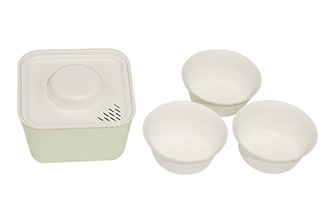
Food Grade Molded Pulp Trays are designed for cutlery, lunch boxes, hamburger boxes, and other food-contact packaging. The published properties include food-safe sugarcane, bamboo, or wood pulp material, customizable size and color, cushioning and compression resistance, and a temperature range of -20°C to +120°C in food-grade use. In a food-service application recorded by Tonghe Paper, molded pulp trays were used by restaurants and supermarkets for transport and turnover of disposable food packaging; the stated result was shockproof and shatterproof performance, with environmental protection as the highlight.
Medical Device Packaging
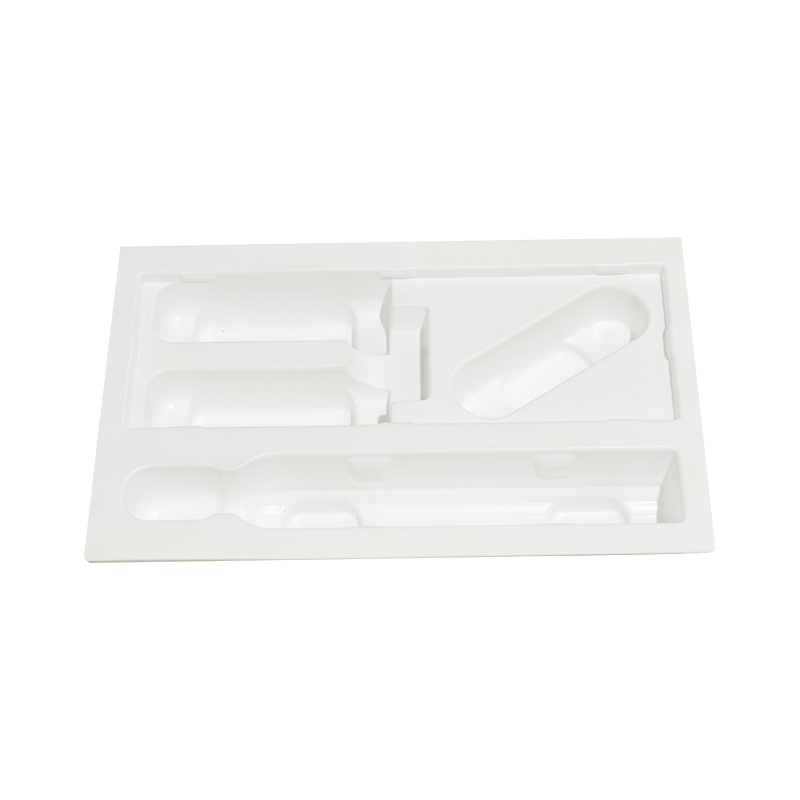
Medical Device Pulp Trays are an example of molded pulp being used for regulated packaging. According to Tonghe Paper’s product data, these trays support EO sterilization, offer one-piece molding with precise positioning, and are described as shockproof, drop-resistant, low-dust, and non-shedding. The material can be made from virgin wood pulp without fluorescent agents, is produced in a clean workshop, and comes with a material inspection report. Custom cavities can be designed for probes, handles, catheters, and surgical instrument components.
Cosmetic and Gift Packaging
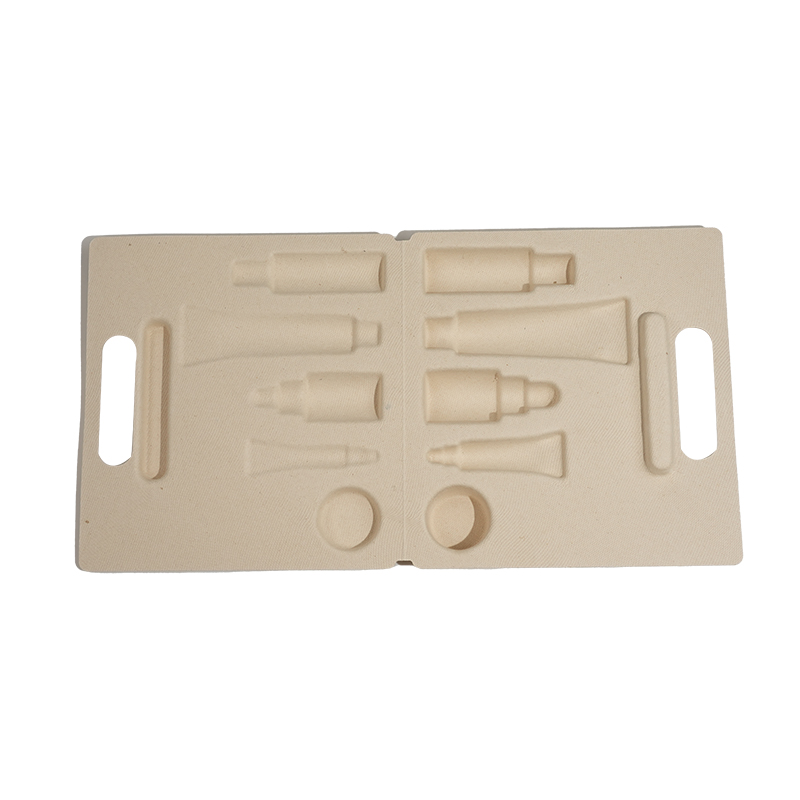
Cosmetic Packaging Pulp Trays are listed for cosmetic inner packaging, with a custom-fit insert structure, anti-scratch cushioning, and customizable color and thickness. The tray design can help hold bottles, jars, and other cosmetic components in place during transit and display.
Electronics and Industrial Products
Eco-Friendly Molded Fiber Trays and Biodegradable Pulp Trays cover a wider range of industries, including 3C electronics, appliances, fresh produce, auto parts, hardware, medical products, toys, and crafts. The molded fiber trays are described as replacing EPS foam and vacuum-formed plastic, with integrated inner linings that resist pressure, impact, and shock. Anti-static versions are available for electronic components and connectors. Biodegradable pulp trays are listed as zero-plastic, with no film coating, no PE/PET plastic film, and no microplastic pollution.
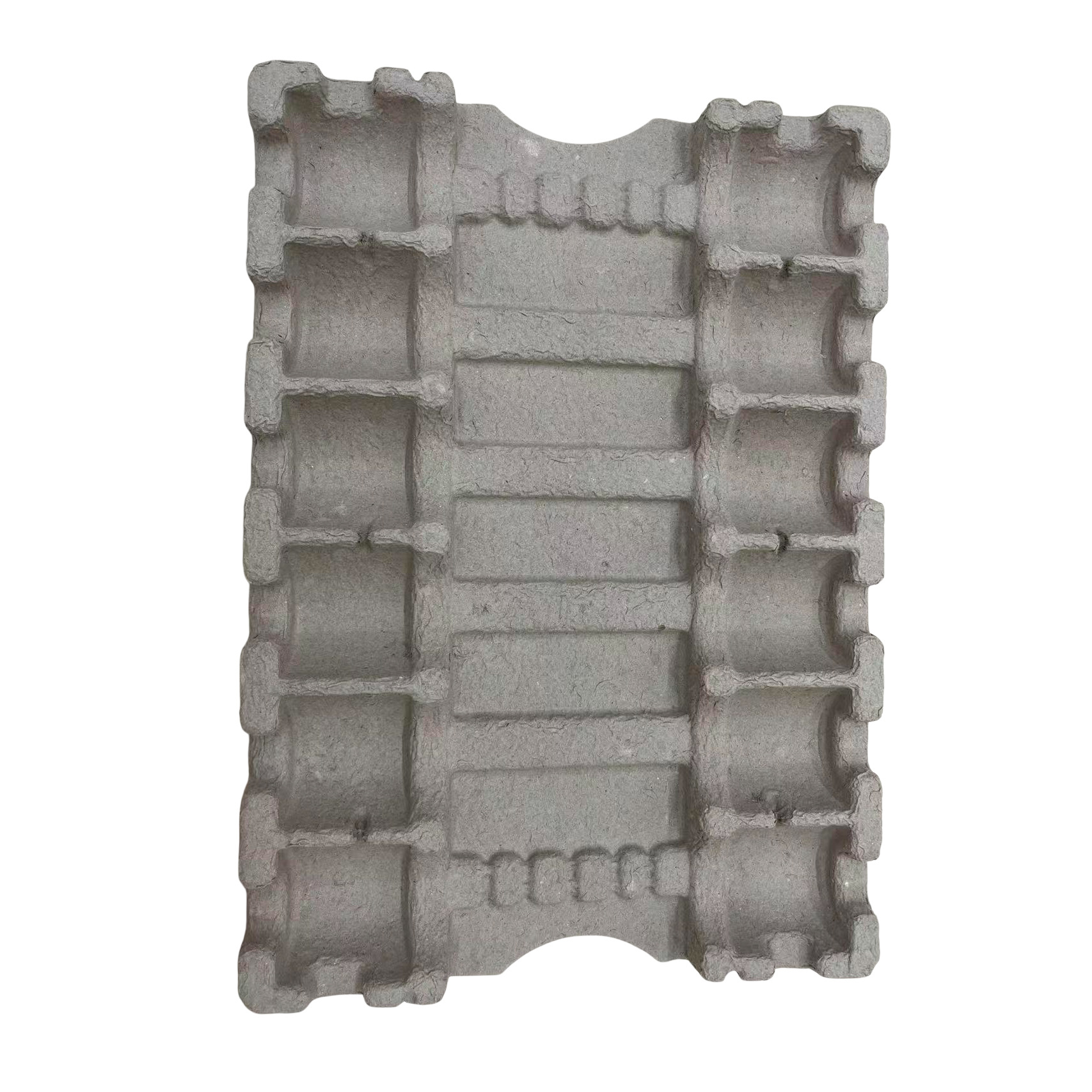
Molded Pulp Tray Comparison by Product Type
| Tray Type | Listed Industries | Verified Characteristics |
|---|---|---|
| Molded Pulp Trays | 3C electronics, appliances, food, fresh produce, auto parts, hardware, medical, toys, crafts | Natural or bleached white material; calendering; waterproof and oil-proof treatment options |
| Custom Molded Pulp Trays | 3C electronics, appliances, food, fresh produce, auto parts, hardware, medical, toys, crafts | Replaces foam vacuum forming; shockproof and pressure-resistant; recyclable and biodegradable |
| Pulp Packaging Trays | 3C electronics, appliances, food, fresh produce, auto parts, hardware, medical, toys, crafts | Can replace foam and plastic vacuum forming; printable and embossable; recyclable and reusable |
| Eco-Friendly Molded Fiber Trays | 3C electronics, appliances, food, fresh produce, auto parts, hardware, medical, toys, crafts | Buffering; integrated molding; anti-static options; can replace EPS foam |
| Biodegradable Pulp Trays | 3C electronics, appliances, food, fresh produce, auto parts, hardware, medical, toys, crafts | Fully biodegradable and compostable; zero plastic; no PE/PET film; no microplastic pollution |
| Medical Device Pulp Trays | Medical devices | EO sterilization support; one-piece molding; virgin wood pulp; low dust; custom cavities for surgical components |
| Cosmetic Packaging Pulp Trays | Cosmetics | Custom-fit insert structure; anti-scratch cushioning; customizable color and thickness |
| Food Grade Molded Pulp Trays | Food service | Food-safe; -20°C to +120°C; cushioning and compression resistance; customizable size and color |
Molded Pulp Tray FAQ
Does Tonghe Paper provide compliance documents for molded pulp trays?
Yes. The published compliance pack includes ISO 9001:2015 certification (No. 04524Q32380R0S), FSC CoC certification (No. RINA-COC-003845), a RoHS test report (No. DSP25050447-1), an SGS RoHS test report (No. SZXPC26000164601), and an MSDS (No. DSP25050758-1). The company also states that its molded pulp products comply with SGS RoHS and PFAS-free requirements.
What are the standard physical specifications for molded pulp trays?
Tonghe Paper lists wet pressure of 0.15-0.25 g/cm³, dry pressure of 0.28-0.45 g/cm³, thickness of 0.8-5.0 mm, moisture content of ≤8-12%, edge crush strength of 3-8 kN/m, compressive strength of 2-8 MPa, and an applicable temperature range of -20°C to +80°C. Food-grade versions can be used from -20°C to +120°C.
Can molded pulp trays be customized for food, medical, and cosmetic packaging?
Yes. Food Grade Molded Pulp Trays are listed for food service with food-safe materials and a food-grade temperature range. Medical Device Pulp Trays support EO sterilization, precise positioning, low dust, and custom cavities for probes, handles, catheters, and surgical instruments. Cosmetic Packaging Pulp Trays are listed with custom-fit insert structures, anti-scratch cushioning, and customizable color and thickness.
What are Tonghe Paper's MOQ, lead time, and production capacity?
Tonghe Paper lists a MOQ of 1,000 pieces, lead time of 15-30 days, monthly capacity up to 1,000 tons, and OEM/ODM production. Quality control is managed through IQC/IPQC/FQC, and after-sales support is available remotely.
What payment terms and shipping methods are accepted?
The company accepts T/T and Alibaba Trade Assurance. Shipping can be arranged by sea, air, or express (DHL/FedEx/UPS). Buyers should provide the destination port or address so the supplier can calculate freight cost. For a sample or quote, contact thpulpmolding@163.com or +86 132-3838-9288.
Conclusion: Build Your Molded Pulp Tray Order Around Verified Constraints
Molded pulp trays are a practical alternative to foam and plastic packaging when the supplier can document raw materials, physical properties, compliance, and customization capabilities. The most useful next step is to turn a product requirement into a short checklist, ask the supplier for certificate numbers and a specification sheet, and test a free sample under real transport conditions.
For quote requests, sample evaluation, or a PDF company brochure, contact Dongguan Tonghe Paper Industry Co., Ltd. (Tonghe Paper):
- Email: thpulpmolding@163.com
- Tel / WhatsApp: +86 132-3838-9288
- Website: https://www.tonghepulp.com
- Brochure: Download Tonghe Paper company brochure (PDF)
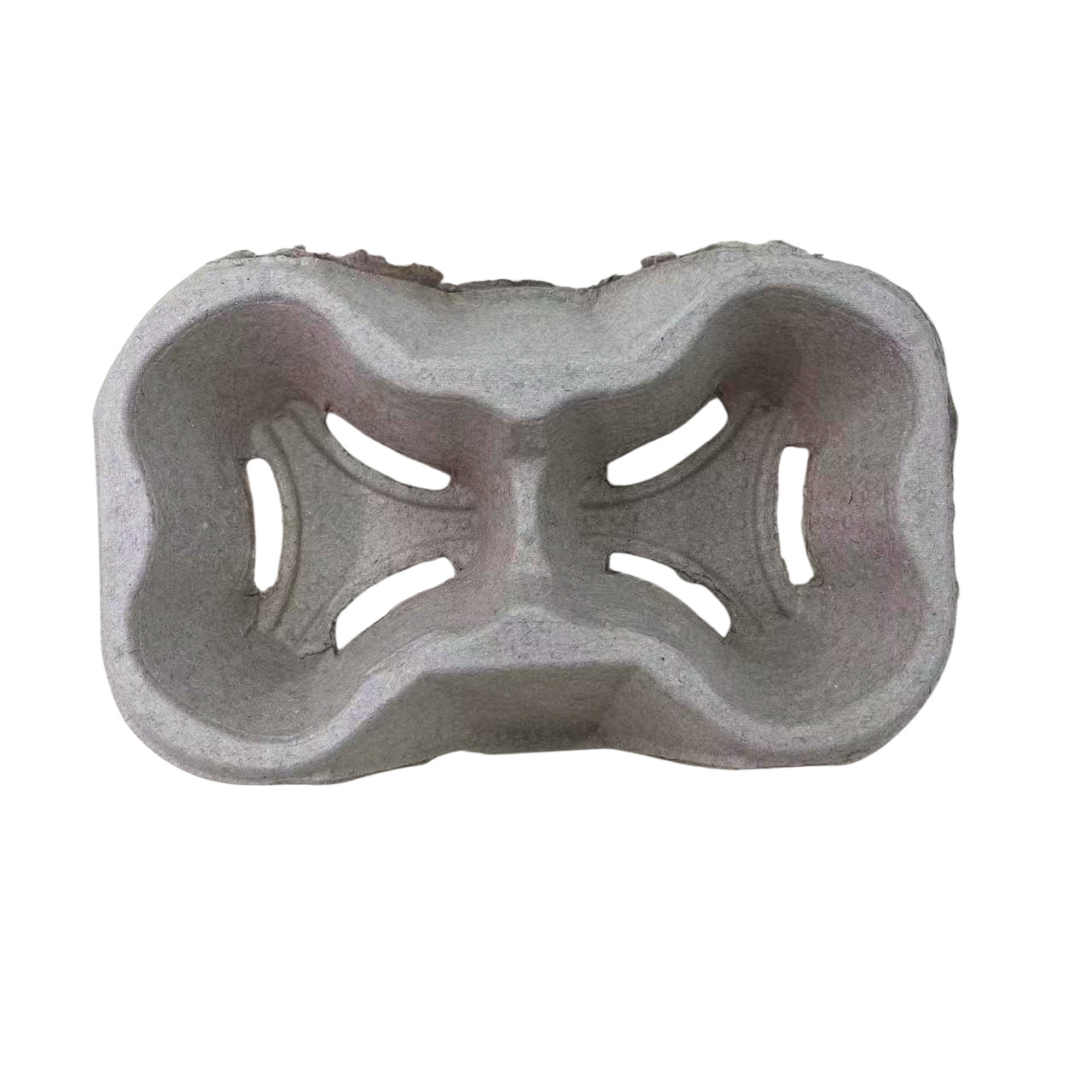
Next step: Compare Tonghe Paper molded pulp trays against your current packaging. Send a product drawing or request a free sample by contacting thpulpmolding@163.com or +86 132-3838-9288.