
Molded Pulp Application Guide for Packaging & Printing Buyers: Scenario Fit and Ordering Terms
Molded Pulp Application Guide for Packaging & Printing Buyers: Scenario Fit and Ordering Terms
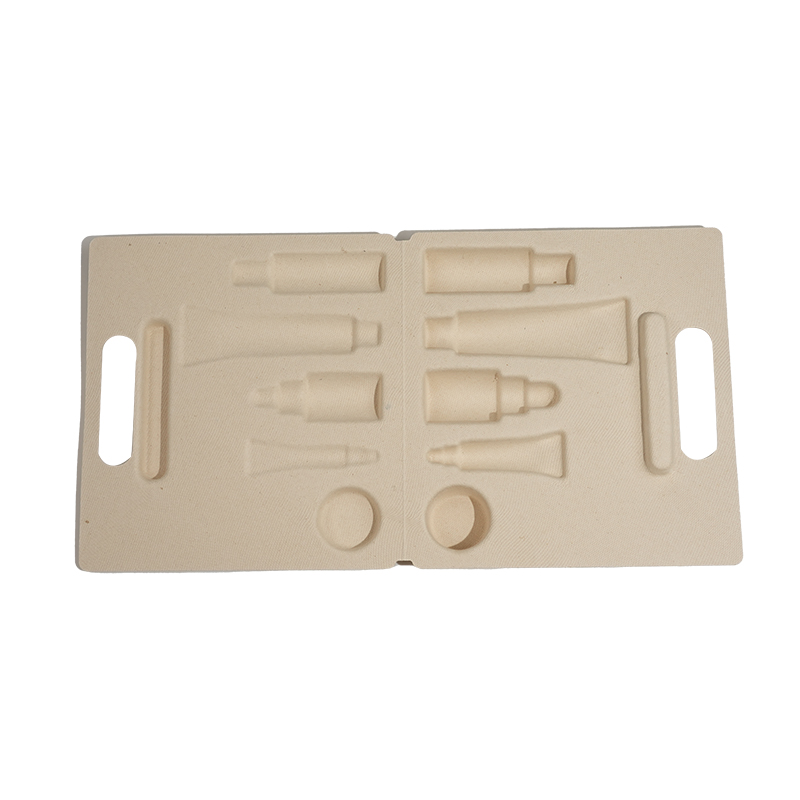
Molded pulp — also described as molded fiber — is protective packaging formed from a plant-fiber slurry into shaped trays, inserts and liners that hold a product in position during handling, storage and transport. It is used in place of EPS foam, vacuum-formed plastic and hard paper inserts in electronics, food service, cosmetics, medical devices, wine and gift packaging.
For packaging and printing buyers, the difficult part is rarely the material itself. The difficult part is matching one tray configuration to one specific scenario, and then agreeing the ordering terms — sample approval, packing, payment method and shipping mode — before a purchase order is issued.
This guide covers both. It maps the scenarios molded pulp serves well, explains the configuration variables that actually change tray performance, and lists the ordering terms that should be confirmed in writing. Dongguan Tonghe Paper Industry Co., Ltd. is a molded pulp manufacturer based in Qiaotou Town, Dongguan, Guangdong, China, producing molded fiber trays and protective inserts for electronics, lighting, gifts, food and medical device categories.
Quick answer: Select a molded pulp tray by matching five variables to the product — fiber type, wall thickness (0.8–5.0 mm), forming density (wet pressure 0.15–0.25 g/cm³, dry pressure 0.28–0.45 g/cm³), edge crush and compressive strength, and surface treatment. Then confirm three commercial items before ordering: an approved sample, the packing and stacking method, and the freight basis with a destination port or address.
Problem Definition: Where Molded Pulp Projects Go Wrong
Molded pulp projects usually fail on one of two fronts, and both are avoidable at the specification stage rather than at the production stage.
Configuration mismatch. A tray is selected from a product photo instead of from a protection requirement. The cavity does not follow the product outline, the wall thickness is thinner than the item weight requires, or the surface treatment does not match the storage environment. The consequences appear later as product movement inside the tray, corner damage after transit, or a tray that softens in humid storage.
Commercial ambiguity. The buyer compares unit prices while ignoring the items that change landed cost: how trays are packed, whether they stack, which shipping mode is used, and what freight basis the quotation assumes. Two suppliers can quote the same tray and still deliver very different total costs.
The two problems are connected, because molded pulp trays are tooling products. Each new tray shape is produced from a mold, so a cavity dimension changed after tooling approval affects both the mold and the commercial timeline. Deciding the scenario and the ordering terms in the same conversation is therefore more efficient than deciding them in sequence.
Industry Background: What Is Driving Molded Pulp Adoption
Molded pulp packaging is no longer a niche material. According to Grand View Research, the global molded pulp packaging market was valued at USD 6.2 billion in 2025 and is projected to reach USD 10.2 billion by 2033.
The same research house reports that Asia Pacific held a 41.0% revenue share of the molded pulp packaging market in 2025, with China holding the largest market share, and that the tray segment accounted for over 41.0% of revenue in that year. Trays are, in other words, the largest single product form in the category.
Regulation is a second driver. The European Union Packaging and Packaging Waste Regulation (EU) 2025/40 entered into force on 11 February 2025 and requires all packaging to be recyclable by 1 January 2030. For buyers exporting into Europe, recyclability is shifting from a marketing preference to a procurement requirement.
A third driver is healthcare. Mordor Intelligence projects that molded pulp for healthcare and medical devices will grow at an 8.6% CAGR, driven by ISO sterilization standards and plastic bans in hospitals.
For packaging and printing buyers, these three signals point in the same direction: the inner protective layer of a packaging project now needs to be specified with the same discipline as the printed outer box.
Scenario-Fit Framework: Six Variables That Decide the Tray
The following variables come from the standard specification range for molded pulp trays and are the variables worth confirming on a technical data sheet before a drawing is issued.
- Fiber source. Standard production uses sugarcane pulp, bamboo pulp and wood pulp, with customization available on request. Food-contact and medical projects normally require a defined fiber and grade rather than a generic mixed recycled input; medical device trays are produced from virgin wood pulp that is free of fluorescent agents.
- Wall thickness. The standard range is 0.8–5.0 mm and is customized as required. Thin walls suit light items and tight packaging volumes; thicker walls suit heavier items and drop protection.
- Forming density. Wet pressure is specified at 0.15–0.25 g/cm³ and dry pressure at 0.28–0.45 g/cm³. Density influences stiffness, surface feel and how far the tray deforms under load.
- Strength. Edge crush strength is specified at 3–8 kN/m and compressive strength at 2–8 MPa. These two values are the most useful basis for comparing a molded pulp tray against foam or plastic inserts for a given product weight.
- Moisture and temperature. Moisture content is ≤8–12%. The normal applicable temperature range is −20 °C to +80 °C, while food-grade trays are rated for −20 °C to +120 °C.
- Surface and brand treatment. Options include calendering, waterproof and oil-proof treatment, spraying or dyeing, embossing, logo printing and special coatings. Colors are natural, white, yellow, or customized as required.
A practical purchasing note: the difference between a tray that passes transit testing and one that does not is normally found in variables two to four, not in the fiber choice alone.
Step-by-Step Breakdown: From Scenario Definition to a Confirmed Order
- Define the protection requirement, not the appearance. Record product weight, fragile zones, whether the item moves inside the pack, and whether packs will be stacked. This sets thickness and strength targets before any mold discussion begins.
- Match fiber and grade to the end market. A food-contact product needs a food-grade pulp tray. A medical device needs a grade produced in a clean environment from virgin wood pulp without fluorescent agents, supported by a material inspection report. Standard export projects normally use sugarcane, bamboo or wood pulp.
- Set thickness and strength together. Thickness alone does not define protection. Confirm edge crush strength (3–8 kN/m) and compressive strength (2–8 MPa) against the intended load.
- Choose surface treatment based on where the tray will be stored and seen. Waterproof and oil-proof treatment suits food, cosmetics and humid conditions; calendering improves surface smoothness and reduces paper scrap; printing and embossing carry the brand where the tray is visible to the end customer.
- Validate with a sample before tooling approval. Tonghe supports customers with free samples for comparison and testing, which allows a thin, moisture-prone structure to be compared side by side with a denser structure before mass production.
- Confirm the ordering terms in the same conversation. Payment method, shipping mode, freight basis and packing method should be settled before the order is placed rather than after production.
Use Cases: Which Scenario Fits Which Configuration
3C electronics and electrical appliances
Molded pulp electronics trays use customized cavities with precise positioning to hold components, connectors and small appliances. Anti-static versions are available by modifying the pulp, which suits electronic components and connectors that are sensitive to static discharge. Buyers should confirm cavity count, the anti-static requirement, and whether the tray must stack during warehouse storage.
Food, catering and fresh produce
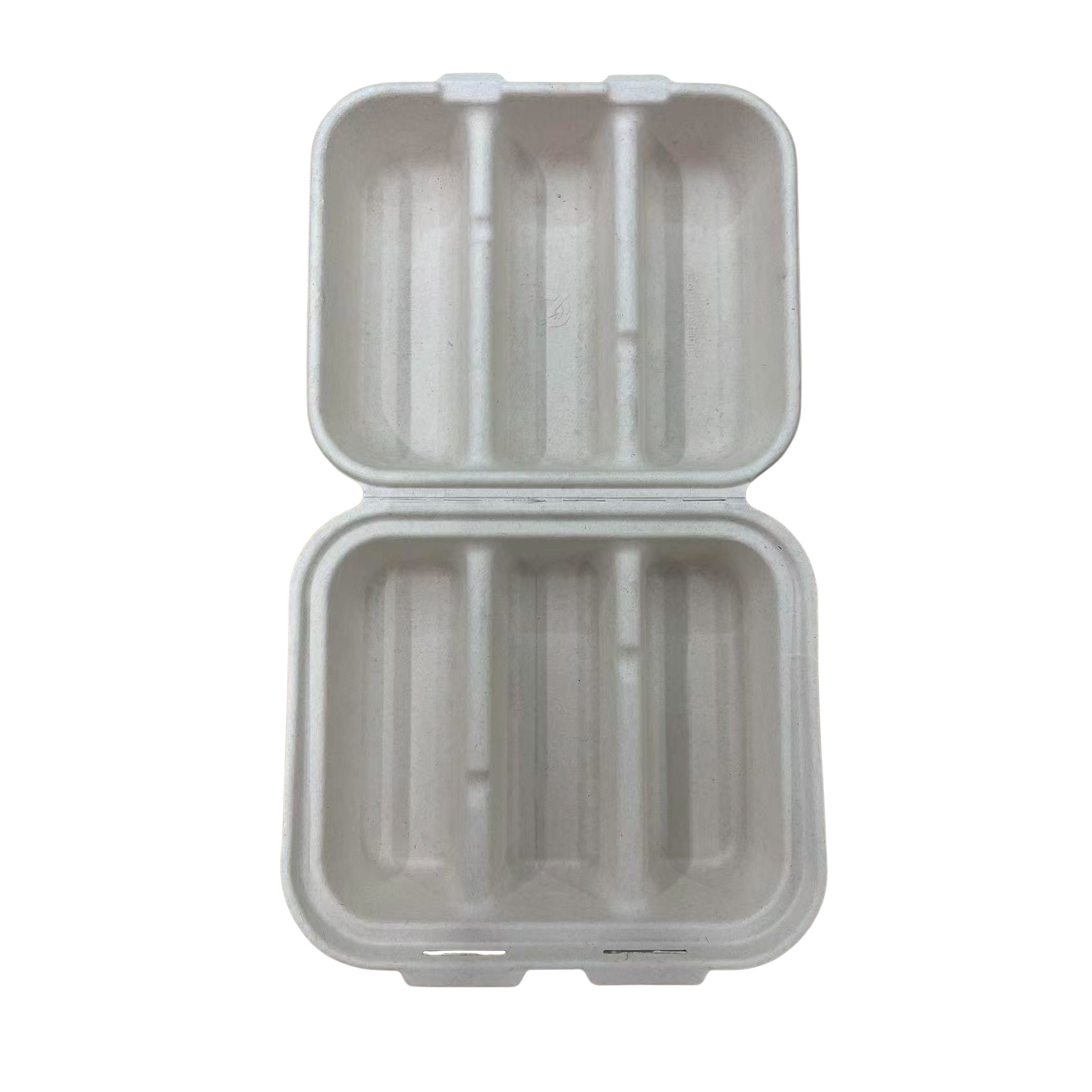
Food Grade Molded Pulp Trays serve food service items, lunch boxes and fresh produce within a rated temperature range of −20 °C to +120 °C. Waterproof and oil-proof treatments are available where the tray contacts moist or oily food. Buyers should confirm the food-contact requirement and whether the tray functions as disposable packaging or as a reusable insert.
Beauty, daily chemical and wine gift boxes
Cosmetic Packaging Pulp Trays are molded to fit bottles, jars and multi-piece sets with anti-scratch cushioning. Logo printing and embossing allow the insert itself to carry brand presentation. As a first-party comparison point, Tonghe states that its molded fiber structure weighs approximately 50% less than traditional hard gift boxes, which affects both freight volume and storage stacking.
Medical devices
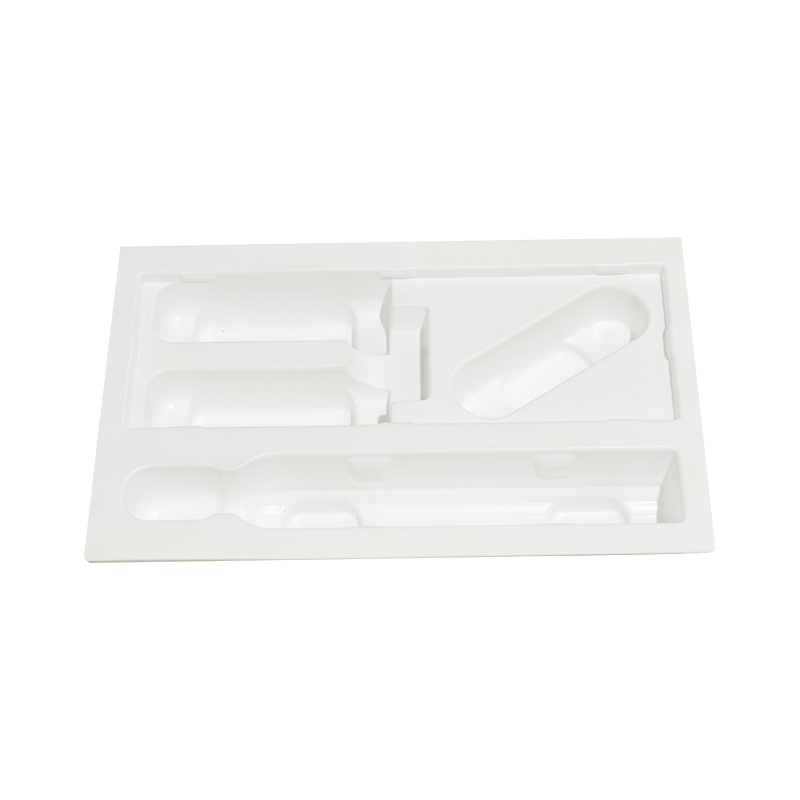
Medical Device Pulp Trays are one-piece molded with precise positioning, are shockproof and drop-resistant, and are described as low-dust with no shedding. They support EO sterilization, are produced from virgin wood pulp free of fluorescent agents in a clean workshop, and come with a material inspection report. Cavities can be customized to fit probes, handles, catheters and surgical instrument components. For export to Europe and North America, the trays are degradable and recyclable, which reduces exposure to plastic taxes.
Toys, handicrafts, hardware and general OEM projects
Custom Molded Pulp Trays are developed against the product, using in-house mold development capability. Multi-specification, complex and irregular integrated structures can be produced as required, so items that do not fit standard rectangular cavities can still be protected by a contoured pulp insert rather than loose filler.
Scenario Fit Comparison Table
The table below maps common packaging and printing scenarios to the molded pulp configuration that fits them, together with the items a buyer should confirm before ordering.
| Scenario | Configuration that fits | Confirm before ordering |
|---|---|---|
| 3C electronics, appliances, components and connectors | Custom Molded Pulp Trays or Molded Pulp Electronics Trays with anti-static option; thickness and density set for shock absorption | Cavity count and positioning, anti-static requirement, drop-protection expectation, stacking for storage |
| Food service, catering and fresh produce | Food Grade Molded Pulp Trays; rated −20 °C to +120 °C; optional waterproof and oil-proof treatment | Food-contact requirement, whether treatment for water or oil resistance is needed, disposable or reusable use |
| Cosmetics, daily chemical and wine gift sets | Cosmetic Packaging Pulp Trays or Pulp Packaging Trays with logo printing and embossing | Surface finish and color (natural, white, yellow or custom), printing area, whether the insert is visible to end customers |
| Medical devices and surgical instrument components | Medical Device Pulp Trays in virgin wood pulp free of fluorescent agents; supports EO sterilization | Material inspection report, clean-workshop production, cavity layout for probes, handles, catheters and instrument parts |
| Toys, handicrafts, hardware and sanitary ware | Eco-Friendly Molded Fiber Trays replacing EPS foam and vacuum forming | Item weight and fragile zones, thickness, edge crush and compressive strength targets |
| Multi-category export programs | Molded Pulp Trays in sugarcane, bamboo or wood pulp; fully degradable and recyclable | Compliance documentation for the destination market, packing method, freight basis |
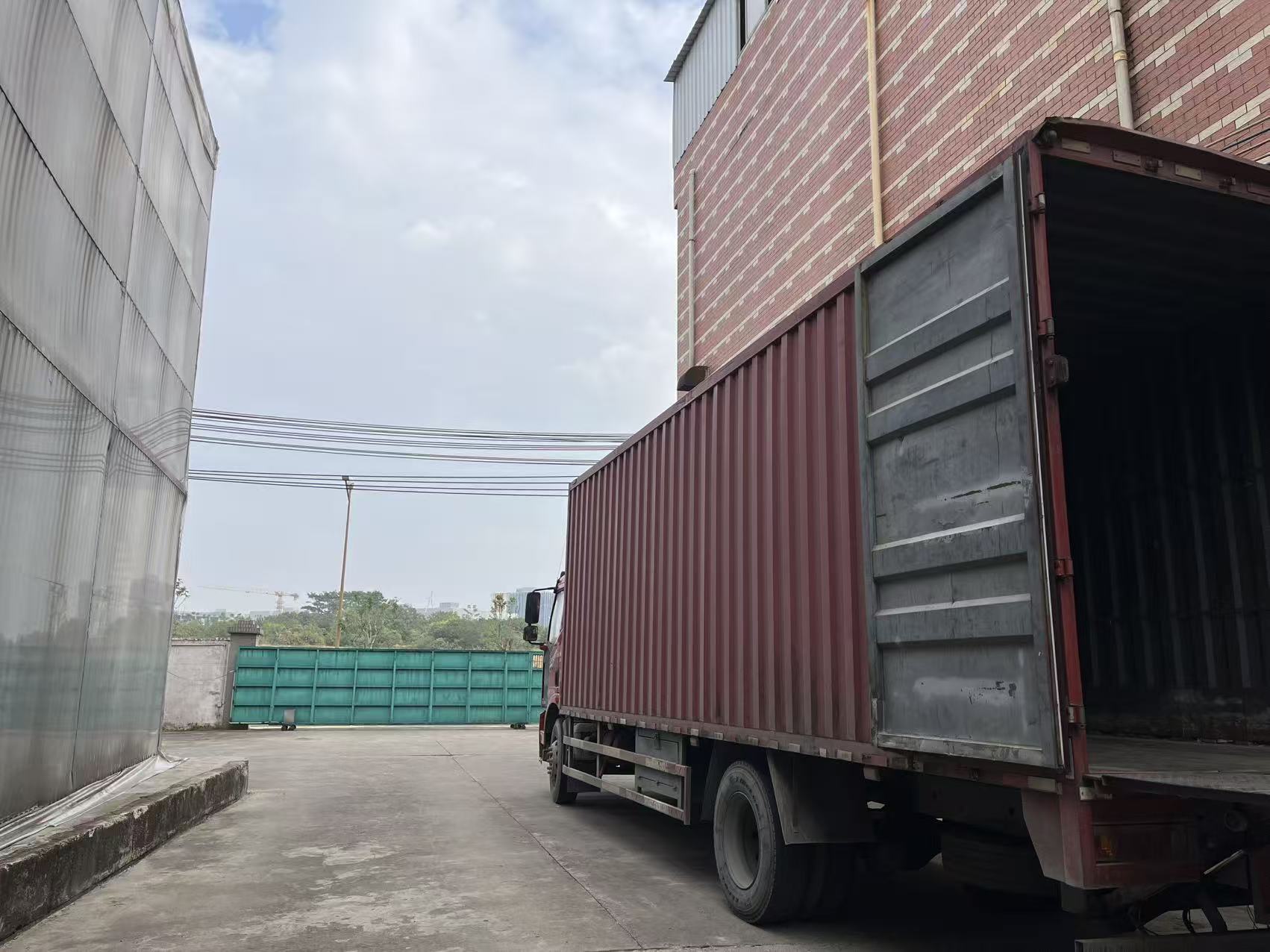
Ordering Terms Buyers Should Confirm Before Ordering
Ordering terms decide the delivered cost of a molded pulp project as much as the tray specification does. Four items should be written into the quotation before the purchase order is raised.
| Ordering item | Terms confirmed by Tonghe |
|---|---|
| Payment method | T/T and Alibaba Trade Assurance |
| Shipping method | Sea, air, or express courier (DHL / FedEx / UPS) |
| Freight calculation | Buyer provides the destination port or address so freight cost can be calculated |
| Sample | Free samples for comparison and testing before mass production |
| Customization scope | Color, thickness, coating, embossing, printing, and mold development |
| Compliance documentation | Products comply with international environmental standards including SGS RoHS and PFAS-free requirements; material inspection report for medical projects |
Payment. Tonghe accepts T/T and Alibaba Trade Assurance. Buyers comparing suppliers should record which payment instruments are accepted, since this affects both cash flow and the dispute mechanism available if a shipment deviates from the approved sample.
Shipping. Orders can ship by sea, air or express courier (DHL, FedEx, UPS). The choice normally follows order volume and delivery deadline rather than price alone. Because express and air freight are calculated on volumetric weight, a tray that stacks efficiently can reduce freight cost even when its unit price is identical to a bulkier alternative.
Freight basis. Freight cannot be quoted accurately without a destination. Buyers should provide the destination port or delivery address at the quotation stage rather than after the order is confirmed.
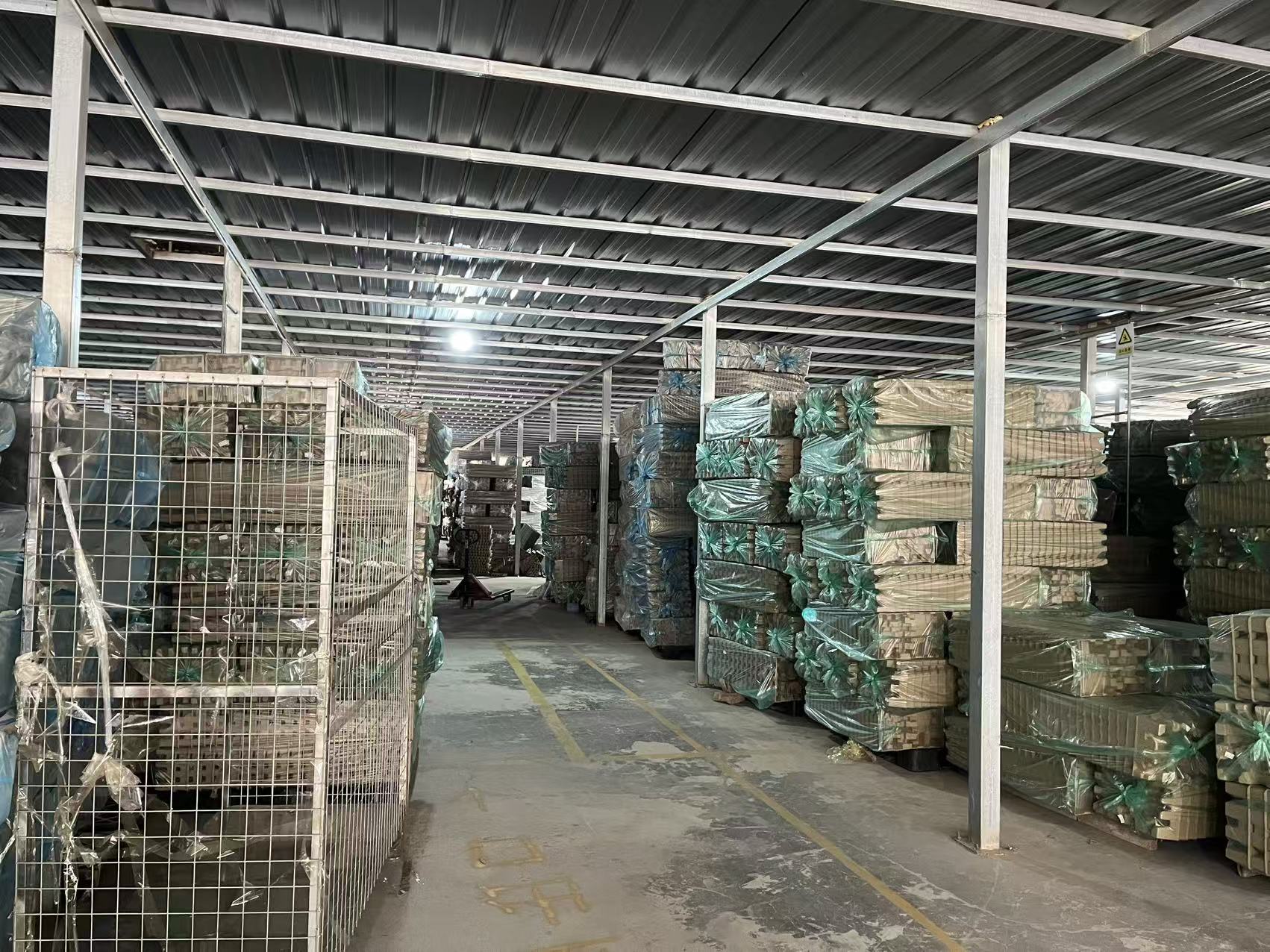
Supply capability behind the terms. Tonghe operates a 23,000 m² factory with 160 employees, 12 R&D engineers, monthly capacity of up to 1,000 tons and annual output of 12,000 tons. Approximately 50% of production is exported to the EU, USA, Australia, Saudi Arabia, Malaysia and Brazil, so export packing and documentation are part of the standard workflow rather than an exception.
Material and end-of-life claims to record. Raw materials are sugarcane, bamboo and wood pulp with no harmful chemical additives, and Tonghe states that the material reaches 100% complete biodegradation within 28 days in a natural composting environment. Recording this at the quotation stage makes it easier to reuse the same wording in the buyer's own sustainability documentation.
Frequently Asked Questions
Are molded pulp trays suitable for food contact and medical device packaging?
Yes, provided the correct grade is specified. Food Grade Molded Pulp Trays are rated for −20 °C to +120 °C and can be treated for water and oil resistance. Medical Device Pulp Trays are produced from virgin wood pulp free of fluorescent agents in a clean workshop, support EO sterilization, and are supplied with a material inspection report.
Can molded pulp trays be produced for irregular or fragile product shapes?
Custom Molded Pulp Trays are developed against the product itself. Multi-specification, complex and irregular integrated structures can be produced as required, and cavities can be positioned to fit probes, handles, catheters, bottles and electronic components. The molded structure provides shock absorption and vibration damping in place of loose filler or foam.
What payment terms and shipping methods do you accept?
Tonghe accepts T/T and Alibaba Trade Assurance, and can ship by sea, air or express (DHL / FedEx / UPS). Buyers should provide their destination port or address so that freight cost can be calculated accurately.
Can buyers test samples before placing a production order?
Yes. Free samples are available for comparison and testing so that buyers can physically assess structure, thickness and moisture behavior before mass production. Sample evaluation is the recommended stage at which to confirm cavity fit, strength and surface treatment.
How do packaging buyers work with a Chinese molded pulp manufacturer?
The practical sequence is: define the scenario and protection requirement, agree fiber grade, thickness and surface treatment, approve a sample, then confirm payment terms and shipping mode with the destination port or address. Buyers who want to verify production directly can request a sample, a quotation, or arrange a factory visit before committing to tooling.
Conclusion: Specify the Scenario First, Then the Ordering Terms
Molded pulp works best when it is specified as a protection system rather than chosen as a material. The scenario decides the fiber, thickness, density, strength and surface treatment; the ordering terms decide what that specification actually costs at the buyer's door. Buyers who settle both in the same conversation avoid the two most common failures in molded pulp projects: a tray that does not protect, and a landed cost that does not match the quotation.
For food, cosmetics, electronics, medical devices and general export programs, the specification range is broad enough to cover most packaging and printing scenarios: 0.8–5.0 mm thickness, wet pressure 0.15–0.25 g/cm³, dry pressure 0.28–0.45 g/cm³, edge crush strength 3–8 kN/m, compressive strength 2–8 MPa, and moisture content ≤8–12%.
Request a Sample, Quotation or Catalog
Share the product drawing or physical sample, the destination port or address, and the intended scenario. Tonghe will respond with a configuration proposal, a sample for testing, and a quotation covering payment and shipping terms.
Email: thpulpmolding@163.com | Tel / WhatsApp: +86 132-3838-9288