
Molded Pulp Packaging: Navigating FDA and EU Food Contact Rules
Food contact compliance for molded pulp is a documentation problem before it is a material problem. A tray can be made from clean virgin fiber, formed on a well-run line, and still fail a buyer's compliance review simply because nobody can produce the paper trail showing what went into it and how it was handled.
This guide covers the two regulatory systems that most often decide whether a molded pulp tray can be sold into a food contact application - the US FDA framework and the EU food contact rules - and explains what buyers should request, how to read what they receive, and how to keep those checks alive across repeat orders instead of treating them as a one-time purchase gate.
No numeric limits are reproduced here. Migration limits depend on the specific food, contact condition, temperature and duration. The authoritative source is always the current regulation plus the supplier's own tested documentation, so the practical skill for a buyer is knowing which documents to ask for, and how to tell a real one from a generic one.
Problem Definition: Natural Fiber Is Not Automatically Food Contact Compliant
Three variables decide whether a molded pulp tray is suitable for food contact: the fiber, the chemistry and the process.
Fiber source
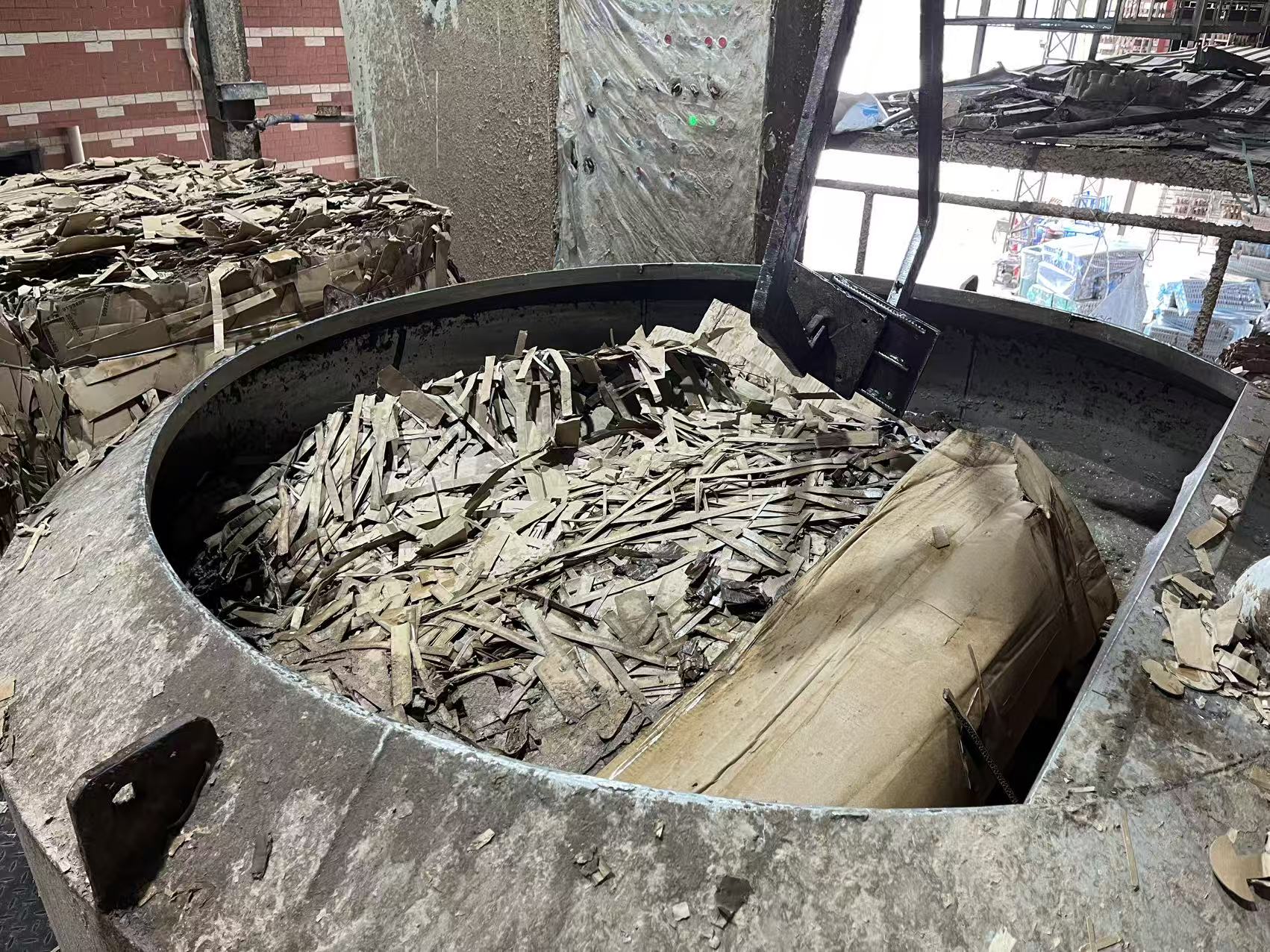
Virgin sugarcane (bagasse) pulp, bamboo pulp and wood pulp are the cleanest starting points for food contact grades because the input stream is controlled from the mill. Mixed recycled waste paper costs less and is widely used in dry, non-food applications such as industrial edge protection, but it can carry printing inks, adhesives and mineral oil residues from its previous life. In a finished natural-color tray, the two can look almost identical. Fiber sourcing therefore has to be confirmed in writing, not judged by appearance.
Chemistry
Molded pulp is not only fiber. Retention aids, sizing agents, mold release agents, barrier or water-based coatings, dyes and print inks all sit on, in or next to the finished tray. Each of them is a potential migration pathway into food, and each carries its own food contact status. A decorative finish that looks premium on a shelf can be exactly the element that blocks a food contact approval if it was specified without documentation.
Process and handling
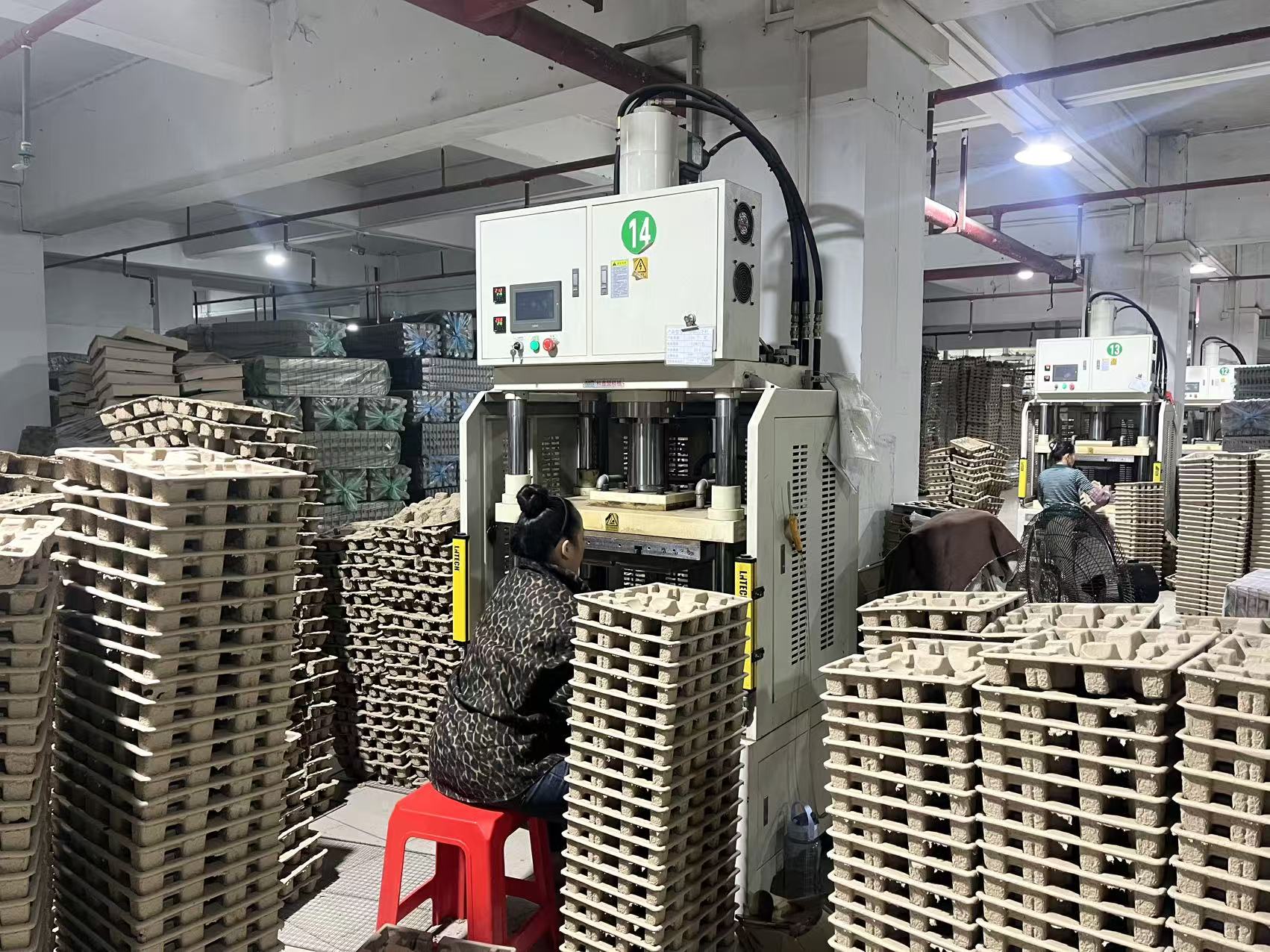
Forming, drying, hot pressing, edge trimming, sorting and packing each create points where a food contact grade can be contaminated by dust, lubricants, or shared handling with non-food material in the same hall. A clean material specification can be undermined by a shared production area when hygiene controls are not documented and auditable.
Direct versus indirect contact
Fresh produce trays, egg trays, disposable food trays and drink carriers touch food directly. Wine gift boxes, cosmetic trays and electronics trays normally do not, but they still sit in supply chains where the brand owner carries the compliance question, and many retailers now apply food-adjacent requirements to primary and secondary packaging alike. The contact scenario has to be defined before the documentation request is written, because it determines which evidence is actually relevant.
The practical conclusion is uncomfortable but useful: natural fiber alone is not evidence. Documents are.
Industry Background: Tighter Rules Meeting a Growing Market
Compliance pressure is arriving at the same time as a volume shift toward fiber. Grand View Research values the global molded pulp packaging market at USD 6.2 billion in 2025 and projects USD 10.2 billion by 2033. Asia Pacific accounted for a 41.0% revenue share in 2025, with China holding the largest share, and the tray segment alone represented over 41.0% of revenue in the same year.
Growth is not evenly distributed. Mordor Intelligence projects molded pulp for healthcare and medical devices to grow at an 8.6% CAGR, driven by sterilization standards and plastic bans in hospitals - segments where documentation expectations are among the highest in the market.
On the regulatory side, the European Packaging and Packaging Waste Regulation (EU) 2025/40 entered into force on 11 February 2025 and requires all packaging to be recyclable by 1 January 2030. That single rule is already reshaping material choices across EU-facing supply chains.
One clarification prevents a great deal of confusion: recyclability rules and food contact rules are separate systems. (EU) 2025/40 governs what happens to packaging after use. Food contact law governs what happens between packaging and food - migration, odor and taste. A tray can be fully recyclable and still be unsuitable for direct food contact, and it can be food contact compliant while failing a recyclability requirement. Buyers need both answers, and they come from two different sets of documents.
The market consequence is straightforward. As plastic substitution pushes volume into molded fiber, more suppliers enter with forming capacity but without the documentation depth that food, beverage and medical customers require. Supplier selection therefore shifts from who can mold a tray to who can prove what the tray is, and keep proving it.
The Food Contact Evidence Stack: What to Request Before Sourcing
A serious molded pulp supplier should be able to assemble the following set without a long internal escalation. If any item triggers hesitation, that is procurement information in itself.
- A written food contact statement issued for the exact grade. In EU supply chains this is normally a Declaration of Compliance tied to the European framework for food contact materials, naming the material, the intended contact conditions and the restrictions that apply. In the US market the equivalent question is whether the relevant food contact substance is covered by a Food Contact Notification, a prior-sanctioned use, or is generally recognized as safe. A statement that names the company but not the material is the most common gap buyers encounter.
- Migration and sensory test reports from an accredited laboratory. The report should identify the sample, the material, the food simulant used, the test conditions and the test date. A report that does not identify the sample cannot be tied to the tray you are buying, and sensory testing matters as much as chemical testing - odor and taste transfer is a frequent and expensive failure mode in food packaging.
- A raw material declaration. Confirm whether the grade uses virgin sugarcane, bamboo or wood pulp, or a recycled mix, and identify the fiber supplier. Where chain-of-custody certification is claimed, the certificate should cover the actual fiber lot, not only the trading entity.
- Additive, coating and ink declarations. This is where PFAS-free statements, heavy metal screening and RoHS-style screening sit. Printing inks and barrier coatings need their own declarations whenever they are used on or near a food contact item.
- GMP and hygiene documentation for the food contact line. Segregation from non-food production, dust control, lubricant selection and packing area controls are the practical content of a food contact management system.
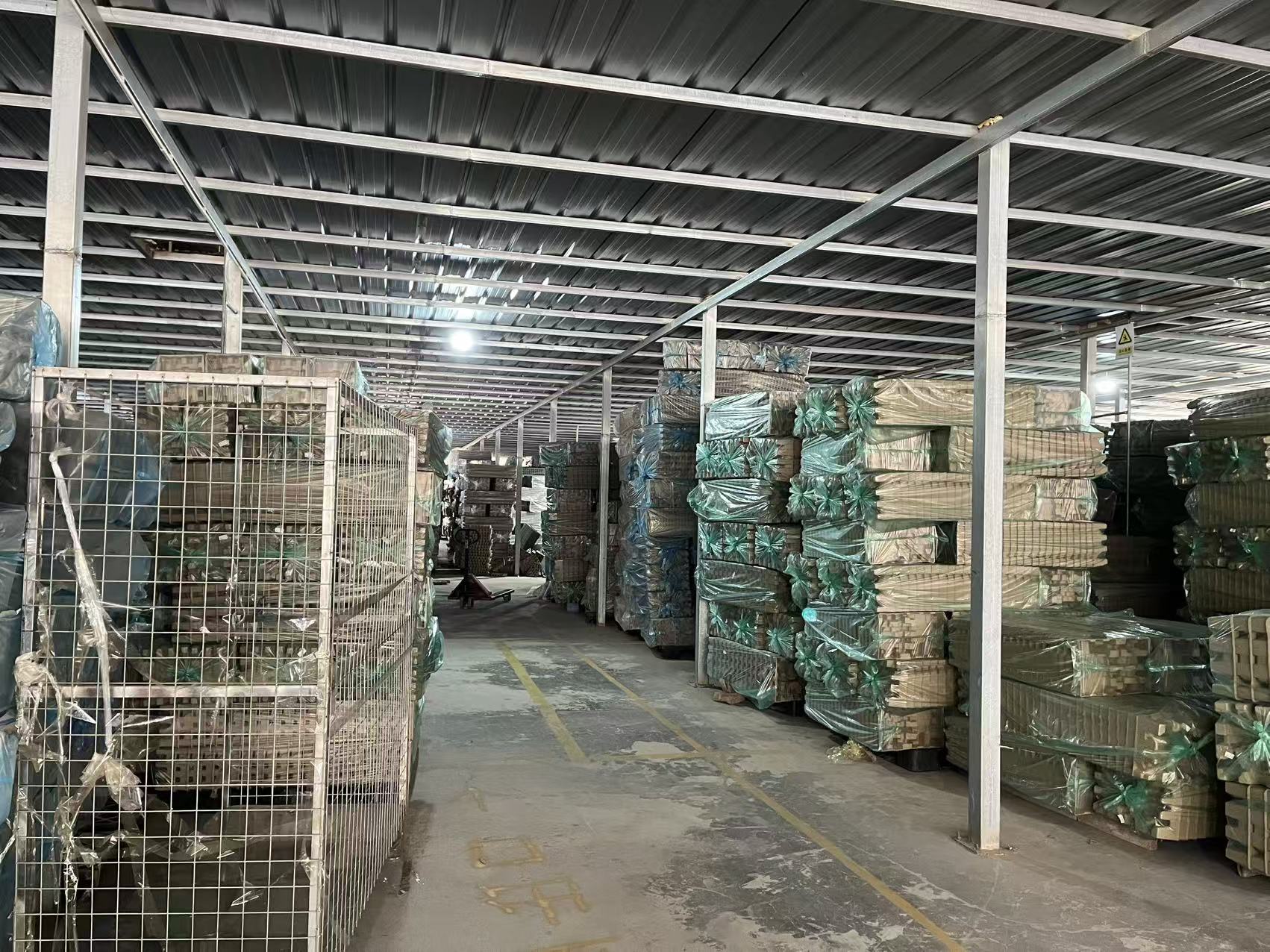
- Batch traceability. The supplier should be able to link a shipped carton back to the fiber lot and production date. Traceability is what keeps a recall narrow instead of total, and it is the first thing a serious auditor asks for.
- A change control commitment. Written notice if fiber, additives, coatings, tooling or process change - because a material change invalidates the test evidence that supported previous orders.
How Tonghe Paper Co., LTD Fits Into a Food Contact Project
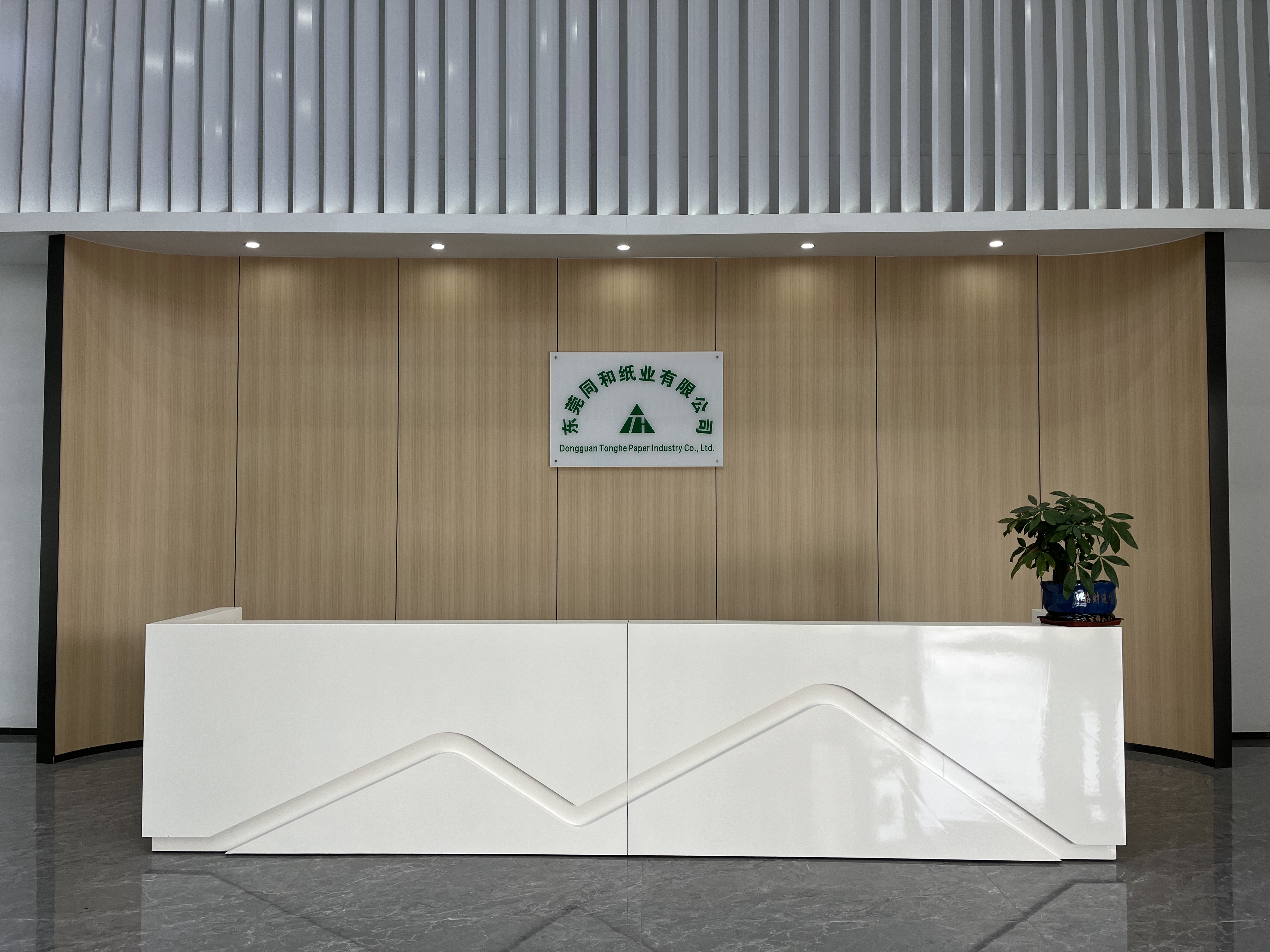
Tonghe Paper Co., LTD is a pulp molding manufacturer based in Dongguan, China, producing molded fiber and molded pulp trays from sugarcane, bamboo and wood pulp for electronics, appliances, food and fresh produce, medical devices, cosmetics and gift packaging.
For buyers building a compliance file, the relevant operating facts are these: the factory covers 23,000 m2 with 160 employees and a 12-engineer in-house mold development team; monthly capacity reaches up to 1,000 tons; annual output is 12,000 tons; roughly 50% of production is exported, with main markets including the EU, USA, Australia, Saudi Arabia, Malaysia and Brazil. Production runs on automated forming and hot-pressing equipment, and the company develops custom molds in-house rather than outsourcing tooling - which matters for compliance, because tooling changes are one of the triggers that require documentation to be re-verified.
Within the food-relevant range, food grade molded pulp trays are specified for use from -20C to +120C, covering chilled and frozen distribution as well as hot-fill catering use. The company states that its products comply with SGS RoHS and PFAS-free requirements, and company-published information also lists ISO 9001, ISO 14001 and FSC certification. Custom coating, embossing and printing are offered for branding - and it is worth stating plainly that any decorative or barrier finish used on a food contact item should be covered by its own declaration before it is specified into the design, no matter how good it looks on a mock-up.
Tonghe also supports free samples for comparison and testing, which is the stage where most compliance risk is either confirmed or removed.
Step-by-Step Breakdown: Verifying a Molded Pulp Supplier Before You Order
- Define the contact scenario first. Direct or indirect contact, dry or moist or fatty or acidic food, temperature range, and how long the food sits in the tray. This definition determines which documents are relevant and prevents a supplier from answering with a generic certificate that covers a different use case.
- Request documentation for the grade, not the company. Ask for the food contact statement and test reports that name the specific tray model and material composition. Company-level certificates are useful for supplier qualification but do not answer a food contact question.
- Cross-check the test reports against the sample. The sample identification in the report should match the tray you intend to buy. If production will use a different mold, coating or print, the evidence needs to be updated.
- Confirm the fiber route in writing. Ask explicitly whether the grade is virgin sugarcane, bamboo or wood pulp, or a recycled mix, and ask for the fiber supplier declaration. This is the single question that separates food-safe grades from look-alike commodity trays.
- Walk the food contact line, on site or by video audit. Confirm segregation from non-food production, dust control, lubricant choice and packing area conditions. Documentation describes intent; a walk-through shows practice.
- Verify traceability on a real carton. Ask the supplier to demonstrate that a shipped carton can be traced back to a fiber lot and a production date. This is a five-minute request that reveals a great deal about a factory's systems.
- Validate with a sample under realistic conditions. Test fit, cushioning, moisture behavior and finish with your own product, and run sensory checks where the tray will sit near food. Sampling converts claims into your own data.
- Agree a re-verification cadence. Set a written rule for when documentation is refreshed - after a fiber change, a coating change, a tooling change, or a defined review interval. This is what makes compliance a long-term capability rather than a one-off purchase gate.
Use Cases: Where Documentation Decides the Project
Fresh produce and cold chain trays
Produce trays contact food directly and often sit in high-moisture, chilled conditions. Buyers in this category should prioritize fiber declarations and sensory testing, together with temperature suitability - the food grade molded pulp range from Tonghe is specified from -20C to +120C, which covers chilled and frozen distribution.
Disposable food service and catering trays
Hot-fill and takeaway applications combine direct contact with higher temperatures. Here the question of coatings is unavoidable, and every coating or print used near the contact surface should have its own declaration before it reaches the tooling stage.
Wine, spirits and gift packaging
These trays usually make indirect contact, but the brand still owns the compliance narrative and retailers increasingly ask about migration and PFAS status even for secondary packaging. Documentation here protects brand value as much as product safety.
Medical device trays
Medical packaging adds its own layer of requirements. Mordor Intelligence links the projected 8.6% CAGR in healthcare molded pulp to sterilization standards and hospital plastic bans, which means buyers in this segment should expect to extend the standard food-adjacent document set with product-specific validation.
Comparison Tables: Documentation and Material Reality
The table below summarizes which framework buyers should reference and which documents to request as a minimum, by destination market. It is a planning tool, not a substitute for the current regulation text or for the supplier's tested evidence.
| Market | Framework buyers reference | Priority documents to request |
|---|---|---|
| United States | FDA food contact framework for food contact substances (Food Contact Notification, prior-sanctioned use, or GRAS routes) | Supplier food contact statement naming the exact grade; identity of the clearance holder; migration and sensory reports from an accredited laboratory |
| European Union | EU food contact materials framework and good manufacturing practice requirements, plus PPWR (EU) 2025/40 for recyclability | Declaration of Compliance; migration and sensory test reports; PFAS-free declaration; recyclability statement |
| Other export markets | National food contact rules plus the importer's own specification | Core document set plus any country-specific declaration requested by the importer or retail customer |
Material-level comparison also matters, because compliance decisions are usually made alongside cost and protection decisions. The following comparison reflects company data comparing molded pulp packaging with plastic packaging.
| Criterion | Molded pulp packaging | Plastic packaging |
|---|---|---|
| Regulatory positioning for export | Positioned as the compliant choice for cross-border shipments into the EU, UK and North America, reducing exposure to plastic taxes and packaging rules | Higher exposure to plastic taxes and packaging regulation in EU export markets |
| Protection performance | Strong shock absorption and impact resistance; cushioning performance reported 25-35% better than ordinary plastic packaging | Ordinary plastic trays offer lower cushioning in comparable drop scenarios |
| Space efficiency in storage and transport | Nested stacking reported to save 40-60% of space | Lower stack efficiency, higher volumetric freight cost |
| Material origin and disposal | Renewable plant fiber; degradable, recyclable and compostable; simple waste disposal | Fossil-based raw material; more complex end-of-life handling |
| Cost profile | Slightly higher unit cost than ordinary plastic packaging, but lower overall compliance cost for EU export because plastic-tax surcharges do not apply | Lower unit cost, higher compliance cost in regulated markets |
| Best fit | Consumer electronics, lighting, gift packaging, food and wine export shipments | Applications without regulatory pressure and without fragile contents |
For reference when writing a specification, the standard molded pulp tray parameter set from Tonghe Paper Co., LTD is: materials of sugarcane pulp, bamboo pulp or wood pulp; wet pressure 0.15-0.25 g/cm3; dry pressure 0.28-0.45 g/cm3; thickness 0.8-5.0 mm; moisture content at or below 8-12%; edge crush strength 3-8 kN/m; compressive strength 2-8 MPa; standard service temperature -20C to +80C, with food grade trays usable from -20C to +120C. Colors include natural, white and yellow, with custom colors on request.
Frequently Asked Questions
Which documents should a buyer request before ordering food contact molded pulp trays?
Request a written food contact statement issued for the exact tray grade and the target market; migration and sensory test reports from an accredited laboratory that identify the sample; a raw material declaration confirming virgin sugarcane, bamboo or wood pulp rather than a mixed recycled stream; additive and coating declarations including a PFAS-free statement; GMP documentation for the food contact production line; and batch traceability records. A company-level certificate that does not name the material is not a substitute, because compliance attaches to a specific material and process combination.
Can a supplier develop custom molded pulp trays that still support food contact requirements?
Yes, provided the custom work is documented from the start. Tonghe Paper Co., LTD develops custom molded pulp trays in-house from drawings or physical samples, supported by a 12-engineer mold team and automated forming and hot-pressing equipment. Custom coating, embossing and printing are available for branding, but any finish that sits on or near the food contact surface should be covered by its own declaration before it enters the design. Customizing the shape does not by itself change the fiber or the forming process, so the existing material documentation usually remains the base of the compliance file.
What drives the cost of food-grade molded pulp trays?
The main drivers are fiber grade (virgin plant fiber costs more than a mixed recycled stream), tooling, thickness and strength class, and any coating or printing. Commercial terms also shape the landed cost: Tonghe Paper Co., LTD works with a minimum order quantity of 1,000 pcs, delivery terms FOB, CIF, CFR or EXW, letter of credit payment terms, and also accepts T/T and Alibaba Trade Assurance. Scrap and damage rates matter as much as unit price in the total cost calculation.
Can we test samples before placing a production order?
Yes. Tonghe Paper Co., LTD supports customers taking free samples for comparison and testing, and pre-shipment inspection (PSI) is available as the acceptance criterion for production orders. Sampling is the stage where a buyer validates fit, cushioning and finish against their own product rather than against a catalog image, and where remaining documentation questions can be closed before tooling is committed.
How are delivery and shipping handled for long-term supply, and how is compliance maintained over time?
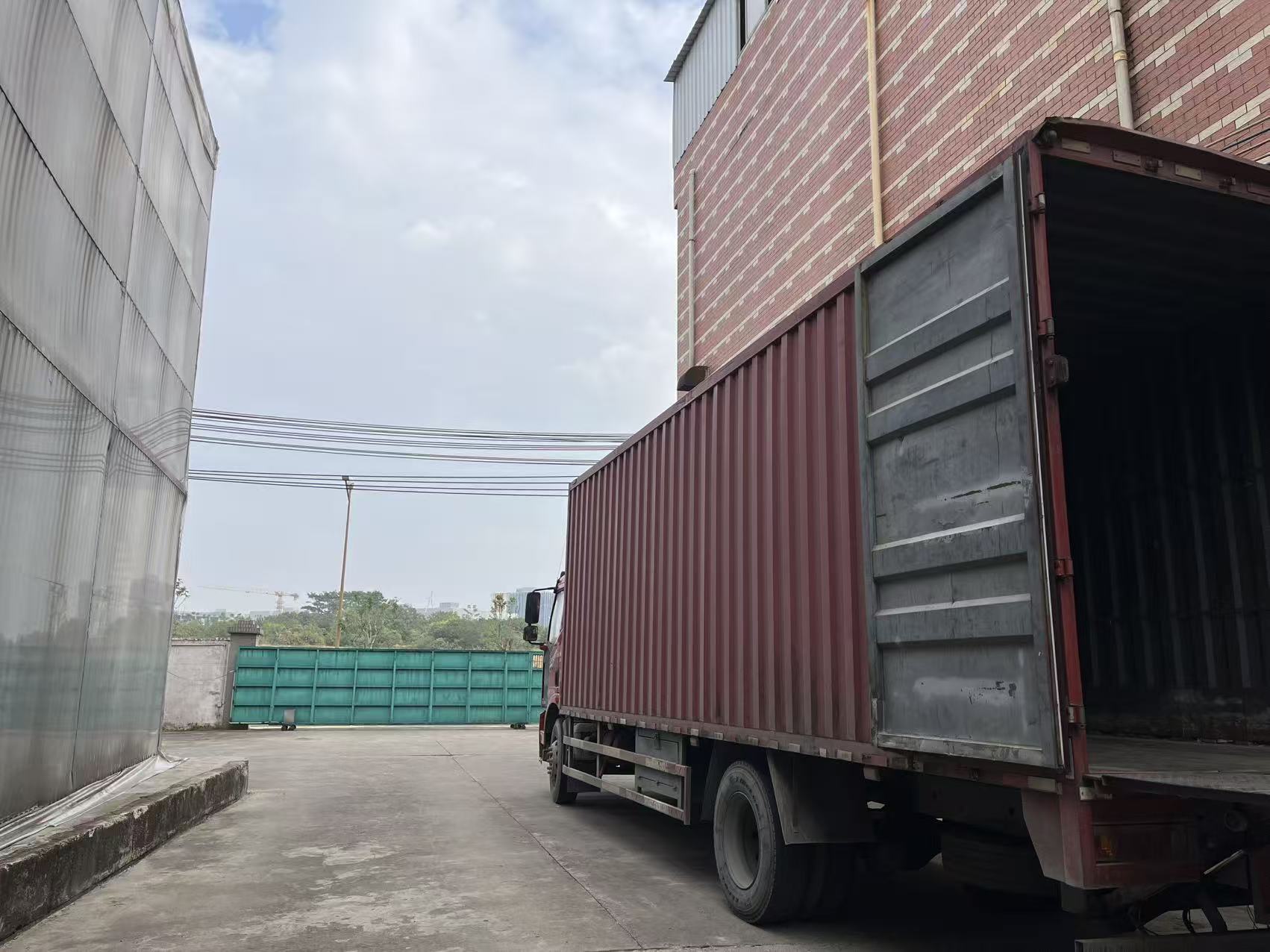
Delivery terms are FOB, CIF, CFR or EXW, and shipments can move by sea, air or express courier such as DHL, FedEx or UPS; buyers provide the destination port or address so freight can be calculated. For repeat supply, the compliance question changes from whether a certificate exists to whether the supplier will notify you when something changes. That requires a written change control commitment covering fiber, additives, coatings, tooling and process, plus batch traceability on every shipment so evidence can be reconnected to a specific production run. Buyers can request the current catalog, a quotation or a full documentation pack, or download the company brochure here.
Conclusion: Compliance Is a Relationship Capability
The FDA and EU food contact systems ask the same underlying question in different ways: can you show what the packaging is made of, how it was made, and what it will do when it meets food? For molded pulp, the answer never rests on the fact that the material is plant-based. It rests on fiber declarations, additive and coating statements, accredited test reports, hygiene controls and batch traceability - and on a supplier willing to keep that file current as materials, tooling and regulations change.
That is why compliance belongs in the long-term supplier decision rather than the one-off purchase decision. A supplier who can issue a full documentation pack today, and commits in writing to tell you when anything in the material or process changes, removes an entire category of risk from your next order. A supplier who can only offer a generic certificate leaves that risk with you.
Next Step
The fastest way to assess a molded pulp supplier for a food contact project is to ask for two things at the same time: documentation for the exact grade, and a sample you can test yourself.
Tonghe Paper Co., LTD
Website: www.tonghepulp.com
Email: thpulpmolding@163.com
Tel / WhatsApp: +86 132-3838-9288
Address: No.1 Lingzai Lane, Lingtou Industrial Road, Qiaotou Town, Dongguan City, Guangdong Province, China