
Molded Pulp Sourcing: Payment Terms vs. Acceptance Criteria
Molded pulp orders rarely fail because the unit price was wrong. They fail because two commercial blocks are negotiated in the wrong order: the block that moves money and goods, and the block that defines what acceptable goods actually are. This guide stages that head-to-head directly, then gives buyers a sequence they can apply to custom molded pulp trays, standard pulp packaging trays, and repeat replenishment orders.
Direct answer: Lock purchasing terms and acceptance criteria first when the tray is new, custom, or regulated. Lock payment terms and shipping methods first when the specification is already proven and the order is a repeat. The deciding variable is not order value or MOQ — it is whether a measurable acceptance standard already exists at the moment of negotiation.
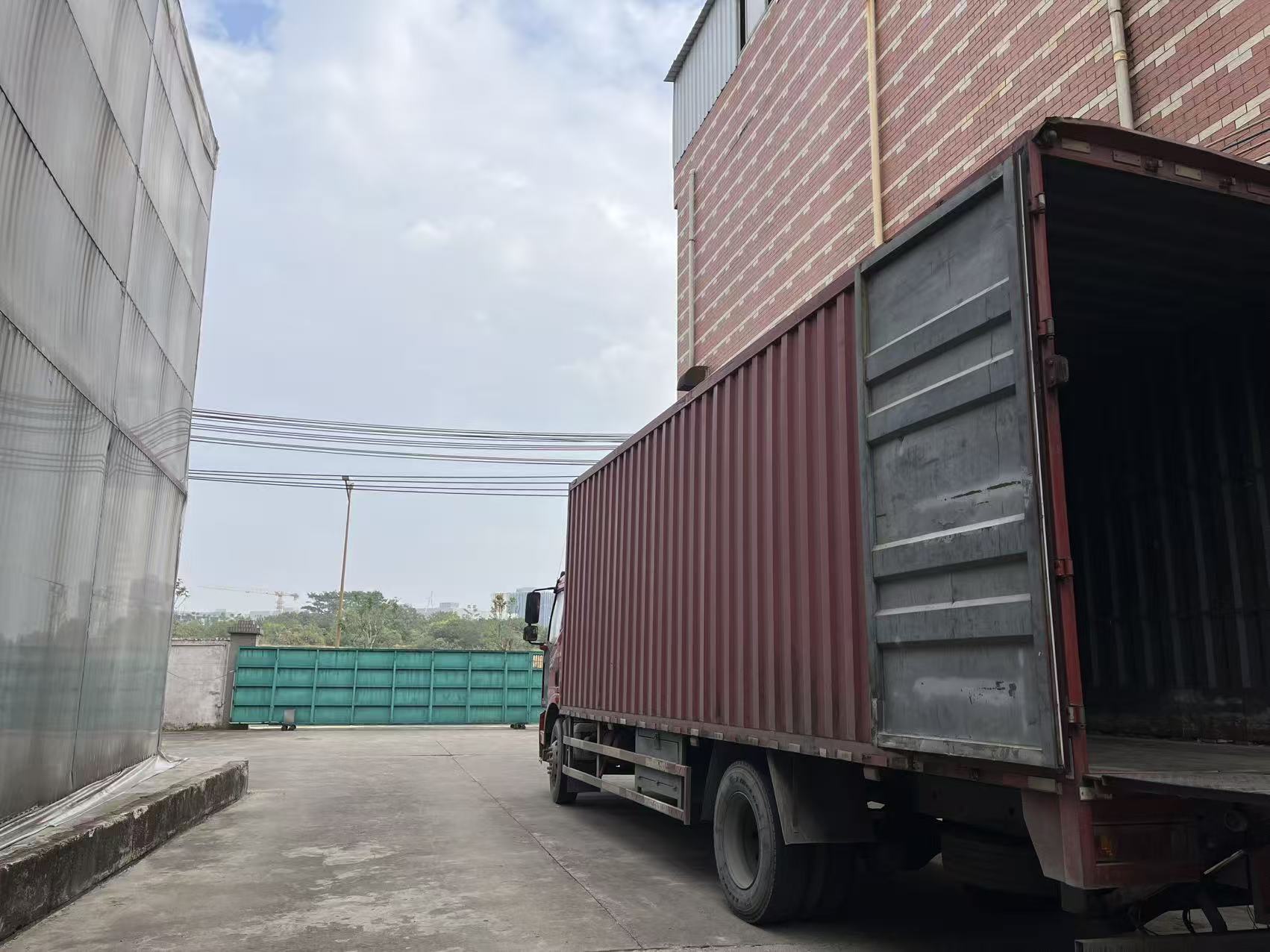
Shipping Area — where shipping method, delivery term and dispatch scheduling converge on a molded pulp order.
Why Payment Terms and Acceptance Criteria Get Negotiated in the Wrong Order
Most first-time molded pulp buyers start with price and payment, because those are the numbers that can be compared across quotations in a single spreadsheet cell. Acceptance criteria are harder to compare, because suppliers describe them in different language: one writes pre-shipment inspection, another writes PSI, another lists tolerances without naming the stage at which those tolerances are checked.
That asymmetry produces a predictable pattern. Payment terms get fixed early because they appear on the quotation. Acceptance criteria get fixed late — sometimes after the tooling has been cut and the first trays have been formed — at which point the buyer's negotiating position is at its weakest.
There is a second, organisational reason. Acceptance criteria touch engineering and quality; payment terms touch finance. These sit with different people in most companies, and the purchase order is usually signed by whoever holds the budget. The negotiation sequence then reflects internal workflow rather than commercial exposure.
Industry Background: Why the Sequencing Question Is Now Practical
Three developments in the molded pulp category have turned this from a contract-drafting detail into a live sourcing decision.
Scale. Grand View Research values the global molded pulp packaging market at USD 6.2 billion in 2025 and projects USD 10.2 billion by 2033. Published estimates differ by definition — a separate estimate places the 2025 figure at USD 4.5 billion — and that gap largely reflects what each study counts as molded pulp. The direction of growth is consistent across sources.
Product mix. Trays accounted for more than 41.0% of global revenue share in 2025, and Asia Pacific held a 41.0% revenue share in the same year, with China the largest single market. Buyers are therefore sourcing a high-volume, tray-heavy category from a concentrated supply base — the exact configuration in which acceptance criteria carry the most weight, because a small specification gap multiplies across a large run.
Regulation. The EU Packaging and Packaging Waste Regulation (EU) 2025/40 entered into force on 11 February 2025 and requires all packaging to be recyclable by 1 January 2030. For a molded pulp order, a recyclability obligation is a specification item, not a payment item. It has to be written where acceptance is defined, or it has no enforcement mechanism at all.
The same logic shows up in the medical segment, where molded pulp for healthcare and medical devices is projected to grow at an 8.6% CAGR, driven by ISO sterilization standards and hospital plastic bans. Regulated demand raises the cost of an ambiguous acceptance clause far more than it raises the cost of a payment clause, because a rejected or non-compliant tray cannot be rescued by a better payment schedule.
The Two Commercial Blocks, Defined
Tonghe Paper Co., LTD is a molded pulp manufacturer based in Dongguan, China, producing molded fiber trays and protective molded pulp packaging from recycled paper, sugarcane pulp, bamboo pulp and wood pulp for export markets that include the EU, USA, Australia, Saudi Arabia, Malaysia and Brazil. Its commercial documentation separates the two blocks cleanly, which makes the head-to-head easier to examine with real terms rather than abstractions.
Block A — Payment Terms and Shipping Methods
This block governs how money leaves the buyer's account and how the goods physically move.
- Accepted payment methods: T/T and Alibaba Trade Assurance.
- Shipping methods: sea freight, air freight, and express courier via DHL, FedEx or UPS.
- Freight basis: freight cost is calculated against the buyer's destination port or delivery address.
- Documentary instrument: L/C appears in the purchasing-terms record, which means the payment instrument is matched to the order structure rather than applied globally to every shipment.
What Block A fixes: the sequence and timing of payment, the documentary basis for release of funds, the transit mode, and the freight reference point. What Block A does not fix: what the buyer is entitled to reject.

Commercial negotiation of payment terms and delivery terms is only half of a molded pulp order — acceptance criteria are decided on the technical side.
Block B — Purchasing Terms and Acceptance Criteria
This block governs the definition of acceptable goods and the point at which risk transfers.
- MOQ: 1000 pcs.
- Delivery terms: FOB, CIF, CFR, EXW.
- Acceptance criteria: PSI — pre-shipment inspection.
- Payment term listed with purchasing terms: L/C.
Acceptance criteria only work if the specification underneath them is measurable. Tonghe Paper's published product data gives buyers the anchors needed to write one: thickness 0.8–5.0 mm with customization available, moisture content ≤8–12%, edge crush strength 3–8 kN/m, compressive strength 2–8 MPa, wet pressure 0.15–0.25 g/cm³, dry pressure 0.28–0.45 g/cm³, and an applicable temperature range of −20°C to +80°C for standard grades, with food-grade material rated to −20°C to +120°C. Material options are sugarcane pulp, bamboo pulp and wood pulp; color options are natural, white, yellow, or customized.
These parameters belong in the acceptance section of the order, not in the price negotiation. A tray quoted at a competitive unit price but accepted against an unwritten moisture expectation is a more expensive tray than one quoted slightly higher against a stated ≤8–12% moisture limit.
Where the Two Blocks Overlap
Three variables connect the blocks and are the source of most confusion:
- Delivery term. EXW, FOB, CIF and CFR decide who pays freight and where risk passes — a purchasing term that behaves like a payment term.
- Shipping method. Sea, air or express changes transit duration and handling exposure, which changes the damage risk that acceptance criteria are supposed to control.
- Inspection timing. PSI takes place before shipment. If payment release is documentary, the inspection record and the shipping documents become the same decision point.
Head-to-Head: Risk, Cash Flow, Quality Assurance and Dispute Resolution
| Decision dimension | Lock payment terms & shipping methods first | Lock purchasing terms & acceptance criteria first |
|---|---|---|
| Cash flow | Payment schedule and freight basis are known early; landed cost can be budgeted before the specification is frozen. | Cash releases attach to a defined acceptance event such as PSI; the schedule is built after the standard exists, so freight stays open longer. |
| Quality assurance | Quality rests on the supplier's internal process control until acceptance is written down. | PSI creates a named inspection point, and measurable parameters such as thickness, moisture and edge crush can be checked against stated values. |
| Logistics cost certainty | High — shipping mode and freight basis are quoted against a destination port or delivery address. | Lower at first — the delivery term is chosen for control (EXW, FOB) or simplicity (CIF, CFR) before the mode is fixed. |
| Dispute resolution | Weak — a quality disagreement has no agreed reference point, so the argument becomes a matter of opinion. | Stronger — a failed pre-shipment inspection produces a documented event before payment release and before dispatch. |
| Custom tooling and first-run risk | Exposed — tooling and the first production run proceed without a written acceptance standard. | Protected — the measurable specification is agreed before tooling is committed. |
| Compliance documentation | Not addressed by this block at all. | Can be listed as acceptance items, for example SGS RoHS and PFAS-free declarations. |
| Best fit | Repeat orders of a proven specification, catalog trays, high-frequency replenishment. | First custom orders, regulated applications, new tooling, a newly appointed supplier. |
Risk. Locking payment and shipping first concentrates risk in the specification. The buyer has committed a schedule against goods whose rejection standard is still verbal, and any later disagreement is settled by negotiation rather than by reference to a clause.
Cash flow. Locking payment and shipping first genuinely helps cash planning, because freight is quoted to a named port or address and the payment instrument is known. Locking acceptance criteria first delays that certainty slightly, but it prevents a worse outcome: funds released against goods that later fail an inspection nobody wrote down.
Quality assurance. PSI is only as strong as the criteria behind it. Where a buyer has specified thickness, moisture content and edge crush strength in numbers, pre-shipment inspection becomes a verification step. Where the buyer has specified only a product name, PSI becomes a formality.
Dispute resolution. Documentary payment and inspection records solve different halves of the same problem. An L/C releases against documents; PSI produces a record before shipment. Together they give a buyer two independent checkpoints. Used alone, either one leaves a gap the other was meant to close.
A Step-by-Step Sequence That Works for Both Order Types
Step 1 — Classify the order before touching either block
Ask one question: does a proven specification exist for this exact tray? If yes, the order is a repeat and payment and shipping terms can be fixed first. If no, the order is a first run, and acceptance criteria must lead.
Step 2 — Write the measurable specification
Convert the requirement into published parameters: thickness within 0.8–5.0 mm, moisture content ≤8–12%, edge crush strength 3–8 kN/m, compressive strength 2–8 MPa, and the correct temperature grade — −20°C to +80°C for standard use, −20°C to +120°C for food-grade applications. Note the fiber type: sugarcane pulp, bamboo pulp or wood pulp.
Step 3 — Convert the specification into acceptance criteria
Attach PSI to the written specification and state what is inspected, at which stage, and against which values. For appearance-driven products such as cosmetic packaging pulp trays, add a physical reference sample, because inspection compares goods to a standard and a photograph is a weak standard.
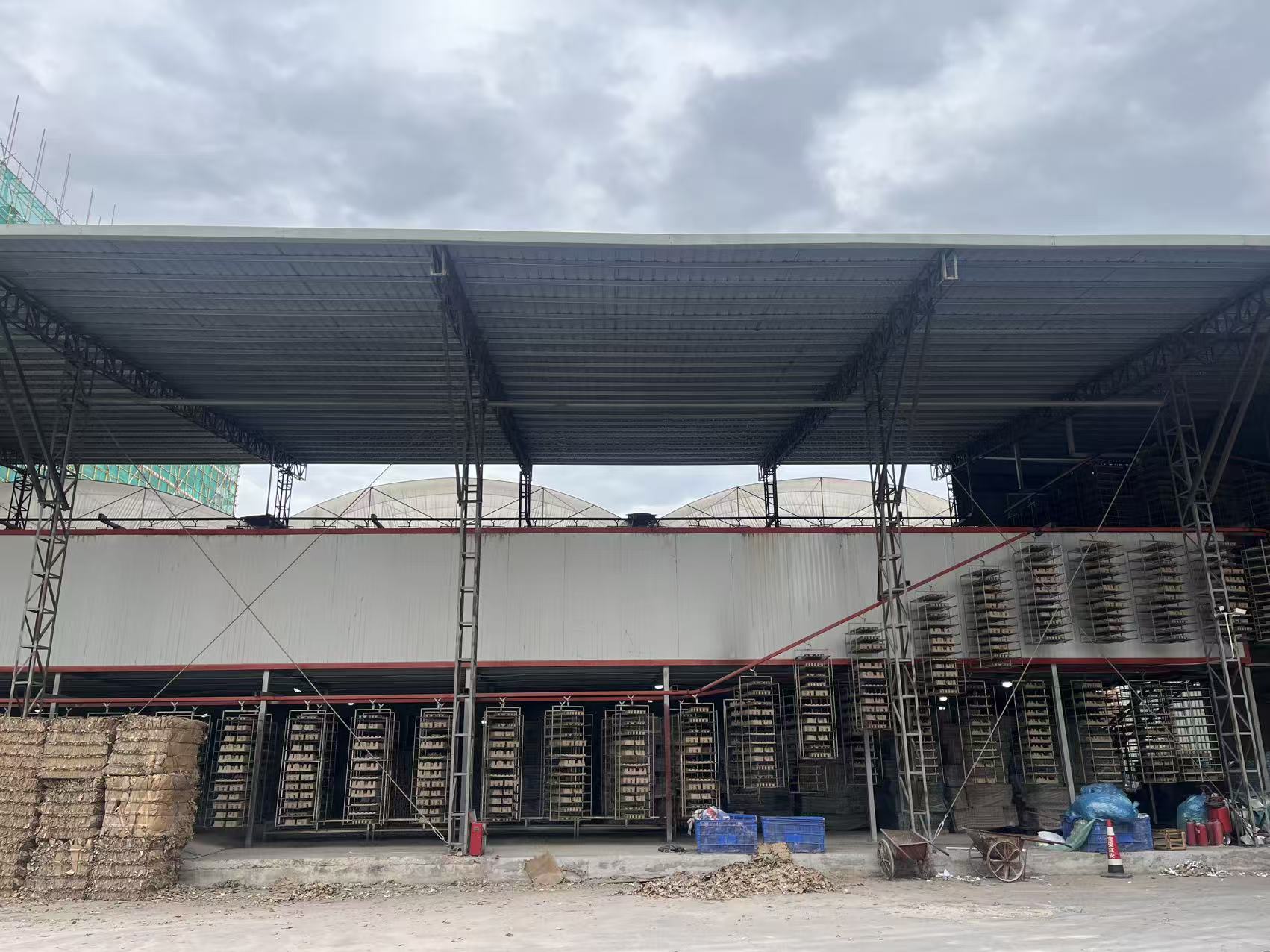
Drying Hanging Cage — the drying stage is where moisture content, one of the most commonly disputed acceptance parameters, is actually set.
Step 4 — Choose the delivery term
EXW, FOB, CIF and CFR are all available. Choose based on who controls freight: CIF and CFR keep freight inside the supplier's quote to the named destination; FOB hands freight to the buyer at the port of shipment; EXW leaves all movement to the buyer. Buyers with their own freight contracts usually prefer FOB or EXW; buyers without one usually prefer CIF or CFR.
Step 5 — Match the payment instrument to the acceptance model
The documented options are T/T, Alibaba Trade Assurance and L/C. Where acceptance depends on a documentary inspection and shipping record, the instrument should be documentary. Where the relationship and specification are already proven, T/T or Alibaba Trade Assurance is the simpler route. The instrument is a function of the order, not a permanent setting.
Step 6 — Fix the shipping method last
Sea, air and express courier each suit a different order profile: sea for volume, air for time-sensitive replenishment, express for samples and small lots. Because freight is calculated against the destination port or delivery address, this step converts the delivery term into an actual number.
Step 7 — Confirm MOQ and quantity structure
MOQ is 1000 pcs. Confirm it before the shipping method is finalised, because the mode decision depends on the volume that MOQ creates. A 1000-piece order of heavy duty molded pulp trays and a 1000-piece order of small cosmetic inserts do not ship the same way.
Where Each Sequence Fits: Order Scenarios
Custom molded pulp trays for electronics. Shockproof pulp trays and molded pulp electronics trays protect precision goods where damage appears after transit, not at inspection. Acceptance criteria must lead: thickness, compressive strength and fit are written first, then PSI, then the shipping method.
Food-grade trays and fresh produce. Food grade molded pulp trays and fresh produce pulp trays carry a temperature requirement that has to be stated — −20°C to +120°C for food-grade material. Compliance documentation such as SGS RoHS and PFAS-free declarations belongs in the acceptance section. For a repeat seasonal order of the same tray, payment and shipping terms can be locked first.
Medical device pulp trays. Medical device pulp trays sit in the segment projected to grow at an 8.6% CAGR on the back of ISO sterilization standards and hospital plastic bans. Regulated applications should always run acceptance criteria first, because a documentation gap discovered after shipment cannot be resolved by renegotiating payment.
Cosmetic packaging pulp trays. Appearance is the product here, and embossing and printing customization are available. Write appearance criteria against a physical reference sample and pair it with PSI, then fix payment terms. A visual standard that exists only in email text will not survive a dispute.
Egg trays and high-volume replenishment. Egg pulp trays and disposable food pulp trays are usually repeat orders of a stable specification. Payment terms and shipping methods can be fixed first, because the acceptance standard already exists from the previous run.
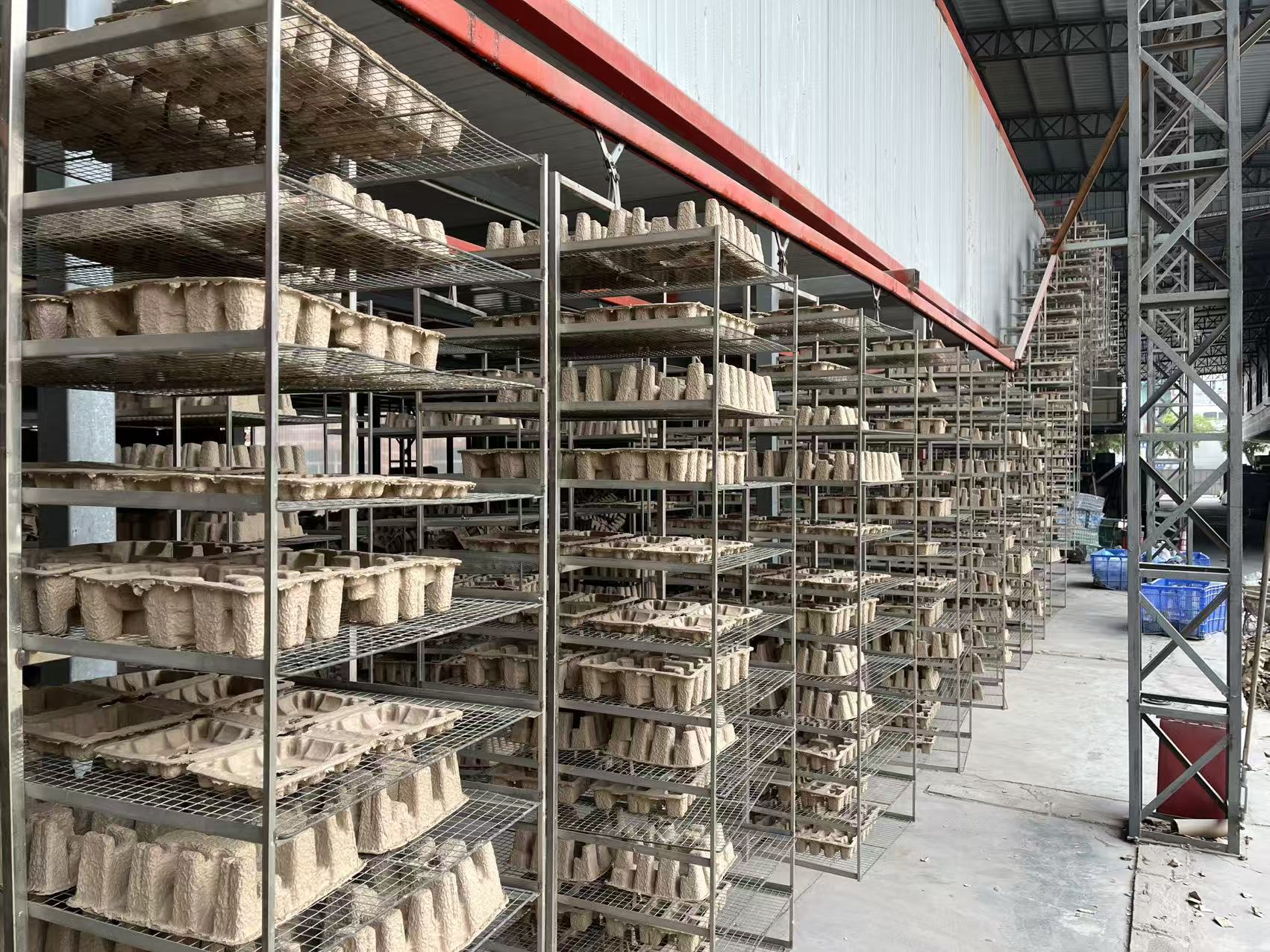
Drying Cage and Air-Drying Area — production consistency here determines whether a pre-shipment inspection passes or fails.
Decision Table: Order Profile and the Block to Lock First
| Order profile | Lock first | Reason |
|---|---|---|
| First custom tray, new tooling | Purchasing terms & acceptance criteria | No measurable standard exists yet; PSI needs something to inspect against. |
| New supplier, existing specification | Purchasing terms & acceptance criteria | The standard exists but the supplier's ability to meet it is unproven. |
| Regulated application (food contact, medical) | Purchasing terms & acceptance criteria | Compliance documentation must be an acceptance item, not an afterthought. |
| Repeat order, proven specification | Payment terms & shipping methods | Quality risk is already reduced to routine inspection of a known standard. |
| High-frequency replenishment | Payment terms & shipping methods | Freight and payment cadence dominate the decision, not specification risk. |
FAQ
Does pre-shipment inspection cover compliance requirements?
PSI is the acceptance criterion listed in the purchasing terms, and it checks goods against an agreed standard before shipment. It does not by itself define which compliance documents are required; those must be written into the purchasing terms as separate line items. Tonghe Paper states that its molded pulp products comply with SGS RoHS and PFAS-free requirements, and the EU Packaging and Packaging Waste Regulation (EU) 2025/40 requires all packaging to be recyclable by 1 January 2030. A buyer exporting into the EU should therefore list recyclability documentation and material declarations as named acceptance items rather than assume a general inspection clause covers them.
What are the minimum order quantity and delivery terms?
MOQ is 1000 pcs. Delivery terms offered are FOB, CIF, CFR and EXW. Custom molded pulp trays are supported by in-house mold development and a 12-engineer R&D team, within a 23,000 m² factory running at a monthly capacity of up to 1,000 tons.
Which delivery term makes landed cost most predictable?
EXW, FOB, CIF and CFR place freight responsibility in different places, so the predictable option depends on whether the buyer already has a freight contract. CIF and CFR keep freight inside the supplier's quotation to the named destination; FOB transfers freight to the buyer at the port of shipment; EXW leaves all movement to the buyer. Freight is calculated against the destination port or delivery address, and the payment instrument interacts with this choice because documentary payment depends on shipping documents.
Can a buyer test trays before fixing payment terms?
Yes. Tonghe Paper supports free samples for comparison and testing. A sample round is the cheapest way to convert a verbal quality expectation into a written acceptance standard, because thickness, fit and moisture behaviour can be checked against a physical reference before PSI criteria are drafted.
What is the correct negotiation order for a first custom order?
Agree the measurable specification, write the acceptance criteria around PSI, select the delivery term, then fix the payment instrument and shipping method. For a repeat order of a proven specification, payment terms and shipping method can be fixed first. Buyers who want to review the full commercial documentation before that conversation can download the Tonghe Paper brochure or request a quotation and sample set.
Conclusion: Sequence, Not Preference
The head-to-head between payment terms and acceptance criteria does not produce a permanent winner. It produces a sequence. Payment terms and shipping methods protect cash and logistics; purchasing terms and acceptance criteria protect the definition of acceptable goods. Whichever block is locked first, the other must follow quickly enough that no tooling is cut, no deposit is released, and no container is booked against an unwritten standard.
The practical rule is short. New specification, regulated product, or new supplier: acceptance criteria first. Proven specification, repeat volume, or routine replenishment: payment and shipping terms first. Every other variable — MOQ of 1000 pcs, the choice between EXW, FOB, CIF and CFR, the choice between T/T, Alibaba Trade Assurance and L/C, and the choice between sea, air and express — is a detail that sits inside one of those two decisions.
Tonghe Paper Co., LTD manufactures molded fiber trays, custom protective pulp packaging and biodegradable pulp trays from recycled paper, sugarcane pulp, bamboo pulp and wood pulp, with ISO 9001, ISO 14001 and FSC certification, a 23,000 m² production base, 160 employees and a 50% export ratio across the EU, USA, Australia, Saudi Arabia, Malaysia and Brazil.
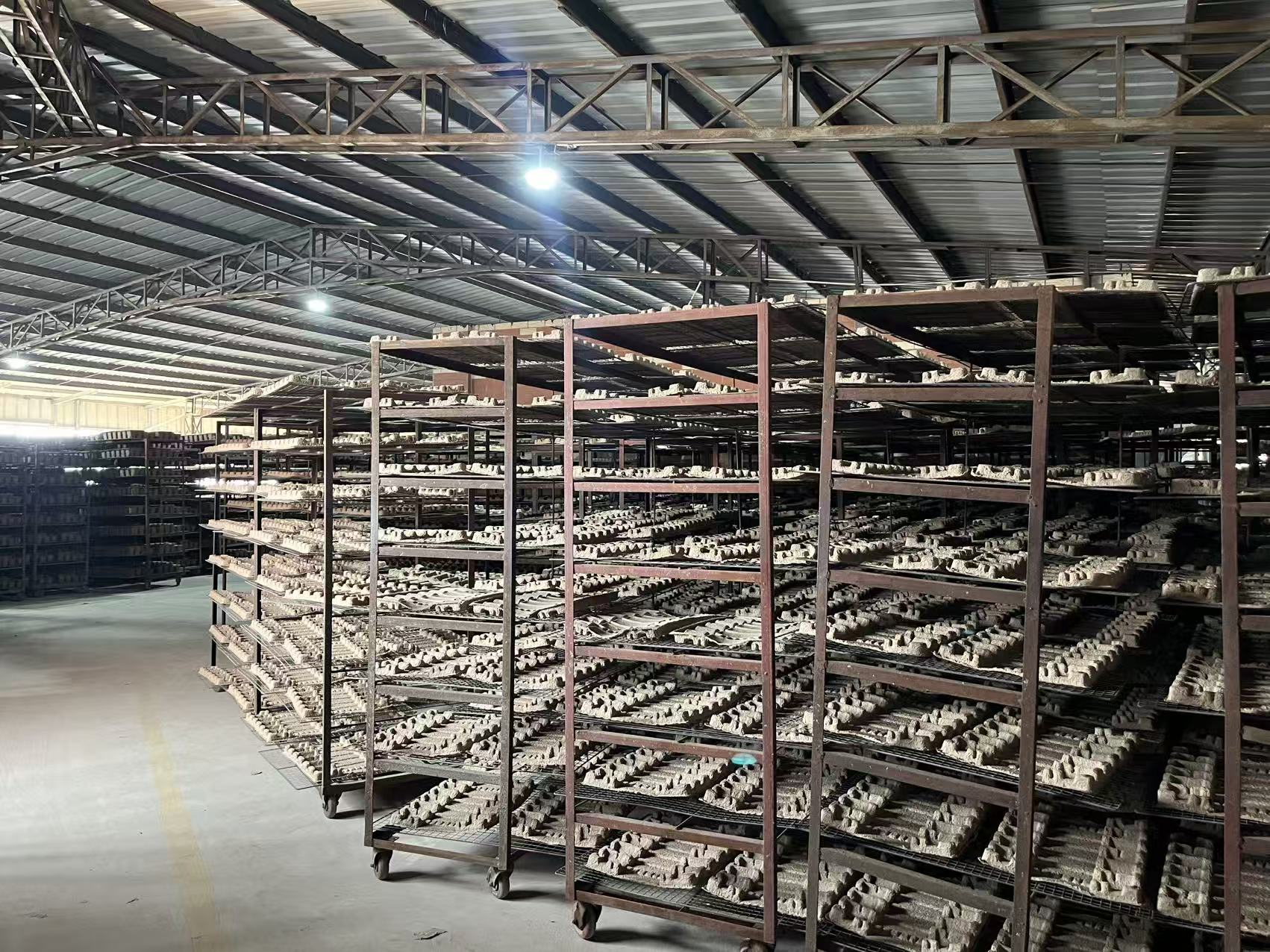
Ventilated Shed Drying and Air-Drying Area — factory visits can be arranged to review production and inspection stages before terms are signed.
Next Step: Fix the Specification Before the Payment Schedule
Request free samples for comparison and testing, ask for a quotation against your delivery term (EXW, FOB, CIF or CFR), or download the full company and product brochure.
Contact: Annie · Email: thpulpmolding@163.com · Tel / WhatsApp: +86 132-3838-9288
Address: No.1 Lingzai Lane, Lingtou Industrial Road, Qiaotou Town, Dongguan City, Guangdong Province, China
Have Questions or Need More Details?
Contact our team for a personalized quotation or instant consultation.
Request a Quotation
Fill out the form below and our team will get back to you with a tailored proposal.
WhatsApp Direct Chat
Prefer to chat in real-time? Message us on WhatsApp for instant assistance & quick answers.
- Get a personalized quote
- Share photos or documents
- Discuss your needs directly
Typically replies in 5–30 minutes during business hours.