Molded Pulp vs. Foam Trays: Which Specs Matter for Fragile Shipments?
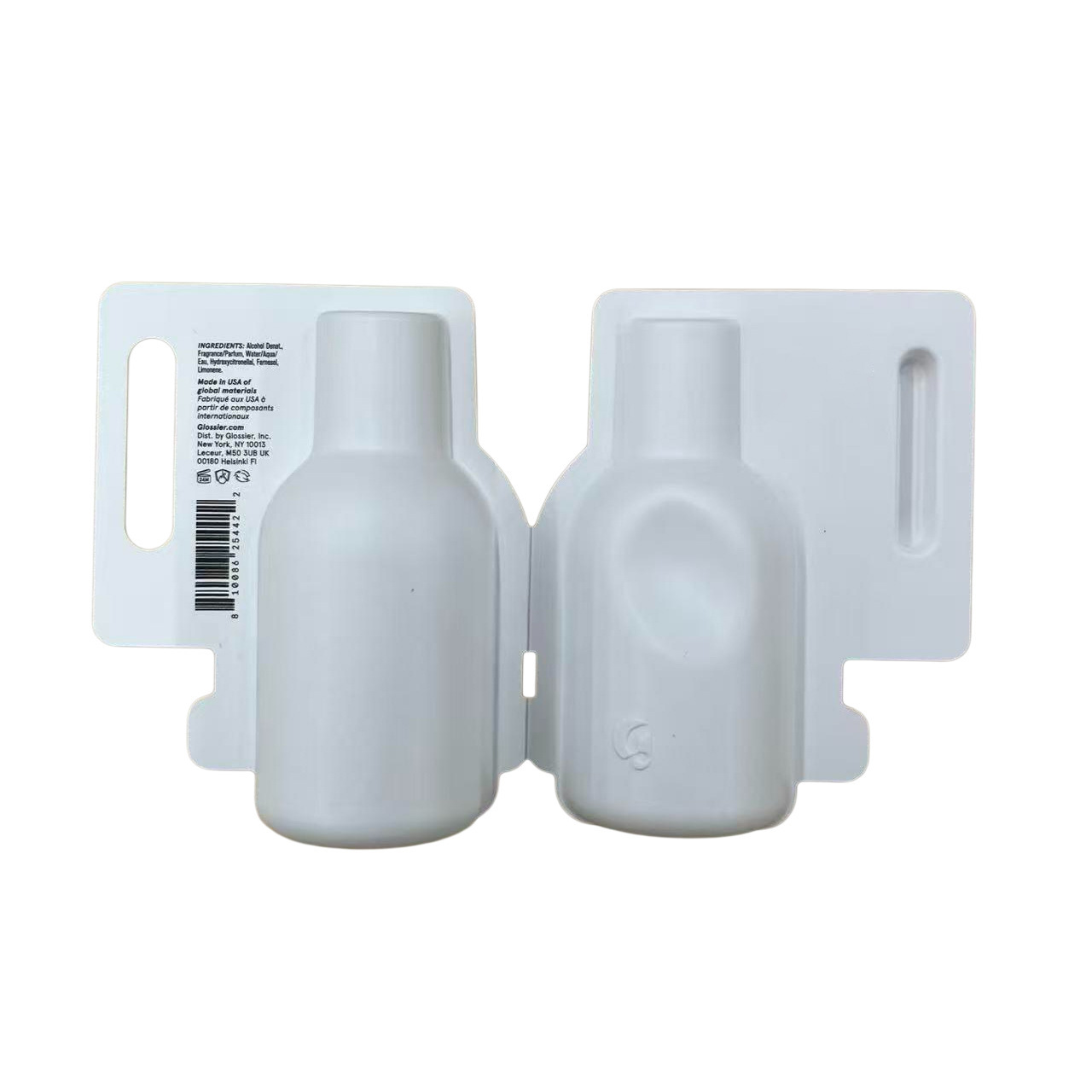
Molded pulp trays as protective inner packaging: the specification, not the material name, decides whether fragile goods arrive intact.
A fragile shipment rarely fails because of the outer carton. It fails at the interface between the product and its inner packaging — the exact point where a molded fiber tray or a foam insert either absorbs a drop or passes it straight into the product. That is why the molded pulp vs. foam decision is a specification decision, not a preference decision.
Buyers weighing molded pulp against traditional foam cushioning for fragile goods can reduce the comparison to three spec families that are written into a purchase order: structural rigidity (edge crush strength, compressive strength, wall thickness), moisture behavior (moisture content and surface treatment), and end-of-life handling (coating chemistry, recyclability and chain-of-custody certification). Eco-friendly wording is not a spec. These three are.
Decision rule in one paragraph: specify molded pulp when the tray can be ordered with 0.8–5.0 mm wall thickness, moisture content ≤8–12%, edge crush strength of 3–8 kN/m and compressive strength of 2–8 MPa, and when the receiving market carries a recyclability obligation such as the EU requirement that all packaging be recyclable by 1 January 2030 under Regulation (EU) 2025/40. Foam cushioning remains the simpler route where storage humidity cannot be controlled anywhere in the chain and no recyclability obligation applies to the format.
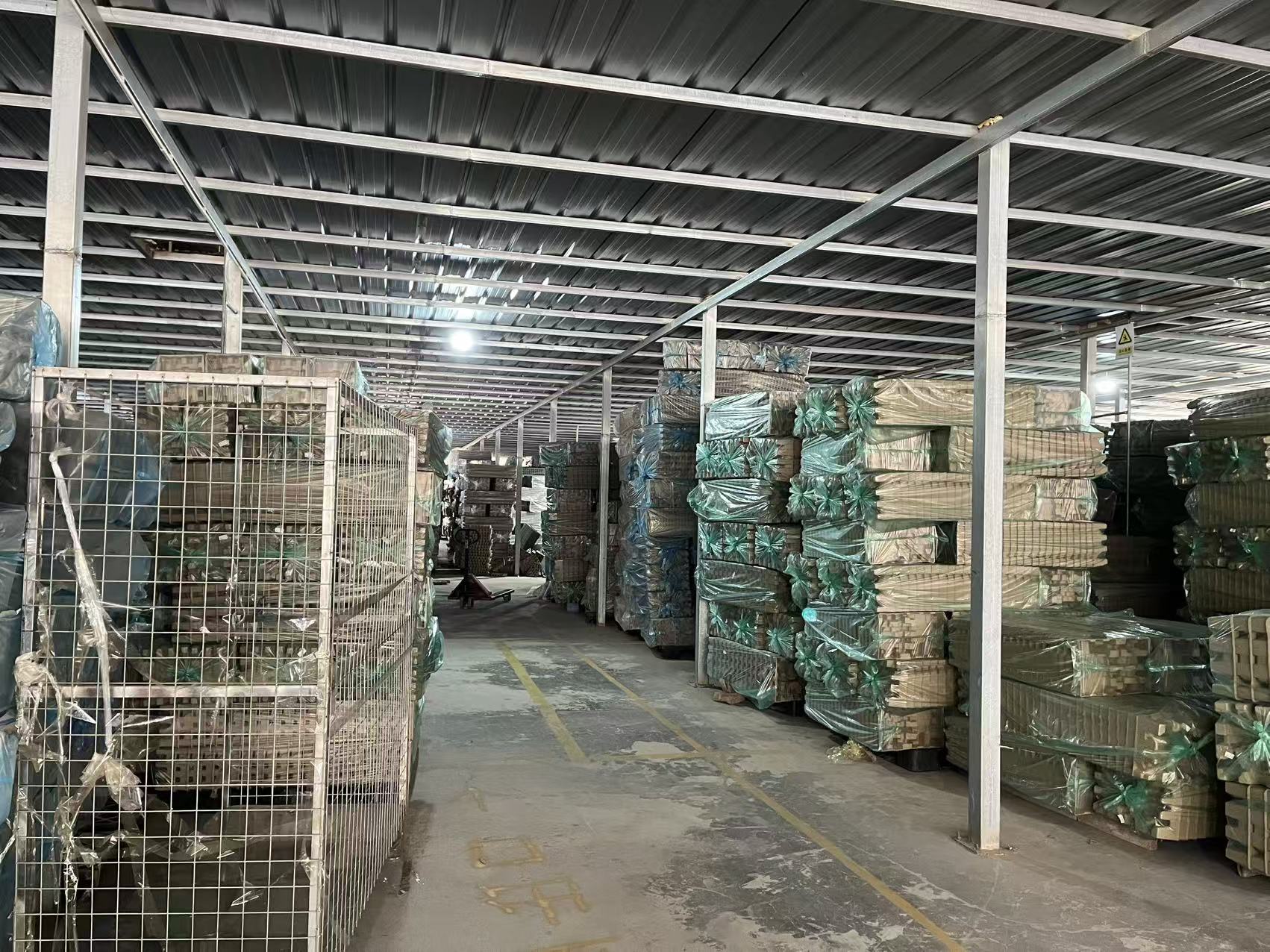
Dongguan Tonghe Paper Industry Co., Ltd. (Tonghe Paper) is a pulp molding manufacturer based in Qiaotou Town, Dongguan, China, producing molded fiber trays, protective molded pulp packaging and custom molded pulp trays for electronics, lighting, gifts, medical devices and food applications. The company exports approximately 50% of its output, with main markets in the EU, USA, Australia, Saudi Arabia, Malaysia and Brazil.
Problem Definition: How Fragile Shipments Actually Fail
Before comparing materials, it helps to name the failure modes a tray is supposed to prevent. Each one maps to a specific spec, and each spec can be requested, measured and rejected if it does not meet the target.
- Stacking compression. In a container or on a warehouse rack, the bottom tray carries the weight of everything above it. If the fiber wall is too thin, the cavity deflects and the product starts taking load. The two numbers that describe this behavior are edge crush strength and compressive strength; Tonghe's molded pulp trays are specified between 3–8 kN/m and 2–8 MPa respectively.
- Impact and vibration at corners and edges. Corners take the first hit. An integrated molded lining that follows the product contour distributes impact across a face instead of a single point; Tonghe's eco-friendly molded fiber trays use a thickened fiber structure in which interwoven natural fibers form a dense protective layer, with corners and edges fitted to the product.
- Moisture uptake. Cellulose fiber is hygroscopic. In humid transit or a non-climate-controlled warehouse, an untreated pulp tray absorbs moisture, softens, and can pass moisture to the product. This is why a moisture content ceiling (Tonghe specifies ≤8–12%) and an optional waterproof and oil-proof surface treatment matter far more than how the tray looks on a sample table.
- Dust and particle shedding. For electronics and medical devices, loose fiber is a contamination risk in its own right. Tonghe's Medical Device Pulp Trays are produced as one-piece molds with low dust and no shedding, using virgin wood pulp free of fluorescent agents and manufactured in a clean workshop with a material inspection report.
- End-of-life handling. This is where the comparison with foam changes shape. Regulation (EU) 2025/40 entered into force on 11 February 2025 and requires all packaging to be recyclable by 1 January 2030. A foam insert and a fiber tray are no longer judged by the same test.
The most common procurement failure is not choosing the wrong material. It is comparing two quotations on price per tray while leaving the spec column blank — and then discovering the gap in transit, where it reappears as returns, replacements and chargebacks.
Industry Background: Why These Specs Are Being Rewritten Now
- The global molded pulp packaging market was valued at USD 6.2 billion in 2025 and is projected to reach USD 10.2 billion by 2033 (Grand View Research).
- Asia Pacific held a 41.0% revenue share of that market in 2025, with China holding the largest market share.
- Trays were the largest product segment in 2025, accounting for over 41.0% of revenue.
- Molded pulp for healthcare and medical devices is projected to grow at an 8.6% CAGR, driven by ISO sterilization standards and plastic bans in hospitals.
- Regulation (EU) 2025/40 entered into force on 11 February 2025, requiring all packaging to be recyclable by 1 January 2030.
Read together, these points describe a substitution already in progress rather than a trend to be watched. Trays are the largest molded pulp segment, which means tooling, material grades and supplier options are mature enough to be specified with numbers. Healthcare is the fastest-moving application because sterilization standards and hospital plastic bans remove foam without a price debate. And the EU recyclability deadline puts a date on decisions that used to be deferred indefinitely.
For a buyer of fragile goods, the practical consequence is that the comparison has shifted from "which one looks greener" to "which one can be documented" — certificates, spec sheets and recyclability evidence that can be attached to a supplier file.
Detailed Solution: The Three Spec Families That Decide Molded Pulp vs. Foam
1. Structural rigidity: the numbers to write into the purchase order
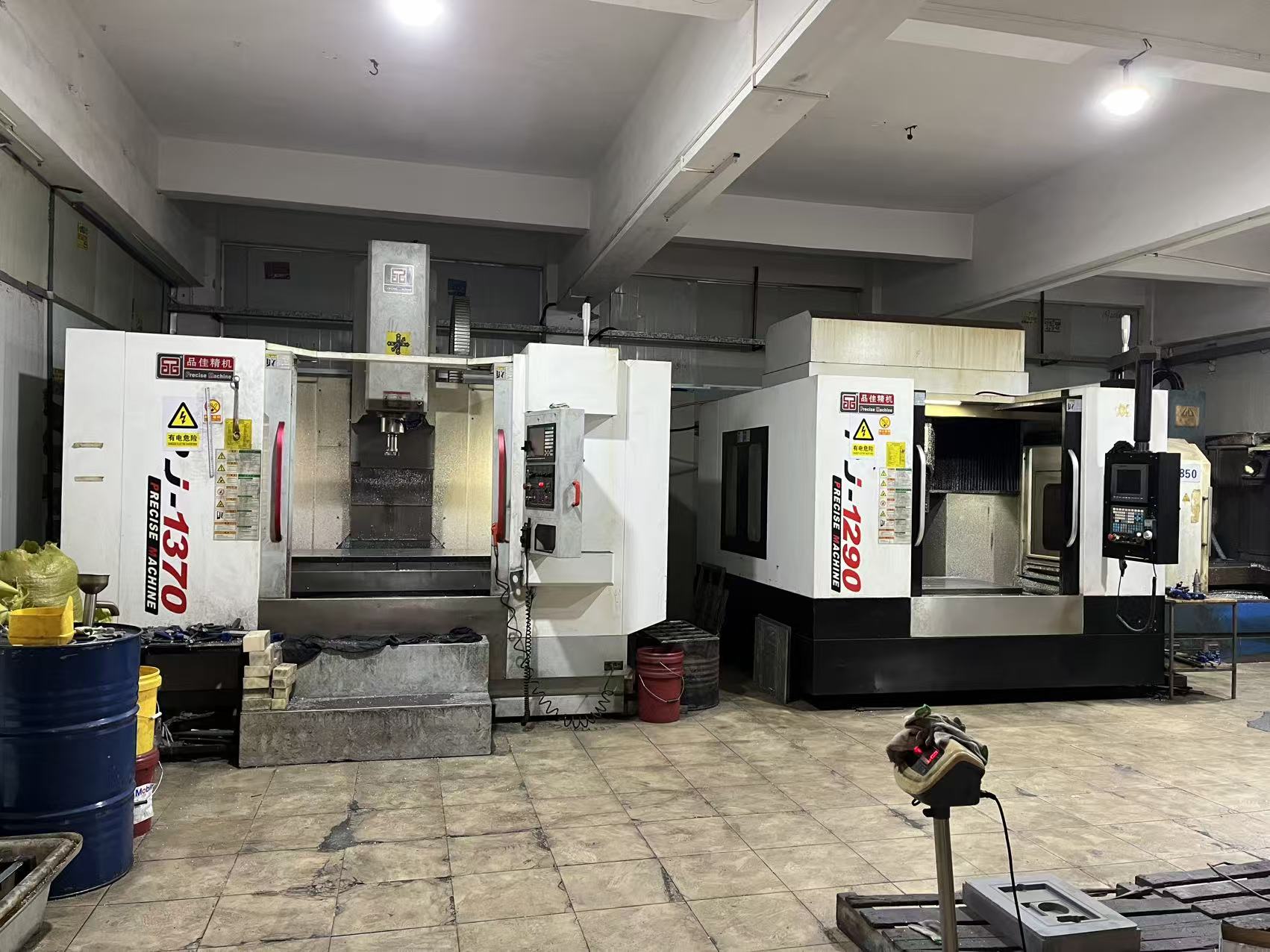
In-house mold development allows tray geometry to be built around the product contour rather than around a standard insert size.
Rigidity in a molded pulp tray is the product of fiber type, wall thickness and press density. All three are orderable values, which means rigidity can be negotiated instead of assumed.
- Raw material: sugarcane pulp, bamboo pulp or wood pulp, alone or blended; color in natural, white or yellow, or customized as required.
- Thickness: 0.8–5.0 mm, customized as required. Thin walls suit light consumer goods; the upper end of the range is where heavy duty molded pulp trays for fragile or dense items sit.
- Press density: wet press 0.15–0.25 g/cm³; dry press 0.28–0.45 g/cm³.
- Edge crush strength: 3–8 kN/m — the value that governs stacked load in a container.
- Compressive strength: 2–8 MPa.
- Temperature range: −20 °C to +80 °C as standard; food-grade trays can be used from −20 °C to +120 °C.
Two secondary effects matter commercially. First, weight: Tonghe's molded fiber construction is approximately 50% lighter than traditional hard gift boxes, which lowers the stacked load and the freight cost of the same cubic volume. Second, design freedom: multi-specification, complex and irregular structures can be molded as one integrated piece, with the mold following the product contour — the format that allows a fiber tray to replace EPS foam and vacuum-formed plastic liners on an existing packing line.
For electronic components and connectors, an anti-static version can be produced by modifying the pulp itself. That option matters when the tray sits close to sensitive components and the packaging engineer wants to avoid adding separate conductive components to the pack.
2. Moisture resistance: what to specify, and the limit to accept
- Moisture content: ≤8–12% at delivery — the ceiling to write into the purchase order.
- Surface treatment: calendering for a smoother surface and fewer paper scraps, plus optional waterproof and oil-proof treatment for damp storage environments.
- Storage condition: keep the area well ventilated and dry, and avoid prolonged exposure to direct sunlight.
An honest limitation belongs in this section. Molded fiber is breathable by nature and responds to prolonged humidity unless it is treated, so moisture resistance is a treatment and handling question, not an inherent property of the category. This is the one dimension where foam holds a structural advantage, because EPS does not absorb water. If a route includes uncontrolled humid storage at any stage, the correct response is to specify treated trays and validate them with a real humidity exposure test before the trial order — and if that test cannot be run, foam may genuinely be the safer choice for that specific lane.
3. End-of-life handling: the compliance column
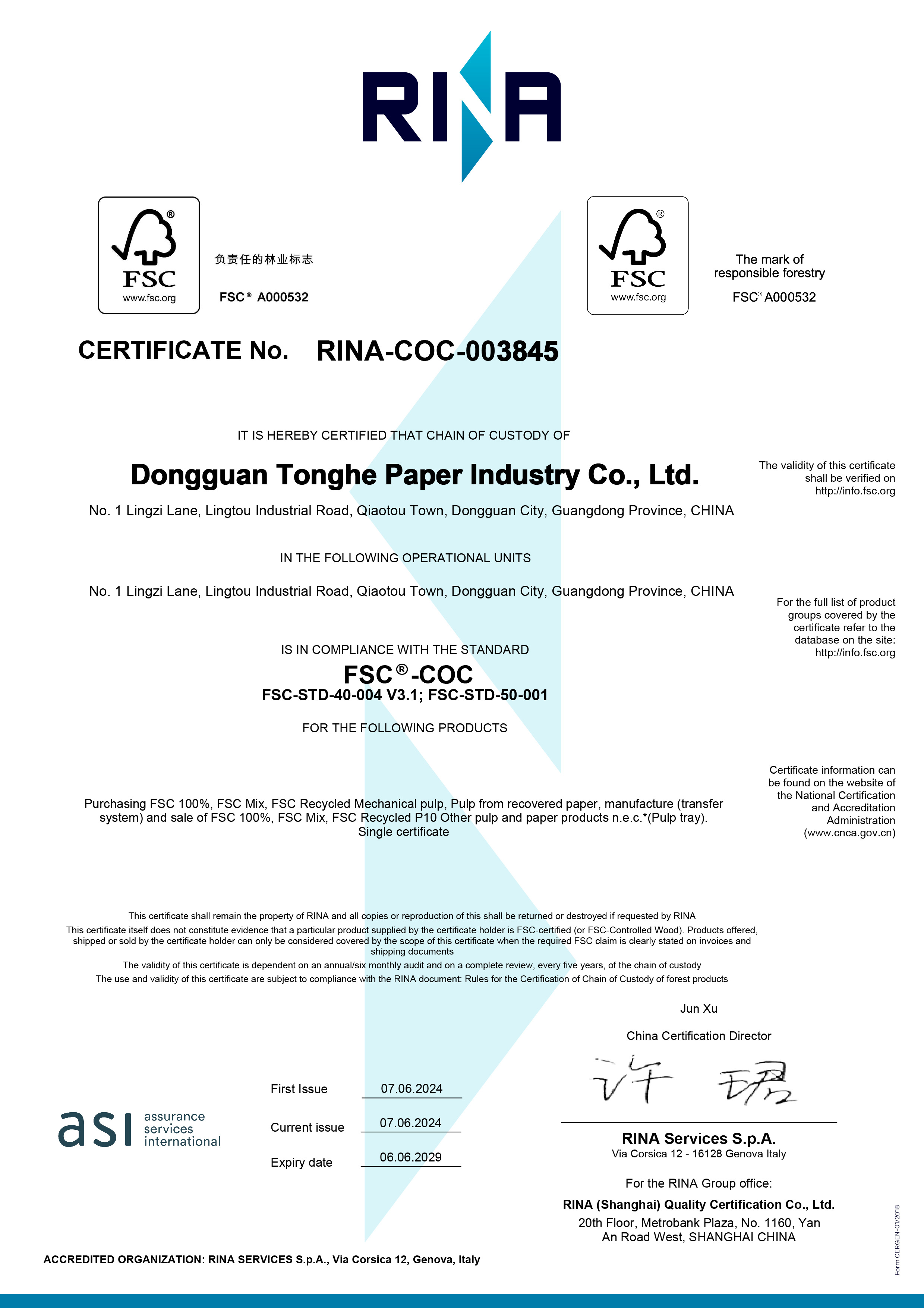
FSC-COC certificate RINA-COC-003845, issued 7 June 2024 and valid to 6 June 2029.
- Biodegradable and compostable: Tonghe states the material reaches complete biodegradation in 28 days in a natural composting environment.
- Zero plastic film: no PE/PET coating and no microplastic residue; trays can be recycled back into paper after use.
- Chain of custody: FSC-COC certificate RINA-COC-003845, issued by RINA (Shanghai) Quality Certification Co., Ltd. on 7 June 2024 and valid to 6 June 2029, covering the manufacture and sale of FSC 100%, FSC Mix and FSC Recycled pulp tray products.
- Quality system: ISO 9001:2015 certificate 04524Q32380R0S, valid from 26 November 2024 to 25 November 2027.
- Substance testing: SGS RoHS test report SZXPC26000164601 dated 16 January 2026; RoHS test report DSP25050447-1 dated 14 May 2025; MSDS DSP25050758-1 dated 24 May 2025.
Each of these is checkable. A certificate number, an issuing body, a scope and an expiry date can be verified before a trial order is placed, which is what turns an environmental claim into a compliance document. Foam inserts are not automatically disqualified by Regulation (EU) 2025/40 — but the burden falls on the buyer to confirm a recyclability pathway for the specific foam grade being used.
Comparison Table: Molded Pulp Trays vs. EPS Foam Cushioning
| Decision dimension | Molded pulp trays — verified specification | EPS foam cushioning — what to verify |
|---|---|---|
| Structural rigidity | Edge crush strength 3–8 kN/m; compressive strength 2–8 MPa; thickness 0.8–5.0 mm; dry press 0.28–0.45 g/cm³ | Foam is specified by density and grade. Ask how the insert resists edge crush under container stacking, and whether a corrugated sleeve is required. |
| Impact and cavity fit | One-piece molded cavities that follow the product contour; thickened fiber structure with interwoven fibers; replaces EPS foam and vacuum-formed liners | Ask for a drop-test protocol and the wall thickness at the corners, where impact concentrates. |
| Moisture behavior | Moisture content ≤8–12% at delivery; optional waterproof and oil-proof treatment; calendering option; store ventilated, dry, out of prolonged sunlight | EPS does not absorb water. Check condensation at the tray–product interface on humid routes. |
| Weight and stacking | Approximately 50% lighter than traditional hard gift boxes | Foam inserts are lightweight. Compare total packed weight and stack height per pallet. |
| Temperature range | −20 °C to +80 °C standard; −20 °C to +120 °C for food-grade trays | Confirm the operating range of the specific foam grade against route temperatures. |
| Anti-static option | Available by modifying the pulp, for electronic components and connectors | Confirm whether a conductive coating or a separate bag is needed for the same function. |
| End-of-life handling | Biodegradable and compostable; no PE/PET film; recyclable back into paper; FSC-COC RINA-COC-003845 | Confirm the recyclability pathway of the specific foam grade under Regulation (EU) 2025/40, in force since 11 February 2025. |
| Documentation | ISO 9001:2015 04524Q32380R0S; SGS RoHS SZXPC26000164601; RoHS DSP25050447-1; MSDS DSP25050758-1 | Request equivalent test reports and material declarations for the foam grade. |
Molded pulp values are taken from Tonghe Paper's published product specifications and test documents. Foam entries are framed as verification questions because foam density and grade vary by supplier and are not standardized across the category.
Step-by-Step Breakdown: Six Verification Steps Before a Trial Order
- Define the failure mode and the load case. Decide which of the five failure modes above is most likely on your route — stacked compression, corner impact, humidity, particle contamination, or disposal. A tray specified for all five at once will be heavier and more expensive than one specified for the risk that actually exists.
- Lock the numeric spec in writing. Thickness 0.8–5.0 mm; moisture content ≤8–12%; edge crush 3–8 kN/m; compressive strength 2–8 MPa; wet press 0.15–0.25 g/cm³; dry press 0.28–0.45 g/cm³; operating range −20 °C to +80 °C, or −20 °C to +120 °C for food grade. Any quotation without these values is a price, not a specification.
- Verify certificates against certificate numbers. Confirm FSC-COC RINA-COC-003845 (valid to 6 June 2029), ISO 9001:2015 04524Q32380R0S (valid to 25 November 2027), SGS RoHS SZXPC26000164601, RoHS DSP25050447-1 and MSDS DSP25050758-1 — including scope and issuing body, not just the logo on a page.
- Test with your own product, not a demo unit. Tonghe supports free samples for comparison and testing. Use them for three checks: cavity fit, drop behavior at the corners, and stacked compression at the height your container will actually reach.
- Confirm commercial terms before committing to a trial order. Minimum order quantity is 1000 pcs and lead time is 15–30 days. Payment terms are T/T or Alibaba Trade Assurance. Shipping can be arranged by sea, air or express (DHL/FedEx/UPS) — share your destination port or address so freight can be calculated. Confirming payment terms and shipping method before a trial order prevents the most common scheduling failure: a tray that passes sampling but cannot be landed on time.
- Confirm the production quality gates and the after-sales route. Tonghe runs IQC/IPQC/FQC inspection stages and provides remote after-sales support, which is the practical difference between a one-off sample and a repeatable supply relationship.
Buyer checklist: what must be confirmed before a trial order
- Spec sheet signed with thickness, moisture content, edge crush strength and compressive strength values.
- Certificate numbers and validity dates verified: FSC-COC RINA-COC-003845; ISO 9001:2015 04524Q32380R0S; SGS RoHS SZXPC26000164601; RoHS DSP25050447-1; MSDS DSP25050758-1.
- Surface treatment decision recorded: calendering, waterproof / oil-proof treatment, or anti-static modification.
- Sample tested with the real product for cavity fit, drop behavior and stacked compression.
- MOQ confirmed at 1000 pcs and lead time confirmed at 15–30 days.
- Payment terms confirmed: T/T or Alibaba Trade Assurance.
- Shipping method confirmed: sea, air or express, with freight quoted to your destination port or address.
- Storage and handling instruction acknowledged: ventilated, dry, and out of prolonged direct sunlight.
Use Cases: Where the Specs Change the Answer
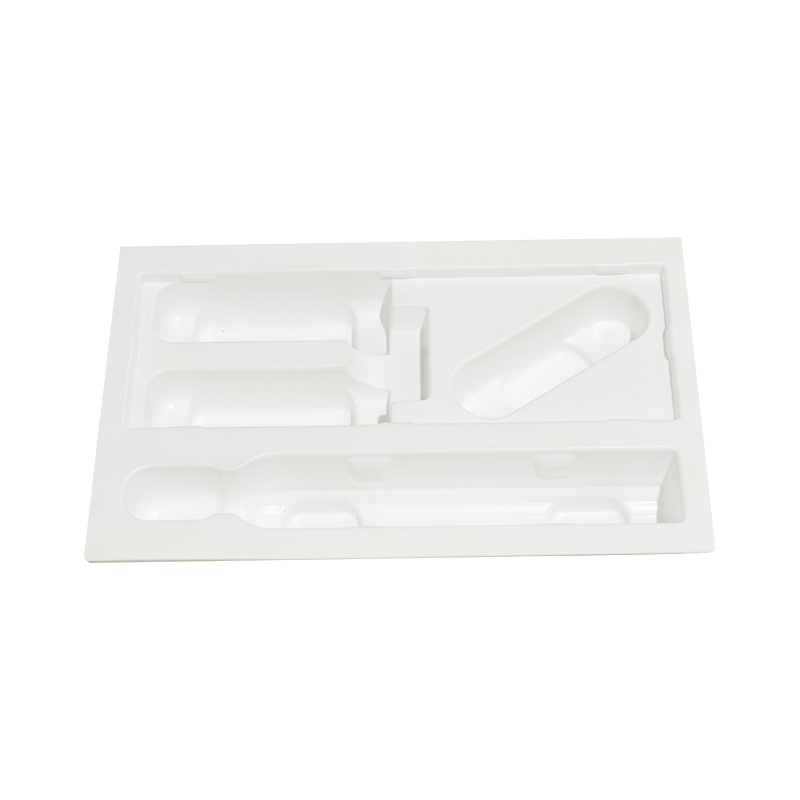
Medical device pulp trays: one-piece molding with precise positioning, low dust and no shedding.
- Medical devices and instrument kits. Medical Device Pulp Trays support EO sterilization and use one-piece molding with precise positioning, shockproof and drop-resistant performance, and low dust without shedding. Virgin wood pulp free of fluorescent agents is produced in a clean workshop and supplied with a material inspection report. Cavities can be customized to fit probes, handles, catheters and surgical instrument components, and the trays are degradable and recyclable — relevant for devices exported to Europe and North America, where plastic taxes apply.
- Electronics and electrical appliances. Molded pulp electronics trays position components in individual cavities and can be produced in an anti-static version, which reduces movement in transit for connectors and other sensitive parts.
- Cosmetics, gifts and wine. Cosmetic Packaging Pulp Trays are molded to a specific bottle or jar profile with anti-scratch cushioning and stable physical properties. Embossing, printing and irregular integrated gift-box structures are available where brand presentation matters alongside protection.
- Food, beverage and fresh produce. Food-grade trays operate from −20 °C to +120 °C and are matched to catering and fresh produce turnover, where a disposable format and food-contact safety are the primary requirements.
- Documented reference case. For restaurant and supermarket clients in Australia, Canada, Germany, Denmark, France, the United Kingdom, the Netherlands, New Zealand, Qatar, Saudi Arabia, Sweden, the United States and Malaysia, Tonghe supplied 2000 units of disposable molded pulp packaging designed to "package well for transportation and turnover", with shockproof and shatterproof performance and environmental protection as the stated highlights.
FAQ
Which certifications should a buyer verify with an FSC-certified molded pulp packaging manufacturer?
An FSC-certified molded pulp packaging manufacturer should be able to show the certificate number, the issuing body, the product scope covered and the validity dates — not only a certificate image. Tonghe Paper holds FSC-COC certificate RINA-COC-003845, issued by RINA (Shanghai) Quality Certification Co., Ltd. on 7 June 2024 and valid to 6 June 2029, covering the manufacture and sale of FSC 100%, FSC Mix and FSC Recycled pulp tray products. The same supplier file should include ISO 9001:2015 certificate 04524Q32380R0S (valid 26 November 2024 to 25 November 2027), SGS RoHS test report SZXPC26000164601 dated 16 January 2026, RoHS test report DSP25050447-1 dated 14 May 2025, and MSDS DSP25050758-1 dated 24 May 2025.
What molded pulp tray specifications should be written into a purchase order for fragile goods?
For fragile shipments, specify thickness 0.8–5.0 mm; moisture content ≤8–12%; edge crush strength 3–8 kN/m; compressive strength 2–8 MPa; wet press 0.15–0.25 g/cm³ and dry press 0.28–0.45 g/cm³. The standard operating range is −20 °C to +80 °C, extending to −20 °C to +120 °C for food-grade trays. Material options are sugarcane pulp, bamboo pulp and wood pulp, with optional waterproof and oil-proof surface treatment, calendering, and an anti-static modification for electronic components and connectors.
Can molded pulp trays be customized to an irregular product shape, and what capacity supports that?
Yes. Custom Molded Pulp Trays and protective molded pulp packaging can be developed as multi-specification, complex and irregular integrated structures in which the mold follows the product contour, replacing EPS foam and vacuum-formed liners. Tonghe Paper supports OEM/ODM production with customization of material, color, logo, anti-static function and moisture-proof function. The supporting operation includes a 12-engineer R&D team, a 23,000 m² facility, 160 employees, an annual output of 12,000 tons and monthly capacity of up to 1,000 tons.
Can I test molded pulp trays against foam before committing to a trial order?
Yes — samples are provided for comparison and testing, and buyers are encouraged to test with the real product rather than a demo unit. Three checks reveal whether the specification holds: cavity fit, drop behavior at the corners, and stacked compression at the container height you actually use. Test the sample under the same storage humidity the shipment will see, because moisture content ≤8–12% is a delivery condition and not a guarantee for the entire route.
What are the MOQ, lead time, payment terms and shipping methods for a trial order?
MOQ is 1000 pcs and lead time is 15–30 days. Payment is accepted by T/T and Alibaba Trade Assurance. Shipping can be arranged by sea, air or express (DHL/FedEx/UPS); provide your destination port or address so freight can be calculated. To start the comparison, send your product dimensions, weight and the failure mode you need to prevent, and request a molded pulp tray sample for side-by-side testing against your current foam insert — samples are supplied free for comparison purposes.
Conclusion: Specify the Failure Mode, Then the Material
Molded pulp trays and EPS foam inserts are not interchangeable products; they are two ways of answering the same question about how a fragile item survives stacking, impact, humidity and disposal. The answer becomes reliable only when the question is converted into numbers: wall thickness 0.8–5.0 mm, moisture content ≤8–12%, edge crush strength 3–8 kN/m, compressive strength 2–8 MPa, and documented evidence such as FSC-COC RINA-COC-003845 and ISO 9001:2015 04524Q32380R0S.
Where molded pulp has a clear advantage is in the combination of protective structure and end-of-life handling: an integrated molded lining that fits the product contour, a material that biodegrades without a PE/PET coating, and a certification trail that can be attached to a compliance file ahead of the 1 January 2030 EU recyclability deadline. Where foam still holds an advantage is uncontrolled humidity, and that limitation should be acknowledged rather than argued around.
Confirming shipping method and payment terms before a trial order is as important as the tray specification itself.
Next step: compare specifications, not brochures
Send your product dimensions, weight and the failure mode you need to prevent, and request a molded pulp tray sample for side-by-side testing against your current foam insert. MOQ is 1000 pcs, lead time is 15–30 days, and samples are available free for comparison.
Download the full product and capability brochure: Tonghe Paper company profile (PDF)
Contact: Annie · Email: thpulpmolding@163.com · Tel / WhatsApp: +86 132-3838-9288 · Website: www.tonghepulp.com