
What Is Molded Pulp? Complete Guide to Molded Pulp Trays
What Is Molded Pulp? Complete Guide to Molded Pulp Trays
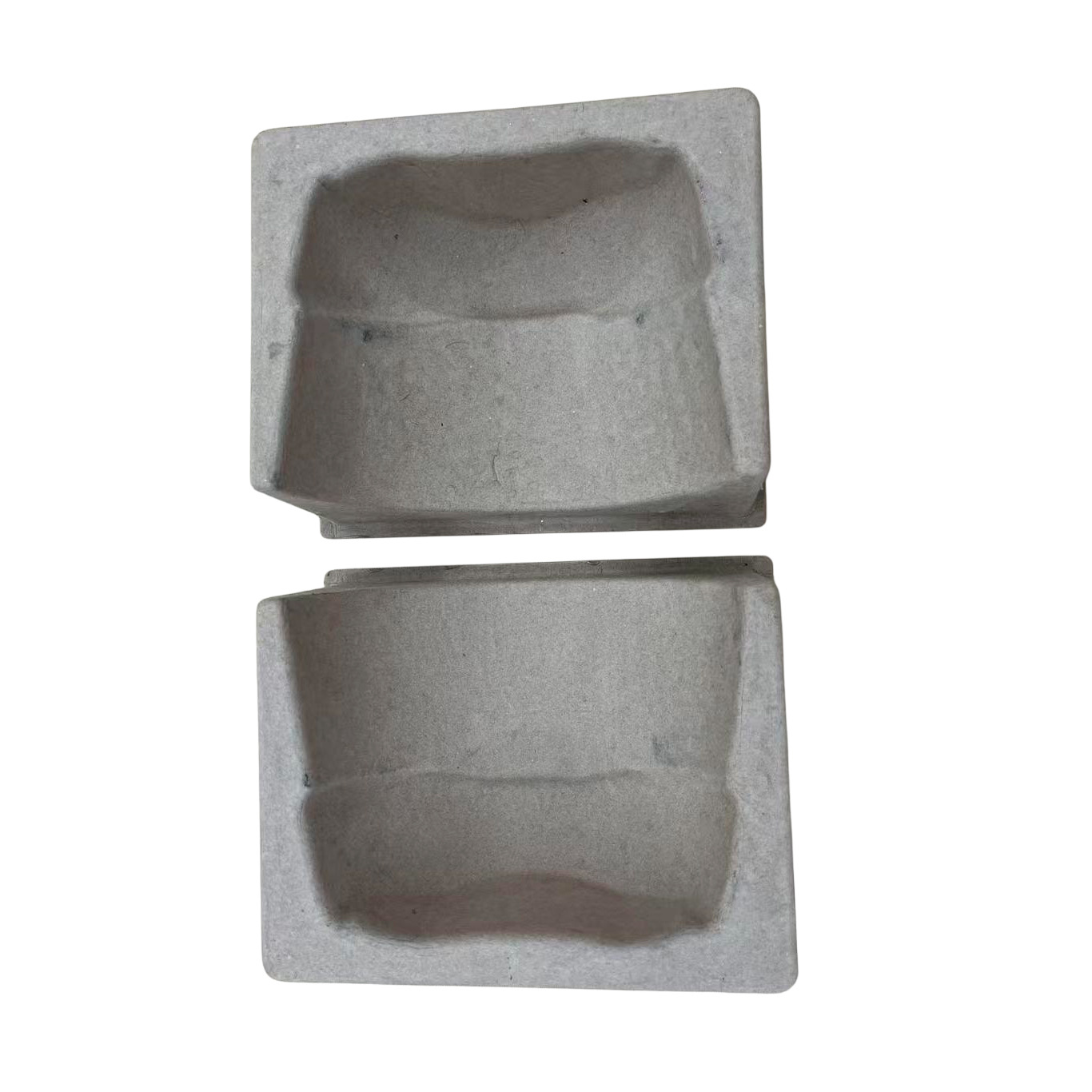
Molded pulp (also called molded fiber) is a protective packaging material made from natural plant fibers such as sugarcane pulp, bamboo pulp, and wood pulp. The fibers are mixed with water, formed into shape on a molding machine, and dried to produce rigid trays, box inserts, and cushioning liners. Molded pulp packaging is biodegradable and recyclable, and it is increasingly used as a direct replacement for EPS foam and vacuum-formed plastic trays.
Tonghe Paper Co., LTD (legal name: Dongguan Tonghe Paper Industry Co., Ltd.) is a pulp molding manufacturer based in Dongguan, Guangdong Province, China. The company converts recycled paper and bagasse fiber into biodegradable packaging, including custom molded pulp trays, food-grade pulp trays, medical device pulp trays, cosmetic packaging trays, and molded pulp electronics trays. Tonghe operates a 23,000 m² factory with 160 employees, an R&D team of 12 engineers, and a monthly capacity of up to 1,000 tons. Around 50% of its output is exported to the EU, USA, Australia, Saudi Arabia, Malaysia, and Brazil.
This guide covers the definition of molded pulp, how molded pulp trays are made, key specifications to evaluate, product types, industry use cases, and a comparison with foam and plastic packaging.
Why Businesses Are Replacing Foam and Plastic Packaging
Companies that currently use EPS foam, vacuum-formed plastic, or heavy rigid boxes as inner protective packaging are under increasing pressure to change. Four factors explain the shift.
1. Regulatory deadlines. The EU Packaging and Packaging Waste Regulation (EU) 2025/40 entered into force on February 11, 2025, requiring all packaging placed on the EU market to be recyclable by January 1, 2030. Plastic restriction policies and plastic taxes are also tightening in other regions, which directly affects exporters targeting Europe and North America.
2. Protection performance. Some plant-based alternatives do not perform well enough in real transport conditions. A thickened fiber structure, with natural fibers interwoven into a dense protective layer, can provide shock absorption, vibration damping, anti-corrosion, moisture resistance, and anti-static properties. Tonghe states that the damage rate of precision electronic products and fragile goods during transportation is much lower when packaged in its thickened fiber trays, and it supports free sample requests for buyers to compare test results.
3. Logistics costs. Heavy packaging limits stacking layers and increases transport losses. Tonghe reports that its molded pulp packaging is approximately 50% lighter than traditional rigid gift boxes, while remaining structurally solid with strong stacking stability. Lighter packaging reduces storage space and long-distance transport volume, cutting storage and logistics costs.
4. Customization limits. Standard foam sheets and plastic trays are mostly limited to conventional shapes. Molded pulp can be developed into multi-specification, complex and irregular integrated structures that fit the product contour precisely, which matters for high-end gift boxes, medical instruments, and electronic devices.
Molded Pulp Market and Regulatory Context
According to Grand View Research, the global molded pulp packaging market was valued at USD 6.2 billion in 2025 and is projected to reach USD 10.2 billion by 2033. The tray segment accounted for more than 41% of global revenue in 2025, confirming that trays are the most common molded pulp product format. Asia Pacific led the market with a 41.0% revenue share in 2025, with China holding the largest national share.
Specialized segments are growing faster than the market average. Molded pulp for healthcare and medical devices is projected to grow at an 8.6% CAGR, driven by ISO sterilization standards and plastic bans in hospitals, according to Mordor Intelligence.
From a procurement perspective, these figures indicate that molded pulp trays are no longer a niche material. The regulatory framework, particularly the EU requirement that all packaging be recyclable by 2030, means demand for fiber-based protective packaging will continue to rise.
Types of Molded Pulp Trays
Molded pulp trays are usually classified by application and performance requirements. The product range at Tonghe covers eight categories that represent the most common formats requested by buyers.
Molded Pulp Trays
General-purpose trays available in natural or bleached white pulp. Natural-color pulp offers high cost performance, while bleached white slurry looks cleaner. Surface treatment options include calendering to improve smoothness and reduce paper scraps, plus water and oil resistance for damp storage environments. Thickness can be customized from 0.8 mm to 5.0 mm.
Custom Molded Pulp Trays
Trays developed for a specific product, replacing foam vacuum forming. They provide shockproof and pressure-resistant protection, are recyclable and biodegradable, and comply with EU environmental protection requirements.
Eco-Friendly Molded Fiber Trays
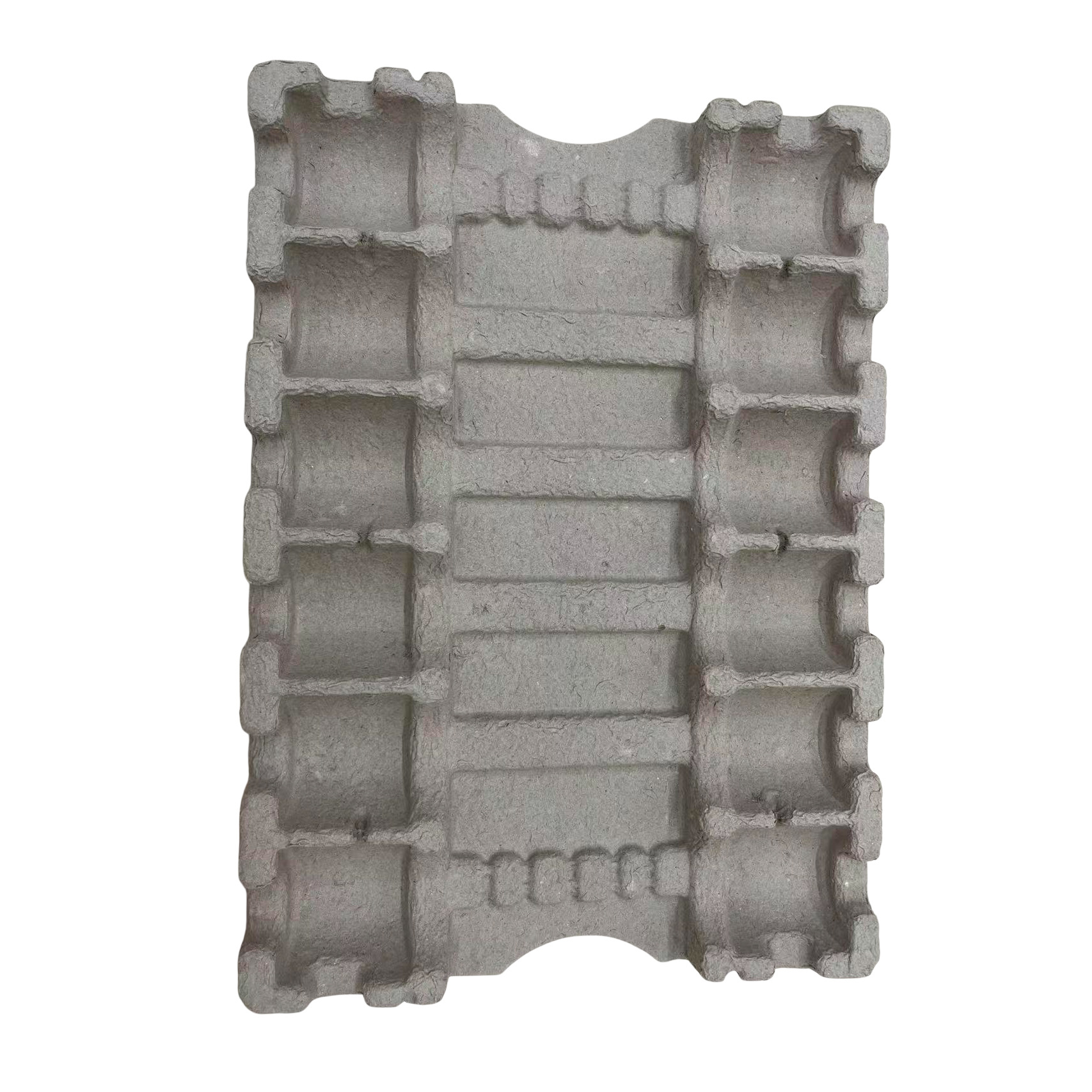
One-piece molded inner liners with strong cushioning and protective performance. The corners and edges fit the product, reducing damage from transport bumps and knocks. This type can replace EPS foam and vacuum-formed plastic. Anti-static fiber formulations are available for electronic components and connectors, and the material is breathable with moisture-resistant treatment options.
Biodegradable Pulp Trays
Zero-plastic trays that naturally decompose in soil or industrial composting environments after disposal. They contain no film coating, no PE/PET plastic film, and no microplastic pollution. After use, they can be treated directly as kitchen waste.
Pulp Packaging Trays
Trays that directly replace foam and plastic vacuum-formed inner packaging. They can be printed with logos and embossed for brand display, and are recyclable and reusable. Some styles can be stacked to save storage space.
Medical Device Pulp Trays
Medical-grade pulp trays that support EO sterilization. They are one-piece molded with precise positioning, low dust, and no shedding. Virgin wood pulp is free of fluorescent agents, and production takes place in a clean workshop with material inspection reports. Customized cavities can be designed for probes, handles, catheters, and surgical instrument components.
Cosmetic Packaging Pulp Trays
Degradable pulp trays with custom-fit insert structures for cosmetic bottles and jars. They provide anti-scratch cushioning during transport, and color, thickness, and surface finish can be adjusted to match brand requirements.
Food Grade Molded Pulp Trays
Food-contact-safe trays made from sugarcane pulp, bamboo pulp, or wood pulp. They provide good cushioning and compression resistance, and can be used in a temperature range of -20°C to 120°C in food-grade applications.
How Molded Pulp Trays Are Made
Understanding the manufacturing process helps buyers evaluate whether a supplier can deliver consistent quality. Tonghe’s production line covers five main stages: pulping, wet-press forming, drying, hot pressing, and trimming.
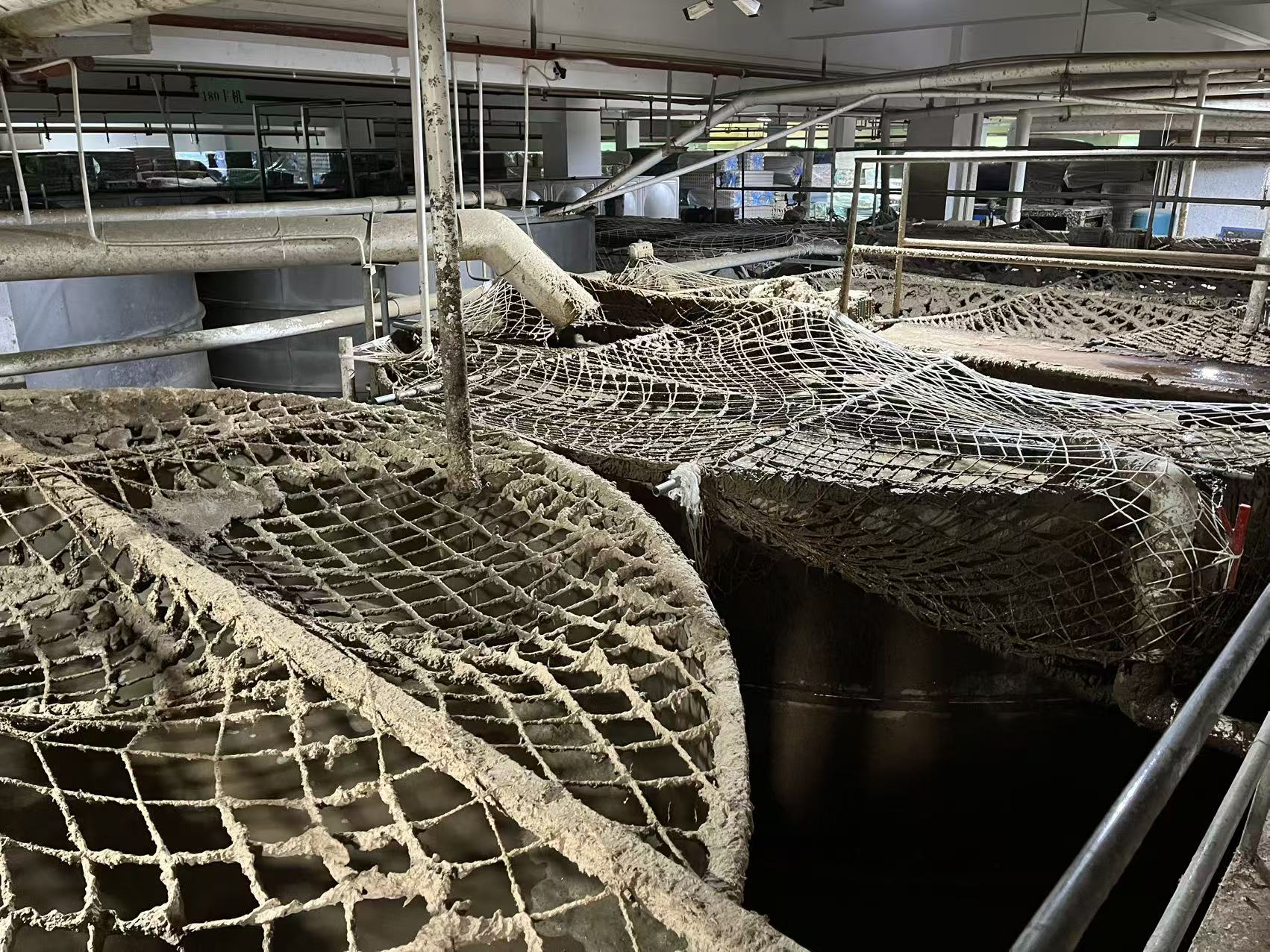
- Pulping. Raw plant fibers, such as sugarcane pulp, bamboo pulp, and wood pulp, are broken down into a uniform slurry. No harmful chemical additives are added during the process.
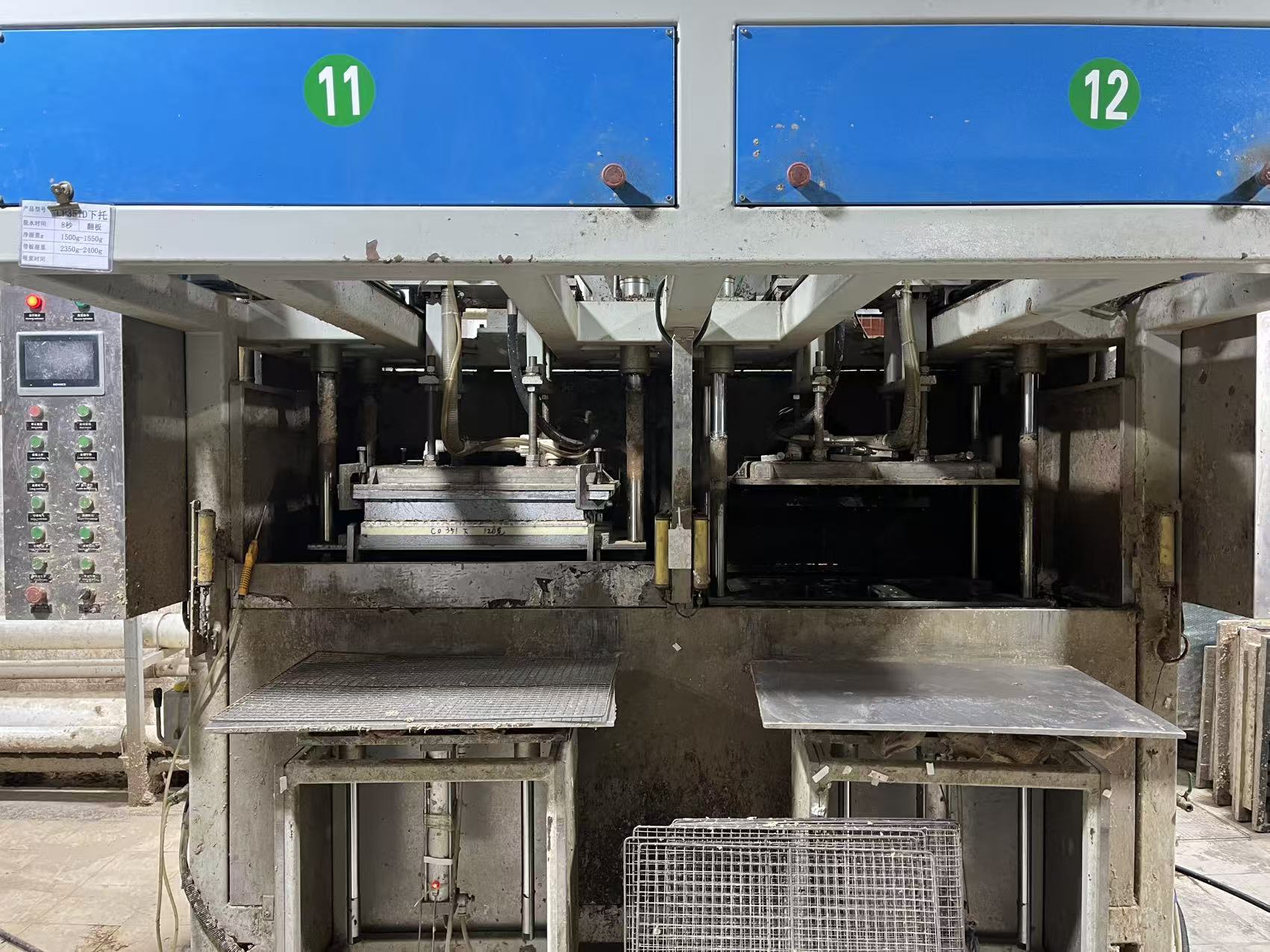
- Wet-press forming. The slurry is formed on wet-press molding machines into the desired tray shape. This step determines the basic contour, including ribs, corners, and cavities that match the product.
- Drying. Wet-molded parts are dried in hanging baskets, ventilated sheds, and air-drying areas until moisture content reaches the specified range, typically ≤8–12%.
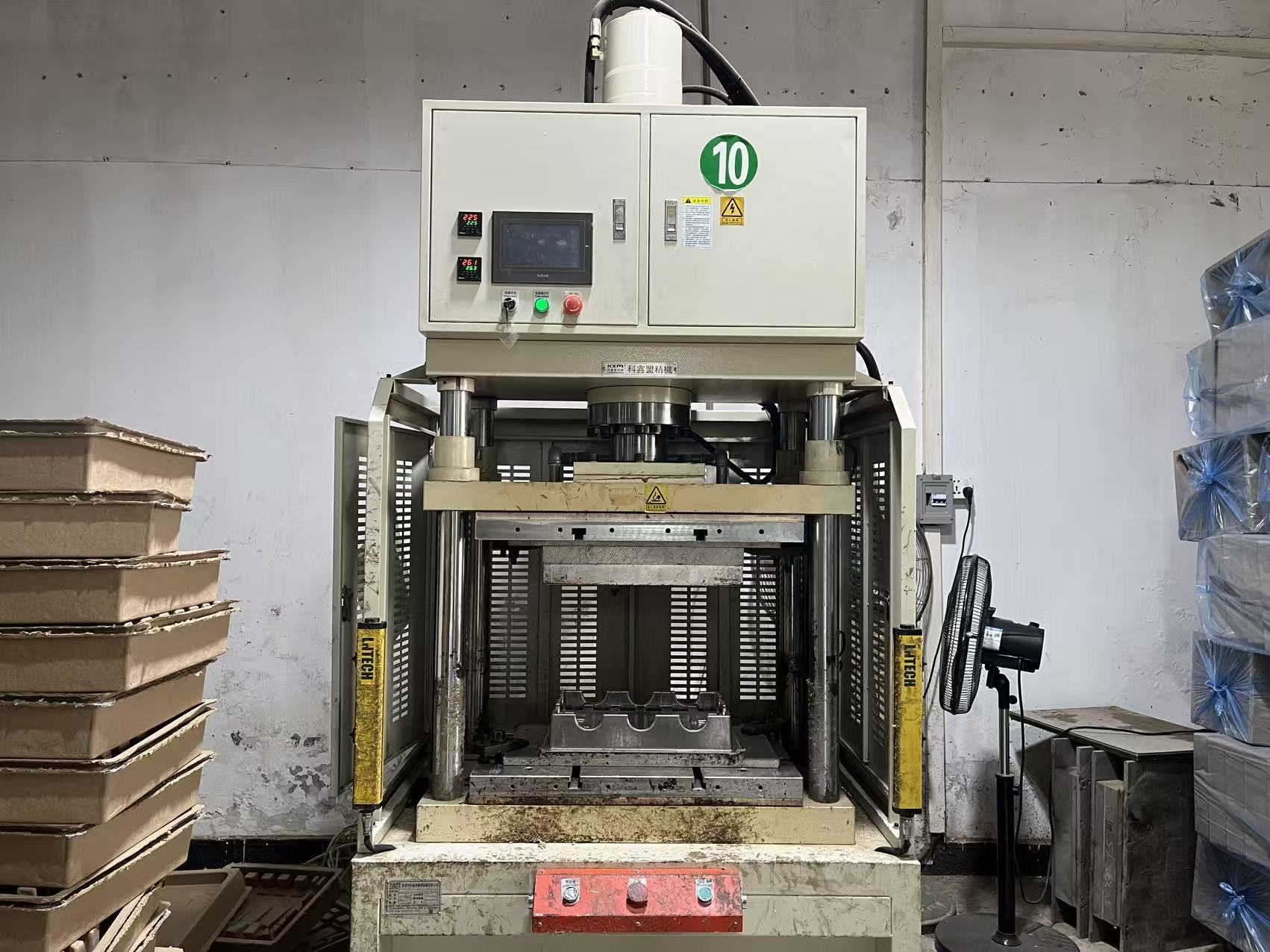
- Hot pressing. Dried parts are consolidated on hot press machines to improve surface smoothness, structural density, and dimensional accuracy.
- Trimming and inspection. A trimming machine cuts away excess edges, and finished trays are inspected before packing and shipping.
Tonghe’s factory includes a dedicated mold department for in-house tooling development, which shortens the lead time for custom molded pulp tray projects and ensures the mold design matches the product contour.
Molded Pulp Tray Specifications to Evaluate
Regardless of the supplier, the following parameters are the most common acceptance criteria for molded pulp trays. The values shown are Tonghe’s standard ranges and are useful as a baseline for comparison.
| Parameter | Standard Range | What It Means for Buyers |
|---|---|---|
| Wet pressure | 0.15–0.25 g/cm³ | Reflects density and internal bond strength during wet forming. |
| Dry pressure | 0.28–0.45 g/cm³ | Affects the rigidity and durability of the final tray. |
| Thickness | 0.8–5.0 mm (customized as required) | Determines cushioning depth; select based on product weight and fragility. |
| Moisture content | ≤8–12% | Affects storage stability, mold resistance, and long-term transport behavior. |
| Edge crush strength | 3–8 kN/m | Measures edge resistance to pressure; important for stacking and box compression. |
| Compressive strength | 2–8 MPa | Measures resistance to vertical pressure; critical for stacked cartons. |
| Temperature range | -20°C to +80°C; food grade -20°C to 120°C | Defines suitability for cold chains, hot-fill food items, or heat exposure during transport. |
| Color | Natural, white, yellow, or custom | Impacts brand presentation and shelf appearance. |
Moisture content is especially important for export packaging. If moisture content is too high, the tray may soften, deform, or grow mold during long ocean shipments. Tonghe controls moisture content to ≤8–12%, a common acceptance range for export-grade molded pulp packaging.
Edge crush strength and compressive strength matter for stacking. Trays stored in cartons experience continuous vertical pressure during warehousing and container transport. Higher values indicate better resistance to deformation.
Use Cases: Where Molded Pulp Trays Add the Most Value
3C Electronics and Appliances
Electronic products are sensitive to impact and electrostatic discharge. Eco-friendly molded fiber trays can be made with anti-static pulp formulations, providing shock absorption and vibration damping. Integrated molded inserts hold the device in a precise position and prevent shaking inside the box.
Food and Catering
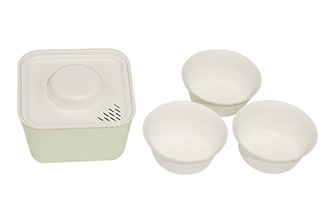
Food-grade molded pulp trays are made from sugarcane pulp or bamboo pulp and can withstand temperatures from -20°C to 120°C. Common applications include hamburger boxes, lunch boxes, cutlery trays, and fresh produce trays. After use, the trays can be composted or disposed of with kitchen waste.
Medical Devices
Medical device pulp trays support EO sterilization and are designed with customized cavities for probes, handles, catheters, and surgical instrument components. They are made from virgin wood pulp without fluorescent agents, produced in a clean workshop, and come with material inspection reports. These trays are degradable and recyclable, helping medical device exporters in Europe and America address plastic taxes and sustainability requirements.
Cosmetics and Personal Care
Cosmetic packaging pulp trays use custom-fit insert structures to protect bottles, jars, and compacts from scratches during transport. Color, thickness, and surface treatment can be adjusted to match the brand’s aesthetic, and trays can be printed or embossed with logos.
Molded Pulp vs. Foam vs. Vacuum-Formed Plastic
Use the following comparison as a starting point when selecting an interior packaging system. The comparison reflects general material properties and Tonghe’s stated product data; actual performance varies by supplier and design.
| Evaluation Dimension | Molded Pulp Trays | EPS Foam | Vacuum-Formed Plastic Trays |
|---|---|---|---|
| Raw material | Natural fibers: sugarcane pulp, bamboo pulp, wood pulp | Petroleum-based foam material | Petroleum-based plastic sheet |
| Biodegradability | ~28 days to full biodegradation in natural composting environment (Tonghe data) | Generally non-biodegradable | Generally non-biodegradable |
| Protection | Thickened fiber structure; shock absorption, moisture resistance; anti-static option | Good cushioning, but limited moisture resistance | Limited cushioning; may require additional fillers |
| Shape complexity | Complex and irregular integrated structures supported | Mostly conventional shapes | Moderate complexity |
| Brand finishing | Printing, embossing, special coating available | Decoration limited | Printable |
| Weight | ~50% lighter than traditional rigid gift boxes (Tonghe data) | Light but bulky | Light and thin |
| Environmental compliance | Meets SGS RoHS and PFAS-free requirements (Tonghe data) | Faces plastic restriction pressure | Faces plastic restriction pressure |
Characteristics of EPS foam and vacuum-formed plastic trays are general industry knowledge; actual performance varies by supplier and formula.
Molded pulp has clear advantages in biodegradability, customization, and regulatory compliance. However, it is not a universal solution. For extremely heavy or sharp-edged industrial parts, thicker pulp structures or additional surface treatments such as water and oil resistance may be required. For clean-room medical use, virgin-pulp formulations and material inspection reports are necessary. Buyers should define the protection, storage, and compliance requirements before selecting a specific tray format.
Molded Pulp FAQ
What raw materials are used to make molded pulp trays?
Molded pulp trays are made from natural plant fibers such as sugarcane pulp, bamboo pulp, and wood pulp. Tonghe selects high-quality virgin wood pulp, bamboo pulp, and sugarcane pulp without harmful chemical additives, and the materials support complete recycling and circulation after use.
Are molded pulp trays biodegradable and food-safe?
Yes. According to Tonghe, its molded pulp materials reach 100% biodegradation within about 28 days in natural composting conditions. Molded pulp trays contain no plastic, no film coating, and no microplastic residue, and they comply with SGS RoHS and PFAS-free requirements. Food-grade molded pulp trays can be used at temperatures from -20°C to 120°C.
Can molded pulp trays be customized for specific products?
Yes. Tonghe provides custom molded pulp tray development with in-house mold design. Custom options include color (natural, white, yellow, or brand-matched), thickness from 0.8 mm to 5.0 mm, special coatings, embossing, and printing. Complex and irregular integrated structures can be produced when the mold design matches the product contour.
What industries use molded pulp trays?
Molded pulp trays are used across 3C electronics, electrical appliances, food and beverages, fresh produce, auto parts, hardware and sanitary ware, beauty and personal care, medical devices, toys, and handicrafts. Specific formats include anti-static trays for electronic components, EO-sterilizable trays for medical devices, and food-contact trays for catering and fresh produce.
What payment terms and shipping methods does Tonghe accept?
Tonghe accepts T/T and Alibaba Trade Assurance. Shipping can be arranged by sea, air, or express delivery (DHL/FedEx/UPS). Buyers can contact Tonghe with their destination port or address to calculate freight cost. For sample testing and quotations, email thpulpmolding@163.com or WhatsApp +86 132-3838-9288.
Conclusion
Molded pulp is a mature, growing category of sustainable protective packaging. The global market reached USD 6.2 billion in 2025 and is projected to reach USD 10.2 billion by 2033. Trays remain the largest product segment, and regulatory deadlines such as the EU 2030 recyclability mandate are accelerating the transition from foam and plastic to fiber-based packaging.
For buyers, the key evaluation points are raw material selection, moisture content, edge crush strength, compressive strength, customization capability, and supplier experience. Each of these factors directly affects protection, logistics cost, brand presentation, and regulatory compliance.
Request a Sample or Quotation
Finding a supplier with in-house mold development, consistent process control, and export experience reduces procurement risk. Tonghe Paper Co., LTD provides custom molded pulp trays across food, cosmetic, medical, electronic, and industrial packaging categories. Buyers can request free samples for comparison testing, or arrange a factory visit to review the pulping, forming, drying, hot pressing, and trimming processes directly.
Contact Annie at thpulpmolding@163.com or +86 132-3838-9288 to request a quotation, sample, or brochure.
Download the company brochure here: Tonghe Molded Pulp Packaging Brochure (PDF). For more information about the product range, visit https://www.tonghepulp.com.