
Cable Accessories Long-Term Supply FAQ: Grounding Boxes, Sealants and After-Sales Support
Direct answer: Long-term supply of cable accessories for utility and project buyers depends on four connected controls: complete ordering parameters, agreed acceptance criteria, the correct product series for the cable and installation environment, and a documented after-sales route. Tonyhoo Cable Accessories, founded in 1997, manufactures cold shrink and heat shrink cable accessories, cable sealants, grounding boxes and related protection products. This FAQ answers recurring partnership questions around J-399, J-499 and J-699 polyurethane sealants, JLS-10 and JLS-35 cold shrink intermediate joints, grounding box material options, maintenance-free separable connectors and long-term supply coordination.
The answers below separate product data from project decisions. They do not replace project-specific drawings, local standards or a buyer's own acceptance plan. They show what information should be fixed before a long-term order is placed and what evidence should travel with the shipment.
Problem definition: why long-term cable accessory supply needs more than a price list
Cable accessories are specification-sensitive. A joint, termination, separable connector, grounding box or sealant is matched to a cable system, an installation environment and a switching or earthing arrangement. If the voltage level, cable cross-section, core quantity or installation environment is wrong, the product may not fit the cable body or may fail to provide the intended electric field control and sealing. The supplied technical guidance states that wrong parameters can cause product mismatch and may trigger insulation failure after energization, so double checking is required.
Long-term supply adds another layer. A buyer may need repeat batches over several project phases, consistent documentation, predictable lead time and an after-sales contact who understands the installed product. The purchasing question therefore changes from 'which item is cheapest' to 'which item can be repeatedly supplied, inspected and supported against the same project data'. This is especially relevant for underground cable trench work, outdoor substations, coastal humidity and other conditions where maintenance access is limited.
Industry background: the product set around medium-voltage cable projects
Medium-voltage distribution and industrial cable projects commonly combine several accessory families rather than one item. Cold shrink intermediate joints and cold shrink terminations provide insulation, electric stress control and sealing at cable connections and cable ends. Heat shrink terminations remain an option where open-flame work is permitted and the project has certified flame operators and a tighter budget. Separable connectors support switchgear and compact connection points. Cable lugs such as DT/SC tin-plated copper lugs connect conductors. Grounding boxes, protection housings and explosion-proof blankets address earthing, mechanical protection and adjacent safety requirements.
Tonyhoo's stated product scope includes cold shrink and heat shrink cable accessories, cable sealant, oil-immersed transformers and high- and low-voltage switchgear. Its cable accessory range includes cold shrink intermediate joints, cold shrink terminations, heat shrink terminations, separable connectors, cable lugs, polyurethane sealants, grounding boxes, FRP and aluminum-magnesium alloy protection housings and explosion-proof blankets. The company reports a 9,900 m² factory, 100 employees, 20 engineers and an annual output of 200,000 units. These company-reported figures are useful for supplier screening, but they should be matched to the actual model mix and delivery schedule of a project.
Installation practice also matters. IEEE 1816-2024 provides industry practices for preparing shielded cables from 2.5 kV through 46 kV for mating accessories. It is a preparation and installation reference, not a certificate for a specific accessory. A buyer can use it to align cable preparation checks with the accessory supplier's installation instructions.
Detailed solution: the five controls behind a reliable long-term supply arrangement
1. Ordering parameters: collect the data that fixes product compatibility
Before a quotation or repeat order, the buyer should confirm the rated voltage level of the cable; the cable model, core quantity and conductor cross-section; the installation scenario, such as indoor, outdoor or direct burial; and the product type, such as cable termination or cable joint. For outdoor applications, pollution resistance grade and weather resistance requirements need extra confirmation to meet local power standards. For sealants, the applicable voltage level and joint sealing method should be stated. For grounding boxes, the system voltage, installation arrangement and required material should be stated.
A practical inquiry pack includes single-line and cable schedule references, cable conductor size, insulation type, screen and armour details where relevant, indoor or outdoor location, direct-buried or duct condition, ambient temperature range, humidity or salt-fog exposure, and the required documentation set. The supplied application scenario for cable accessories lists indoor cabinets, outdoor substations, underground cable trenches, high humidity, salt-fog coastal environments, dust-polluted areas and wide temperature range conditions, so these should not be left as assumptions.
2. Product series matching: joints, terminations, sealants and connectors
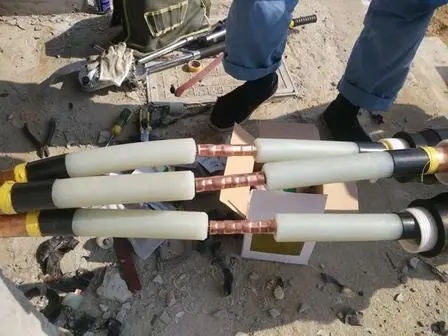
For cold shrink intermediate joints, the supplied JLS-10 and JLS-35 series cover voltage classes of 8.7/10 kV, 12/20 kV and 19/35 kV, cable sections of 25–400 mm² and an operating temperature range of -40°C to 90°C. The models listed are JLS-10/1.1, JLS-10/3.3, JLS-35/1.3 and JLS-35/3.4. The material is silicone rubber. The product description highlights cold shrink design with rubber elastic memory, sealing performance, ageing resistance and high insulation strength. These are the characteristics to match against the cable schedule and the installation method.
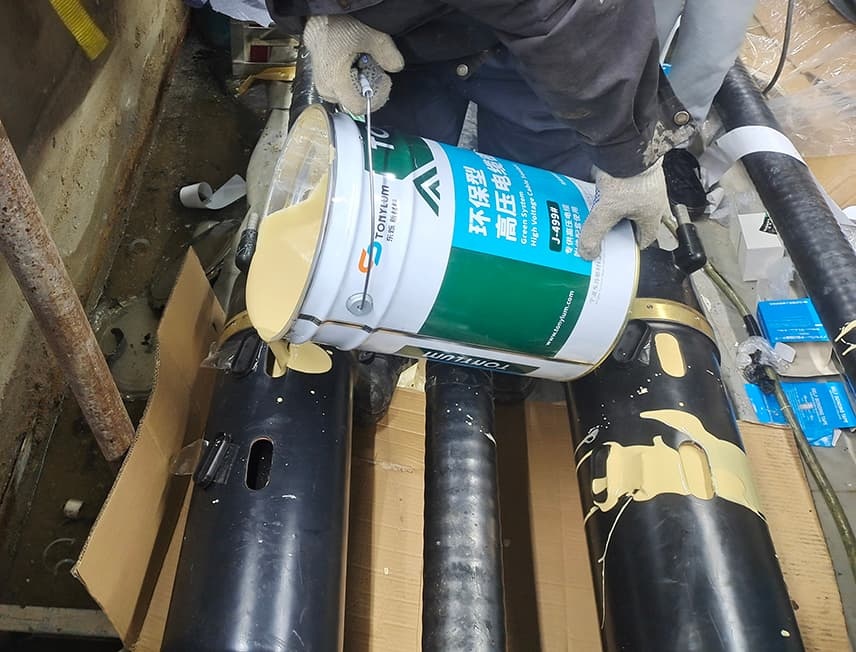
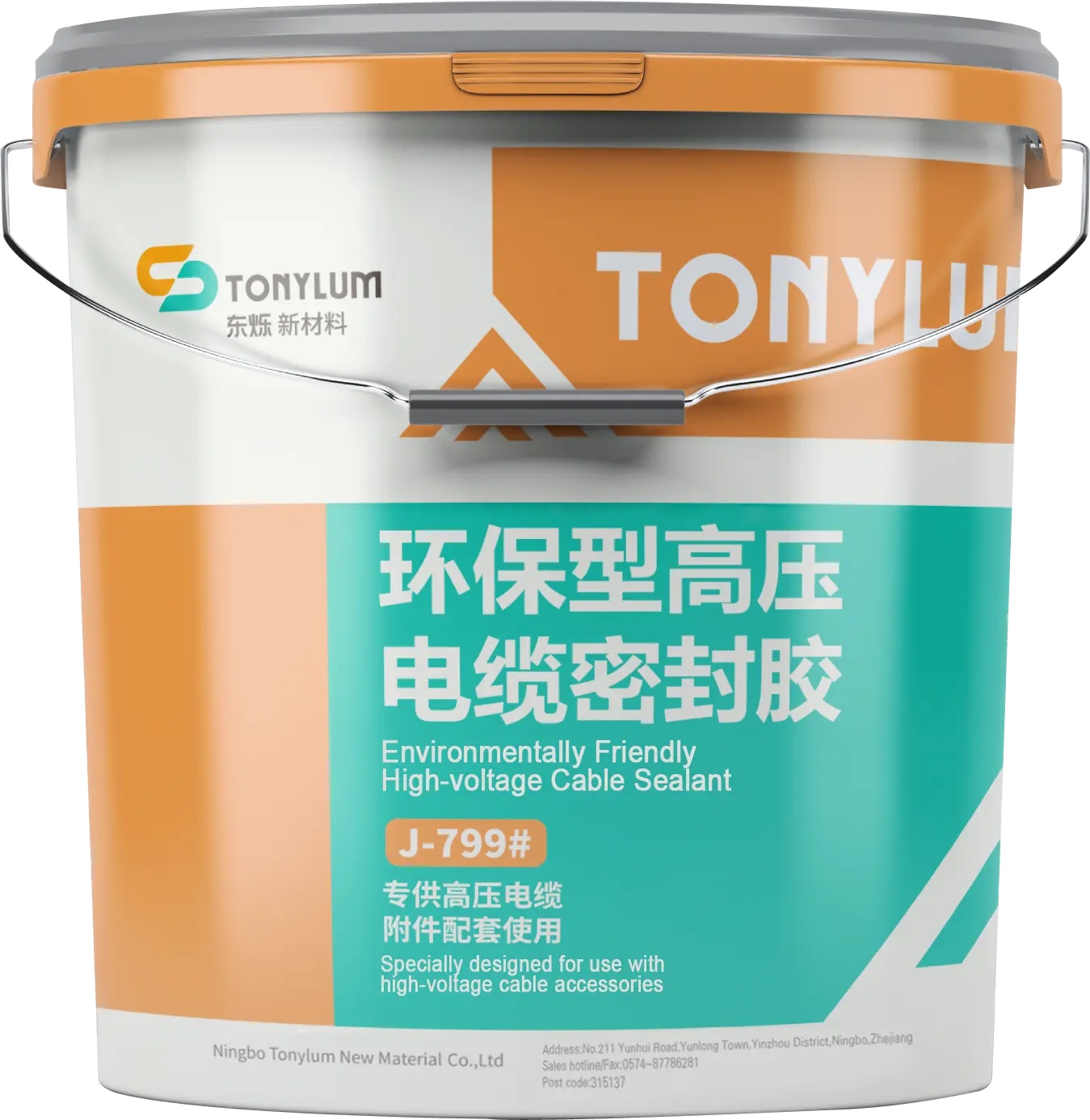
For joint sealing, the polyurethane sealant series J-399, J-499 and J-699 is listed for 10 kV–35 kV applications. Supplied series data include a light yellow color, hardness of 55A ±10 and density of 1.55 g/m³ ±0.55. The sealant is described as solvent free, with minimal shrinkage after curing, good impermeability, high volume resistivity and room-temperature construction. These properties matter when the joint body must be sealed against moisture and contaminants and when site work must avoid complex heating equipment.
For cable ends, cold shrink termination and heat shrink termination are not interchangeable by name alone. Cold shrink products are preferred where open flame is not allowed and construction schedules are tight; they need no torch heating and are easy to install. Heat shrink products are suitable where the budget is limited and certified flame operators are available, because they can offer a cost advantage. Both are described as capable of meeting insulation, electric field control and sealing protection requirements for medium-voltage cables, but the project should still verify the specific model, voltage class and installation conditions.
For switchgear and compact connections, the DS/SC separable connector is listed for 10 kV, 630 A applications, with a rated voltage of 15 kV, one-minute AC withstand voltage of 42 kV, 15-minute DC withstand voltage of 52 kV, lightning impulse withstand voltage of 95 kV, minimum corona onset voltage of 11 kV, thermal short-circuit current of 22.8 kA/2 s, dynamic short-circuit current of 80.8 kA and partial discharge of ≤10 pC. The material is EPDM with tin-plated copper. Tonyhoo lists the separable connector as maintenance free, with anti-condensation and anti-pollution characteristics. 'Maintenance free' is a product description; the project's own operating and safety rules still govern inspection and maintenance.
3. Grounding box material options: match the enclosure to the environment
The grounding box is listed for 35 kV, 66 kV, 110 kV and 220 kV models and is described as a cross-interconnect grounding box. Supplied technical data include a cabinet insulation resistance of 5 MΩ; a box body impact test of 37.5 kV for 10 times without breakdown; and a direct-buried box air-tightness test at 0.2 MPa for 30 minutes with no leakage. The material options are SS304, SS316 and SMC FRP. The product description also lists IP65 waterproofing, high corrosion resistance and robust copper conductive parts, with applications in power grids, AI data centers, new energy and power transmission.
Material selection should follow the installation environment and the project's corrosion and mechanical requirements. SS304 and SS316 are stainless steel options; SMC FRP is a fiberglass-reinforced plastic option. The supplied data does not rank one material above another for every site. A coastal or high-humidity location, a direct-buried location and an indoor cabinet may justify different choices. The buyer should state the environment and request the corresponding material data and acceptance records rather than selecting by enclosure name alone.
4. Acceptance criteria: agree what will be checked before shipment
Acceptance criteria should be written into the purchase order. Tonyhoo's stated quality-control process includes 100% factory electrical testing, partial discharge testing and third-party inspection such as SGS or TUV. For a project order, the buyer should confirm which records are required for the specific model: routine electrical test records, partial discharge results where applicable, visual and dimensional checks, marking and packaging checks, and any agreed third-party inspection report.
For grounding boxes, the supplied acceptance data that can be discussed include insulation resistance, impact performance and air tightness. For sealants, the buyer can verify color, hardness, density and applicable voltage level against the order. For cold shrink joints and terminations, acceptance should include a check that the delivered kit matches the approved model, cable section and voltage class, plus a review of installation instructions and sealing components. Installation checks should include cable preparation dimensions, insulation surface condition, stress cone positioning and completion of the seal before energizing. IEEE 1816-2024 can support cable preparation discussions, while the accessory supplier's own installation instructions remain the product-specific reference.
5. Long-term supply and after-sales coordination
Tonyhoo states a monthly capacity of 12,000 sets, a lead time of 30–40 days and a minimum order quantity of 10 sets. The company offers OEM, ODM and customized solutions, with customization covering rated voltage, cable cross-section, material formula, packaging, logo printing and special anti-corrosion versions. Its stated export markets include the EU, Southeast Asia, the Middle East, Africa and South America. These figures support supply planning, but they are company-reported and should be confirmed against the chosen model, order quantity, documentation requirements and project schedule.
After-sales support is listed as on-site installation guidance, remote technical support and a 5-year product warranty. For long-term supply, the buyer should agree the contact path, the documentation language, the spare or repeat-order process and the method for handling installation questions. A warranty statement is not a substitute for correct selection and installation; it should be read together with the installation instructions, acceptance records and the project's operating conditions.
Step-by-step breakdown: a practical long-term supply workflow
Step 1 — Define the project data pack. Record voltage level, cable model, conductor cross-section, core quantity, indoor or outdoor location, direct-buried or duct condition, ambient conditions and the required product type. Add the joint, termination or connector arrangement and the grounding box location. This becomes the controlled reference for repeat orders.
Step 2 — Match the product series. Use JLS-10 or JLS-35 for cold shrink intermediate joint applications according to voltage class and cable section. Use the J-399, J-499 or J-699 sealant series for 10 kV–35 kV joint sealing as specified. Use DS/SC separable connectors where the switchgear or connection design calls for a 10 kV, 630 A separable connection. Select the grounding box model and enclosure material from the system voltage and environment.
Step 3 — Agree the acceptance file. List the test records, inspection points, third-party inspection requirements, marking, packaging and document language. For grounding boxes, include insulation resistance, impact and air-tightness records. For sealants, include the ordered hardness, density and color. For cold shrink products, include model, voltage class and cable section verification.
Step 4 — Confirm installation method and site constraints. Cold shrink accessories are preferred where open flame is not allowed and schedules are tight. Heat shrink accessories require certified flame operators and fire-fighting preparation. For underground confined spaces, the cold shrink method avoids torch heating. For terminations and joints, confirm cable preparation dimensions, stress cone positioning and sealing steps before work starts.
Step 5 — Plan the supply schedule. Compare the 30–40 day stated lead time with the project milestones, the 10-set MOQ and the 12,000-set monthly capacity. For repeat supply, agree how forecast quantities will be released and how model changes will be documented. Do not treat a capacity figure as a guaranteed allocation without written confirmation.
Step 6 — Set the after-sales route. Record the contact for on-site installation guidance, remote technical support and warranty claims. Confirm what information the supplier needs for a support request: model, batch or order reference, installation photos, test records and a description of the condition. This reduces delay when a project team needs a fast answer.
Step 7 — Close the documentation loop. Keep the approved datasheet, order specification, acceptance records, installation instructions and warranty terms together. For long-term supply, this file is the reference for the next batch and helps prevent silent substitution of a model, material or accessory kit.
Use cases: how the supply questions appear in real project records
In a Thailand PEA suburban cable expansion project, Tonyhoo reports 500 units of cold shrink intermediate joints used for 10 kV underground cable intermediate connection and sealing. The record states that the cold shrink structure requires no open flame, which suits underground confined-space work, and that the sealing structure resists moist soil corrosion. The reported result is no leakage or discharge issues since commissioning over a duration of at least 20 years. This is a company-reported case, but it shows why buyers for underground projects ask about installation method, sealing and long-term support together.
A second Thailand project record reports 1,000 units used for indoor 10 kV cable terminal support in a substation. The stated result is stable electric field control, passage of the local power authority's grid access test and a compact structure suitable for limited installation space. A third record covers outdoor 10 kV cable terminals in an urban distribution renovation, with 1,000 units reported to have passed on-site acceptance and to operate without insulation faults under outdoor high-temperature and high-humidity conditions. These cases are not a promise of identical results for other projects, but they identify the checks a buyer should request: installation method, acceptance test, environment and long-term operating report.
For supply reliability, an Albania power engineering contractor record lists 1,087 pieces in 32 cartons for a grid construction project, delivered on schedule with stable operation after installation. The record combines cable accessories and DC lugs and cites short lead time and reliable electrical performance for European power projects. This is relevant to buyers who need mixed accessory shipments rather than a single product line.
The practical lesson is that project records should be read with their scope. A record for an underground 10 kV joint does not automatically qualify a 35 kV termination, and a substation terminal record does not prove performance in a direct-buried grounding box. The buyer should ask for evidence for the same product family, voltage class and application.
Comparison table: supplied characteristics by accessory family
| Accessory family | Supplied characteristics | Typical project fit | Supply note |
|---|---|---|---|
| Cold Shrink Intermediate Joint JLS-10 / JLS-35 | 8.7/10 kV, 12/20 kV, 19/35 kV; 25–400 mm²; -40°C to 90°C; silicone rubber; models JLS-10/1.1, JLS-10/3.3, JLS-35/1.3, JLS-35/3.4 | Underground cable trenches, substations and cable laying where cold shrink installation is preferred | Confirm cable section, voltage class and installation space; stated lead time 30–40 days and MOQ 10 sets |
| Polyurethane Sealant J-399 / J-499 / J-699 | 10 kV–35 kV; light yellow; hardness 55A ±10; density 1.55 g/m³ ±0.55; solvent free; room-temperature construction | Cable joint sealing and protection where moisture and contaminant ingress must be limited | Confirm the ordered series and batch data; follow surface preparation and sealing instructions |
| Grounding box | 35 kV, 66 kV, 110 kV, 220 kV; SS304 / SS316 / SMC FRP; 5 MΩ insulation resistance; 37.5 kV impact 10 times; 0.2 MPa, 30 min air tightness | High-voltage cable earthing protection in power grids, AI data centers and power transmission | State indoor, outdoor or direct-buried condition and select enclosure material accordingly |
| Separable Connector DS/SC | 10 kV; 630 A; 15 kV rated voltage; 42 kV AC 1 min; 52 kV DC 15 min; 95 kV lightning impulse; PD ≤10 pC; EPDM and tin-plated copper | Switchgear, compact connections and medium-voltage distribution where a separable interface is required | Listed as maintenance free; project inspection rules still apply |
| Aluminum-Magnesium Alloy Protection Housing | 10 kV/35 kV/110 kV; impact resistance: 1 kg weight from 2 m without cracks or damage; flexural strength 127 MPa; salt-water test in 3% sodium chloride for 3 days | Cable joint protection, outdoor equipment protection and industrial control housings | Match housing size, voltage class and site corrosion exposure; confirm with the project specification |
After-sales and long-term coordination: what to put in the agreement
A useful long-term supply agreement should record the approved model list, the acceptance file, the order release method, the lead-time basis, the packaging and marking requirements, and the after-sales contact route. Tonyhoo's stated support includes on-site installation guidance, remote technical support and a 5-year product warranty. The agreement should say how those services are requested and what information must accompany a request. This is particularly important when the buyer is in a different country or when the project owner, contractor and installer are different parties.
Customization should also be documented. Tonyhoo lists OEM, ODM and customized solutions, with customization covering rated voltage, cable cross-section, material formula, packaging, logo printing and special anti-corrosion versions. A customized item should have an approved drawing or specification before repeat supply begins, otherwise a later batch may be technically different even if the product name is similar.
FAQ
What parameters need to be provided to suppliers when purchasing cable accessories?
Confirm voltage level, cable model, conductor cross-section, core quantity and application environment, such as indoor, outdoor or direct burial. Also clarify the product type: cable termination or cable joint. For outdoor applications, confirm pollution resistance grade and weather resistance requirements for the local power standard. Complete parameters help match products of the corresponding specification and support electric field control, sealing performance and compatibility with the cable body. Wrong parameters can cause product mismatch and may trigger insulation failure after energization, so a double check is required.
How to choose between cold shrink and heat shrink cable accessories?
Cold shrink cable accessories are preferred for projects where open flame is not allowed and construction schedules are tight; they need no torch heating and are easy to install. Heat shrink cable accessories are suitable where the budget is limited and certified flame operators are available, because they can offer a cost advantage. Both are described as able to meet insulation, electric field control and sealing protection requirements for medium-voltage cables. The final choice should be checked against the cable voltage class, cross-section, application environment and the site's safety rules.
What operations during the installation of cold shrink cable terminations may cause breakdown faults in later operation?
Scratches on the main cable insulation, rough treatment of the semi-conductive layer cut, moisture and dust on the installation interface, and offset stress cone positioning are the main reported inducements for later breakdown of cold shrink cable terminations. Strip according to process dimensions, keep the insulation surface clean and dry, and position the stress cone accurately. The practical sequence is to strip the cable outer sheath, armour and inner sheath to drawing dimensions; remove the semi-conductive shielding layer and polish the insulation; fit the cold shrink body and stress cone to the specified dimension; pull the support core at constant speed; then inspect the sealing structure and appearance before energizing.
How should cable sealant be used to protect cable connections?
Cable sealant is used to seal cable connections and help prevent moisture, dust and other contaminants from entering the connection area. Disconnect and isolate the cable before installation. Clean and dry the cable and connection surfaces, prepare the sealant according to the product instructions, apply it evenly around the required sealing area, and ensure complete coverage without gaps or exposed areas. Check the finished seal and confirm that the connection is properly protected. Installation should be performed by qualified electrical personnel, and the cable should not be energized until the connection has been properly inspected.
Chinese cable accessories manufacturers for underground cold shrink intermediate joint projects
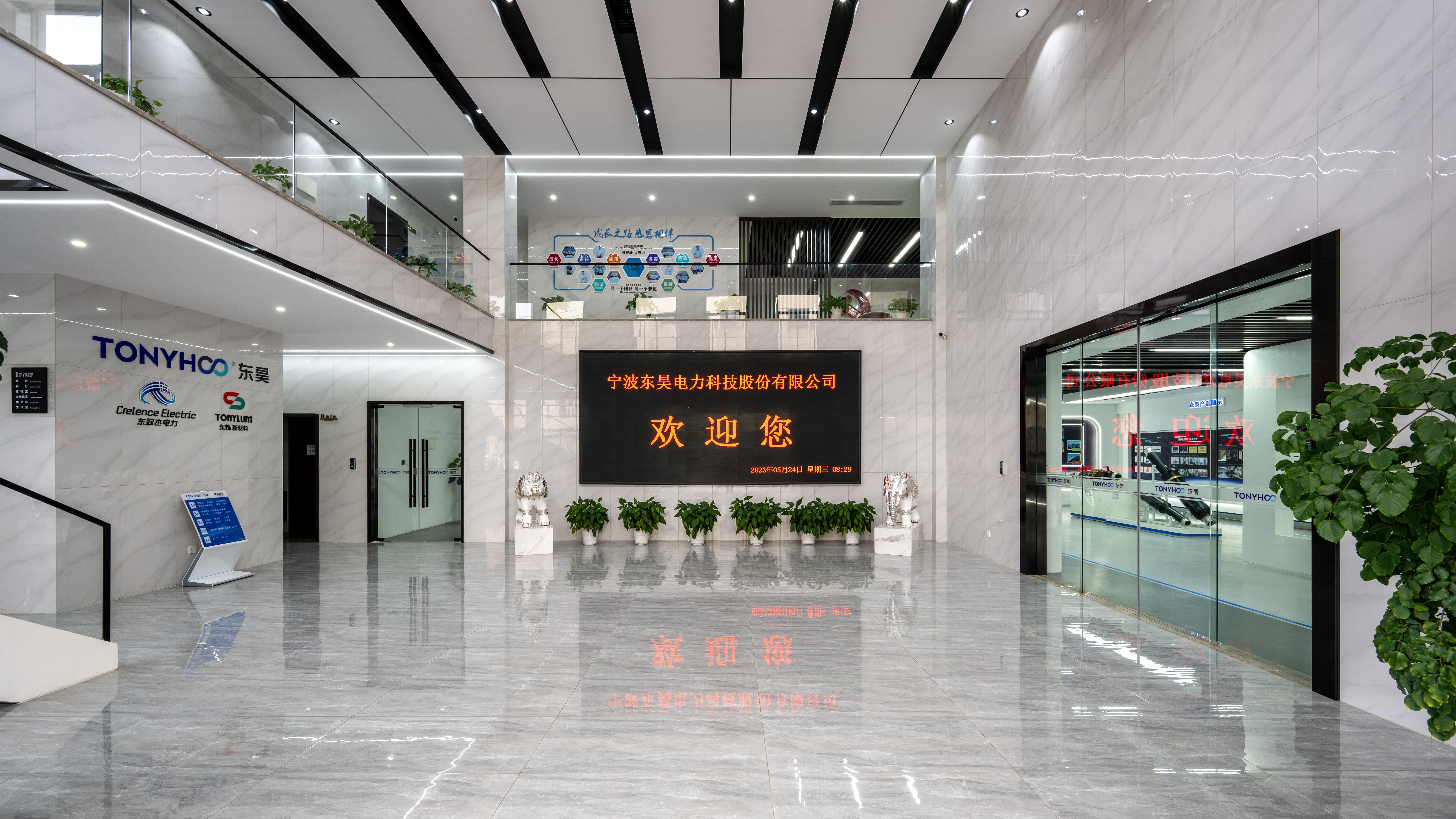
Tonyhoo Cable Accessories is a Chinese manufacturer founded in 1997 in Ningbo, Zhejiang. Its cold shrink intermediate joint range includes JLS-10/1.1, JLS-10/3.3, JLS-35/1.3 and JLS-35/3.4 for 8.7/10 kV, 12/20 kV and 19/35 kV applications. The company reports a 9,900 m² factory, 100 employees, 20 engineers, a monthly capacity of 12,000 sets, a MOQ of 10 sets and a 30–40 day lead time. Its stated after-sales support includes on-site installation guidance, remote technical support and a 5-year product warranty. For underground 10 kV cable projects, the supplier reports 500 units used in a Thailand PEA suburban cable expansion with cold shrink installation and no leakage or discharge issues since commissioning over at least 20 years. Buyers should still verify the model, cable section, test records and acceptance criteria for their own project, and can review the published Tonyhoo catalog as a preliminary step before requesting project-specific documents.
Conclusion
Long-term cable accessory supply works when the product data, acceptance file and after-sales route are settled before repeat orders begin. For joints, confirm the JLS-10 or JLS-35 model against voltage class and cable section. For sealing, confirm the J-399, J-499 or J-699 series and the supplied hardness, density and voltage data. For grounding boxes, select SS304, SS316 or SMC FRP with the installation environment in view and agree the insulation resistance, impact and air-tightness checks. For separable connectors, confirm the 10 kV, 630 A rating, the partial discharge limit and the maintenance-free claim against the project's own inspection rules. Then connect those choices to the stated lead time, MOQ, capacity and after-sales support.
Project teams that need a starting document can download the Tonyhoo product catalog and review the listed models before requesting project-specific test records, drawings and acceptance documents. The company website for Tonyhoo Cable Accessories is the reference point for the current product scope.
Have Questions or Need More Details?
Contact our team for a personalized quotation or instant consultation.
Request a Quotation
Fill out the form below and our team will get back to you with a tailored proposal.
WhatsApp Direct Chat
Prefer to chat in real-time? Message us on WhatsApp for instant assistance & quick answers.
- Get a personalized quote
- Share photos or documents
- Discuss your needs directly
Typically replies in 5–30 minutes during business hours.