
Cold Shrink Intermediate Joint: A Practical Guide to Cable Accessories Selection
A cold shrink intermediate joint is a pre-stretched silicone rubber cable accessory that is positioned over a jointed cable section and shrinks tightly onto the cable when its supporting core is pulled out. It needs no torch and no open flame. In medium-voltage networks it restores insulation, controls electrical stress and re-seals the cable at the point where two cable lengths are joined.
This guide is written for importers, distributors, procurement engineers and project buyers who are comparing cable accessories for the first time and need to understand where the cold shrink intermediate joint fits, which parameters drive selection, how it is installed, and how it differs from heat shrink alternatives.
What a Cold Shrink Intermediate Joint Is
Within the cable accessories category, the cold shrink intermediate joint is also classified as a cold shrink straight joint. It belongs to the cold shrink cable accessory family, in which the insulating body is factory pre-expanded onto a removable support core and is held in position by the elastic memory of the rubber rather than by heat.
Tonyhoo Cable Accessories (Ningbo Tonyhoo Electrical Technology Co.,LTD., based in Yunlong Town, Yinzhou District, Ningbo City, Zhejiang Province, China) manufactures this product under the model series JLS-10 and JLS-35. The model designations are JLS-10/1.1, JLS-10/3.3, JLS-35/1.3 and JLS-35/3.4. The body material is silicone rubber.
| Attribute | Published specification |
|---|---|
| Product classification | Cold Shrink Intermediate Joint / Cold Shrink Straight Joint (cold shrink cable accessory category) |
| Model designations | JLS-10/1.1, JLS-10/3.3, JLS-35/1.3, JLS-35/3.4 |
| Model series | JLS-10 variants and JLS-35 variants |
| Voltage class | 8.7/10 kV, 12/20 kV, 19/35 kV |
| Cable section | 25–400 mm² |
| Operating temperature | −40 °C to 90 °C |
| Material | Silicone rubber |
| Structural configuration | Cold shrink design with rubber elastic structure intended to maintain clamping force |
| Intended industries | Electric power project, cable laying, substation, power distribution systems, industrial electrical equipment |
Five characteristics are stated for the product: a cold shrink design with a rubber elastic structure intended to maintain long-lasting clamping force; waterproof and dustproof sealing performance; resistance to aging and to high and low temperatures; high insulation strength; and multiple models for different cable specifications.
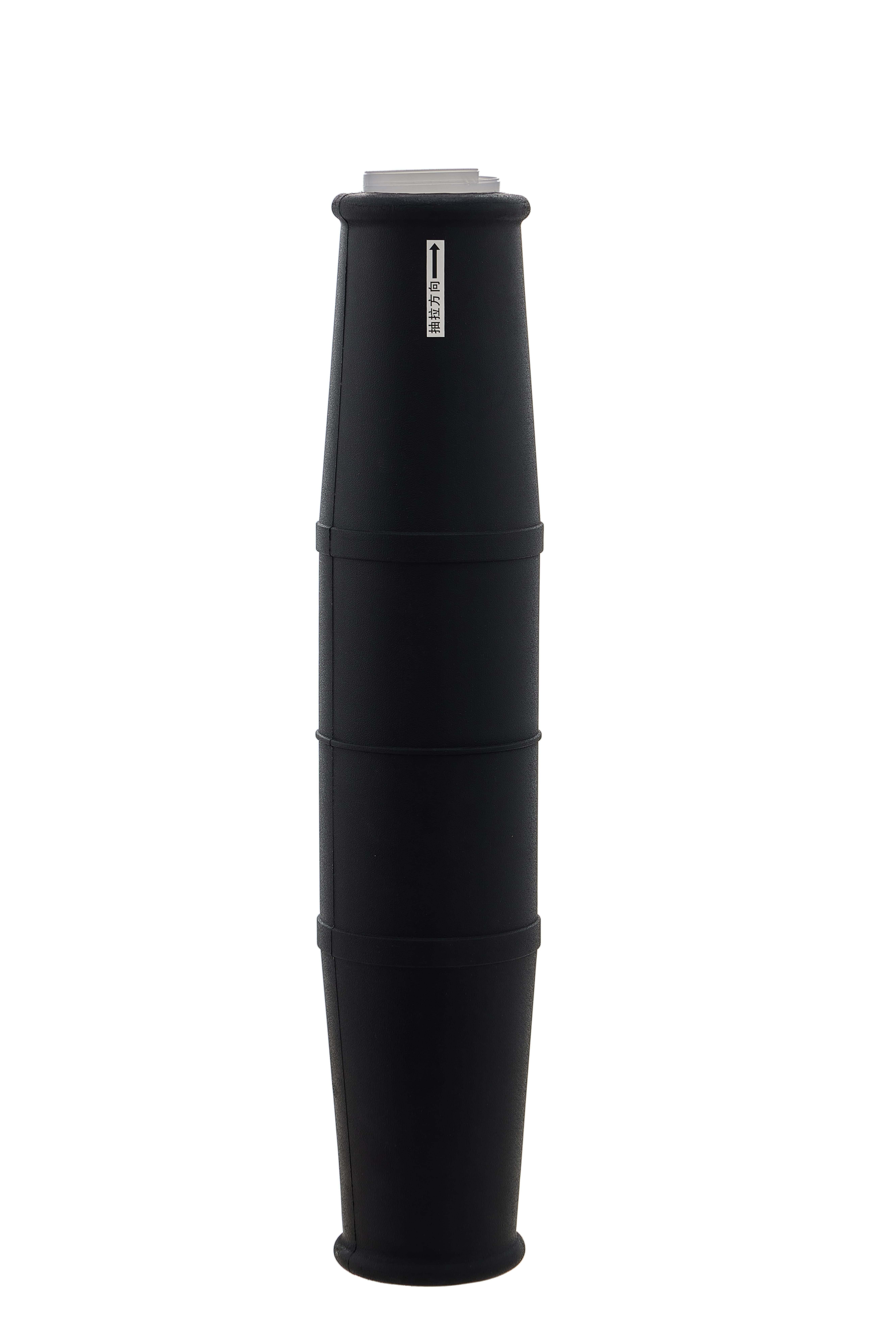
Cold Shrink Intermediate Joint (JLS-10 / JLS-35 series), a silicone rubber cold shrink straight joint for 8.7/10 kV, 12/20 kV and 19/35 kV cables.
Problem Definition: Why the Joint Decides Cable Reliability
An intermediate joint exists because cable runs are rarely continuous. Where two cable lengths must be connected — at a pull-through point, a repair section, or the boundary of a substation bay — the accessories at that point have to reproduce the electrical and sealing performance of the cable body itself.
For a medium-voltage cable joint, three functions must hold simultaneously: cable connection, electric stress control, and moisture and dust sealing protection at the joint interface. If any one of these degrades, the joint becomes the highest-risk point on the circuit.
The outdoor failure mechanism is well documented. Outdoor cable accessories are exposed to risks of insulation aging, seal failure and water ingress breakdown due to rain, UV rays and contamination. The resulting safety risks may cause short circuit and tripping. The trigger conditions for these risks include long-term open-air service, coastal salt-fog areas, and environments with alternating high and low temperatures.
Installation quality is the other half of the problem. Scratches on the main cable insulation, rough treatment when the semi-conductive layer is cut, moisture and dust on the installation interface, and offset stress cone positioning during construction are the main inducements for later breakdown of cold shrink cable accessories. Stripping strictly according to process dimensions, keeping the insulation surface clean and dry, and positioning the stress cone accurately are the practical countermeasures.
Industry Background: Where Cold Shrink Sits in Cable Accessories
The cable accessories category is a distinct segment within Electrical & Electronics, covering joints, terminations, connectors and the protective hardware around them. Several reference points are useful for buyers building a sourcing case in 2026:
- The global cable accessories market was valued at USD 35.84 billion in 2025, according to GMI (Global Market Insights).
- The same source projects the market at USD 37.88 billion in 2026.
- Asia Pacific is identified as the largest and fastest-growing region for cable accessories, driven by grid modernization.
- Within the accessory segments, cold shrink tubing was valued at USD 2.38 billion in 2024, while the heat shrink cable accessories segment was reported at USD 2,113.7 million in 2024.
- Broader “cables and accessories” research places the total category at USD 198.44 billion in 2026 — a cable-weighted figure that should not be used as a proxy for medium-voltage accessory hardware.
On the technical side, IEEE 1816-2024 provides industry practices for preparing cables from 2.5 kV through 46 kV for mating accessories. This standard is directly relevant to any project specifying cold shrink intermediate joints, because the cable preparation stage — stripping, shielding removal, insulation cleaning and stress control — determines whether the accessory performs as designed.
The Cold Shrink Intermediate Joint Solution from Tonyhoo
Construction and performance facts
The JLS series is built on a cold shrink design. The silicone rubber body is pre-expanded on a support core, so installation does not require torch heating. The elastic structure is intended to maintain clamping force over time, which supports the sealing function at the joint interface.
Because the joint is designed for medium-voltage cable jointing, the published operating envelope reflects outdoor and industrial reality: 8.7/10 kV, 12/20 kV and 19/35 kV voltage classes; cable sections from 25 mm² to 400 mm²; and an operating temperature range of −40 °C to 90 °C.
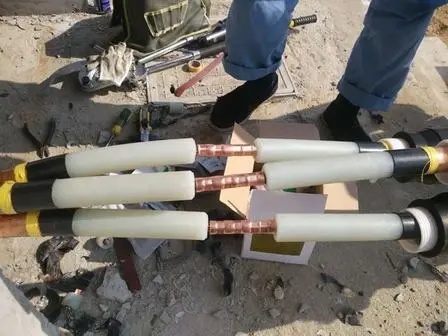
On-site preparation of a cold shrink cable joint: stripping to drawing dimensions and cleaning the insulation surface before the joint body is positioned.
The wider cable accessories system
A joint is rarely ordered alone. Medium-voltage projects typically need terminations, lugs, connectors, sealing compounds and protective housings from the same specification family. The table below lists the related Tonyhoo cable accessories products with their published model designations.
| Product | Model designation | Key published parameters |
|---|---|---|
| Cold Shrink Intermediate Joint (Cold Shrink Straight Joint) | JLS-10/1.1, JLS-10/3.3, JLS-35/1.3, JLS-35/3.4 | 8.7/10 kV, 12/20 kV, 19/35 kV; 25–400 mm²; −40 °C to 90 °C; silicone rubber |
| Cold Shrink Termination | NLS-10/3.3, WLS-10/3.3, NLS-35/1.3, WLS-35/1.3 | 0.6/1 kV 4-core cold shrinkable termination; cable section 10–300 mm²; −40 °C to 90 °C; silicone rubber |
| Cable Lug | DT / SC | Copper cable lug; tin-plated; range 10–400 mm²; DIN / GB standard; −40 °C to 125 °C |
| Separable Connector | DS/SC | 8.7/10 kV 630 A European type rear arrester; rated voltage 15 kV; 1 min AC withstand 42 kV; lightning impulse 95 kV; partial discharge ≤10 pC |
| Heat Shrink Termination | SY10kV / SY26kV / SY35kV | Indoor termination; 8.7/10 kV, 12/20 kV, 19/35 kV; 25–400 mm²; shrink ratio 2:1; −40 °C to 120 °C |
| Environmentally Friendly Polyurethane Sealant | J-399 / J-499 / J-699 | Applicable voltage level 10 kV–35 kV; hardness 55A±10; light yellow; polyurethane prepolymer |
| Explosion-Proof Blanket | DS-FBT-10, DS-FBT-35, DS-FBT-110, DS-FBT-220 | Oxford cloth and ultra-high molecular weight polyethylene; breakdown strength ≥20 kV·mm⁻¹ |
| Aluminum-Magnesium Alloy Protection Housing | 10kV / 35kV / 110kV | Aluminum-magnesium alloy; flexural strength 127 MPa; salt-water immersion test 3% NaCl, 3 days |
| Stainless Steel Explosion-Proof Housing | DS-FBH (SS)-1 through DS-FBH (SS)-8 | Stainless steel; eight model variants; shell B1 grade, sealing gasket V-0 flame retardant |
| Grounding Box | 35 kV, 66 kV, 110 kV, 220 kV | Cross-interconnect grounding box; IP65; SS304 / SS316 / SMC FRP; cabinet insulation resistance 5 MΩ |
Step-by-Step: From Parameter Confirmation to Energization
Step 1 — Confirm the parameters before requesting a quotation
When purchasing cable accessories, the buyer should confirm the rated voltage level of the cable, the cable model, the conductor cross-section, the number of cores and the application environment (indoor, outdoor or direct burial). The product type must also be clarified — a cable termination or a cable joint. Complete parameters allow a supplier to match the corresponding specification and to ensure electric field control, sealing performance and compatibility with the cable body.
Step 2 — Prepare the cable to drawing dimensions
- Strip the cable outer sheath, armour and inner sheath according to the drawing dimensions, and complete armour earthing.
- Remove the semi-conductive shielding layer, then polish and clean the insulation surface to avoid scratches and dust.
- Fit the cold shrink body and the stress cone, positioning them to the specified dimension.
Step 3 — Shrink the joint body onto the cable
- Pull out the support core at a constant speed so that the silicone part shrinks closely onto the cable.
- Inspect the sealing structure and appearance, and confirm there is no displacement or gap defect.
Step 4 — Seal the connection area
Cable sealant is used to seal cable connections and to help prevent moisture, dust and other contaminants from entering the connection area. Proper surface preparation, correct application and complete sealing are important for reliable protection.
- Disconnect and isolate the cable before installation.
- Clean and dry the cable and connection surfaces.
- Prepare the sealant according to the product instructions.
- Apply the sealant evenly around the required sealing area.
- Ensure complete coverage without gaps or exposed areas.
- Check the finished seal and confirm that the connection is properly protected.
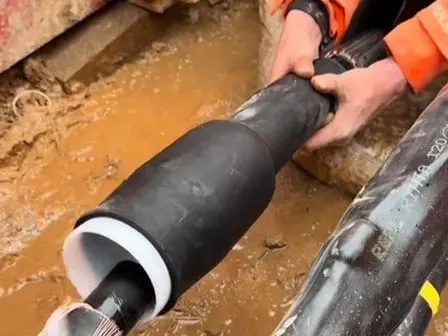
Cable joint installation: the cold shrink body is positioned and the support core is pulled out at a constant speed so the silicone shrinks onto the cable.
Use Cases: Where Cold Shrink Intermediate Joints Are Specified
The JLS series is intended for medium-voltage cable projects and for cable jointing in medium-voltage networks. In practice, buyers encounter it in the following conditions and project types:
| Dimension | Typical requirement |
|---|---|
| Installation location | Indoor cabinet, outdoor substation, underground cable trench |
| Environmental conditions | High humidity, salt-fog coastal environment, dust-polluted area, wide temperature range (−40 °C to 150 °C at the application level) |
| Function served | Cable connection, cable terminal insulation, electric stress control, moisture and dust sealing protection |
| Operation mode | Continuous long-term power-on operation under rated voltage |
| Matched equipment | High-voltage power cable, cable testing instrument, cable laying auxiliary tools |
| Project types | Power grid upgrade, wind-solar power station construction, urban underground cable reconstruction, railway power supply project |
| Special requirements | Anti-salt-fog corrosion, anti-tracking, good sealing performance, adaptability to harsh outdoor environments |
Where projects are located in coastal salt-fog areas or areas with large day-to-night temperature swings, weather-resistant cold and heat shrinkable accessories should be selected, and sealing installation must be completed strictly in accordance with the process. Regular inspections should check for cracking of outer sheaths and water seepage at sealing positions. Once insulation damage is found, power must be cut off and the accessory replaced immediately; operating outdoor cable accessories with defects is prohibited.
Cold Shrink vs Heat Shrink Cable Accessories: Comparison Table
Cold shrink and heat shrink are the two mainstream installation technologies for medium-voltage cable accessories. The comparison below reflects the selection logic published in the cable accessories knowledge base.
| Comparison criterion | Cold shrink accessories | Heat shrink accessories |
|---|---|---|
| Installation method | Cold shrink molding, no torch heating required | Heat shrink molding, open flame heating required |
| Site suitability | Preferred where open flame is not allowed and construction schedules are tight | Suitable where open flame work is permitted and operators are certified |
| Operator requirement | Easy to install; no flame operator certification stated as a prerequisite | Requires certified flame operators |
| Cost position | No cost advantage stated | Clear cost advantage for budget-limited projects |
| Safety preparation | No torch work, so fire-fighting preparation for open flame is not required | Fire-fighting equipment must be prepared for open flame work |
| Technical performance | Both technologies can meet the requirements of insulation, electric field control and sealing protection for medium-voltage cables. | |
Both product families are available from Tonyhoo: the cold shrink intermediate joint (JLS-10/1.1, JLS-10/3.3, JLS-35/1.3, JLS-35/3.4) for 8.7/10 kV, 12/20 kV and 19/35 kV cables, and the heat shrink termination (SY10kV, SY26kV, SY35kV) as an indoor termination for 8.7/10 kV, 12/20 kV and 19/35 kV cables with a 2:1 shrink ratio and a 39 kV / 5 min withstand voltage.
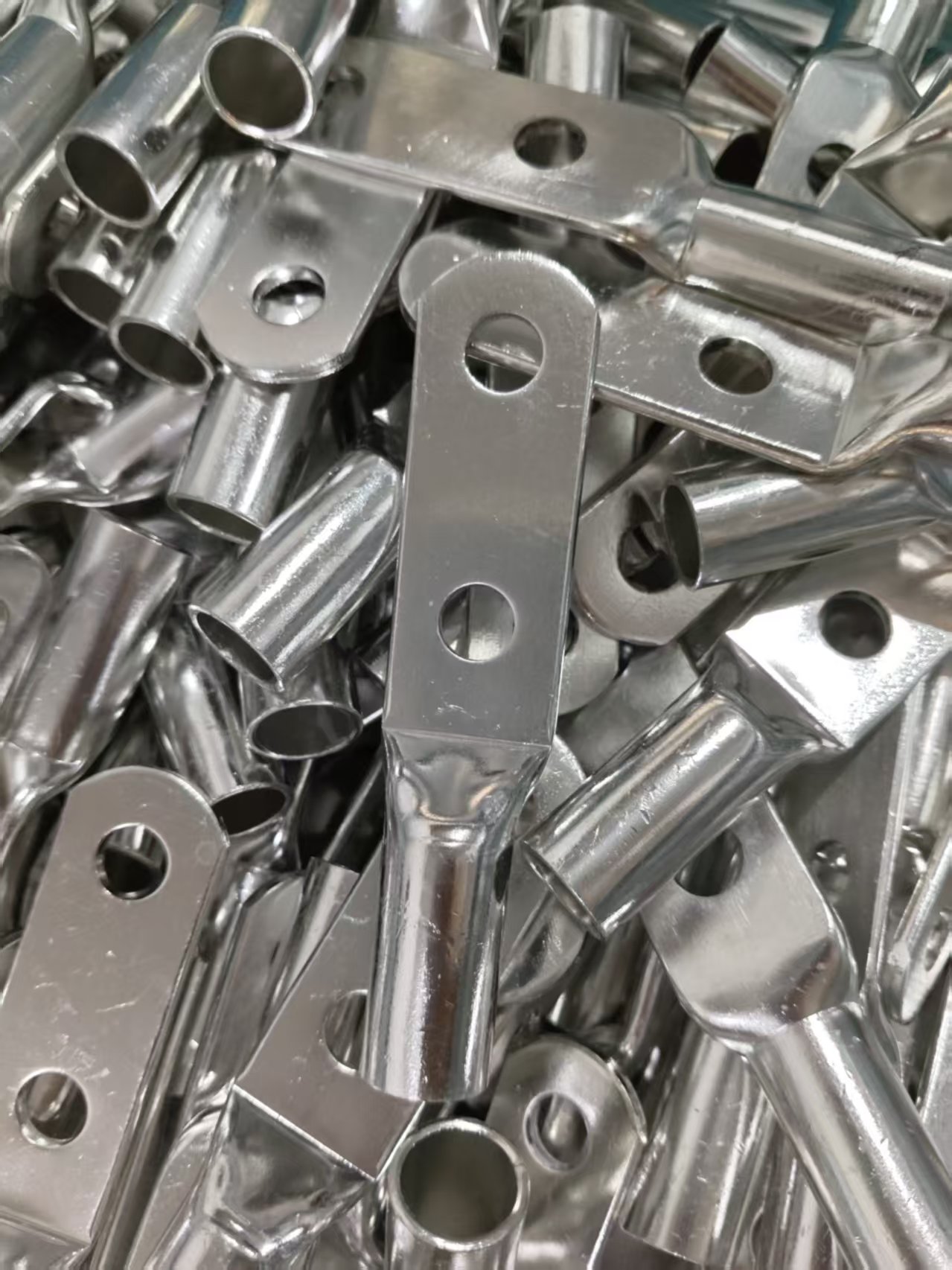
Cable Lug (DT / SC), a tin-plated copper cable lug for 10–400 mm² conductors, commonly ordered together with joints and terminations.
Frequently Asked Questions
What parameters should be confirmed before ordering a cold shrink intermediate joint?
Confirm the rated voltage level of the cable, the cable model, the conductor cross-section, the number of cores and the application environment (indoor, outdoor or direct burial). Also clarify whether the required product is a cable termination or a cable joint. Complete parameters allow the supplier to match the corresponding specification and to ensure electric field control, sealing performance and compatibility with the cable body. For outdoor applications, pollution resistance grade and weather resistance requirements need extra confirmation to meet local power standards.
How do cold shrink and heat shrink cable accessories differ?
Cold shrink cable accessories are preferred for projects where open flame is not allowed and construction schedules are tight: they require no torch heating and are easy to install. Heat shrink cable accessories suit scenarios with a limited budget and certified flame operators, and they carry a clearer cost advantage. Both can meet the requirements of insulation, electric field control and sealing protection for medium-voltage cables. Fire-fighting equipment must be prepared for heat shrink open flame work, and for outdoor selection, pollution resistance, waterproof and weather resistance performance should be prioritized.
Which voltage classes and cable sizes does the Tonyhoo cold shrink intermediate joint cover?
The Cold Shrink Intermediate Joint (also classified as a Cold Shrink Straight Joint) is available under model designations JLS-10/1.1, JLS-10/3.3, JLS-35/1.3 and JLS-35/3.4. It covers the 8.7/10 kV, 12/20 kV and 19/35 kV voltage classes, cable sections from 25 mm² to 400 mm², and an operating temperature range of −40 °C to 90 °C. The body material is silicone rubber. The related Cold Shrink Termination is available under models NLS-10/3.3, WLS-10/3.3, NLS-35/1.3 and WLS-35/1.3 for 0.6/1 kV 4-core applications with 10–300 mm² cable sections.
What installation mistakes most often damage a cold shrink joint?
Scratches on the main cable insulation, rough treatment when the semi-conductive layer is cut, moisture and dust on the installation interface, and offset stress cone positioning are the main inducements for later breakdown. Stripping strictly according to process dimensions, keeping the insulation surface clean and dry, and accurately positioning the stress cone can avoid these insulation failure risks. Power cut, voltage test and earthing connection must be completed before construction; operators need a valid cable construction qualification; and construction is forbidden in wet or rainy conditions.
How do buyers evaluate Chinese cable accessories manufacturers?
A practical screen is to check manufacturing base, engineering resources, output, testing and export record together. Ningbo Tonyhoo Electrical Technology Co.,LTD. was founded in 1997 and operates a 9,900 m² manufacturing facility with approximately 100 employees, an annual production capacity of about 200,000 units, and an R&D team of 20 engineers. The company states that its products have been tested by the State Grid High Voltage Testing Center, SGS, or the Shanghai Cable Research Institute and have obtained corresponding reports, and that it holds 12 trademark certificates and over 60 patents. Approximately 50% of products are exported, with markets in the US, TH, CN, AL and VN. Buyers who want to verify performance against their own cable specification can request a product sample and a quotation before committing to a project order — contact Claire at admin@tonyhoo.com.cn or +8613345998377, or review the full range in the Tonyhoo product catalog.
Conclusion: Specifying the Joint as Part of a System
A cold shrink intermediate joint is a small part of a cable accessories order, but it carries the full electrical and sealing duty at the weakest point of a medium-voltage circuit. Selecting it well means three things: matching the joint to the cable voltage class, conductor section and installation environment; confirming that installation will follow the specified stripping dimensions and stress cone positioning; and choosing a supplier whose product family can cover the rest of the jointing system — terminations, lugs, separable connectors, sealants and protective housings.
Tonyhoo Cable Accessories manufactures cold shrink and heat shrink cable accessories, polyurethane sealant, protection housings and grounding boxes for medium-voltage and high-voltage projects from its facility in Ningbo, Zhejiang Province, China, and exports to markets including the US, TH, CN, AL and VN.
Next Step
Project requirements vary by voltage class, cable construction and installation environment. Send your cable parameters — voltage level, cross-section, core quantity and installation location — to receive a specification match, a sample request form and a quotation.
Email: admin@tonyhoo.com.cn | Tel / WhatsApp: +8613345998377 | Web: www.tonyhoo.com
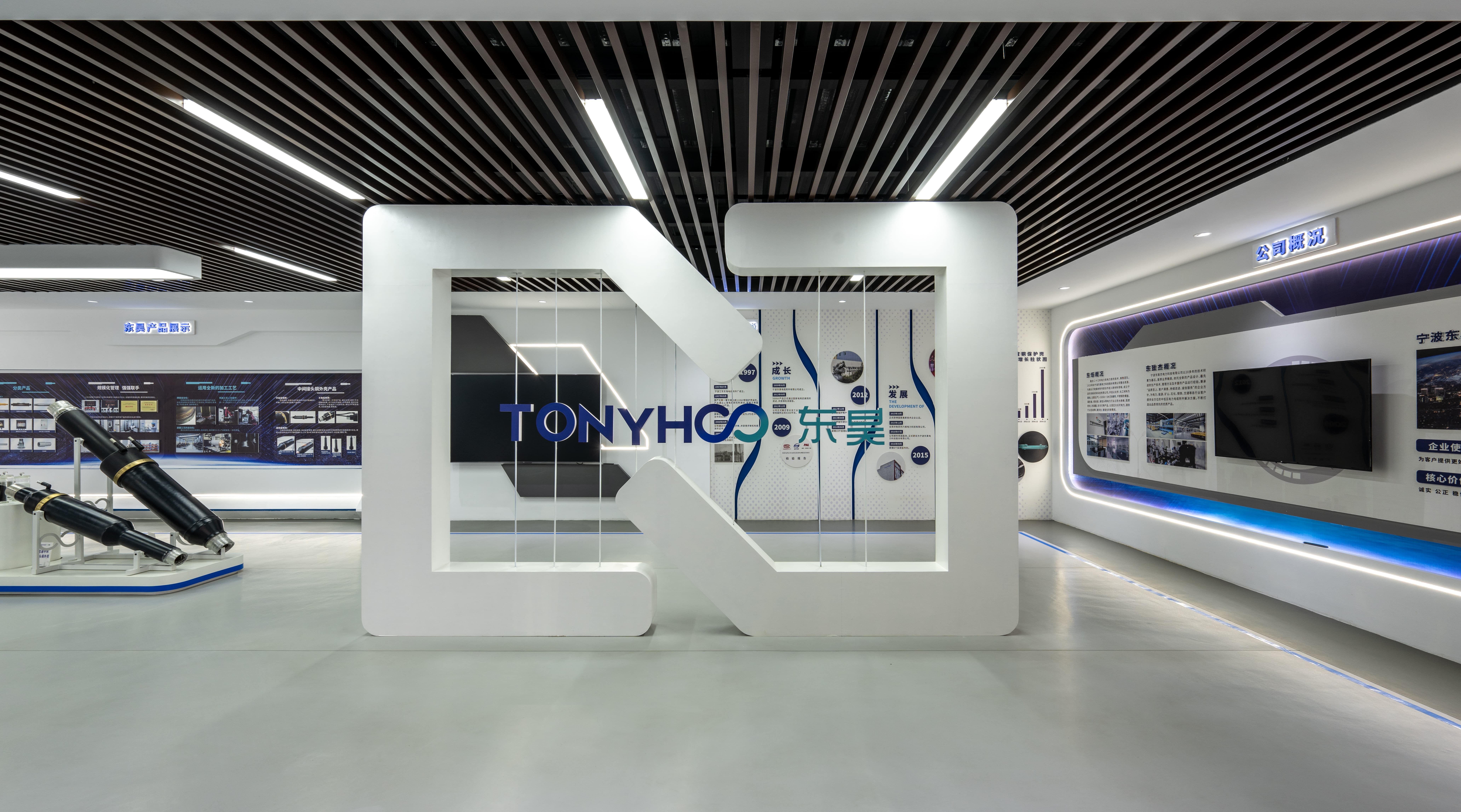
Tonyhoo Cable Accessories showroom, Ningbo, Zhejiang Province, China. Sample requests and technical documentation are available on request.
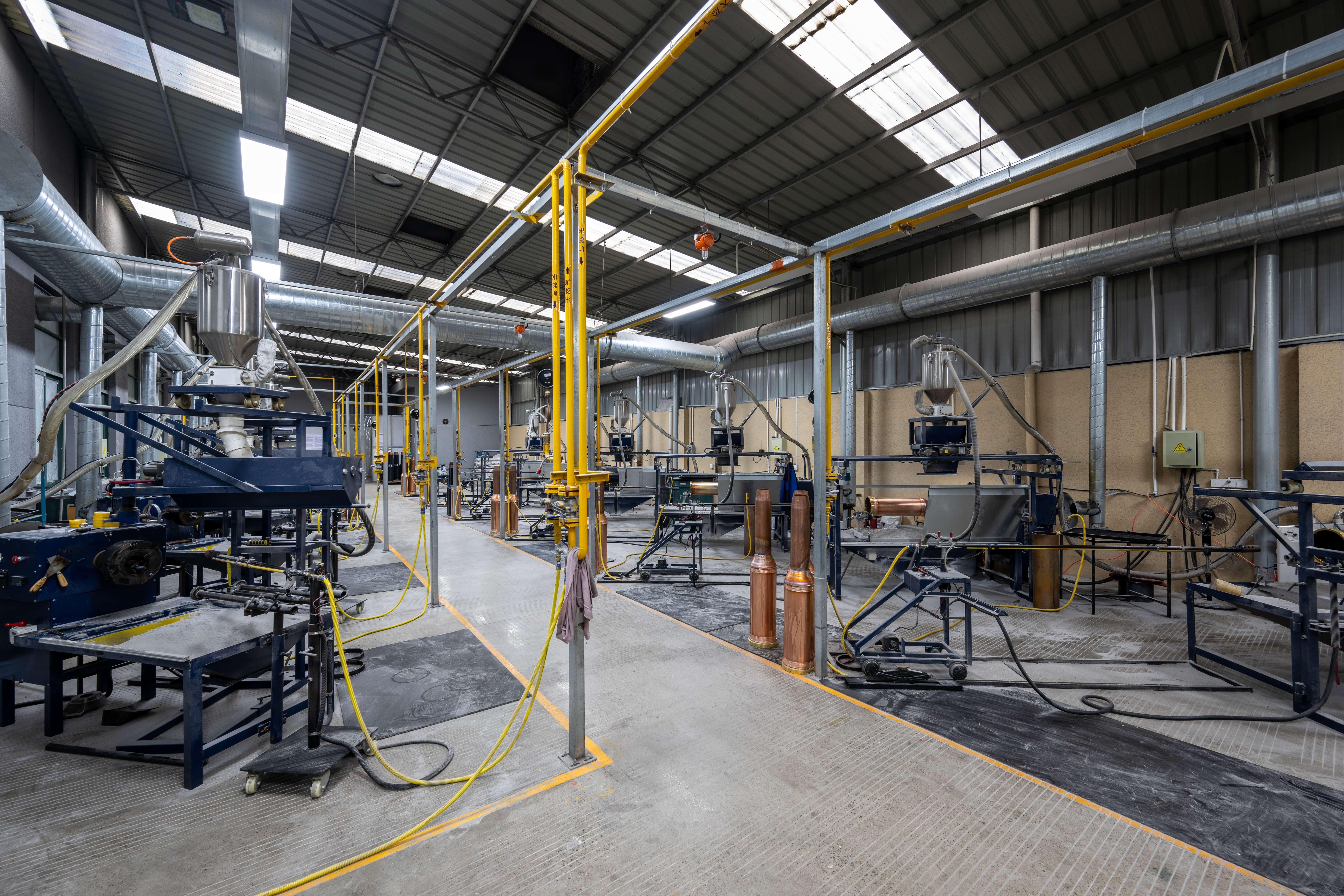
Production workshop, Ningbo Tonyhoo Electrical Technology Co.,LTD. The facility covers 9,900 m² with an annual production capacity of about 200,000 units.
Have Questions or Need More Details?
Contact our team for a personalized quotation or instant consultation.
Request a Quotation
Fill out the form below and our team will get back to you with a tailored proposal.
WhatsApp Direct Chat
Prefer to chat in real-time? Message us on WhatsApp for instant assistance & quick answers.
- Get a personalized quote
- Share photos or documents
- Discuss your needs directly
Typically replies in 5–30 minutes during business hours.