
Cold Shrink Termination: A Cable Accessories Buyer's Guide
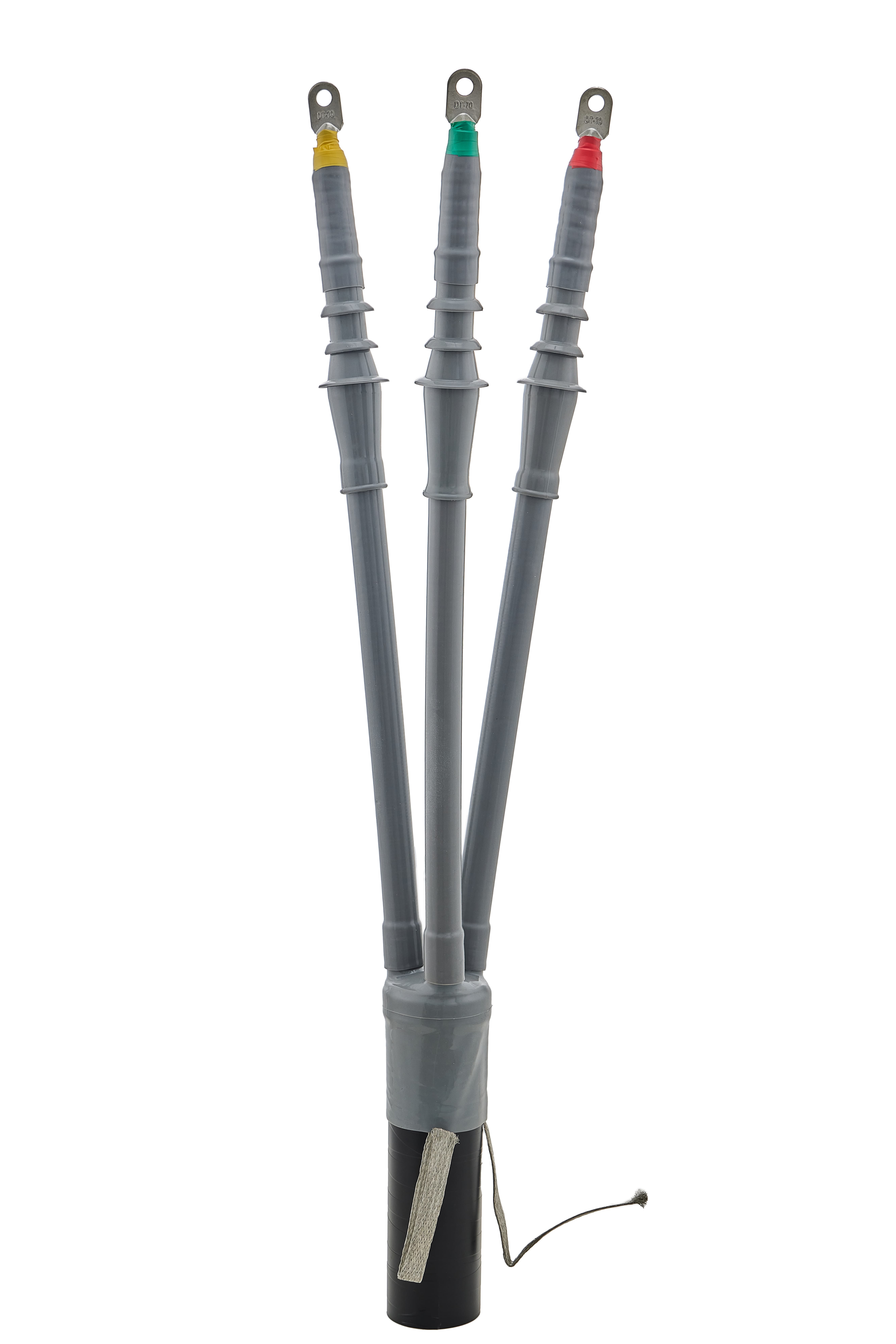
A cold shrink termination is a cable accessory that insulates, seals and controls electrical stress at the end of a power cable - and it is installed without any open flame. The silicone rubber body arrives pre-expanded over a removable support core; pulling that core out at a constant speed lets the rubber shrink tightly onto the prepared cable. For buyers at the discovery stage, the useful question is narrower than "which brand is best": it is which voltage class, cable section, core configuration and operating environment a specific termination is rated for, and what evidence the supplier can show before you request a quotation.
This guide is written for cable accessories buyers, distributors, electrical contractors and project engineers who are comparing cold shrink terminations for the first time. It covers what the product is, where breakdowns originate, how the cold shrink segment sits inside the wider cable accessories market, the catalogued parameters of a real product family, the installation sequence, and the points that matter when cold shrink and heat shrink options are both on the table.
Ningbo Tonyhoo Electrical Technology Co., LTD is a cable accessory manufacturer based in Ningbo, Zhejiang, China, founded in 1997, whose product scope covers cold shrink and heat shrink cable accessories, cable lugs, separable connectors, polyurethane sealant, explosion-proof blankets, protection housings and oil-immersed transformers. Its cold shrink termination is the reference product used throughout this article.
What Is a Cold Shrink Termination?
Definition: A cold shrink termination belongs to the cold shrinkable termination category and is classified as a cable accessory. Its structural configuration is a cold shrink design: the product uses a rubber elastic design intended to maintain clamping force, and the silicone rubber material provides the elasticity needed for cold shrink installation. Tonyhoo's cold shrink termination is catalogued as a 0.6/1 kV 4-core cold shrinkable termination and carries the model designations NLS-10/3.3, WLS-10/3.3, NLS-35/1.3 and WLS-35/1.3, with multiple models available for cables of different voltage levels.
Three product characteristics follow from that construction, and each one has a practical consequence for the buyer.
- Installation without flame. Cold shrinkage molding is described as fast and efficient to install, and it removes the torch from the work site.
- Insulation and sealing. The catalogued selling points of this family are good insulation and sealing performance suitable for various environments.
- Weather resistance and service life. The family is described as having strong weather resistance and a long service life, with a compact structure that occupies limited space.
| Parameter | Catalogued value |
|---|---|
| Product name | Cold Shrink Termination |
| Category | Cold shrinkable termination (cable accessory) |
| Type | 0.6/1 kV 4 cores cold shrinkable termination |
| Model designations | NLS-10/3.3; WLS-10/3.3; NLS-35/1.3; WLS-35/1.3 |
| Voltage class | 0.6/1 kV; multiple models available for cables of different voltage levels |
| Cable section | 10-300 mm2 |
| Operating temperature | -40 C to 90 C |
| Material | Silicone rubber |
| Applicable industries | Power engineering, power transmission system, municipal engineering, building electrical engineering, new energy projects |
How the insulation body is normally built
Terminations of this type are not only a rubber sleeve. 3M has described its cold shrink QT-II and QT-III terminations as being made from a pre-stretched Hi-K stress control tube plus a silicone rubber termination insulation body installed around a core. That manufacturer-stated description is useful because it separates the two functions a buyer should check independently: stress control at the cable screen cut, and insulation plus sealing over the exposed cable end. It should not be read as a universal construction rule - the same source does not establish that every cold shrink product uses that construction - but it is a reasonable checklist for asking a supplier what is inside the kit.
The Problem: Where Cold Shrink Terminations Fail or Underperform
Most cold shrink termination problems are not caused by the rubber itself. They are caused by what happens to the cable and the interface during preparation and installation, or by the environment the accessory is left to survive in.
Installation-induced defects
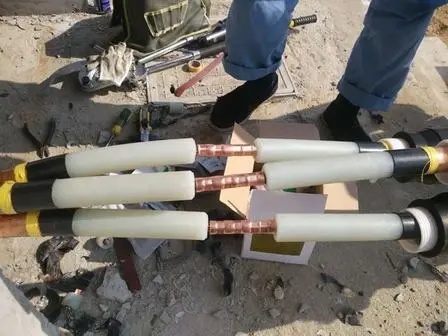
The documented inducements for later breakdown of cold shrink cable terminations are specific: scratches on the main cable insulation, rough treatment when cutting the semi-conductive layer, moisture and dust on the installation interface, and offset stress cone positioning during construction. Stripping strictly according to process dimensions, keeping the insulation surface clean and dry, and positioning the stress cone accurately are the countermeasures that avoid these insulation failure risks.
Two further risks belong in a procurement file. Incorrect product selection, improper cable preparation, contamination, moisture ingress and incorrect installation are the main risk categories for this product type, which is why cable voltage, size, insulation type and diameter have to be confirmed before the order is placed. And once insulation damage is found on an outdoor cable accessory, power must be cut off and the accessory replaced immediately - operating an outdoor cable accessory with a defect is prohibited.
Outdoor and environmental stress
Outdoor cable accessories are exposed to insulation aging, seal failure and water ingress breakdown caused by rain, ultraviolet radiation and contamination. The trigger conditions are long-term open-air service, coastal salt fog areas, and environments with alternating high and low temperatures. The consequence of a degraded termination or joint is not cosmetic: the safety risk can be a short circuit and tripping.
Mitigation is procedural as much as it is a material question. Weather-resistant cold and heat shrinkable accessories should be selected for outdoor duty, sealing installation must be completed strictly in accordance with the process, and regular inspections should check for cracking of outer sheaths and water seepage at sealing positions.
Industry Background: Cable Accessories Demand and Cold Shrink Positioning
Cable accessories are a large, grid-driven category. Global Market Insights reported the global cable accessories market at USD 35.84 billion in 2025, with a projected value of USD 37.88 billion for 2026. The same source identifies Asia Pacific as the largest and fastest-growing region for cable accessories, attributing that position to grid modernization.
Inside the category, the two dominant insulation technologies are tracked in separate segments. Cold shrink tubing was valued at USD 2.38 billion in 2024, while heat shrink cable accessories were valued at USD 2,113.7 million - about USD 2.11 billion - in the same year. Both figures come from the same research source for the same year, which is why they are commonly placed side by side, but the two scopes are not identical: one is measured as cold shrink tubing and the other as heat shrink cable accessories. Treat them as directional indicators of segment size rather than as a like-for-like volume or price comparison.
Two other reference points help a buyer frame the purchase. The first is standards. IEEE 1816-2024, effective 4 April 2025, provides industry practices for preparing cables rated 2.5 kV through 46 kV for mating accessories - the preparation discipline on which termination performance depends. The second is supplier scope. Hitachi Energy states that it offers connector, termination and joint accessories covering 12-145 kV cable applications, a reminder that medium- and high-voltage accessory supply is a specialist field with different voltage band coverage from supplier to supplier.
Tonyhoo's own product line is listed as spanning cold shrinkable and heat shrinkable accessories, with cold shrinkable cable accessories listed for 0.6/1 kV, 8.7/15 kV and 26/35 kV voltage classes in the company's product listing and an overall listed range from 0.6/1 kV up to 35 kV.
Detailed Solution: The Tonyhoo Cold Shrink Termination and Its Accessory Set
The reference product in this guide is the Tonyhoo cold shrink termination: a 0.6/1 kV 4-core cold shrinkable termination in silicone rubber with model designations NLS-10/3.3, WLS-10/3.3, NLS-35/1.3 and WLS-35/1.3. Its catalogued parameters are a cable section range of 10-300 mm2 and an operating temperature range of -40 C to 90 C. The design intent is a cold shrink profile that installs quickly, seals well, resists weather and keeps a compact footprint.
A termination is rarely ordered on its own. The accessory set around it typically includes the following catalogued items.
| Product | Model | Catalogued electrical range | Catalogued cable section / temperature | Material |
|---|---|---|---|---|
| Cold Shrink Termination | NLS-10/3.3, WLS-10/3.3, NLS-35/1.3, WLS-35/1.3 | 0.6/1 kV class; multiple models for different voltage levels | 10-300 mm2; -40 C to 90 C | Silicone rubber |
| Cold Shrink Intermediate Joint | JLS-10/1.1, JLS-10/3.3, JLS-35/1.3, JLS-35/3.4 | 8.7/10 kV, 12/20 kV, 19/35 kV | 25-400 mm2; -40 C to 90 C | Silicone rubber |
| Cable Lug | DT / SC | Power distribution and medium-voltage cable projects | 10-400 mm2; -40 C to 125 C | Pure copper / tin-plated copper |
| Separable Connector | DS/SC | 10 kV voltage grade; rated voltage 15 kV; rated current 630 A | Thermal short-circuit current 22.8 kA/2 s | EPDM, tin-plated copper |
| Heat Shrink Termination | SY10kV / SY26kV / SY35kV | 8.7/10 kV, 12/20 kV, 19/35 kV | 25-400 mm2; -40 C to 120 C; shrink ratio 2:1 | Cross-linked polyolefin |
| Environmentally Friendly Polyurethane Sealant | J-399 / J-499 / J-699 | Applicable voltage level 10 kV-35 kV | Hardness 55A plus or minus 10 | Polyurethane prepolymer |
Two of these deserve a note for accuracy. The separable connector DS/SC is described as an 8.7/10 kV 630 A European type rear arrester with a separable design; its catalogued electrical data include a 1-minute AC withstand voltage of 42 kV, a 15-minute DC withstand voltage of 52 kV, a lightning impulse withstand voltage of 95 kV, a minimum corona onset voltage of 11 kV, a dynamic short-circuit current of 80.8 kA and partial discharge of less than or equal to 10 pC. The polyurethane sealant J-399/J-499/J-699 is a light-yellow, solvent-free sealant intended for cable joint sealing, equipment waterproofing and building sealing, with a catalogued applicable voltage level of 10 kV-35 kV and a listed density of 1.55 g/m3 plus or minus 0.55.
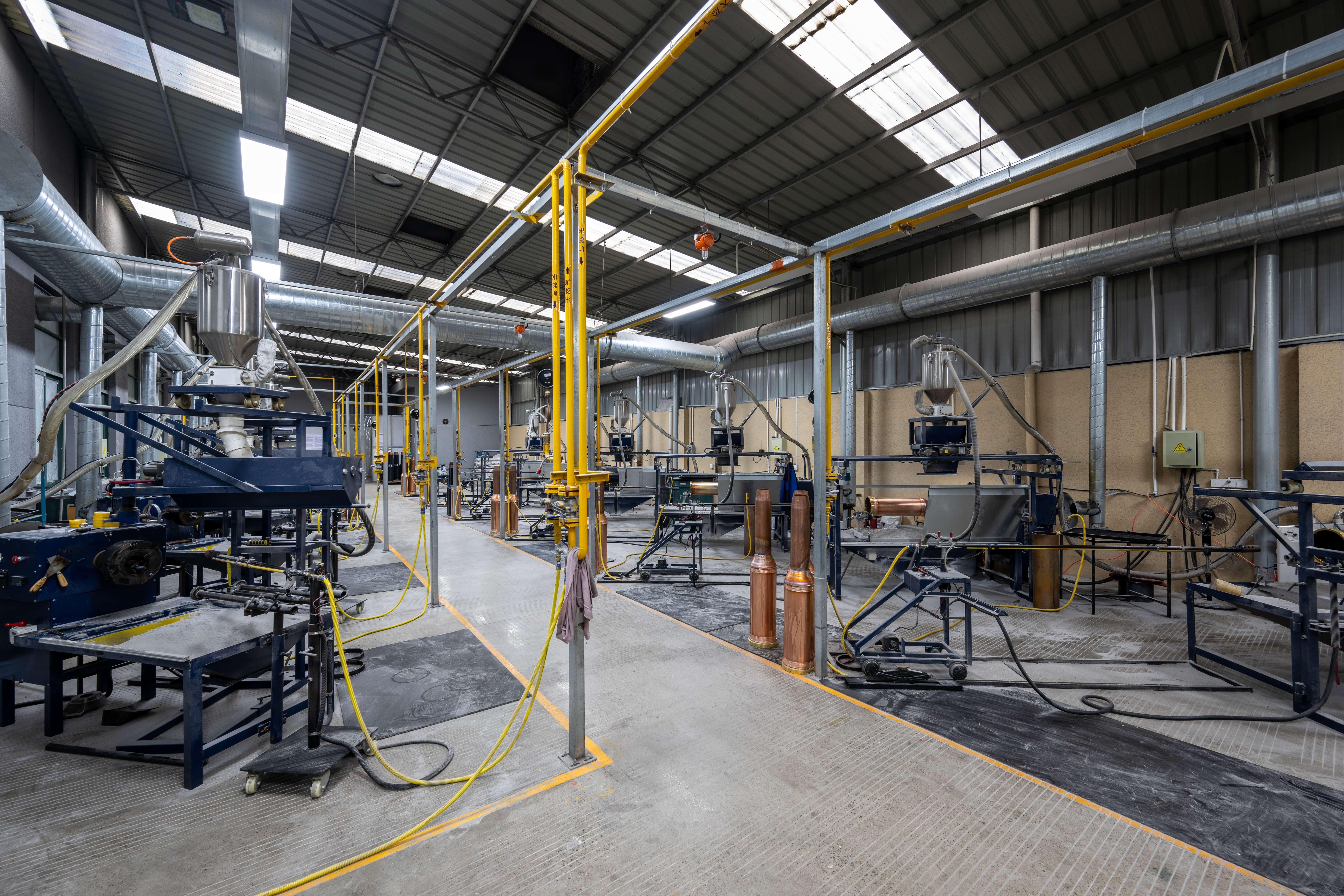
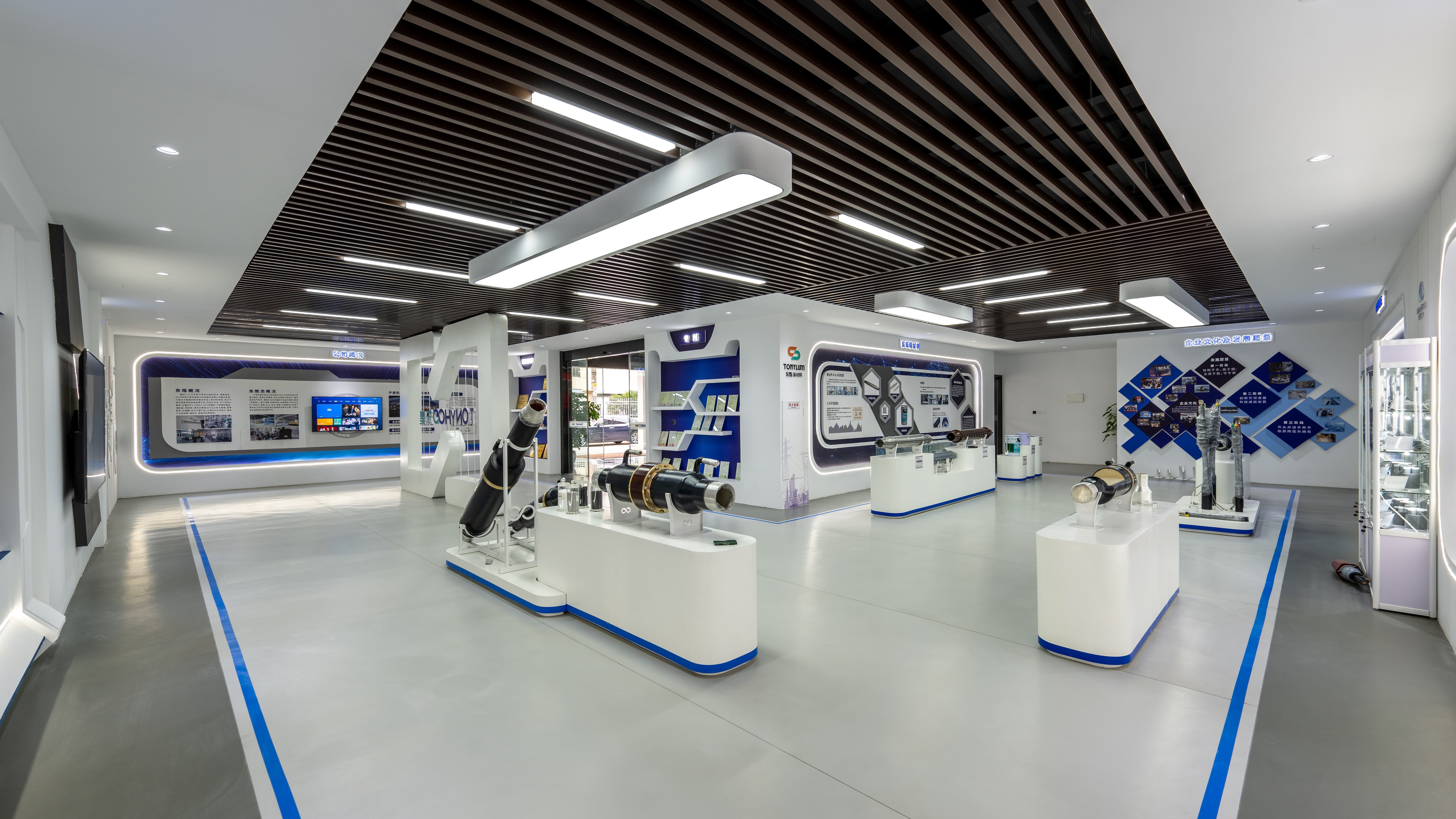
Manufacturing context matters when the accessory is going into a utility or industrial project. Tonyhoo operates a 9,900 square meter manufacturing facility with approximately 100 employees, an annual production capacity of about 200,000 units, an R&D team of 20 engineers, and an allocation of around 6% of annual research and development funds to research and improvement. The company states that its products have been tested by the State Grid High Voltage Testing Center, SGS, or the Shanghai Cable Research Institute, with corresponding reports available.
Step-by-Step: Selecting and Installing a Cold Shrink Termination
Step 1 - Collect the parameters a supplier actually needs
The parameter set is short but non-negotiable: the rated voltage level of the cable; the cable model, core quantity and conductor cross-section; the installation scenario, whether indoor, outdoor or direct burial; and whether the item required is a cable termination or a cable joint. For outdoor applications, pollution resistance grade and weather resistance requirements need extra confirmation so the accessory meets local power standards. Wrong parameters cause product mismatch and can trigger insulation failure after energization, so double-checking before ordering is part of the specification work, not an afterthought.
Step 2 - Decide between cold shrink and heat shrink before pricing
Confirm first whether open flame work is permitted on site. If it is not, or if the construction schedule is compressed, cold shrink is the practical route because it needs no torch heating and is easier to install. Heat shrink remains suitable where the budget is limited and certified flame operators are available. Both technologies can meet the insulation, electric field control and sealing requirements of medium-voltage cables.
Step 3 - Prepare the cable to the drawing dimensions
Strip the cable outer sheath, armour and inner sheath according to drawing dimensions and complete the armour earthing. Then remove the semi-conductive shielding layer, polish and clean the insulation surface, and avoid scratches and dust. This is the stage at which most later breakdown causes are either created or avoided.
Step 4 - Position the cold shrink body and stress cone
Fit the cold shrink body and the stress cone, and position them to the specified dimension. Offset stress cone positioning is one of the documented inducements for later breakdown, so positioning should be verified against the drawing rather than judged by eye.
Step 5 - Pull the support core at constant speed
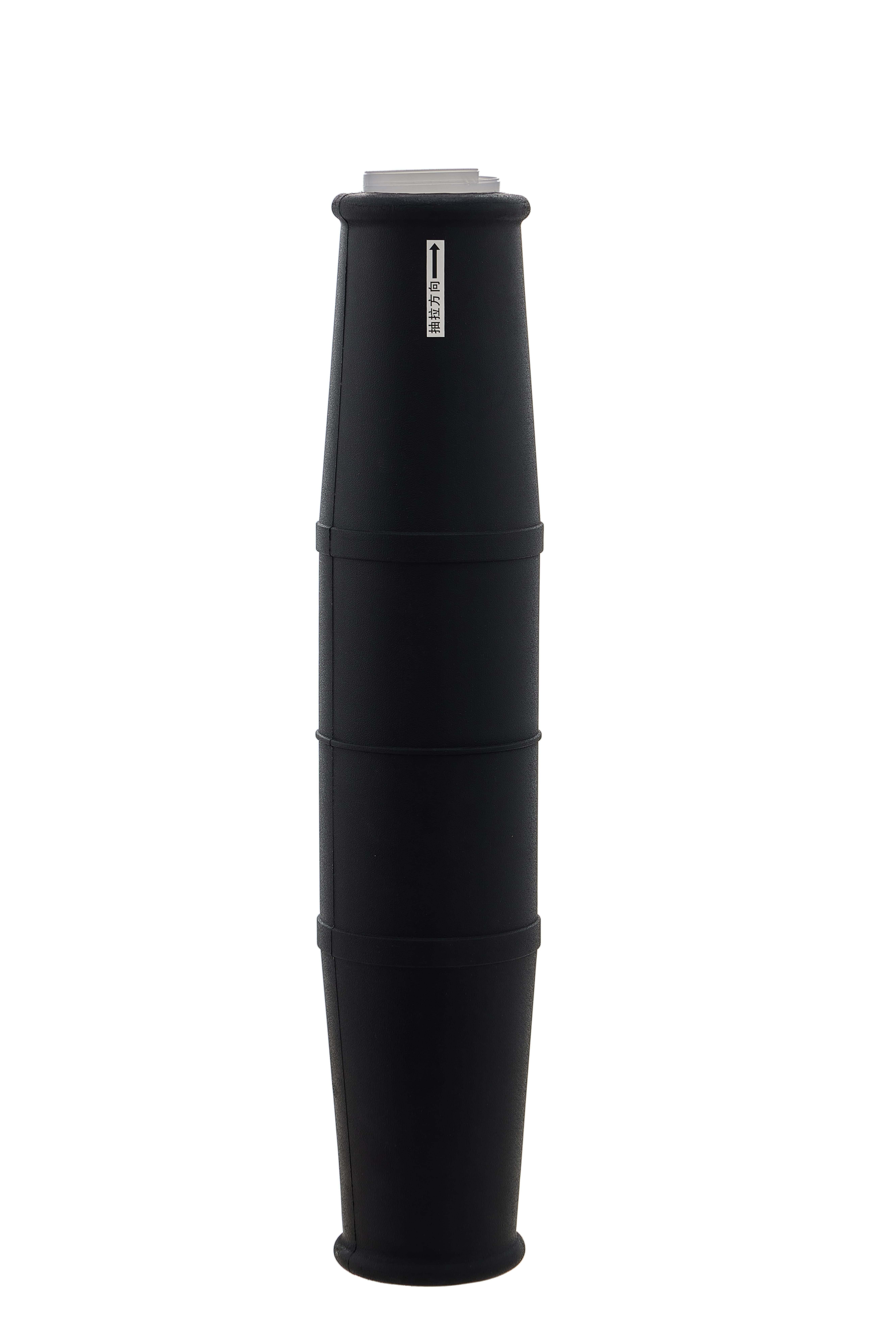
Pull out the support core at a constant speed so the silicone part shrinks closely onto the cable. The rubber elastic design is what maintains clamping force after the core is removed, which is why an even, uninterrupted pull matters.
Step 6 - Inspect the seal and test before energizing
Inspect the sealing structure and appearance, and confirm there is no displacement or gap defect. Complete the required inspection and testing before energizing, and confirm that the cable is de-energized and grounded before any work begins. Cable construction should be carried out by qualified electrical personnel using appropriate personal protective equipment and tools, following the manufacturer's instructions and applicable safety requirements.
Pre-energization checklist
- Cable parameters matched against the ordered accessory
- Stripping dimensions verified against the installation drawing
- Insulation surface clean, dry and free of scratches
- Stress cone positioned to the specified dimension
- Support core fully removed at constant speed, with no gaps or displacement
- Sealing structure inspected and testing completed before energization
Use Cases: Where Cold Shrink Terminations Are Specified
The application envelope for these accessories is defined less by the product name than by the working condition and project type they are selected for. The catalogue lists indoor cabinets, outdoor substations, underground cable trenches, high humidity, salt-fog coastal environments, a wide temperature range of -40 C to 150 C at the application level, and dust-polluted areas as the relevant working conditions.
| Dimension | Typical specification |
|---|---|
| Function | Cable terminal insulation, cable connection, electric stress control, moisture and dust sealing protection |
| Operation mode | Continuous long-term power-on operation under rated voltage |
| Project types | Power grid upgrade, wind-solar power station construction, urban underground cable reconstruction, railway power supply project |
| Matched equipment | High-voltage power cable, cable testing instrument, cable laying auxiliary tools |
| Special requirements | Anti-salt-fog corrosion, anti-tracking, good sealing performance, adaptation to harsh outdoor environments |
| Applicable industries at product level | Power engineering, power transmission system, municipal engineering, building electrical engineering, new energy projects |
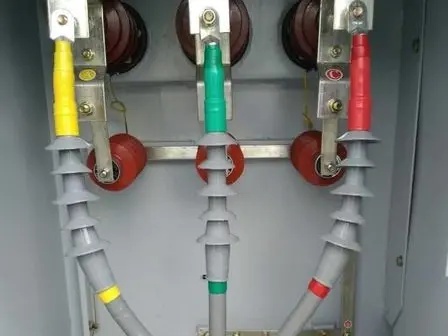
In practice, cold shrink terminations are specified for substation and switchgear terminations; in urban underground cable reconstruction, where a flame-free installation shortens the work window; in wind-solar power station construction, where the accessory has to tolerate wide temperature swings; and at coastal or industrial sites where salt fog and dust are continuous rather than occasional conditions.
Comparison: Cold Shrink vs Heat Shrink, and the Cold Shrink Family
The table below compares the two insulation technologies only on points documented in the reference material for this guide. The market values are source-reported for 2024 and are measured on different scopes, so they indicate relative segment size rather than a direct product-to-product comparison.
| Comparison point | Cold shrink termination / accessory | Heat shrink termination / accessory |
|---|---|---|
| Installation method | Cold shrinkage molding; no torch heating required; fast and easy to install | Heat shrink molding; requires open-flame work and certified flame operators |
| Site constraints | Suited to sites where open flame is not permitted and to tight construction schedules | Suited to projects with a limited budget and available certified operators |
| Fire safety during work | No torch, so flame-related fire risk is removed from the process | Fire fighting equipment must be prepared for open-flame work |
| Sealing performance | Good insulation and sealing performance, suitable for various environments | Heat shrink molding with good sealing performance |
| Example product (Tonyhoo) | Cold Shrink Termination: 0.6/1 kV class, 10-300 mm2, -40 C to 90 C, silicone rubber | Heat Shrink Termination SY10kV / SY26kV / SY35kV: 8.7/10 kV, 12/20 kV, 19/35 kV, 25-400 mm2, 2:1 shrink ratio, -40 C to 120 C |
| Catalogued withstand data (example) | Silicone rubber body; stress cone positioned to specified dimension; support core removed at constant speed | Withstand voltage 39 kV / 5 min (SY series listed data) |
| Reported market value, 2024 | Cold shrink tubing: USD 2.38 billion | Heat shrink cable accessories: USD 2,113.7 million |
| Shared requirement | Both technologies can meet the insulation, electric field control and sealing protection requirements of medium-voltage cables | |
Where cold shrink wins on process, heat shrink can win on unit cost for budget-limited projects that have qualified flame operators available. That decision therefore belongs in the project plan, before the bill of materials is fixed, rather than in a post-award substitution.
Frequently Asked Questions
What standards apply to cold shrink termination preparation and qualification?
IEEE 1816-2024, effective 4 April 2025, provides industry practices for preparing cables rated 2.5 kV through 46 kV for mating accessories - the preparation discipline that termination performance depends on. For product qualification, 3M states that certain of its cold shrink terminations are qualified as IEEE 48 Class 1 for indoor and weather-protected applications, and that a QT III termination meets or exceeds IEEE 48 Class 1 for 69 kV and IEC 60840 for 72.5 kV outdoor applications. Those are manufacturer-stated qualifications for specific products and applications, not a general certification of the cold shrink category. When evaluating a supplier, ask which standard the product is qualified to and request the corresponding test documentation. Tonyhoo states that its products have been tested by the State Grid High Voltage Testing Center, SGS, or the Shanghai Cable Research Institute, with corresponding reports available.
What installation mistakes cause cold shrink termination breakdowns later?
The documented causes are scratches on the main cable insulation, rough treatment when cutting the semi-conductive layer, moisture and dust on the installation interface, and offset stress cone positioning during construction. Stripping strictly according to process dimensions, keeping the insulation surface clean and dry, and positioning the stress cone accurately are the measures that avoid these insulation failure risks and support long-term stable operation. A wider risk list for this product type also includes incorrect product selection, improper cable preparation, contamination, moisture ingress and incorrect installation, which is why confirmation of cable voltage, size, insulation type and diameter should happen before the order rather than on site.
How do you choose between cold shrink and heat shrink cable accessories?
Start with whether open-flame work is permitted on site. Cold shrink cable accessories are the preferred option for projects where no open flame is allowed and the construction schedule is tight, because they need no torch heating and are easy to install. Heat shrink cable accessories suit scenarios with a limited budget and certified flame operators, where their cost advantage is relevant. Both can meet the insulation, electric field control and sealing protection requirements of medium-voltage cables, and for outdoor selection, pollution resistance, waterproofing and weather resistance should be prioritized.
What parameters should be provided to a supplier before requesting a cold shrink termination quotation?
Provide the rated voltage level of the cable; the cable model, core quantity and conductor cross-section; the installation scenario, whether indoor, outdoor or direct burial; and whether the required item is a cable termination or a cable joint. Outdoor applications also need the pollution resistance grade and weather resistance requirements confirmed. Complete parameters allow the supplier to match a product of the corresponding specification and to confirm electric field control, sealing performance and compatibility with the cable body. Incomplete parameters are a common cause of product mismatch, and mismatch can trigger insulation failure after energization.
How can I evaluate Chinese cable accessories manufacturers for a cold shrink termination project?
Evaluate against the specification, not the catalogue cover. Ask for the model designation and catalogued electrical range, the cable section and temperature range, the material of the insulation body, the applicable standard and test documentation, and the manufacturing and export record behind the claim. As one reference point, Tonyhoo is a cable accessory manufacturer in Ningbo, Zhejiang, China, founded in 1997, with a 9,900 square meter facility, approximately 100 employees, an annual production capacity of about 200,000 units and roughly 50% of products exported; its listed markets include the US, TH, CN, AL and VN. If you are shortlisting suppliers for a specific cold shrink termination project, send your cable parameters and request a sample and quotation - see the contact details below.
Conclusion: Turn the Specification into a Quotation
A cold shrink termination is a flame-free, pre-stretched silicone rubber cable accessory that insulates, seals and controls stress at the end of a cable. The product itself is the simple part. Performance risk sits in three places: whether the voltage class, cable section and core configuration match the cable; whether cable preparation and stress cone positioning follow the drawing; and whether the selected accessory suits the environment it will live in, whether that is an indoor cabinet, an outdoor substation, an underground trench or a salt-fog coastal site.
Cold shrink and heat shrink both remain valid answers for medium-voltage work. Decide on flame-free installation and schedule first, then on cost, and confirm the applicable standard and test evidence before the order is placed.
Request a Sample, Quotation or Product Catalog
Send your cable voltage level, cable model, core quantity, conductor cross-section and installation scenario, and the Tonyhoo team will match the corresponding cold shrink termination or joint model.
Contact: Claire - WhatsApp / Tel: +8613345998377 - Email: admin@tonyhoo.com.cn
Website: www.tonyhoo.com | Blog: blog.tonyhoo.com
Full product catalog (PDF): Tonyhoo product catalog
Have Questions or Need More Details?
Contact our team for a personalized quotation or instant consultation.
Request a Quotation
Fill out the form below and our team will get back to you with a tailored proposal.
WhatsApp Direct Chat
Prefer to chat in real-time? Message us on WhatsApp for instant assistance & quick answers.
- Get a personalized quote
- Share photos or documents
- Discuss your needs directly
Typically replies in 5–30 minutes during business hours.