
Baby Diapers vs. Period Pants: OEM/ODM Buyer Comparison Guide

Baby diapers and period pants are both disposable absorbent products, and both can be sourced through the same OEM/ODM relationship — but they are not variants of one another. A baby diaper is engineered around urine and stool containment for an infant, with a taped or pull-up waist system and a size ladder tied to body weight. Period pants are engineered around menstrual-fluid containment for an adult wearer, with a garment-like fit, an elastic waistband and absorbency levels specified by use occasion rather than by age. Line allocation, material mix, test protocol, packaging and order profile all follow from that difference.
This guide compares the two categories for the buyer who may source both: an importer, distributor, private-label brand owner or retail chain building a maternal-and-infant plus feminine-care range. Company facts come from Quanzhou V-Care Sanitary Products Co., Ltd., a manufacturer founded in 2013 in Quanzhou, Fujian, China, which produces baby diapers, adult diapers, sanitary napkins, pet diapers and underpads and sells the Top Nurse Baby Diapers range. Company-reported claims, third-party research and regulatory material are labelled separately throughout.
The short answer
Specify baby diapers when you need volume-driven, repeat-purchase SKUs with a weight-banded size ladder and a children's-product compliance file. Specify period pants when you need a garment-fit feminine-care SKU where absorbency level, discretion and fit drive the specification. If you need both, source them from a plant that already runs both converting categories, and keep two separate technical briefs — one per category — instead of one merged brief.
| Decision dimension | Baby diapers (OEM/ODM) | Period pants (OEM/ODM) |
|---|---|---|
| Wearer and containment job | Infant; urine and stool containment | Adult; menstrual-fluid containment |
| Fit system | Taped waist with refastenable patches, or pull-up/training-pant format | Garment-style elastic waistband, worn like underwear |
| Sizing logic | Body-weight band, from newborn upward | Garment size plus absorbency level |
| Construction focus | Absorbent core, leg cuffs, waist closure, wetness-indicator strip | Absorbent layer, leak-resistant barrier, waistband and edge sealing |
| Format ambiguity to resolve first | Taped versus pull-up are distinct SKUs, not one item with two names | Disposable pull-up pants versus reusable absorbent underwear are different products |
| Compliance emphasis | Children's-product safety, chemical screening, market-specific documentation | Intimate-skin material safety, substantiation of absorbency and leakage claims |
| Cost exposure | Core-intensive; raw materials dominate operating cost | Same raw-material logic, different material mix |
| What the sample must prove | Absorbency, rewet, side leakage, waist fit, skin comfort | Absorbency level, edge leakage, fit under clothing, odour control |
| V-Care line availability (verified) | Four baby diaper lines | Menstrual care covered by five sanitary napkin lines; confirm period-pant construction |
The two categories can share a supplier, a quality system and a shipment. They cannot share a specification.
Why this comparison is easy to get wrong
Buyers who source both categories tend to fail in one of three predictable ways, and each failure is traceable to a specific decision that could have been fixed before the first purchase order.
- Treating period pants as a diaper without ears. The assumption collapses two different fit systems, two different absorbency targets and two different test protocols into one brief. The resulting sample may pass a diaper test and still fail as underwear: bulky under clothing, weak at the leg opening, or unable to hold a stated absorbency level.
- Reading line presence as SKU capability. A plant that runs baby diaper lines is not automatically tooled for the specific period-pant construction the buyer has in mind. Disposable pull-up pants and reusable absorbent underwear involve different materials, different converting steps and different claim substantiation.
- Reusing one compliance file for both categories. A children's-product file does not cover an adult feminine-care product, and an adult intimate-care file does not demonstrate children's-product compliance. Each category needs its own document set, even when the supplier and the factory are the same.
The fix is procedural rather than technical: one supplier relationship, two technical briefs, two document packs, and one consolidated shipment plan.
Industry background: what the public numbers do and do not show
Public market research gives the buyer a size context but not a sourcing verdict. Fortune Business Insights values the global diaper market — baby and adult combined — at USD 80.90 billion in 2025, projected to reach USD 108.17 billion by 2034. Within that total, the babies segment held the largest share at 64.52% in 2025, and disposable products accounted for 86.99% of the market in the same year. Those figures are commercial research estimates, not audited statistics, and they describe category value rather than any individual plant's capability.
Cost structure is more useful at the negotiating table. IMARC's 2026 diaper manufacturing plant analysis places raw materials — nonwovens, fluff pulp and superabsorbent polymer — at roughly 60–70% of total operating expenses. That single ratio explains why absorbent-core specification, not labour or marketing, is the largest lever a buyer holds in either category.
Competitive intensity is visible in trade records. Volza import data records 286 active buyers of loose diapers under HS 9619 in the United States between July 2024 and June 2025, sourcing from 520 global suppliers. The pattern is repeated across mature markets: many buyers, many suppliers, and very little public information about which plants actually deliver on time. Public datasets track product flows, not plant-level reliability — lead times, reorder behaviour and customization failure rates are rarely disclosed. That gap is precisely why the buyer's own audit and sample process carries more weight than any market report.
Six dimensions that change the buying decision
1. Product architecture and performance priorities
A baby diaper is a containment system built around a fast liquid insult. Its performance is judged on absorption speed, rewet, side leakage at the leg cuff, waist fit and skin comfort during long wear, including overnight use. A period pant is a wear-comfort system built around slower, repeated fluid release: it is judged on total absorbency for a stated wear period, leakage at the edges under movement, bulk under clothing and odour control. The performance language differs, so a specification written for one category translates poorly into the other.
2. Line allocation and format capability
Format is a manufacturing question before it is a marketing question. ECHA's information on diaper products separates traditional disposable baby diapers from diaper pants and training pants, which is a useful reminder that taped and pull-up formats are distinct product scopes in regulatory review, technical files and tooling. The same distinction applies on the feminine-care side, where disposable pull-up period pants and reusable absorbent underwear are different products rather than different sizes. Before requesting a quotation, confirm which format a given line is set up for and how a changeover between formats affects scheduling.
3. Sizing, SKU count and packaging
Baby diaper ranges multiply quickly: each weight band is a separate SKU, and the format (taped or pull-up), pack count and print variant multiply it again. Period pant ranges multiply along a different axis, combining garment size with absorbency level. The practical consequence is that a buyer planning three diaper sizes across two formats and three pack formats is managing eighteen SKUs, while a period-pant range built on three sizes and two absorbency levels may reach a similar count with far fewer units per SKU. Carton configuration, print and customized packaging should be settled at brief stage, because packaging changes drive tooling, minimum quantities and lead time independently of the product itself.
4. Compliance and technical documentation
The two categories do not share a compliance story. For baby diapers, the European Union's CASP 2022 coordinated hygiene-products activity included baby diapers in its product scope and referenced EN ISO 10993-18 for chemical characterization, EN ISO 10993-5 for in-vitro cytotoxicity and EN ISO 10993-23 for irritation testing, alongside REACH screening for substances of very high concern. Those are testing-plan references from a market-surveillance project, not a blanket legal mandate for every SKU, and they should be read alongside current jurisdiction-specific requirements. In the United States, the CPSIA framework generally requires applicable children's products to meet safety rules, be tested by accepted accredited laboratories where required, carry a written Children's Product Certificate and include tracking information where practicable — but diaper-specific applicability requires product-level legal review.
Chemical attention does not by itself establish risk. ECHA reported in 2021 that its Risk Assessment Committee found insufficient scientific evidence to conclude that the chemicals evaluated in a proposed restriction posed a demonstrated risk at the identified levels. That conclusion does not remove the need for buyer-specific restricted-substance specifications and material declarations; it simply means compliance should be built on current documentation rather than on alarm. For period pants, the equivalent file centres on intimate-skin material safety and on substantiation of absorbency and leakage claims, both of which are buyer-specified rather than universally prescribed.
5. Cost structure and price negotiation
Because raw materials represent 60–70% of operating expense, price conversations in both categories are really material conversations. In baby diapers the negotiation turns on core composition, nonwoven weight and closure type; in period pants it turns on absorbent-layer construction, barrier film and waistband elastic. Three further variables move the quoted price in either category: the number of SKUs in the mix, print and packaging complexity, and order quantity per SKU. Comparing price per piece across categories is meaningless; the usable comparison is cost per use within the same category and the same specification.
6. Sampling, validation and scale-up
Sample approval is where most sourcing risk is eliminated or locked in. For baby diapers, a usable trial protocol can be built from standard usage practice: confirm front and back orientation, seat the product with the waist patch aligned, fasten so that one finger fits under the waistband, draw out the leg cuffs to prevent side leakage, and verify that the fit does not compress the abdomen. Change frequency gives a second measurable check — newborns are typically checked every two to three hours and older babies every three to four hours during the day, with immediate change after a bowel movement. A wetness-indicator strip makes the check observable rather than estimated. For period pants, the equivalent protocol should define the wear period, the absorbency level being tested, movement conditions and the leakage points to inspect, so that the result is a specification decision rather than an impression.
Company overview: Quanzhou V-Care Sanitary Products Co., Ltd.
Quanzhou V-Care Sanitary Products Co., Ltd. is a Chinese manufacturer of disposable personal care products, founded in 2013 and headquartered in Quanzhou City, Fujian Province, China. The company describes its business as research, design, production and marketing of disposable hygiene products for families and pets, and reports that it operates two factories with a combined area of 100,000 m². Its product range covers baby diapers, adult diapers, sanitary napkins, pet diapers and underpads, sold under brands including Top Nurse Baby Diapers and supplied to both domestic wholesale and international trade customers.
| Company fact | Reported detail |
|---|---|
| Founded | 2013 |
| Headquarters | Quanzhou City, Fujian Province, China |
| Factory area | 100,000 m² across two factories |
| Production lines | Five sanitary napkin, four baby diaper, one adult diaper |
| Annual output | 200,000,000 pieces |
| Employees | 50 |
| R&D team | 3 engineers |
| Export ratio | 70% |
| Main markets | United States, France, Uganda, Venezuela, New Zealand, Nigeria and more |
| Stated certifications | CE, ISO 9001, SGS |
Two details in that table matter more than the rest for a comparative buyer. First, the line mix: four baby diaper lines and five sanitary napkin lines mean both categories sit inside the same plant footprint, which simplifies raw-material purchasing, quality documentation and consolidated shipping. Second, the export ratio: at 70%, the company's order flow is predominantly international, which normally means export documentation and shipping coordination are routine rather than exceptional. Neither detail substitutes for a factory audit.
Core products and OEM/ODM solutions
V-Care's product portfolio spans five categories, and the two compared in this guide sit at different points within it. Baby diapers form the infant-care core; sanitary napkins form the menstrual-care core, which is the category in which period-pant-style products would sit. Adult diapers, pet diapers and underpads broaden the range for distributors serving mixed retail channels.
- Baby diapers. The Top Nurse Baby Diapers range is described as combining stable quality with diversified designs. Available specification detail on the public site covers sizes and some materials; buyers should request the full specification sheet for the target SKU.
- Sanitary napkins and menstrual care. Produced on five dedicated lines, this is the category to brief for period-pant programmes. Because the verified product list names sanitary napkins rather than period pants specifically, the exact construction must be confirmed in writing.
- Adult diapers and underpads. Produced on one adult diaper line, with underpads also listed in the range — relevant for distributors serving care institutions alongside retail.
- Pet diapers. Extends the same absorbent converting capability into a non-human segment, useful for buyers building a broad household-hygiene basket.
On the service side, the company supports domestic OEM and wholesale business as well as international trade orders, and describes an OEM workflow that runs from design and sampling through testing, mass production, loading and shipment. Customized packaging and diversified designs are part of that scope. For a buyer, the workflow itself is the useful part: it defines six natural approval points, and each one can be made a contractual milestone rather than a conversation.
Manufacturing, R&D, quality control and global supply
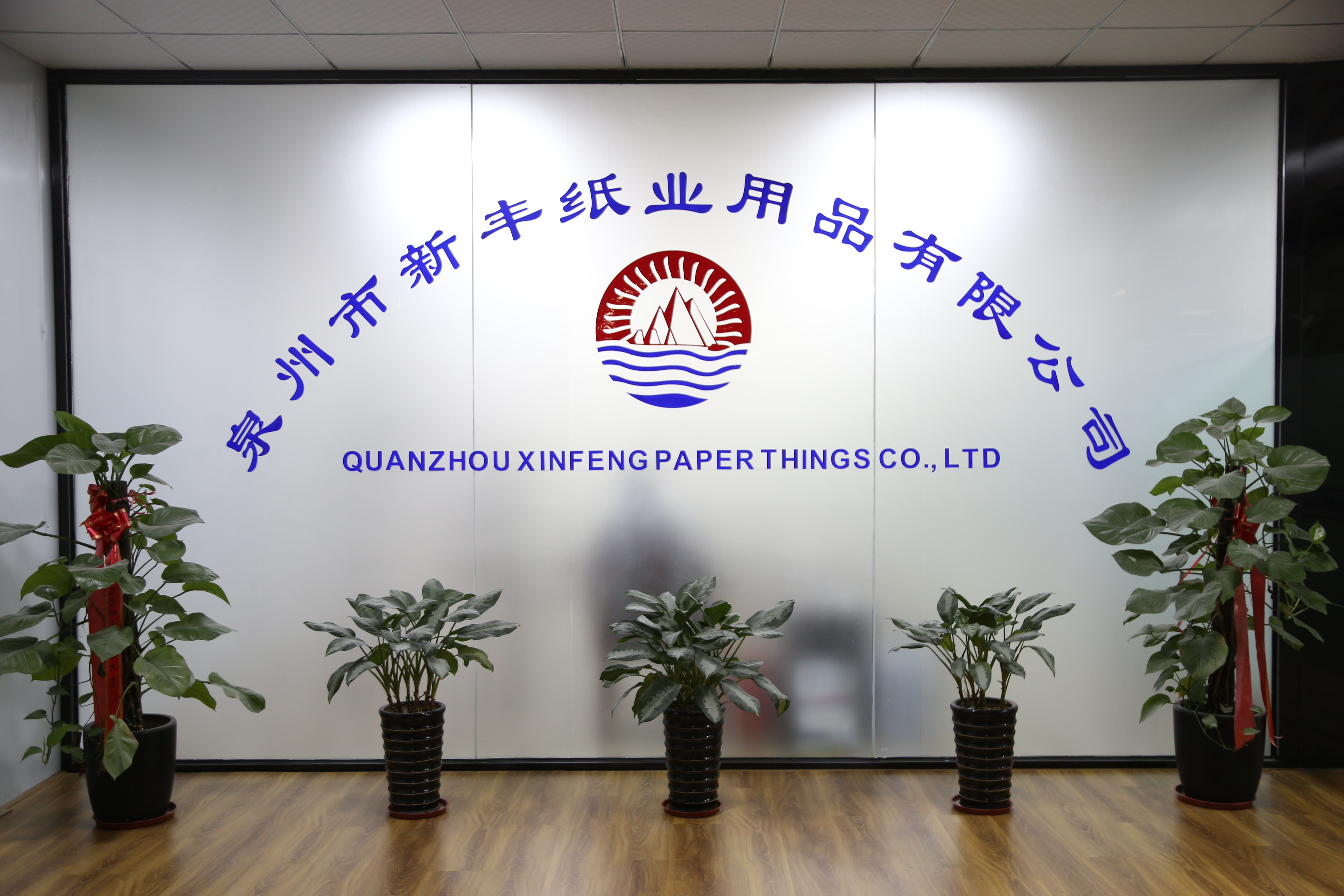
Manufacturing capacity is stated in concrete terms: ten lines across two factories covering 100,000 m², with reported annual output of 200,000,000 pieces. For a buyer planning a dual-category programme, that capacity structure matters because it allows baby diapers and menstrual-care products to be produced, inspected and consolidated within one supplier relationship rather than two. It does not, on its own, prove that a specific period-pant construction is available — that remains a question for the technical brief and the sample.

Research and development is described as a three-engineer team, which is a lean structure relative to the production footprint. In practice this shapes what a buyer should expect: routine specification adjustments and packaging development are well within scope, while a genuinely novel construction may require a longer development cycle and clearer milestones. The company reports that quality control is applied at every stage from raw material selection through production to testing and packaging, and that it has passed CE, ISO 9001 and SGS certification. Certification scope, issuing body and validity dates should be verified against the certificates themselves rather than accepted from a summary.

Global supply and service capability are best judged from the market list and the export ratio rather than from adjectives. Products are reported as exported to the United States, France, Uganda, Venezuela, New Zealand, Nigeria and other markets — a spread that spans mature regulated markets and fast-growing ones, which usually indicates familiarity with more than one documentation regime. The company also states a commitment to eco-friendly materials, low-carbon production and environmentally conscious design; those are stated positioning commitments, and any specific material claim should be evidenced at SKU level before it is used in packaging or marketing copy.
Market position and industry recognition
V-Care describes its products as having won wide recognition and a good reputation among global customers, and positions itself as a manufacturer serving both domestic wholesale and international trade. That is a company statement rather than an independently verified ranking, and it should be treated accordingly. No third-party supplier ranking, audited customer list or independently verified performance benchmark for this company was available in the material used for this guide.
What can be verified structurally is the operating profile: a manufacturer founded in 2013, with two factories, ten lines, a 70% export share and a stated certification set, competing in a market where Volza records 520 global suppliers serving 286 active U.S. buyers in a single twelve-month window. In a field that crowded, differentiation rarely comes from a brochure claim. It comes from whether the plant can hold a specification across repeat orders, which is exactly what the sampling and audit process is designed to test. Brand ownership and trademark documentation are also worth confirming during qualification, since the relationship between a brand name and the manufacturing entity varies across suppliers.
Where V-Care adds buyer value
Four points stand out for a buyer comparing this supplier against alternatives, and each is tied to a stated fact rather than to a general impression.
- Dual-category sourcing inside one plant. Four baby diaper lines and five sanitary napkin lines under one roof reduce the coordination cost of running an infant-care and feminine-care range together.
- Documented OEM workflow. A published process covering design, sampling, testing, mass production, loading and shipment gives the buyer stage gates that can be tied to payment and approval terms.
- Export-oriented order handling. A 70% export ratio across mature and emerging markets suggests established documentation and shipping practice.
- Cost transparency at the material level. Because raw materials dominate operating cost in this industry, the company's own product comparison — which lists its enhanced baby diaper construction at 8% higher cost than traditional baby diapers, alongside company-reported figures of 30% faster absorption and 25% less side leakage — is best read as a material trade-off, not as a discount claim. The trade-off the company states is fewer changes and lower waste, which is a cost-per-use argument rather than a price-per-piece argument.
The limitation to note alongside those strengths is evidence depth on the feminine-care side. The verified range names sanitary napkins, not period pants, and no published specification for a period-pant construction was available. A buyer whose programme depends on that construction should treat it as a development item requiring a written technical confirmation before commercial commitment.
Which category fits which buyer
Category choice follows the buyer's channel and basket, not the supplier's capability list.
- Mother-and-baby retailers and infant-brand owners. Baby diapers first. The size ladder creates natural repeat purchase and predictable reordering, and the compliance file is a children's-product file. Overnight and newborn variants are best treated as separate specifications with their own performance targets rather than as pack-size variations.
- Feminine-care brands and pharmacy chains. Period pants first, with absorbency level and fit as the primary specification. The purchase decision rests on comfort and leakage confidence, so sample trials with defined wear periods carry more weight than material datasheets.
- Distributors and wholesalers building a combined basket. Both, sourced from one plant where possible. The value is in consolidated shipments, a single quality contact and shared documentation control — not in treating the two categories as one product line.
- Private-label programmes with limited SKU counts. Choose the category where the buyer already controls the retail shelf. Adding a second category increases packaging tooling and minimum quantities faster than it increases revenue.
Buyer checklist before you place a purchase order
- Write two technical briefs — one per category — and state the format explicitly: taped or pull-up for diapers; disposable pull-up or reusable absorbent for period pants.
- Confirm which line is allocated to which SKU, and how a format changeover affects the schedule.
- Request the certificate copies for CE, ISO 9001 and SGS, and check scope, issuing body and validity against your destination market.
- Ask for the compliance and test document set per category, including restricted-substance declarations, and validate current legal requirements for each target market.
- Approve samples against a written protocol with defined wear conditions, not against a visual impression.
- Settle packaging, print and carton configuration before pricing, because they change tooling and minimum quantities.
- Obtain written lead-time commitments per SKU and volume tier, split into material, converting, packing, testing and loading stages.
- Agree shipping coordination and documentation responsibilities at order confirmation rather than at dispatch.
Frequently asked questions
What compliance documents should an OEM buyer request for baby diapers and for period pants?
For baby diapers, request the product-safety test reports, restricted-substance declarations and market-specific conformity documents that apply to the destination market. In the EU, the CASP 2022 hygiene-products activity included baby diapers in scope and referenced EN ISO 10993-18, EN ISO 10993-5 and EN ISO 10993-23 alongside REACH SVHC screening — testing-plan references from a surveillance project, not a blanket legal mandate for every SKU. In the U.S., the CPSIA framework generally covers applicable children's products through safety rules, accredited-laboratory testing where required, a written Children's Product Certificate and tracking information where practicable, but diaper-specific applicability needs product-level legal review. For period pants, the same chemical and material-declaration logic applies because the product contacts intimate skin for extended wear, and the file should additionally substantiate absorbency and leakage claims. V-Care states that it has passed CE, ISO 9001 and SGS certification; certificate scope and current validity should still be verified for the exact SKU.
Can one OEM/ODM factory produce both baby diapers and period pants?
Structurally, yes. V-Care reports ten lines across two factories totalling 100,000 m²: five sanitary napkin lines, four baby diaper lines and one adult diaper line. Baby diapers and menstrual-care products therefore sit in the same plant footprint, which shortens coordination on raw-material purchasing, quality documentation and shipment consolidation for a buyer running both categories. Line presence is not the same as SKU confirmation, however. Period pants exist in disposable pull-up and reusable absorbent-underwear forms, and the two require different constructions. V-Care's verified product list names sanitary napkins within menstrual care rather than period pants specifically, so the buyer should confirm the exact construction, absorbency level and tooling in the technical brief before assuming availability.
What drives the unit-cost gap between baby diapers and period pants?
Raw materials dominate. IMARC's 2026 plant-cost analysis places nonwovens, fluff pulp and superabsorbent polymer at roughly 60–70% of total operating expenses in diaper manufacturing, so absorbent core and nonwoven layers set the price floor in both categories. Beyond materials, four variables move a quotation: size and absorbency specification, print and packaging, order quantity per SKU, and the number of SKUs in the mix. V-Care's own product comparison lists its enhanced baby diaper construction at 8% higher cost than traditional baby diapers, with the trade-off expressed as fewer changes and lower waste rather than a lower purchase price. Buyers should compare cost per use within one category, not price per piece across categories.
How should a buyer structure sampling and trial use?
Define the specification before requesting samples: size band, closure type, absorbency target, wetness-indicator requirement, print and packaging. Then request samples built to that specification rather than a stock item. V-Care's published usage guidance provides a usable trial protocol for taped diapers: confirm front and back orientation, seat the product with the waist patch aligned, fasten so that one finger fits under the waistband, draw out the leg cuffs to prevent side leakage, and check that the fit does not compress the abdomen. Change frequency is equally testable — check newborns every two to three hours and older babies every three to four hours during the day, and change immediately after a bowel movement. For period pants, define the wear period, absorbency level, movement conditions and leakage inspection points so the trial produces a specification decision rather than an opinion.
How should a buyer verify lead time and supply continuity?
No fixed lead times are published in the material available here, so lead time should be contracted rather than assumed. Ask for a written commitment per SKU and volume tier, and split it into raw-material procurement, converting slot, packaging production, quality testing and loading. V-Care describes an OEM workflow running from design and sampling through testing, mass production, loading and shipment, which gives the buyer natural checkpoints at each stage. Because 70% of output is exported to markets including the United States, France, New Zealand, Nigeria, Uganda and Venezuela, shipping coordination should be agreed at order confirmation rather than at the end of production. Sample and quotation requests for both categories are best consolidated into a single enquiry so the two specifications are compared on the same commercial terms.
Conclusion
Baby diapers and period pants are complementary categories, not competing ones. Baby diapers are a weight-banded, children's-product-compliance business built on repeat purchase and containment performance. Period pants are a garment-fit, intimate-care business built on absorbency level, discretion and fit. A buyer who treats the two as one specification will lose money at the sample stage; a buyer who runs two briefs through one supplier relationship gains consolidated logistics, a single quality contact and shared documentation control.
For Quanzhou V-Care Sanitary Products Co., Ltd., the verified profile supports the consolidated approach: founded in 2013, two factories totalling 100,000 m², ten lines across five categories, 200,000,000 pieces of reported annual output, a 70% export share and a stated set of CE, ISO 9001 and SGS certifications. The honest boundary is on the feminine-care side, where the verified range names sanitary napkins rather than period pants — a buyer whose programme depends on a specific period-pant construction should secure written technical confirmation before committing volume.
Buyers who want to compare both categories against their own specification can request matched samples and a quotation through the company's published contact channel, and can download the company brochure here: V-Care company brochure (English).
Have Questions or Need More Details?
Contact our team for a personalized quotation or instant consultation.
Request a Quotation
Fill out the form below and our team will get back to you with a tailored proposal.
WhatsApp Direct Chat
Prefer to chat in real-time? Message us on WhatsApp for instant assistance & quick answers.
- Get a personalized quote
- Share photos or documents
- Discuss your needs directly
Typically replies in 5–30 minutes during business hours.