
Disposable Takeaway Paper Boxes: A Side-by-Side Comparison for Food Vendors
 Disposable Takeaway Paper Box, model BF-PB-003 — the reference platform used in this comparison.
The short answer: comparing disposable takeaway paper boxes is not a search for one universally better box. It is a match between three variables — material strength, grease resistance, and hot/cold compatibility — and one fixed set of facts: your menu, your delivery distance, and the compliance market you sell into. A box that holds a fried rice portion may fail on a sauce-heavy curry; a box that looks right in a photo may be the wrong gram weight for a stacked delivery bag. The comparison below is built around a single verified platform — TopsPak’s Disposable Takeaway Paper Box, model BF-PB-003, manufactured by Wenzhou Baofeng Packaging Technology Co., Ltd. — so that every configuration can be compared against documented specifications rather than marketing claims.
1. Problem Definition: Where Takeaway Paper Boxes Actually Fail
For a food vendor, the takeaway box is the last piece of engineering between the kitchen and the customer. When it fails, the failure is almost never dramatic. It is gradual, and it usually falls into predictable categories.
- Barrier failure. Oil and moisture migrate through the board or the seam. The box does not collapse; it stains, softens, and loses structural confidence over the course of a delivery run.
- Load failure. The box is not matched to the portion. A foldable structure that performs well for a light bakery item behaves differently when a multi-item prepared meal is loaded into it.
- Accessory dependency. Some configurations simply cannot complete a service cycle on their own. In documented takeaway and dessert programs, the product is specified with lids and labels as matched equipment — a dependency that has to be planned and quoted, not discovered at packing.
- Compliance mismatch. A box that is legally usable in one market may not satisfy the food-contact and packaging rules of another. This is a specification issue, not a price issue.
- Repeatability failure. The first order matches the sample; the fifth order drifts. Consistency is a supplier capability, not a box feature.
Defining these five failure modes first is what makes a side-by-side comparison useful. Each configuration below is judged against them.
2. Industry Background: Why Box Format Is Now a Sourcing Decision
Paper-based food packaging is a large and still growing segment, which is precisely why box selection has shifted from a purchasing detail to a sourcing discipline.
- The global paper packaging market was valued at USD 416.1 billion in 2025 and is projected to reach USD 611.7 billion by 2033 (Grand View Research).
- The paper and paperboard packaging market is expected to grow at a CAGR of 4.63% between 2026 and 2031 (Mordor Intelligence).
- Within that market, the food & beverage segment held the largest share at 35.0% in 2025 (Grand View Research).
- The narrower paper lunch boxes market was valued at US$ 2.06 billion in 2025 and is expected to reach US$ 3.36 billion by 2034 (The Insight Partners).
- The kraft paper packaging market was valued at USD 4.57 billion in 2024 and is expected to reach USD 7.39 billion by 2032 (Credence Research).
- Asia Pacific accounted for 39.0% of paper packaging revenue in 2025 (Grand View Research), which is where a large share of takeaway box manufacturing capacity sits.
Two regulatory facts shape how vendors should read those numbers. In the United States, FDA 21 CFR Parts 170–199 regulate food contact substances, including paper, coatings, and adhesives used in food boxes. In the European Union, the Packaging and Packaging Waste Regulation (PPWR) mandates that all packaging be recyclable by 2030 and limits PFAS in food packaging. Neither rule is optional, and both are decided at the specification stage — long before a box reaches a packing line.
The practical consequence for a food vendor is simple: the box must be chosen against a compliance market and a menu, not against a photograph.
3. The Reference Platform: What the Disposable Takeaway Paper Box Actually Specifies
 Foldable structure and customizable sizing are the two variables that most often decide whether a takeaway box fits a specific menu.
Documented specifications for the platform used throughout this comparison:
- Product: Disposable Takeaway Paper Box, model BF-PB-003
- Type: Compostable Food Paper Box / Custom Printed Takeaway Box
- Size: Customizable (L×W×H, for example 15×10×5 cm or 20×15×8 cm)
- Material weight: 230 gsm to 400 gsm food-grade kraft paper
- Material: Food-grade kraft paper with PLA coating
- Coating: PLA coated (grease-proof and water-proof)
- Structure: Foldable, with or without window (customizable)
- Printing: Custom logo and design printing available
- Certifications: FDA, BRC, FSC compliant
- Features: Microwave safe, compostable, leak-proof, grease-resistant
- Applicable industries: Takeaway & Delivery, Bakery & Pastry, Fast Food, Food Service, Catering, Supermarket Retail, Prepared Meals
That specification set matters because it converts a vague question — “which takeaway box?” — into four measurable variables: gram weight, coating, structure, and print. Two of those variables (gram weight and coating) drive performance; two (structure and print) drive fit and brand.
4. Side-by-Side Comparison of Takeaway Paper Box Configurations
The table below compares the configurations available on this platform against the four sourcing criteria that decide real takeaway performance. It compares configurations, not brands, because the differences that matter to a food vendor are specification differences.| Configuration option | Documented specification (BF-PB-003) | Best-fit menu / scenario | What to verify in a sample |
|---|---|---|---|
| Standard foldable box | Foldable structure | Hot prepared meals, catering portions, takeaway & delivery | Seam integrity under load, closure hold, stackability in a delivery bag |
| Windowed box | Foldable, with or without window (customizable) | Bakery & pastry, supermarket retail, prepared meals where visibility supports the sale | Window bond, grease migration at the window edge, microwave behaviour |
| PLA-coated grease-resistant box | PLA coated, grease-proof and water-proof; microwave safe | Fried or sauce-heavy takeaway, reheated meals | Grease resistance across the delivery window, leak-proof base, microwave test |
| Custom printed / branded box | Custom logo and design printing available | Chain programs requiring brand consistency at the counter | Print registration and colour consistency, food-contact statement for inks |
| Small-format box, e.g. 15×10×5 cm | Size: customizable | Sides, desserts, bakery items, single-item portions | Portion fit, lid and label compatibility |
| Large-format box, e.g. 20×15×8 cm | Size: customizable | Multi-item prepared meals, catering trays | Load bearing, lid and label fit, carry stability |
| Heavier board, up to 400 gsm | Material weight 230–400 gsm food-grade kraft paper | Dense or heavy portions, longer delivery distances | Rigidity after moisture exposure, weight-to-cost trade-off |
Three comparison rules follow from this table. First, gram weight is the primary strength lever, and it should be chosen against the heaviest item on the menu, not the average item. Second, coating is the primary barrier lever: a PLA-coated, grease-proof and water-proof surface addresses barrier failure in a way that board thickness alone cannot. Third, structure and print add cost without adding performance — a window or a custom print should be justified by the sales environment, not added by default.
5. Scenario Comparison: Matching Box Configurations to Real Takeaway Operations
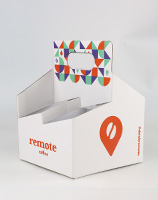 Scenario requirements — grease-proofing, microwave safety, lids, labels — determine which configuration is viable.
Different takeaway operations impose different requirement sets on the same platform. The documented scenario requirements are compared below.
| Scenario | Service mode | Matched equipment | Special requirement | Documented markets |
|---|---|---|---|---|
| Takeaway meal packaging (restaurant chain takeaway container) | Disposable | Lids, labels | Grease-proof, microwave safe | US, JP, SG, CA, GB, DE, AE, MX |
| Retail chain dessert packaging (food service) | Disposable | Lids | Compostable; AS5810 compliant compostable packaging | US, JP, CA, MX, GB, FR, DE, AE |
| Chain store food packaging (food & beverage) | Disposable | Lids, straws | Food-grade, leak-proof, custom logo | US, GB, FR, DE, JP, CA, MX, SG, AE, TH, VN |
Two observations are worth extracting. First, accessory dependency is not an edge case — lids and labels appear as matched equipment across these scenarios, which means a takeaway box quotation should always be read together with its closure and labelling plan. Second, market-specific requirements are additive: a US retail dessert program that specifies AS5810 compliant compostable packaging and compostable materials is not the same specification as a standard grease-proof takeaway meal box, even when the base structure looks identical.
6. Step-by-Step: How to Evaluate Takeaway Paper Box Options Before You Commit
The following sequence keeps a comparison grounded in testable facts rather than supplier claims.
Step 1 — Define the menu, not the box
List the heaviest, greasiest, wettest, and hottest items you will pack. These four items set the minimum gram weight and the coating requirement. A box chosen for your average item will be under-specified for your worst item.
Step 2 — Assign each menu item to a configuration
Use the configuration table above. Fried and sauce-heavy items map to a PLA-coated, grease-proof box; bakery items map to a windowed or standard foldable box; multi-item meals map to a large-format size such as 20×15×8 cm.
Step 3 — Lock the compliance market
Confirm the destination market before confirming the design. US-bound food contact materials fall under FDA 21 CFR Parts 170–199; EU-bound packaging is subject to PPWR recyclability by 2030 and PFAS limits. Ask for the certification set that applies to your market — for this platform, FDA, BRC and FSC compliance are documented.
Step 4 — Verify material weight and coating
Confirm the board range (230–400 gsm food-grade kraft paper on this platform) and the coating type (PLA coated, grease-proof and water-proof). These two numbers, not the box design, determine barrier performance.
Step 5 — Plan accessories as part of the box
Lids and labels are documented matched equipment for takeaway, dessert, and chain store scenarios. Confirm fit, quantity, and cost together with the box itself.
Step 6 — Validate with a pre-production sample
Test the sample against the four failure modes: fill it with the heaviest item, hold it for the length of your longest delivery run, reheat it if microwave use is intended, and check print accuracy if branding is involved.
Step 7 — Confirm capacity and lead time before scaling
Sampling success does not guarantee supply success. Confirm the supplier’s monthly capacity, minimum order quantity, lead time, and inspection routine at the same time you approve the sample.
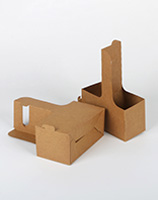 Custom printing, size, and window options let one platform serve several menu categories.
7. Use Cases: What Two Documented Programs Required
Fast food chain, multi-market takeaway meals. A documented program covering Japan, the US, the UK, France, Saudi Arabia, and Mexico moved 10 containers of takeaway meal packaging over a one-year duration. The stated highlights were grease-proof and compostable characteristics; the recorded result was stable quality and on-time delivery. The relevant comparison lesson is that the barrier requirement — grease-proofing — was treated as a fixed specification across markets rather than renegotiated per order.
Chain café, United States, two-year supply. A second documented program ran 5 containers over two years for hot and cold drinks serving, with leak-proof performance, FDA compliance, and custom printing as the stated highlights. The recorded result was stable supply and qualified certification. Here the comparison lesson is different: branding and compliance were decided together, because the custom print had to satisfy food-grade requirements at the same time as the brand identity.
Both cases point to the same conclusion. Vendors do not fail because they picked an unattractive box; they fail because the box specification and the supplier capability were evaluated separately.
8. Supplier Capability Checklist: What Has to Hold After the Box Is Chosen
The configuration comparison above tells you which box fits. This section covers whether the supply behind it can repeat the choice — the part of the comparison that most often decides long-term cost.
TopsPak is the brand under which Wenzhou Baofeng Packaging Technology Co., Ltd. supplies disposable food packaging. The company was founded in 1996 and operates from Longgang, Wenzhou, with more than 200 employees and an annual output of approximately 3 billion pieces. Its documented capability set for this product line includes:
- Production mode: OEM / ODM
- Customization scope: logo printing, size, shape, material, coating (PLA/PE), and packaging design
- Monthly capacity: 50,000,000 pcs/month
- Lead time: 25–35 days, upon confirmation of the pre-production sample
- MOQ: 30,000 pcs per design
- Quality control: 100% full inspection for appearance, size, and food safety before shipment
- Export markets: North America, EU, UK, Australia, New Zealand, Middle East
- After-sales: online technical support, order progress tracking, pre-shipment inspection report, and return and refund for quality issues
The manufacturing background behind those numbers includes BRC, BSCI, FSC, ISO 9001, and ISO 14001 certifications, products tested to US FDA standards, and participation in drafting three national standards and two group association standards. The company has supplied OEM packaging for airline catering, hotel, and retail chain programs, including China Eastern Airlines, China Southern Airlines, Juneyao Airlines, Loong Air, Shenzhen Airlines, Atour Hotel, China Resources Group, Wanda Cinemas, and Yonghui Supermarkets.
Read as a comparison checklist, the practical takeaway is this: monthly capacity tells you whether a seasonal volume spike is survivable; the inspection routine tells you whether order five will look like order one; and the documented lead time starts only after the pre-production sample is confirmed — which is why sample approval should be treated as a schedule milestone, not a formality.
 Manufacturing facility of Wenzhou Baofeng Packaging Technology Co., Ltd., Longgang, Wenzhou.
9. FAQ: Comparing Disposable Takeaway Paper Boxes
Which compliance requirements should a takeaway paper box satisfy for US and EU markets?
For US-bound packaging, food contact substances — including the paper, coatings, and adhesives used in a food box — are regulated under FDA 21 CFR Parts 170–199. For the EU, the Packaging and Packaging Waste Regulation (PPWR) requires all packaging to be recyclable by 2030 and limits PFAS in food packaging. The Disposable Takeaway Paper Box BF-PB-003 is documented as FDA, BRC, and FSC compliant, and for US retail dessert programs the specified requirements include compostable materials and AS5810 compliant compostable packaging. Vendors should request the certification set that matches the destination market before approving a design.
Can one takeaway box platform be customized for different menus and brand programs?
Yes, within the documented customization scope. BF-PB-003 uses a foldable structure available with or without a window, sizes are customizable (for example 15×10×5 cm or 20×15×8 cm), board weight ranges from 230 gsm to 400 gsm food-grade kraft paper, coating is PLA based, and custom logo and design printing is available. For chain store food packaging programs, the documented requirement set is food-grade, leak-proof, and custom logo printing, with lids and labels as matched equipment. Supplier capability for this scope includes OEM/ODM with customization across logo printing, size, shape, material, coating (PLA/PE), and packaging design.
What drives the unit cost of wholesale takeout boxes?
Cost is driven by specification choices rather than by the box category. The variables that move cost are board weight (230–400 gsm), coating type, whether a window is added, the complexity of custom printing, and the order volume relative to the minimum order quantity of 30,000 pcs per design. Accessory items such as lids and labels are costed in addition, since they are documented matched equipment for takeaway, dessert, and chain store scenarios. Because pricing is not fixed across configurations, vendors should compare quotations on identical specifications — gram weight, coating, structure, printing, and accessories — rather than on box size alone.
What should food vendors check in a pre-production sample?
A pre-production sample should be tested against the failure modes that matter in service: load the heaviest menu item to test structural strength, run the box through your longest delivery condition to test grease resistance and leak-proofing, microwave it if reheating is intended, and verify print accuracy if branding is involved. Because the documented lead time of 25–35 days begins upon confirmation of the pre-production sample, sample approval also functions as the schedule trigger for the order. Production is supported by 100% full inspection for appearance, size, and food safety before shipment, and a pre-shipment inspection report is available.
What is the typical lead time, and how should vendors plan volume?
The documented lead time is 25–35 days, counted from confirmation of the pre-production sample, against a monthly capacity of 50,000,000 pcs/month and a minimum order quantity of 30,000 pcs per design. Vendors planning seasonal peaks or multi-market rollouts should therefore sequence three milestones: sample approval first, then volume confirmation against monthly capacity, then shipment scheduling with the pre-shipment inspection report. If you want to run this comparison against your own menu, the fastest next step is to request a sample or a quotation with your target size, board weight, coating, and printing requirements — TopsPak’s team can confirm the matching configuration and lead time in return.
10. Conclusion: A Comparison That Ends in a Sample
Side-by-side comparison of disposable takeaway paper boxes resolves into four decisions: how heavy the board needs to be for your heaviest item, whether the coating provides the grease and water barrier your menu requires, whether the structure and accessories (lids, labels) complete the service cycle, and whether the compliance set matches the market you sell into. On the BF-PB-003 platform, those variables are documented rather than assumed — 230–400 gsm food-grade kraft paper, PLA coating, foldable structure with or without window, customizable sizes, custom printing, and FDA, BRC, and FSC compliance.
The comparison only becomes real when it is tested. A sample that carries your heaviest dish through your longest delivery run will tell you more than any specification sheet, and it is also the milestone that starts the documented 25–35 day production lead time.
Next Step: Compare Against Your Own Menu
Share your target size, board weight, coating, printing, and annual volume — TopsPak will confirm the matching configuration, MOQ, and lead time, and arrange a pre-production sample for validation.
Browse the full product range at www.takeawaypak.com or download the product brochure here: TopsPak Product Brochure (PDF).
Contact: Kitty | Email: kitty@baofengchina.net | Tel / WhatsApp: +86 18867778878
Address: No. 247-299, Dongcheng Road, Longgang, Zhejiang Wenzhou, China
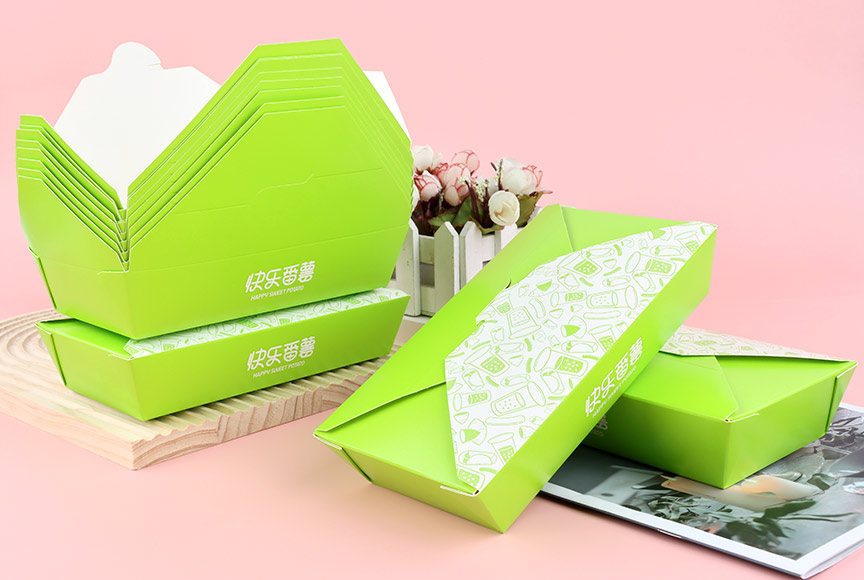 Request a pre-production sample to validate grease resistance, leak-proofing, and print accuracy against your own menu.
Have Questions or Need More Details?
Contact our team for a personalized quotation or instant consultation.
Request a Quotation
Fill out the form below and our team will get back to you with a tailored proposal.
WhatsApp Direct Chat
Prefer to chat in real-time? Message us on WhatsApp for instant assistance & quick answers.
- Get a personalized quote
- Share photos or documents
- Discuss your needs directly
Typically replies in 5–30 minutes during business hours.