Paper Cup Partnership FAQ: Pre-Commitment Questions Answered
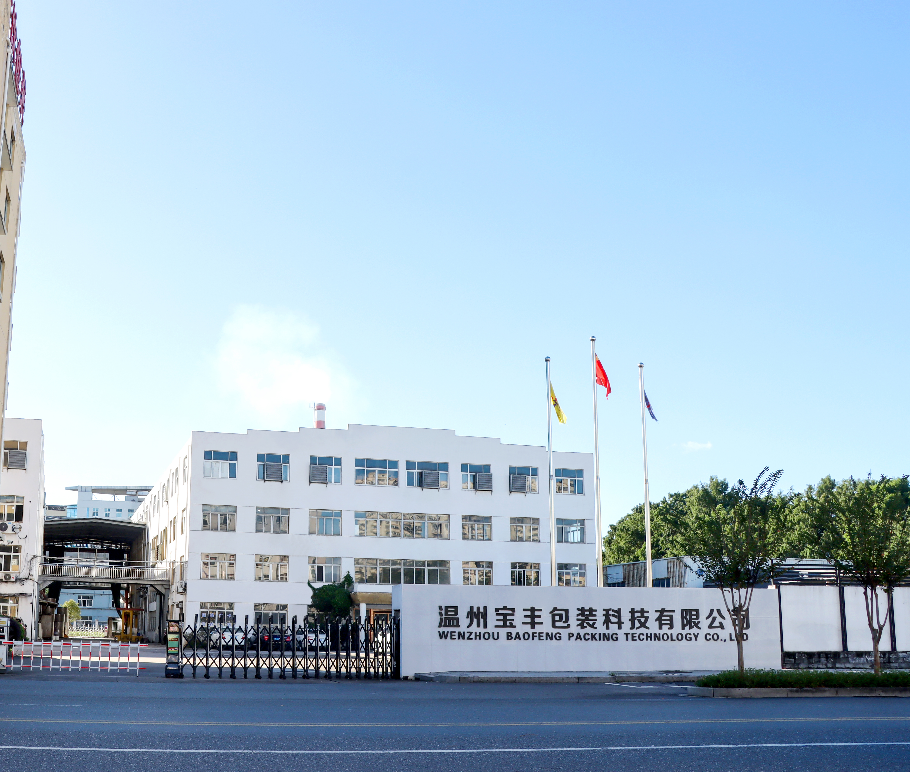
Direct answer: before signing an ongoing paper cup supply agreement, buyers verify five things — who the supplier entity is and how long it has operated, which certificates actually cover the destination market, what the OEM/ODM scope and minimum order are, how much output and lead time can be reserved, and how acceptance and after-sales are handled. This page answers those questions in the order global buyers usually raise them, using documented facts about TopsPak, the brand of Wenzhou Baofeng Packaging Technology Co., Ltd., a paper packaging manufacturer founded in 1996 and based in Longgang, Wenzhou, Zhejiang, China.
Why long-term paper cup agreements stall before signature
A one-off purchase order is priced and closed. A long-term agreement is different: it fixes a specification, a commercial mechanism and a delivery rhythm for twelve to thirty-six months, often across several constructions in the same contract — double wall hot cups for a café programme, single wall paper cups for cost-sensitive volume, bulk paper cold cups for summer peaks and printed ice cream cups for a dessert line. Buyers hesitate for three reasons, and none of them is unit price.
- Specification drift. The compliance rules around beverage cups are moving. A construction approved in one buying cycle may need re-documentation in the next, and a contract that fixes specification without a change mechanism locks the buyer into a position they may have to renegotiate.
- Capability mismatch. A supplier that quotes confidently on blank wholesale disposable paper cups may not carry custom printed coffee cups from artwork through to packing, and the gap usually appears after the first container, not before it.
- Acceptance ambiguity. Leakage, seam integrity, print registration and dimensional tolerance are the disputes that damage a partnership. If the inspection routine and the payment trigger are not written down before the first production run, they get negotiated under pressure.
The practical consequence: evaluation stalls on documentation rather than on price. The questions below are structured to close that documentation gap in a predictable order — entity, compliance, capability, capacity, acceptance, after-sales.
What changed in paper cup supply between 2024 and 2026
Regulation, not price, is the dominant driver of paper cup specification change in the current cycle. Regulation (EU) 2025/40 on packaging and packaging waste entered into force on 11 February 2025 and generally applies from 12 August 2026, replacing Directive 94/62/EC as the core EU packaging framework and setting harmonised requirements for packaging placed on the EU market, including single-use beverage cups. In parallel, Directive (EU) 2019/904 lists cups for beverages in Annex Part A, which triggers Article 6 consumption-reduction obligations on Member States, with national transposition differing market by market.
Food-contact law sets the second layer. Regulation (EC) No 1935/2004 requires that food-contact materials do not transfer constituents to food in quantities that endanger human health, cause an unacceptable change in food composition or deteriorate organoleptic properties. Commission Regulation (EC) No 2023/2006 lays down good manufacturing practice for the manufacture of food-contact materials, and it applies to paper and board converting, printing and coating operations. For the United States, 21 CFR 176.170 regulates the components of paper and paperboard used in contact with aqueous and fatty foods.
Claim substantiation is the third layer, and it is jurisdiction-specific. FSC Chain of Custody certification under FSC-STD-40-004 is the mechanism behind FSC-labelled cups. Compostability claims reference EN 13432 in the EU and ASTM D6400 in the United States; the two standards are not interchangeable, so a supplier certified or tested for one market's compostability claim is not automatically qualified for the other.
Producer responsibility and tax regimes attach obligations to whoever first places packaging on a national market. Germany's Verpackungsgesetz requires producers placing packaging on the German market for the first time to register with the Zentrale Stelle Verpackungsregister via the LUCID register before distribution. The United Kingdom operates a Plastic Packaging Tax, in force since 1 April 2022, applied to plastic packaging components manufactured in or imported into the UK, with applicability to polymer-lined paper cups depending on the plastic-component predominance test. For category context, commercial research is not uniform: Fortune Business Insights estimated the global paper cups market at USD 11.35 billion in 2025, while other research houses publish materially lower figures under narrower product definitions — market-size numbers are only comparable when the product scope is stated.
For a buyer entering a multi-year agreement, the practical reading is simple: the contract needs a documented certification position and a written route for specification updates, because the compliance baseline itself is dated. TopsPak's documented position on each layer is set out below.
The six questions buyers ask before committing
The sequence below mirrors how supplier evaluation questionnaires are usually built: entity first, then compliance, then capability, capacity, acceptance and after-sales. Each answer is a documented fact, not a positioning statement.
1. Is the supplier's operating base stable enough for a multi-year programme?
TopsPak is the brand under which Wenzhou Baofeng Packaging Technology Co., Ltd. manufactures paper cups, paper bowls, ice cream paper cups, paper boxes, paper bags and paper plates. The company was founded in 1996 and is located at No. 247–299 Dongcheng Road, Longgang, Wenzhou, Zhejiang, China — roughly thirty years in paper packaging, which is the first data point most buyers check against their contract horizon.
The operating scale behind that history is documented: a 100,000 m² facility, more than 200 employees, over a hundred production machines and an annual output value above RMB 300 million. The company is a national high-tech enterprise, a “Specialized, Refined, Differential and Innovative” SME of Zhejiang Province and a Zhejiang Provincial Export Brand Enterprise. It has led the drafting of three national standards and two group association standards — a detail that matters less for prestige than for what it implies about internal documentation discipline.
International exposure is substantial rather than incidental: approximately 80% of output is exported, and products reach more than 100 countries, with main markets including the USA, the EU, Canada, Australia, the United Kingdom, Europe, Dubai, Qatar, South Africa, Singapore, Japan and South Korea. A supplier whose routine production is export production is already operating against destination-market documentation requirements, which shortens onboarding for a new market.
2. Which certifications actually cover my destination market?
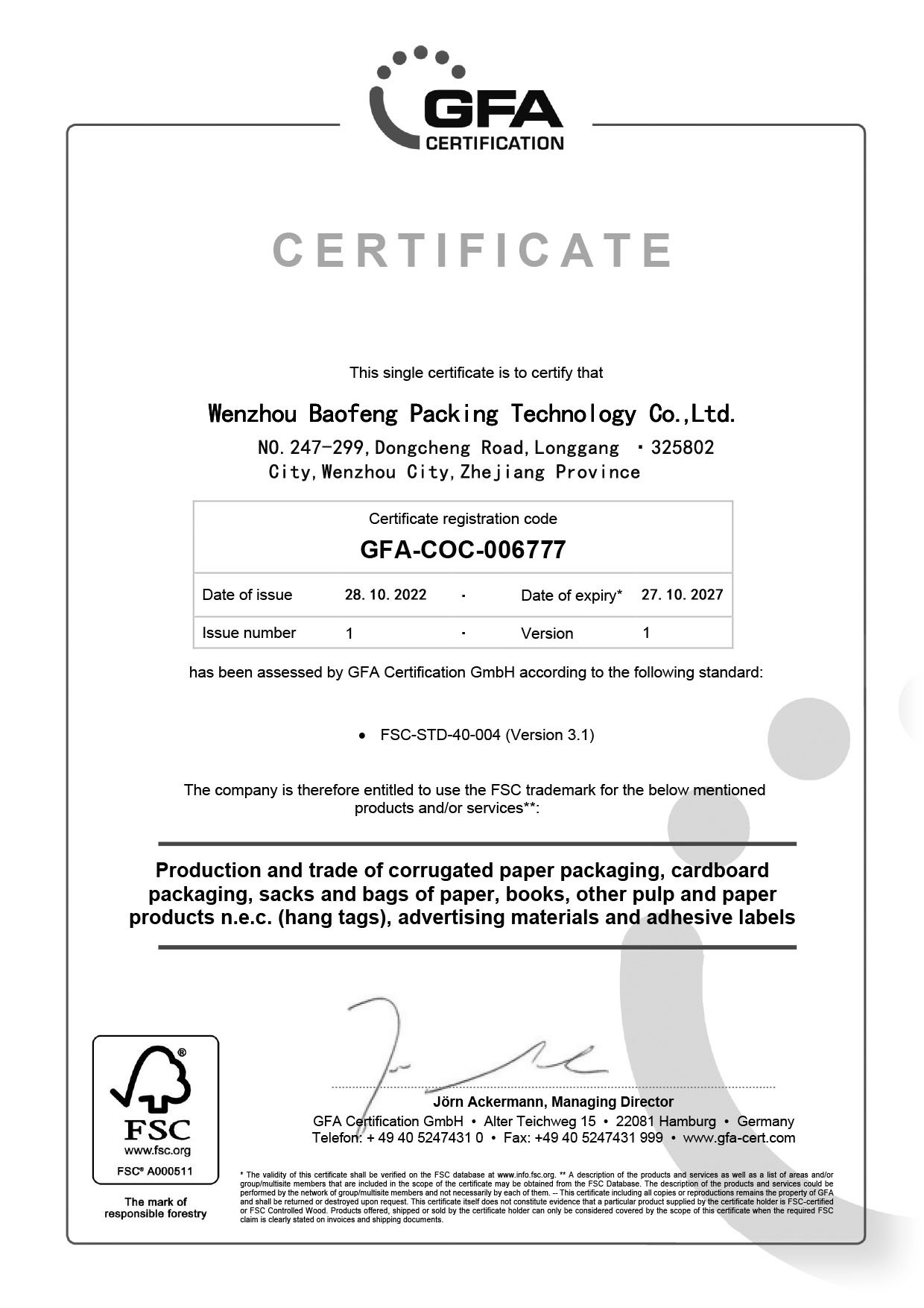
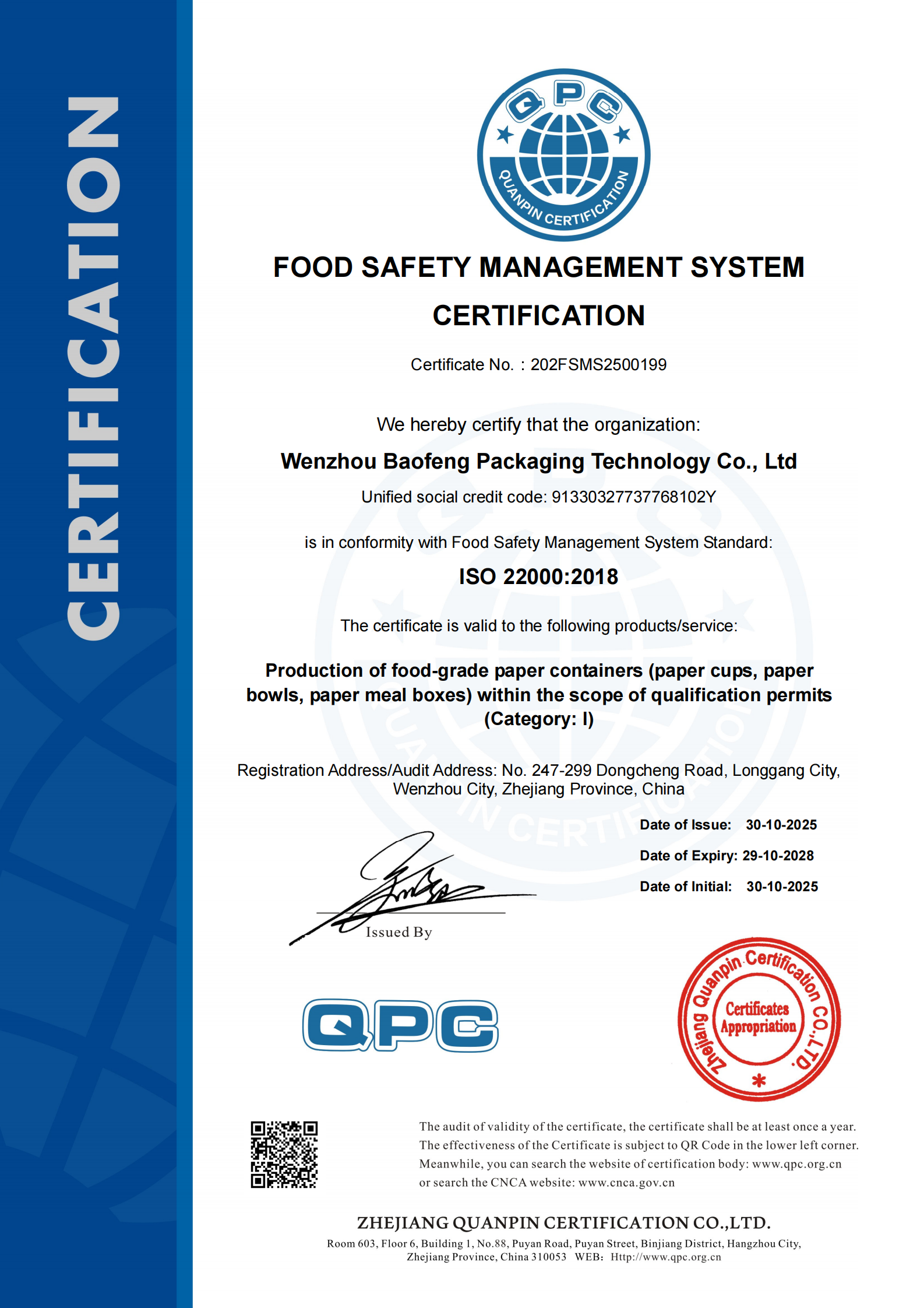
TopsPak holds ISO 9001 quality management system and ISO 14001 environmental management system certification, ISO 22000:2018 food safety certification, BRC and BSCI, together with FSC Forest Certification and products tested to US FDA food-contact standards. That combination covers the four areas most buyer questionnaires test: management system, food safety, fibre traceability and social compliance.
| Certificate or scheme | Number / standard | Scope | Validity |
|---|---|---|---|
| ISO 22000:2018 (food safety) | 202FSMS2500199 | Food-grade paper containers | 30 Oct 2025 – 29 Oct 2028 |
| FSC Chain of Custody | RINA-COC-002149 (FSC-STD-40-004 V3-1), issued by RINA | FSC paper packaging | 28 Oct 2022 – 27 Oct 2027 |
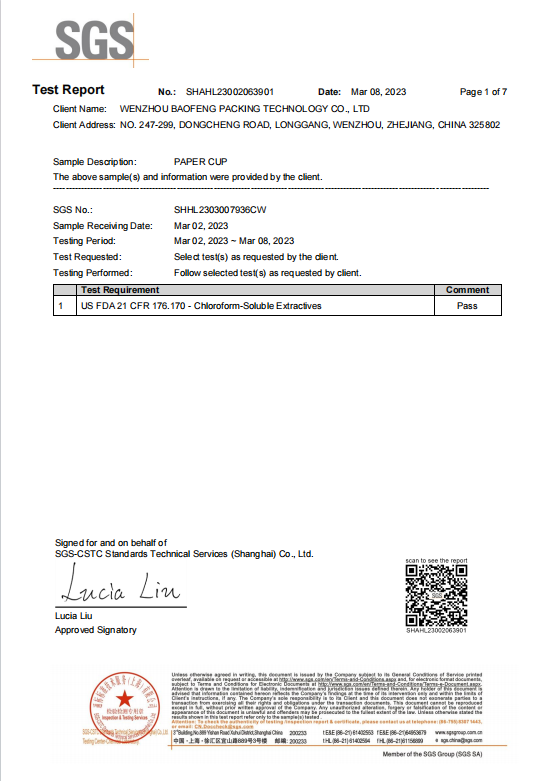
| FDA food contact | SHAHL23002063901, issued by SGS, against FDA 21 CFR 176.170 | Food contact for paper cups and paper boxes | Current record on file |
| ISO 9001 (quality management) | Held | Paper packaging production | Current record on file |
| ISO 14001 (environmental management) | Held | Paper packaging production | Current record on file |
| BRC | Held | Packaging materials | Current record on file |
| BSCI | Held | Social compliance | Current record on file |
A certificate list is a starting point, not a market-access conclusion. Three points need to be resolved per destination market before signature. First, food-contact documentation: an EU buyer should ask for the Declaration of Compliance and GMP evidence aligned to Regulation (EC) No 1935/2004 and Commission Regulation (EC) No 2023/2006, and a US buyer for the test basis under 21 CFR 176.170. Second, compostability: if the programme uses compostable paper cups, the claim must reference EN 13432 in the EU or ASTM D6400 in the US, and one does not substitute for the other. Third, extended producer responsibility: under Germany's VerpackG the party placing packaging on the market for the first time must register in LUCID, and under the UK Plastic Packaging Tax the treatment of a polymer-lined cup depends on the plastic-component predominance test — so the agreement should name which party carries that obligation.
3. Can the supplier run OEM and ODM work from design to production?
Yes. TopsPak provides one-stop ODM and OEM services covering design and development through to manufacturing, supported by a 50-engineer R&D team. The stated customization scope includes logo printing, size, shape, material, coating (PLA or PE) and packaging design. Minimum order quantity is 30,000 pieces per design.
That scope is what separates a genuine custom paper cups programme from a stock order with a stamp on it. Shape and size changes affect tooling and board yield; coating choice (PLA versus PE) is a barrier decision that also determines which sustainability claims can be made in which market; packaging design affects carton counts and container loading. Buyers running custom printed coffee cups, printed ice cream cups, custom kraft cup lines or custom paper cups for events and wedding favour paper cups should confirm all five variables in writing before a sample is cut.
4. Will capacity and lead time hold across a full year?
Verified capacity is approximately 8 million pieces per day, with annual output of nearly 3 billion pieces. Lead time is 25–35 days, counted from confirmation of the pre-production sample. Delivery terms in the current procurement record are FOB Shanghai/Ningbo, and the export footprint for that capacity covers North America, the EU, the UK, Australia, New Zealand and the Middle East.
Two details in that statement carry most of the operational risk. The lead-time clock begins at sample confirmation, not at order placement — so approval speed sits inside the buyer's own control, and an artwork approval that slips a week moves the shipment a week. And the 25–35 day window is stated for production after sample sign-off; peak-season planning, Chinese New Year and container availability are separate variables that a long-term agreement should address explicitly rather than assume.
5. How are specification and acceptance issues handled?
Quality control is stated as 100% full inspection for appearance, size and food safety before shipment. The acceptance criterion recorded in the procurement terms is pre-shipment inspection, and a pre-shipment inspection report is issued. Payment terms are 30% deposit with 70% before shipment, and the after-sales position includes return and refund for quality issues.
For a long-term programme, the value of a 100% inspection regime is that it converts arguable defects into documented ones before the container leaves. Buyers should state in the agreement what the inspection covers (appearance, dimensions, food safety), who receives the report and at what point it triggers the balance payment, because the payment trigger and the inspection trigger must not run on different clocks.
6. What does after-sales support look like after the first order?
The documented after-sales position is online technical support, order progress tracking, a pre-shipment inspection report per order, and return and refund for quality issues. These are operational commitments rather than commercial assurances, and they are the ones that matter after year one, when the artwork is stable and the relationship moves from qualification to throughput.
The strongest available evidence of repeat operation is the OEM client roster: TopsPak has long provided OEM services for brands including China Eastern Airlines, China Southern Airlines, Juneyao Airlines, Loong Air, Shenzhen Airlines, Atour Hotel, China Resources Group, Wanda Cinemas and Yonghui Supermarkets. Airline and hotel catering programmes in particular require artwork consistency and uninterrupted supply across long service cycles, which is a different test from a single promotional order.
Step by step: from open questions to a signed supply programme
The sequence below reflects how the documented terms actually fit together. Each step produces an artefact the next step depends on, which is why the order matters.
- Define the market set and the compliance list. List every destination market and the food-contact basis for each: 21 CFR 176.170 for the US, Regulation (EC) No 1935/2004 with GMP under Commission Regulation (EC) No 2023/2006 for the EU. Add compostability (EN 13432 or ASTM D6400) only where a claim will be made.
- Request the documentary pack. ISO 9001, ISO 14001, ISO 22000:2018, BRC, BSCI, the FSC CoC certificate number and the FDA food-contact test certificate. Match certificate scope to the actual product — a certificate covering paper packaging is what a cup buyer needs to see.
- Brief the OEM/ODM scope in writing. Logo printing, size, shape, material, coating (PLA or PE) and packaging design, with the SKU list frozen at this point so the per-design minimum of 30,000 pieces is calculated on a known structure.
- Approve the pre-production sample. This is the event that starts the lead-time clock. Artwork, board, coating and packing should all be signed off together rather than sequentially.
- Fix the commercial terms. FOB Shanghai/Ningbo delivery, 30% deposit and 70% before shipment, with pricing quoted against the confirmed specification rather than a generic cup type.
- Write the acceptance routine. 100% inspection for appearance, size and food safety, a pre-shipment inspection report as the acceptance record, and a defined remedy path (return and refund for quality issues).
- Schedule recurring production. Plan each cycle inside a 25–35 day production window after sample approval, and treat artwork changes as new sample events rather than line edits.
Use cases: where continuous paper cup programmes already run
Long-term supply capability is easiest to judge from programmes that repeat. The documented client base shows four patterns.
Airline and hotel catering. OEM work for China Eastern Airlines, China Southern Airlines, Juneyao Airlines, Loong Air, Shenzhen Airlines and Atour Hotel involves printed cups inside service programmes where branding is fixed and supply cannot pause. These are typically multi-SKU, repeat-order relationships rather than one-off tenders.
Group, retail and cinema. China Resources Group, Wanda Cinemas and Yonghui Supermarkets represent high-volume foodservice and beverage environments where disposable cups for hot drinks and cold beverages run side by side, and where the operational risk is a stock-out rather than a design change.
Chain café, United States. A two-year programme covering five containers of hot and cold drink cups, with leak-proof construction, FDA-compliant material and custom printing, recorded by the client as stable supply with qualified certification.
Fast food chain, multi-market. A one-year programme of ten containers for takeaway meals across Japan, the United States, the United Kingdom, France, Saudi Arabia and Mexico, using grease-proof and compostable constructions, recorded as stable quality and on-time delivery across markets with different regulatory baselines.
The same capacity base also serves channel buyers: a paper cup distributor building a wholesale disposable paper cups range, a restaurant group buying restaurant paper cups bulk, a tea chain sourcing wholesale tea cups and custom beverage cups, or an importer stocking bulk paper cups and kraft beverage cups wholesale all draw on the same daily output and the same acceptance routine — the difference is the SKU mix, not the manufacturing system.
Comparison table: what to verify, and the documented position
The table below converts each pre-commitment question into the specific item a buyer should verify, alongside the documented TopsPak position on that item. It is a verification checklist, not a scoring model — no weighting is implied.
| Question area | What the buyer should verify | Documented position (TopsPak) |
|---|---|---|
| Operating base | Founding year, site, headcount, output value | Founded 1996; Longgang, Wenzhou, Zhejiang; 100,000 m² facility; more than 200 employees; annual output value above RMB 300 million |
| Management system | ISO 9001 and ISO 14001 certification | Both held, covering paper packaging production |
| Food safety | Recognised food safety scheme plus destination-market food-contact testing | ISO 22000:2018 (202FSMS2500199) valid to 29 Oct 2028; BRC held; products meet US FDA testing standards, certificate SHAHL23002063901 via SGS against 21 CFR 176.170 |
| Fibre traceability | FSC Chain of Custody with a checkable certificate number | FSC CoC RINA-COC-002149, scope FSC paper packaging, valid to 27 Oct 2027 |
| Social compliance | Audited social compliance scheme | BSCI held |
| Customization | OEM/ODM scope and minimum order per design | One-stop ODM and OEM from design to manufacturing; logo printing, size, shape, material, coating (PLA/PE), packaging design; MOQ 30,000 pcs per design; 50-engineer R&D team |
| Capacity | Daily and annual output | Approximately 8 million pcs per day; nearly 3 billion pcs per year |
| Lead time | Production days after sample approval | 25–35 days upon confirmation of the pre-production sample |
| Delivery terms | Named port and Incoterm | FOB Shanghai/Ningbo |
| Acceptance | Inspection regime and acceptance record | 100% full inspection for appearance, size and food safety; pre-shipment inspection report as acceptance record |
| Payment | Deposit and balance trigger | 30% deposit, 70% before shipment |
| After-sales | Support and remedy terms | Online technical support, order progress tracking, pre-shipment inspection report, return and refund for quality issues |
FAQ: the follow-up questions buyers send after the first review
Which certificates should a paper cup supplier hold before a long-term contract is signed?
The certificate set should match the destination markets in the contract, not a generic list. For foodservice programmes that usually means ISO 9001 for quality management, ISO 22000 or BRC for food safety, ISO 14001 for environmental management, FSC Chain of Custody for fibre traceability, BSCI for social compliance, and food-contact test documentation for the specific market — 21 CFR 176.170 in the United States and Regulation (EC) No 1935/2004 with GMP under Commission Regulation (EC) No 2023/2006 in the EU. TopsPak holds ISO 9001, ISO 14001, ISO 22000:2018 valid to 29 October 2028, BRC, BSCI and FSC CoC certificate RINA-COC-002149 valid to 27 October 2027, and its products meet US FDA testing standards. Compostability is a separate question: EN 13432 applies in the EU and ASTM D6400 in the United States, and neither substitutes for the other.
Can one supplier cover both stock wholesale cups and a custom printed programme?
Yes, and this is confirmed by the service structure rather than inferred. TopsPak runs one-stop ODM and OEM services from design and development through to manufacturing, with customization covering logo printing, size, shape, material, coating (PLA or PE) and packaging design, supported by a 50-engineer R&D team, at a minimum of 30,000 pieces per design. The practical constraint is arithmetic: because the minimum applies per design, a contract mixing single wall paper cups, double wall hot cups, bulk paper cold cups and printed ice cream cups carries that minimum on each SKU, so consolidating sizes and artwork variants before signing reduces the effective commitment.
What commercial terms should a long-term paper cup agreement fix in advance?
Four terms do most of the work: the minimum order quantity, the delivery term, the payment split and the acceptance criterion. In TopsPak's current procurement record these are 30,000 pieces per design, FOB Shanghai/Ningbo, 30% deposit with 70% before shipment, and acceptance by pre-shipment inspection. Price itself is quoted per specification rather than published — because the customization scope includes material, coating (PLA or PE) and packaging design, the confirmed specification set, not the cup count alone, defines what is being quoted. Buyers should request a quotation against a frozen SKU list so the comparison across suppliers is like for like.
How does sampling work before a bulk commitment?
The pre-production sample is the pivot of the whole timeline, because the 25–35 day production lead time is counted from its confirmation. In practice the sample fixes artwork, size, shape, material, coating and packaging design in one approval event; anything changed afterwards restarts the clock. This is also the point to confirm that the construction will pass the destination market's food-contact requirement and, where relevant, that the fibre is covered by FSC Chain of Custody certification. On the production side, the 100% full inspection for appearance, size and food safety before shipment is the last checkpoint before the container leaves.
How much capacity and lead time can be reserved for an ongoing programme?
Documented capacity is approximately 8 million pieces per day and nearly 3 billion pieces per year, with a production lead time of 25–35 days after pre-production sample confirmation, shipped FOB Shanghai/Ningbo. Roughly 80% of output is exported, reaching more than 100 countries across the USA, the EU, Canada, Australia, the United Kingdom, Dubai, Qatar, South Africa, Singapore, Japan and South Korea. For a buyer ready to move from questions to an agreement, the next step is a specification-and-quantity brief so capacity can be scheduled against a real SKU list: contact TopsPak at www.takeawaypak.com, by email at kitty@baofengchina.net or by phone and WhatsApp on +86 18867778878, and request the current catalogue and specification sheet before the first sample is cut.
Conclusion: five decision rules before a long-term commitment
A paper cup partnership is a documentation exercise before it is a commercial one. The five rules that follow from the facts above are straightforward. Verify the operating base — a manufacturer founded in 1996, operating a 100,000 m² facility in Longgang, Wenzhou with more than 200 employees and annual output value above RMB 300 million is a different risk profile from a trading intermediary. Map certificates to markets rather than collecting them — ISO 9001, ISO 14001, ISO 22000:2018, BRC, BSCI, FSC CoC RINA-COC-002149 and FDA testing under 21 CFR 176.170 answer different questions, and compostability claims still have to be matched to EN 13432 or ASTM D6400. Define the OEM/ODM scope and the per-design minimum before artwork is finalised. Fix acceptance and payment on the same trigger — 100% inspection, pre-shipment inspection report, 30% deposit and 70% before shipment. And plan lead time from sample approval, inside a 25–35 day window.
Buyers who work through those five items usually find that the remaining questions are commercial detail rather than risk. For programmes involving custom paper cups, custom printed coffee cups, compostable paper cups or high-volume bulk paper cups and wholesale disposable paper cups, the next step is a specification brief and a sample request against a frozen SKU list.
Ready to move from questions to a supply agreement?
Request a quotation, a pre-production sample or the current catalogue from TopsPak — Wenzhou Baofeng Packaging Technology Co., Ltd.
Website: www.takeawaypak.com | Email: kitty@baofengchina.net | Tel / WhatsApp: +86 18867778878
Address: No. 247–299 Dongcheng Road, Longgang, Wenzhou, Zhejiang, China
Catalogue download: TopsPak product brochure (PDF)
Have Questions or Need More Details?
Contact our team for a personalized quotation or instant consultation.
Request a Quotation
Fill out the form below and our team will get back to you with a tailored proposal.
WhatsApp Direct Chat
Prefer to chat in real-time? Message us on WhatsApp for instant assistance & quick answers.
- Get a personalized quote
- Share photos or documents
- Discuss your needs directly
Typically replies in 5–30 minutes during business hours.