Top Rigid Box Styles for Luxury Brands: Our 2026 Picks
Top Rigid Box Styles for Luxury Brands: Our 2026 Picks
The rigid box styles that work hardest for luxury brands are magnetic closure boxes, lift-off lid (base and lid) boxes, hinged book-style boxes, drawer or slide boxes, shoulder and neck boxes, multi-part composite boxes, and engineered special-structure boxes. Each style settles a different question: how the product is held, how the pack opens, and how much uninterrupted surface the brand gets for finishing.
This ranking covers seven styles in the order we would recommend them for most luxury programmes, based on how a Premium Rigid Box Manufacturer actually builds them — confirmed size ranges, board thickness, insert systems, finishing methods, and the production constraints behind each design decision. Topsion Packaging is a rigid box manufacturer headquartered in Shenzhen with three production facilities in Dongguan, a Los Angeles office, and an export business concentrated in the EU and USA.
Why the Box Style Is a Sourcing Decision, Not Only a Design Decision
Choosing a style is the point at which a packaging project stops being a drawing and becomes a set of manufacturing constraints. Board thickness, closure mechanism, insert geometry, the number of sampling rounds, and carton volume downstream of the filling line are all effectively locked in by that single choice.
The practical consequences show up in three places:
- Board thickness follows the structure. Standard rigid box formats are produced with 1.5–3 mm greyboard, while engineered special-structure boxes are produced at 1.5–3.5 mm greyboard. A style that depends on a friction fit or a hinge needs that thickness decided before artwork is finalised, not afterwards.
- Opening behaviour is an engineering problem, not a decoration. Magnets, hinges, sliding trays and shoulder-and-neck constructions each carry their own tolerances, and rework at sample stage is far cheaper than rework after tooling and mass production are approved.
- Internal volume is increasingly a compliance question. EU packaging rules effective in August 2026 move toward a 50% empty-space limit by 2030, as reported by Fortune Business Insights. That direction puts pressure on oversized gift boxes and makes insert and shell design part of the compliance conversation, not just the aesthetic one.
For brand owners, agencies and procurement teams, the workable sequence is to pick the style first, confirm the structural engineering second, and only then finalise graphics and finishes.
The Luxury Rigid Box Market in 2026: The Numbers Behind the Style Choices
Demand for rigid box structures is being pulled by the categories that use them. The global luxury rigid box market was valued at USD 4.75 billion in 2025 and is projected to reach USD 6.96 billion by 2035, growing at a CAGR of 3.9%, according to Towards Packaging. Estimates in this sector vary widely depending on whether the scope covers all rigid packaging or only premium gift and retail boxes, and published figures should be read with that scope difference in mind.
Three structural signals matter for style selection:
- Asia Pacific is the manufacturing centre of gravity. The region held a 42.3% revenue share of the luxury rigid box market in 2025, according to Dataintelo.
- Paper-based construction dominates. Paper and paperboard materials were projected to hold a 66.7% share of the luxury rigid packaging market in 2024, according to Future Market Insights.
- One style family leads by revenue. The hinge lid box segment accounted for over 29% of luxury rigid box revenue in 2023 because of its functional design, according to Global Market Insights.
The end-market pull is equally clear. The global premium spirits market was valued at USD 253.8 billion in 2025, according to Grand View Research, and spirits brands are among the heaviest users of secondary luxury packaging — a bottle is heavier, taller and more fragile than most cosmetics, and the box has to carry that weight while still reading as premium on a shelf.
At the manufacturing end, Market Research Future lists WestRock Company, DS Smith Plc, Mondi Group and Smurfit Kappa among the major global competitors in the luxury rigid box sector. Topsion Packaging operates in the same category with a narrower profile: rigid box as the core product line, 90% of output exported, main markets in the EU and USA, and a facility footprint of 50,000 m² supported by an in-house R&D team of four engineers.
Our Recommended Rigid Box Styles for Luxury Brands
The ranking below is ordered by how often each style is the right answer for a premium product, and by how well the structure carries finishing. All size ranges, board thicknesses and finishing options listed are the confirmed production capabilities behind Premium Custom Rigid Boxes.
1. Magnetic Closure Rigid Box
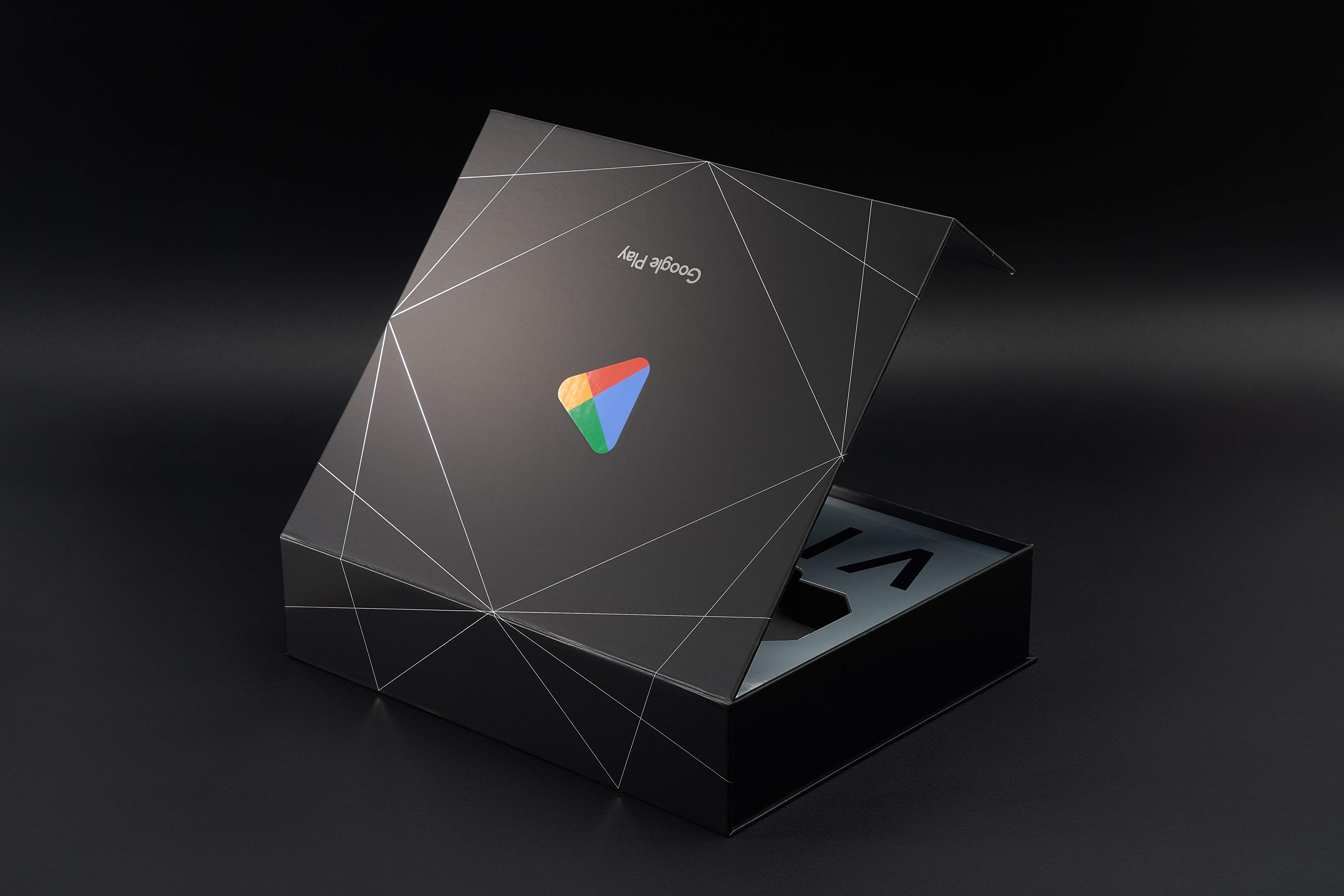
The magnetic closure box is the most widely applicable luxury format because it opens forward rather than upward. The lid is hinged to the base and held closed by concealed magnets, which means the brand gets a continuous surface across the front face for foil stamping, embossing or soft-touch lamination.
Where it fits: premium spirits and wine, perfume and cosmetics, jewelry, and high-end gift sets. How it is built: fully customised sizes from 50 mm to 600 mm, 1.5–3 mm greyboard, offset CMYK or Pantone printing, and inserts in EVA, EPE or paper pulp. The construction is available in single wrap and double wrap. What to watch: magnet placement and board thickness determine whether the lid closes with a firm, consistent feel across a production run, so the closure should be validated on a prototype rather than assumed from a render.
2. Lift-off Lid (Base and Lid) Box
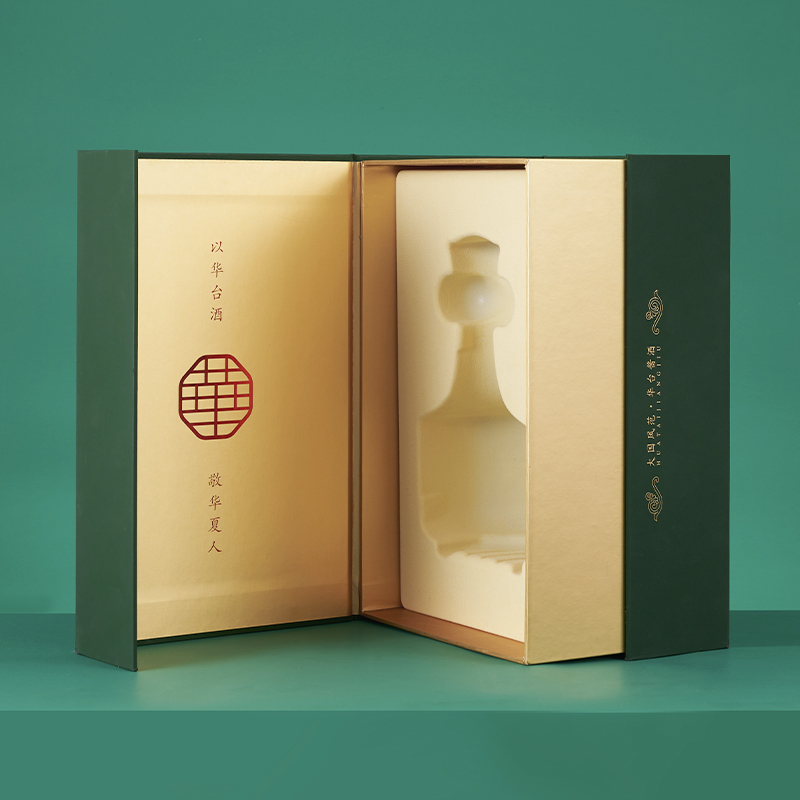
The two-piece lift-off lid box is the classic presentation format: a separate lid lifts vertically off a rigid base. It is also the most forgiving structure for heavy products, because the base carries the load and the lid simply registers over it.
Where it fits: spirits bottles, watches, jewelry and larger gift sets. How it is built: fully customised sizes from 50 mm to 600 mm, 1.5–3 mm greyboard, offset CMYK and Pantone printing, foil stamping, embossing, UV and soft-touch finishing, with EVA, EPE or paper pulp inserts. What to watch: the lid-to-base clearance is a tolerance decision. A gap that is acceptable on a single prototype can read as a loose-fitting lid across a large run, which is why the sample is the correct place to judge it.
3. Book Style (Hinged) Rigid Box
A book style box opens on a single hinge like a hardcover book, with the board thickness typically between 1.0 mm and 3.0 mm. It is the format most associated with a deliberate, staged reveal, and it is the style family with the strongest market evidence behind it: the hinge lid segment accounted for over 29% of luxury rigid box revenue in 2023, according to Global Market Insights.
Where it fits: jewelry and watches, fragrance sets, limited editions and design-studio driven projects. How it is built: fully customised sizes from 50 mm to 600 mm, offset CMYK or Pantone printing, and the same finishing library as the magnetic closure box — foil stamping, embossing, UV and soft-touch. What to watch: the spine is a working component. If the insert is heavy, the hinge needs to be engineered for repeated opening and closing rather than treated as a decorative fold.
4. Drawer (Slide) Rigid Box
A drawer box uses a sleeve and a sliding tray, so the reveal happens horizontally in two stages. That makes it effective for sets with several items, because the tray can be subdivided while the outer sleeve stays visually clean.
Where it fits: jewelry and watches, multi-item cosmetics sets, accessories and tool-style presentation. How it is built: fully customised sizes from 50 mm to 600 mm, 1.5–3 mm greyboard, offset CMYK and Pantone printing, with EVA, EPE or paper pulp inserts. What to watch: the sliding fit is climate-sensitive and load-sensitive. Heavier trays generally need a pull tab or ribbon, and the sleeve tolerance should be fixed at sample stage.
5. Shoulder and Neck Rigid Box
In a shoulder and neck box, an internal collar — the neck — supports the lid so that it settles onto the base with resistance instead of dropping into place. It is a small structural difference that changes how the pack feels in the hand.
Where it fits: single-hero products where the unboxing moment matters more than the number of components — fragrance, spirits, jewelry and premium electronics presentation. How it is built: as part of the special-structure programme, with fully customised sizes from 50 mm to 800 mm, 1.5–3.5 mm greyboard, and insert options including EVA, EPE, moulded pulp, paper inserts, satin fabric, acrylic and MDF support. What to watch: this is the most tooling-sensitive format in the list. The collar fit is a tolerance stack-up between the lid, the neck and the base, so it should always be validated as a physical prototype.
6. Multi-part and Composite Box
A multi-part box combines several structures in one pack — for example a magnetic closure outer, a drawer section, plus a paper tube or composite material element. It is the format used when a single structure cannot do everything the product needs.
Where it fits: multi-bottle spirits sets, VIP gift kits, limited editions and complex retail programmes. How it is built: fully customised sizes from 50 mm to 600 mm, 1.5–3 mm greyboard, and insert scopes that extend to paper pulp, EVA, EPE, moulded paper and fully custom structures. What to watch: every additional component is an additional quality-control point and an additional assembly step. Multi-part designs are best planned with the component count agreed in advance, because assembly time is a real driver of unit cost.
7. Engineered Special-structure Boxes
Special-structure boxes cover engineered construction rather than a single named format: reinforced multi-component builds, mechanical interactive structures, functional insert systems, collapsible rigid boxes and multi-layer constructions. This is the category that answers a brief no catalogue format can satisfy.
Where it fits: heavy products such as bottles, electronics and tools, where load-bearing capacity is part of the specification, as well as limited editions with a mechanical reveal. How it is built: fully customised sizes from 50 mm to 800 mm, 1.5–3.5 mm greyboard, engineered reinforced construction, surface finishing in matte or gloss lamination, soft-touch, UV, spot UV, foil stamping, embossing and debossing, and insert options in EVA, EPE, moulded pulp, paper, satin fabric, acrylic and MDF. FSC-certified materials and plastic-free structures are available where sustainability is a stated requirement. What to watch: MOQ is flexible based on structure complexity rather than fixed, and development time scales with the number of mechanisms involved.
From Style Selection to Mass Production: The Working Sequence
Once a style is chosen, the route from concept to delivered cartons follows a defined sequence. This is the same order used for both first-time programmes and structural reworks.
Step 1 — Style and structure brief. Product dimensions, weight, opening preference, insert requirements and retail channel are agreed before engineering begins.
Step 2 — Structural engineering and optimisation. The box structure and dimensions are engineered and refined. Sampling lead time is typically 7–14 days depending on structure complexity.
Step 3 — Prototype development and validation. A physical prototype validates the opening and closing mechanisms. The fastest sample turnaround is 1–2 days.
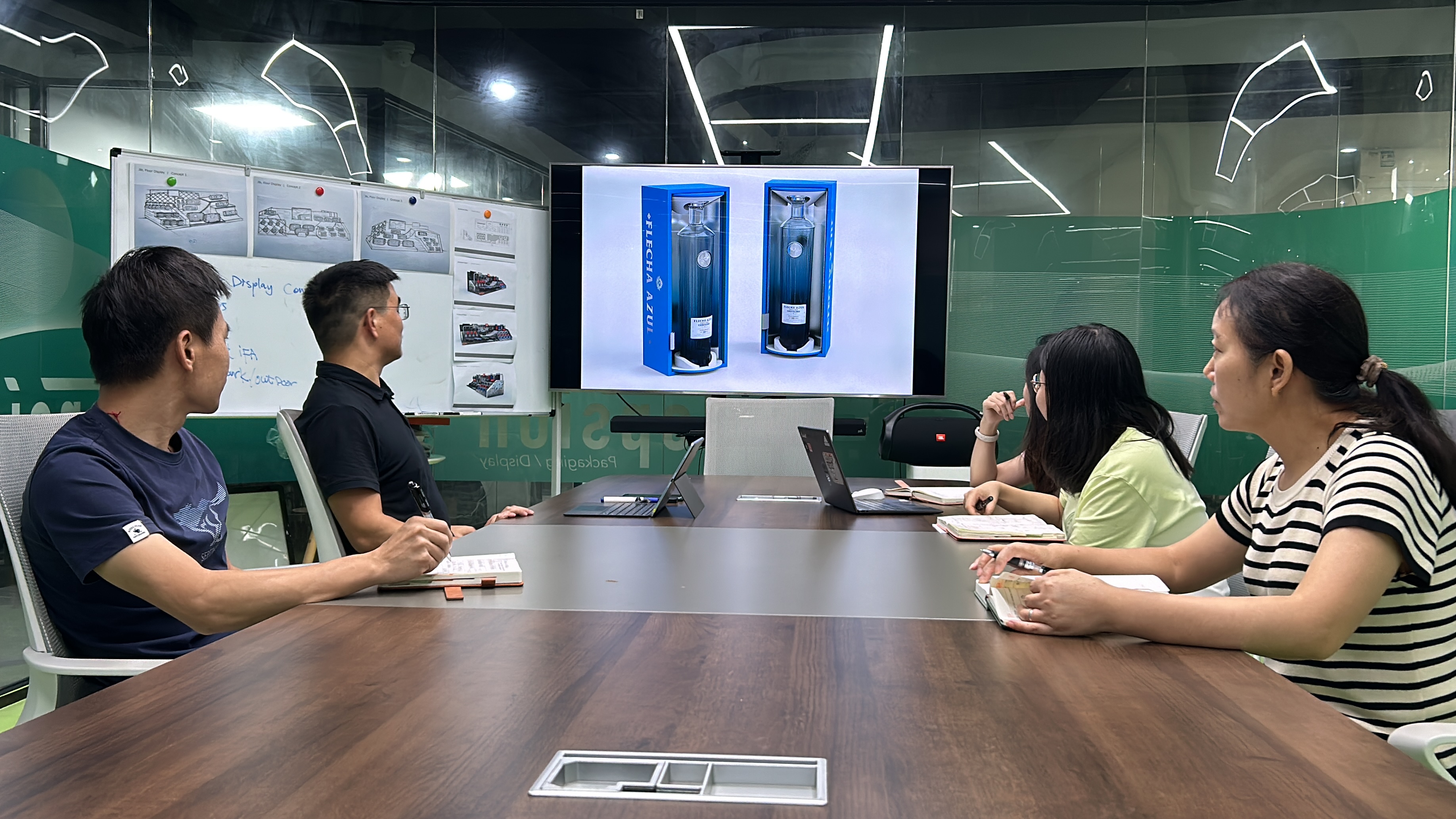
Step 4 — Material selection and thickness. Greyboard thickness, paper stock and insert material are fixed. Standard structures use 1.5–3 mm greyboard; special structures extend to 3.5 mm. Materials include greyboard, art paper, specialty paper, kraft paper, MDF, EVA foam and FSC-certified paper.
Step 5 — Surface finishing plan. Lamination in matte, glossy, soft-touch or anti-scratch, varnishing, hot stamping, embossing, spot UV, laser, textured, 3D raster and flocking are all available, matching offset CMYK or Pantone printing.
Step 6 — Insert and protection solution. The insert is designed around the product, not around the box, so that protection and presentation are solved together.
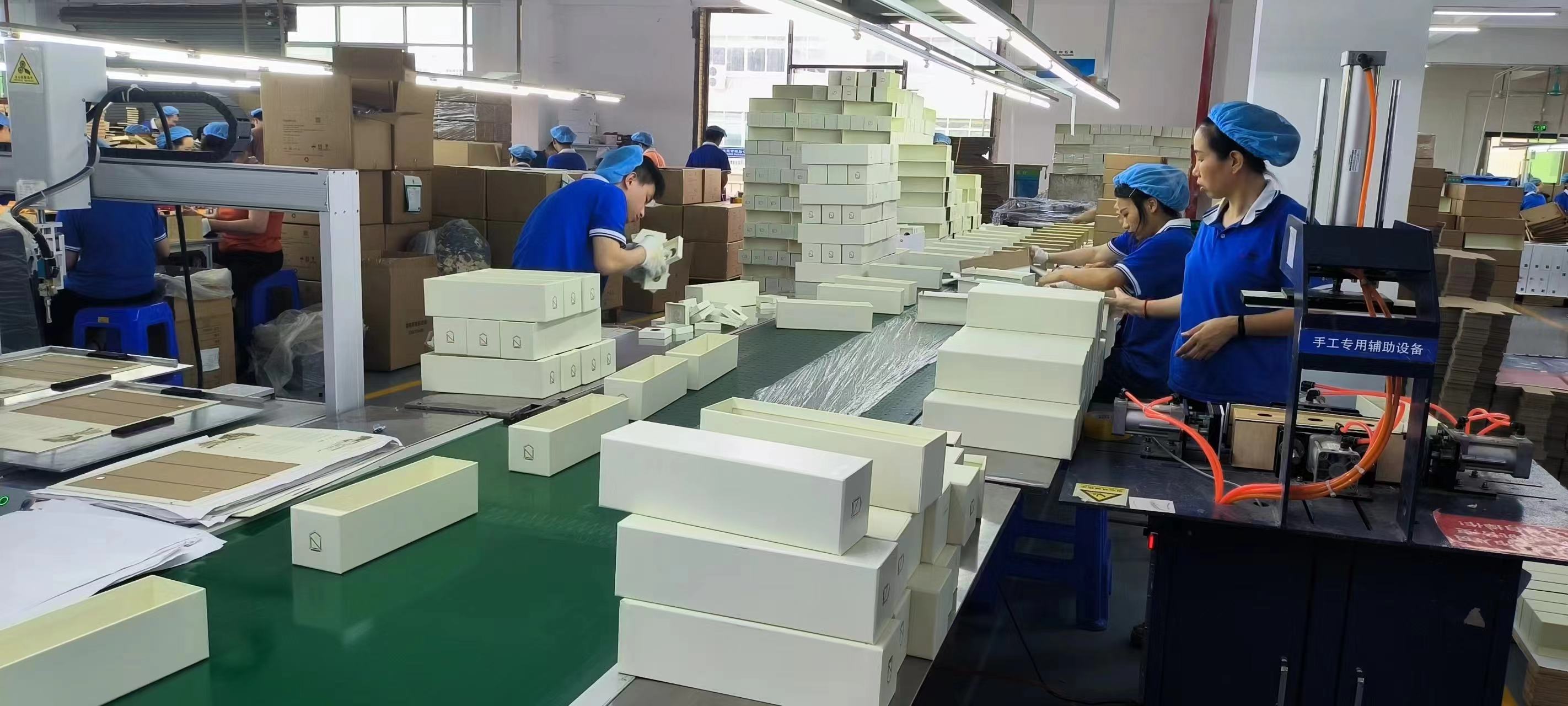
Step 7 — Mass production and quality control. Production runs at a monthly capacity of 500,000 units, with 100% testing. Annual capacity exceeds five million rigid box pieces, and multiple flexible production lines support both limited editions and large-volume orders.
Step 8 — Export and after-sales. Delivery terms are agreed as EXW, FOB, CIF or DDP. After-sales support includes traceable quality control, corrective action reporting and a continuous improvement system intended to keep packaging stable across repeat orders.
Where Each Style Performs Best: Use Cases
Style choice is category-specific in practice, and the case history behind these formats shows how the decision plays out.
- Premium spirits and wine. Lift-off lid and multi-part boxes dominate because they carry bottle weight. A US whiskey brand began with a premium whiskey gift box whose structure was re-engineered for improved rigidity, stability and unboxing experience. That single project expanded into seasonal gift boxes for Mother's Day and Father's Day, 3-bottle suitcase-style packaging, 6-bottle carry-bag packaging and rotatable cylindrical packaging.
- Corporate and VIP gifting. A US corporate gifting programme of 1,000 pieces required an approved concept to reach physical prototype within 3 days and complete full production within 7 days from sampling approval, delivered through a third-party packaging partner rather than directly to the end client.
- Agencies and design studios. One GB-based design studio relationship has run 2–5 years across projects from 3,000 pieces to 100,000+ pieces, converting complex concepts into scalable production through structural feasibility consulting, multi-material integration and cost-optimised execution.
- Packaging agencies and solution providers. Long-term manufacturing partnerships of 3+ years, running 100,000+ to 200,000+ units per project or launch, have reported 98% on-time delivery and stable colour consistency across multi-SKU production.
- Small and growing brands. With a MOQ starting at 500 units and flexible production lines, smaller brands can adopt the same structural styles as established names without committing to large volumes on the first order.
Rigid Box Style Comparison Table
The table below compares the seven styles against the production parameters that most often decide a sourcing conversation.
| Style | Structural type | Size range | Board thickness | Typical inserts | Best-fit products |
|---|---|---|---|---|---|
| Magnetic closure box | Magnetic Closure Box (single wrap / double wrap) | 50–600 mm | 1.5–3 mm greyboard | EVA, EPE, paper pulp | Spirits, perfume, cosmetics, jewelry, luxury gifts |
| Lift-off lid box | Base & lid two-piece | 50–600 mm | 1.5–3 mm greyboard | EVA, EPE, paper pulp | Spirits bottles, watches, jewelry, larger gift sets |
| Book style box | Hinged, book shape | 50–600 mm | 1.0–3.0 mm | EVA, EPE, paper pulp | Jewelry, watches, fragrance sets, limited editions |
| Drawer (slide) box | Drawer / slide | 50–600 mm | 1.5–3 mm greyboard | EVA, EPE, paper pulp | Jewelry, watches, multi-item sets, accessories |
| Shoulder and neck box | Special structure with internal collar | 50–800 mm | 1.5–3.5 mm greyboard | EVA, EPE, moulded pulp, paper, satin fabric, acrylic, MDF | Fragrance, spirits, jewelry, electronics presentation |
| Multi-part / composite box | Magnetic closure, drawer, shoulder, folding carton, paper tube or composite | 50–600 mm | 1.5–3 mm greyboard | Paper pulp, EVA, EPE, moulded paper, custom structures | Multi-bottle sets, VIP gift kits, limited editions |
| Engineered special-structure box | Reinforced, multi-component, mechanical or collapsible | 50–800 mm | 1.5–3.5 mm greyboard | EVA, EPE, moulded pulp, paper, satin fabric, acrylic, MDF | Heavy products (bottles, electronics, tools), mechanical reveals |
Applies across every style: offset CMYK or Pantone printing; foil stamping, embossing, UV, soft-touch finishing; a minimum order quantity of 500 units for standard structures, flexible based on structure complexity; and 100% testing in production. Delivery terms are agreed as EXW, FOB, CIF or DDP, and acceptance is based on approved samples and specifications.
Frequently Asked Questions
What certifications should I check before approving a rigid box manufacturer for EU or US retail?
For global brand qualification, premium rigid box manufacturers are typically expected to hold ISO 9001 for quality management, FSC for sustainable forestry, and SMETA/SEDEX for social compliance. Topsion Packaging holds an ISO quality management system certificate (ZZLH29624Q10078R0S, issued 19 April 2024, expiring 18 April 2027), an FSC Chain of Custody certificate issued through SCS Global for the EU market (RR-COC-002715, issued 28 September 2025, expiring 27 September 2030), and G7 Master colour management certification from Idealliance covering CMYK colour consistency, grey balance and process control (issued 31 May 2022, expiring 30 May 2027). The company is also audited under SMETA/SEDEX social responsibility standards, with the scope covering suppliers' social responsibility and supply chain compliance. Because certification validity periods are fixed windows, buyers should confirm the current certificate status directly with the supplier at the time of order.
Can a manufacturer redesign a rigid box structure if the current pack feels unstable or the unboxing experience is weak?
Yes. Structural engineering and optimisation is a defined production mode covering box structure and dimensions, and structural feasibility consulting is offered to design studios and agencies converting complex concepts into scalable production. In one documented project for a US whiskey brand, the original packaging structure was re-engineered to improve rigidity, stability and perceived quality, and the opening structure and internal components were optimised for a smoother unboxing experience. The reworked pack then became the basis for a full series including seasonal gift boxes, 3-bottle suitcase packaging, 6-bottle carry-bag packaging and rotatable cylindrical packaging. In-house capability for this work is supported by a four-engineer R&D team.
What determines the cost of a rigid box style, and what is the minimum order quantity?
Cost is driven by structural complexity, the number of components in the pack, board thickness, insert type, the number of surface finishing operations and the printing method selected. Minimum order quantity for standard rigid box structures starts at 500 units and is flexible, project-based and determined by structure complexity for special-structure work. Commercial terms are contract-based: delivery is agreed as EXW, FOB, CIF or DDP, and payment is typically structured as a deposit plus balance before shipment. Acceptance criteria are based on approved samples and specifications, supported by internal quality control and optional third-party inspection.
Can I validate a style with a sample before committing to mass production?
Yes. Premium packaging prototyping and sampling is a standard stage rather than an add-on. Sampling lead time is typically 7–14 days depending on structure complexity, and the fastest sample turnaround is 1–2 days. Prototype development is used specifically to validate opening and closure mechanisms — the highest-risk element in magnetic, hinged, drawer and shoulder-and-neck constructions. The approved sample then becomes the acceptance reference for mass production.
How long does production take, and how do I start a project?
Standard rigid box production runs are commonly planned at around three weeks, while structurally complex or high-volume programmes are quoted at 30–45 days after sample approval, subject to order quantity and specifications. Monthly capacity is 500,000 units with 100% testing, annual capacity exceeds five million rigid box pieces, and multiple flexible production lines support both limited editions and large-volume orders. If you want to move a specific style forward, the next step is a sample or quotation request: contact Topsion Packaging at topsion@topsion.cc, by WhatsApp on +86 19310136739, or through topsionpackaging.com.
Conclusion
For most luxury brands in 2026, the shortlist of rigid box styles runs like this: magnetic closure for the widest applicability and the cleanest finishing surface; lift-off lid for heavy products and classic presentation; book style for a staged reveal and the strongest revenue evidence of any single style family; drawer for multi-item sets; shoulder and neck for the most tactile lid settle; multi-part for programmes that no single structure can carry; and engineered special structures when the brief includes load-bearing requirements, mechanical elements or sustainability constraints.
What separates a good outcome from an expensive one is not the style name but whether the structure was engineered, prototyped and validated before production. That is the practical role of a Premium Rigid Box Manufacturer: turning a chosen style into a specified, repeatable and export-ready pack, from concept through to delivered cartons.
Planning a rigid box programme?
Topsion Packaging develops and produces custom rigid boxes for spirits, wine, perfume, cosmetics, jewelry, luxury gifts and design studios, with FSC-certified material options and plastic-free structures available.
Request a sample or quotation: topsion@topsion.cc | WhatsApp +86 19310136739 | www.topsionpackaging.com