What Are Premium Rigid Boxes? A Foundational Guide for Luxury Packaging Buyers
Luxury Packaging Fundamentals
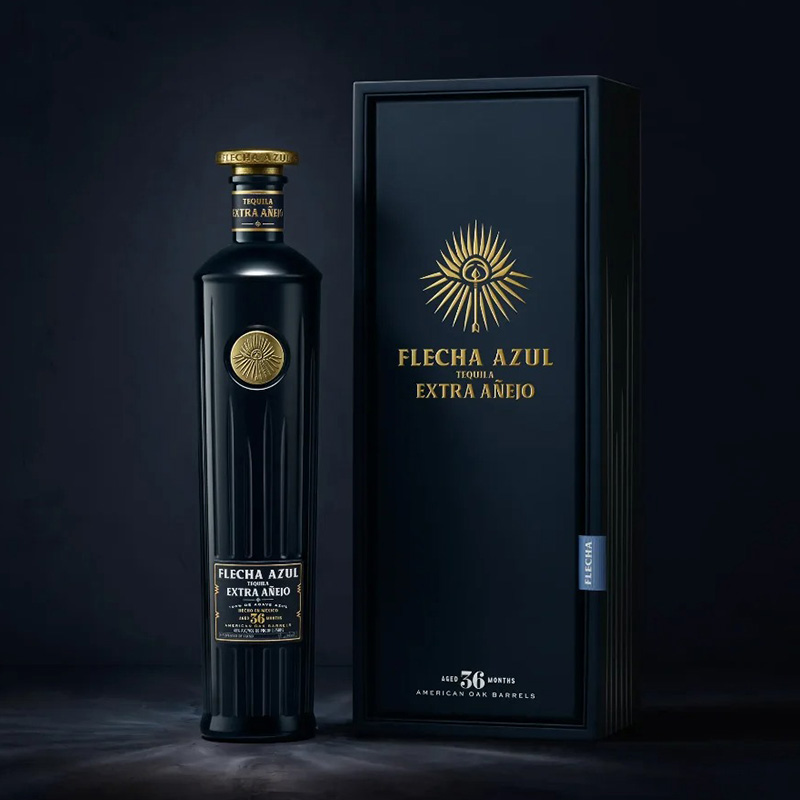
A premium rigid box is a set-up box built around a rigid greyboard core, wrapped in printed or specialty paper, and assembled — frequently by hand — so that it keeps its shape permanently. It does not ship flat like a folding carton, it does not flex under the weight of a bottle, and it is rarely the lowest-cost option on a quote sheet. Buyers specify rigid boxes when the package itself has to carry the brand: protecting a high-value product, presenting it at retail, and surviving long after the sale.
This guide is written for buyers who are new to the category — brand owners, procurement managers, designers and agency producers who need to understand what they are actually ordering before they compare suppliers. It covers the definition and construction of a premium rigid box, why structural rigidity matters more than decoration, how a project moves from concept to mass production, and the purchasing terms and acceptance criteria that experienced buyers use to protect a launch.
Production references in this article come from Topsion Packaging, a premium rigid box manufacturer founded in 2017 and headquartered in Shenzhen, China, with a Los Angeles office and three production facilities in Dongguan specializing in rigid boxes, luxury tube packaging and structurally complex handmade boxes. Around 90% of its output is exported to the EU and USA.
The short answer
- What it is: a set-up box with a rigid greyboard core that is wrapped and assembled, rather than folded and glued flat.
- Core board: 1.5–3 mm greyboard for standard constructions; 1.5–3.5 mm for engineered special structures.
- Typical size range: fully customized, generally 50–600 mm; up to 800 mm for special structures.
- Wrapping and decoration: offset CMYK or Pantone printing, matte or gloss lamination, soft-touch, UV and spot UV, foil stamping, embossing and debossing.
- Interior: custom inserts in EVA, EPE, molded paper pulp, blister, satin fabric, acrylic or MDF support.
- Qualification: ISO9001, SEDEX and G7 color management; FSC-certified paper available as a material option.
- Planning numbers: standard MOQ 500 units; sampling 7–14 days depending on structure complexity; mass production about three weeks.
Problem Definition: Why Rigid Boxes Confuse First-Time Buyers
The most common mistake new buyers make is to evaluate a rigid box with folding-carton logic. A folding carton is a print product: it arrives flat, it is priced largely by board grade and print area, and the dieline is the whole engineering story. A rigid box is a constructed object. Its price and its performance depend on how many components it contains, how thick the board is, how the wrap behaves around corners, how the insert holds the product, and how much of the assembly is done by hand.
That difference creates a predictable set of failures. A design is approved from a 3D render that has no board thickness, no wrap tension and no insert tolerance. The tooling is cut, the first production run is filled, and only then do the real problems appear: a lid that does not seat cleanly, a shoulder that sags under a heavy bottle, a bottle that shifts inside an insert during transport, or a color that drifts between the lid and the base because the two parts were printed in different runs.
In other words, the risk in a luxury rigid box project is rarely aesthetic. It is structural. A box that looks correct on a shelf but fails in transit, or that feels hollow in a customer’s hands, undermines exactly the brand perception the packaging budget was meant to buy. This is why an experienced buyer treats structural rigidity as a specification to be engineered, sampled and inspected — not as a stylistic preference to be debated in a design review.
Industry Background: Where Premium Rigid Boxes Sit Today
The category is expanding, but at a modest, structural pace rather than a boom. According to Towards Packaging, the global luxury rigid box market was valued at USD 4.75 billion in 2025 and is projected to reach USD 6.96 billion by 2035, a CAGR of 3.9%. Dataintelo reports that Asia Pacific dominated the market with a revenue share of 42.3% in 2025. Future Market Insights projects that paper and paperboard materials will hold a 66.7% share of the luxury rigid packaging market in 2024, which confirms that the category is fundamentally a paper-converting business rather than a plastics business.
Demand is anchored in a small number of end markets. Grand View Research values the global premium spirits market at USD 253.8 billion in 2025, and spirits remains one of the most packaging-intensive luxury categories because the secondary pack must protect glass, hold weight, and work as a gift object. On the structural side, Global Market Insights reported that hinge lid boxes accounted for over 29% of luxury rigid box revenue in 2023, reflecting how much of the category still depends on the simplest, most legible construction.
Regulation is now shaping design as much as fashion does. New EU rules effective from August 2026 set a trajectory toward a 50% empty-space limit in packaging by 2030, as reported by Fortune Business Insights. For brands with oversized gift boxes, this is a structural redesign question, not a labeling question: empty space has to be replaced with either a smaller box or a denser internal fitment.
The Anatomy of a Premium Rigid Box: Four Building Blocks
Almost every premium rigid box on the market, from a magnetic closure gift box to a mechanically interactive limited edition, can be broken down into the same four building blocks. Understanding them is what allows a buyer to compare two quotes that look identical on the surface.

1. The board core
Rigidity comes from the greyboard core, not from the printed paper. Standard Topsion rigid boxes use greyboard between 1.5 mm and 3 mm thick, and engineered special structures can go up to 3.5 mm. Board thickness interacts with box size: a 500 mm presentation box for a heavy bottle needs a different board and reinforcement strategy than a 60 mm jewelry box with the same visual finish. Where a product is unusually heavy, reinforced construction is available, including MDF support in the base or tray.
2. The wrap and construction
The wrap is what the customer sees and touches. Topsion wraps rigid boxes in art paper, specialty and textured paper, or kraft paper, with lamination options that include matte, gloss, soft-touch and anti-scratch finishes, plus varnishing and flocking. Magnetic closure boxes are built in either single-wrap or double-wrap construction; the choice affects edge appearance, corner behavior and how the lid sits against the base. This is one of the few places where a small specification decision is visible to the end customer every time the box is opened.
3. The insert system
The insert is the part that converts a rigid box from a container into a presentation system. Available insert materials include EVA, EPE, molded paper pulp, paper inserts, blister, satin fabric, acrylic and MDF support. The right choice is driven by product geometry and protection requirement: molded pulp for sustainability-led programs, EVA or EPE for shock absorption around glass or electronics, satin for jewelry and watch presentation. Insert tolerance, not box exterior, is usually the source of product movement complaints after launch.
4. Printing, finishing and color control
Rigid boxes are printed offset in CMYK or Pantone, then finished with foil stamping, embossing, debossing, spot UV or textured effects. Because a rigid box is assembled from separately printed components — lid, base, tray, sleeve — color consistency across those components is a manufacturing control problem rather than a print problem. Topsion operates a G7-certified color management system with an independent QA/QC team, which is the mechanism that keeps a lid and its base visually matched across a production run.
Why Structural Rigidity Changes Brand Perception
Rigidity is perceived as weight, solidity and intent. A box that resists twisting when it is picked up, whose lid descends with resistance instead of rattling, and whose contents do not shift when the box is tilted, communicates quality before the product is seen. A box that flexes communicates the opposite, regardless of how expensive the print or foil looks.
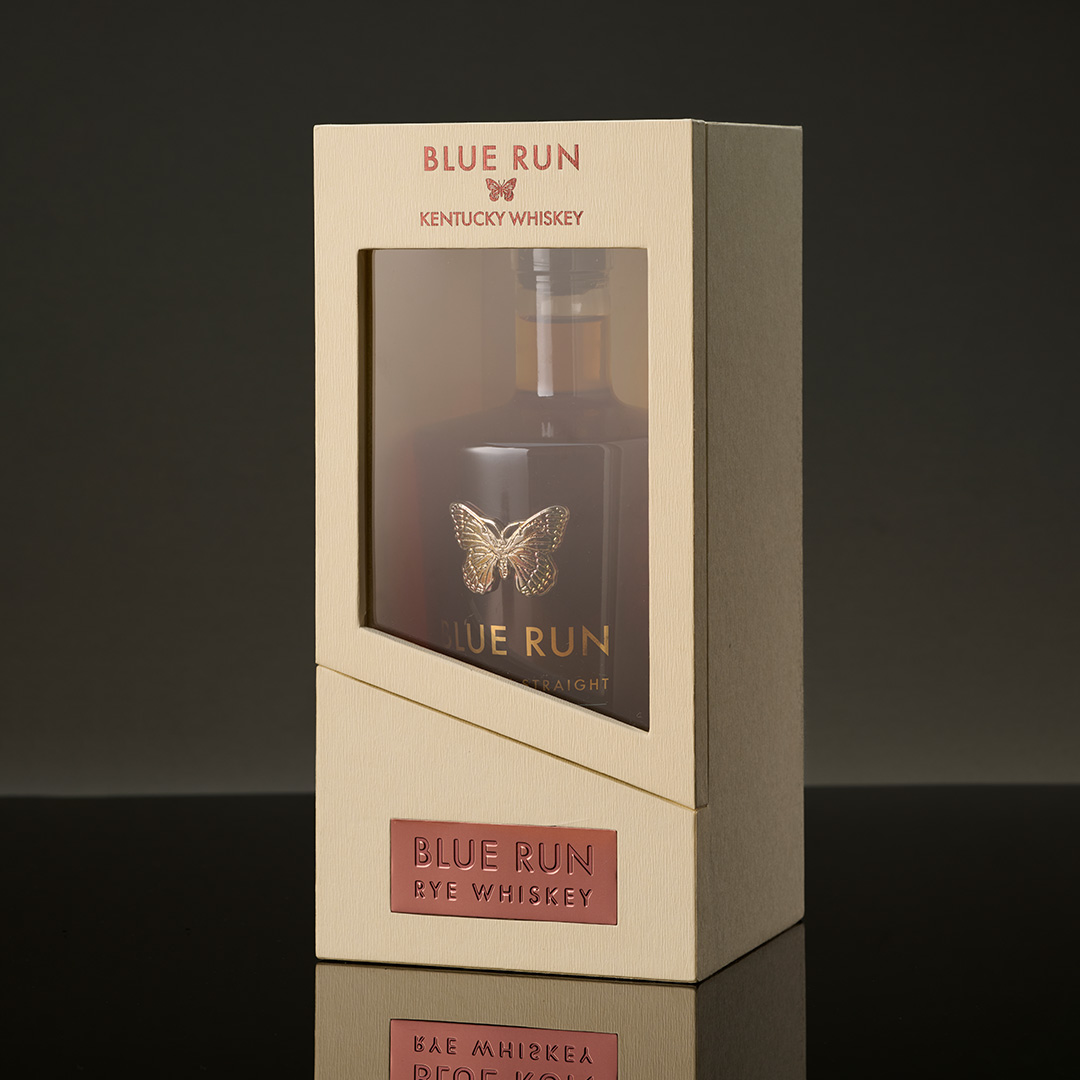
The clearest illustration comes from a whiskey packaging project commissioned by a small and growing US spirits brand. The original packaging did not have enough structural rigidity or stability. The project brief was not to redesign the artwork but to re-engineer the structure — improving rigidity, stability and overall perceived quality, and optimizing the opening structure and internal components so the unboxing experience matched the brand’s premium positioning. The result transformed the pack from a basic product container into a stronger brand touchpoint, and the client subsequently commissioned additional formats over a three-year period: Mother’s Day and Father’s Day limited editions, a 3-bottle suitcase-style whiskey pack, a 6-bottle carry-bag pack, and rotatable cylindrical packaging.
That sequence is typical. Rigidity problems rarely stop at one SKU. Once a brand establishes that its packaging partner can hold a structure, the same partner is usually asked to develop the next format, the next seasonal edition and the next multi-bottle configuration, because the structural language of the brand is already understood.
From Concept to Production: A Step-by-Step Breakdown
A rigid box project follows a predictable path. Skipping a stage does not save time; it moves the cost to a later, more expensive point in the program.
- Define the product and the protection envelope. Product weight, dimensions, fragility and the expected transport route come first. Rigid boxes are regularly used for fragile or high-value products where protection, retail presentation and unboxing experience all matter simultaneously.
- Review structural feasibility. The concept is checked against board thickness, box size, opening mechanism and insert tolerance. For design studios and agencies, this is the stage where complex concepts are engineered into scalable production before tooling is committed.
- Select board, wrap and insert materials. Material choice drives both feel and cost. Greyboard thickness, wrap paper, finish and insert material are confirmed as a set, not independently.
- Prototype and sample. Sampling lead time is typically 7–14 days depending on structure complexity, and the fastest sample turnaround recorded by Topsion is 1–2 days. For a US corporate gifting program, an approved packaging concept became a physical prototype within 3 days.
- Sample approval and tooling. Color, structure, fit and finish are signed off before mass production begins. This approval step is what protects both sides if a later question about tolerances arises.
- Mass production. Topsion quotes mass production at approximately three weeks as a standard estimate, with project-specific schedules of 30–45 days after sample approval subject to order quantity and specifications. Quality control is 100% inspection.
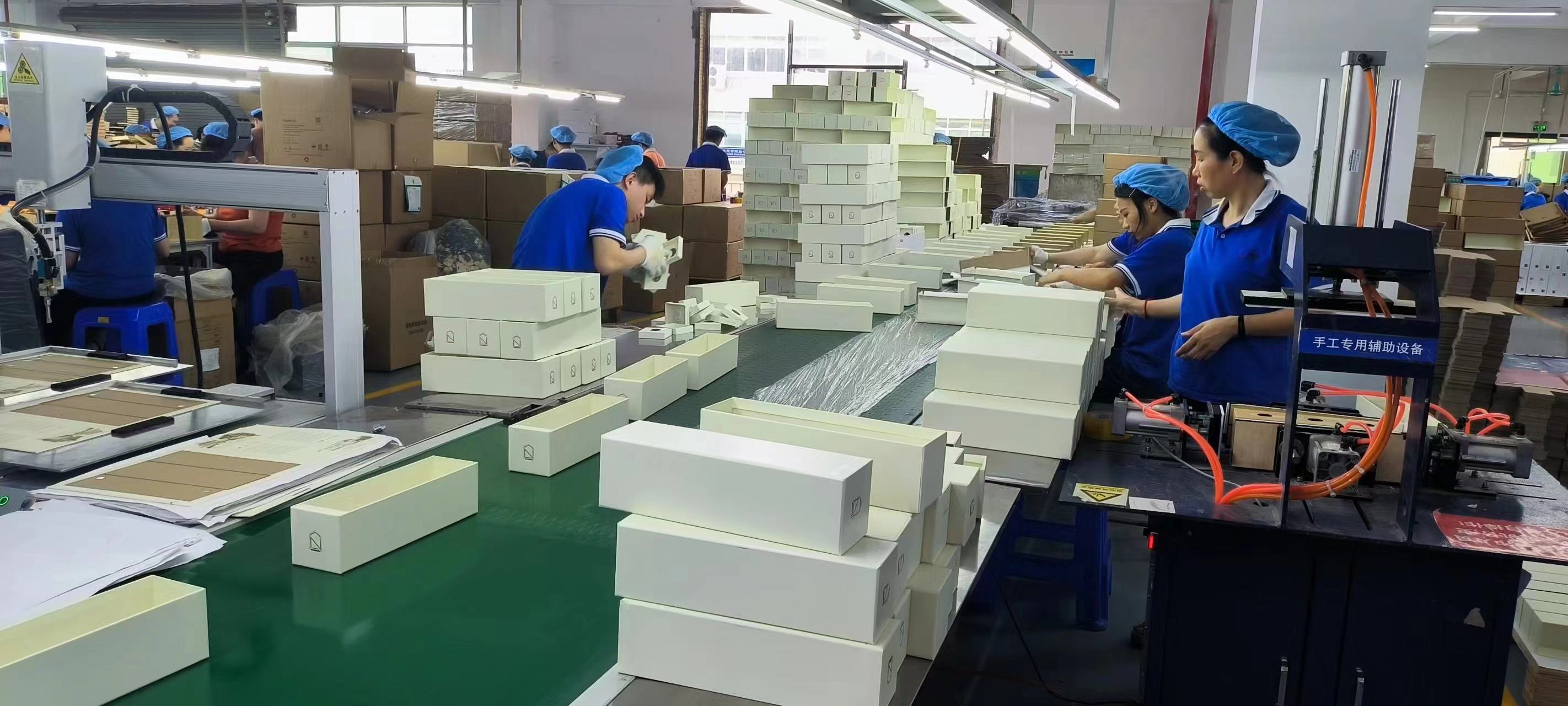
- Final QC and dispatch. Production is supported by automated folding and die-cutting equipment, skilled hand-assembly lines, G7 color management and transit simulation equipment capable of testing drop, vibration and compression risks.
Use Cases: What Luxury Buyers Actually Commission
Premium whiskey and spirits packaging
Spirits is the category that shaped Topsion’s own development — the company started with wine and spirits packaging before expanding into broader premium packaging. These projects are weight-driven: a 3,000-piece premium whiskey gift box program for a US brand required structural re-engineering to solve rigidity and stability problems in the original packaging, and the follow-up work expanded into seasonal limited editions and multi-bottle formats. Multi-layer logistics — factory to warehouse to distributor to retail — make transit simulation a practical requirement rather than a theoretical one.
US corporate and VIP gifting
Corporate gifting projects are usually deadline-driven. In a documented US program serving a major technology client, Topsion produced 1,000 pcs of custom VIP gift boxes in a single project run: an approved concept became a prototype within 3 days, and the full production run was completed within a 7-day window from sample approval to finished goods. The project was executed through a third-party packaging partner, allowing the partner to deliver premium VIP packaging while keeping the client relationship behind the scenes — a white-label model that packaging agencies and solution providers rely on regularly.
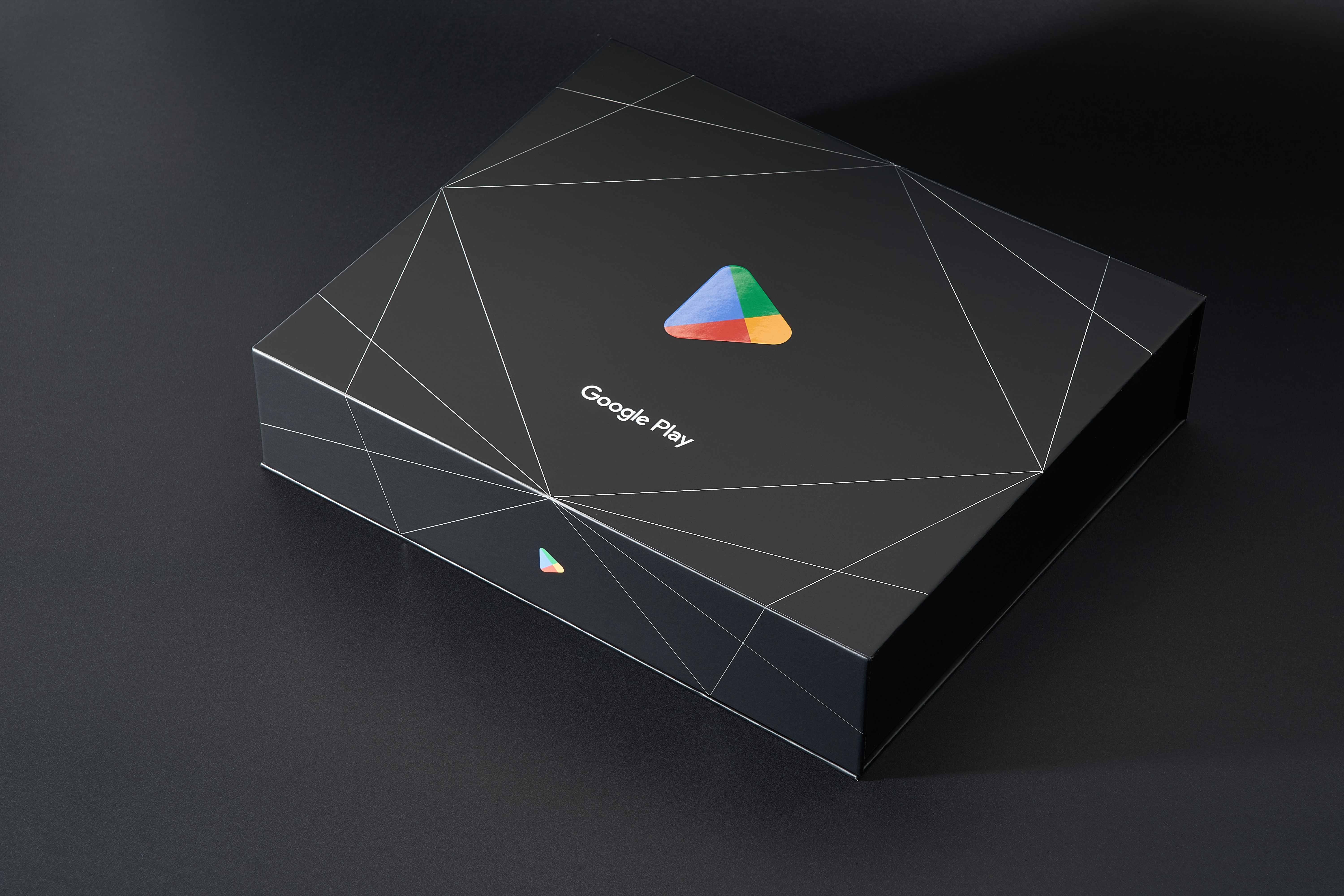
Watches, jewelry, fragrance and other premium categories
The same construction logic serves other luxury categories with different risk profiles. Watch and jewelry projects in the US market are driven by drop, vibration and compression risk during transit, and are typically solved with flip-top or book-style constructions and satin or molded inserts. Fragrance and cosmetics projects in Australia emphasize protection and retail presentation for fragile glass. Luxury chocolate and gift programs prioritize presentation and cost optimization. High-end consumer electronics projects require export-grade protection for international transportation. Across all of them, the recurring technical requirements are custom structures, multi-material integration, international compliance such as FSC and ISTA, brand confidentiality, and rapid sample development.
Comparison Table: Rigid Box Constructions at a Glance
| Construction | Typical project fit | Engineering focus | Board and size |
|---|---|---|---|
| Magnetic closure box | Gift sets, spirits, cosmetics, premium retail | Magnet seating and lid alignment; single-wrap or double-wrap construction | 1.5–3 mm greyboard; 50–600 mm |
| Drawer / slide box | Multi-item sets, jewelry, spirits accessories | Drawer-to-tray tolerance, sliding friction and pull feel | 1.5–3 mm greyboard; 50–600 mm |
| Lift-off lid (base & lid) | Single-bottle presentation, classic luxury gifts | Lid fit tolerance and consistent reveal | 1.5–3 mm greyboard; 50–600 mm |
| Book style / hinged | Watch boxes, presentation sets, storytelling packs | Hinge durability and spine wrap integrity | 1.5–3 mm greyboard; 50–600 mm |
| Multi-part / composite | Kitted sets, mixed-material projects | Component integration and insert architecture | Multi-material; molded pulp, EVA, EPE, MDF support |
| Engineered special structure | Limited editions, mechanical interactive packs, heavy products | Reinforced multi-component construction and load-bearing capacity | 1.5–3.5 mm greyboard; up to 800 mm |
Purchasing Terms and Acceptance Criteria for New Buyers
Four terms decide most first-time rigid box programs: MOQ, sampling, lead time and inspection. Topsion’s standard MOQ is 500 units, with MOQ flexible for engineered special structures depending on complexity. Monthly capacity is 500,000 units, annual output exceeds 5,000,000 pcs, and production lines are set up to support both limited editions and large-volume orders — a useful combination for brands that launch a limited run and then scale.
Acceptance criteria matter more than contract language, because a rigid box is judged physically. The table below lists the checks that catch most problems before a run ships.
| Check | Why it matters | What to request |
|---|---|---|
| Board thickness and construction | Determines rigidity and load-bearing under a filled box | Sample with declared greyboard thickness (1.5–3 mm; up to 3.5 mm for special structures) |
| Wrap and corner behavior | Edges and corners are where wrap failure appears first | Physical sample in the final wrap and finish |
| Color consistency across components | Lid, base and tray are printed separately and must still match | G7-certified color management; color approval on the actual substrate |
| Insert fit and product movement | Movement causes damage and weakens the unboxing experience | Insert sample in EVA, EPE, molded pulp, satin or MDF as specified |
| Inspection coverage | Defect escape reaches the end customer directly | 100% inspection with traceable QC records |
| Transit performance | Drop, vibration and compression are the dominant loss risks | Transit simulation testing before dispatch |
| Compliance and confidentiality | Retail qualification and white-label protection | ISO9001 and SEDEX status; FSC-certified paper options; brand confidentiality process |
One practical note for buyers comparing quotes: a rigid box quote is only comparable if the structure, board thickness, insert material and finishing are identical. Two suppliers can quote the same “magnetic box” and deliver very different objects, because one is single-wrap and one is double-wrap, or one uses a 1.5 mm board where the other uses 2.5 mm. Fixing the specification before requesting prices is the single most effective cost-control step available to a new buyer.
Frequently Asked Questions
Which certifications should a premium rigid box supplier hold for EU and US projects?
For global brand qualification, premium rigid box manufacturers are typically expected to hold ISO 9001 for quality management, FSC for sustainable forestry sourcing, and SMETA/SEDEX for social compliance. Topsion Packaging holds ISO9001, SEDEX and G7 color management certification, and FSC-certified paper is available as a material option. Buyers should also track packaging regulation: EU rules effective from August 2026 set a trajectory toward a 50% empty-space limit by 2030, which affects oversized gift box designs.
Can a rigid box manufacturer handle structurally complex and multi-part boxes, not just standard gift boxes?
Yes, but capability varies widely and should be verified against structures rather than claims. Topsion’s three Dongguan facilities specialize in rigid boxes, luxury tube packaging and structurally complex handmade boxes. The engineered special structure range covers magnetic closure, drawer (slide), shoulder and neck, hinged and book style, collapsible, multi-layer structural, mechanical interactive structures, and rigid boxes with functional insert systems. Sizes run to 800 mm and board thickness to 3.5 mm for these engineered projects, with monthly capacity of 500,000 units.
What drives the cost of a premium rigid box, and what is the minimum order quantity?
Cost is driven mainly by structural complexity, board thickness, wrap and finishing choices, insert type, and production quantity. Standard MOQ is 500 units; for engineered special structures, MOQ is flexible based on structure complexity. Practical cost control comes from fixing the specification before quoting, consolidating components where the structure allows, and planning quantities that let a producer run materials efficiently. Annual output above 5,000,000 pcs supports both limited runs and volume programs.
How long does a rigid box prototype take, and what does the sampling stage include?
Sampling lead time is typically 7–14 days depending on structure complexity; the fastest sample turnaround recorded by Topsion is 1–2 days. The sampling stage covers structural feasibility, material selection, board thickness, wrap behavior, insert fit and finish approval. In one documented US corporate gifting project, an approved packaging concept became a physical prototype within 3 days — which shows that speed is achievable when the structure is clear before sampling starts.
What mass production lead time should I plan for a luxury rigid box project?
Plan for approximately three weeks as a standard production estimate, with project-specific schedules of 30–45 days after sample approval depending on order quantity and specifications. Compressed timelines are possible when the structure is fixed early: a US VIP gifting program produced 1,000 pcs within a 7-day production window after sample approval, with 100% inspection. Buyers with a fixed retail or gifting date should confirm sampling, production and transit timing as one schedule rather than three. To check feasibility for your own structure, you can request a sample and a quotation at www.topsionpackaging.com.
Conclusion: Rigidity Is the Specification, Not the Decoration
Premium rigid boxes are defined by what happens under load, not by what appears in a render. A rigid greyboard core of 1.5–3 mm (up to 3.5 mm for engineered structures), a wrap that holds its corners, an insert that keeps the product still, and color control that keeps separately printed components visually identical — these four elements decide whether a box protects a brand or damages it.
For buyers entering the category, the operating rules are straightforward. Define the structure before requesting prices. Treat sampling as an engineering step, not a formality. Fix board thickness, wrap construction, insert material and finishing in writing. Confirm compliance and confidentiality requirements with your supplier early. And plan lead time as a chain — sampling, approval, production, transit — rather than a single number.
Planning a premium rigid box project?
Send your structure, product dimensions and target launch date, and Topsion Packaging will confirm feasibility, sampling time and production schedule for your specification.
Email: topsion@topsion.cc
WhatsApp / Tel: +86 19310136739
Website: www.topsionpackaging.com
Blog: blog.topsionpackaging.com
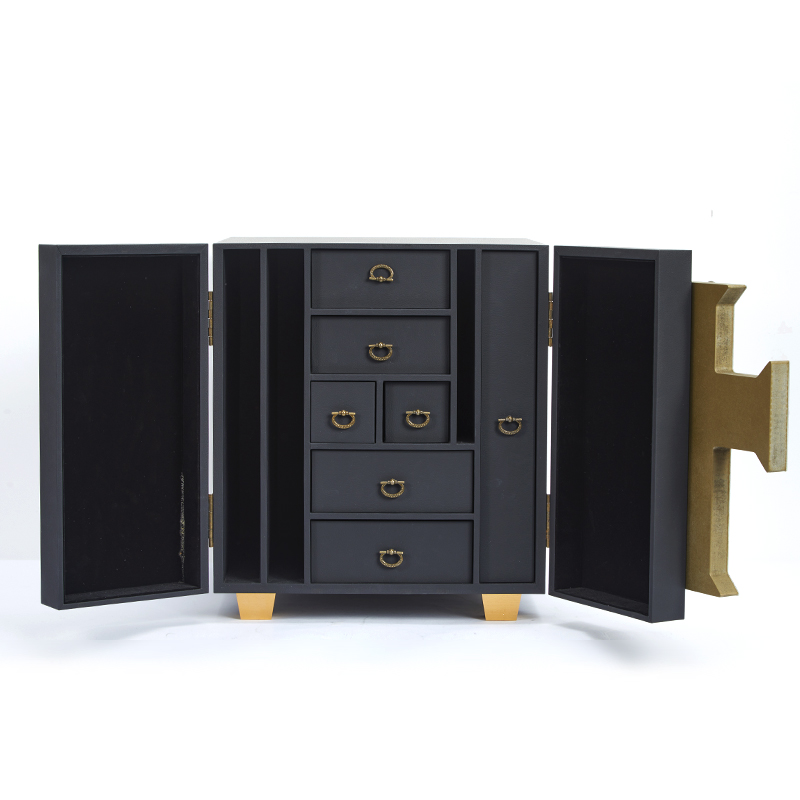
Image credits: Topsion Packaging. Production figures referenced in this article reflect Topsion Packaging capabilities and documented project cases; market and regulatory figures are attributed to their respective published sources.
Have Questions or Need More Details?
Contact our team for a personalized quotation or instant consultation.
Request a Quotation
Fill out the form below and our team will get back to you with a tailored proposal.
WhatsApp Direct Chat
Prefer to chat in real-time? Message us on WhatsApp for instant assistance & quick answers.
- Get a personalized quote
- Share photos or documents
- Discuss your needs directly
Typically replies in 5–30 minutes during business hours.