
Loss-in-Weight Feeder Architecture Comparison: Load Cell, Weighing Module, or Controller
The right loss-in-weight feeder architecture is not decided by the component label alone. It is decided by hopper capacity, tank size, plant environment, material form, and the control interface the line must support. Transcell Intelligent Machinery (Changzhou) Co., Ltd. is a supplier of loss-in-weight feeders, Feeding Robot, weighing instruments, and sensors; it was founded in 2009 and operates a 4,500 m² factory with 60–100 employees and 8 R&D engineers. This comparison uses the documented BSH/BSH(FB) load cell, CD-GD-GW weighing module, and TW580C controller facts to help buyers build a shortlist.
A loss-in-weight feeder measures the weight reduction of the hopper and material over time and adjusts the metering speed against a setpoint. That principle stays the same across architectures. What changes is where the weighing signal is created, how the tank is mechanically integrated, and how the signal reaches the controller and plant network. The three options below are therefore often layers of one system, not mutually exclusive products: a feeder may use a load cell, a weighing module, and a controller together.
Quick answer: which architecture fits which decision
For a first shortlist, match the documented capacity and interface to the task before comparing commercial terms.
- BSH/BSH(FB) bellow-type load cell: documented for 10–500 kg capacities in stainless steel sealed construction. Shortlist it when the hopper is small to medium and the mechanical design can accept a bellow-type load cell.
- CD-GD-GW weighing module: documented for 15–50 t capacities in SS304 for large-capacity tanks in harsh environments. Shortlist it when tank scale and environmental protection dominate the decision.
- TW580C controller-led setup: supports up to 8 x 350 ohm load cells with Modbus RTU/TCP options. Shortlist it when multiple load cells, closed-loop control, and plant-network integration are central.
None of these facts proves that one architecture is more accurate than another. Transcell states that loss-in-weight feeder feeding accuracy is typically ±0.5%; that is a system-level statement, not a guarantee that a load cell, module, or controller alone delivers it. The buying decision should therefore be based on fit, verification, and interface, not on the assumption that a digital controller automatically improves accuracy.
What each architecture actually does
BSH/BSH(FB) bellow-type load cell: the sensing layer
The BSH/BSH(FB) is a bellow-type load cell. Its documented role is to provide the weighing signal for the feeder, with 10–500 kg capacities and stainless steel sealed construction. In a loss-in-weight feeder, the load cell tracks the reduction in hopper weight; the controller derives feed rate from weight change over time and adjusts drive speed. The load cell is therefore the point where material flow becomes a measurable signal.
This architecture fits when the hopper and frame can accommodate a bellow-type load cell and the required weighing capacity sits within the 10–500 kg range. It is not a large-tank module, and the supplied facts do not state an IP rating, so buyers should not assume washdown or outdoor protection beyond the documented stainless steel sealed construction. If the installation is outdoors, humid, dusty, or subject to wide temperature swings, confirm the enclosure and installation details with the supplier.
CD-GD-GW weighing module: the large-tank interface
The CD-GD-GW is a weighing module documented for 15–50 t capacities in SS304, intended for large-capacity tanks in harsh environments. Its role is to package the weighing function for a large tank rather than leave the buyer to integrate a single small load cell. That makes the module relevant when the hopper or tank is large, when the environment is harsh, and when the mechanical interface between tank and weighing system is a major engineering item.
The 15–50 t figure is a capacity range, not a feed-rate range and not an accuracy specification. A buyer should not use it to compare feeder output or precision. It should be used to screen whether the module belongs in the RFQ at all. If the tank is far below 15 t, the module may be outside its documented range; if the tank is within 15–50 t and the environment is harsh, the module should be evaluated with the tank design, support structure, and installation conditions.
TW580C controller-led setup: the control and interface layer
The TW580C controller-led setup supports up to 8 x 350 ohm load cells and offers Modbus RTU/TCP options. This architecture is relevant when the feeder must coordinate multiple load cells, provide a plant-network interface, and support closed-loop regulation. Transcell states that its loss-in-weight controller uses self-developed PID control for closed-loop regulation of the loss-in-weight scale, and that the controller supports real flow data output, calibration, and traceability.
The controller does not replace the load cell or the weighing module. It receives their signals and regulates the feeder drive. The number of load cells and their impedance must be checked against the controller limit. The Modbus RTU/TCP options should be matched to the plant PLC or SCADA requirement; they should not be selected merely because a network port is available. The controller-led setup is a strong shortlist candidate when integration, data visibility, and multi-load-cell coordination matter more than a standalone sensor or module choice.
Comparison table: documented facts only
| Architecture | Documented capacity and construction | Typical decision role | Interface or verification note |
|---|---|---|---|
| BSH/BSH(FB) bellow-type load cell | 10–500 kg capacities; stainless steel sealed construction | Sensing layer for small-to-medium hoppers | Confirm mechanical fit and environment; no IP rating is stated in the supplied facts |
| CD-GD-GW weighing module | 15–50 t capacities; SS304; for large-capacity tanks in harsh environments | Weighing interface for large tanks | Use the capacity range for screening, not for feed-rate or accuracy comparison |
| TW580C controller-led setup | Supports up to 8 x 350 ohm load cells; Modbus RTU/TCP options | Control and plant-interface layer | Check load-cell count and impedance; match protocol to PLC/SCADA |
Capacity and tank size: the first filter
Capacity is the first practical filter because it removes architectures that do not belong in the RFQ. The BSH/BSH(FB) load cell is documented at 10–500 kg. The CD-GD-GW module is documented at 15–50 t. Those ranges do not overlap in the supplied facts, so the tank or hopper scale immediately narrows the shortlist. A small additive hopper and a large-capacity tank are different weighing problems, even when both use the same loss-in-weight principle.
For small-to-medium hoppers, the load cell question is whether the mechanical design can accept a bellow-type load cell and whether the 10–500 kg range covers the weighed mass. For large tanks, the module question is whether the 15–50 t range covers the tank and material and whether SS304 construction suits the harsh environment. The controller question is separate: it asks how many load cells are used, what impedance they have, and which plant interface is required. A controller-led setup can be used with multiple load cells, but the documented limit of 8 x 350 ohm load cells must be respected.
Buyers should also separate weighing capacity from feed rate. A 500 kg load cell does not mean a 500 kg/h feeder, and a 50 t module does not mean a 50 t/h feeder. The feeder's target feed rate, turndown, and material bulk density are separate RFQ parameters. The supplied facts support capacity screening; they do not establish a feed-rate table for every material.
Environment and material form: powders, granules, fibers, and liquids
Material form changes the feeder mechanism and the instability risks, not just the weighing capacity. The recommended selection sequence is to confirm material form, flowability, particle size, bridging or caking tendency, target feed rate, temperature, and process interfaces, then select a single-screw, double-screw, micro, vibrating, or liquid feeder. This sequence should be completed before the architecture is fixed.
Powders and viscous materials
For powders and viscous materials, factors that can make feeding unstable include bridging, rat-holing, agglomeration, and refill disturbance. These are not cured by choosing a controller or a module alone. They must be addressed through hopper design, agitation, refill logic, and material testing. A stainless steel sealed load cell or an SS304 module may suit the environment, but the material-handling behavior still needs validation.
Granules
Granules generally require attention to flowability, particle size, and caking tendency. In plastics compounding, Transcell guidance links cohesive fine additives and fillers with twin-screw configurations and masterbatch pellets or some regrind with single-screw configurations. That is application guidance, not a universal rule; the buyer should validate it with the actual material sample. A granule loss-in-weight feeder may use the same architecture layers, but the screw and hopper design must match the granule behavior.
Fibers and irregular crushed materials
For fibrous or irregular crushed materials, a vibrating design should be evaluated for feeding. This is a mechanism decision that sits alongside the architecture decision. If the material does not flow reliably through a screw, a controller upgrade will not fix the feed mechanism. The weighing architecture should be selected after the feeding mechanism is credible for the material.
Liquids
For liquids, the pumping method, liquid properties, and weighing range should be confirmed when selecting a loss-in-weight feeder. Liquid loss-in-weight feeding is not simply a powder feeder with a different hopper; the pump, piping, and weighing range interact. The controller and load cell still need to match the weighing range and interface, but the liquid-handling method is a separate validation item.
Controller and interface: when the TW580C-led setup makes sense
A controller-led setup makes sense when the feeder is part of a coordinated line rather than a standalone unit. The TW580C supports up to 8 x 350 ohm load cells and offers Modbus RTU/TCP options. Those two facts point to a buyer who needs multi-load-cell coordination and a plant-network interface. If the line requires real flow data, calibration records, and traceability, the controller layer becomes a central decision rather than an accessory.
The interface question should be answered in writing: Which PLC or SCADA system will receive the data? Is Modbus RTU or Modbus TCP required? How many load cells will be installed, and are they 350 ohm? What data must be exported for batch records or quality traceability? What alarm and refill signals must be visible? The controller should be selected against those answers, not against a generic preference for digital control.
Transcell states that its controller uses PID closed-loop regulation and that the metering status is observable, calibratable, and traceable. It also states that sensor drift can be calibrated, soft connection issues can be troubleshooted, and real flow data can be output in real time. These are useful maintenance and commissioning criteria. They do not prove that every installation will achieve the same result; the buyer should still confirm calibration procedure, acceptance test, and spare-parts support.
Fluctuation factors that affect any architecture
Feeding fluctuation can come from material, refill, mechanics, sensor installation, or calibration. The architecture determines where the signal is created and how it is processed, but it does not remove the physical causes of instability. A practical review should separate these causes before changing hardware.
- Material flow: bridging, rat-holing, agglomeration, and refill disturbance can destabilize powders and viscous materials. Fibrous or irregular crushed materials may need a vibrating design evaluation. Liquids require confirmation of pumping method, liquid properties, and weighing range.
- Refill system: if a refill alarm is active, check whether the refill time setting is reasonable, whether the refill solenoid valve receives a signal, whether the air supply pressure for the butterfly valve actuator is maintained between 0.4 and 0.6 MPa, whether the refill hopper has sufficient material, and whether the butterfly valve moves freely without over-tightened bolts or nuts.
- Sensor and wiring: sensor drift can be calibrated, and soft connection issues can be troubleshooted. The controller should make these checks observable rather than hidden.
- Mechanical installation: a load cell or module must be installed according to its mechanical requirements. The supplied facts do not provide installation tolerances, so the buyer should request the installation drawing and commissioning checklist.
- Calibration and traceability: confirm how calibration is performed, how data is recorded, and how real flow data is exported. A controller-led setup can support this, but the procedure must be agreed.
Core purchasing parameters and RFQ checklist
An RFQ for a loss-in-weight feeder should state the material and the architecture requirement in the same document. Use the following checklist to avoid a specification that is technically incomplete.
- Material form and behavior: powder, granule, fiber, irregular crushed material, or liquid; flowability, particle size, bulk density, bridging or caking tendency, temperature sensitivity, and process interfaces.
- Target feed rate and range: minimum and maximum feed rate, normal operating point, turndown requirement, and any batch or continuous loss-in-weight batching requirement.
- Weighing capacity: confirm whether the BSH/BSH(FB) 10–500 kg range or the CD-GD-GW 15–50 t range fits the weighed mass. Do not confuse capacity with feed rate.
- Construction and environment: stainless steel sealed construction for the BSH/BSH(FB); SS304 for the CD-GD-GW; outdoor installation, high humidity, dust, and a -10°C to 50°C range are listed as applicable operating conditions. Confirm any required enclosure protection, because the supplied facts do not state an IP rating. An optional electrical explosion-proof function is available; confirm the actual classification required for the site.
- Controller and interface: TW580C load-cell count and impedance limit (up to 8 x 350 ohm load cells), Modbus RTU/TCP options, PLC/SCADA protocol, data export, alarm signals, and remote-monitoring requirements.
- Refill and alarm logic: refill time setting, refill signal, air pressure range for the butterfly valve actuator (0.4–0.6 MPa), low-material detection, and valve movement checks.
- Calibration and maintenance: sensor drift calibration, soft connection troubleshooting, real flow data output, calibration interval, and spare-parts list.
- Acceptance and documentation: material test, accuracy verification method, installation drawing, commissioning checklist, operation manual, and traceability records.
- Commercial terms: price, lead time, warranty, and after-sales support should be confirmed separately; the supplied product facts do not establish those commercial terms.
Use-case matching across common industries
The same architecture comparison can be applied across the industries Transcell lists: modified plastics, chemicals, lithium batteries, food, building materials, and medicine. The material and environment, not the industry label alone, should drive the final choice.
Plastics compounding and masterbatch
For compounding plastics, the feeder may handle pellets, regrind, fillers, or additives. Transcell guidance recommends twin screws for cohesive fine additives and fillers and single screws for masterbatch pellets and some regrind. A controller-led setup is relevant when multiple components are continuously compounded and the line needs ratio control and data traceability. The BSH/BSH(FB) load cell may fit smaller additive hoppers within 10–500 kg; the CD-GD-GW module belongs in the discussion when a large tank is weighed in a harsh environment.
Chemical powder and building materials
Chemical powder loss-in-weight feeders often face bridging, rat-holing, and refill disturbance. Building materials loss-in-weight feeders may use large tanks and dusty environments, which makes the 15–50 t SS304 module relevant. In both cases, the refill system and material-handling design should be reviewed before the controller is selected.
Food processing, new energy, and medical materials
Food processing loss-in-weight feeders may use stainless steel construction, but food-contact compliance must be confirmed separately; the supplied facts state stainless steel sealed construction and SS304, not a food-contact certificate. New energy material loss-in-weight feeders, including lithium-battery materials, may require closed handling and optional electrical explosion-proof design; confirm the actual site classification. Medical material loss-in-weight feeders require careful material and documentation review, and the same capacity and interface rules apply.
Supplier support and verification
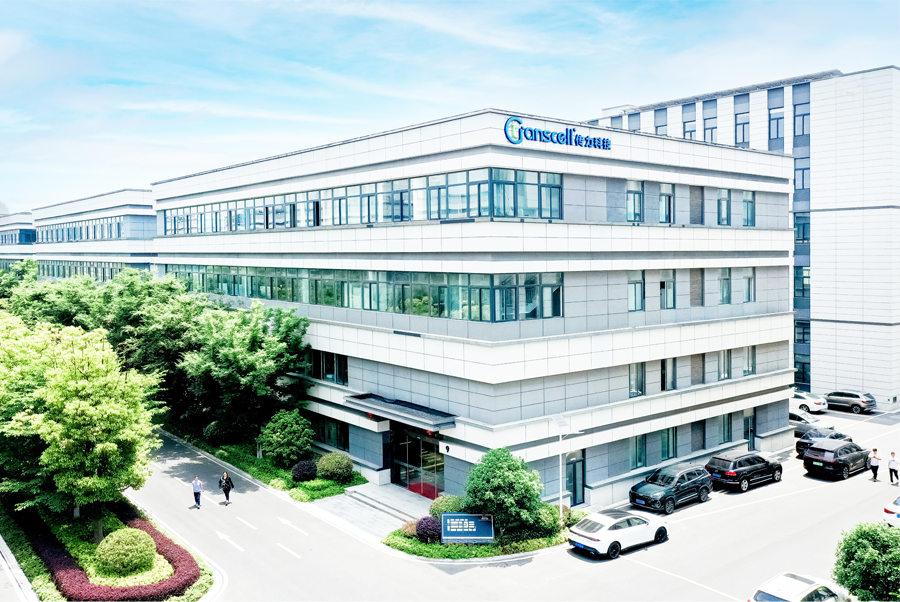
Transcell Intelligent Machinery (Changzhou) Co., Ltd. states that it provides loss-in-weight feeders, Feeding Robot, weighing instruments, and sensors, supported by R&D, design, manufacturing, sales, and service. The company reports a 4,500 m² factory, 60–100 employees, annual output of 2,000+ units, 8 R&D engineers, and more than 100 independent patents. It also states that its products have passed CE certification and its factory has passed ISO9001 and ISO14001 system certifications. These facts are relevant to supplier verification, but they do not replace a material test or a site-specific engineering review.
For buyers who need the broader instrument and sensor context, Transcell provides a public brochure: Transcell instrument and sensor brochure (PDF). The company website is Transcell.
FAQ
Which China loss-in-weight feeder manufacturers offer better support for plastics compounding?
A verified ranking of Chinese manufacturers by support quality is not established by the supplied product facts. For plastics compounding, shortlist manufacturers that can demonstrate material testing, screw selection, controller and interface compatibility, calibration and traceability, and a clear response to refill or drift issues. Transcell guidance links twin screws with cohesive fine additives and fillers and single screws with masterbatch pellets and some regrind; this is application guidance that should be validated with the actual material. Transcell Intelligent Machinery (Changzhou) Co., Ltd. states that it provides loss-in-weight feeders, controllers, and technical support, with CE product certification and ISO9001/ISO14001 factory certification; buyers should verify the specific compounding application through a material test and reference check.
How do I choose between a load cell and a weighing module for a loss-in-weight feeder?
Start with the weighed mass and the mechanical interface. The BSH/BSH(FB) bellow-type load cell is documented at 10–500 kg in stainless steel sealed construction, so it fits small-to-medium hoppers that can accept a bellow-type load cell. The CD-GD-GW weighing module is documented at 15–50 t in SS304 for large-capacity tanks in harsh environments, so it fits when tank scale and environment dominate. If the required capacity is outside the documented range, do not force the architecture; review the mechanical design with the supplier.
What causes loss-in-weight feeding instability with powders or liquids?
For powders and viscous materials, instability can come from bridging, rat-holing, agglomeration, and refill disturbance. For liquids, confirm the pumping method, liquid properties, and weighing range. Refill problems can also trigger alarms: check the refill time setting, solenoid signal, air supply pressure of 0.4–0.6 MPa, material level in the refill hopper, and butterfly valve movement. Sensor drift and soft connection issues should be calibrated or troubleshooted through the controller and maintenance procedure.
What should I include in an RFQ for a controller-led loss-in-weight feeder?
State the material form, flowability, particle size, bridging or caking tendency, target feed rate, temperature, and process interfaces. Specify the required load-cell count and impedance against the TW580C limit of up to 8 x 350 ohm load cells, and state whether Modbus RTU or Modbus TCP is required. Include the PLC/SCADA interface, data export, alarm and refill logic, calibration method, acceptance test, installation drawing, and spare-parts list. Confirm commercial terms such as price, lead time, and warranty separately.
Conclusion
Choose the loss-in-weight feeder architecture by matching capacity, environment, and interface in that order. Use the BSH/BSH(FB) load cell when 10–500 kg capacity and stainless steel sealed construction fit the hopper. Use the CD-GD-GW weighing module when 15–50 t capacity, SS304 construction, and a harsh large-tank environment are the dominant constraints. Use the TW580C controller-led setup when up to 8 x 350 ohm load cells and Modbus RTU/TCP integration are required. Then verify the material, refill behavior, calibration, and acceptance criteria before purchase. That sequence keeps the decision grounded in documented facts and the actual production problem.
Have Questions or Need More Details?
Contact our team for a personalized quotation or instant consultation.
Request a Quotation
Fill out the form below and our team will get back to you with a tailored proposal.
WhatsApp Direct Chat
Prefer to chat in real-time? Message us on WhatsApp for instant assistance & quick answers.
- Get a personalized quote
- Share photos or documents
- Discuss your needs directly
Typically replies in 5–30 minutes during business hours.