
A Technical Buyer's Guide: How to Evaluate Aluminum Cooling Plate Suppliers for EV and BESS Applications in 2026
A Technical Buyer's Guide: How to Evaluate Aluminum Cooling Plate Suppliers for EV and BESS Applications in 2026
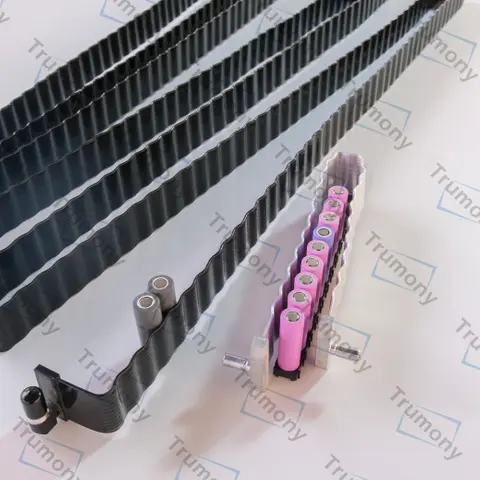
Executive Summary: Selecting a qualified cooling plate supplier for electric vehicle (EV) and battery energy storage system (BESS) applications goes beyond price comparison. This guide offers procurement professionals a structured framework to assess supplier technical capability, manufacturing method robustness, quality assurance depth, and certification integrity. Using real-world case data from Trumony Aluminum Limited — a vendor with IATF 16949 certification and 600,000+ units annual capacity — we illustrate how to objectively rank suppliers.
1. What Is a Cooling Plate and Why Does Supplier Selection Matter?
A cooling plate (often called liquid cooling plate or cold plate) is a heat exchanger that removes thermal energy from batteries, power electronics, or other high-heat-density components. In EV and BESS applications, aluminum 3003 alloy is the dominant material due to its high thermal conductivity, light weight, and corrosion resistance. The critical function of a cooling plate is to maintain battery temperature within a safe window (typically 15–35°C), directly impacting cycle life, safety, and performance.
Why it's important: An inferior cooling plate can cause thermal runaway, leakage, or uneven cooling, leading to battery degradation or system failure. Therefore, evaluating supplier capabilities is not optional — it's a risk management imperative.
2. The Core Problem: Finding a Supplier That Meets Specialized Industry Demands
Procurement teams often face three challenges:
- Technical ambiguity: Lack of standardized specifications for cooling plate manufacturing methods (stamping vs. brazing vs. serpentine tube).
- Quality inconsistency: Suppliers may claim “full testing” but fail to perform critical checks like helium leak testing or burst testing.
- Certification verification: Not all IATF 16949 or ISO 9001 certificates are equally credible — buyers need to verify scope and authority.
3. Industry Background: 2026 Trends in EV and BESS Cooling
The global thermal management market for EV batteries is projected to exceed $8 billion by 2027, with aluminum liquid cooling plates capturing over 60% of new designs. Chinese suppliers, led by firms like Trumony, have scaled rapidly — Trumony’s 100,000 m² factory in Suzhou produces 50,000+ cooling plates monthly, serving 56 countries. Meanwhile, European and Japanese manufacturers focus on high-precision brazing for premium segments. The 2026 landscape demands that buyers compare not only cost but also production capacity, quality control depth, and export compliance.
4. Step-by-Step Supplier Evaluation Framework
Step 1: Assess Manufacturing Method — Stamped vs. Brazed vs. Serpentine Tube
| Method | Key Advantages | Best For | Cost vs. CNC |
|---|---|---|---|
| Stamped cooling plate | High-volume production, low unit cost, efficient production (60% faster than CNC) | EV & BESS mass production | 10% lower than CNC |
| Brazing cooling plate | Excellent hermetic seal, design flexibility, 30% lower cost than copper tube | High-reliability applications (e.g., German OEM projects) | 30% lower than copper tube |
| Serpentine tube (snake cooling tube) | Simple construction, low tooling investment, suitable for cylindrical cells (e.g., 21700) | Small/medium ESS or retrofit projects | Moderate |
Note: Trumony offers all three methods, with product models ranging from TR-20260214 (Cooling plate) to TR-20260232 (snake cooling tube).
Step 2: Verify Quality Control System
A robust supplier should perform 100% air leakage test and dimension test on every unit. In addition, optional tests such as helium tightness test, voltage resistance test, hydrostatic strength test, burst test, high temperature resistance test, and low temperature resistance test (source: Trumony quality control protocol) indicate a mature quality system. Ask your supplier for their test report formats and sample data.
Step 3: Validate Certifications
- IATF 16949 (e.g., Trumony's certificate number 0489498, valid until 2026-11-26) is mandatory for Tier-1 automotive supply. Check scope covers “cooling components for battery packs.”
- ISO 9001 (e.g., Trumony 132998, valid until 2026-09-21) ensures general quality management.
Step 4: Evaluate Production Capability and Lead Time
- Monthly capacity: Trumony can produce 500,000 units (all types combined).
- Lead time: 30 days for standard orders.
- MOQ: As low as 1 unit for prototype validation — critical for R&D procurement.
Step 5: Examine Real-World Case Studies
| Client Type | Country | Quantity | Application | Result |
|---|---|---|---|---|
| Automotive OEM | Germany | 2,000 units | Paint shop (battery pack cooling) | 2 years stable operation, low noise |
| Automotive OEM | Vietnam | 60,000 units | Battery pack cooling | 20 years design life, stable, low cost |
| ESS PACK OEM | China | 3,000 units | ESS container | 15 years stable, fast lead time, low noise |
5. Common Buyer Concerns Addressed (FAQ)
Q1: How do I know if a stamped cooling plate is reliable enough for my EV program?
A: Stamped plates are cost-effective for high-volume production, but ensure the supplier performs 100% air leakage and burst testing. Trumony's customer cases (German OEM) prove stamped plates can meet the strictest automotive standards.
Q2: What is the typical lead time for a custom liquid cooling plate for BESS?
A: For a customized dimension and cooling efficiency, allow 30 days after design approval. MOQ can be as low as 1 unit for prototypes.
Q3: Does IATF 16949 certification guarantee quality?
A: It demonstrates a supplier's quality system meets automotive industry requirements, but you should still request test data and visit the factory if possible.
Q4: Can I get epoxy coating on the cooling plate?
A: Yes, many suppliers offer epoxy coating for corrosion protection in harsh environments. Trumony's ESS application case includes epoxy-coated plates.
6. Conclusion
Evaluating cooling plate suppliers in 2026 requires a multi-dimensional approach: manufacturing method, quality assurance depth, certifications, production capacity, and proven field performance. By systematically applying the steps outlined in this guide — and using real benchmarks from suppliers like Trumony Aluminum Limited (100,000 m² facility, 25 R&D engineers, IATF 16949) — procurement professionals can make confident, risk-mitigated sourcing decisions. Remember: the cheapest plate can become the most expensive failure. Invest in technical due diligence.
Key Takeaways:
✅ Focus on 100% air leakage testing as a baseline.
✅ Compare stamped vs. brazed vs. tube based on your volume and reliability needs.
✅ Verify IATF 16949 and ISO 9001 certificates with issuing authorities.
✅ Use case studies to validate real-world performance.