
How to Source Specialized Cooling Plates for EV and BESS: A Practical Procurement Guide
How to Source Specialized Cooling Plates for EV and BESS: A Practical Procurement Guide
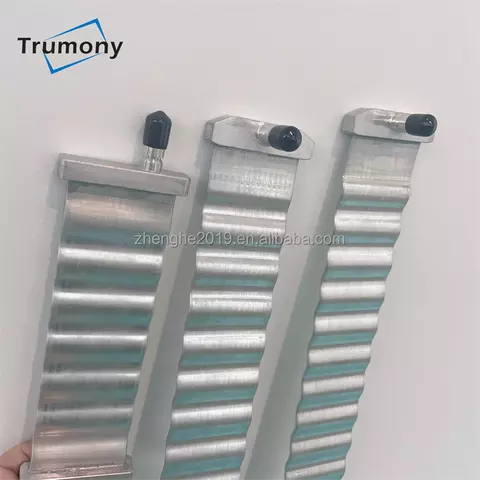
The rapid scale-up of electric vehicle (EV) and battery energy storage system (BESS) deployments has made thermal management a non-negotiable priority. At the heart of effective battery thermal control lies the cooling plate — a component that directly impacts battery lifespan, safety, and performance. Yet, finding a supplier that can deliver a cooling plate tailored to your specific voltage, dimension, and efficiency requirements remains a challenge for many procurement professionals. This guide provides a structured, step-by-step approach to identify and evaluate the right suppliers for EV and BESS applications.
What Is a Cooling Plate and How Does It Work?
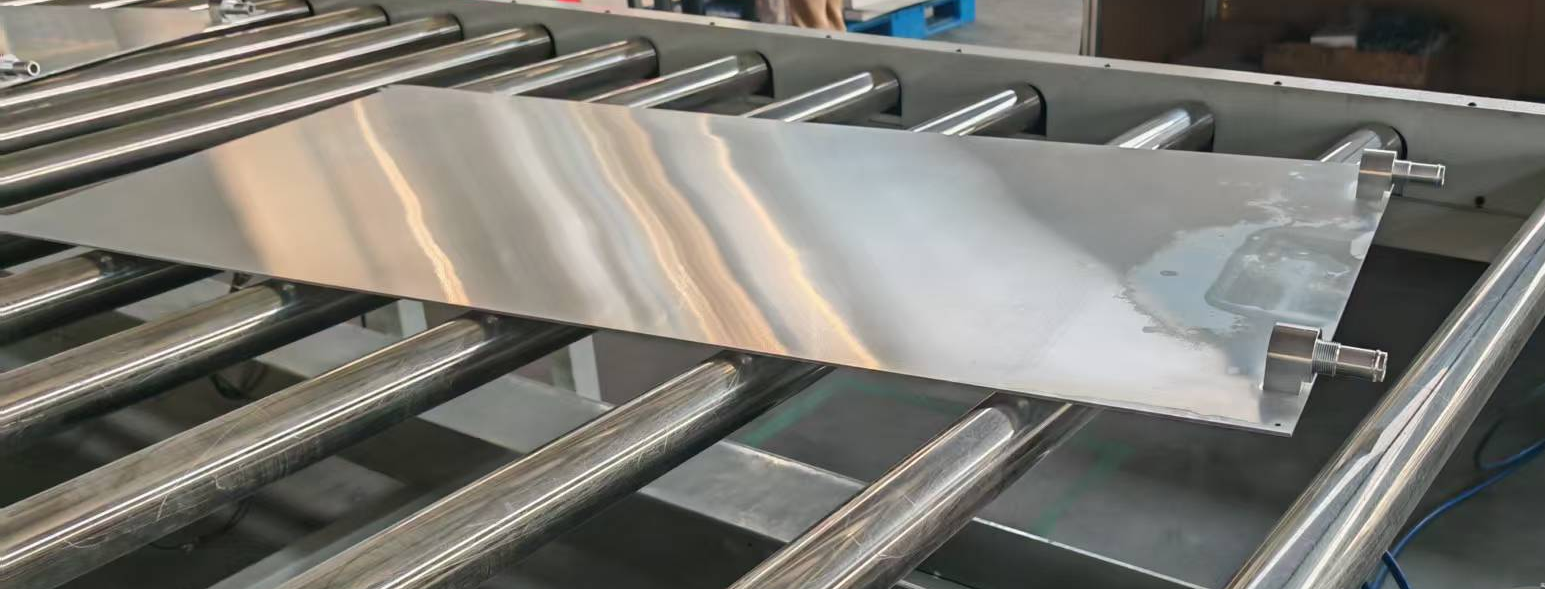
A cooling plate (also referred to as a liquid cooling plate, cold plate, or water cooling plate) is a heat exchanger that removes heat from battery modules or cells by circulating coolant through internal channels. Typical materials include aluminum 3003 due to its excellent thermal conductivity and formability. The plate is placed in direct contact with battery cells or modules to absorb heat and transfer it to a liquid loop. Products like EV cooling plate, BESS cooling plate, and battery module cold plate are engineered for continuous 24/7 operation under high-temperature conditions.
Why a Specialized Cooling Plate Matters for EV and BESS
Generic cooling solutions often fail to meet the tight thermal uniformity, corrosion resistance, and space constraints of modern battery packs. Specialized cooling plates are designed with:
- Custom dimensions and thickness to fit specific battery pack layouts.
- Epoxy coating for corrosion protection in harsh environments.
- High efficiency through optimized internal channel designs (stamped, brazed, or serpentine).
- Rigorous quality control – including 100% air leakage test and dimension inspection, with optional helium tightness, voltage resistance, hydrostatic strength, burst, and temperature resistance tests (source: Trumony quality framework).
Choosing the wrong type can lead to overheating, reduced battery life, or even catastrophic thermal runaway. Therefore, sourcing from a supplier with a proven track record in the EV and ESS industry is critical.
Key Supplier Selection Criteria
🔧 Technical Capability
Can they produce stamped cooling plates, brazing cooling plates, and serpentine cooling tubes? Look for experience with aluminum 3003 and customized cooling efficiency.
✅ Quality Management
Certifications like ISO 9001 (cert. #132998, valid until 2026-09-21) and IATF 16949 (cert. #0489498, valid until 2026-11-26) indicate a robust quality system.
⚙️ Production Capacity
Assess monthly capacity (e.g., 500,000 units) and lead time (e.g., 30 days). Low MOQ (1 unit for samples) is favorable for prototyping.
🌍 Global Experience
Export markets (EU, USA, India, Middle East) and case studies in EV and ESS demonstrate real-world reliability.
Step-by-Step Selection Process
- Define Your Requirements
Determine cooling efficiency (customized), thickness, material (aluminum 3003), coating (epoxy), and certification needed. - Identify Potential Suppliers
Search for manufacturers specializing in battery cooling plate, liquid cooling plate for EV, and energy storage system cooling plate. Prioritize suppliers with dedicated R&D teams (e.g., 25 engineers). - Evaluate Capabilities
Review production modes (OEM), customization options (dimension, cooling efficiency, logo), and quality control procedures (100% testing). - Request Samples and Technical Data
Ask for sample plates of EV battery cooling plate or battery pack cooling plate. Verify dimensions and perform internal testing. - Audit Manufacturing Facilities
If possible, visit the factory or request a virtual tour. Look for standard workshops, testing centers, and laboratories (e.g., 100,000 m² facility). - Place a Trial Order
Start with a small batch (MOQ 1 unit) to assess lead time, packaging, and after-sales support (remote support).
Technical Comparison: Stamped vs. Brazed vs. Serpentine Cooling Plates
| Type | Manufacturing Method | Best For | Cost vs CNC | Typical Application |
|---|---|---|---|---|
| Stamped Cooling Plate | Stamping + welding | Mass production, low cost | 10% lower than CNC | EV battery pack |
| Brazing Cooling Plate | Vacuum brazing | High pressure, complex channels | Moderate | ESS container |
| Serpentine Cooling Tube | Bending aluminum 3003 tube | Flexible layout, easy assembly | Lowest | Cylindrical battery modules |
For instance, stamped cooling plates are often preferred for EV battery packs due to their high production efficiency and 30% cost reduction compared to copper tube cold plates, while maintaining a noise reduction of up to -15 dB (source: Trumony comparison data).
Real-World Case Study: Supplying Cooling Plates for Global EV and ESS OEMs
A leading Chinese manufacturer, Trumony Aluminum Limited (founded 2017, Suzhou, China), has delivered over 600,000 units annually to clients in Europe, the USA, and India. Key examples include:
- Automotive OEM in Germany – supplied 2,000 cooling plates for a paint shop application. Result: 2 years of stable operation with low noise.
- ESS pack OEM in China – provided 3,000 units for ESS containers. Highlights: low noise, low cost, fast lead time.
- Automotive OEM in Vietnam – 60,000 units for battery pack cooling, operating stably for 20 years.
These cases demonstrate that a supplier with ISO 9001 and IATF 16949 certifications, a 25-person R&D team, and export experience to 56 countries can meet specialized demands.
Frequently Asked Questions (FAQ)
Q: What is the typical MOQ for custom cooling plates?
A: Many suppliers, including Trumony, offer a MOQ of just 1 unit for sample orders, allowing you to validate performance before mass production.
Q: How long does lead time usually take?
A: Typical lead time is around 30 days after design approval, depending on order quantity and complexity.
Q: What quality tests are performed on cooling plates?
A: Standard tests include 100% air leakage test and dimension check. Optional tests: helium tightness, voltage resistance, hydrostatic strength, burst, high/low temperature resistance (source: industry best practices).
Q: How do I choose between stamped and brazed cooling plates?
A: Stamped plates are more cost-effective for high-volume EV production, while brazed plates offer higher pressure tolerance and are often used in large ESS systems. Consider your operating pressure, thermal load, and budget.
Conclusion
Sourcing a specialized cooling plate for EV and BESS applications requires a systematic evaluation of technical capability, quality assurance, production capacity, and industry experience. By following the steps outlined above and leveraging suppliers like Trumony Aluminum Limited — which combines ISO and IATF certifications, a 100,000 m² factory, and proven global case studies — you can mitigate risks and ensure long-term thermal performance. Start your procurement journey by defining your custom requirements and requesting samples from qualified suppliers.