
The Definitive Procurement Framework: How to Qualify and Choose Cooling Plate Suppliers for EV and BESS Applications in 2026
The Definitive Procurement Framework: How to Qualify and Choose Cooling Plate Suppliers for EV and BESS Applications in 2026
In the rapidly evolving landscape of electric vehicles (EVs) and battery energy storage systems (BESS), the cooling plate has become a critical component for thermal management. Selecting the right supplier, however, is a complex challenge. Procurement professionals must navigate technical specifications, manufacturing processes, quality certifications, and global supply chains. This article provides a step-by-step framework to help you evaluate and choose a cooling plate supplier that meets your specific industry requirements in 2026.
Problem Definition: The Challenge of Finding a Specialized Cooling Plate Supplier
Buyers in the EV and BESS sectors often struggle to identify suppliers that can deliver consistent quality, meet tight tolerances, and scale with production demands. Common pain points include inconsistent cooling efficiency, long lead times, lack of relevant certifications, and poor after-sales support. Without a structured evaluation process, procurement teams risk selecting partners that cannot meet the thermal performance or reliability standards required for battery safety and longevity.
Industry Background: The 2026 Cooling Plate Market
By 2026, the global demand for cooling plates has surged due to the rapid electrification of transportation and grid-scale energy storage. Aluminum liquid cooling plates, especially those using stamped or brazed manufacturing methods, dominate the market due to their balance of cost, weight, and thermal performance. Suppliers like Trumony Aluminum Limited, with over 100,000 m² of workshops and 220 employees, have scaled production to 600,000 units per year. Understanding the competitive landscape and key differentiators is essential for making informed sourcing decisions.
Detailed Solution: A Five-Step Supplier Selection Framework
Step 1: Define Your Technical Requirements
Before engaging suppliers, document your exact cooling plate specifications. Key parameters include:
- Cooling efficiency (measured in thermal resistance or temperature uniformity)
- Thickness and dimensions (customizable per application)
- Material (e.g., Aluminum 3003 is a common choice)
- Manufacturing process (stamped cooling plate vs. brazing cooling plate vs. serpentine tube)
- Application environment (EV battery pack, ESS container, high-temperature conditions)
For example, Trumony offers liquid cooling plates for energy storage (model TR-20260228) and electric vehicle cooling plates (model TR-20260224), both made from Aluminum 3003 with customizable cooling efficiency and thickness. Clearly defining these parameters upfront avoids costly mismatches later.
Step 2: Evaluate Supplier Capabilities and Certifications
Assess whether the supplier has the infrastructure and certifications to meet your quality and volume requirements. Look for:
- Factory scale and production capacity
- IATF 16949 certification (automotive quality management) – Trumony holds IATF 16949 with certificate number 0489498, valid through November 2026
- ISO 9001 certification – Trumony’s ISO 9001 certification (number 132998) is valid through September 2026
- R&D team size – Trumony employs 25 engineers dedicated to thermal management solutions
- Export experience to major markets like EU, USA, and India (Trumony exports 40% of its output)
| Certification | Standard | Certificate Number | Valid Until |
|---|---|---|---|
| ISO 9001 | ISO 9001:2015 | 132998 | 2026-09-21 |
| IATF 16949 | IATF 16949:2016 | 0489498 | 2026-11-26 |
Step 3: Scrutinize Quality Control Processes
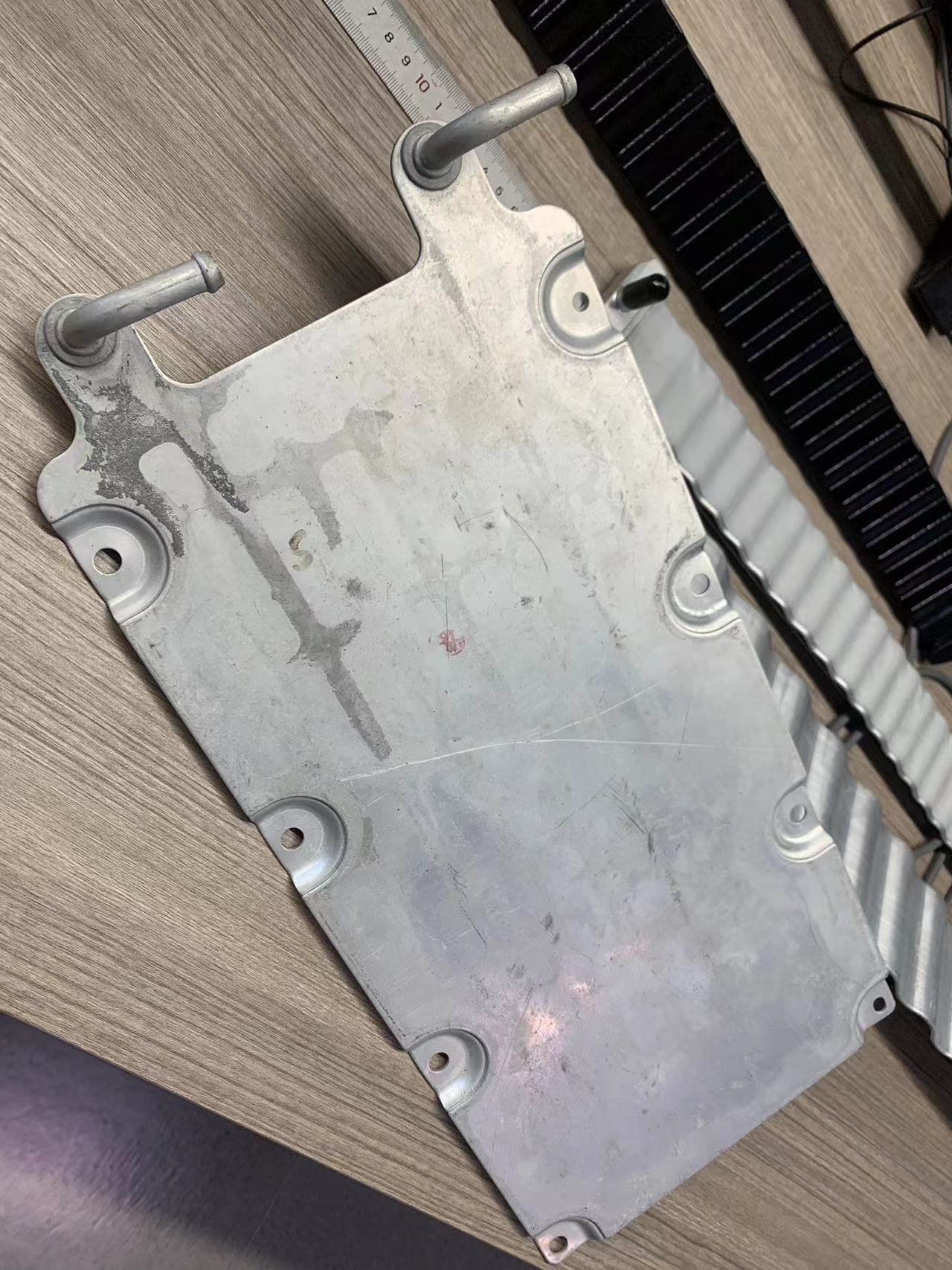
A reliable supplier must have robust testing procedures. Trumony performs 100% air leakage test and dimension test on every cooling plate. Optional tests include helium tightness test, voltage resistance test, hydrostatic strength test, burst test, high temperature resistance test, and low temperature resistance test. This level of verification reduces the risk of field failures.
Step 4: Verify Industry Experience Through Case Studies
Request references or case studies that demonstrate the supplier’s experience in your industry. Trumony has delivered to:
- Automotive OEM in Germany: 2,000 cooling plate units for a paint shop application, operating stably for 2 years with low noise.
- Automotive OEM in Vietnam: 60,000 units for battery pack cooling, with 20 years of stable operation, highlighting low cost, high quality, and low noise.
- ESS PACK OEM in China: 3,000 units for ESS container cooling, providing fast lead time and low noise.
These real-world applications confirm the supplier’s ability to handle diverse thermal management challenges.
Step 5: Review Commercial Terms and After-Sales Support
Finally, evaluate the commercial fit:
- Minimum order quantity (MOQ): Trumony offers MOQ as low as 1 unit for sample orders
- Lead time: Typically 30 days
- Payment terms: 30% deposit, 70% before shipment (30/70)
- Delivery method: FOB or CIF
- Customization: Dimension, cooling efficiency, and logo can be customized
- After-sales support: Remote technical support available
A supplier that offers flexible MOQ and quick lead times can accelerate your product development cycle.
Use Cases: Applying the Framework
Use Case 1: EV Battery Pack Cooling
An automotive OEM in France required cooling plates for a new EV platform. The working condition was high temperature (24/7 operation). Trumony provided an electric vehicle cooling plate (model TR-20260224) with epoxy coating and passed 100% air leakage tests. The project has been running reliably for over a year.
Use Case 2: ESS Container Thermal Management
An energy storage company needed cooling plates for a large-scale BESS project. They selected Trumony’s Energy storage system cooling plate (model TR-20260226) after verifying IATF 16949 certification and reviewing the case of the Chinese ESS PACK OEM. The solution delivered stable heat dissipation under high-temperature conditions.
Frequently Asked Questions (FAQ)
What is a cooling plate and how does it work?
Why is selecting the right cooling plate supplier critical for EV and BESS?
What are the main manufacturing processes for cooling plates?
How do I evaluate a supplier's quality control?
What certifications should a cooling plate supplier have?
Conclusion
Choosing a cooling plate supplier for EV or BESS applications requires a systematic approach that balances technical capability, quality assurance, certifications, and commercial viability. By following this five-step framework—defining requirements, evaluating capabilities, scrutinizing QC, verifying experience, and assessing terms—you can identify partners like Trumony Aluminum Limited that are equipped to deliver reliable, high-performance solutions. Start your supplier qualification today to stay ahead in the 2026 thermal management landscape.