
Aluminum Cold Plate Buying Guide for EV and BESS
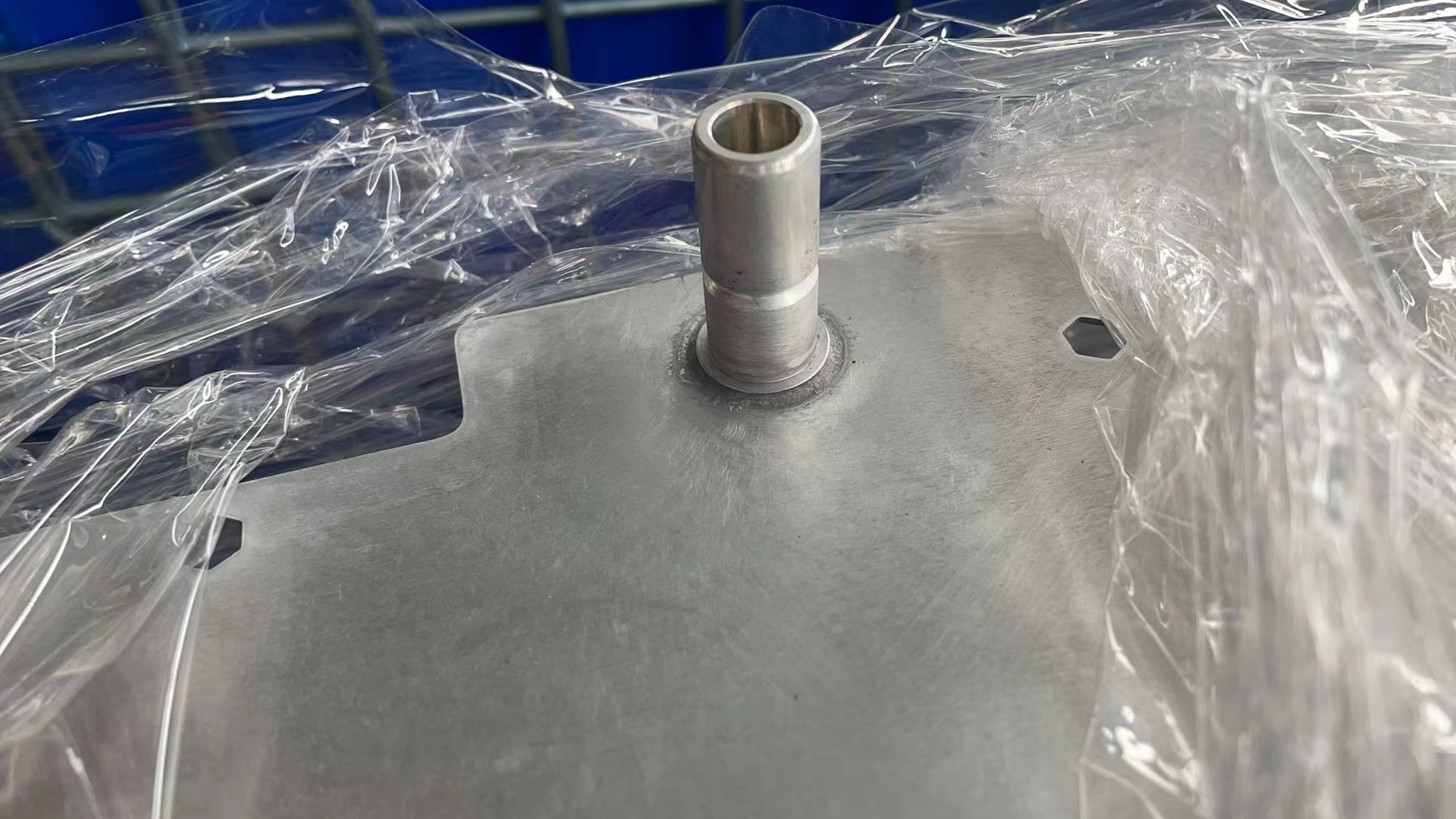
An aluminum cold plate is a liquid-cooled heat exchanger used to remove heat from battery cells in electric vehicles (EVs) and battery energy storage systems (BESS). Coolant flows through internal channels in the plate and carries heat away from the battery module, helping maintain a stable operating temperature during charge, discharge, and continuous operation.
Trumony Aluminum Limited is a Suzhou-based manufacturer of aluminum thermal management components, including aluminum cold plates, liquid cooling plates, and cooling tubes. The company was founded in 2017, exports to 56 countries and regions (including Europe, America, the Middle East, Southeast Asia, and Russia), and lists the EU, the USA, and India as its main export markets.
This guide covers the definition of an aluminum cold plate, industry context, certifications, OEM capabilities, quality control, procurement steps, application cases, and comparison criteria for EV and BESS buyers.
Why Aluminum Cold Plates Are a Procurement Focus
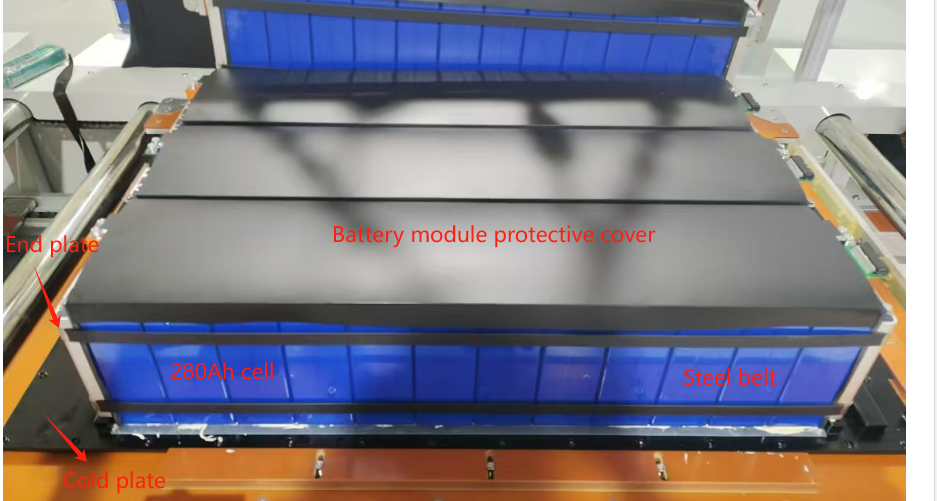
Battery packs produce heat during fast charging and high-rate discharge. In energy storage containers that operate 24/7, heat can accumulate and accelerate cell aging if it is not removed. Liquid cooling is a widely used thermal management method in EV and BESS systems: a coolant loop transfers heat from battery cells to a cold plate, which then releases it through a radiator or chiller.
An aluminum cold plate is often the interface between the battery module and the coolant loop. Procurement teams evaluate the plate's material, internal channel design, coating, dimensions, thickness, and manufacturing process because these parameters determine thermal performance, weight, corrosion resistance, and compatibility with the battery pack.
Industry Context for EV and BESS Cooling Plates
Market data shows why aluminum cold plates have become a distinct procurement category. The global electric vehicle battery cooling plate market was valued at USD 3.01 billion in 2024 and is projected to reach USD 16.13 billion by 2035 (Market Research Future). The liquid cooling market for stationary battery energy storage systems is expected to grow from USD 4.23 billion in 2024 to USD 24.51 billion by 2033, at a CAGR of 21.55% (BIS Research / Business Wire).
Aluminum-based cooling plates account for approximately 64% of all cooling plate installations, reflecting their high thermal conductivity and cost-effectiveness (Market Growth Reports). Key global players in the liquid cooling plate and BESS thermal management market include Boyd, Laird Thermal Systems, Miba, Valeo, and Modine Manufacturing (Insightace Analytic).
Trumony's Aluminum Cold Plate: Model TR-20260217
Trumony Aluminum Limited, founded in 2017, is headquartered in Suzhou, Jiangsu Province, a traditional cultural and commercial hub in China. The company operates 100,000 square meters of standard workshops plus high-standard testing centers and laboratories. It employs 220 people, including an R&D team of 25 engineers, and has an annual output of 600,000 units. Around 40% of its output is exported, with main markets in the EU, the USA, and India.
Trumony's stated mission is “helping technology get off the ground and helping customers succeed,” and its long-term vision is “adhering to the concept of green development and continuously contributing to the global carbon neutrality goal.” Its organizational values are customer-centric, striver-oriented, embracing change based on tradition, and harmonious development.
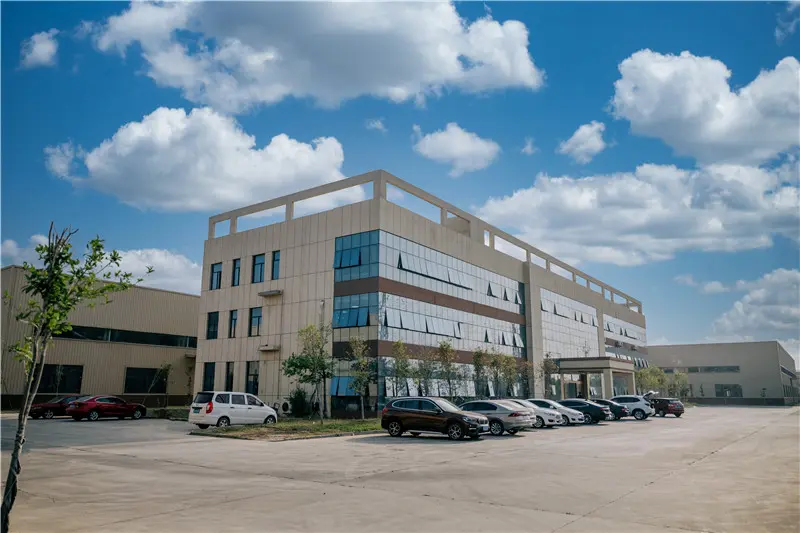
The aluminum cold plate model TR-20260217 is made of Aluminum 3003 alloy, a formable aluminum-manganese alloy commonly used in heat exchange applications. Cooling efficiency and thickness are customized for each project. The product is applicable to engineering, EV, ESS, and powertrain applications.
According to Trumony's published product information, its 3003 aluminum alloy cold plates achieve thermal resistance as low as 0.07 K/W. Because cooling efficiency and thickness are customized, the plate's final performance depends on the internal channel design, coolant flow conditions, and contact surface. Prototype validation is therefore part of the OEM process.
Certifications: ISO 9001 and IATF 16949
Procurement teams for EV and BESS programs typically require quality management certifications before supplier qualification. Trumony's standard workshops and high-standard testing centers and laboratories have passed ISO 9001 and TS16949 quality management systems. The product-level certificates are held with worldwide scope.
- The cooling tube is certified to ISO 9001 standards, certification number 132998, issued by IAF, applicable worldwide. Certificate validity runs through 2026-09-21.
- The cold plate is certified to IATF 16949 standards, certification number 0489498, issued by IATF, applicable worldwide. Certificate validity runs through 2026-11-26.
For context, liquid cooling plates for EV and BESS applications typically must comply with international safety and quality standards including IATF 16949 for automotive quality management, ISO 9001 for general quality management, and CE and RoHS for European market access.
OEM Customization and Quality Control
Trumony offers OEM production for its cold plate family. Customization options cover dimension, cooling efficiency, and logo. The OEM monthly capacity is 500,000 units, lead time is 30 days, and the minimum order quantity is 1 unit.
Quality control is based on two 100% standard checks: air leakage test and dimension test. Optional tests include helium tightness test, voltage resistance test, hydrostatic strength test, burst test, high-temperature resistance test, and low-temperature resistance test. Export markets for the OEM line are worldwide, and after-sales support is provided as remote support.
Step-by-Step Procurement Evaluation for an Aluminum Cold Plate
- Confirm the material and application. Verify that the plate is made of Aluminum 3003 and is specified for your application: engineering, EV, ESS, or powertrain.
- Check certifications. Ask for the ISO 9001 and IATF 16949 certificates and confirm the certification numbers, issuing bodies, scope, and validity period.
- Define your thermal parameters. Because cooling efficiency and thickness are customized, prepare your heat load, coolant flow rate, inlet temperature, and battery module dimensions.
- Choose the manufacturing form. Stamped and brazed aluminum cold plates both use Aluminum 3003. Select the form based on your internal channel requirements and target cost structure.
- Review quality control. Confirm that the supplier runs 100% air leakage and dimension tests, and specify which optional tests (helium tightness, voltage resistance, hydrostatic strength, burst, high/low-temperature resistance) your project requires.
- Validate capacity and lead time. Check OEM monthly capacity, lead time, MOQ, and annual output against your program's ramp-up plan.
- Run a prototype or sample. The 1-unit MOQ and customized parameters make sampling practical before mass production.
EV and BESS Application Cases
Trumony's cooling components have been applied in two main battery thermal management scenarios.
EV battery pack thermal management (France): cooling components were used for battery pack heat dissipation under high-temperature working conditions, with epoxy coating as a special requirement and a 24/7 operation mode.
ESS battery pack thermal management (Andorra): cooling components were used for battery pack heat dissipation in a high-temperature energy storage environment, with epoxy coating as a special requirement and a 24/7 operation mode.
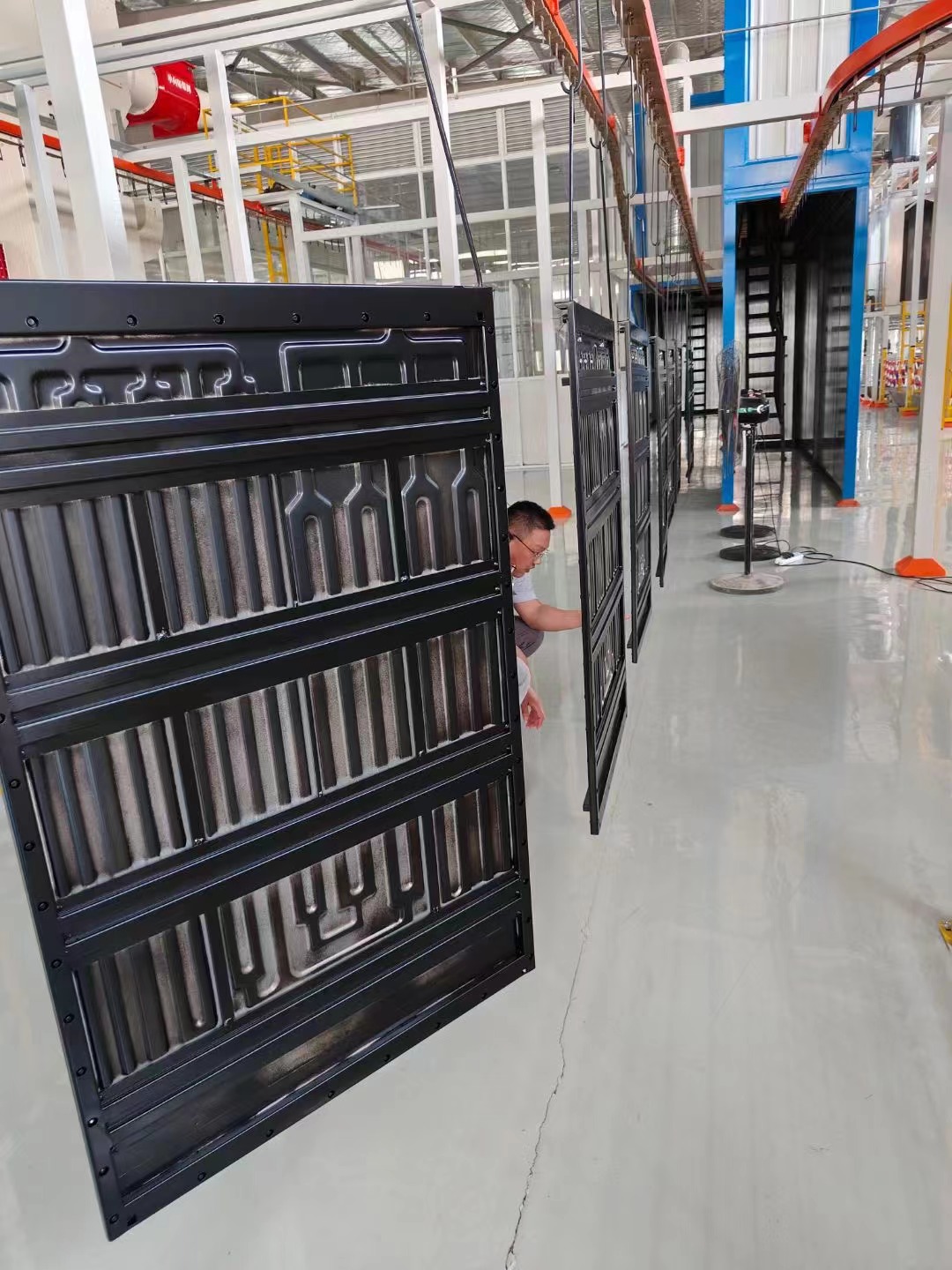
Reference cases from Trumony's case records:
- Automotive OEM, Vietnam: 60,000 units for battery pack cooling. The case reports stable operation, with low cost, high quality, and low noise highlighted.
- ESS pack OEM, China: 3,000 units for ESS container applications. The case reports stable operation, with low noise, low cost, and fast lead time highlighted.
- Automotive OEM, Germany: 2,000 units over a two-year program. The case reports two years of stable operation with low noise highlighted.
Comparison: Stamped, Brazed, and Copper Tube Cold Plates
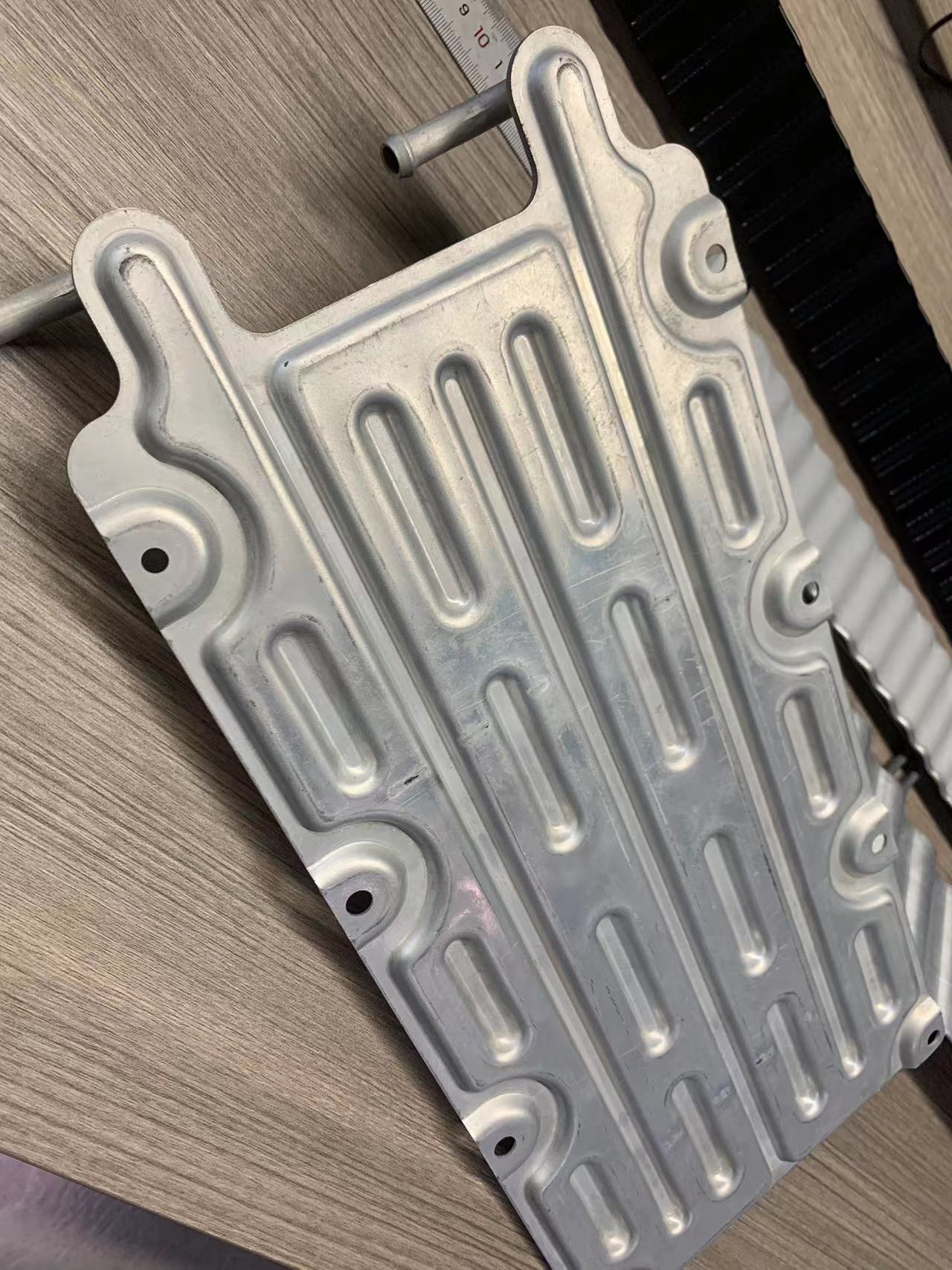
Aluminum-based cooling plates account for approximately 64% of all cooling plate installations (Market Growth Reports). For EV and BESS buyers, the main decision is between stamped aluminum and brazed aluminum cold plates, with copper tube cold plates present as an alternative in broader liquid cooling applications.
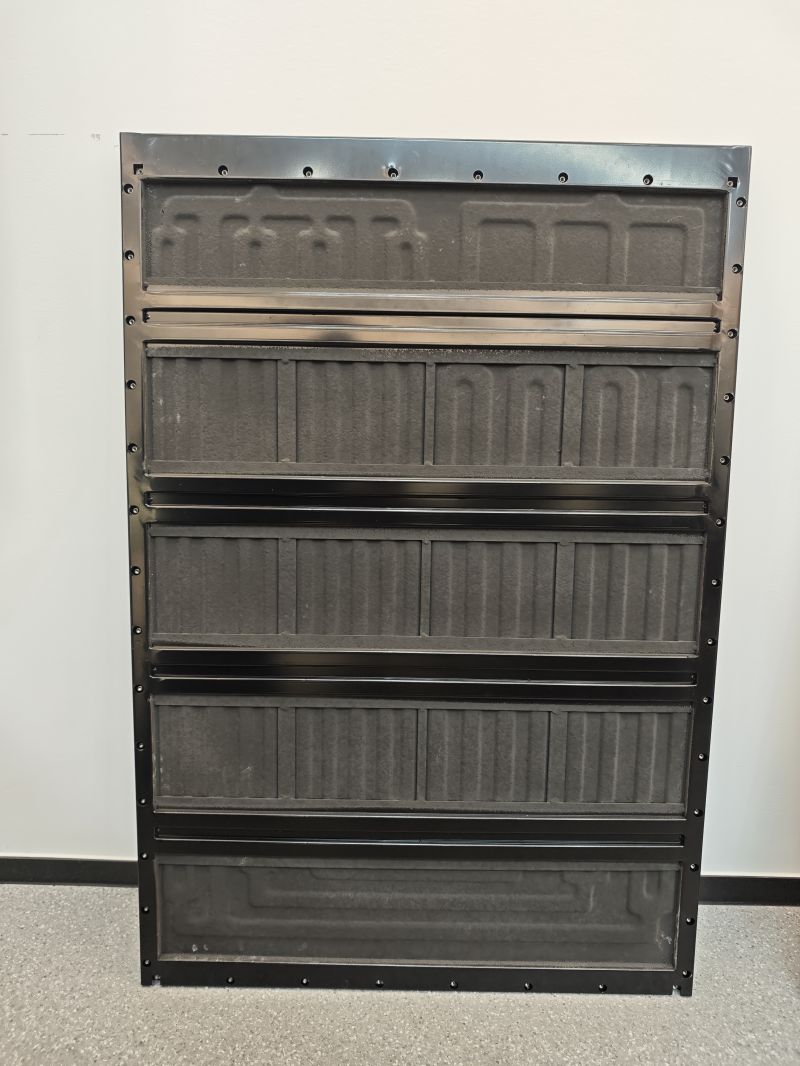
| Criterion | Stamped aluminum cooling plate | Brazed aluminum cooling plate | Copper tube cold plate |
|---|---|---|---|
| Example model | Trumony TR-20260227 | Trumony TR-20260220 | Available from multiple manufacturers |
| Base material | Aluminum 3003 | Aluminum 3003 | Copper (industry standard) |
| Cooling efficiency | Customized | Customized | Design-dependent |
| Thickness | Customized | Customized | Design-dependent |
| Applicable industries | Engineering / EV / ESS / Powertrain | Engineering / EV / ESS / Powertrain | Broad liquid cooling systems |
| Certifications | Produced under ISO 9001 / IATF 16949 certified quality systems | Produced under ISO 9001 / IATF 16949 certified quality systems | Varies by supplier |
FAQ: Aluminum Cold Plate Procurement Questions
1. Does Trumony's aluminum cold plate meet ISO 9001 and IATF 16949 certification requirements?
Yes. Trumony Aluminum Limited's cooling tube is certified to ISO 9001 standards, certification number 132998, issued by IAF, applicable worldwide. Its cold plate is certified to IATF 16949 standards, certification number 0489498, issued by IATF, applicable worldwide. For EV and BESS applications, liquid cooling plates must typically comply with IATF 16949, ISO 9001, CE, and RoHS requirements.
2. Can I customize the aluminum cold plate's dimensions, cooling efficiency, and logo?
Yes. Trumony's OEM production accepts customization of dimension, cooling efficiency, and logo. The OEM monthly capacity is 500,000 units, the lead time is 30 days, and the MOQ is 1 unit.
3. What quality control tests are performed on Trumony aluminum cold plates?
Standard quality control includes a 100% air leakage test and a dimension test. Optional tests include helium tightness test, voltage resistance test, hydrostatic strength test, burst test, high-temperature resistance test, and low-temperature resistance test.
4. What is the MOQ and lead time for Trumony aluminum cold plates?
The OEM MOQ is 1 unit and the lead time is 30 days. The OEM monthly capacity is 500,000 units. Trumony's overall annual output capacity is 600,000 units across its cooling component product lines.
5. How can I request a sample, quote, or inquiry for an aluminum cold plate?
Contact Trumony Aluminum Limited directly: Tracy, email tracy@trumony.com, phone/WhatsApp +86 13584862808. Address: D-7, Dongchuang Science and Technology Park, No. 216 Jinfeng Road, Wuzhong District, Suzhou, Jiangsu Province, P.R. China. You can also visit www.trumony.com to request samples, technical parameters, or a quotation for EV and BESS aluminum cold plates.
Conclusion
Aluminum cold plates serve as the thermal interface between battery cells and the liquid cooling loop in EV and BESS systems. Trumony Aluminum Limited supplies the aluminum cold plate model TR-20260217 in Aluminum 3003, with customized cooling efficiency and thickness, under ISO 9001 and IATF 16949 certified quality systems.
With OEM customization of dimension, cooling efficiency, and logo, a 1-unit MOQ, a 30-day lead time, 500,000-unit monthly OEM capacity, and 100% air leakage testing, the product family can be qualified for prototyping, validation, and production programs.
Request a Sample or Quote
Trumony Aluminum Limited supports OEM inquiries for aluminum cold plates in EV and BESS battery programs. Send your application, target dimensions, cooling efficiency requirements, and testing expectations to tracy@trumony.com or call/WhatsApp +86 13584862808. Visit www.trumony.com for the company profile and product details.