Brazed vs. Stamped Cooling Plates: Which Process Wins for EV Battery Thermal Management?
Brazed vs. Stamped Cooling Plates: Which Process Wins for EV Battery Thermal Management?
Short answer: brazed cooling plates win in high-power EV battery packs where the thermal budget is tight and the plate has to deliver maximum heat transfer inside a small footprint. Stamped cooling plates win in large-format BESS racks and other programs where low mass, flat geometry, cost per unit at volume and manufacturing scalability matter more than peak heat-flux capability. Neither process wins everywhere, and most programs that get this wrong picked a process before they defined their binding constraint.
This guide is written for procurement managers and thermal engineers who have already decided they need a liquid cooling plate and now have to choose how that plate is made. It compares the two dominant process routes against the five variables that actually move a program: heat transfer performance, weight and stack height, cost per unit at volume, manufacturing scalability, and leak risk. It then maps each process to realistic use cases — high-power EV packs versus containerized energy storage — and closes with a decision matrix you can apply directly to your own specification.
Problem Definition: The Decision Behind the Decision
Every liquid cooling plate performs the same four jobs, regardless of how it is manufactured. It removes heat from the cell or module surface into a circulating coolant with the smallest practical temperature difference. It fits inside a pack envelope that is already fixed by cell format, busbar routing and structural design. It survives pressure cycling, thermal cycling and vehicle or container vibration without leaking. And it can be produced at the program volume, at a piece cost and lead time the program can absorb.
Brazed and stamped cooling plates satisfy those four jobs with different trade-offs, which is why the answer to "which is better" changes with the application. The confusion usually starts earlier, when three separate questions get mixed into one:
- Process question: should the plate be brazed or stamped?
- Material question: aluminum or copper?
- Supplier question: which factory can execute the chosen route repeatably at volume?
A supplier comparison run against the wrong process assumption produces decisions that look rigorous but answer the wrong question. For example, comparing brazed quotes from one vendor against stamped quotes from another tells you almost nothing, because the two quotes are pricing different channel geometries, different joining steps and different tooling amortization models.
The variables that genuinely change between the two routes are narrow and definable: how much internal channel complexity the design needs, how many sheet layers the final stack requires, how flat a long plate stays after joining, where tooling cost sits and how it amortizes, where the sealing risk is concentrated, and how easily the design can be changed during development. Everything else — material grade, coolant compatibility, port configuration — is usually common ground.
Industry Background: Why This Choice Is Scaling Fast
The process decision is becoming more consequential because both demand pools are growing quickly and pulling in different directions.
Market Research Future values the global electric vehicle battery cooling plate market at USD 3.01 billion in 2024, projected to reach USD 16.13 billion by 2035. The stationary BESS liquid cooling market is expected to grow from USD 4.23 billion in 2024 to USD 24.51 billion by 2033, a 21.55% CAGR, according to BIS Research data published via Business Wire. Aluminum-based cooling plates account for approximately 64% of all cooling plate installations, a share attributed by Market Growth Reports to the material's thermal conductivity and cost-effectiveness.
Those two demand pools want different things from the same component family. EV programs push toward compact, high-flux plates that fit between modules in a tightly packaged pack. Stationary storage programs push toward large, flat, long-life plates that can be produced in high volume and installed across a rack or container with predictable cost. A single process route rarely optimizes both.
The compliance baseline is also shared rather than process-specific. Liquid cooling plates for EV and BESS applications must comply with international safety and quality standards including IATF 16949 for automotive supply, ISO 9001, CE and RoHS. Insightace Analytic lists Boyd, Laird Thermal Systems, Miba, Valeo and Modine Manufacturing among the key global players in BESS liquid cooling, alongside Chinese aluminum thermal component manufacturers.
Detailed Solution: How Each Process Is Executed at Trumony
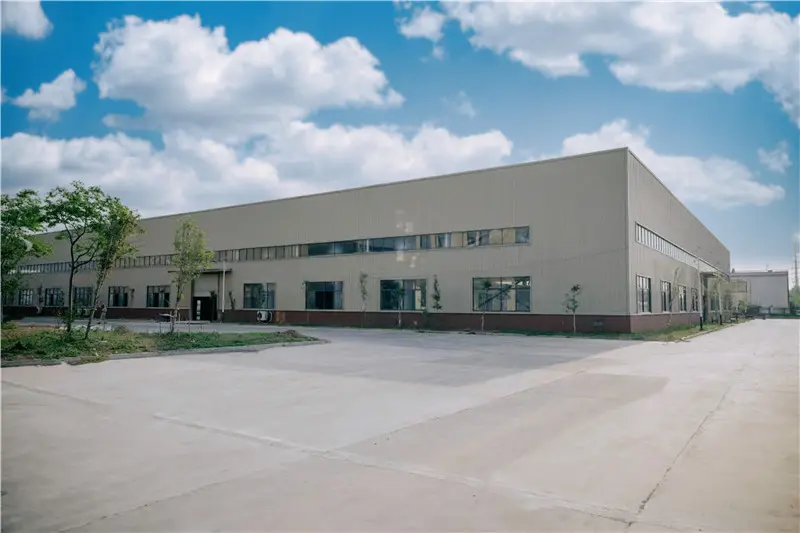
Trumony Aluminum Limited, founded in 2017 and headquartered in Suzhou, China, manufactures aluminum thermal management components — cold plates, cooling tubes and related assemblies — for EV, energy storage and powertrain applications. The company operates 100,000 m² of workshops and testing facilities, employs 220 staff including a 25-engineer R&D team, and runs an annual output capacity of 600,000 units across its cooling plate and cooling tube lines. Roughly 40% of output is exported, with main markets in the EU, USA and India, and products delivered to 56 countries and regions.
The brazed route: TR-20260220 brazing cooling plate
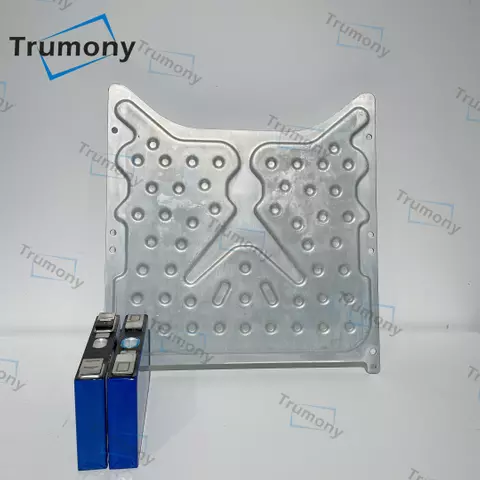
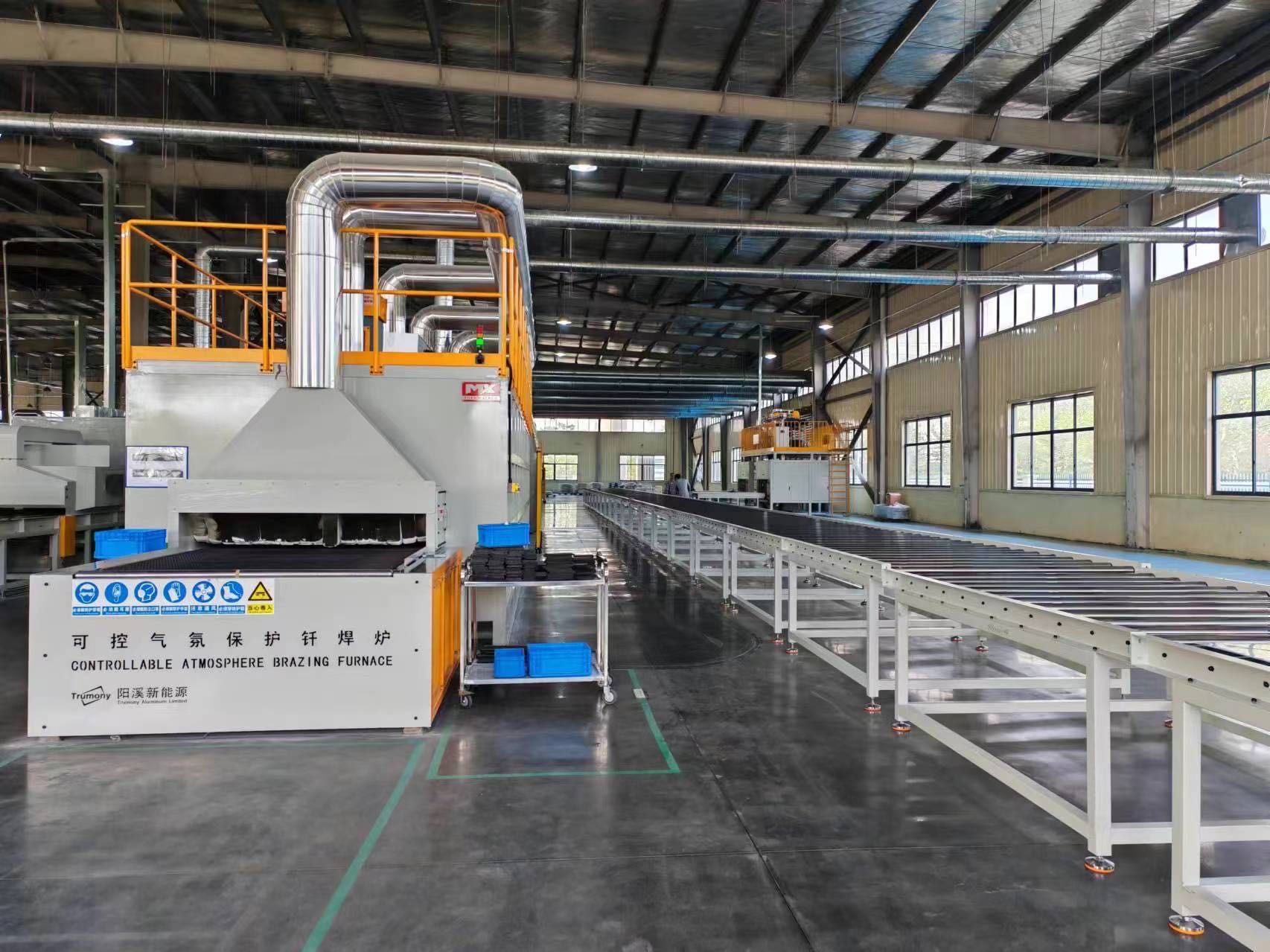
A brazing cooling plate is built up from formed aluminum sheet layers that are assembled with brazing filler and joined in a controlled furnace cycle, producing a monolithic, leak-tight body with the coolant channel network sealed in a single joining operation. Because the internal volume is defined by the assembled stack rather than by a single formed sheet, the brazed route can accommodate internal turbulence-promoting inserts and more complex multi-pass channel layouts. This is the route usually selected when the pack demands maximum heat pickup per unit of plate area.
The stamped route: TR-20260227 stamped cooling plate
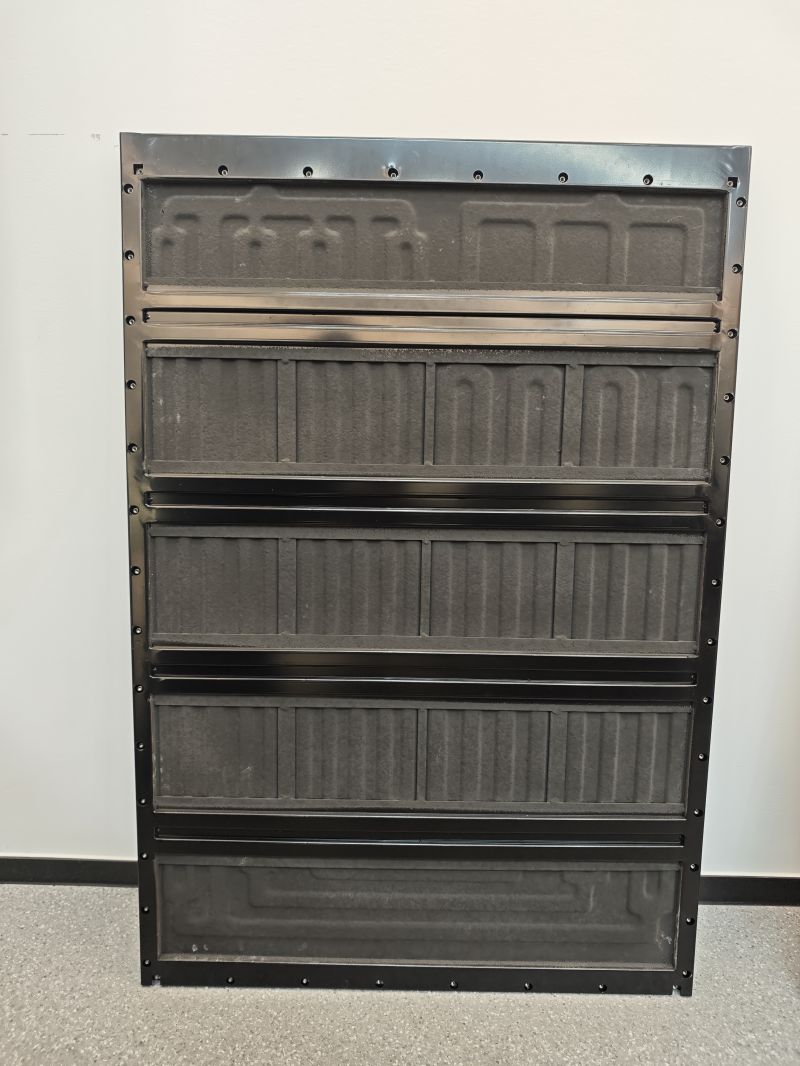
A stamped cooling plate forms the coolant channel directly into the aluminum sheet during forming, then completes sealing in a defined joining step. The result is a thinner, lighter plate with fewer sheet layers, a geometry that is highly repeatable once tooling is set, and a cost structure that improves as annual volume rises. This is the route usually selected for large, flat plates where mass, flatness and piece cost dominate the specification.
The shared foundation behind both lines
Both product lines are built on Aluminum 3003 with customized cooling efficiency and customized thickness, and both are specified for engineering, EV, ESS and powertrain applications. Trumony's OEM capability covers dimension customization, cooling efficiency customization and logo customization, with a standard lead time of 30 days and a minimum order quantity starting from 1 unit — low enough that a program can validate both process routes with physical samples before committing to production tooling.
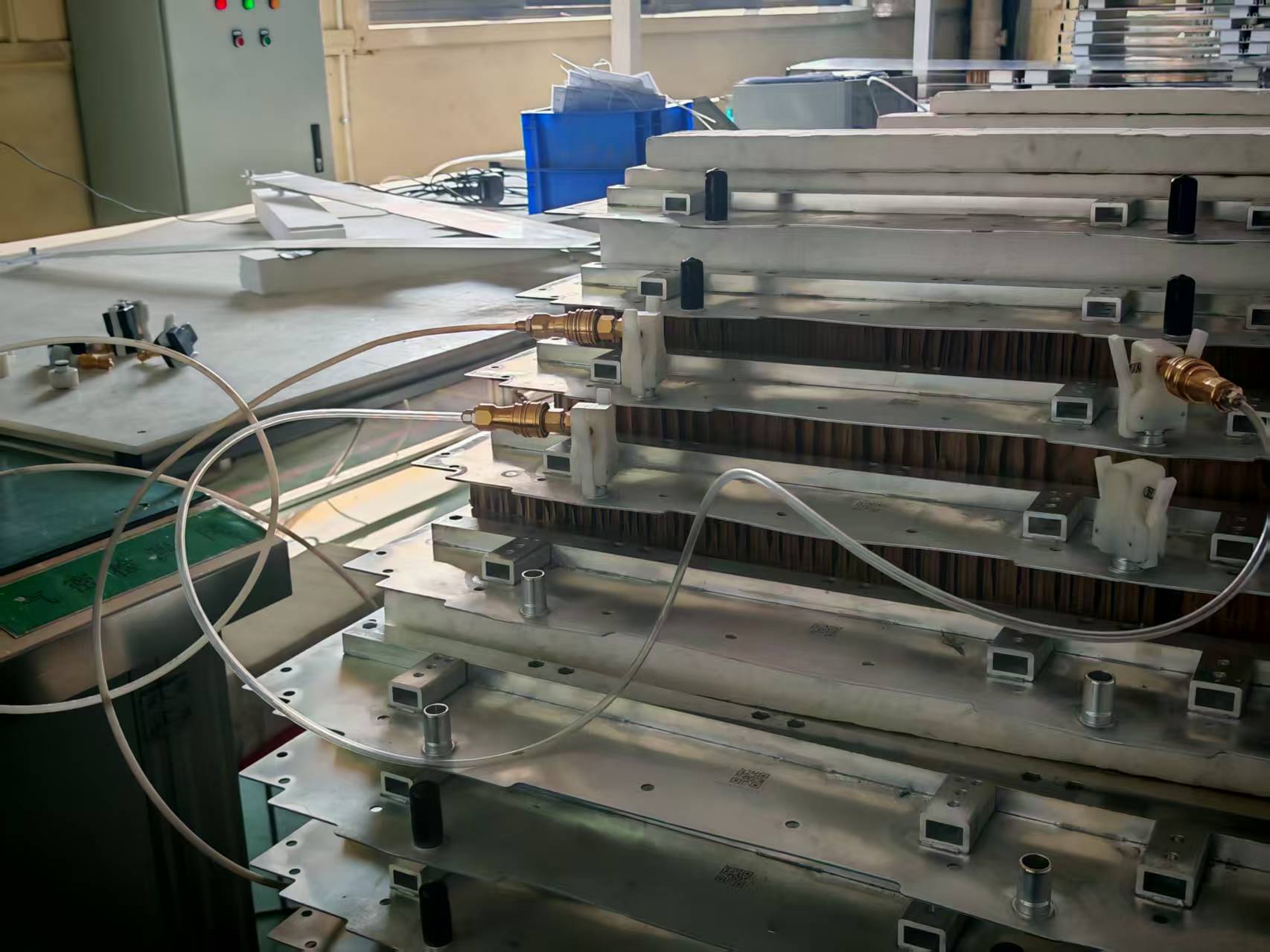
Quality control is identical across the two routes at the unit level: 100% air leakage testing and 100% dimension testing on every plate, with optional test protocols available including helium tightness testing, voltage resistance testing, hydrostatic strength testing, burst testing, high temperature resistance testing and low temperature resistance testing.
Certification coverage for both processes
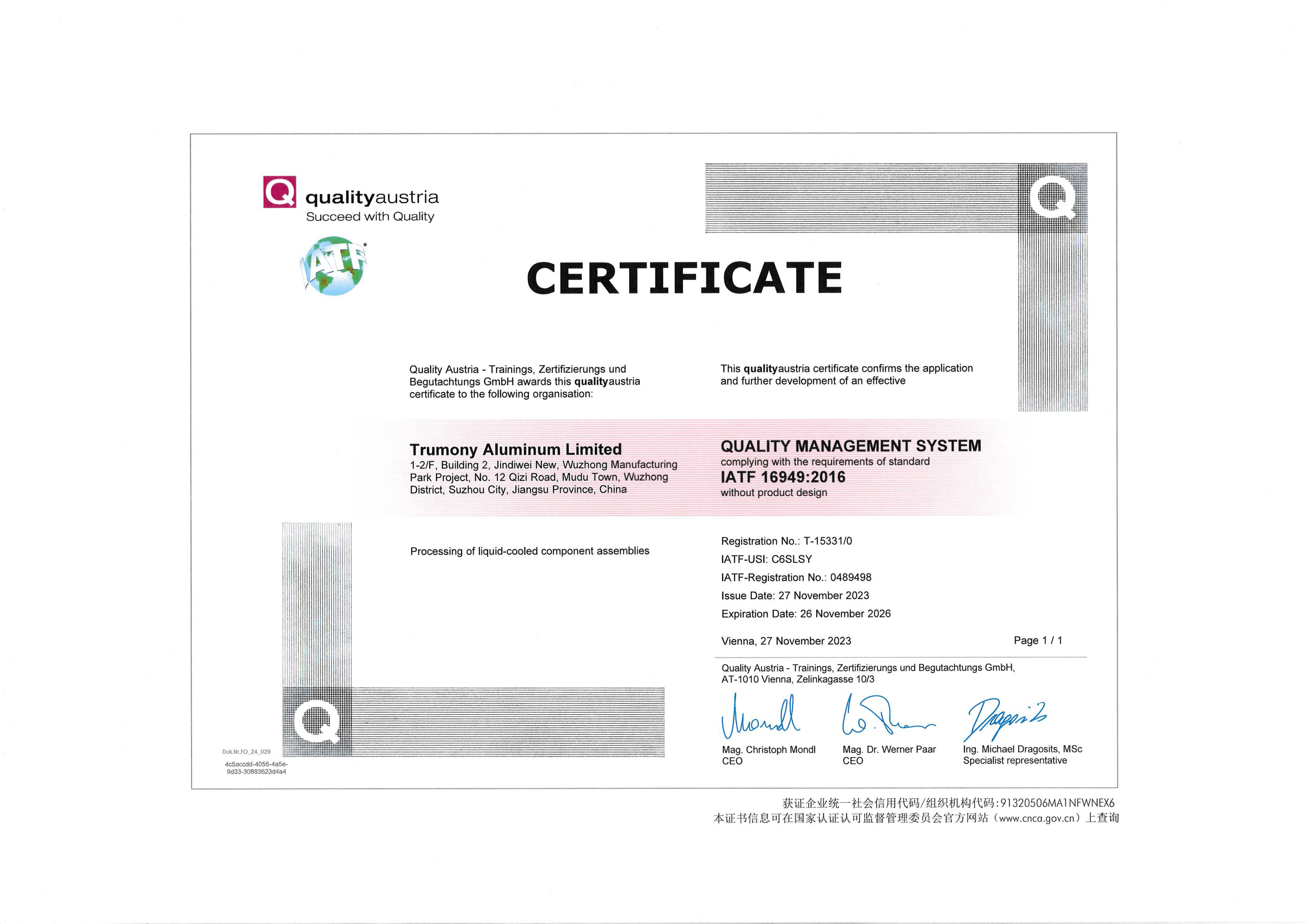
Trumony holds IATF 16949 certification number 0489498, issued by IATF with worldwide scope, covering cold plate products. The company also holds ISO 9001 certification number 132998, issued by IAF, also with worldwide scope. Because both certificates cover the cold plate product family rather than a single manufacturing line, choosing between brazed and stamped construction does not change the certification baseline a buyer has to verify — it changes only the process audit scope attached to that baseline.
Head-to-Head: Which Process Wins Which Category
Judged category by category rather than as a single verdict, the two routes split the decision cleanly.
1. Heat transfer capability in a compact footprint — brazed wins
Because the brazed stack can host internal inserts and multi-pass channel layouts inside the joined body, it gives designers more wetted surface and more turbulence promotion within a fixed plate area. For a high-power EV module where the plate footprint is capped by the pack envelope, that additional internal design freedom is usually the deciding factor.
2. Weight and stack height — stamped wins
A stamped plate carries fewer sheet layers and no internal insert, so the finished part is thinner and lighter for the same external footprint. Where the program is chasing mass reduction or a tight vertical budget between module and pack floor, the stamped route starts with an advantage.
3. Cost per unit at volume with frozen geometry — stamped wins
Tooling economics differ between the routes. Stamped forming tools are geometry-specific and amortize across high annual volumes, after which material yield and cycle time drive the piece cost. The brazed route adds insert material and a furnace cycle to each unit. At high volume with a stable design, the stamped route generally trends toward the lower piece cost; at lower volume or when the design is still moving, the brazed route avoids committing to hard tooling prematurely.
4. Channel design freedom — brazed wins
Serpentine, parallel and multi-pass internal layouts with localized high-intensity zones are easier to realize in an assembled, brazed stack than in a single formed sheet. If your thermal simulation calls for a channel pattern that cannot be formed in one piece of sheet metal, the process decision is effectively made for you.
5. Leak risk — neither wins; the risk simply moves
Leak risk is not lower in one route in absolute terms; it concentrates in a different place. In brazed construction, the entire channel network is sealed in one furnace operation, so quality is dominated by furnace profile control, surface cleanliness and assembly fixturing. In stamped construction, sealing is a defined joining step, so risk concentrates along that joining path where a single local defect can open a leak path. Both routes therefore justify 100% unit-level leak testing, and both benefit from optional helium tightness testing for high-sensitivity programs.
Where the decision actually flips: if your binding constraint is watts per square centimeter in a fixed footprint, choose brazed. If your binding constraint is mass, flatness, plate size or piece cost at high volume, choose stamped. If both constraints bind simultaneously, split the program: brazed for the high-flux modules and stamped for the large, low-flux plates.
Step-by-Step Breakdown: A Seven-Step Process Selection Workflow
The workflow below is written so that a thermal engineer and a procurement manager can run it together and reach the same conclusion.
- Define the thermal target per cell or module. Fix the maximum acceptable cell-to-coolant temperature difference and the peak heat load. This single number tells you whether you need internal turbulence promotion (brazed) or whether a formed channel is sufficient (stamped).
- Fix the mechanical envelope. Record available plate thickness, mounting interface flatness, port positions and allowable mass. If the stack height or mass budget is already tight, that constraint eliminates the brazed stack early and saves evaluation time.
- Decide the channel pattern. Sketch the required coolant path. If it is a simple, uniform, single-layer pattern, stamping is the natural route. If it needs multiple passes, localized high-intensity zones or internal inserts, move to brazed.
- Forecast annual volume and design stability. High volume plus a frozen design favors stamping, because forming tooling amortizes. Prototype-heavy or still-changing designs favor brazing, because the assembly route tolerates iteration without committing to hard tooling.
- Set the leak-risk and test plan before quoting. Specify 100% air leakage testing and 100% dimension testing as a minimum, then decide whether helium tightness testing, hydrostatic strength testing, burst testing, voltage resistance testing, high or low temperature resistance testing are required for your duty cycle.
- Validate with physical samples. With a minimum order quantity from 1 unit and a 30-day standard lead time, both routes can be sampled and tested before production tooling is authorized. Test the sample against your own leak, pressure and thermal criteria — not against a datasheet.
- Lock the supplier against certification and capacity, not price alone. Confirm the certification numbers actually covering the product (IATF 16949 no. 0489498 and ISO 9001 no. 132998 for Trumony), then confirm the annual capacity behind the quote. Trumony's 600,000-unit annual output, 100,000 m² facility and 25-engineer R&D team are the numbers that determine whether a ramp can be met.
Use Cases: Mapping Process to Program Type
High-power EV packs and blade battery modules — brazed
Where cell formats are large and heat generation is concentrated, the plate has to extract heat from a limited footprint. The brazed route's internal design freedom is what makes the thermal target reachable. Trumony's battery module cold plate and blade battery cold plate designs sit in this category.
Large-format BESS racks and containerized storage — stamped
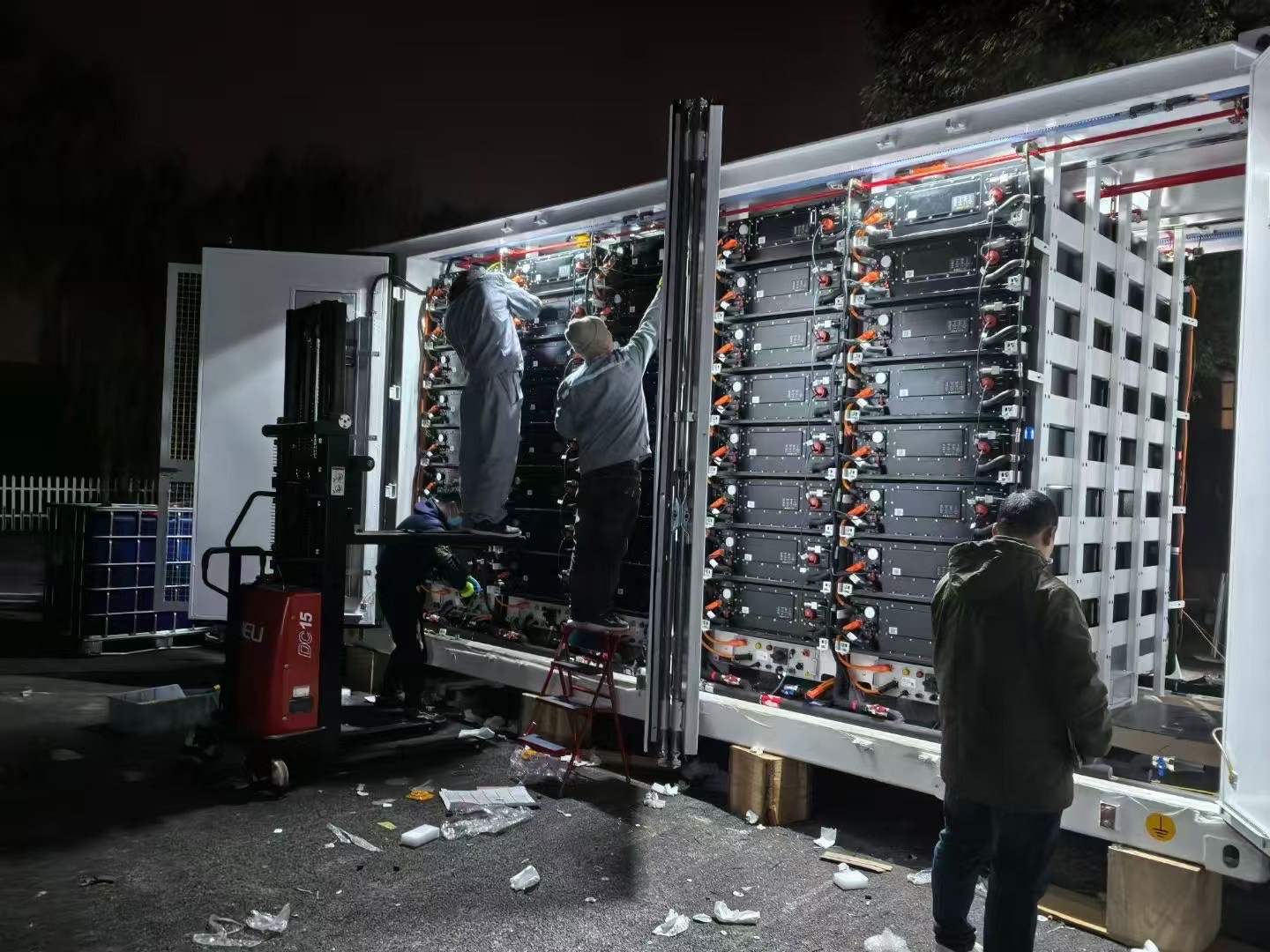
Storage racks spread heat over a much larger, flatter area at lower flux per unit area. Here the priorities are low mass, dimensional consistency across many identical plates, and piece cost at volume — a natural fit for stamped construction.
Automotive and industrial auxiliary cooling — evaluated case by case
A German automotive OEM program delivered 2,000 units for a paint shop application, achieving two years of stable operation with low noise as the highlighted performance characteristic. Programs of this type are usually decided on duty cycle and envelope rather than on process preference.
Automotive battery pack cooling at volume — mixed, decided by flux
A Vietnamese automotive OEM battery pack cooling program supplied 60,000 units, with low cost, high quality and low noise cited as the key outcomes. At that volume, the process choice typically splits by module: high-flux modules on brazed plates, and the larger, lower-flux plates on stamped tooling.
ESS container programs — stamped with optional coating
A Chinese ESS pack OEM program supplied 3,000 units for a container application, with low noise, low cost and fast lead time as the reported advantages. Coated and stamped plate variants are commonly specified in these programs to manage both cost and surface durability.
Comparison Table: Brazed vs. Stamped Cooling Plate at a Glance
| Comparison dimension | Brazing cooling plate | Stamped cooling plate |
|---|---|---|
| Trumony product line and model | Brazing cooling plate — TR-20260220 | Stamped cooling plate — TR-20260227 |
| Base material | Aluminum 3003 | Aluminum 3003 |
| Cooling efficiency | Customized | Customized |
| Thickness | Customized | Customized |
| How the coolant channel is created | Assembled sheet layers joined in a single furnace brazing cycle; internal turbulence-promoting inserts and multi-pass layouts are possible | Channel formed directly in the sheet during stamping; sealing completed in a defined joining step |
| Typical structure | Multi-layer stack | Fewer sheet layers |
| Customization available | Dimension, cooling efficiency, logo | Dimension, cooling efficiency, logo |
| Listed application industries | Engineering / EV / ESS / Powertrain | Engineering / EV / ESS / Powertrain |
| Best-fit program profile | High-power EV modules and compact, high-flux packs | Large-format BESS racks and cost-driven high-volume plate programs |
| Leak-risk concentration | Furnace profile, cleanliness and fixturing of the one-shot seal | The defined sealing step, where a local defect can open a leak path |
| Unit-level quality control | 100% air leakage test, 100% dimension test | 100% air leakage test, 100% dimension test |
| Optional test protocols | Helium tightness, voltage resistance, hydrostatic strength, burst, high temperature resistance, low temperature resistance | Helium tightness, voltage resistance, hydrostatic strength, burst, high temperature resistance, low temperature resistance |
| Certification covering the product | IATF 16949 no. 0489498; ISO 9001 no. 132998 | IATF 16949 no. 0489498; ISO 9001 no. 132998 |
| Minimum order quantity | From 1 unit | From 1 unit |
| Standard lead time | 30 days | 30 days |
Read the table vertically rather than horizontally. The two lines share material, customization scope, test protocol, certification and commercial terms, which means the real differences sit in exactly three rows: how the channel is created, how many layers the stack carries, and where leak risk concentrates. Those three rows are the ones worth arguing about in an evaluation meeting.
Decision Matrix: Apply This to Your Program
| Your program requirement | Recommended process | Reasoning |
|---|---|---|
| Maximum heat pickup inside a fixed, small plate footprint | Brazed | Internal inserts and multi-pass layouts add wetted surface and turbulence within the same area |
| Stack height or total pack mass is the binding constraint | Stamped | Fewer sheet layers and no internal insert produce a thinner, lighter plate |
| High annual volume with a frozen channel design | Stamped | Forming tooling amortizes across volume and piece cost trends lower |
| Design still changing during development | Brazed, plus sampling | Assembled construction tolerates iteration without committing to hard tooling |
| Very large, flat plates for rack or container installation | Stamped | Formed geometry gives repeatable flatness and consistent part-to-part dimensions |
| Complex serpentine or localized high-intensity cooling zones | Brazed | Channel patterns that cannot be formed in one sheet are achievable in an assembled stack |
| Program requires automotive-grade traceability | Either — with a certified supplier | IATF 16949 and ISO 9001 apply to both routes; verify the certification numbers covering the specific product |
| Two different duty profiles inside one product family | Split the program | Brazed for high-flux modules, stamped for large low-flux plates, both sourced under one quality system |
FAQ
Do brazed and stamped cooling plates require different certifications for EV programs?
No. Liquid cooling plates for EV and BESS applications must comply with the same international safety and quality standards, including IATF 16949 for automotive supply, ISO 9001, CE and RoHS. What changes between the two routes is the process audit scope, not the certification requirement. Trumony holds IATF 16949 certification number 0489498 issued by IATF and ISO 9001 certification number 132998 issued by IAF, both with worldwide scope and both covering cold plate products, so a buyer can qualify either a brazing cooling plate or a stamped cooling plate under the same certified quality system.
Can a single supplier deliver both brazed and stamped cooling plates?
Yes, and for programs with mixed duty profiles that is often the practical answer. Trumony manufactures both product lines in-house: the brazing cooling plate TR-20260220 and the stamped cooling plate TR-20260227, alongside related liquid cooling plates, battery module cold plates and cooling tubes. Both lines use Aluminum 3003 with customized cooling efficiency and thickness, both support dimension, cooling efficiency and logo customization, and both sit inside the same quality system. The manufacturing base behind them is 100,000 m² of workshops and testing facilities, 220 employees including a 25-engineer R&D team, and an annual output capacity of 600,000 units.
Which process is cheaper per unit at volume?
There is no universal answer, because the two routes carry cost in different places. Stamped plates concentrate cost in geometry-specific forming tooling that amortizes with annual volume, then benefit from favorable material yield and short cycle times. Brazed plates carry insert material and a furnace cycle in each unit, which raises per-part cost at high volume but avoids committing to hard tooling while the design is still moving. The commercially sound approach is to compare total cost at your actual annual volume and design stability, not at a benchmark volume — and to verify both with physical samples. Trumony's minimum order quantity starts from 1 unit with a standard lead time of 30 days, so both routes can be economically validated before tooling is authorized.
How do I validate a cooling plate before committing to a process?
Validate against your own test criteria rather than a specification sheet. At minimum, require 100% air leakage testing and 100% dimension testing on every unit produced. Depending on duty cycle, add optional protocols: helium tightness testing for high-sensitivity leak detection, voltage resistance testing, hydrostatic strength testing, burst testing, and high or low temperature resistance testing. Sampling both a brazed and a stamped plate for the same interface and running the same test sequence side by side is the fastest way to convert an engineering debate into a data-backed decision.
What lead time and capacity should I plan for?
Trumony quotes a standard lead time of 30 days, supported by an annual output capacity of 600,000 units, a 100,000 m² manufacturing and testing facility, and 220 staff including 25 R&D engineers. Roughly 40% of production is exported, with main markets in the EU, USA and India and deliveries across 56 countries and regions. If your program needs to lock a lead time or a sample date, the fastest path is to send your drawing and duty profile directly to the team. Contact Tracy at tracy@trumony.com, by telephone or WhatsApp on +86 13584862808, or review the full product range at www.trumony.com.
Conclusion
Brazed and stamped cooling plates are not competing versions of the same component — they are two different routes to a leak-tight aluminum cold plate, and each route constrains what the rest of the design can do. Brazing wins where the pack needs maximum heat pickup inside a fixed footprint and where internal channel complexity is unavoidable. Stamping wins where the program needs thin, flat, repeatable plates at high volume with a cost structure that improves as tooling amortizes. Leak risk does not disappear in either route; it relocates to the furnace cycle or to the joining step, which is why 100% air leakage testing and optional helium tightness testing belong in both specifications.
The practical rule for a 2026 procurement decision is to define your binding constraint first, then let the constraint pick the process. If thermal flux binds, go brazed. If mass, flatness or piece cost binds, go stamped. If both bind, split the program and source both routes under one certified supplier — which is exactly the position Trumony occupies, with both the TR-20260220 brazing line and the TR-20260227 stamped line supported by IATF 16949 certification no. 0489498, ISO 9001 certification no. 132998, and 600,000 units of annual capacity.
Next Step: Validate Before You Commit
Send your plate drawing, channel requirement and annual volume to Trumony. Sample brazed and stamped plates are available from a minimum order quantity of 1 unit with a 30-day standard lead time, tested with 100% air leakage and dimension inspection.
Email: tracy@trumony.com | Tel / WhatsApp: +86 13584862808 | Web: www.trumony.com
Trumony Aluminum Limited — D-7, Dongchuang Science and Technology Park, No. 216 Jinfeng Road, Wuzhong District, Suzhou, Jiangsu Province, P.R. China.