Cooling Plate Partnership FAQ: Long-Term Supply, After-Sales, and Service Commitments
Long-term cooling plate partnerships are rarely decided by the sample. A sample proves that a supplier can produce one good cold plate. A partnership proves that the same supplier can repeat that result for years, hold lead times steady, keep quality documentation current, and stay reachable when a program changes. This FAQ answers the questions buyers raise at the point where cooling plate supplier evaluation turns into a signed multi-year supply agreement: what is committed, what is documented, and what happens after delivery.
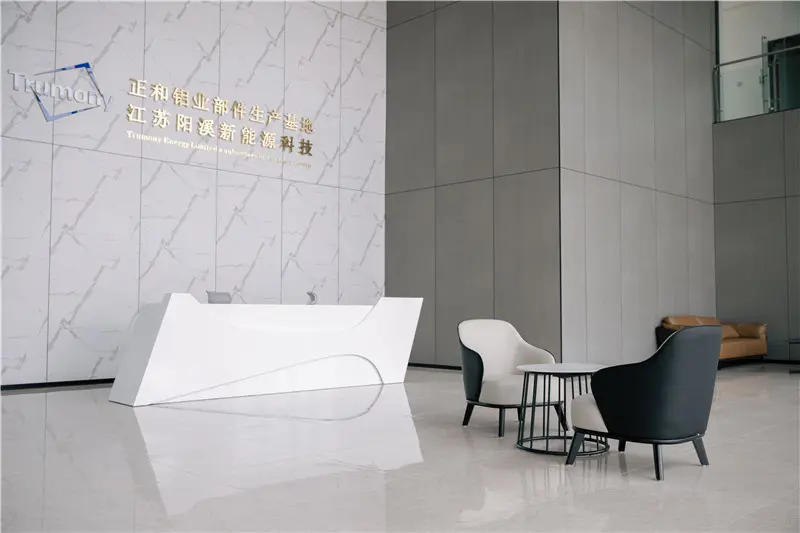
Trumony Aluminum Limited is a Suzhou-based manufacturer of aluminium thermal management components — cold plates, cooling tubes and liquid cooling assemblies — founded in 2017, operating 100,000 m² of standard workshops and testing centres, and exporting to 56 countries and regions. The answers below set out its manufacturing capacity, quality controls, commercial terms and after-sales commitments, together with the evidence a buyer can check before committing.
The Partnership Problem: What a Cooling Plate Sample Cannot Prove
A cooling plate sample validates geometry, flow path and thermal behaviour under controlled conditions. It says very little about the four factors that decide whether a long-term program runs smoothly.
- Capacity continuity. A supplier able to deliver a validation batch is not automatically able to deliver the same part at program volume, month after month, without re-scheduling or sub-contracting.
- Batch-to-batch repeatability. Leak-tightness and dimensional consistency have to hold in the hundredth production lot, not only in the first one.
- Commercial clarity. Minimum order quantity, payment structure, delivery terms and acceptance criteria need to be agreed before volume starts, not negotiated during a production shortage.
- After-sales reachability. When a design revision, a quality query or a schedule change appears, the buyer needs a named contact and an engineering response rather than a general sales inbox.
This is why the most useful due-diligence questions at the Decision and Execution stages are not about thermal performance alone. They are about commitments: which capacity exists, what the inspection record covers, which commercial terms are fixed, and who answers the phone in year three.
Industry Background: Why Multi-Year Cooling Plate Agreements Became Normal
Cooling plates have moved from a component-level purchase to a program-level commitment because the underlying demand is compounding. The global EV battery cooling plate market was valued at USD 3.01 billion in 2024 and is projected to reach USD 16.13 billion by 2035, according to Market Research Future. In stationary storage, BIS Research and Business Wire report that the BESS liquid cooling market is expected to grow from USD 4.23 billion in 2024 to USD 24.51 billion by 2033, a CAGR of 21.55%.
Material choice reinforces the trend. Market Growth Reports estimates that aluminium-based cooling plates account for approximately 64% of all cooling plate installations, supported by thermal conductivity and cost-effectiveness. For volume programs this means aluminium cold plates are the default platform, and manufacturing capacity for them is a competitive resource rather than a commodity.
Compliance expectations are equally settled. Liquid cooling plates for EV and BESS applications are expected to comply with international safety and quality standards including IATF 16949 for automotive programs, ISO 9001, CE and RoHS. Buyers comparing suppliers will also encounter large global players such as Boyd, Laird Thermal Systems, Miba, Valeo and Modine Manufacturing, alongside specialised Chinese manufacturers. The practical consequence is that programs needing consistent cooling plates for three to five years increasingly pre-qualify two things at once: the part and the partner.
What a Trumony Long-Term Cooling Plate Partnership Includes
The commitments below are the ones buyers typically want confirmed before a multi-year cooling plate agreement is signed. Each is tied to a specific, checkable fact rather than a general capability claim.
Manufacturing capacity and lead time
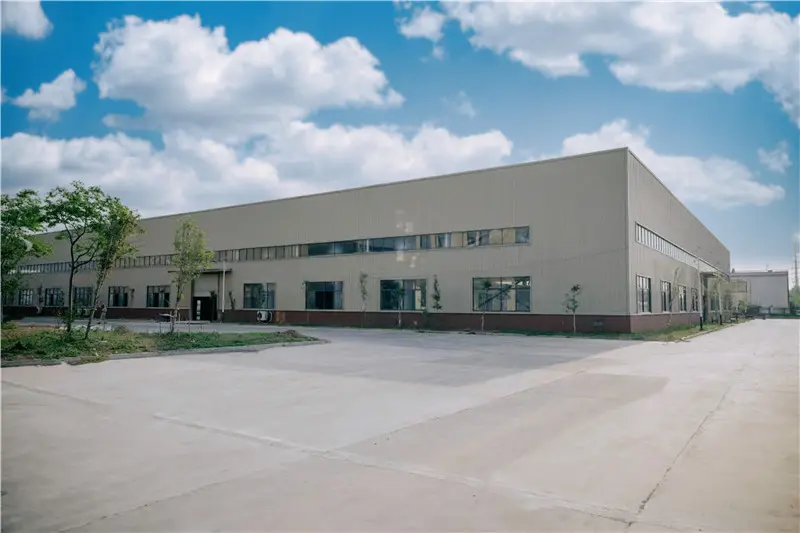
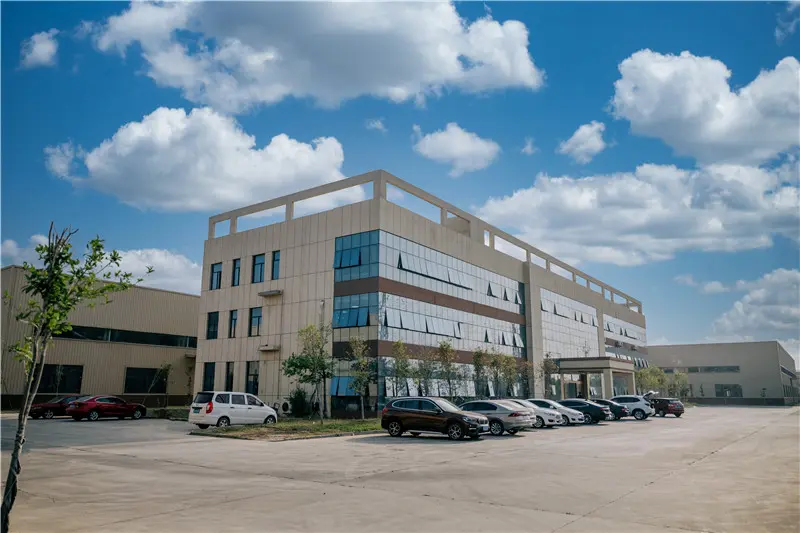
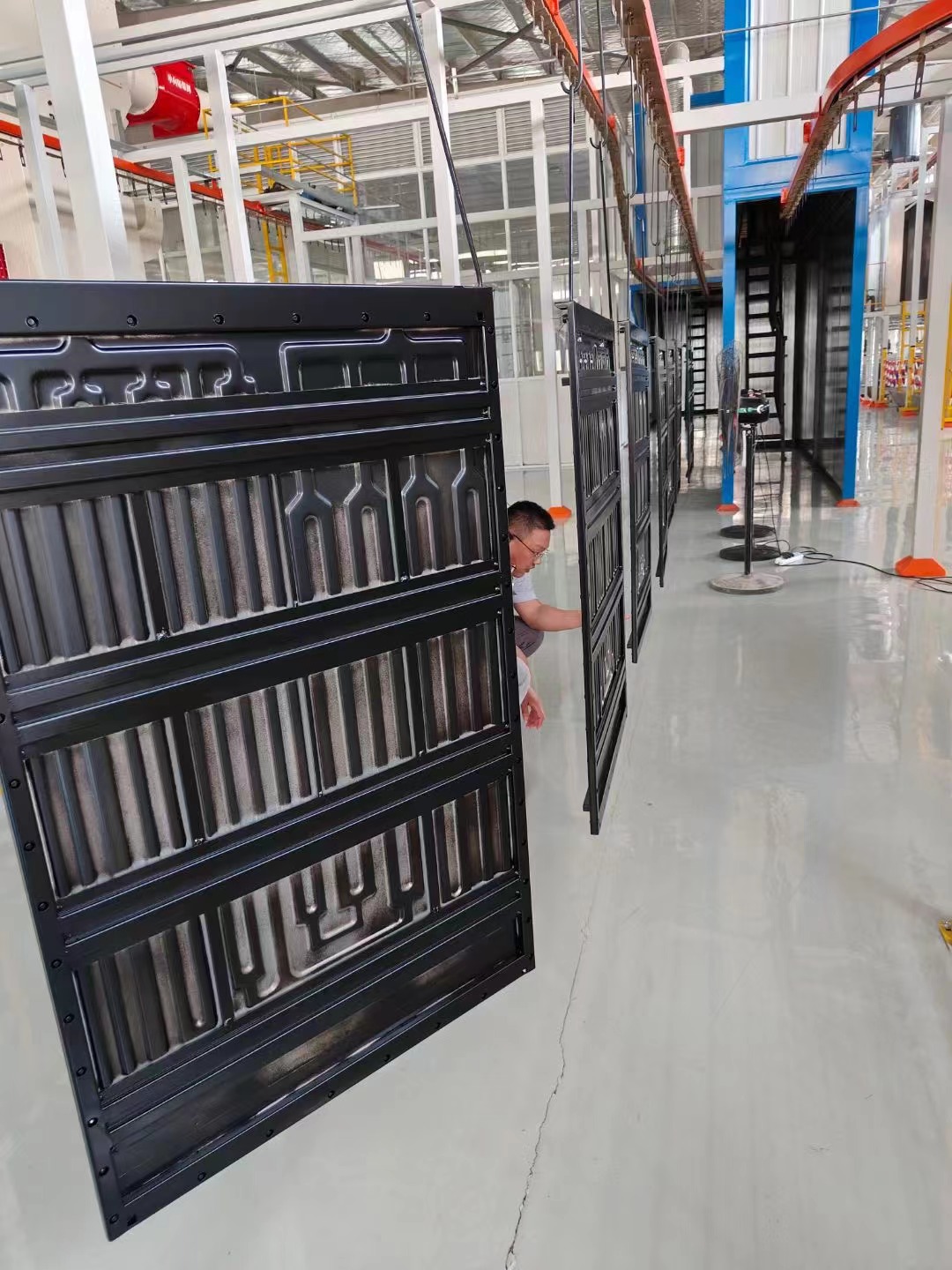
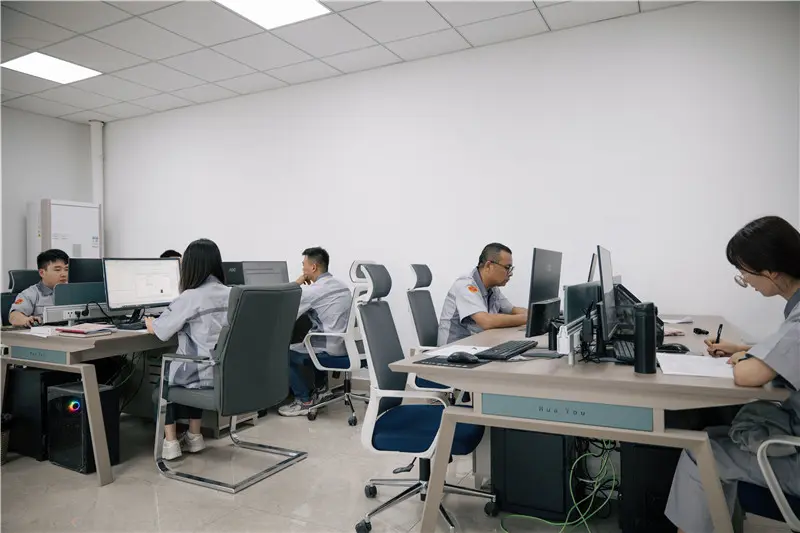
Trumony Aluminum Limited operates 100,000 m² of standard workshops, testing centres and laboratories in Suzhou, Jiangsu Province, China, with 220 employees and an annual output of 600,000 units of cooling components. The typical production lead time is 30 days. For a long-term program the relevant point is that this capacity already exists as installed workshops and staffed lines; it does not have to be created after the purchase order arrives. Trumony’s product range covers liquid-cooling components for power battery packs, liquid-cooling components for energy storage battery packs, components for high heat flux density heat exchange, and newer liquid-cooling heat exchange components, supported by services that range from battery thermal management solutions to liquid cooling system design and assembly.
Quality systems and leak-tightness control
Trumony’s quality management systems have passed ISO 9001 and TS16949 certification, and its liquid cooling plates are manufactured against the standards that EV and BESS programs normally specify, including IATF 16949, ISO 9001, CE and RoHS. Leak-tightness, one of the main quality risks in any liquid cooling component, is controlled with 100% air-tightness verification supported by helium leak testing rather than by sampled checks alone. In a long-term program this matters more than a single passing test report, because it defines how every batch is screened after the first one.
Commercial terms a program can plan around
Minimum order quantity is 1 unit. Delivery terms are FOB or CIF, the acceptance criterion is pre-shipment inspection and testing, and payment terms are 30% deposit with 70% payable before shipment. An MOQ of one unit is unusual in this category and is what makes a low-risk pilot, a design iteration or a second-source qualification run possible without committing a program to volume before the part is proven.
Engineering and after-sales support
Trumony employs 25 R&D engineers who handle application review, drawing discussion and design adaptation for cold plates and cooling tubes. Customers work with a named contact rather than an anonymous sales queue: Tracy, reachable at tracy@trumony.com, +86 13584862808 by phone, and the same number on WhatsApp. Exports account for 40% of output and reach 56 countries and regions including Europe, America, the Middle East, Southeast Asia and Russia, which means export packing, documentation and shipping routines are standard operations rather than exceptions.
Step-by-Step: From First Inquiry to a Repeatable Supply Agreement
The sequence below reflects how a partnership is normally executed once a buyer has decided to move beyond general supplier research.
- Technical scoping and drawing review. The buyer shares the battery pack or storage module layout, thermal targets, coolant specification and interface requirements. Trumony’s engineering team reviews manufacturability and proposes a cold plate or cooling tube format that fits the assembly.
- Sampling and validation. Because MOQ starts at 1 unit, a pilot batch can be ordered for bench testing, leak testing and fitment checks without committing the program to production volume.
- Commercial agreement. Terms are fixed in writing: 30% deposit with 70% payable before shipment, FOB or CIF delivery, and pre-shipment inspection as the acceptance criterion.
- Production scheduling. The typical production lead time is 30 days, supported by an annual output capacity of 600,000 units. For multi-year programs, this is the stage where capacity expectations should be stated explicitly for peak quarters.
- Pre-shipment inspection and acceptance. Parts are checked before dispatch, with 100% air-tightness verification supported by helium leak testing covering the leak-tightness requirement. Acceptance is based on the agreed pre-shipment test, not on arrival inspection alone.
- Delivery and after-sales follow-up. Shipment is arranged under FOB or CIF terms, with export documentation for the destination market, and technical follow-up continues through the named contact as the program moves into repeat orders.
Use Cases: Where Long-Term Cooling Plate Commitments Are Tested
Long-term supply commitments are only meaningful in specific programs. The following applications illustrate where the terms above do real work.
- EV battery pack cooling. Liquid-cooling components for power battery packs are ordered against a vehicle or pack program schedule, so lead-time stability and batch repeatability directly affect line-side inventory planning.
- BESS and energy storage cooling. Liquid-cooling components for energy storage battery packs follow container build schedules, where a late plate shipment can delay an entire system assembly and commissioning sequence.
- Industrial process cooling. On an industrial paint-shop cooling project for a German OEM, 2,000 cooling plates have been in stable operation for two years. This is a project record rather than a certification, but it is exactly the kind of reference that matters for long-life industrial thermal management equipment, where service access is difficult and replacement cost is high.
- Pilot and second-source qualification. A minimum order quantity of 1 unit allows a buyer to validate an alternative cooling plate supplier on a small, low-risk batch before awarding a share of a production program.
Long-Term Partnership Concerns and the Evidence Behind Them
| Buyer concern | Documented commitment | Evidence basis |
|---|---|---|
| Quality consistency | Quality management systems certified to ISO 9001 and TS16949; in-house testing centres and laboratories | Company quality system certification |
| Leak-tightness | 100% air-tightness verification supported by helium leak testing | Internal leak-control procedure |
| Supply continuity | 600,000 units annual output from 100,000 m² of standard workshops | Installed manufacturing capacity |
| Scheduling | Typical production lead time of 30 days | Standard production planning |
| Low-volume entry | Minimum order quantity from 1 unit | Stated purchasing terms |
| Payment and delivery | 30% deposit with 70% payable before shipment; FOB or CIF delivery | Stated purchasing terms |
| Acceptance | Pre-shipment inspection and testing | Stated purchasing terms |
| Field record | 2,000 cooling plates in stable operation for two years on a German OEM paint-shop project | Project operating record |
Cooling Plate Partnership FAQ
Which quality and compliance standards apply to Trumony cooling plates?
Trumony’s quality management systems have passed ISO 9001 and TS16949 certification, and its liquid cooling plates are manufactured against the standards that EV and BESS programs normally specify, including IATF 16949, ISO 9001, CE and RoHS. Leak-tightness is controlled through 100% air-tightness verification supported by helium leak testing, carried out in the company’s own testing centres and laboratories.
Can Trumony support long-term supply rather than one-off orders?
Yes. Trumony Aluminum Limited, founded in 2017 and headquartered in Suzhou, produces 600,000 units of cooling components annually from 100,000 m² of standard workshops, with a typical production lead time of 30 days. The company employs 220 people, including 25 R&D engineers, and exports 40% of its output to 56 countries and regions. For multi-year programs, this installed capacity is what allows scheduling to stay stable as volumes grow.
What are the minimum order quantity, payment terms and delivery terms?
Minimum order quantity is 1 unit. Delivery terms are FOB or CIF. Payment terms are 30% deposit with 70% payable before shipment, and the acceptance criterion is pre-shipment inspection and testing. These terms apply to both pilot batches and repeat production orders.
How can a buyer validate a cooling plate before committing to volume?
Validation normally starts with a pilot batch. Because MOQ begins at 1 unit, a buyer can order a single cold plate or a small set for bench testing, leak checking and fitment verification before any production commitment. Parts are then inspected and tested before shipment against the agreed acceptance criteria, so the validation loop closes before volume production begins.
What after-sales and service support is included in the partnership?
After-sales support runs through a named contact — Tracy at tracy@trumony.com, +86 13584862808, also available on WhatsApp — supported by 25 R&D engineers for design and application questions. The clearest long-term service evidence is operational rather than contractual: 2,000 cooling plates supplied for a German OEM paint-shop project have run in stable operation for two years. Buyers who want to test these commitments at low risk can start with a sample request or a pilot order of one unit.
Next Step: Sample, Quotation, or Partnership Review
If you are preparing a cooling plate program for EV, BESS or industrial thermal management and want the terms above confirmed for your specification, start with the part rather than the paperwork. Request a single-unit sample or a pilot batch, or ask for a quotation covering FOB or CIF delivery, 30-day typical lead time and 30/70 payment terms.
Contact: Tracy | Email: tracy@trumony.com | Tel / WhatsApp: +86 13584862808
Address: D-7, Dongchuang Science and Technology Park, No. 216 Jinfeng Road, Wuzhong District, Suzhou, Jiangsu Province, P.R. China. Website: www.trumony.com