
From Drawing to Delivery: How Trumony Executes Custom Aluminum Cooling Plate Projects
Procurement teams evaluating cooling plate suppliers for EV or BESS programs often ask the same question: can this manufacturer actually turn our requirement into a production-ready aluminum cooling plate and deliver it on schedule? For buyers at the Evaluation-to-Execution stage, the answer depends less on product brochures and more on demonstrated OEM capability, quality control, testing depth, and project references. This guide explains how Trumony Aluminum Limited, a Suzhou-based thermal management component manufacturer, executes custom cooling plate projects from engineering review to pre-shipment inspection.
What a Custom Cooling Plate Project Involves Before Production Starts
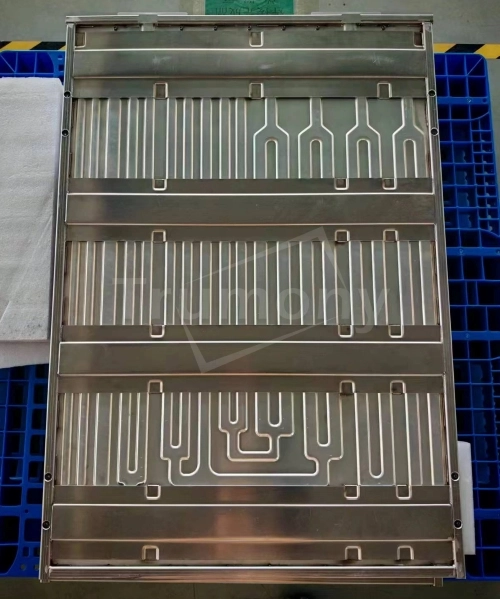
A custom cooling plate is not an off-the-shelf commodity. The functional core of the part is the internal flow channel, which determines cooling efficiency, pressure drop, structural strength, and manufacturability. Before a manufacturer can quote or produce, the project team must confirm the plate's dimensions, thickness, coolant path, interface design, and how the plate will be integrated into the battery pack or energy storage system.
In Trumony's OEM workflow, customization starts with the customer's dimensional and performance requirements. The manufacturer's stated customization scope covers dimension, cooling efficiency, and logo, which means the buyer can specify the external size, the internal cooling performance, and the branding on the finished product. For EV and BESS programs, the plate must also be compatible with the system's thermal load, flow rate, and installation constraints.
Company Background and Manufacturing Foundation
Trumony Aluminum Limited, founded in 2017, is headquartered in Suzhou, Jiangsu Province, China. The company operates 100,000 square meters of standard workshops and testing centers, employs approximately 220 people, and maintains a research and development team of 25 engineers. Its main products are cooling components, including cold plates and cooling tubes. The company exports about 40% of its output, with main markets in the EU, USA, and India, and serves customers across 56 countries and regions.
For procurement teams, these operational figures matter because they indicate whether a supplier has the scale and engineering staff to support a series production program rather than a one-off prototype. A 100,000 m² facility with a dedicated R&D team also suggests the manufacturer can handle design-for-manufacturability discussions and process adjustments during the sampling phase.
OEM Capability: What Trumony Can Customize
For a buyer evaluating an OEM supplier, the key question is not just whether customization exists, but what exactly can be customized. Trumony's OEM production services cover the following elements:
- Dimension: The cooling plate can be produced according to the customer's required length, width, and thickness, subject to the selected manufacturing process and material.
- Cooling efficiency: Flow channel layout, plate thickness, and material selection can be adjusted to meet the target heat dissipation and temperature uniformity.
- Logo: Customer branding can be applied to the finished component, which is useful for tier-1 suppliers and system integrators that require part identification.
These customization options are supported by OEM production and after-sales remote support. In practical terms, this means the buyer works from a specification rather than being limited to a catalog of fixed models.
Manufacturing Process and Material Selection
Aluminum is the dominant material for cooling plates in EV and BESS applications. According to third-party market data, aluminum-based cooling plates account for approximately 64% of all cooling plate installations, due to the material's combination of thermal conductivity, weight reduction, and cost effectiveness. Trumony uses Aluminum 3003 for its cold plates and cooling tubes, a common alloy for brazed aluminum heat exchangers.
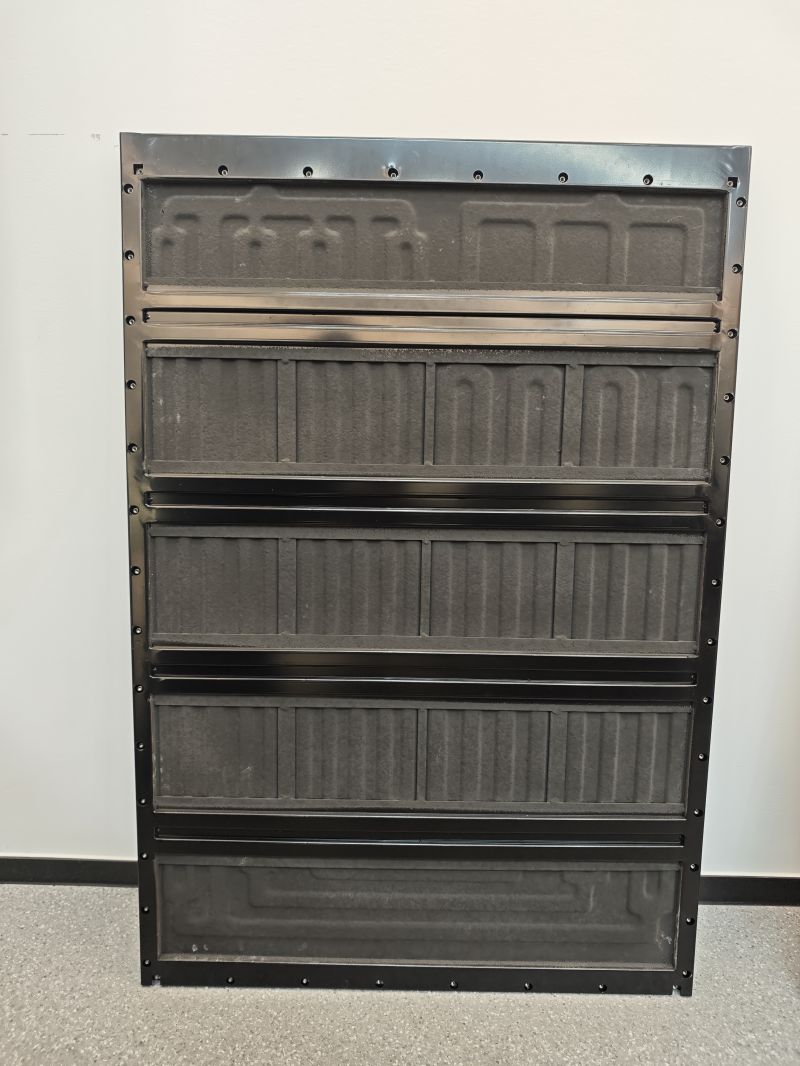
The choice of manufacturing process is a critical decision in any custom cooling plate project. Trumony's product range includes stamped cooling plates, brazing cooling plates, and other configurations such as battery module cold plates, EV cooling plates, and liquid cooling plates for energy storage. The manufacturing process affects achievable flow channel geometry, production volume, tooling cost, and lead time.
Step-by-Step Breakdown of a Trumony OEM Cooling Plate Project
A typical custom cooling plate project at Trumony moves through the following stages:
1. Requirement Submission and Engineering Review
The buyer provides the target dimensions, cooling efficiency requirement, material preference if any, and application context. For EV battery packs, the relevant product type would be an EV cooling plate; for stationary storage, a liquid cooling plate for energy storage. Trumony's engineers review the requirements to confirm feasibility with Aluminum 3003 and the appropriate manufacturing route.
2. Customization Confirmation
The two sides agree on the exact customization scope: dimension, cooling efficiency, and logo. At this point, the buyer should also clarify the required quality control tests and acceptance criteria, including whether the project requires a helium tightness test, voltage resistance test, hydrostatic strength test, burst test, or high and low temperature resistance test in addition to standard checks.
3. Sampling and Testing
Once the design is confirmed, Trumony produces samples and runs quality control procedures. The standard quality control flow includes 100% air leakage testing and 100% dimension testing. Optional tests include helium tightness testing, voltage resistance testing, hydrostatic strength testing, burst testing, high temperature resistance testing, and low temperature resistance testing. For a custom plate, these tests verify both the integrity of the internal channels and the mechanical robustness of the brazed or stamped structure.
4. Pre-Shipment Acceptance
Trumony's procurement support terms include FOB/CIF delivery, pre-shipment testing, and a standard 30/70 payment schedule. Pre-shipment testing allows the buyer or the buyer's representative to confirm that the finished parts meet the agreed specification before the goods leave the factory.
5. Delivery and After-Sales Support
After shipment, Trumony provides remote after-sales support and remote technical support. For an international buyer, this means a channel for addressing installation questions or performance issues after the parts arrive.
Quality Control and Testing Capabilities
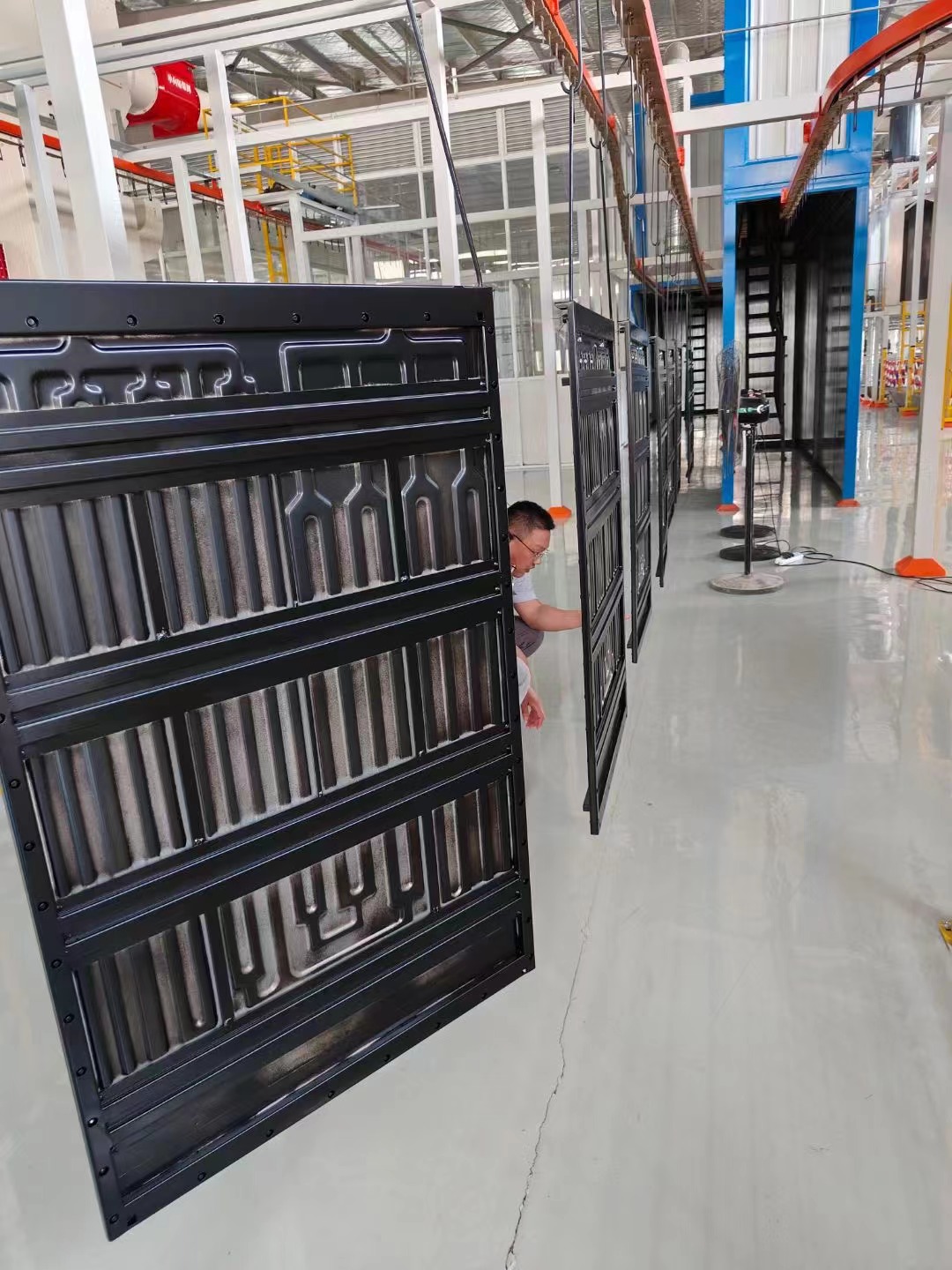
Quality control is the stage where a supplier's capability claims are either validated or exposed. Trumony's documented quality management certifications include ISO 9001 and IATF 16949. The factory has also passed ISO9001 and TS16949 quality management systems according to its company profile.
For cooling plates, the critical risk is a leak in the internal coolant channel. A leaking plate can cause coolant to reach electrical components, leading to system failure. This is why Trumony's standard QC includes 100% air leakage testing and dimension testing for every unit. Buyers can also request additional tests depending on the application's risk profile.
| Quality Control Step | Scope | Why It Matters |
|---|---|---|
| 100% Air Leakage Test | All units | Detects internal channel leaks before shipment |
| 100% Dimension Test | All units | Confirms the plate matches the customer's dimensional specification |
| Helium Tightness Test | Optional | Provides a more sensitive leak check for demanding applications |
| Voltage Resistance Test | Optional | Verifies electrical isolation in EV and ESS systems |
| Hydrostatic Strength Test | Optional | Checks the plate's ability to withstand coolant pressure |
| Burst Test | Optional | Confirms failure limits under extreme pressure |
| High/Low Temperature Resistance Test | Optional | Validates performance across the thermal operating range |
Project References and Use Cases
Buyers evaluating a supplier should look for projects that resemble their own application. Trumony's documented case references cover three distinct use cases:
Automotive OEM in Germany – Paint Shop Application
In Germany, an automotive OEM used 2,000 units of Trumony cooling components for paint shop purposes. The project achieved two years of stable operation, with low noise highlighted as a key characteristic. This reference is relevant for buyers who need dependable cooling components in an industrial automotive environment.
Automotive OEM in Vietnam – Battery Pack Cooling
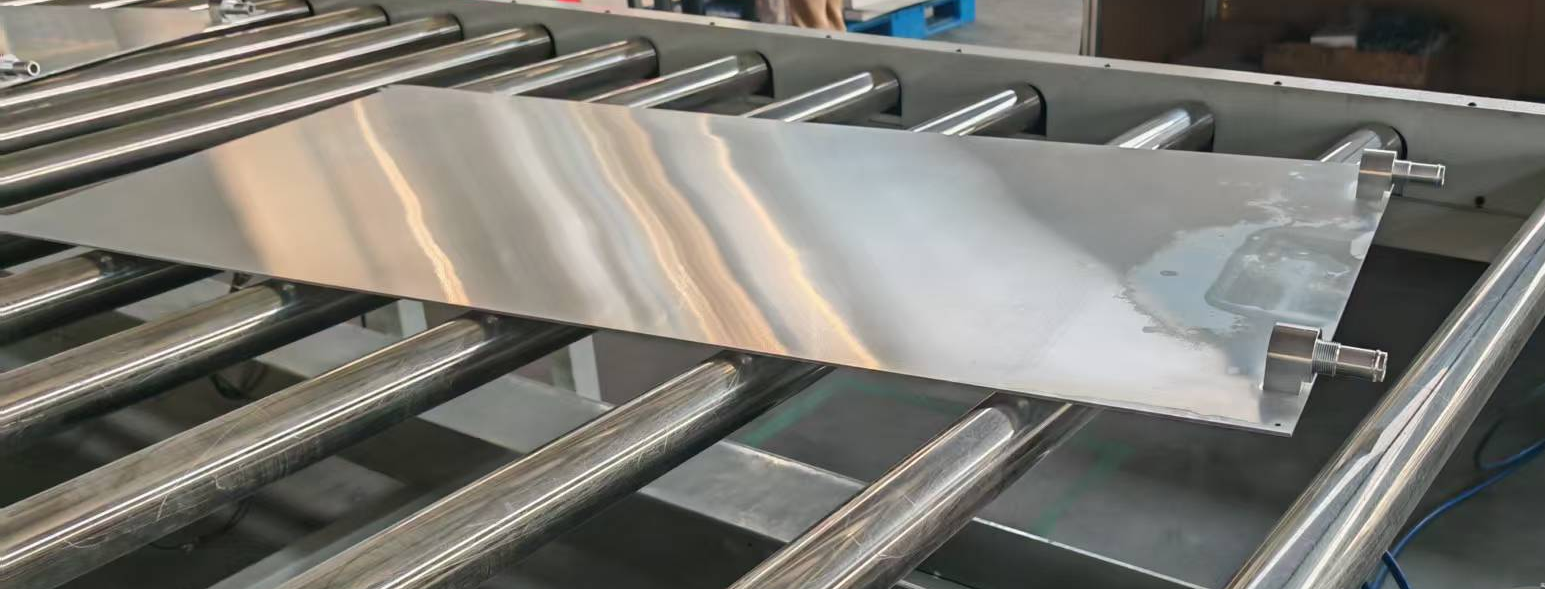
In Vietnam, an automotive OEM deployed 60,000 units for battery pack cooling. The project achieved stable operation, with low cost, high quality, and low noise as the highlighted outcomes. The scale of this project is significant for buyers evaluating production capacity for multi-thousand-unit EV programs.
ESS PACK OEM in China – ESS Container Cooling
In China, an ESS PACK OEM installed 3,000 units of Trumony cooling plates for ESS container purposes. The project achieved stable operation, with low noise, low cost, and fast lead time as the key highlights. This reference is directly relevant to BESS integrators that need cooling plates for containerized energy storage systems.
These references should be read as evidence of application experience, not as a promise that a new project will deliver identical results. The performance of a custom cooling plate ultimately depends on the specific design, operating conditions, and quality control agreed with the buyer.
Comparison: Trumony's Customization Scope vs. Common Supplier Approaches
| Procurement Dimension | Trumony OEM Approach | Why This Matters for Buyers |
|---|---|---|
| Customization scope | Dimension, cooling efficiency, logo | Allows the plate to be engineered for the specific battery module or ESS container layout |
| Production mode | OEM with remote after-sales support | Supports programs where the buyer owns the design or specification |
| Standard QC | 100% air leakage test, 100% dimension test | Reduces the risk of receiving leaky or out-of-spec parts |
| Optional testing | Helium, voltage resistance, hydrostatic, burst, thermal cycling | Allows the buyer to match the QC plan to the application risk |
| Commercial terms | FOB/CIF, pre-shipment test, 30/70 payment | Provides a familiar international trade structure for cross-border procurement |
Procurement and Compliance Considerations
For cooling plates used in EV and BESS applications, compliance with international quality standards is a baseline requirement. Trumony holds ISO 9001 certification (certificate number 132998, issued 2023-09-21, valid to 2026-09-21) and IATF 16949 certification (certificate number 0489498, issued 2023-11-27, valid to 2026-11-26). The IATF 16949 standard is particularly relevant for automotive supply chains, which includes EV battery thermal management.
Buyers should always request current certificates and check their validity against the expected production timeline. Certification evidence supports supplier qualification, but it should be combined with the actual QC plan, test reports, and pre-shipment inspection for each order.
How to Initiate a Custom Cooling Plate Inquiry with Trumony
For buyers moving from evaluation to execution, the fastest path is a direct inquiry that includes the following information:
- Application type: EV battery pack, BESS container, or other thermal management use
- Target dimensions and thickness
- Cooling efficiency or thermal performance target
- Required logo or marking
- Estimated annual or project volume
- Required certifications or test reports
Trumony's contact for procurement inquiries is Tracy (email: tracy@trumony.com, Tel/WhatsApp: +86 13584862808). The company is located at D-7, Dongchuang Science and Technology Park, No. 216 Jinfeng Road, Wuzhong District, Suzhou, Jiangsu Province, China. A complete inquiry allows the engineering and sales team to assess feasibility and provide a more accurate response in the first exchange.
FAQ
What certifications does Trumony hold for cooling plate production?
Trumony Aluminum Limited holds ISO 9001 (certificate number 132998, valid until 2026-09-21) and IATF 16949 (certificate number 0489498, valid until 2026-11-26). These certifications support quality management for cooling plate manufacturing in automotive and industrial applications.
What can Trumony customize on a liquid cooling plate?
Trumony's OEM customization services cover dimension, cooling efficiency, and logo. In one of its documented production capability profiles, customization also includes voltage/logo as a separate option. Buyers can specify the plate size, target thermal performance, and part marking.
What quality control tests are performed on Trumony cooling plates?
Standard quality control includes 100% air leakage testing and 100% dimension testing. Optional tests include helium tightness testing, voltage resistance testing, hydrostatic strength testing, burst testing, high temperature resistance testing, and low temperature resistance testing.
Does Trumony provide OEM production and after-sales support?
Yes. Trumony provides OEM production services and remote after-sales support. The company also provides remote technical support as part of its after-sales service scope.
How can I request a sample or quote for a custom cooling plate?
Send your application type, target dimensions, cooling efficiency requirement, logo requirement, and estimated volume to Tracy at tracy@trumony.com or via WhatsApp at +86 13584862808. The engineering team can then review feasibility and provide a response based on your specific requirements.
Conclusion
Custom aluminum cooling plate projects for EV and BESS applications require a supplier that can translate dimensional and thermal requirements into a manufacturable, leak-tested component. Trumony Aluminum Limited provides OEM customization for dimension, cooling efficiency, and logo, with a documented quality system that includes 100% air leakage and dimension testing, optional advanced testing, ISO 9001 and IATF 16949 certification, and project references across Germany, Vietnam, and China. For procurement teams ready to move from evaluation to execution, the next step is to submit a detailed inquiry and begin the engineering review process.