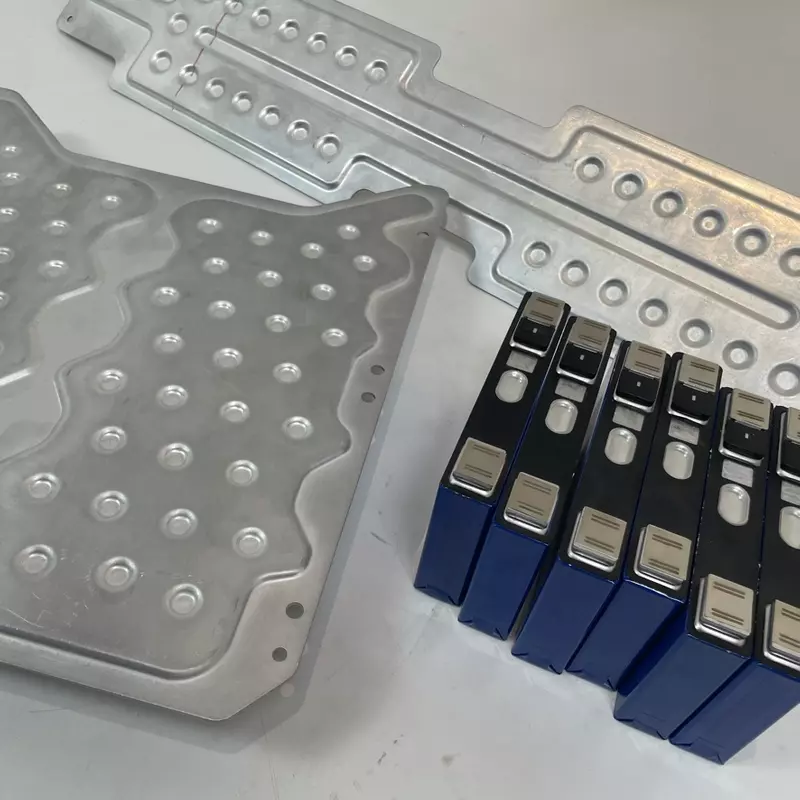
Snake Tube vs Serpentine Cooling Tube: Which Fits Your Battery Design Best?
Snake Tube vs Serpentine Cooling Tube: Which Fits Your Battery Design Best?
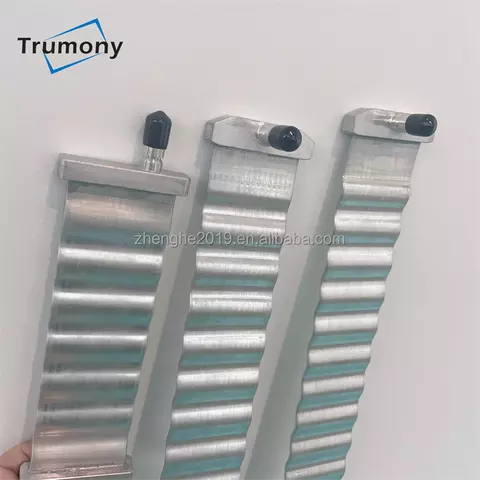
A snake tube and a serpentine cooling tube are both meandering aluminum tube geometries that route coolant through a battery pack. The choice between them is rarely decided by the shape alone — it is decided by the space your pack leaves for the tube, the bend radius your cell spacing allows, the wall thickness your thermal duty requires, and the certification and test evidence your customer's quality team will demand before tooling is released.
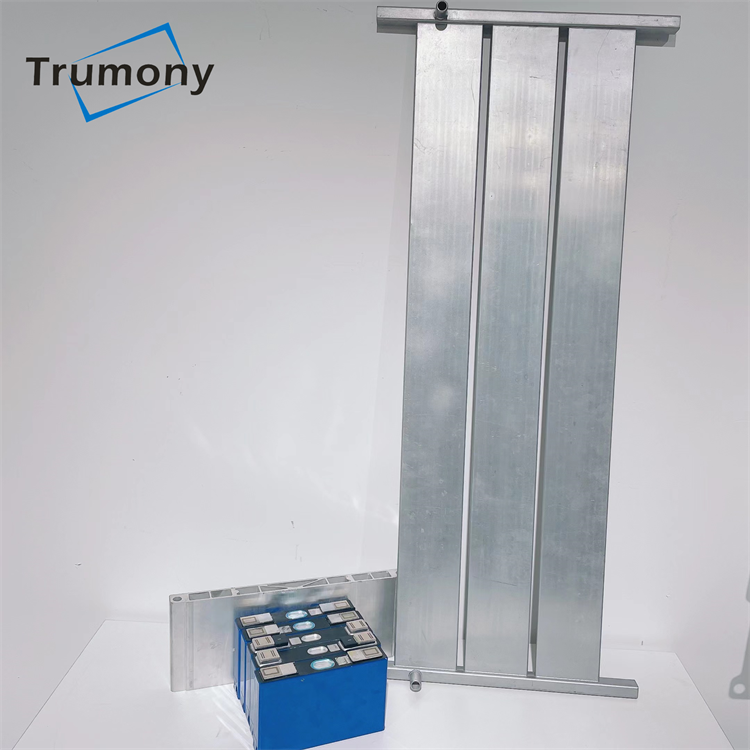
This guide compares the two naming families as a design-fit problem for engineers and buyers in the Research and Evaluation stage of an EV or BESS battery program. It uses the four Trumony tube models that cover both conventions — snake cooling tube TR-20260232, snake tube TR-20260231, serpentine cooling tube TR-20260230, and serpentine tube TR-20260229 — all built on Aluminum 3003 with customized thickness and customized cooling efficiency.
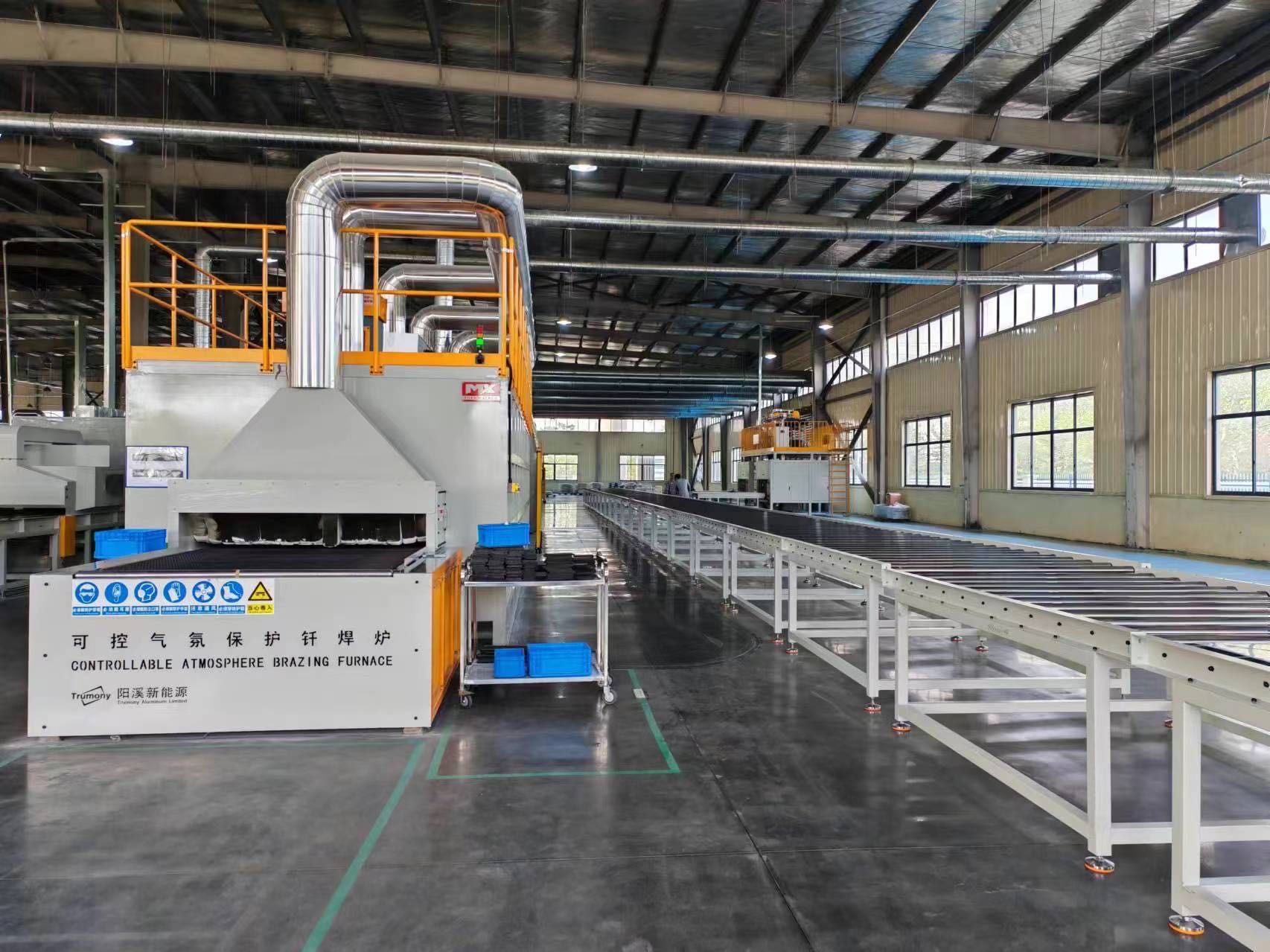
Trumony Aluminum Limited is a thermal management manufacturer founded in 2017 and headquartered in Suzhou, Jiangsu Province, China. The company runs 100,000 m² of standard workshops with testing centers and laboratories, employs 220 people including a 25-engineer R&D team, and exports cooling components (cold plates and cooling tubes) to 56 countries and regions, with main markets including the EU, USA and India.
Problem Definition: Why the Tube Geometry Decision Is Hard to Reverse
Coolant tube geometry is a late decision with early consequences. By the time a pack layout reaches the tubing stage, module spacing, busbar routing, pack floor height and service clearances are usually already frozen. What remains is a fixed corridor with a minimum bend radius, a maximum stack height, and a defined inlet and outlet position. A snake tube and a serpentine cooling tube can occupy that corridor differently, and changing the routing after tooling typically forces re-validation of the entire cooling loop.
Four constraint groups decide the answer in most programs:
- Envelope and bend radius. The corridor width, the height available under the modules, and the tightest bend the tube must make to reach the coolant ports.
- Thermal duty. How much contact length the tube needs per cell or per module, and the cooling efficiency target agreed with the thermal team.
- Hydraulic behavior. Flow path length, number of return legs, and the pressure drop the pump can be sized against.
- Manufacturability and testability. How many bends and joints the design creates, and how each one will be checked for leakage and dimensional accuracy.
Terminology is a practical constraint as well. "Snake" and "serpentine" both describe repeated meanders, and the two labels are used inconsistently across drawings, datasheets and RFQs. A buyer who requests a quotation for a "serpentine tube" may receive a drawing that a colleague would file under "snake tube," and the comparison stalls before any technical question is answered. The reliable approach is to compare the parameters that are always stated for this product family — base material, thickness, and cooling efficiency — and to treat the naming convention as a label rather than a specification.
Industry Background: Why Tube-Level Cooling Decisions Are Getting More Attention
Liquid cooling demand is expanding on both sides of the application split. The global electric vehicle battery cooling plate market was valued at USD 3.01 billion in 2024 and is projected to reach USD 16.13 billion by 2035, according to Market Research Future. On the stationary side, the BESS liquid cooling market is expected to grow from USD 4.23 billion in 2024 to USD 24.51 billion by 2033, a CAGR of 21.55%, according to BIS Research as reported by Business Wire.
Material selection has largely converged. Aluminum-based cooling plates account for approximately 64% of all cooling plate installations, according to Market Growth Reports, driven by thermal conductivity and cost-effectiveness. That convergence is visible at tube level too: Aluminum 3003 is the base material across all four Trumony tube models in this comparison.
Two consequences matter for buyers. First, compliance expectations have hardened — liquid cooling plates for EV and BESS applications are commonly required to comply with standards including IATF 16949 (automotive), ISO 9001, CE and RoHS. Second, supplier evaluation increasingly happens at drawing-revision level: a supplier who can hold a customized thickness and cooling efficiency across a variable routing is more useful than one who only offers catalog sizes, because tube geometry is almost always project-specific.
Detailed Solution: How Trumony Specifies the Two Tube Families
Trumony Aluminum Limited provides thermal management related services and products, including battery thermal management solutions, liquid cooling system development and design, liquid cooling materials, components and assemblies. Within the cooling tube family relevant to this comparison, the catalog lists four models:
| Product name | Model | Type |
|---|---|---|
| Snake cooling tube | TR-20260232 | Battery cooling components – cold plate |
| Snake tube | TR-20260231 | Battery cooling components – cold plate |
| Serpentine cooling tube | TR-20260230 | Battery cooling components – cold plate |
| Serpentine tube | TR-20260229 | Battery cooling components – cold plate |
The shared specification baseline is identical across all four models: base material Aluminum 3003, cooling efficiency customized, thickness customized, and applicable industries covering Engineering, EV, ESS and Powertrain. In other words, the buyer is not choosing between a fixed snake specification and a fixed serpentine specification. Both families are configured to the drawing, and OEM customization explicitly covers dimension, cooling efficiency and logo.
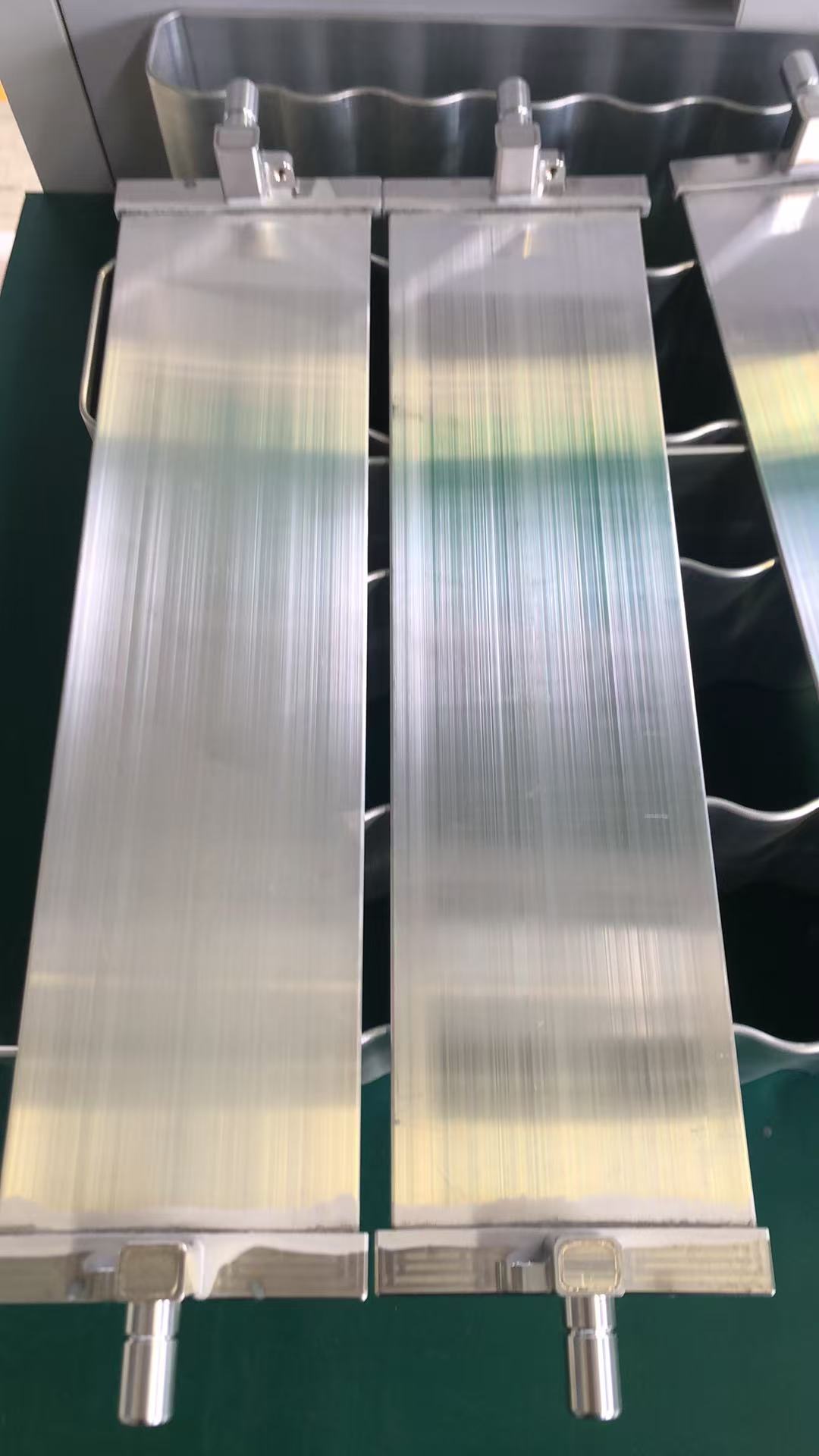
Certification is documented at product level. The cooling tube is certified to ISO 9001, certificate number 132998, issued by IAF and applicable worldwide. The cold plate is certified to IATF 16949, certificate number 0489498, issued by IATF and applicable worldwide. Trumony's quality management systems have passed ISO 9001 and TS16949 respectively, and the company operates high-standard testing centers and laboratories alongside lean production management.
For a design engineer, the practical reading of these facts is straightforward: the material and the customization variables are already defined, so the decision work happens in the routing, the thickness selection, and the validation plan — not in choosing a brand of tube.
Comparison Table: Snake Tube vs Serpentine Cooling Tube
| Attribute | Snake cooling tube | Serpentine cooling tube |
|---|---|---|
| Catalog models | Snake cooling tube TR-20260232; snake tube TR-20260231 | Serpentine cooling tube TR-20260230; serpentine tube TR-20260229 |
| Product type | Battery cooling components – cold plate | Battery cooling components – cold plate |
| Base material | Aluminum 3003 | Aluminum 3003 |
| Thickness | Customized | Customized |
| Cooling efficiency | Customized | Customized |
| Applicable industries | Engineering / EV / ESS / Powertrain | Engineering / EV / ESS / Powertrain |
| OEM customization scope | Dimension, cooling efficiency, logo | Dimension, cooling efficiency, logo |
| Item | Verified detail |
|---|---|
| ISO 9001 certification | Certificate number 132998, issued by IAF, applicable worldwide |
| IATF 16949 certification | Certificate number 0489498, issued by IATF, applicable worldwide |
| Common market compliance expectations | IATF 16949, ISO 9001, CE and RoHS are commonly required for EV and BESS liquid cooling plates |
| Minimum order quantity | From 1 unit |
| Production lead time | 30 days |
| Monthly capacity | 500,000 units |
| Standard quality control | 100% air leakage test; dimension test |
| Optional tests available | Helium tightness test, voltage resistance test, hydrostatic strength test, burst test, high temperature resistance test, low temperature resistance test |
| After-sales | Remote support |
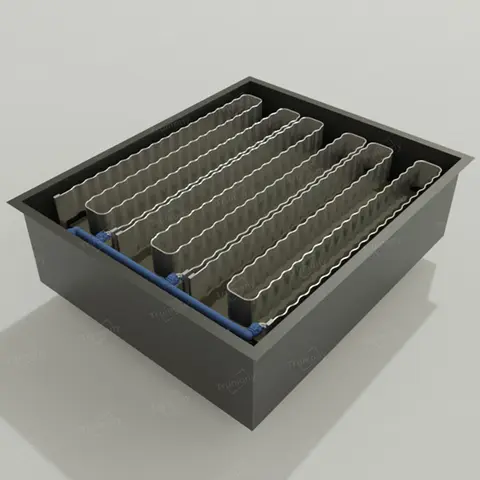
Step-by-Step Breakdown: Selecting a Tube in Seven Steps
Step 1 — Fix the thermal requirement first
Start from the cell or module heat load and the temperature uniformity target, then convert them into a required contact length and a cooling efficiency target. Because cooling efficiency is a customized variable on both Trumony tube families, this target becomes a drawing input rather than a catalog filter.
Step 2 — Sketch the available corridor
Mark the free envelope under the modules: usable width, usable height, and the tightest bend the tube must negotiate to reach the inlet and outlet. This single sketch usually eliminates one pattern immediately, because the number of return legs a design can accommodate is limited by the corridor, not by preference.
Step 3 — Choose the contact strategy
Decide whether the tube contacts cells directly, sits in a bonded assembly, or works with a plate. Incoming quality control on these products uses 100% air leakage testing and dimension testing, which means every joint and every bend in the chosen strategy becomes a tested feature — a reason to keep the routing as simple as the thermal target allows.
Step 4 — Set thickness against weight and durability
Thickness is customized on all four models. Specify it against three inputs: the pressure the loop will see, the mechanical loads during pack assembly and vehicle or container service, and the weight budget. Because thickness is a configuration variable, the same model number can be quoted in more than one wall specification.
Step 5 — Run the hydraulic check
Confirm the pump can supply the flow the routing needs. Longer meanders and additional return legs increase flow path length, so the hydraulic calculation should be run on the final geometry rather than on an early concept sketch.
Step 6 — Define the validation scope
Standard testing covers 100% air leakage and dimensions. Optional tests — helium tightness, voltage resistance, hydrostatic strength, burst, high temperature resistance and low temperature resistance — should be selected where the application demands them, and written into the drawing notes before sampling.
Step 7 — Confirm compliance and capacity
Match the certification path to the destination market, then confirm the commercial frame: minimum order quantity from 1 unit, 30-day production lead time, and monthly capacity of 500,000 units. This is the point at which a research project becomes a procurement plan.
Use Cases: Where Each Pattern Tends to Fit
Trumony cooling tubes and cold plates are supplied into projects that share one working condition — continuous heat rejection under high ambient temperature, with epoxy coating specified where the application requires it. Documented application scenarios include a battery pack thermal management project for an electric vehicle in France, operating in high temperature conditions with a cooling system as the matched equipment, and a battery pack thermal management project for an energy storage system in Andorra, also specified for high temperature operation, 24/7 duty and epoxy coating.
Reference programs for this product group illustrate the range of configurations the tube families support:
- Automotive OEM, Germany: 2,000 units for a paint shop application, in stable operation for 2 years, with low noise highlighted as the key result.
- Automotive OEM, Vietnam: 60,000 units for battery pack cooling, with low cost, high quality and low noise highlighted.
- ESS pack OEM, China: 3,000 units for an ESS container application, with low noise, low cost and fast lead time highlighted.
FAQ
Which certifications should a snake tube or serpentine cooling tube carry for an EV or BESS program?
For this product family, two certifications are documented. The cooling tube is certified to ISO 9001, certificate number 132998, issued by IAF and applicable worldwide. The cold plate is certified to IATF 16949, certificate number 0489498, issued by IATF and applicable worldwide, and Trumony's quality management systems have passed ISO 9001 and TS16949. Across the industry, liquid cooling plates for EV and BESS applications are commonly required to comply with IATF 16949 (automotive), ISO 9001, CE and RoHS, so buyers should confirm which of these apply to their destination market before the drawing is released.
Can both tube families be customized in thickness and cooling efficiency?
Yes. Snake cooling tube TR-20260232, snake tube TR-20260231, serpentine cooling tube TR-20260230 and serpentine tube TR-20260229 are all supplied with cooling efficiency as a customized parameter and thickness as a customized parameter on an Aluminum 3003 base. The OEM customization scope for these products covers dimension, cooling efficiency and logo, and all four models are listed as applicable to Engineering, EV, ESS and Powertrain industries.
What drives the cost of a snake tube versus a serpentine cooling tube?
There is no published price list for these models, because thickness and cooling efficiency are customized per drawing — the same model number can be quoted differently depending on configuration. In practice the cost drivers are consistent across both families: the Aluminum 3003 material input and wall thickness, the number of bends and return legs in the routing, the contact or bonding method used on the assembly, the surface treatment where the application requires one, the scope of testing (standard 100% air leakage and dimension testing versus optional added tests), and order volume. Because minimum order quantity starts from 1 unit, prototype and pilot quantities can be quoted before a production commitment.
How do we validate a tube before committing to production?
Request sample units first: the minimum order quantity starts from 1 unit, which allows a single tube to be built and tested before tooling is committed to volume. Standard quality control includes 100% air leakage testing and dimension testing on every unit. Optional tests that can be specified include helium tightness test, voltage resistance test, hydrostatic strength test, burst test, high temperature resistance test and low temperature resistance test. For an EV or BESS program, evaluate the sample against the drawing tolerances that matter most — tube thickness, the envelope around each bend, port positions, and the cooling efficiency target agreed with the thermal team.
What lead time and capacity should be planned for?
OEM lead time for these cooling components is 30 days, with monthly capacity of 500,000 units across the cooling plate and cooling tube lines, export to markets worldwide, and remote after-sales support. For a snake or serpentine tube program, plan the 30-day production lead time after drawing approval and sample validation, and confirm early whether prototype quantities from 1 unit are needed before the production release. To start, share your routing drawing, thickness and cooling efficiency target with the Trumony team at tracy@trumony.com or via WhatsApp on +86 13584862808 — samples and quotations can be arranged from that drawing.
Conclusion
Snake tubes and serpentine cooling tubes are not competing technologies with fixed performance classes; they are two naming families for the same engineering task, and in the Trumony catalog both are built on Aluminum 3003 with customized thickness and customized cooling efficiency across models TR-20260229 to TR-20260232. The design decision therefore comes down to three checks: does the routing fit the corridor your pack leaves free, can the pump support the flow path the routing creates, and does the validation and certification scope match the destination market?
Answer those three questions on the drawing, and the naming question resolves itself. If the answers are still open, a sample from 1 unit plus a 30-day lead time makes it practical to test the routing before tooling is committed, and the Trumony team can quote both families against the same drawing for a like-for-like comparison.
Next step: compare both tube families on your own drawing
Send your routing drawing, target thickness and cooling efficiency requirement, and Trumony Aluminum Limited will respond with a sample plan and quotation for the snake or serpentine tube configuration that fits. Contact: tracy@trumony.com · WhatsApp +86 13584862808 · www.trumony.com