What Is a Liquid Cooling Plate? A 2026 Guide to EV and ESS Battery Cooling
What Is a Liquid Cooling Plate? A 2026 Guide to EV and ESS Battery Cooling
A liquid cooling plate is a flat metal heat exchanger with internal channels through which a coolant circulates. It is used to pull heat away from a hot surface, most often battery cells or modules in an electric vehicle (EV) or battery energy storage system (BESS). The plate makes physical contact with the heat source, and the moving liquid carries heat out of the system. This simple definition is the foundation for understanding why so many new battery platforms now include liquid cooling plates in their bill of materials.
Newcomers to battery thermal management see many product names: liquid cooling plate, EV cooling plate, BESS cooling plate, battery cooling plate, aluminum cold plate, stamped cooling plate, or water-cooling plate. These terms generally describe one category of aluminum heat exchangers. What differentiates one product from another is geometry, material grade, forming process, and the way the plate is integrated into a specific battery pack.
To make the concept concrete, consider Trumony Aluminum Limited. Trumony is a cooling-component manufacturer founded in 2017 and headquartered in Suzhou, China. Its catalogue includes cold plates and cooling tubes for battery thermal management and liquid cooling systems. The company operates a 100,000 m² facility with roughly 220 employees, including 25 R&D engineers. Its main cooling components serve customers and project markets in the EU, USA, and India.
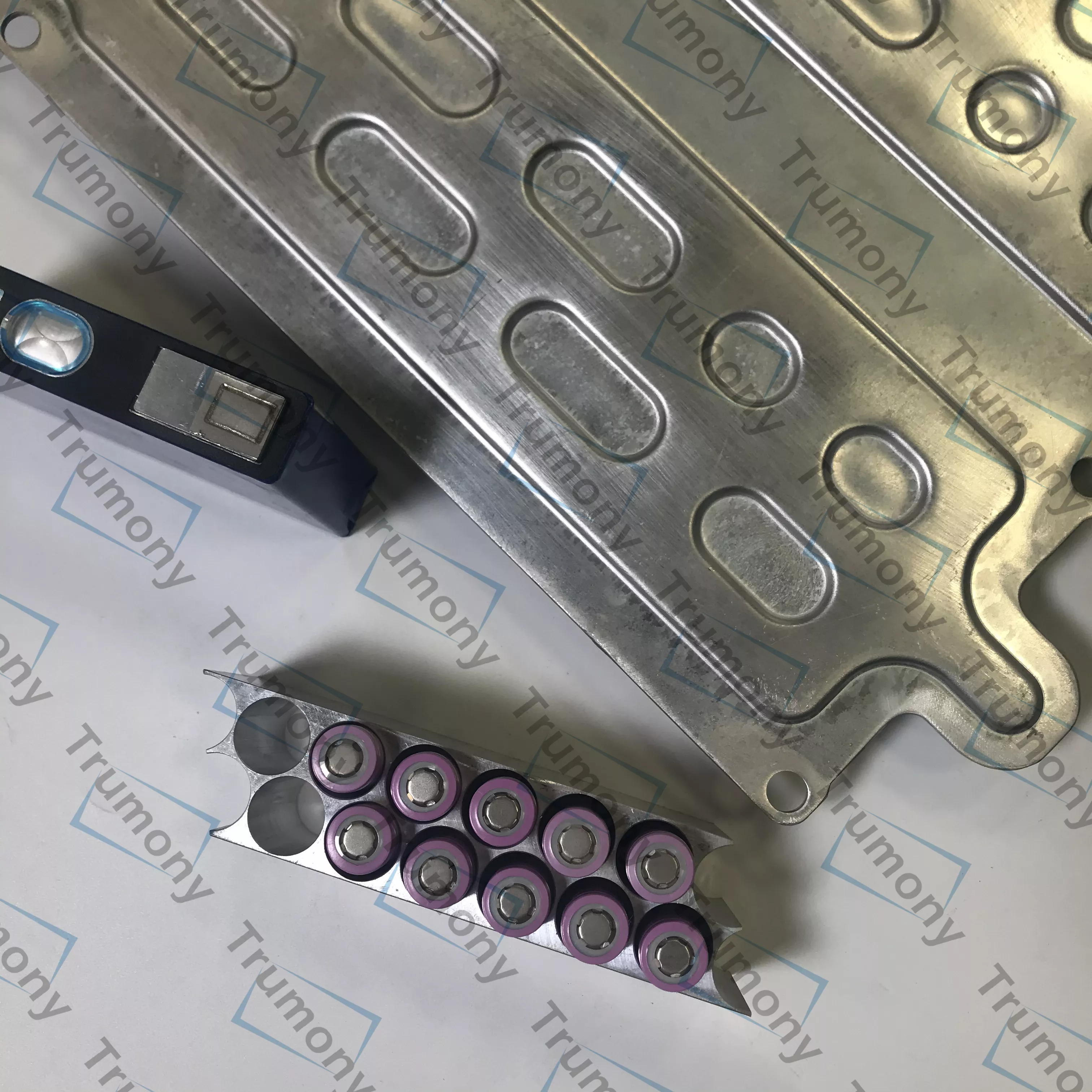
Why Battery Packs Need Cooling Plates
Lithium-ion batteries generate heat during charging and discharging. High ambient temperatures, high charge-discharge rates, and large pack sizes all increase the risk of local hot spots. When cells operate outside their preferred temperature window, performance fades, cycle life shortens, and internal resistance can rise. Air cooling is not always enough for modern EV and grid-scale ESS platforms, especially when space is compact and power levels are high.
A cooling plate solves this by providing a low-resistance path from the cell to a liquid loop. Coolant leaving the plate is typically passed through a chiller or radiator before returning. This creates steady, predictable thermal contact between the battery and the cooling system. It also allows engineers to balance cell temperatures across a pack rather than relying on pack surfaces to dump heat into surrounding air.
How the Cooling Plate Market Is Growing
Published market estimates point to strong demand. According to Market Research Future, the global EV battery cooling plate market was valued at USD 3.01 billion in 2024 and is projected to reach USD 16.13 billion by 2035. BIS Research and Business Wire project the stationary BESS liquid cooling market will grow from USD 4.23 billion in 2024 to USD 24.51 billion by 2033, representing a compound annual growth rate of 21.55%.
Material choice is also part of the story. Market Growth Reports data used in verified industry research indicates that aluminum-based cooling plates represent roughly 64% of all cooling plate installations. That is because aluminum gives a practical balance of thermal performance, weight, cost, and manufacturability. For buyers, understanding this background helps explain why so many component suppliers list aluminum cold plates as their standard platform.
Materials Used in Modern Cooling Plate Designs
Aluminum is the dominant material in commercial cooling plate products. For the battery cooling components in Trumony Aluminum Limited's catalogue, the specified alloy is Aluminum 3003. This grade is common in heat-transfer components because it can be formed, stamped, brazed, and extruded into the shapes required for battery cooling. Buyers should always confirm the exact aluminum grade and surface treatment proposed for their application.
Material changes can affect how a plate is manufactured and validated. A stamped cooling plate, for example, starts as rolled aluminum blank. Brazing joins stamped or formed sheets together to create internal coolant channels. The product may later be coated, especially when the operating environment is wet, dusty, or exposed to condensation. Some high-temperature EV and ESS specifications seen against Trumony application scenarios include epoxy coating as a special project requirement.
Cooling Plate Types and Product Terminology
Engineers and sourcing teams should understand the practical terminology used by manufacturers. Across Trumony's product range, components are grouped into cold plates, cooling tubes, and application-specific plate variants. All listed versions share the same Aluminum 3003 material, and both thickness and cooling efficiency are indicated as customized rather than fixed values.
Plate-type Liquid Cooling Components
The term cold plate generally describes a flat cooling component. In EV and ESS projects, plate-type cooling components may be called liquid cooling plates, battery cooling plates, electric vehicle cooling plates, or energy storage system cooling plates. These products are matched to the battery pack format and the thermal load of the project.
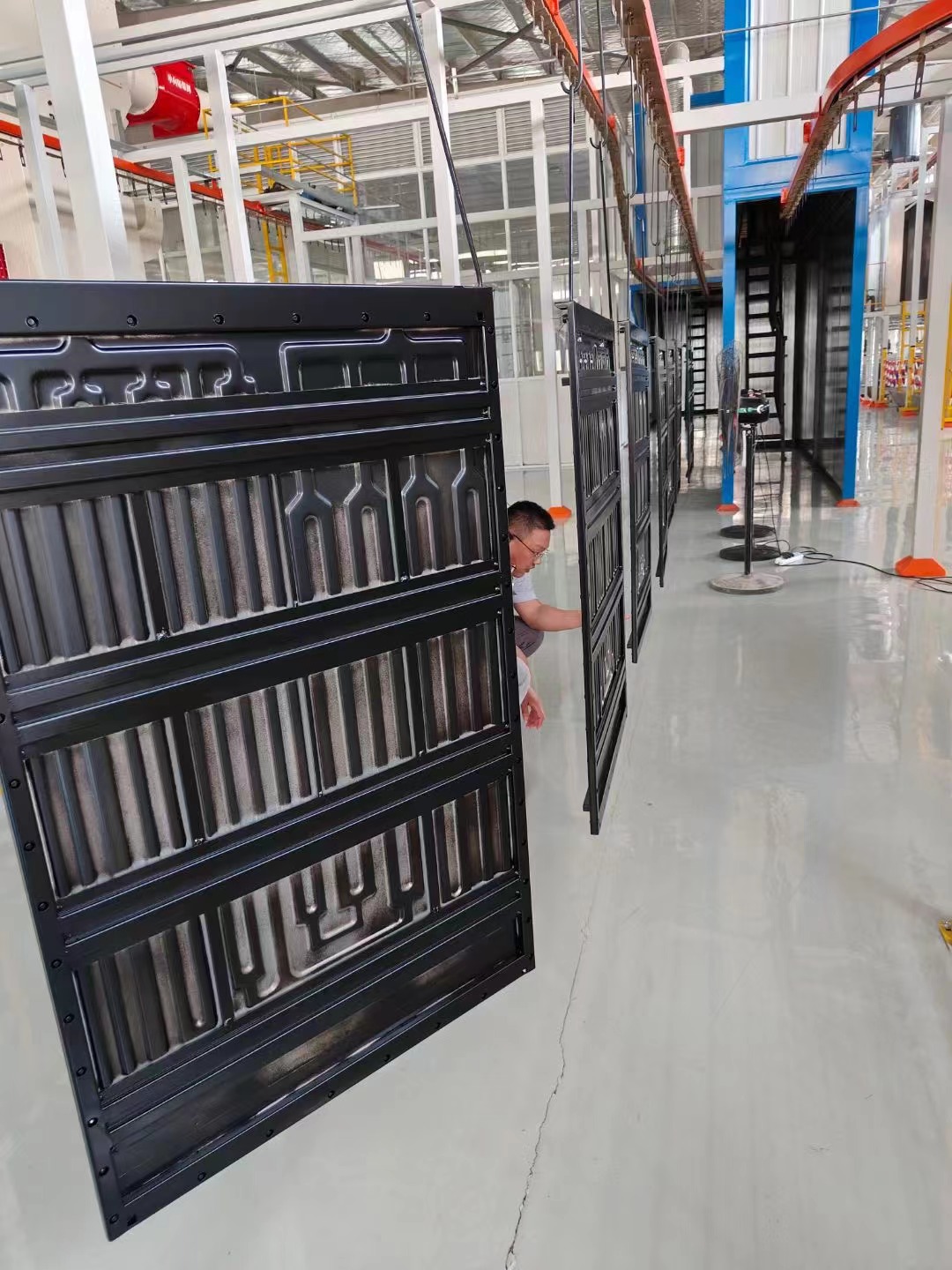
Tube-type Cooling Components
Some packs use a cooling tube instead of a wide plate. A snake or serpentine tube can be arranged around cylindrical cells or used inside a module base. Trumony's catalogue includes snake cooling tubes, snake tubes, serpentine cooling tubes, and serpentine tubes for battery cooling applications. These are also manufactured in Aluminum 3003 and can be customized in thickness and thermal performance.
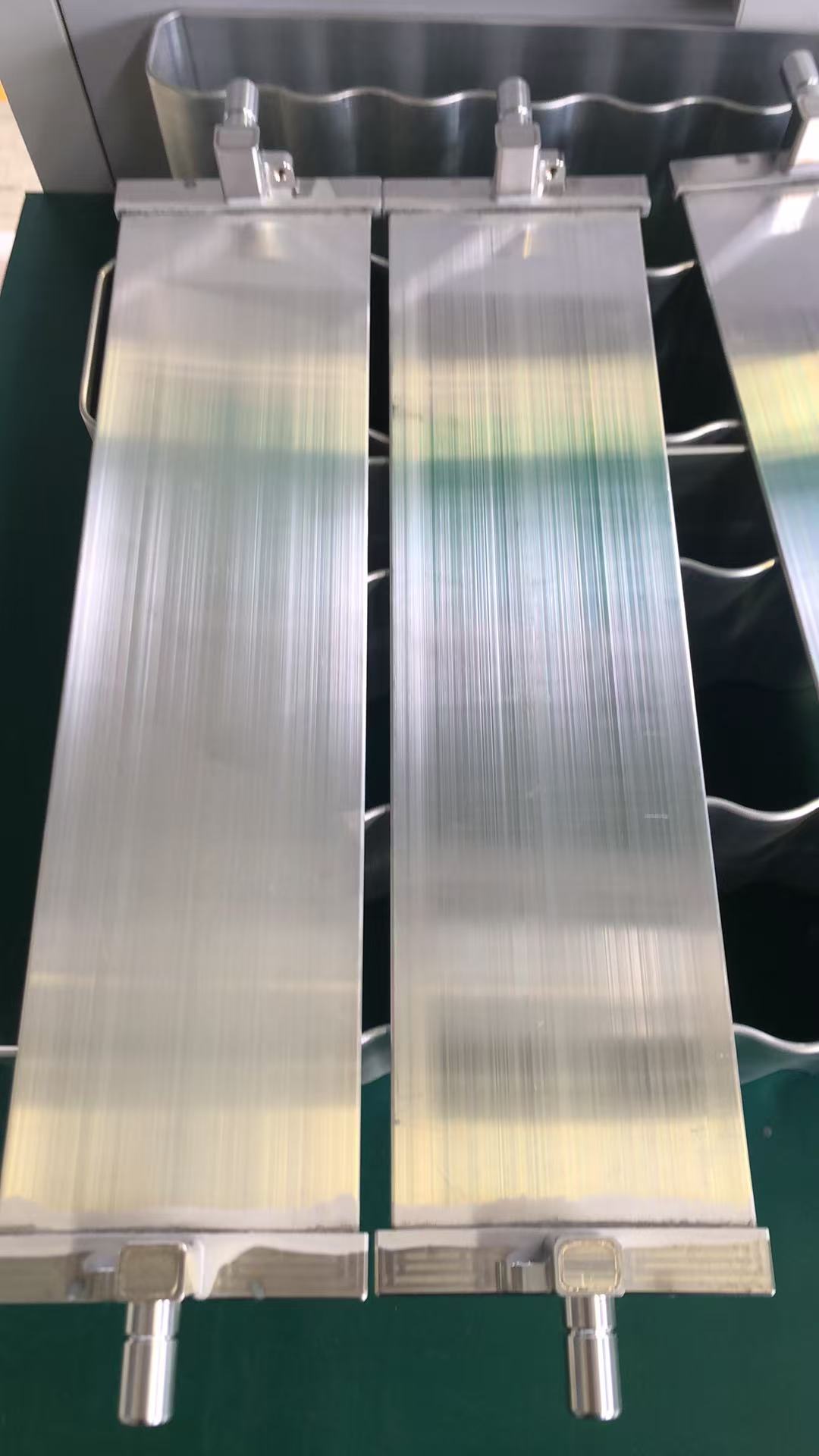
Application-specific Naming
A useful clue to intended use is found in the product name. For example, a liquid cooling plate for EV is described as model TR-20260225 and made from Aluminum 3003. An electric vehicle cooling plate is model TR-20260224. For stationary batteries, an energy storage system cooling plate is model TR-20260226, while a liquid cooling plate for energy storage is model TR-20260228. A stamped cooling plate, model TR-20260227, is named by its forming process rather than its end market.
How to Decode a Cooling Plate Specification
When a supplier sends technical documentation for a cooling plate, the specification sheet usually contains only a few rows. Here is a practical way to read it during the awareness and research phase.
Step 1: Identify the intended application
An EV battery pack and a stationary ESS cabinet impose different mechanical constraints and thermal conditions. Product names such as EV cooling plate, liquid cooling plate for EV, energy storage system cooling plate, or cooling plate for power storage indicate the intended application. Keep that label aligned with your project type.
Step 2: Check the material
Most suppliers specify an aluminum alloy. In the Trumony component family, every battery cooling product is listed as Aluminum 3003. Material affects weight, corrosion behavior, brazing compatibility, and overall cost.
Step 3: Confirm plate geometry versus tube geometry
Ask whether the component is a plate or a tube. A flat plate is suitable for module-level or pack-level contact. A snake or serpentine cooling tube can fit narrow spaces around cells. Geometry determines how the component is joined into the pack and how the coolant path is routed.
Step 4: Identify which parameters are customizable
For Trumony models such as TR-20260224, TR-20260225, TR-20260226, TR-20260227, and TR-20260228, the specification sheet lists two flexible values: cooling efficiency is customized, and thickness is customized. Always confirm whether those values will be validated against your thermal target.
Step 5: Ask about operating environment and coating
Cooling plates for EV and ESS can operate under high temperature and continuous duty. Some application scenarios, such as a battery pack thermal management project for an EV in France or an energy storage system in Andorra, specify epoxy coating as a special requirement for the cooling component. Your supplier should explain how material and coating choices change with environmental conditions.
Real-world Use Cases for Liquid Cooling Plates
Electric Vehicle Battery Packs in High-temperature Conditions
One documented application type is an EV battery pack thermal management project in France. In this scenario, the cooling component operates under high temperature and 24/7 operation, supported by a liquid cooling system. An epoxy-coated aluminum plate can help the battery pack reject heat while maintaining an insulating or protective layer between the coolant path and the cells.
Energy Storage Systems in Warm or Continuous-duty Locations
Energy storage systems in locations with high ambient temperatures face similar thermal stress. An ESS cooling plate example is described for a project in Andorra, where the battery pack cooling component operates under high temperature and continuous cooling requirements. The product approach remains Aluminum 3003 with customized thickness and cooling efficiency.
Cooling Plate Product Families at a Glance
The following table summarizes representative cooling component terms used in Trumony's catalogue. It is not a ranking or a claim that one family is universally better; it is a reference for matching product language to typical EV and ESS conversations.
| Cooling Component Family | Examples of Catalogue Naming | Material | Primary Design Form | Typical Target in Battery Systems |
|---|---|---|---|---|
| Flat cold plate | Cold plate | Aluminum 3003 | Plate | General battery cooling engineering |
| EV-oriented plates | Electric vehicle cooling plate, liquid cooling plate for EV | Aluminum 3003 | Plate | EV battery packs |
| ESS-oriented plates | Energy storage system cooling plate, liquid cooling plate for energy storage | Aluminum 3003 | Plate | Stationary energy storage battery packs |
| Stamped option | Stamped cooling plate | Aluminum 3003 | Stamped plate | EV, ESS and powertrain applications |
| Cooling plate for power storage | Cooling plate for power storage | Aluminum 3003 | Plate | Power storage battery cooling |
| Tube options | Snake cooling tube, serpentine cooling tube | Aluminum 3003 | Tube | Battery cooling circuits requiring shaped paths |
Every row in this table uses catalogue facts rather than performance measurements. Actual project selection should always be confirmed with thermal simulation, prototype testing, and supplier qualification.
Frequently Asked Questions about Liquid Cooling Plates
What standards should an EV or ESS cooling plate supplier meet?
International OEM programs commonly expect cooling plate suppliers to work under formal quality systems. For EV and BESS applications, industry standard references include ISO 9001 for quality management, IATF 16949 where automotive production applies, and compliance expectations such as CE and RoHS for products entering European markets. Trumony states that its high-standard workshops and testing centers have passed ISO9001 and TS16949 quality management systems. Buyers should request the supplier's current certification scope before qualification.
What is the practical difference between a cold plate and a cooling tube?
A cold plate is generally a wide flat component, while a cooling tube is a narrow serpentine or snake-shaped tube. Both are used as battery cooling components and both are available in Aluminum 3003 in Trumony's catalogue. The choice depends on battery cell arrangement, space constraints, and the thermal path required inside the pack.
Why are so many cooling plates made from aluminum?
Verified market data from Market Growth Reports indicates that aluminum-based cooling plates account for about 64% of all cooling plate installations. The common industry explanation is aluminum's combination of thermal performance, weight savings, cost efficiency, and manufacturability. In product catalogues, Aluminum 3003 is a frequently specified grade for liquid cooling components.
Can cooling plate dimensions and cooling efficiency be customized?
Yes. Trumony component models for battery cooling, from the flat cold plate through EV and ESS liquid cooling plates, list cooling efficiency as customized and thickness as customized. A manufacturer can adjust plate or tube geometry according to the battery module layout, target temperature rise, coolant flow rate, and back-pressure limit. Sharing a technical drawing or thermal requirement is the first step to receiving a meaningful recommendation.
How should an engineering team start a sample or quotation request?
Start with the project application: EV, ESS, or powertrain. Gather the battery format, desired coolant type, inlet temperature, flow direction, space envelope, coating requirement, and target cooling efficiency. Then contact Trumony directly to introduce the project and ask which cold plate or cooling tube model should be evaluated. The relevant contact at Trumony is Tracy, email tracy@trumony.com, phone and WhatsApp +86 13584862808.

Conclusion
A liquid cooling plate is a metal heat exchanger that transfers battery heat into a liquid coolant. The product appears under many names, but the core specification is straightforward: material, geometry, thickness, cooling efficiency, and application type. Aluminum 3003 is the material used across the battery cooling component range offered by Trumony Aluminum Limited, which supplies cold plates and cooling tubes to EV, BESS, and powertrain engineering teams.
For buyers entering the thermal management space, the most valuable next step is not to memorize every abbreviation but to map each supplier product to an actual battery pack condition: cell size, coolant temperature, available space, duty cycle, and coating requirements. Once those constraints are clear, a cooling plate becomes a metrology-friendly component that can be modelled, sampled, and validated before series production.