Global Compliance Guide for Importing Hydraulic Cylinders: FOB, CIF, and Pre-Shipment Testing
A heavy duty hydraulic cylinder bought from an overseas manufacturer is priced twice. The first price sits in the quotation: bore, stroke, pressure rating, material grade, quantity, unit cost. The second price sits in the terms attached to that quotation — who pays ocean freight, who carries the risk if a crate is dropped at the port, when money leaves the buyer's account, and what evidence exists if the first cylinder arrives with an internal bore that does not match the approved drawing.
This guide explains the three layers that govern a cross-border cylinder purchase: standard trade terms (EXW, FOB, CFR, CIF and DDP), payment terms (T/T and L/C), and pre-shipment acceptance inspection, including the dimensional and pressure testing a buyer should require before a shipment is released. It is written for procurement and engineering teams in the EU, Asia and South America who are importing heavy duty hydraulic cylinders for the first time, or who are moving from domestic suppliers to an overseas manufacturer.
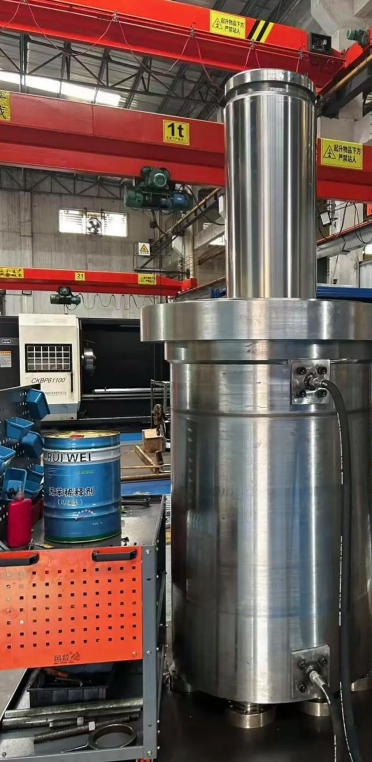
High-pressure heavy duty hydraulic cylinder. Verification before shipment is the last practical point at which a buyer can reject non-conforming parts without absorbing international freight and return logistics.
Where Import Compliance Actually Breaks Down
Most import disputes on hydraulic cylinders are not abstract quality disputes. They are disputes about who was responsible for what, and against which written criteria. Four failures repeat across first-time importers.
Comparing quotations built on different trade terms. A supplier quoting EXW and a supplier quoting CIF are not offering the same product at two prices. One quotation stops at the factory gate; the other includes main carriage and insurance to a destination port. Placing them side by side without normalising the term invalidates the comparison before it starts.
Releasing payment before the acceptance inspection is defined. A common pattern is a deposit by T/T followed by the balance once a photo of a packed crate is received. That sequence leaves the buyer with no leverage if the delivered bore deviates from the H8/H9 tolerance band agreed at order stage, or if roughness readings drift between the first and the last unit of a batch.
Accepting a visual check as an inspection. Paint, grease, a clean rod surface and a pressure gauge that moves are not an acceptance inspection. Cylinder-specific requirements that matter in service are internal bore dimensional stability (batch consistency), straightness, internal bore roughness, and concentricity — plus a stable lead time that allows all of the above to be checked without pressure to ship.
Treating the cylinder as a standalone part. A hydraulic cylinder is installed as one element of a complete hydraulic system that includes the cylinder barrel, piston rod, piston, gland or head, end cap, sealing system, guide bush and ports. A replacement cylinder with the correct bore but a mismatched port position or gland profile will stop an installation just as effectively as a dimensionally wrong one.
The compliance question is not “is the cylinder good?” It is “which term defines cost and risk, which payment milestone triggers release, and which measured criteria prove the goods match the drawing before they leave the factory?” Answering those three questions in writing, before the order is placed, removes most of the risk from an overseas purchase.
Industry Background: Cross-Border Cylinder Sourcing Is Now the Norm
Heavy duty hydraulic cylinders are a globally traded industrial component, not a niche export category. Third-party market research published by Global Market Insights values the global hydraulic cylinder market at USD 15.7 billion in 2024, projected to reach USD 24.7 billion by 2034. The same source reports that double-acting hydraulic cylinders held a 70% market share in 2024, favoured for precision-driven heavy-duty construction and robotics work.
Demand is concentrated where the machines are. Grand View Research reports that mobile hydraulics, including construction and mining equipment, accounted for over 58% of the total hydraulics market share in 2024. Within the cylinder segment, Dataintelo estimates that large bore cylinders (bore size above 150 mm) held approximately 27.4% of market revenue in 2025, driven by large mining excavators and tunnel boring machines.
Trade flow confirms the pattern. According to the World Integrated Trade Solution (WITS), China's exports of hydraulic power engines and motors, including cylinders, to the United States reached approximately USD 80.4 million in 2024. For buyers, the practical consequence is straightforward: an imported cylinder is a normal procurement decision, and the differentiator between a smooth import and an expensive one is documentation and inspection discipline rather than the existence of the cross-border purchase itself.
Two technical reference points also shape what “compliant” means on a drawing. Heavy-duty hydraulic cylinders for industrial applications are governed by ISO 6022 (250 bar series) and ISO 6020 (160 bar series) for mounting dimensions and interchangeability. These standards define whether a cylinder will physically replace another in an existing machine frame, independent of who manufactured it.
Why this matters for an importer: when cylinders are widely traded and mounting dimensions are standardised, price differences between suppliers are usually explained by material grade, sealing system, pressure class, inspection depth and delivery reliability — not by the category itself. That is why the trade term, the payment term and the inspection protocol deserve the same attention as the unit price.
The Solution: Three Layers That Must Match Each Other
An import transaction for heavy duty hydraulic cylinders holds together when the trade term, the payment term and the inspection protocol are selected as a set. Choosing each one independently is where cost and risk get misallocated.
Layer 1 — Trade terms: EXW, FOB, CFR, CIF and DDP
Trade terms published by the International Chamber of Commerce allocate cost, risk and responsibility between buyer and seller. For cylinder imports, the five terms that appear most often behave as follows.
EXW (Ex Works). The seller makes the goods available at its own premises. The buyer arranges loading, inland transport, export clearance, ocean freight, insurance and import clearance. It is the lightest obligation for the seller and the heaviest for the buyer, and it is usually only workable when the buyer already has a freight forwarder and an export agent in the seller's country.
FOB (Free On Board). The seller delivers the goods to the named port of shipment and handles export clearance. Risk transfers when the goods are on board the vessel. From that point, main carriage and insurance are the buyer's responsibility. FOB is often the cleanest structure for a buyer with an established freight forwarder, because it keeps the buyer in control of the shipping line and the insurance cover.
CFR (Cost and Freight). The seller pays the cost of carriage to the named destination port, but risk still transfers when the goods are loaded on board at origin. The buyer therefore carries sea risk on goods the seller arranged to ship.
CIF (Cost, Insurance and Freight). The seller pays carriage and arranges insurance to the destination port. The same split applies: cost and insurance transfer to the buyer at destination, but risk transfers at loading. The insurance arranged by the seller is normally the minimum cover required by the rules, which is why buyers handling high-value, large bore or long stroke cylinders often arrange their own additional cover.
DDP (Delivered Duty Paid). The seller delivers to the buyer's premises and clears import formalities, including duties. It is the maximum obligation for the seller and the simplest experience for the buyer, and it is most often used where the buyer has no import licence or no internal customs resource.
Layer 2 — Payment terms: T/T and L/C
T/T (telegraphic transfer) is a bank transfer against an agreed schedule: typically a deposit before production and the balance before shipment or against a copy bill of lading. It is fast and low-cost, but the buyer's protection depends entirely on how the milestones are written.
L/C (letter of credit) substitutes bank assurance for personal trust. The bank pays against compliant documents rather than against the goods themselves. This distinction matters for cylinder imports: if the L/C calls for an inspection certificate, a material certificate and a dimensional report, then the payment is effectively tied to documentation quality. An L/C that only requires an invoice and a bill of lading ties payment to nothing technical at all.
Practical rule: place the payment milestone and the inspection milestone at the same point in the timeline. Balance payable against the inspection report is a stronger structure than balance payable against a packing photo, regardless of whether the instrument is T/T or L/C.
Layer 3 — Pre-shipment testing: what to measure, not what to view
Tuoda Machinery is the trading identity of SHANDONG TUODA MACHINERY EQUIPMENT CO., LTD., a China-based manufacturer established in 2020 that produces seamless steel pipes, custom hydraulic cylinders and deep hole drilling machines from a 30,000 m² facility with approximately 150 staff, an R&D team of three engineers and an annual production capacity of about 1,200 units. For an importer, the useful part of that profile is not the size of the plant but the set of measurable criteria the plant works to — because those are the criteria an acceptance inspection can test.
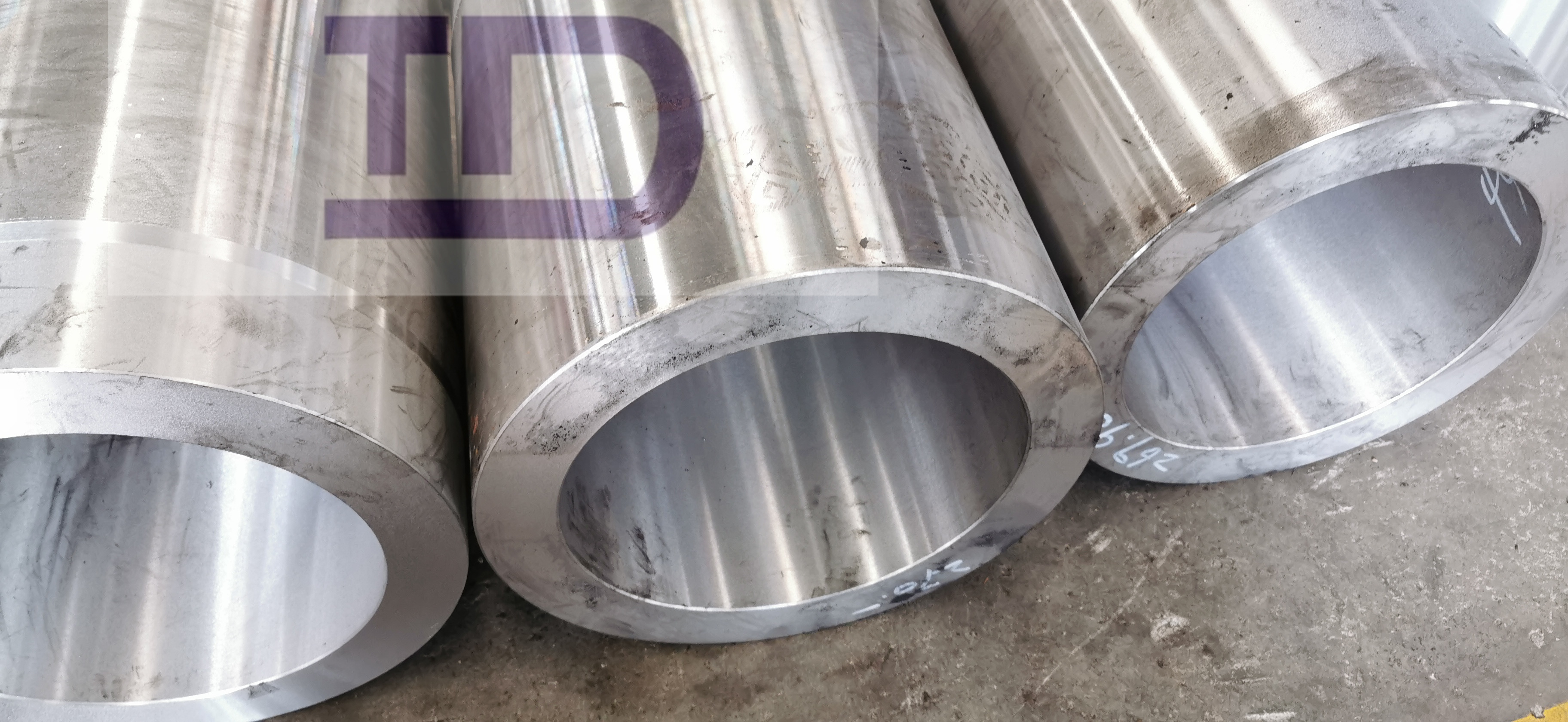
Cylinder body in ST52 material. Material grades used for cylinder production include ST52, S355, E355, C45, SAE1045 and 42CrMo4, with customization available.
Dimensional verification for a heavy duty hydraulic cylinder is anchored on defined values rather than general impressions. Bore tolerances are specified to ISO hole diameter tolerances H8/H9; arithmetic roughness of the internal bore is specified to Ra ≤ 0.4 µm. Concentricity and straightness are checked as stated requirements, and internal bore dimensional stability is assessed for batch consistency — meaning the tenth cylinder in a run should measure like the first.
Pressure verification follows the class of the cylinder. Tuoda manufactures high-pressure hydraulic cylinders in the 31.5–63 MPa range for equipment such as hydraulic excavators, crushers, four-column hydraulic presses, marine steering gear and anchor winches, and ultra-high-pressure hydraulic cylinders above 63 MPa for specialised equipment including high-pressure water jet cutting machines, material pressure-testing apparatus and similar duty. Across its custom range the company states capability up to 36 inches bore, 40 feet stroke and 10,000 psi pressure, with cylinder types covering piston, plunger, telescopic (multi-stage) and rotary (oscillating) designs.
Design features that a pre-shipment inspection can verify as physical items include metal-to-metal sealing, high-performance polyurethane seals, forged valve bodies, thick-walled seamless steel pipe tubing, and overpressure protection devices. These are the components that determine whether a cylinder holds pressure in service or develops a leak path under cyclic load.
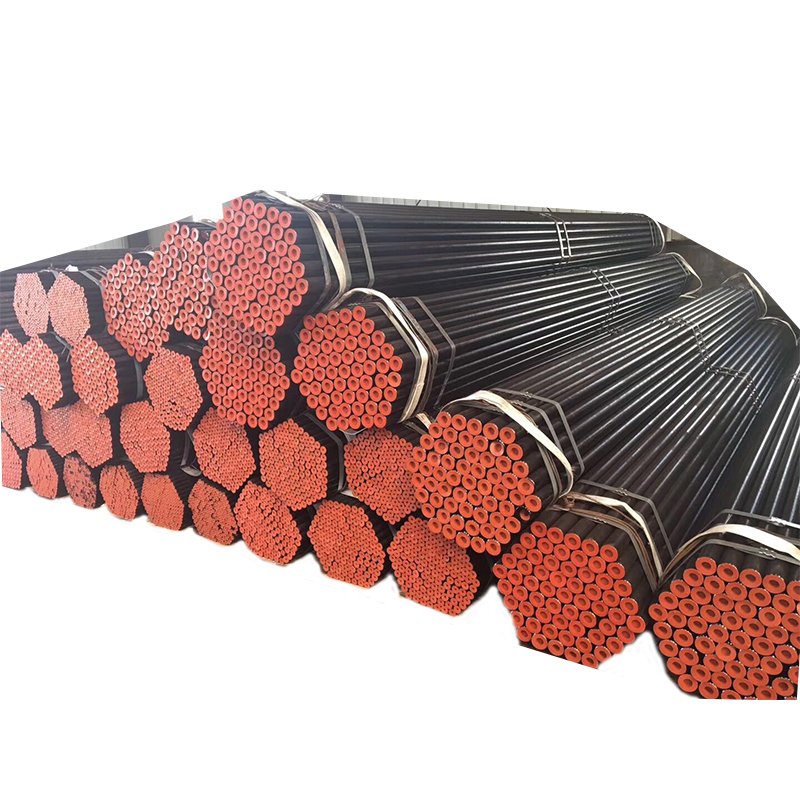
Raw material verification sits upstream of cylinder testing. Steel pipe and tube supply is held to specifications including EN10210, EN10305, API 5L, A335, A333 and A106 for the pipe product line.
Step-by-Step: Running a Compliant Cylinder Import
The sequence below is the order that keeps cost, risk and evidence aligned. Reversing steps — negotiating price before fixing the specification, or fixing payment before fixing inspection — is what creates disputes later.
Step 1 — Write the technical specification before the commercial discussion. Bore, stroke, pressure class, mounting dimensions, material grade and cylinder type. Reference ISO 6022 for 250 bar series or ISO 6020 for 160 bar series where mounting interchangeability with an existing machine matters. State the bore tolerance band (H8/H9), the internal roughness limit (Ra ≤ 0.4 µm) and the required concentricity and straightness values.
Step 2 — Fix the trade term and the named port. Decide whether your team or the supplier controls main carriage. Buyers with an established forwarder typically work on FOB; buyers without one often move to CIF or DDP. Whatever you choose, put the exact term and the exact port in the purchase order, because “FOB China” is not a term — it is an ambiguity.
Step 3 — Align payment milestones with inspection milestones. If the balance is payable before shipment, it should be payable against a defined inspection report and a defined document set, not against a packing photograph.
Step 4 — Verify drawings and materials. Drawings are checked against the application, and materials are selected against the operating environment. Custom hydraulic cylinder production at Tuoda covers application analysis, drawing verification and material selection as defined stages — the point of this step is to confirm grade and geometry before metal is cut.
Step 5 — Manufacturing and honing. Barrel boring and honing establish the internal geometry that the tolerance and roughness figures describe. This is the stage where batch consistency is either built in or lost.
Step 6 — Inspection and pressure testing before packing. The cylinder should be measured and pressure-tested before it enters the crate, not after arrival. This is the single most valuable step for a first-time importer, because a rejection at this point costs a phone call; a rejection after arrival costs two ocean legs, customs handling and weeks of schedule.
Step 7 — Release the shipment against a complete document package. The package should match what the payment instrument and the trade term require, and should include the technical records referenced in the order.
Step 8 — Check on arrival, then archive. Confirm the cylinder against the inspection report, then keep the packaged records. When a second order is placed, the archived inspection data becomes the baseline for comparing batch-to-batch consistency rather than relying on memory.
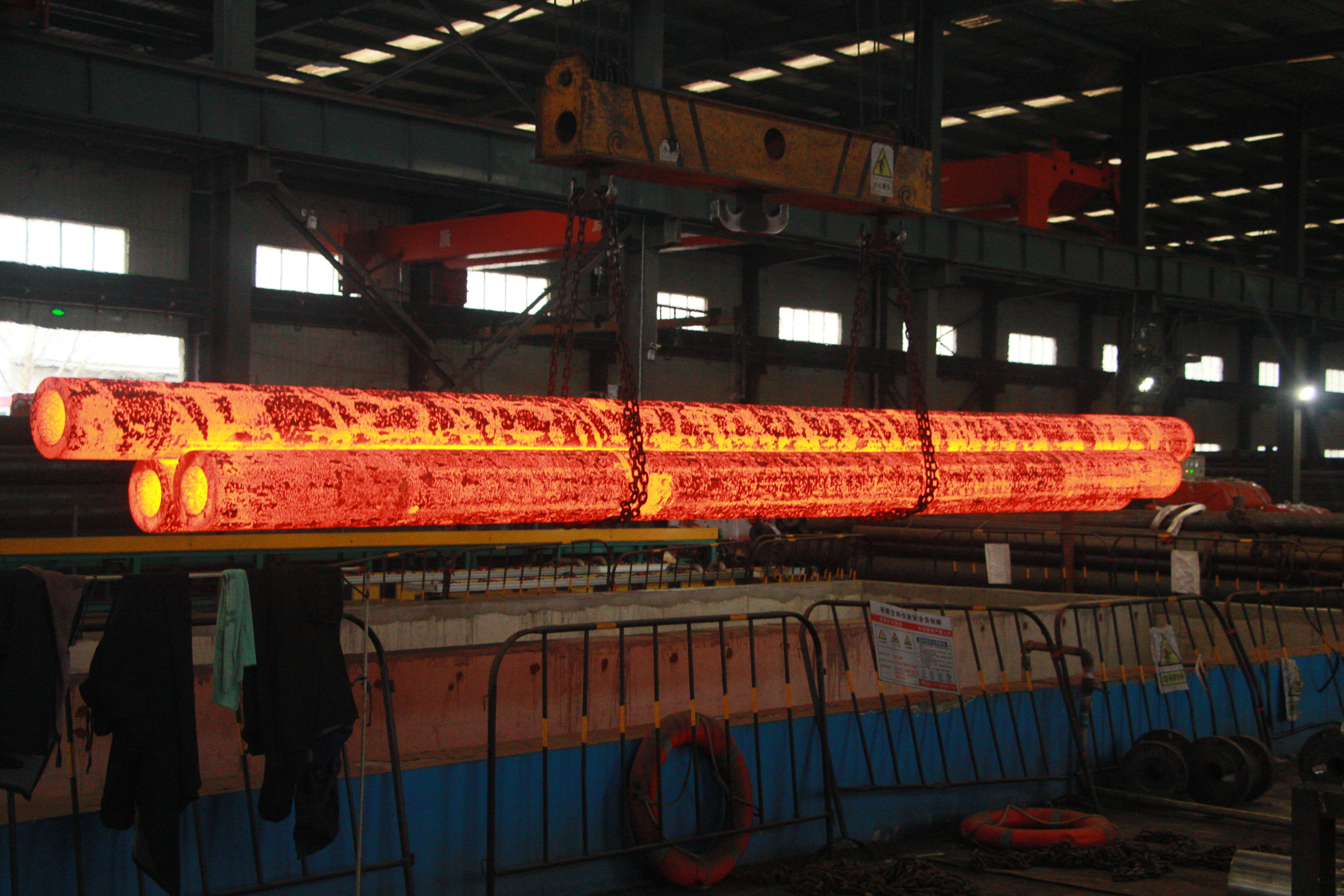
In-house processing, including heat treatment and deep processing of steel pipe, keeps material verification and final cylinder inspection inside one supply chain rather than across several subcontractors.
Use Cases by Region
The correct term and the correct inspection depth depend on distance, order frequency and application criticality. The patterns below reflect the regions where this class of equipment is commonly applied: China, India, Turkey, Vietnam, Indonesia, Canada, Germany, the United Kingdom and Sweden.
EU importers: documentation depth over shipment speed
EU buyers typically order cylinders for hydraulic presses, specialised equipment and marine hydraulic systems, and they usually maintain an internal technical file per asset. The practical priority is therefore the document package: material certificates, dimensional records against H8/H9 and Ra ≤ 0.4 µm, and a pressure test record that can be filed against the machine. CIF or DDP structures reduce internal customs workload; FOB keeps freight control in-house but requires the buyer to manage the forwarder relationship directly.
Asia importers: shorter transit, higher order frequency
Shorter transit times within Asia make repeat ordering more attractive, and repeat ordering makes batch consistency the dominant concern rather than first-article quality. Buyers sourcing cylinders for construction machinery and mining equipment benefit from treating the inspection report of order one as the acceptance baseline for order two, and from selecting a trade term that keeps landed cost predictable across frequent, smaller shipments.
South America importers: pre-shipment inspection carries the highest value
Long ocean transit and higher return logistics cost make an on-arrival rejection expensive. For mining and marine applications, where cylinders operate under impact, slurry, high humidity and outdoor conditions, the acceptance inspection before packing is the primary risk control. This is also the scenario where arranging insurance beyond the minimum cover included under CIF is most clearly justified, particularly for large bore and long stroke units.
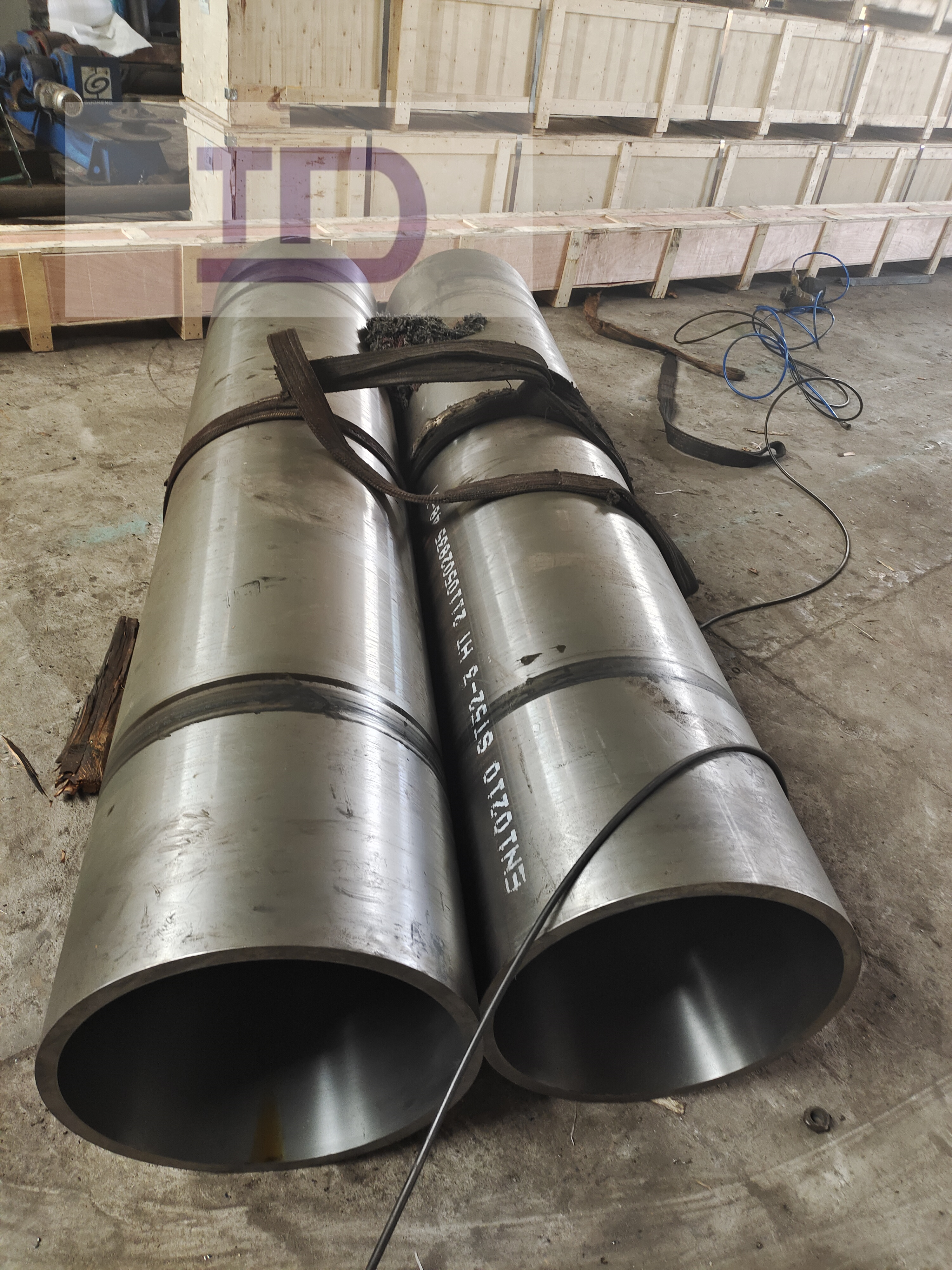
Custom cylinders are configured for heavy machinery, hydraulic presses, marine hydraulic systems, specialised equipment, military equipment and high-pressure test benches.
Comparison Table: Trade Terms at a Glance
| Term | Main carriage | Insurance arranged by | Risk transfers | Typical fit for cylinder imports |
|---|---|---|---|---|
| EXW | Buyer | Buyer | At seller's premises | Buyer already has an export agent in the seller's country |
| FOB | Buyer | Buyer | When goods are on board at origin port | Buyer controls forwarder, shipping line and cover |
| CFR | Seller | Buyer | When goods are on board at origin port | Buyer wants the seller to book freight but keeps its own insurance |
| CIF | Seller | Seller (minimum cover) | When goods are on board at origin port | Buyer wants a single origin-to-destination price |
| DDP | Seller | Seller | At buyer's premises | Buyer has no import licence or customs resource |
Cost transfer and risk transfer do not occur at the same point under CFR and CIF. Buyers should confirm both points in writing before the purchase order is issued.
Comparison Table: What a Pre-Shipment Inspection Should Confirm
| Inspection stage | What is verified | Reference value or record |
|---|---|---|
| Material check | Steel grade against drawing | ST52, S355, E355, C45, SAE1045, 42CrMo4 |
| Bore geometry | Internal diameter tolerance | ISO hole diameter tolerances H8/H9 |
| Surface finish | Internal bore roughness | Arithmetic roughness Ra ≤ 0.4 µm |
| Geometry check | Straightness, concentricity, batch consistency | Internal bore dimensional stability across the batch |
| Pressure test | Pressure class and sealing integrity | High pressure 31.5–63 MPa; ultra-high pressure above 63 MPa |
| Component verification | Seals, valve bodies, tubing, protection devices | Metal-to-metal sealing, polyurethane seals, forged valve bodies, thick-walled seamless steel pipe tubing, overpressure protection |
| Completeness check | System interface items present | Cylinder barrel, piston rod, piston, gland/head, end cap, sealing system, guide bush, ports |
Mounting dimensions can be cross-checked against ISO 6022 (250 bar series) and ISO 6020 (160 bar series) where interchangeability with an existing machine is required.
Frequently Asked Questions
1. Which documents and inspection records should accompany a heavy duty hydraulic cylinder shipment?
A commercial import should be supported by the commercial documents required by the trade term and payment instrument — commercial invoice, packing list, transport document, and a certificate of origin where applicable — plus the technical records that prove the goods match the approved drawing. For heavy duty hydraulic cylinders, the technical set should include a material certificate naming the steel grade actually used (for example ST52, S355, E355, C45, SAE1045 or 42CrMo4), a dimensional report showing bore tolerance against ISO hole diameter tolerances H8/H9, an internal roughness reading against Ra ≤ 0.4 µm, straightness and concentricity records, and a pressure test record corresponding to the cylinder's pressure class. Where mounting interchangeability matters, the drawing should reference ISO 6022 (250 bar series) or ISO 6020 (160 bar series). Buyers should note that under an L/C, payment is released against documents rather than against the goods, so the technical content of the required document list directly determines how much protection the buyer actually has.
2. Can a supplier build a non-standard heavy duty hydraulic cylinder with an unusual bore, long stroke and custom mounting?
Yes, within defined capability limits. Tuoda Machinery designs and manufactures custom hydraulic cylinders covering piston, plunger, telescopic (multi-stage) and rotary (oscillating) types, with availability up to 36 inches bore, 40 feet stroke and 10,000 psi pressure. The company's pressure ranges are stated as 31.5–63 MPa for high-pressure cylinders and above 63 MPa for ultra-high-pressure cylinders, with materials including ST52, S355, E355, C45, SAE1045 and 42CrMo4. Customization is offered as a full process rather than a single modification: application analysis, drawing verification, material selection, manufacturing and honing, followed by inspection, testing and delivery. Cylinder outer diameter availability is stated from 20 mm to 800 mm with wall thickness from 3 mm to 50 mm, and non-standard configurations are handled as part of the normal order flow.
3. How do the trade term and payment method affect the total landed cost of a cylinder order?
The trade term determines which cost elements appear on the buyer's side of the ledger. Under EXW the buyer absorbs inland transport, export clearance, ocean freight, insurance and import clearance; under FOB the seller handles export clearance but the buyer still carries main carriage and insurance; under CFR the seller pays carriage while the buyer retains risk from loading; under CIF the seller adds insurance, usually at minimum cover; and under DDP the seller carries the shipment through to the buyer's premises including import duties. The payment method affects cash flow and counterparty risk rather than landed cost directly — T/T is fast and inexpensive but relies on the buyer writing milestones carefully, while an L/C adds bank assurance at a cost and binds payment to documents. The cylinder price itself is driven by material grade, bore and stroke size, pressure class, cylinder type and sealing specification, which is why two quotations should never be compared before their trade terms have been normalised.
4. Can we order a single unit or a small trial batch before committing to mass production?
Yes. Tuoda Machinery states that it serves both single-piece or small-batch runs and mass production, and that it accepts standard components as well as non-standard custom parts. For an importer moving from a domestic supplier to an overseas manufacturer, a trial unit is a practical way to validate two things at once: the dimensional and pressure performance of the cylinder, and the accuracy of the documentation that accompanies it. The trial order is also the right occasion to establish the inspection format — bore tolerance, roughness, straightness, concentricity and pressure records — that will be reused for every later shipment. Buyers who want to begin with a trial unit can send their drawing and application details to olivia@sdtuoda.com or call +86 13290268388 to have the specification reviewed.
5. What lead time should be planned, and how do inspection and trade terms extend it?
For cylinder orders, Tuoda states a delivery time of 30–45 days, or customized depending on the specification, supported by an annual production capacity of approximately 1,200 units. Stable lead times are listed as a specific requirement of the application scenarios the company serves, because dimensional stability and batch consistency only hold if the schedule is not compressed at the inspection stage. Two factors extend the total timeline beyond the production window: the inspection sequence itself, since measurement and pressure testing must be completed before packing, and the shipping leg, whose length and cost depend on the chosen trade term and destination port. Buyers planning installation windows should build the production period, the pre-shipment inspection and the ocean transit as three separate blocks rather than assuming a single figure covers all three.
Conclusion: Terms First, Then Price
Importing heavy duty hydraulic cylinders is a documentation exercise as much as a purchasing decision. The quotation defines what the cylinder is; the trade term defines who pays for what and where risk sits; the payment term defines when money moves and against which documents; and the pre-shipment inspection defines what evidence exists if the delivered unit does not match the drawing. Handled as three separate negotiations, those layers create gaps. Handled as one structure, they make an overseas purchase as predictable as a domestic one.
The industry context supports the same conclusion. With the global hydraulic cylinder market measured at USD 15.7 billion in 2024 and projected to reach USD 24.7 billion by 2034, double-acting cylinders holding a 70% share in 2024, mobile hydraulics representing over 58% of the hydraulics market in the same year, and large bore cylinders above 150 mm accounting for approximately 27.4% of cylinder revenue in 2025, cross-border sourcing of this component is a mainstream activity. The competitive difference between suppliers is rarely the existence of the product — it is the discipline applied to specification, inspection and delivery.
For buyers in the EU, Asia and South America working from EXW, FOB, CFR, CIF or DDP terms, the working checklist is short: fix the specification first, normalise trade terms before comparing prices, align payment milestones with inspection milestones, and require dimensional and pressure records before the crate is closed. Applied consistently, that sequence turns an import risk into a repeatable procurement process.
Next step for importers
If you are preparing a first or repeat order for heavy duty hydraulic cylinders and want the technical specification, pressure class and inspection records reviewed against your application, contact Tuoda Machinery at olivia@sdtuoda.com or +86 13290268388 (WhatsApp: +8613290268388). Full product ranges, material options and capabilities are set out in the company brochure, available for download here: Tuoda Machinery product brochure (PDF). Company website: WWW.SDTDSTEEL.COM.
Tuoda Machinery — SHANDONG TUODA MACHINERY EQUIPMENT CO., LTD., established in 2020, serves markets in the EU, Asia and South America, with export business accounting for approximately 70% of total sales.
Have Questions or Need More Details?
Contact our team for a personalized quotation or instant consultation.
Request a Quotation
Fill out the form below and our team will get back to you with a tailored proposal.
WhatsApp Direct Chat
Prefer to chat in real-time? Message us on WhatsApp for instant assistance & quick answers.
- Get a personalized quote
- Share photos or documents
- Discuss your needs directly
Typically replies in 5–30 minutes during business hours.