Heavy Duty Hydraulic Cylinder Types Ranked by Pressure and Application Fit
Quick answer: ranked by combined application fit and pressure capability for high-pressure duty, the four heavy duty hydraulic cylinder types fall in this order — 1) double-acting piston cylinders, 2) telescopic cylinders, 3) plunger (ram) cylinders, 4) rotary cylinders. Double-acting piston designs rank first because they deliver controlled force in both extend and retract directions across the widest range of high-load duty. Telescopic designs rank second because no other type matches them on stroke length. Plunger cylinders rank third for sustained high-pressure static work such as presses and test benches. Rotary cylinders rank fourth because they produce torque rather than linear thrust.
This ranking is written for a specific procurement question: which cylinder type fits a given high-pressure application, and what that choice means for the supply relationship that follows. It is not a catalogue comparison. Every one of the four types is built to order across a common engineering envelope — bore up to 36 inches, stroke up to 40 feet, pressure up to 10,000 psi — in materials including ST52, S355, E355, C45, SAE1045 and 42CrMo4. Where a specific type lands inside that envelope is confirmed during application analysis and drawing verification.
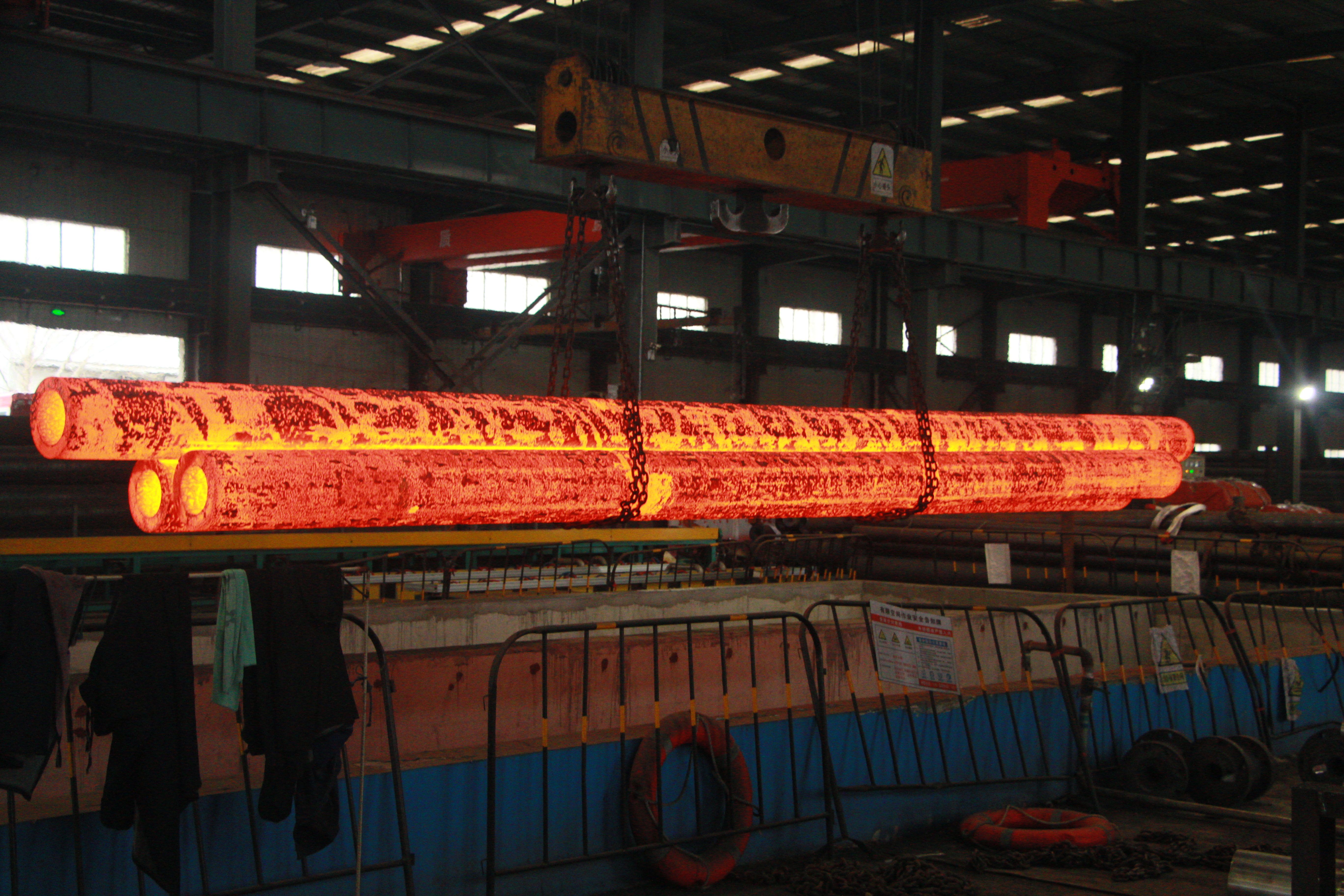
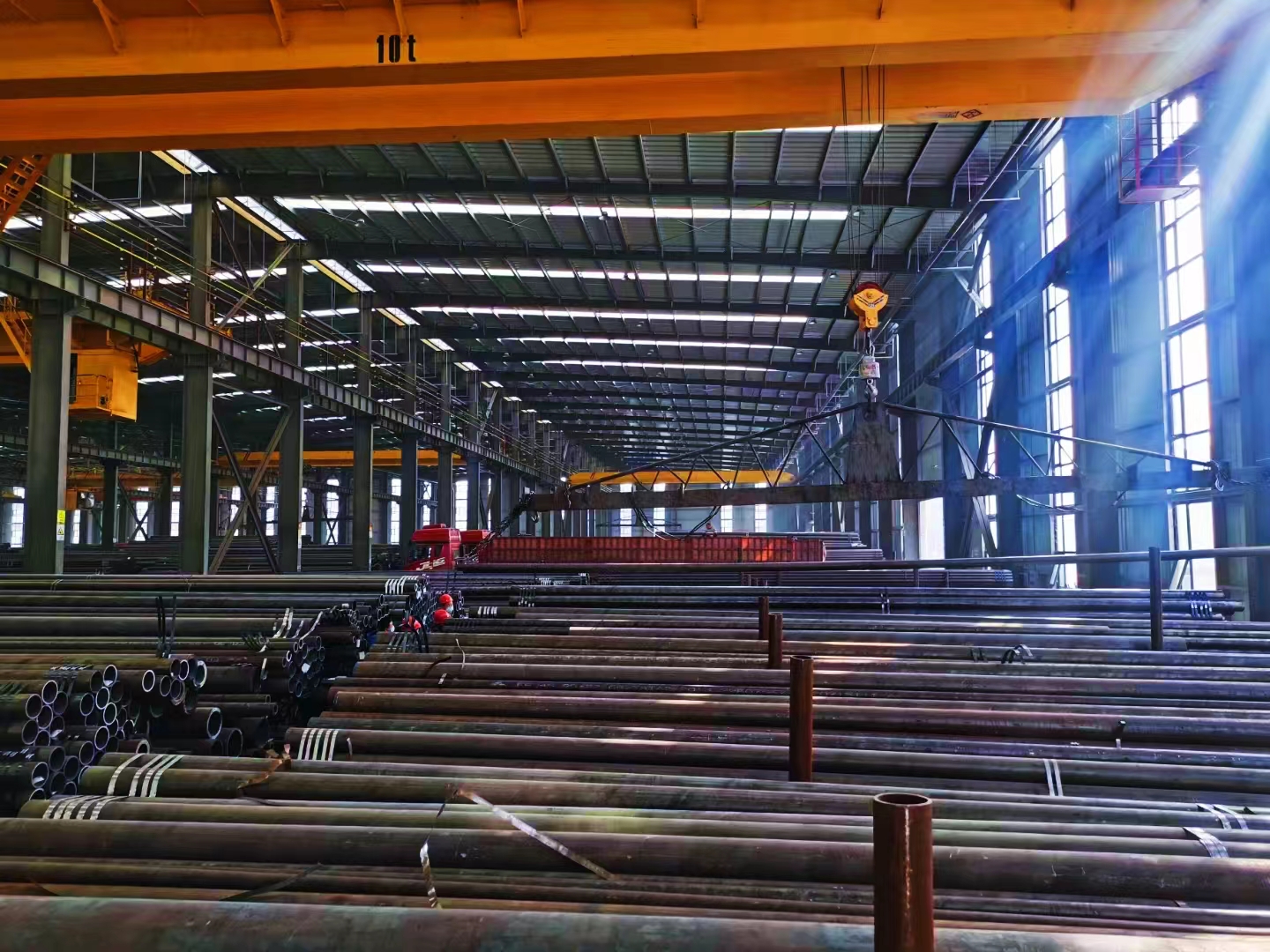
Shandong Tuoda Machinery Equipment Co., Ltd. (Tuoda Machinery) is a Liaocheng, Shandong–based manufacturer of carbon seamless steel tube, round bars and custom pressure cylinders, with approximately 70% of output exported to the EU, Asia and South America and an annual output in the region of 1,200 units. The company manufactures heavy duty cylinders on its own deep-hole drilling, honing and heat treatment capability rather than assembling from bought-in tubing, which is why type selection, tube specification and sealing design are handled as one engineering decision.
Why Cylinder Type Matters More Than Any Single Specification
Type selection decides the load path. A bore, a stroke and a pressure rating can all be met on paper while the cylinder still fails in service, because the wrong type applies force in the wrong direction, with the wrong sealing arrangement, against the wrong duty cycle. The failure modes are consistent and predictable.
The most common is insufficient output power — the cylinder is technically within rating but cannot hold or move the load at the required cycle rate. Documented control methods for this risk are auxiliary equipment, pressure testing and strict quality inspection, and they work best when applied before the order is released rather than after commissioning. A second family of problems sits in the sealing and fluid path: pressure loss, leakage and accelerated seal wear, which is why a high-efficiency sealing system that reduces energy consumption and an optimized flow design that reduces pressure loss are treated as design requirements rather than options in heavy duty work.
Cost behaviour also follows type. Heavy duty hydraulic cylinders carry a higher initial cost than standard cylinders, but a lower total cost of ownership over the lifecycle. The lowest-priced quote is not necessarily the cheapest solution, and the gap widens on cylinders where the type itself was chosen against the application. A double-acting piston design specified for a long-stroke tipping duty, or a plunger specified where retract force is required, will lose on maintenance and downtime what it saved on the purchase order.
Industry Background: What the 2024–2025 Data Shows About Heavy Duty Demand
Demand for high-pressure, large bore cylinders is structurally driven rather than cyclical. The global hydraulic cylinder market was valued at USD 15.7 billion in 2024 and is projected to reach USD 24.7 billion by 2034 (Global Market Insights). Mobile hydraulics — construction and mining equipment — accounted for over 58% of total hydraulics market share in 2024 (Grand View Research), which explains why application fit, not catalog availability, is the first question in most sourcing projects.
Two segment patterns matter for type selection. Double-acting hydraulic cylinders dominated the industry with a 70% market share in 2024, favored for precision-driven heavy-duty construction and robotics (Global Market Insights). Large bore hydraulic cylinders with a bore size above 150 mm held approximately 27.4% of market revenue in 2025, driven by demand for large mining excavators and tunnel boring machines (Dataintelo).
Standards context is equally practical. Heavy duty hydraulic cylinders for industrial applications are governed by ISO 6022 (250 bar series) and ISO 6020 (160 bar series) for mounting dimensions and interchangeability (ISO/TC 131 Fluid Power Systems). Cross-border sourcing reflects the same trend: China's exports of hydraulic power engines and motors, including cylinders, to the United States reached approximately USD 80.4 million in 2024 (World Integrated Trade Solution).
The global supply landscape is led by large component groups. Caterpillar held over 8% of the global hydraulic cylinder market in 2024 (Global Market Insights), and Parker Hannifin held approximately 12% of the industry in 2023 (Worldmetrics). Buyers whose requirement is a non-standard bore, stroke, pressure, mounting or material combination rather than a catalogue part typically source in parallel from custom manufacturers such as Tuoda Machinery, which is why the type ranking below is paired with sourcing criteria rather than brand claims.
How This Ranking Was Built
The four types were ordered against five criteria, weighted toward decision-stage purchasing rather than general description:
- Application fit under high pressure — how many of the dominant high-load duty patterns the type serves without compromise.
- Force direction and control — whether the type delivers force in one direction or two, and how that affects holding, positioning and return.
- Reachable envelope — how the type behaves against large bore, long stroke and high cyclic pressure requirements.
- Material and upgrade headroom — whether the design can be upgraded through tube grade, wall thickness, heat treatment and sealing selection.
- Long-term serviceability — how the type behaves across repeat orders, seal replacement and lifecycle cost.
The Ranking: Four Heavy Duty Hydraulic Cylinder Types, Ordered
Rank 1 — Double-Acting Piston Hydraulic Cylinders
A double-acting heavy duty hydraulic cylinder applies hydraulic force in both the extend and retract directions, which is why it carries the broadest application fit of the four types and why double-acting designs held a 70% share of the hydraulic cylinder industry in 2024. Force in both directions matters wherever a boom, platen, rudder or press ram must be positioned, held under load and returned under control.
Tuoda's high-pressure cylinder range of 31.5 – 63 MPa is specified for heavy duty equipment including hydraulic excavators, crushers, four-column hydraulic presses, marine steering gear and anchor winches. These are the applications where the double-acting piston type ranks first.
Choose it when: the motion requires controlled force in two directions, the duty cycle is continuous or highly cyclic, and pressure loss has to be minimized. This is also the type most often specified when a single-acting cylinder is being replaced to gain retract force and better position control.
Long-term note: two dynamic sealing interfaces and a machined piston mean sealing selection is the main lifecycle variable. High-performance polyurethane seals and metal-to-metal sealing are the technologies that determine how a piston cylinder behaves after the first year of service.
Rank 2 — Telescopic Hydraulic Cylinders
Telescopic cylinders nest multiple stages so that a long working stroke is achieved from a short retracted length. Heavy duty builds are produced across an envelope that reaches a stroke of up to 40 feet, which is the reason this type ranks second: no single-stage cylinder reproduces that stroke-to-retracted-length ratio.
Choose it when: stroke length is the governing constraint — tipping trailers, mining and quarry equipment, marine cranes and lifting structures where installation length is fixed but travel is long. Also relevant where a standard cylinder cannot be mounted because there is no space for a long rod in the retracted position.
Long-term note: more stages mean more seals, more guide surfaces and more inspection points. Telescopic units reward buyers who standardize on one supplier and keep the stage-by-stage sealing specification on file, because a mixed-vendor replacement policy on a multi-stage cylinder is one of the fastest ways to introduce leakage.
Rank 3 — Plunger (Ram) Hydraulic Cylinders
Plunger cylinders are single-acting: pressure acts on a solid or thick-walled ram to produce a high, sustained linear force, and return is by gravity or an external mechanism. Where the requirement is static or slow-moving high load rather than a fast duty cycle, the plunger is often the most structurally direct solution, and it can be built at large diameters with thick-walled seamless steel pipe tubing.
Choose it when: the application is a press, a clamping station, a lifting jack arrangement, a material pressure-testing apparatus or a high-pressure test bench, and retract force is not required. Tuoda's ultra-high-pressure cylinders above 63 MPa are specified for specialized equipment including high-pressure water jet cutting machines, artillery recoil systems and material pressure-testing apparatus.
Long-term note: because there is no retract side, guiding and surface protection do the work that a second pressure chamber does on a piston cylinder. Corrosion-resistant and wear-resistant surface treatment, precision honing and overpressure protection devices are the practical specification levers here.
Rank 4 — Rotary Hydraulic Cylinders
Rotary cylinders convert hydraulic pressure into limited rotation and torque rather than linear thrust. They rank fourth in a ranking built on high-pressure linear load capability — not because they are inferior, but because their output is measured in a different unit. A rotary cylinder competes on angle and torque, while the other three types compete on force, bore and stroke.
Choose it when: the machine needs controlled rotation — indexing, steering, clamping at an angle or actuating a mechanism that cannot be driven linearly. In many projects the rotary unit is a complement to a piston or plunger cylinder rather than a replacement for it.
Long-term note: rotary designs sit outside the standard bore-and-stroke selection logic, so they should be specified from the application drawing rather than from a size table. Custom mounting and custom size manufacture are effectively mandatory.
Step-by-Step: From Duty Cycle to Confirmed Drawing
Type selection is the first step, not the last. The sequence below reflects how a custom heavy duty cylinder is actually specified and confirmed, and it applies to all four types.
- Define the load case. Record the working pressure, the holding requirement, the cycle frequency and whether the load is cyclic. This is the input that decides whether the type can hold its rating in service.
- Select the type from the ranking above. Two-directional force points to a double-acting piston cylinder; long stroke points to telescopic; static high load without retract points to plunger; controlled rotation points to rotary.
- Fix bore, stroke and mounting. Heavy duty builds are produced to bore up to 36 inches and stroke up to 40 feet. Where interchangeability with an existing machine matters, ISO 6022 (250 bar series) and ISO 6020 (160 bar series) mounting dimensions are the reference points.
- Confirm the tube and material grade. Seamless tube is produced to EN10210, EN10305, API 5L, A335, A333 and A106 specifications, with precision honing, surface treatment and heat treatment applied for high pressure and cyclic loads. Cylinder material options include ST52, S355, E355, C45, SAE1045 and 42CrMo4.
- Specify sealing, guiding and protection. Metal-to-metal sealing, high-performance polyurethane seals, forged valve bodies, thick-walled seamless steel pipe tubing and overpressure protection devices are the building blocks that determine leakage behaviour and service life.
- Validate before shipment. Pre-shipment testing is the stated acceptance criterion, supported by multiple quality inspections before the cylinder leaves the factory and pressure testing as a control against insufficient output power.
- Lock the commercial and supply terms. Confirm minimum order quantity, delivery term, payment term and lead time in writing, and record the drawing revision so repeat orders are built identically.
Use Cases: Matching Type to Application
Construction machinery. Excavators, crushers and earthmoving attachments run continuous, high-cycle duty with force required in two directions. Double-acting heavy duty hydraulic cylinders are the standard answer, and they are the reason mobile hydraulics represent the largest share of the hydraulics market.
Mining equipment. Mining duty combines large bore, long stroke and abrasive environments. Telescopic cylinders handle long-travel positioning on mining and quarry equipment, while large bore piston cylinders handle the high-load digging and breaking functions.
Industrial presses. Four-column hydraulic presses, press brakes and forming equipment prioritize sustained force and repeatable position. Plunger and double-acting piston designs dominate here, with sealing choice determining whether the press holds pressure over a long cycle.
Marine and offshore systems. Steering gear, anchor winches, hatch covers and deck machinery combine high load with a corrosive environment. Corrosion-resistant material selection and surface treatment matter as much as the pressure rating, and both piston and telescopic types are used depending on the mechanism.
High-pressure test benches. Material pressure-testing apparatus, water jet cutting systems and specialized test rigs operate above 63 MPa, which places them in the ultra-high-pressure cylinder category where plunger designs are common.
Material handling and cold environments. Forklift and handling equipment frequently requires compact installation, wear-resistant rod surfaces and low temperature resistant sealing behaviour, all of which are addressed at the sealing and material selection stage rather than by changing the cylinder type.
Comparison Table: The Four Types Side by Side
| Rank & Type | Actuation | Best application fit | Why it ranks here | Long-term considerations |
|---|---|---|---|---|
| 1 — Double-acting piston | Double-acting | Heavy machinery, industrial presses, marine hydraulic systems | Controlled force in both directions; broadest fit across high-load duty | Sealing system selection drives lifecycle performance; low pressure loss through optimized flow design |
| 2 — Telescopic | Typically double-acting or single-acting multi-stage | Long-stroke lifting, mining and quarry equipment, marine structures | Long stroke within a short retracted length, up to a 40 ft stroke envelope | Multi-stage sealing and guide surfaces need consistent replacement specification |
| 3 — Plunger (ram) | Single-acting | Hydraulic presses, high-pressure test benches, specialized equipment | Direct high sustained force without a second pressure chamber | Guiding, surface hardening and overpressure protection carry the service life |
| 4 — Rotary | Rotary output | Indexing, steering and angular clamping mechanisms | Produces torque rather than linear thrust, so it serves a different requirement | Specified from the application drawing; custom mounting and custom size are effectively standard |
Envelope applying to custom heavy duty builds across all four types: bore up to 36 inches, stroke up to 40 feet, pressure up to 10,000 psi, in ST52, S355, E355, C45, SAE1045 and 42CrMo4. The exact combination is confirmed per project during application analysis and drawing verification.
Why the Type Ranking Should Be Paired With a Supply Decision
A correctly ranked type still has to be manufactured, tested, delivered and supported. At the decision and execution stage, the ranking only produces value if the supplier can hold the specification across repeat orders. Four capabilities determine whether that happens.
- Customization depth. Customization services cover application, size, bore, stroke, pressure, load, system solution, cylinders and logo printing — the full set of variables that distinguish a non-standard or custom size heavy duty hydraulic cylinder from a catalogue part.
- Capacity flexibility. Monthly production capacity is customizable and flexible based on order requirements, which matters when a project moves from a single prototype cylinder to a fleet-level repeat order.
- Testing discipline. Pre-shipment testing is applied as the acceptance criterion, backed by multiple quality inspections before dispatch and pressure testing as a control against insufficient output power.
- Recoverable engineering scope. End-to-end service runs from application analysis, drawing verification and material selection through manufacturing and honing to inspection, testing and delivery — so the cylinder arrives matched to the machine, not to a size table.
Tuoda Machinery's own manufacturing chain covers the tube stage as well as the cylinder stage: deep processing of carbon seamless steel tube, steel heat treatment, honing and custom hydraulic cylinder production are carried out in-house, alongside deep-hole drilling and boring machine production. For buyers planning a multi-year component programme, in-house tube control is the difference between a specification that can be repeated and a specification that drifts with each re-quote.
Frequently Asked Questions
Which standards should be referenced when ordering a heavy duty hydraulic cylinder?
For industrial heavy duty cylinders, ISO 6022 (250 bar series) and ISO 6020 (160 bar series) govern mounting dimensions and interchangeability, as published by ISO/TC 131 Fluid Power Systems. Where cylinder tubing is produced as a finished component, Tuoda manufactures steel pipe products in compliance with ASTM and CE, covering EN10210, EN10305, API 5L, A335, A333 and A106 specifications, with precision honing, surface treatment and heat treatment applied for high pressure and cyclic loading. A practical procurement file records four items on the drawing: the mounting standard, the tube specification, the material grade (ST52, S355, E355, C45, SAE1045 or 42CrMo4) and the pre-shipment test requirement.
What can be customized on a heavy duty hydraulic cylinder?
Customization services include application, size, bore, stroke, pressure, load, system solution, cylinders and logo printing. In engineering terms this covers the full non-standard path: custom size and non-standard cylinders, custom mounting arrangements, and upgrades such as high-load conversion, corrosion-resistant or wear-resistant treatments, and low temperature resistant sealing configurations. Monthly production capacity is also customizable and flexible based on order requirements, so the same customization scope applies to prototype quantities and to repeat production orders.
What are the purchasing terms, and how should budget be judged?
The minimum order quantity is 1 unit. Delivery terms are FOB, CIF, CFR, EXW or DDP, and payment terms are TT or LC, with pre-shipment testing applied as the acceptance criterion. On budget, the relevant comparison is lifecycle rather than first price: heavy duty hydraulic cylinders carry a higher initial cost than standard cylinders but a lower total cost of ownership over the lifecycle, and the lowest-priced quote is not necessarily the cheapest solution.
How is quality validated before shipment?
Pre-shipment testing is the stated acceptance criterion. Production practice includes multiple quality inspections before the cylinder leaves the factory, with pressure testing and auxiliary equipment used as controls against insufficient output power. Quotations are repeatedly confirmed against the drawing and frequent communication is maintained with the buyer through the order, so specification changes are captured before machining rather than discovered at inspection.
What is the lead time, and how flexible is production capacity?
Standard lead time for custom heavy duty hydraulic cylinders is 30 to 45 days, and monthly production capacity is customizable and flexible based on order requirements. Buyers who need the full technical and commercial file before releasing an order can download the Tuoda Machinery brochure at https://cdn.socialarks.com/sbsp/24818/0/2026/0507/69fc2cae5c851.pdf, or send the application drawing directly to Olivia at olivia@sdtuoda.com for quotation against a specific bore, stroke, pressure and material combination.
Conclusion
Ranked by application fit and pressure capability, double-acting piston cylinders lead because they serve the widest range of high-load duty with force in both directions. Telescopic cylinders follow for long-stroke positioning, plunger cylinders for sustained single-acting high pressure, and rotary cylinders for torque duty outside the linear force envelope. The ranking changes nothing about the underlying engineering reality: the type has to be matched to the load case, the bore, stroke, pressure and material have to be confirmed on a drawing, and the build has to be validated before it ships.
That is also where the supply relationship starts rather than ends. Customization covering application, size, bore, stroke, pressure, load, system solution and logo printing, flexible monthly capacity, a 1-unit minimum order quantity, pre-shipment testing as the acceptance criterion and a 30 to 45 day lead time together make a cylinder programme repeatable — which is the real objective of specifying heavy duty hydraulic cylinders correctly the first time.
Request a quote or the technical brochure
Shandong Tuoda Machinery Equipment Co., Ltd. (Tuoda Machinery)
Website: WWW.SDTDSTEEL.COM
Email: olivia@sdtuoda.com | Tel / WhatsApp: +86 13290268388
Address: NO853 South Liaoniu Road, Dongchangfu District, Shandong, China