Heavy Duty Hydraulic Cylinders Explained: Key Specs, Applications, and Selection Basics
Heavy duty hydraulic cylinders are linear actuators built to handle higher pressures, larger loads, and more demanding environments than standard industrial cylinders. They are commonly used in heavy machinery, hydraulic presses, mining equipment, excavators, marine systems, and high-pressure test benches. For buyers at the awareness and research stage, understanding what makes a cylinder “heavy duty,” how it is specified, and where it fits into different machines is the first step toward making a sound purchasing decision.
This guide explains the fundamentals of heavy duty hydraulic cylinders, including performance characteristics, common types, materials, application fit, selection criteria, and frequently asked questions. It draws on manufacturer-level information from SHANDONG TUODA MACHINERY EQUIPMENT CO., LTD., a Chinese producer of seamless steel pipe-based hydraulic cylinders, and is intended for engineers, purchasing teams, and equipment owners exploring their options.
What Is a Heavy Duty Hydraulic Cylinder?
A hydraulic cylinder converts hydraulic energy into mechanical energy through linear reciprocating motion. It provides the pushing or pulling force needed to move machine components such as excavator booms, press platens, crane arms, and mining equipment structures.
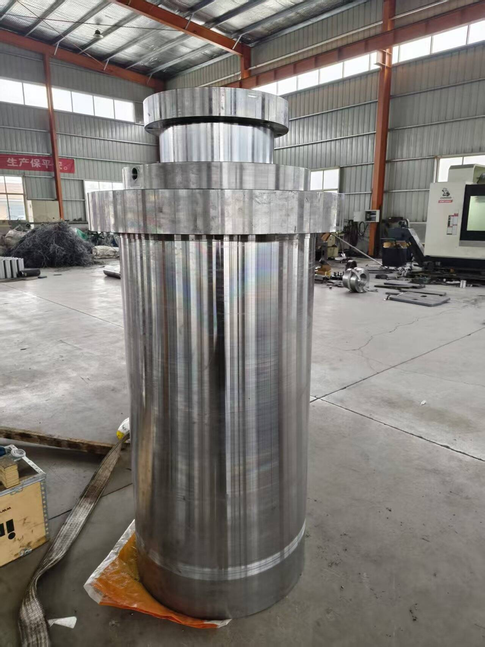
A heavy duty hydraulic cylinder is not a single standardized product category. In practice, the term refers to cylinders designed with higher strength materials, thicker wall sections, heavier sealing systems, and more robust mounting configurations to operate under conditions that would accelerate wear or cause failure in standard cylinders.
Typical performance ceilings for heavy duty cylinders include bore sizes up to 36 inches, stroke lengths up to 40 feet, and operating pressures up to 10,000 psi. These figures represent a significant performance gap over standard cylinders, which are usually designed for lower pressure ranges and lighter service cycles.
Why Heavy Duty Cylinders Matter Across Industries
The global hydraulic cylinder market was valued at approximately USD 15.7 billion in 2024 and is projected to reach around USD 24.7 billion by 2034, according to Global Market Insights. The same source reports that double-acting hydraulic cylinders dominated the industry with about 70% market share in 2024, due largely to demand from heavy construction and robotics applications.
Mobile hydraulics, including construction and mining equipment, accounted for more than 58% of the total hydraulics market share in 2024, according to Grand View Research. Large bore hydraulic cylinders, defined as bore sizes above 150 mm, held approximately 27.4% of market revenue in 2025, driven by demand for large mining excavators and tunnel boring machines, according to Dataintelo.
These figures reflect a broader trend: as equipment becomes more productive and more automated, the cylinders inside that equipment must withstand higher pressures, longer strokes, and more continuous operation. Heavy duty cylinders are therefore not a niche product. They are core components in the machines that build infrastructure, extract resources, manufacture goods, and move cargo.
Key Specifications That Define a Heavy Duty Cylinder
When evaluating heavy duty hydraulic cylinders, buyers should understand the following specification areas:
Bore Size
The bore is the internal diameter of the cylinder barrel and directly affects the force the cylinder can generate. A larger bore produces more force at the same pressure. Heavy duty cylinders often exceed 150 mm bore, and custom designs can reach much larger diameters depending on the application.
Stroke Length
Stroke is the maximum travel distance of the piston rod. Long stroke cylinders are required for applications such as lifts, presses, and certain mining equipment. Stroke lengths up to 40 feet are possible in specially designed heavy duty cylinders.
Pressure Rating
Operating pressure determines the force output and the stress on the barrel, rod, seals, and end caps. Many industrial hydraulic systems operate in the 160–250 bar range, with ISO 6020 covering the 160 bar series and ISO 6022 covering the 250 bar series for mounting dimensions and interchangeability. Heavy duty cylinders for specialized equipment can be designed for much higher pressures.
Rod Diameter and Strength
The rod transfers force from the cylinder to the machine. In heavy duty applications, rods must resist bending, buckling, and surface wear. Hardened and chrome-plated rods are common in demanding environments.
Sealing System
Seals prevent internal and external leakage. Heavy duty cylinders may use metal-to-metal sealing, high-performance polyurethane seals, or specialty seal stacks depending on pressure, temperature, and fluid compatibility. The sealing system must balance low friction, long life, and leak resistance.
Mounting Style
Mounting style determines how the cylinder is attached to the machine. Common options include clevis, flange, trunnion, and foot mounts. The correct mounting style affects alignment, load distribution, and service life.
Common Types of Heavy Duty Hydraulic Cylinders
Hydraulic cylinders can be classified by construction type and operating principle. Tuoda Machinery offers piston, plunger, telescopic (multi-stage), and rotary (oscillating) cylinder types, each serving different motion and packaging requirements.
Piston Cylinders
Piston cylinders are the most common type. A piston attached to a rod moves inside a barrel, dividing the cylinder into two chambers. Pressurized fluid on either side creates push or pull motion. They are suitable for a wide range of heavy machinery applications.
Plunger Cylinders
Plunger cylinders use a heavy plunger instead of a conventional piston and rod assembly. They are often used in vertical applications where the load returns by gravity. Their simple construction can offer advantages in certain press and lifting applications.
Telescopic (Multi-Stage) Cylinders
Telescopic cylinders contain multiple nested stages that extend sequentially, producing a long stroke from a short retracted length. They are commonly found in dump trucks, trailers, and other mobile equipment where compact packaging is essential.
Rotary (Oscillating) Cylinders
Rotary cylinders convert hydraulic pressure into rotational or oscillating motion rather than linear motion. They are used in specialized equipment that requires controlled angular movement.
Double-Acting vs. Single-Acting
Double-acting cylinders use hydraulic pressure for both extension and retraction. They provide positive control in both directions and are preferred for precision-driven heavy duty applications. Single-acting cylinders use pressure for motion in one direction and rely on gravity or springs for return. The dominance of double-acting cylinders in the market reflects their versatility and control advantages in heavy equipment.
Materials and Manufacturing Quality
The material choice for a heavy duty cylinder is one of the most important factors in its performance and service life.
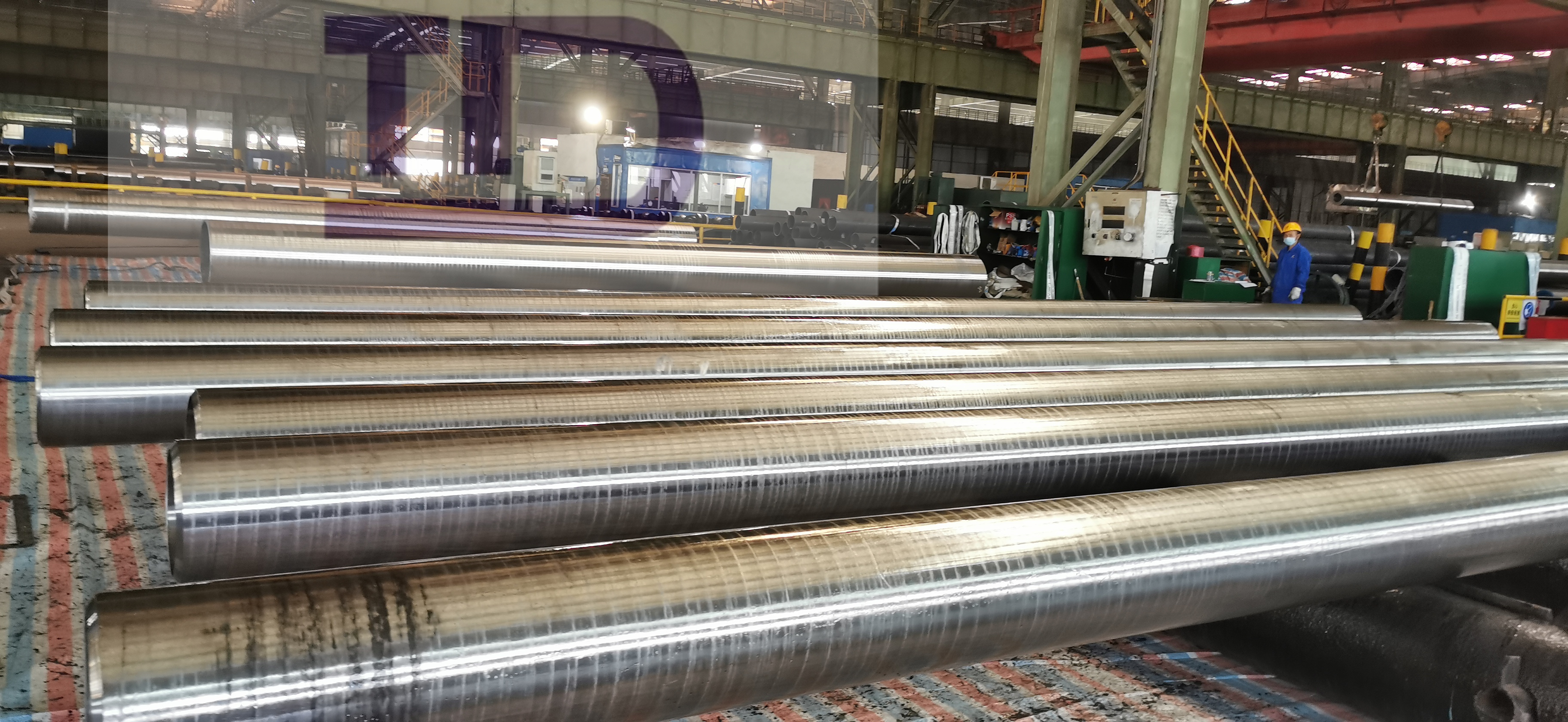
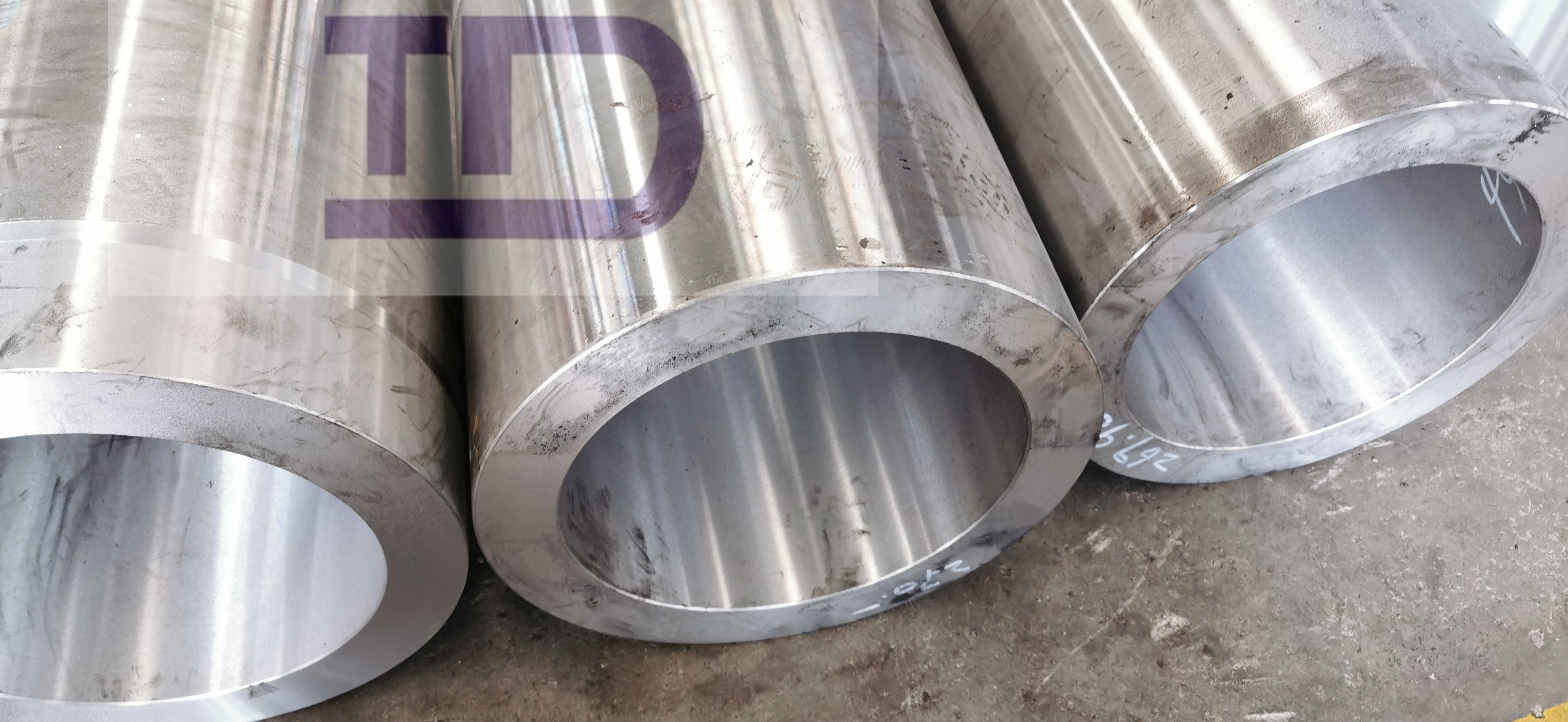
Tuoda Machinery’s hydraulic cylinders can be manufactured from ST52, S355, E355, C45, SAE1045, 42CrMo4, and other materials, with customization available. These materials offer different balances of strength, machinability, weldability, and toughness.
The company operates a 30,000 m² manufacturing facility in Liaocheng, Shandong, China. It was established in 2020 and employs approximately 150 people. Tuoda specializes in manufacturing seamless steel pipes, custom hydraulic cylinders, deep hole drilling machines, and pressure cylinders. The company also produces the steel tubes used in cylinder barrels, which gives it direct control over material quality from the pipe stage through final machining.
Key quality characteristics for hydraulic cylinder barrels include:
- Internal bore dimensional stability – consistent bore size across long lengths and between batches;
- Straightness – necessary for smooth rod motion and even seal wear;
- Internal bore roughness – affects seal life and friction;
- Concentricity – keeps the rod, piston, and barrel aligned;
- Batch consistency – important for OEMs and repeat orders.
Tuoda’s hydraulic cylinder specifications include ISO hole diameter tolerances of H8/H9 and arithmetic roughness of Ra ≤ 0.4 μm, indicating precision honing capability. Outer diameter availability spans 20 mm to 800 mm and wall thickness from 3 mm to 50 mm, with customization available for special requirements.
Heavy Duty Cylinder Applications
Heavy duty hydraulic cylinders are found in a wide range of industrial and mobile equipment. Tuoda’s product documentation identifies the following major application areas:
- Heavy machinery – construction machinery, excavators, loaders, and mining equipment;
- Hydraulic presses – four-column presses and other forming equipment requiring high force;
- Marine hydraulic systems – steering gear, anchor winches, and deck equipment;
- Specialized equipment – high-pressure water jet cutting machines and custom industrial machinery;
- Military equipment – applications requiring high reliability under extreme conditions;
- High-pressure test benches – material pressure-testing and calibration systems.
These applications often combine several demanding conditions at once. Tuoda’s cylinders are designed to operate in high temperature, dusty, high humidity, marine, outdoor, mine, impact, and slurry environments. Common application countries include China, India, Turkey, Vietnam, Indonesia, Canada, Germany, the United Kingdom, and Sweden.
Construction Machinery and Excavators
Excavators rely on heavy duty cylinders for boom, arm, and bucket motion. These cylinders must withstand shock loads, abrasive dust, and continuous cycling. High pressure capability allows compact cylinder sizes while delivering the digging forces required on job sites.
Mining Equipment
Mining environments combine impact loading, slurry contamination, and extreme temperatures. Cylinders in mining equipment must resist scoring, seal damage, and structural fatigue. Large bore cylinders are common in large mining excavators and tunnel boring machines.
Industrial Presses
Hydraulic presses generate very high forces over relatively short strokes. Heavy duty cylinders for presses must maintain alignment, minimize deflection, and control the platen precisely. Ultra-high-pressure cylinders may be used in specialized forming and testing equipment.
Marine and Offshore Systems
Marine hydraulic systems operate in saltwater environments where corrosion resistance and seal reliability are critical. Heavy duty cylinders for marine use may require special surface treatments, wiper seals, and materials selected to withstand humidity and salt exposure.
Material Handling and Forklifts
Forklifts use hydraulic cylinders for mast lift, tilt, and attachment functions. Heavy duty cylinders for forklift applications must fit within compact envelopes while providing reliable lifting force over long service lives.
Heavy Duty vs. Standard Cylinders: What Changes
Choosing a heavy duty cylinder instead of a standard cylinder changes several design parameters. The table below summarizes typical differences at a conceptual level.
| Comparison Area | Standard Cylinder | Heavy Duty Cylinder |
|---|---|---|
| Typical pressure range | Lower pressure series (e.g., 160 bar class per ISO 6020) | Higher pressure series (e.g., 250 bar class per ISO 6022); specialized designs above 63 MPa |
| Barrel wall thickness | Sized for standard loads | Thicker walls for higher pressure and impact resistance |
| Bore size | Range depends on series | Large bore designs common; available up to 36 inches |
| Stroke length | Limited by standard design envelope | Long stroke designs available up to 40 feet |
| Materials | Conventional carbon or alloy steel | ST52, S355, E355, C45, SAE1045, 42CrMo4, and custom selections |
| Sealing system | Standard elastomeric seals | Metal-to-metal sealing, high-performance polyurethane seals, or application-specific stacks |
| Application environment | Controlled industrial settings | High temperature, dusty, high humidity, marine, mine, impact, and slurry |
| Typical applications | General manufacturing, light automation | Excavators, mining equipment, hydraulic presses, marine systems, high-pressure test benches |
Note that ISO 6022 and ISO 6020 are international standards for mounting dimensions and interchangeability of hydraulic cylinders. They do not by themselves define whether a cylinder is heavy duty; rather, they define dimensional series commonly used in industrial applications. Buyers should confirm the specific standard referenced by the manufacturer when interchangeability is required.
Custom and Non-Standard Heavy Duty Cylinders
Many heavy duty applications require non-standard cylinder designs. Off-the-shelf cylinders may not provide the right bore, stroke, mounting, port configuration, or material for a specific machine.
Custom heavy duty cylinders can be designed for:
- Custom sizes, including large bore and long stroke configurations;
- Non-standard materials and heat treatment requirements;
- Custom mounting styles to fit existing equipment;
- Special sealing systems for extreme pressure, temperature, or fluid compatibility;
- Retrofits, including replacing single-acting cylinders with double-acting designs;
- High-load upgrades where standard cylinders have failed or underperformed.
Tuoda Machinery provides end-to-end customization services that span application analysis, drawing verification, material selection, manufacturing and honing, inspection, testing, and final delivery. This approach is particularly relevant for OEMs and equipment owners who need cylinders matched to specific machine interfaces and duty cycles.
The company produces approximately 1,200 hydraulic units per year, with export business accounting for roughly 70% of total sales. Major markets include the EU, Asia, and South America. The company’s R&D team consists of three engineers who support custom design work.
Replacing Standard Cylinders with Heavy Duty Versions
When a standard cylinder fails repeatedly in a demanding application, upgrading to a heavy duty cylinder can address the root cause. Common upgrade triggers include oil leakage, premature seal wear, rod bending, insufficient force, and short service life. A properly specified heavy duty cylinder may use a thicker barrel, a heavier rod, a more robust sealing system, or a larger bore to deliver higher force.
Before upgrading, it is important to check the machine’s pump flow, pressure relief settings, mounting envelope, and structural load path. A cylinder with higher force capacity may impose additional stress on other components. Working with a manufacturer that provides drawing verification and application analysis helps reduce this risk.
How to Evaluate a Heavy Duty Hydraulic Cylinder Manufacturer
For buyers at the awareness and research stage, understanding supplier evaluation criteria helps shortlist candidates before requesting quotes. The following factors are particularly relevant for heavy duty cylinders:
Material and Barrel Production Capability
A manufacturer that produces its own seamless steel tubes has more direct control over material quality and delivery lead time than one that only machines externally sourced barrels. Tuoda’s history in seamless steel pipe deep processing supports this integration.
Machining and Honing Precision
Internal bore quality directly affects seal life and cylinder performance. Look for documented tolerances such as ISO H8/H9 hole diameter tolerances and surface roughness of Ra ≤ 0.4 μm or better.
Pressure and Application Range
Check whether the manufacturer’s standard range covers the pressure class you need. Tuoda offers high-pressure cylinders in the 31.5–63 MPa range and ultra-high-pressure cylinders above 63 MPa, covering applications such as hydraulic excavators, crushers, four-column hydraulic presses, marine steering gear, anchor winches, high-pressure water jet cutting machines, and pressure-testing equipment.
Custom Engineering Support
Custom heavy duty cylinders require engineering input. A manufacturer should be able to review drawings, recommend materials, and validate the design before production. R&D headcount and engineering experience are relevant signals.
Production Capacity and Lead Time
For project-based procurement, stable lead times matter. Tuoda’s stated delivery time for many products is 30–45 days, with options for customization. Annual output of approximately 1,200 units gives a sense of scale for order planning.
Manufacturing Location and Export Experience
Buyers importing from China should consider the manufacturer’s export experience and communication responsiveness. Tuoda exports about 70% of its output to the EU, Asia, and South America, and can be reached directly via email or phone for specification discussions.
Total Hydraulic System Considerations
A heavy duty cylinder does not operate alone. It must be used with complete hydraulic systems including the cylinder barrel, piston rod, piston, gland/head, end cap, sealing system, guide bush, and ports. The cylinder is one component within a circuit that also includes pumps, valves, hoses, filters, and reservoir systems.
When specifying a cylinder, consider how it will interact with the rest of the system:
- Does the pump deliver enough flow to achieve the required cylinder speed?
- Is the pressure relief setting compatible with the cylinder rating?
- Are the port sizes and thread types matched to the hoses and fittings?
- Will the cylinder’s mounting style create bending moments or misalignment?
- Does the system need cushioning to handle high-speed loads at end of stroke?
Answering these questions before ordering reduces the risk of mismatched components and unexpected downtime.
Step-by-Step: From Requirement to Heavy Duty Cylinder Selection
For buyers new to heavy duty cylinder specification, the following workflow provides a structured approach:
- Define the load and motion requirements. Determine the force required, stroke length, mounting orientation, and cycle frequency.
- Calculate the required bore and pressure. Force = pressure × area. Choose a bore and pressure combination that delivers the required force with a safety margin.
- Check the packaging envelope. Compare the retracted and extended lengths against available space on the machine.
- Select the cylinder type. Decide between piston, plunger, telescopic, or rotary based on motion and space constraints.
- Choose materials and sealing. Match barrel, rod, and seal materials to fluid type, temperature, and environmental conditions.
- Define mounting and porting. Specify mounting style, port sizes, port locations, and any special features such as cushions or proximity sensors.
- Verify standards and interchangeability. If the cylinder must fit existing equipment, reference ISO mounting dimensions or manufacturer drawings.
- Send clear specifications to manufacturers. Provide dimensions, pressure, stroke, mounting, environment, and any non-standard requirements.
- Review proposals and ask for drawing verification. Confirm that the manufacturer can produce the design and explain how they will control bore finish, straightness, and concentricity.
- Plan for testing and after-sales support. Discuss inspection documentation, leak testing, and warranty terms before ordering.
Major Players and Market Context
Understanding the competitive landscape provides context for supplier selection. According to Global Market Insights, Caterpillar held over 8% of the global hydraulic cylinder market share in 2024 as a vertically integrated equipment manufacturer. Parker Hannifin held approximately 12% of the hydraulic cylinder industry in 2023, according to Worldmetrics, reflecting its position as a diversified motion and control technology supplier.
These figures are estimates from third-party research sources and should be interpreted as directional context rather than precise measurements. The hydraulic cylinder market remains fragmented, with many regional and specialized manufacturers serving distinct industries.
For buyers comparing global suppliers, the relevant comparison is not simply brand recognition. It includes capability fit, engineering support, production capacity, quality systems, delivery reliability, and total cost over the equipment’s life. Chinese manufacturers such as Tuoda Machinery compete on integrated steel processing, custom manufacturing flexibility, and direct communication.
Cost and Value Considerations
Heavy duty cylinders generally cost more than standard cylinders because they require more material, more precise machining, heavier seals, and more rigorous testing. The price difference reflects the need to survive higher pressure, impact, contamination, and continuous operation.
When evaluating cost, buyers should consider not only the purchase price but also:
- Expected service life under actual operating conditions;
- Maintenance cost and ease of seal replacement;
- Downtime cost if the cylinder fails;
- Lead time and availability of spare parts;
- Compatibility with existing hydraulic systems.
A cylinder that is heavily oversized may also be more expensive than necessary. The goal is to match the cylinder to the machine’s real duty cycle, not to maximize every parameter independently.
Common Failure Signs That Point to Heavy Duty Needs
Equipment owners often discover the need for heavy duty cylinders after experiencing repeated failures. The following signs suggest that a standard cylinder may be underspecified:
- Oil leakage – seal damage caused by high pressure, contamination, or overheating;
- Rod bending or scoring – side loading or impact beyond the rod’s design capacity;
- Premature seal wear – rough bore surface or poor lubrication;
- Insufficient force – the cylinder cannot reliably lift or press the load;
- Frequent breakdowns – short repair intervals increase operating cost.
In these cases, upgrading to a heavy duty cylinder with higher pressure rating, larger rod, better sealing, or more appropriate material can provide a longer-term solution. A manufacturer that offers custom design support can help match the replacement cylinder to the existing machine envelope.
Corrosion Resistance and Environmental Adaptation
Heavy duty cylinders used outdoors, in marine environments, or in mining operations may require corrosion-resistant surface treatments. Common approaches include:
- Chrome plating on piston rods;
- Paint systems rated for marine or industrial atmospheres;
- Stainless steel components for critical parts;
- Sealed wiper systems to prevent contamination ingress.
The right solution depends on the actual environment. A cylinder designed for a controlled factory press may not survive at a coastal port or underground mine. Describing the operating environment accurately to the manufacturer helps them recommend appropriate materials and treatments.
Low-Temperature and Extreme-Condition Designs
Some heavy duty applications involve low ambient temperatures, where standard seals and materials may lose flexibility or become brittle. Low-temperature-resistant cylinders may require special seal compounds, steel grades with suitable impact toughness, and hydraulic fluids matched to the operating temperature range.
Similarly, high-temperature environments affect seal life and fluid viscosity. If temperature extremes are part of your operating conditions, these requirements should be specified during the design review rather than discovered after installation.
Standards and Compliance Considerations
International standards relevant to hydraulic cylinders include ISO 6022 (250 bar series) and ISO 6020 (160 bar series), which cover mounting dimensions and interchangeability. These standards help buyers specify cylinders that fit existing equipment without requiring full custom engineering.
For seamless steel pipes used in cylinder barrels, Tuoda manufactures in accordance with international standards including EN10210, EN10305, API 5L, A335, A333, and A106, as well as CE requirements. Material certifications and mill test reports should be requested as part of procurement documentation.
Buyers should confirm which standards apply to their application and whether the manufacturer can provide the relevant documentation. This is especially important for regulated industries such as oil and gas, marine, and heavy construction.
Global Sourcing Context
China is a significant source of hydraulic power engines and motors, including cylinders. According to the World Integrated Trade Solution (WITS), China’s exports of hydraulic power engines and motors to the United States reached approximately USD 80.4 million in 2024. This trade flow reflects the ability of Chinese manufacturers to supply hydraulic components into global markets.
For buyers considering Chinese suppliers, direct communication, factory audits, and sample orders are practical ways to evaluate capability. Documented production processes, material traceability, and inspection reports provide evidence of manufacturing quality.
Choosing Between Standard, Heavy Duty, and Custom Cylinders
The decision between standard, heavy duty, and custom cylinders often comes down to:
- Duty cycle – how many cycles per day and at what load;
- Pressure and force needs – whether the application exceeds standard pressure ratings;
- Environment – temperature, humidity, dust, slurry, chemicals, or saltwater;
- Packaging – available space for bore, stroke, and mounting;
- Lifecycle cost – upfront price vs. maintenance and downtime.
If the application involves extreme conditions in several of these categories, a heavy duty or custom cylinder is likely justified. If the machine operates under moderate conditions, a standard cylinder may be sufficient and more economical.
Working with Tuoda Machinery
SHANDONG TUODA MACHINERY EQUIPMENT CO., LTD. is a Chinese manufacturer combining seamless steel pipe production with custom hydraulic cylinder manufacturing. The company is based in Liaocheng, Shandong, and operates a facility covering 30,000 m² with approximately 150 employees. Tuoda was established in 2020 and produces about 1,200 units per year.
The company’s hydraulic cylinder product line includes:
- High-pressure hydraulic cylinders in the 31.5–63 MPa range;
- Ultra-high-pressure hydraulic cylinders above 63 MPa;
- Piston, plunger, telescopic, and rotary cylinder types;
- Custom designs from application analysis through final inspection.
Key technologies include metal-to-metal sealing, high-performance polyurethane seals, forged valve bodies, thick-walled seamless steel pipe tubing, and overpressure protection devices. The company’s integrated capability allows it to control barrel material quality from steel pipe processing through honing, machining, assembly, and testing.
Tuoda exports approximately 70% of its products to markets including the EU, Asia, and South America. For inquiries about standard or custom heavy duty hydraulic cylinders, the company can be contacted by email at olivia@sdtuoda.com or by phone/WhatsApp at +86 13290268388.
FAQ
What is the difference between a heavy duty hydraulic cylinder and a standard hydraulic cylinder?
Heavy duty hydraulic cylinders are designed for higher pressures, larger loads, longer strokes, and more demanding environments than standard cylinders. They typically use stronger materials such as ST52, S355, E355, C45, SAE1045, or 42CrMo4, thicker barrel walls, heavier rods, and more robust sealing systems. Heavy duty cylinders may offer bore sizes up to 36 inches, strokes up to 40 feet, and pressures up to 10,000 psi, representing a significant performance gap over standard cylinders.
What pressure ratings are available for heavy duty hydraulic cylinders?
Heavy duty hydraulic cylinders are available in a range of pressure ratings depending on the design and application. Standard industrial series include ISO 6022 (250 bar series) and ISO 6020 (160 bar series) for mounting dimensions and interchangeability. For higher-load equipment, manufacturers such as Tuoda Machinery offer high-pressure cylinders in the 31.5–63 MPa range and ultra-high-pressure cylinders above 63 MPa for specialized applications including high-pressure water jet cutting machines and material pressure-testing apparatus.
Can heavy duty hydraulic cylinders be customized for specific machines?
Yes, many heavy duty hydraulic cylinders are custom-engineered to match existing equipment interfaces and performance requirements. Customization can include bore size, stroke length, mounting style, port configuration, materials, sealing systems, and pressure ratings. Tuoda Machinery provides end-to-end customization from application analysis and drawing verification through material selection, manufacturing, honing, inspection, and delivery. Custom cylinders are commonly specified for retrofits, OEM applications, and non-standard equipment.
What are the typical lead times for heavy duty hydraulic cylinders?
Lead times depend on the complexity of the order and whether the cylinder is standard or custom. Tuoda Machinery states a delivery time of 30–45 days for many products, with options for customized delivery schedules. Buyers planning large or non-standard orders should confirm lead times during the quotation stage, especially when steel material procurement and custom machining are involved.
How do I get a quote or discuss a custom heavy duty cylinder project?
To discuss a project or request a quote, contact Tuoda Machinery directly. The company can be reached by email at olivia@sdtuoda.com or by phone/WhatsApp at +86 13290268388. Providing key parameters such as bore size, stroke, pressure, mounting style, operating environment, and any existing drawings will help the engineering team respond with a more accurate recommendation.
Request a quote or download the company brochure
For engineers and buyers evaluating heavy duty hydraulic cylinder options, Tuoda Machinery provides direct consultation on specification and customization.
This article is a foundational guide for buyers researching heavy duty hydraulic cylinders. It reflects manufacturer information from SHANDONG TUODA MACHINERY EQUIPMENT CO., LTD. and third-party industry data current as of 2026. Always confirm specifications and project requirements directly with the manufacturer before placing an order.