Heavy Duty Hydraulic Cylinders: Pressure Ratings, Configurations, and Upgrade Considerations
Heavy Duty Hydraulic Cylinders: Pressure Ratings, Configurations, and Upgrade Considerations
Heavy duty hydraulic cylinders are high-pressure linear actuators engineered for construction machinery, mining equipment, hydraulic presses, marine systems, and specialized industrial equipment. The key specification that separates a heavy duty cylinder from a standard cylinder is its combination of pressure rating, bore size, stroke length, sealing system, and structural materials. This guide explains how to evaluate heavy duty hydraulic cylinders by pressure class, configuration, and upgrade potential, with emphasis on double-acting designs, large bore and long stroke options, and custom modifications such as replacing single-acting cylinders with double-acting units.
What Defines a Heavy Duty Hydraulic Cylinder?
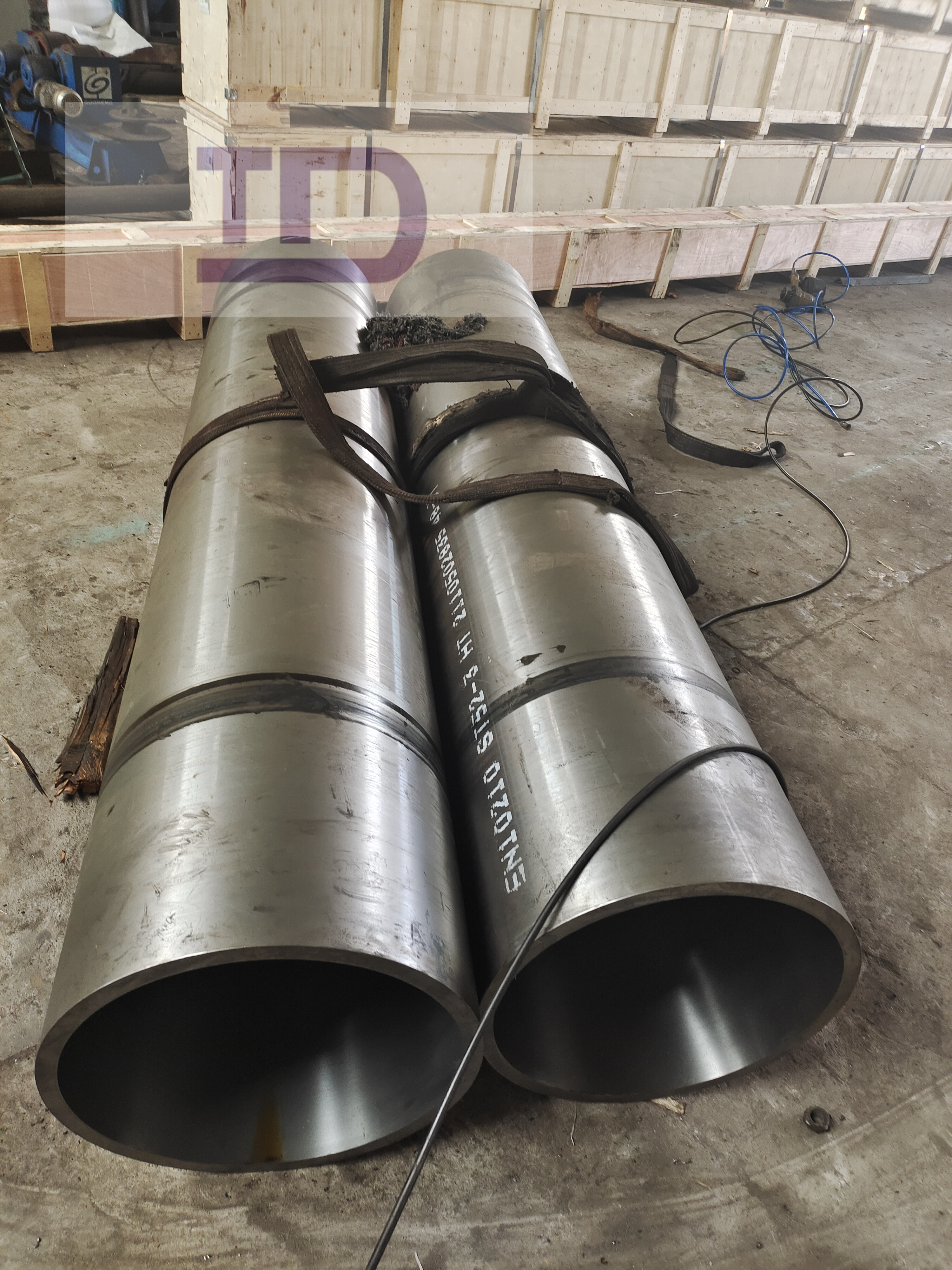
A hydraulic cylinder converts hydraulic energy into mechanical energy through linear reciprocating motion. A heavy duty version is distinguished by the ability to sustain higher pressures, heavier shock loads, and harsher environments. In practice, this means thicker cylinder walls, stronger materials, precision-honed internal bores, and sealing systems capable of containing high-pressure oil over repeated cycles.
Shandong Tuoda Machinery Equipment Co., Ltd. (Tuoda Machinery), located in Liaocheng, Shandong, China, manufactures custom hydraulic cylinders in two main pressure classes:
- High-pressure hydraulic cylinders rated at 31.5–63 MPa, suitable for hydraulic excavators, crushers, four-column hydraulic presses, marine steering gear, and anchor winches.
- Ultra-high-pressure hydraulic cylinders rated above 63 MPa, built for high-pressure water jet cutting machines, artillery recoil systems, material pressure-testing apparatus, and similar specialized equipment.
For context, ISO 6022 (250 bar series) and ISO 6020 (160 bar series) are commonly referenced international standards for heavy-duty industrial cylinder mounting dimensions and interchangeability. Tuoda's 31.5–63 MPa range equals 315–630 bar, well beyond the 250 bar ISO series, which explains why these cylinders are classified as high-pressure and ultra-high-pressure rather than standard industrial cylinders.
Why the Pressure Rating Matters: 31.5–63 MPa vs Ultra-High Pressure
Pressure rating is the first technical decision when specifying a heavy duty hydraulic cylinder. Higher pressure allows the same bore size to produce more force, or allows a smaller bore to produce the force required in a tighter space. But higher pressure also places greater stress on the barrel, piston rod, seals, and end caps.
Tuoda Machinery groups its hydraulic cylinders into two engineering categories:
- High-pressure cylinders (31.5–63 MPa): Designed for mainstream heavy equipment such as excavators, crushers, four-column hydraulic presses, marine steering gear, and anchor winches.
- Ultra-high-pressure cylinders (>63 MPa): Used in specialized machines including high-pressure water jet cutting systems, artillery recoil mechanisms, and material pressure-testing apparatus.
These two categories require different barrel wall thicknesses, sealing technologies, and testing procedures. A cylinder designed for 31.5 MPa cannot simply be operated at 63 MPa without re-engineering. When buyers request high-load upgrades or replacement cylinders, the rod diameter, wall thickness, port sizes, and seal materials must all be recalculated for the actual operating pressure.
Key sealing technologies for high and ultra-high pressure
Tuoda's high-pressure and ultra-high-pressure cylinders use metal-to-metal sealing, high-performance polyurethane seals, forged valve bodies, thick-walled seamless steel pipe tubing, and overpressure protection devices. These design choices address the three most common failure modes in heavy duty cylinders: seal extrusion, rod bending under shock load, and internal bore deformation under repeated pressure cycles.
From a procurement perspective, specifying only the working pressure is not enough. Buyers should also state whether the cylinder will face impact loads, continuous duty, or cyclic pressure spikes, because these conditions determine the level of sealing and structural reinforcement required.
Large Bore and Long Stroke Heavy Duty Cylinders
Large bore and long stroke cylinders are required when the application demands high force output over a long travel distance. Typical examples include large mining excavators, tunnel boring machines, straightening machines, and industrial presses.
Tuoda Machinery manufactures hydraulic cylinders with an outer diameter range of 20–800 mm and wall thickness range of 3–50 mm. These ranges support both large bore and long stroke configurations. For a large bore cylinder, the internal bore dimensional stability, straightness, concentricity, and internal bore roughness are critical for reliable seal performance over long strokes.
The stated surface roughness for Tuoda's cylinder tubes is Ra ≤ 0.4 μm, with ISO hole diameter tolerances of H8/H9. These are precision machining standards that reduce seal wear and internal leakage, particularly important in long stroke cylinders where rod deflection and bore straightness are harder to control.
It should be noted that large bore cylinders are an important segment of the global market. According to Dataintelo, large bore hydraulic cylinders (bore size >150 mm) held approximately 27.4% of market revenue in 2025, driven by demand for large mining excavators and tunnel boring machines. This segment is directly relevant to buyers who need high force in a compact envelope.
Single-Acting vs Double-Acting Heavy Duty Hydraulic Cylinders
Double-acting hydraulic cylinders dominated the industry with a 70% market share in 2024, favored for precision-driven heavy-duty construction and robotics. A double-acting cylinder uses hydraulic pressure for both extension and retraction, providing controlled motion in both directions. A single-acting cylinder relies on external force or gravity for retraction, which is simpler but cannot push or pull with equal control.
When a buyer searches for hydraulic cylinder replacement from single-acting to double-acting, the motivation is usually better control, higher cycle speed, or the need to retract under load. Replacing a single-acting cylinder with a double-acting unit is not a direct swap in most cases. The cylinder head, port configuration, seal orientation, and sometimes the pump and directional control valve must be evaluated together.
Tuoda Machinery supports custom cylinder configurations in several structural types: piston cylinder, plunger cylinder, telescopic (multi-stage) cylinder, and rotary (oscillating) cylinder. Piston-type double-acting cylinders are the most common for heavy duty linear drives requiring force in both directions.
Heavy Duty Cylinders for Construction Machinery and Mining Equipment
Mobile hydraulics, including construction and mining equipment, accounted for over 58% of the total hydraulics market share in 2024. This explains why excavator cylinders, loader cylinders, and mining equipment cylinders are among the most frequently requested heavy duty hydraulic cylinders.
Tuoda's high-pressure cylinders (31.5–63 MPa) are explicitly suitable for hydraulic excavators, crushers, and four-column hydraulic presses. The working conditions for these machines often include high temperature, dust, high humidity, outdoor operation, mines, impact loads, and slurry exposure. A cylinder designed for these conditions needs not only high pressure capacity but also corrosion resistance, wear resistance, and seal systems that tolerate contamination.
Wear-resistant and corrosion-resistant options
Wear resistance is primarily achieved through rod surface treatment and bore finishing. Corrosion resistance depends on the rod coating, seal material compatibility, and whether the cylinder is designed for marine or high-humidity environments. Buyers should clearly state whether the cylinder will be used in marine, dust-heavy, slurry, or low-temperature conditions so that material selection and sealing can be adjusted.
Low-temperature resistance
Low-temperature environments require seal materials and steels that retain ductility at sub-zero temperatures. Standard polyurethane seals may become stiff and fail in extreme cold. A cylinder specified for low-temperature operation must be evaluated for its material toughness, seal flexibility, and the viscosity of the hydraulic oil used in the system.
High Efficiency Heavy Duty Hydraulic Cylinder Design
Efficiency in a hydraulic cylinder is often understood as minimizing internal leakage, friction, and pressure loss. A high-efficiency heavy duty cylinder should maintain stable force output, reduce energy consumption, and run cooler over long duty cycles.
Several design factors contribute to efficiency:
- Precision-honed bore with low surface roughness reduces seal friction and wear.
- High-performance polyurethane seals reduce internal leakage and maintain pressure holding.
- Proper rod and bearing alignment reduces side loading and friction.
- Clean internal machining prevents contamination, extending seal life.
The straightening machine case from Tuoda illustrates the long-term efficiency of properly designed heavy duty cylinders. A Vietnamese heavy machinery OEM has used a Tuoda straightening machine application for over 10 years. The reported results include stable operation, energy saving, reduced maintenance cost, and zero major failures. No quantified figures beyond this description are claimed, but the continued operation period is an indicator of design margin and manufacturing quality.
Custom Sizes, Non-Standard Cylinders, and Custom Mountings
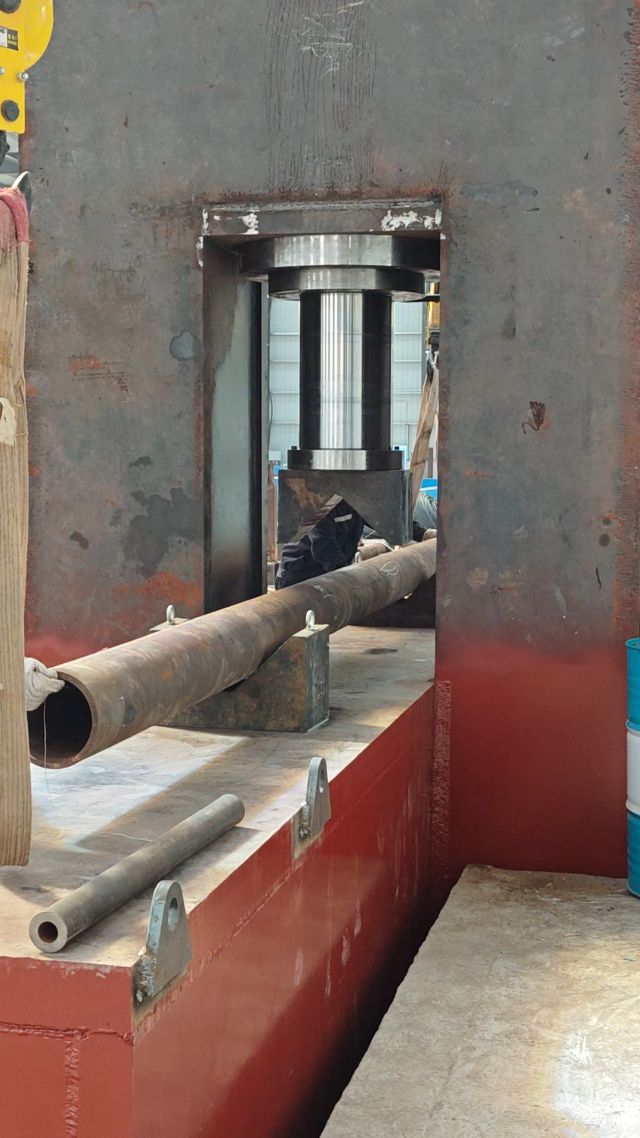
Many heavy duty applications require custom size hydraulic cylinders because standard catalogs cannot cover every bore, stroke, mounting style, port position, and pressure requirement. Tuoda Machinery specializes in OEM and custom production for cylinders. Customization areas include application analysis, size, bore, stroke, pressure, load, system solution, cylinders, and logo printing.
The manufacturing lead time for custom hydraulic cylinders is 45–60 days, and the minimum order quantity is 1 unit. This makes custom non-standard cylinders practical even for single-machine replacement projects. The company's monthly capacity is flexible and depends on the order configuration.
Common custom requirements from buyers
- Custom bore size and stroke length.
- Custom mounting styles—clevis, flange, foot, or trunnion—to fit the existing machine structure.
- Custom port positions and port sizes to match existing hydraulic lines.
- Custom pressure rating to meet high-load upgrade requirements.
- Custom materials and seals for corrosion resistance, high temperature, or low temperature.
- Logo printing and marking for OEM branding.
Because the outer diameter range for cylinder tubes is 20–800 mm and wall thickness ranges from 3–50 mm, Tuoda can match a broad range of custom bore sizes and pressure requirements. For any custom cylinder, the buyer should provide operating pressure, required force, stroke, mounting style, port configuration, and environmental conditions.
Replacing Standard Cylinders and Solving Oil Leakage Issues
One of the most common reasons buyers search for heavy duty hydraulic cylinders is to replace standard cylinders that fail under high load. Standard cylinders may have thinner walls, lower-grade seals, or insufficient rod diameter for shock loads. Upgrading to a heavy duty cylinder can solve several recurrent problems:
- Frequent seal failure and oil leakage.
- Rod bending or breakage under impact loads.
- Internal bore scoring due to contamination or insufficient hardness.
- Insufficient force or stability under continuous high pressure.
Oil leakage is often caused by worn seals, damaged rod surfaces, or oversized clearances under pressure. A heavy duty cylinder with high-performance polyurethane seals and precision-finished rod surfaces can reduce leakage incidents, but the root cause must be verified. If the machine's hydraulic system is generating pressure spikes above the cylinder rating, the cylinder will leak again no matter how well it is built.
Step-by-Step: How to Specify a Heavy Duty Hydraulic Cylinder
- Define the operating pressure and flow: identify system pressure, peak pressure, and whether the cylinder will encounter shock loads.
- Calculate required force and bore size: force equals pressure times effective piston area; select bore size based on the maximum required force and available pressure.
- Determine stroke length: measure the full required travel distance, including any margin for end stops or cushioning.
- Choose rod diameter: consider buckling strength under compression, especially for long stroke cylinders.
- Select mounting style: clevis, flange, foot, or trunnion must match the machine structure and allow for misalignment.
- Specify seals and materials for the environment: consider dust, water, slurry, temperature extremes, and fluid compatibility.
- Define ports and connections: choose port size, type, and position to match existing hoses or manifolds.
- Confirm testing and quality control: require pressure testing and verify bore tolerance, surface roughness, and cleanliness standards.
- Review lead time and after-sales support: confirm the supplier's production schedule, spare parts availability, and repair capability.
Comparison: High-Pressure vs Ultra-High-Pressure vs Standard Cylinders
| Characteristic | Standard industrial cylinder | High-pressure heavy duty cylinder | Ultra-high-pressure cylinder |
|---|---|---|---|
| Typical pressure range | 160–250 bar (ISO 6020/6022 class) | 31.5–63 MPa (315–630 bar) | >63 MPa (over 630 bar) |
| Typical tube material approach | Standard steel tubing | Thick-walled seamless steel pipe; materials such as ST52, S355, E355, C45, SAE1045, 42CrMo4 | Thick-walled seamless steel pipe with higher-strength alloy steel and reinforced design |
| Sealing approach | Conventional seals | Metal-to-metal sealing and high-performance polyurethane seals | Metal-to-metal sealing, high-performance polyurethane seals, and overpressure protection devices |
| Typical applications | General industrial automation and light equipment | Excavators, crushers, four-column hydraulic presses, marine steering gear, anchor winches | Water jet cutting, artillery recoil systems, material pressure-testing apparatus |
| Custom capability | Limited variations | Custom bore, stroke, mounting, pressure, load, and system integration | High-precision custom engineering for specialized systems |
Case Evidence: Long-Term Stability in a Heavy Machinery OEM
A heavy machinery OEM in Vietnam operates a straightening machine using Tuoda hydraulic cylinders. The client has used the equipment for more than 10 years. The reported performance includes stable operation, energy saving, reduced maintenance cost, and zero major failures. This case is relevant to buyers evaluating long-term reliability rather than initial purchase price.
The straightening machine application is consistent with Tuoda's capability to supply custom cylinders for heavy machinery. The working condition involves high structural loads and requires internal bore dimensional stability, straightness, and concentricity over time.
Frequently Asked Questions
Which pressure rating is considered heavy duty for hydraulic cylinders?
Heavy duty hydraulic cylinders are generally rated from 315 bar upward in the high-pressure category. Tuoda Machinery defines high-pressure hydraulic cylinders as 31.5–63 MPa (315–630 bar), and ultra-high-pressure cylinders as above 63 MPa. These ratings are higher than the ISO 6022 250 bar series commonly used for industrial cylinders.
Can a single-acting hydraulic cylinder be replaced with a double-acting cylinder?
Yes, but it is not always a direct mounting swap. A double-acting cylinder requires two hydraulic ports and flow paths, while a single-acting cylinder typically has one port with an external return. Replacing single-acting with double-acting gives controlled retraction and is often chosen when the cylinder must retract under load or the machine needs faster cycle times. The port configuration, mounting dimensions, seal direction, and control valve must be reviewed. Tuoda Machinery supports custom double-acting designs and can manufacture a replacement that fits the existing machine envelope.
What bore size is considered a large bore heavy duty hydraulic cylinder?
Large bore hydraulic cylinders are commonly defined as having a bore size greater than 150 mm. This segment accounted for approximately 27.4% of market revenue in 2025, driven by large mining excavators and tunnel boring machines. Tuoda Machinery manufactures cylinders with outer diameters up to 800 mm and wall thicknesses up to 50 mm, covering large bore custom requirements.
What is the typical lead time for a custom heavy duty hydraulic cylinder?
Tuoda Machinery's lead time for custom hydraulic cylinders is 45–60 days, depending on configuration and order volume. The minimum order quantity is 1 unit, which is practical for replacement or prototype projects. For standard tube products such as seamless steel pipes, delivery is approximately 30–45 days.
How can a heavy duty hydraulic cylinder solve oil leakage problems?
A heavy duty cylinder with precision-honed bore, high-performance polyurethane seals, and metal-to-metal sealing can reduce oil leakage caused by seal wear, rod surface damage, and bore irregularities. Tuoda also uses thick-walled seamless steel pipe tubing and overpressure protection devices in ultra-high-pressure designs. However, to prevent recurring leaks, the system's pressure spikes, oil contamination, and alignment must also be addressed. If you need application-specific advice, request a sample, quote, or technical inquiry; the team can be reached at Olivia@sdtuoda.com or via WhatsApp at +86 13290268388.
Looking for a custom heavy duty hydraulic cylinder?
Request a quote, sample, or technical consultation.
Conclusion
Selecting a heavy duty hydraulic cylinder requires more than matching the bore size and stroke length. The pressure class, mounting configuration, sealing system, and environmental compatibility must be evaluated together. For construction machinery and mining equipment, pressure ratings of 31.5–63 MPa and above are the typical heavy duty range, supported by thick-walled seamless steel tubing, precision-honed bores, and high-performance seals.
Tuoda Machinery manufactures custom heavy duty hydraulic cylinders to order with a lead time of 45–60 days and a minimum order quantity of 1 unit. Customization covers bore, stroke, mounting, pressure, and system solutions, which makes it possible to replace standard cylinders, convert single-acting units to double-acting, and solve recurring leakage issues through a properly engineered design.