Heavy Duty Hydraulic Cylinders: Seamless vs. Welded Steel Pipe Comparison Guide
Heavy duty hydraulic cylinders operate under pressure levels, shock loads and duty cycles that standard cylinders cannot handle. The cylinder barrel is the main pressure container of the actuator, so the choice between seamless steel pipe and welded steel pipe is not simply a raw-material detail. It affects pressure capability, machining quality, fatigue behaviour and total ownership cost.
This comparison guide is designed for buyers and engineers evaluating steel pipe for heavy duty hydraulic cylinder bodies. Tuoda Machinery, a Liaocheng-based manufacturer of seamless steel tube processing, custom high-pressure hydraulic cylinders and deep-hole boring machines, specifies thick-walled carbon seamless steel pipe for the pressure-bearing bodies in its high-pressure cylinder range. The sections below explain the practical differences between seamless and welded steel pipe and how to use product data to make a specification decision.
Problem definition: choosing the steel pipe behind the cylinder barrel
The cylinder barrel must contain fluid pressure, guide the piston, absorb external loads and provide a machined inside surface that works with rod seals and piston seals. If the raw pipe contains a weld seam, that seam becomes not only a geometric transition but also a metallurgical area that must be evaluated under pressure and cyclic loading.
Buyers often compare seamless pipe and welded pipe because welded pipe can look more economical at the quotation stage. In heavy duty applications, however, the cylinder body is under repeated stress. Choosing based only on welding route or raw material price can create long-term reliability risks. The real decision should be guided by operating pressure, load spectrum, bore size, stroke length and the manufacturer's ability to hold close tolerances after pipe processing.
Industry background: high-load hydraulic demand is growing
Global industrial data illustrates why heavy duty cylinder design receives attention. Global Market Insights valued the hydraulic cylinder market at USD 15.7 billion in 2024 and projected it to reach USD 24.7 billion by 2034. Grand View Research reported that mobile hydraulics, including construction and mining equipment, accounted for over 58% of the total hydraulics market in 2024. Dataintelo also reported that large-bore hydraulic cylinders with bore sizes above 150 mm represented approximately 27.4% of construction-machinery hydraulic cylinder market revenue in 2025.
These segments typically require high-pressure, large-bore, long-stroke and double-acting cylinders. In the same market context, double-acting hydraulic cylinders held about 70% market share in 2024. For such cylinders, the barrel must be produced from a material that can be bored, honed, heat-treated and inspected consistently.
Detailed solution: how to evaluate seamless steel pipe vs. welded steel pipe
What seamless steel pipe offers in heavy duty hydraulic cylinder bodies
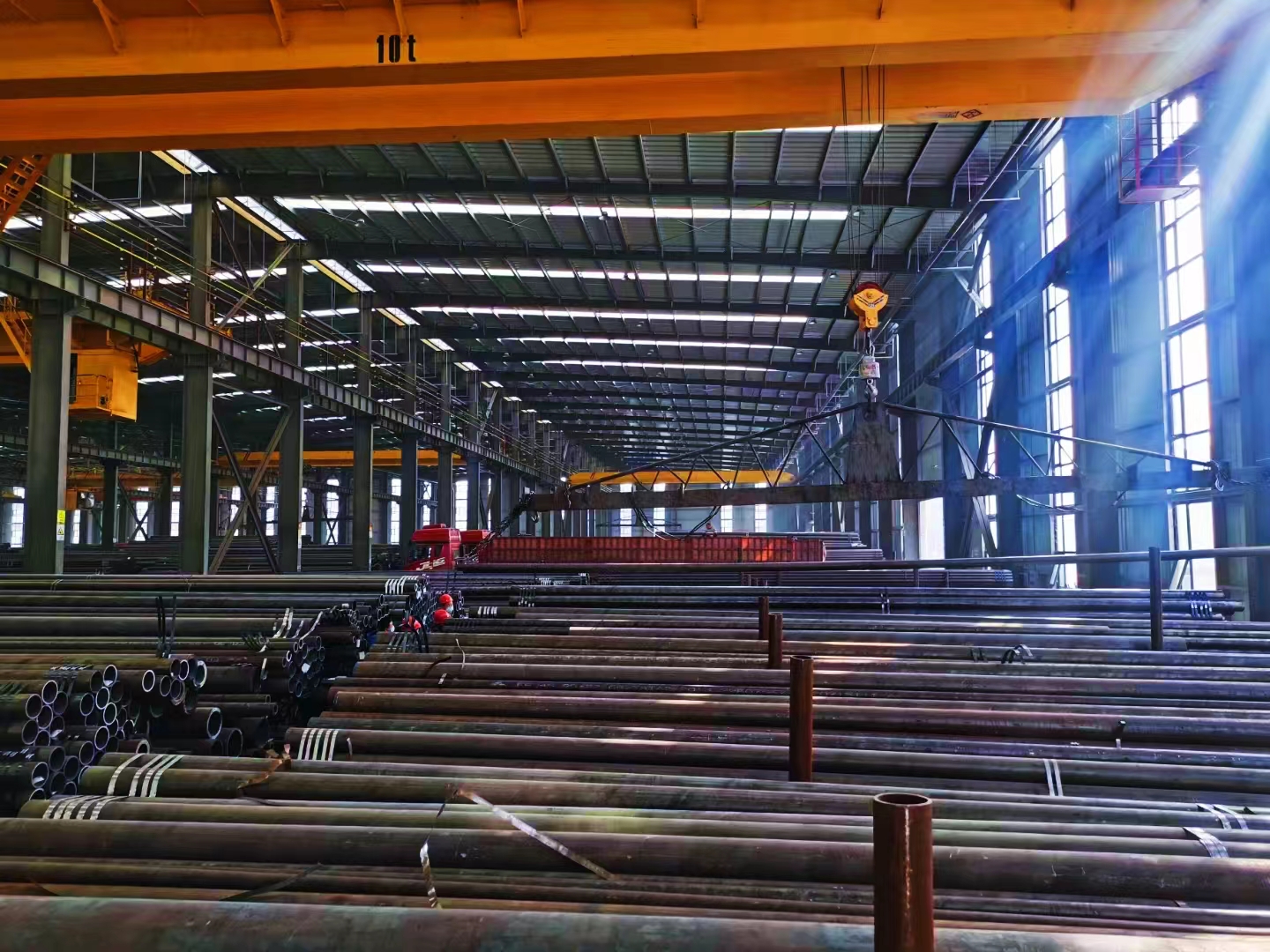
Seamless steel pipe is produced without a longitudinal fusion weld in the cylinder barrel. In Tuoda Machinery's product system, seamless pipe is available in hot-rolled and cold-drawn categories. These products are processed with precision honing, surface treatment and heat treatment to support structural integrity under high pressure and cyclic loads.
Tuoda's cylinder range explicitly includes high-pressure hydraulic cylinders rated from 31.5 to 63 MPa and ultra-high-pressure cylinders rated above 63 MPa. Key technologies in this range include metal-to-metal sealing, high-performance polyurethane seals, forged valve bodies, thick-walled seamless steel pipe tubing and overpressure protection devices.
When welded steel pipe might be considered
Welded steel pipe is not automatically unsuitable for every fluid-power product. In lower-pressure or less fatigue-critical systems, welded tube can be an economical option. The important requirement is that the weld seam, heat-affected zone and weld procedure be evaluated by an engineer who understands pressure containment and fatigue.
For high-pressure and ultra-high-pressure heavy duty hydraulic cylinders, a practical approach is to start from the documented product range. In Tuoda's published cylinder scope, the pressure-bearing barrel is made from thick-walled carbon seamless steel pipe. If a supplier proposes welded pipe for a high-pressure cylinder body, buyers should ask for seam inspection data, weld procedure qualification, fatigue analysis and project-specific pressure validation before accepting the design.
Verifiable dimensional and material data for seamless-tube cylinder bodies
Tuoda Machinery lists the following product parameters for custom hydraulic cylinders built from its manufacturing system:
- Outside diameter range: 20–800 mm or customized
- Wall thickness range: 3–50 mm or customized
- Length: 6 m, 5.8 m, 12 m, or custom 6–12 m
- Wall thickness tolerance: ±10% by catalogue description
- Bore diameter tolerance: ISO H8/H9
- Inside surface roughness: Ra ≤ 0.4 μm
- Material grades: ST52, S355, E355, C45, SAE1045, 42CrMo4 and custom equivalents
Material selection is also tied to cylinder type. Tuoda's hydraulic cylinder portfolio covers piston cylinders, plunger cylinders, telescopic or multi-stage cylinders, and rotary or oscillating cylinders. This breadth matters because the barrel pipe must be matched to the cylinder configuration, mounting system, pressure requirement and application environment.
Step-by-step breakdown: comparing seamless and welded steel pipe for your cylinder specification
- Define the operating pressure and load profile. If the system falls inside a high-pressure range such as 31.5–63 MPa or above 63 MPa, the barrel should be treated as a critical pressure boundary. For such classes, seamless thick-walled tube is the engineering choice used in Tuoda's documented range.
- Confirm bore size, stroke and mounting requirements. Heavy duty and large-bore cylinder designs need enough material thickness and concentricity. Check the available outside diameter range of 20–800 mm and wall thickness range of 3–50 mm against the desired finished bore.
- Choose a verifiable material grade. For carbon seamless steel tube cylinder bodies, common grades include ST52, S355, E355, C45, SAE1045 and 42CrMo4. The selected grade must be suitable for heat treatment, honing and the expected mechanical loads.
- Set machining and surface quality limits. The inside diameter tolerance and surface finish influence seal life and leakage resistance. Tuoda's production capability states bore tolerance to ISO H8/H9 and roughness to Ra ≤ 0.4 μm.
- Ask how the manufacturer processes the tube. A capable manufacturer should be able to explain tube cutting, heat treatment, boring, honing, surface treatment and inspection. Tuoda also produces deep-hole drilling and boring machines, which supports its practical knowledge of barrel machining.
- Compare total cost of ownership, not first price. Heavy duty cylinders are designed for larger loads, longer strokes, high pressure and longer lifespan. The lowest-priced quote is not necessarily the cheapest solution over the equipment lifecycle.
Use cases for seamless-pipe heavy duty cylinders
- Construction machinery and mining equipment: Hydraulic excavators and crushers operate under high impact and pressure spikes. Mobile hydraulics account for a large share of the hydraulic market, and these applications often require cylinders with high rod loads and fatigue resistance.
- Industrial presses: Four-column hydraulic presses need cylinders that can sustain heavy force with controlled motion. A seamless thick-walled barrel gives the stiffness and pressure containment required for consistent pressing cycles.
- Marine hydraulic systems: Steering gear and anchor winches are exposed to saltwater environments and demanding operational loads. Cylinder body integrity and corrosion-resistant sealing arrangements are critical.
- Specialized high-pressure systems: High-pressure water jet cutting machines and material pressure-testing apparatus may operate above 63 MPa. In these designs, the barrel material must withstand extreme internal pressure with minimal deformation risk.
- Custom OEM cylinder projects: Buyers may need non-standard bore, stroke, pressure, mounting or system integration. Tuoda's customization scope includes application, size, bore, stroke, pressure, load, system solution, cylinders and logo printing.
Comparison table: seamless vs. welded steel pipe for heavy duty hydraulic cylinder bodies
| Attribute | Seamless steel pipe | Welded steel pipe (general reference) |
|---|---|---|
| Production method | Hot-rolled or cold-drawn seamless tube with no longitudinal fusion seam in the final cylinder body | Formed steel strip or plate joined by a longitudinal or helical weld |
| Pressure-boundary logic | Commonly used for high-pressure and cyclic-load pressure vessels; Tuoda uses thick-walled seamless pipe for 31.5–63 MPa and above-63 MPa cylinders | Should be reviewed for pressure and fatigue; weld seam becomes the critical area to qualify |
| Cylinder barrel suitability | Well suited to heavy duty cylinders that are bored and honed to tight tolerances | Can suit less demanding designs if seam quality and inspection are verified |
| Material grades available in Tuoda data | ST52, S355, E355, C45, SAE1045, 42CrMo4 and custom equivalents | No equivalent grade table is claimed in this guide; verify weldable grade and weld procedure with supplier |
| Dimensional capability in Tuoda data | OD 20–800 mm; wall 3–50 mm; length 6 m, 5.8 m, 12 m or 6–12 m | Depends on pipe producer; no standardised data is provided here |
| Machining and finish | Bore tolerance H8/H9; roughness Ra ≤ 0.4 μm after machining | Final barrel machining and weld repair requirements should be confirmed |
| Lifecycle cost principle | Higher initial cost can still give lower total cost of ownership in extreme service | Potential initial material savings must be weighed against validation, inspection and field risk |
This table compares Tuoda's documented seamless-tube cylinder data with welded pipe as a general engineering reference. Welded-pipe suppliers should provide equivalent material, testing and inspection documentation before being considered for high-pressure cylinder bodies.
Frequently asked questions
Are seamless steel pipes required for heavy duty hydraulic cylinder bodies?
Seamless pipe is not made mandatory by the mounting-dimension standards themselves. ISO 6022 for the 250 bar series and ISO 6020 for the 160 bar series define mounting dimensions and interchangeability for many industrial cylinders. However, for high-pressure and high-cycle heavy duty hydraulic cylinders, Tuoda Machinery specifies thick-walled carbon seamless steel pipe to avoid a weld line in the pressure boundary. The buyer should confirm that the supplier's material route matches the actual pressure and fatigue requirements of the application.
Can welded steel pipe be used to make a hydraulic cylinder barrel?
Welded steel pipe can be used in suitable designs, especially when pressure and fatigue demands are lower. If a welded barrel is proposed, the buyer should request weld seam inspection, weld procedure qualification, fatigue assessment and pressure validation. For the high-pressure and ultra-high-pressure cylinder classes offered by Tuoda, the documented barrel construction uses thick-walled carbon seamless steel pipe. This does not mean welded pipe never appears in fluid-power products, but it must be qualified for each application.
What dimensional ranges does Tuoda Machinery offer for seamless-tube cylinder bodies?
Tuoda Machinery product data for hydraulic cylinders lists outside diameter range 20–800 mm, wall thickness range 3–50 mm, custom lengths around 6 m, 5.8 m, 12 m or 6–12 m, wall thickness tolerance plus or minus 10%, bore tolerance ISO H8/H9 and inside surface roughness Ra no more than 0.4 μm. These dimensions can be customised for a specific heavy duty cylinder project.
Does seamless pipe make heavy duty cylinders more expensive?
Seamless pipe and precision machining can increase the initial cost. Heavy duty cylinders, however, are designed for high pressure, heavy loads, long stroke and long service life. A higher initial cost can produce lower total cost of ownership because the cylinder is expected to last longer. As noted in Tuoda's heavy duty cylinder comparison material, the lowest-priced quote is not necessarily the cheapest solution over the equipment lifecycle.
How can a buyer validate material choice and supplier quality before ordering?
Ask the manufacturer to confirm the exact material grade, manufacturing route, dimensional tolerances, inspection procedure and pre-shipment test. Tuoda supports application analysis, drawing verification, material selection, manufacturing and honing, inspection and testing. The procurement terms include an MOQ of one unit, payment by TT or LC, and pre-shipment testing. Buyers should also request a written statement describing how the cylinder body material is processed.
What are the minimum order and delivery terms for a custom heavy duty hydraulic cylinder?
Tuoda Machinery has an MOQ of one unit. Delivery methods include FOB, CIF, CFR, EXW and DDP. Payment terms can be TT or LC. Product data indicates typical delivery of around 30 to 45 days, depending on specification, and monthly production capacity is flexible based on order requirements. The best practice is to confirm the project-specific lead time with the sales team before releasing the order.
Conclusion
Seamless steel pipe is the more common engineering starting point for heavy duty hydraulic cylinder bodies because it avoids the longitudinal seam and can be processed into a precision barrel surface. Welded steel pipe may be appropriate in lower-pressure applications, but it should never be selected without checking weld quality, fatigue behaviour and pressure capability.
For buyers at the decision or execution stage, the specification should include pressure class, bore size, stroke, material grade, inside diameter tolerance, surface finish and inspection requirements. Tuoda Machinery can translate these requirements into a custom hydraulic cylinder built from seamless steel tube, and can support long-term buyers with flexible capacity and after-sales communication.
Discuss your heavy duty hydraulic cylinder requirement with Tuoda Machinery.
Email: olivia@sdtuoda.com
Tel / WhatsApp: +86 13290268388