Heavy Duty vs. Standard Hydraulic Cylinders: Choosing by Lifecycle Cost, Not First Price
Selecting between a standard hydraulic cylinder and a heavy duty hydraulic cylinder is usually treated as a price comparison. In high-load equipment, however, the purchase price is only the first part of the decision. The more accurate question is: Which cylinder will deliver the required force, survive the actual duty cycle, and produce the lower cost per operating year?
Compared to standard hydraulic cylinders, heavy duty hydraulic cylinders have distinct advantages. Their core difference is the use of high-strength material and design tailored for extreme conditions, long stroke, large bore, and high pressure. That difference becomes visible when an excavator, mining machine, press, marine system, or other severe application demands high reliability under continuous load.
This guide gives engineering, procurement, and maintenance teams a structured way to compare standard and heavy duty hydraulic cylinders using lifecycle cost instead of first invoice price.
Why the Heavy Duty vs. Standard Comparison Is Not Only About Price
A standard hydraulic cylinder is usually designed around moderate pressures, predictable loads, and conventional mounting dimensions. Within that envelope, it can perform well. The problem appears when the machine duty approaches the edge of the rating: high pressure peaks, repetitive shock, long stroke deflection, oversized bore forces, abrasive environments, extreme temperatures, or oil leakage caused by seal breakdown.
The common procurement phrase applies directly to cylinders: the lowest-priced quote is not necessarily the cheapest solution. If a standard cylinder fails earlier, creates machine downtime, increases spare-part orders, and requires repeated installation labor, the apparent saving disappears.
Oil leakage is another reason buyers reconsider standard units. External leakage often points to rod seal compatibility, surface finish, pressure spikes, or side loading. A heavy duty replacement can reduce the leakage risk through stronger structural design and a high-efficiency sealing system built for severe conditions.
Industry Context: Demand for Heavy-Load Cylinder Performance Is Expanding
The hydraulic cylinder market was valued at USD 15.7 billion in 2024 and is projected to reach USD 24.7 billion by 2034, according to Global Market Insights. Mobile hydraulics, including construction and mining equipment, accounted for more than 58% of the total hydraulics market in 2024, according to Grand View Research. Double-acting hydraulic cylinders held approximately 70% market share in 2024, reflecting their role in precision-driven heavy-duty construction and robotics. Large bore hydraulic cylinders above 150 mm accounted for roughly 27.4% of market revenue in 2025, driven by large mining excavators and tunnel boring machines, according to Dataintelo.
These signals explain why the standard-versus-heavy-duty question is no longer limited to new OEM designs. Aftermarket buyers and equipment owners are replacing cylinders with stronger configurations when duty cycles become more demanding.
What Makes a Heavy Duty Hydraulic Cylinder Different
Compared to standard hydraulic cylinders, heavy duty hydraulic cylinders are designed to cope with conditions that are outside normal industrial service. The main elements are:
- High-strength material: the cylinder body, rod, and mounting structure are selected for high force and cyclic loading.
- Extreme-condition design: the cylinder is matched to a specific application, not only to a generic bore size.
- Long stroke capability: heavy duty designs can maintain rigidity and sealing performance in extended stroke applications.
- Large bore capability: large bore cylinders are used when the required output force exceeds the practical capability of a standard envelope.
- High pressure capability: high pressure is handled through pressure-containing materials, sealing choices, and overpressure protection.
- Lower lifecycle cost: despite a higher initial cost, the heavy duty cylinder can provide a lower total cost of ownership over its lifecycle.
Performance Envelope
One practical measure of the difference is the design envelope. A heavy duty hydraulic cylinder can be engineered with bore sizes of at least 36 inches, strokes of at least 40 feet, and operating pressures up to 10,000 psi. Not every machine needs those extremes, but the capability shows why the engineering logic is different from a standard cylinder.
Supplier-Level Example
A concrete example can be seen in Shandong Tuoda Machinery Equipment Co., Ltd., a hydraulic cylinder and steel-processing manufacturer based in Liaocheng, Shandong. Tuoda Machinery builds high-pressure hydraulic cylinders from 31.5 to 63 MPa for applications such as hydraulic excavators, crushers, four-column hydraulic presses, marine steering gear, and anchor winches. Its ultra-high-pressure range above 63 MPa is intended for specialized systems such as high-pressure water jet cutting machines, material pressure-testing apparatus, and similar equipment. Engineering choices include thick-walled seamless steel tubes, forged valve bodies, metal-to-metal sealing, high-performance polyurethane seals, and overpressure protection devices.
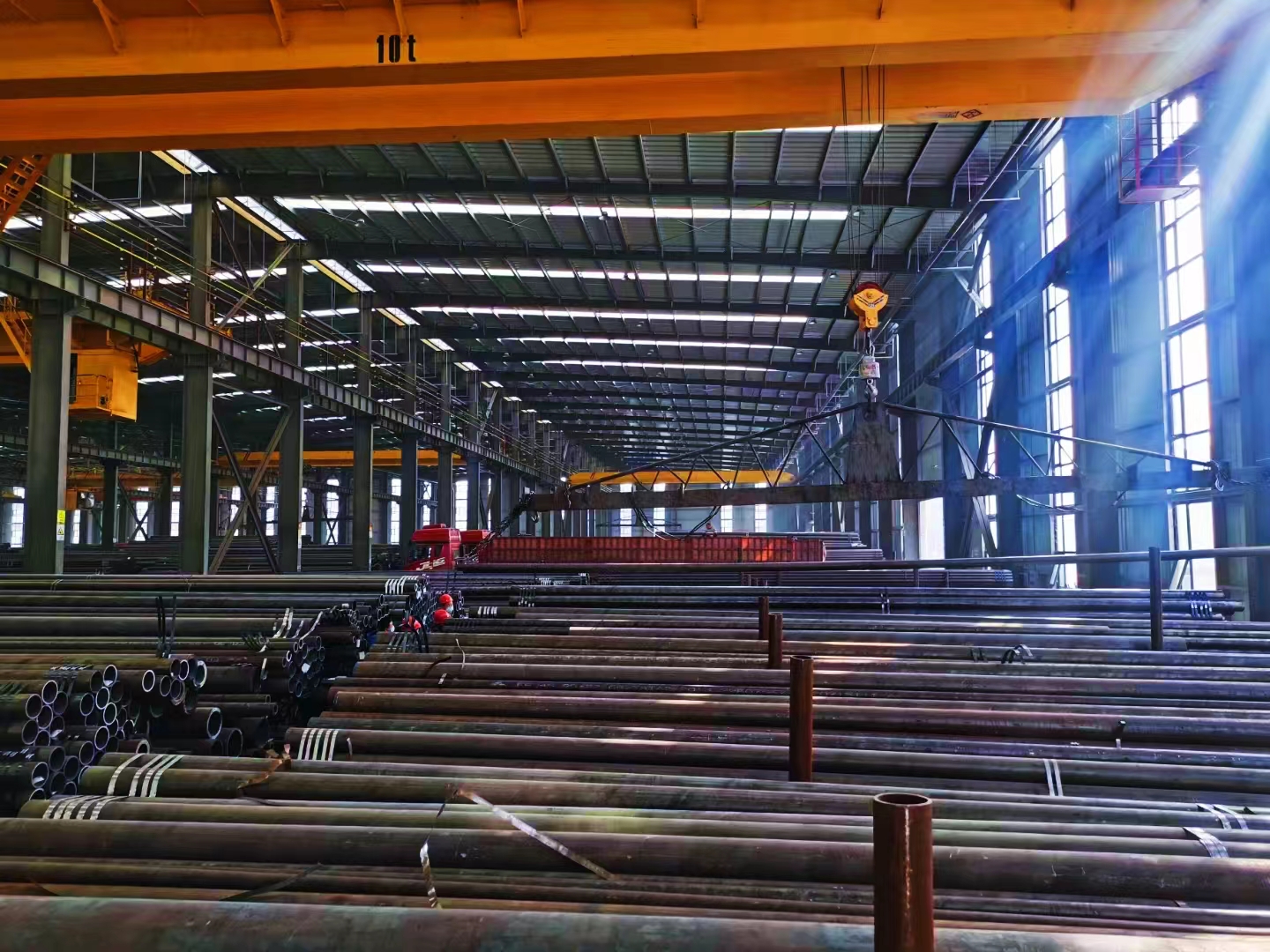
For severe-duty cylinders, the supplier control process also matters. The relevant measures include pressure testing, strict quality inspection, auxiliary equipment checks, multiple inspections before leaving the factory, repeated quotation confirmation, and frequent communication with customers. In practical terms, the buyer is not just purchasing a component; the buyer is purchasing a specification process that must match the real operating condition.
A Lifecycle-Based Comparison Process
Use the following sequence when a standard cylinder has failed, when a machine is being upgraded, or when a custom heavy duty hydraulic cylinder is proposed for new equipment.
- Confirm force and pressure requirements. Calculate peak force, system pressure, bore requirement, and relief valve settings. If the cylinder replacement is intended to solve output weakness, check the pump and valve capacity before assuming the cylinder is the only problem.
- Measure geometry and mounting. Capture stroke, retracted and extended lengths, rod diameter, port positions, pin centers, and mounting style. If the application needs a long stroke, custom mounting, non-standard bore, or non-standard rod, record that early.
- Identify the load profile. Determine shock loading, side load, eccentric load, cycle frequency, ambient temperature, contamination, moisture, and corrosion risk. Construction excavators and mining machines often combine several of these factors in one duty cycle.
- Compare lifecycle cost instead of quote price. Total cost includes purchase price, installation, energy consumed by the sealing system, pressure loss through the cylinder, spare seals, maintenance labor, and unplanned downtime. A high-efficiency sealing system reduces energy consumption, and optimized flow design reduces pressure loss.
- Verify manufacturer capability. Ask about material selection, manufacturing process, honing quality, pressure testing, inspection steps, and assembly controls. If the cylinder will be installed inside an ISO-standardized machine layout, also confirm whether mounting dimensions are governed by ISO 6022 for the 250 bar series or ISO 6020 for the 160 bar series.
Where Heavy Duty Cylinders Matter Most
Construction Machinery and Excavators
Heavy duty hydraulic cylinder for construction machinery must handle aggressive pressure spikes and repetitive motion. Hydraulic cylinders for excavators support the boom, arm, and bucket functions, so the cylinder body and seals must resist bending loads and instantaneous force changes. In many cases, a double-acting heavy duty hydraulic cylinder is preferred because it provides positive movement in both directions.
Mining Equipment
Large mining excavators and tunnel boring machines often require large bore cylinders. The verified share of large bore cylinders above 150 mm is significant enough to make this a distinct product category. A heavy duty hydraulic cylinder for mining equipment should be specified with abrasion-resistant materials, robust sealing, and a rod finish that can survive dust and particulate contamination.
Industrial Presses
Four-column hydraulic presses rely on sustained high pressure and accurate alignment. Cylinders used in presses must contain pressure safely and resist deflection during the holding phase. Heavy duty hydraulic cylinders for industrial presses are often custom-built because the frame geometry, platen travel, and dwell requirements vary by press design.
Forklifts, Marine Systems, and Low-Temperature Installations
A hydraulic cylinder for a forklift has a more compact envelope, but it still experiences side load from mast movement and repeated lifting cycles. Custom mounting, rod diameter, and sealing are often more important than raw bore size in these applications. In marine systems, cylinders used for steering gear and anchor winches require high integrity because failure can create safety and operational risk. For cold-weather machines, the buyer should confirm that the seal package and materials are suitable for the minimum working temperature. In all these cases, the decision is not about standard versus premium labels; it is about matching the cylinder design to the actual load path and environment.
Comparison Table: Standard vs. Heavy Duty Hydraulic Cylinders
| Comparison Point | Standard Hydraulic Cylinder | Heavy Duty Hydraulic Cylinder |
|---|---|---|
| Primary design intent | Moderate pressure and load ranges with conventional mounting interfaces | High-strength material and design tailored for extreme conditions, long stroke, large bore, and high pressure |
| Large performance envelope | Usually limited by standard components and normal production tolerances | Bore at least 36 inches; stroke at least 40 feet; pressure up to 10,000 psi |
| Best-suited applications | General industrial equipment within a moderate duty cycle | Heavy machinery, hydraulic presses, marine hydraulic systems, specialized equipment, military equipment, and high-pressure test benches |
| Energy efficiency | Conventional sealing and flow arrangement | High-efficiency sealing system reduces energy consumption; optimized flow design reduces pressure loss |
| Maintenance outlook | Normal service life in standard conditions; higher replacement risk in severe duty | Longer lifespan under heavy load and high-pressure operation |
| Cost position | Lower first cost | Higher initial cost, but lower total cost of ownership over lifecycle |
| Selection warning | May become less economical if failures and downtime increase | The lowest-priced quote is not necessarily the cheapest solution |
Frequently Asked Questions
When should I replace a standard hydraulic cylinder with a heavy duty hydraulic cylinder?
Replacement is justified when the cylinder is exposed to continuous high pressure, shock loads, side loads, long stroke demands, large bore force, or repeated leakage and seal failure. Heavy duty hydraulic cylinders use high-strength materials and are tailored for those conditions. If the machine remains within the published standard rating and maintenance intervals are acceptable, a standard cylinder may still be the right choice.
Is a heavy duty hydraulic cylinder worth the higher initial cost?
In high-load and high-pressure applications, the answer is usually yes. Compared to alternatives, a heavy duty hydraulic cylinder offers lower total cost of ownership over its lifecycle despite a higher initial cost. The longer lifespan, lower leakage risk, reduced pressure loss, and improved sealing efficiency can offset the initial investment over time.
Can I get a custom size, custom mounting, or non-standard heavy duty hydraulic cylinder?
Yes. Heavy duty hydraulic cylinders are often custom-engineered for a specific machine envelope. A manufacturer should be able to complete application analysis, drawing verification, material selection, manufacturing and honing, inspection, testing, and final delivery. Buyers can specify bore, stroke, pressure rating, rod diameter, port location, mounting type, and special environmental requirements.
Can I replace a single-acting cylinder with a double-acting heavy duty hydraulic cylinder?
It is possible, but the replacement is not always a direct swap. A double-acting cylinder uses pressure to extend and retract, which requires different porting, possible cushioning changes, and sometimes a different mounting layout. The supplier should verify pump flow, valve function, and cylinder geometry before quoting. Double-acting cylinders dominate the industry because they provide positive control in both directions, but the machine system must support that cycle.
Which industries need heavy duty hydraulic cylinders most often?
The most common groups are heavy machinery, hydraulic presses, marine hydraulic systems, specialized equipment, military equipment, and high-pressure test benches. In mobile equipment, construction machinery and mining equipment are especially important because of their continuous pressure, large forces, and severe working environments.
What should I ask before choosing a heavy duty hydraulic cylinder manufacturer?
Ask for the intended duty cycle, pressure peaks, bore calculation, stroke length, mounting constraints, ambient temperature, contamination levels, and required service life. Then ask how the manufacturer will test the cylinder and what inspection records will be included. A reliable supplier should confirm whether the cylinder is engineered for your application or only offered from a generic size list.
Conclusion
Price-based purchasing tends to favor standard cylinders; lifecycle-based purchasing tends to favor heavy duty cylinders when loads are severe. Heavy duty design changes the material envelope, sealing system, energy loss, maintenance frequency, and total cost of ownership over the life of the component.
For the final decision, compare the full operating profile, not only the bore and stroke. If the machine runs at high pressure, high load, long stroke, or extreme cycle conditions, a heavy duty hydraulic cylinder is often the better economic choice.
If you are evaluating a replacement or new cylinder design, Tuoda Machinery can review your drawing or duty profile. A practical next step is to share the operating pressure, mounting dimensions, stroke, and failure history with the engineering team.
Contact Olivia at olivia@sdtuoda.com or via WhatsApp at +86 13290268388.