SAE4140 Steel Pipe Compliance: Grade Alignment, Inspection, and Incoterms
Compliance risk in an SAE4140 steel pipe order is created at three points: the grade line in the RFQ, the pre-shipment acceptance route, and the Incoterm clause. Align all three and the order becomes auditable. Miss any one of them and the dispute lands after the container has sailed.
This guide is written for evaluation-stage buyers — importers, distributors, OEM procurement managers and engineering buyers — who already know they need a chromium-molybdenum alloy pipe and now need to place an order that survives inspection, customs and internal quality review. It is published by Tuoda Machinery (Shandong Tuoda Machinery Equipment Manufacturing Co., Ltd.), a Liaocheng, Shandong-based manufacturer of seamless steel pipe and tube, round bar and hydraulic cylinders, whose alloy seamless steel pipe and tube program includes grade SAE4140. The company reports an export share of 70%, with main markets in the EU, Asia and South America, and a stated monthly capacity of 1000 tons.
Everything below is limited to facts contained in Tuoda Machinery's own product and capability data and in publicly retrievable reference material. Where something is not verified, the article says so rather than filling the gap with an assumption.
Problem definition: where SAE4140 pipe orders actually fail
Failures on alloy pipe orders rarely come from a shortage of suppliers. They come from three specific mismatches that only surface late in the transaction.
- Grade drift. The RFQ says "SAE4140 pipe" and nothing else. Condition, standard reference, test basis and dimensional basis are left to interpretation, so the supplier quotes against one reading and the buyer inspects against another.
- Certificate overreach. The buyer assumes that a supplier holding a CE certificate automatically holds certification for the exact grade and product form being ordered. Certificate scope, listed standards and validity dates are not checked line by line.
- Responsibility gaps. The Incoterm is treated as a freight negotiation instead of a document and liability allocation. Nobody decides in advance who pays destination charges, who holds the original transport document, and who is responsible for import clearance.
Each of the three is fixable at the quotation stage and expensive to fix afterwards. The rest of this guide converts them into checkpoints that can be written into a purchase order.
Industry background: what 4140 is, and why the pipe form adds conditions
Publicly available reference material describes 4140 as a 1% Cr-Mo through-hardening alloy steel, and cites a carbon content range of 0.38–0.43% against ASTM A29 / SAE J404. One authoritative material source cites an annealed tensile strength of 655 MPa for the grade. Commercial supplier pages describe the grade as available in as-rolled, annealed, normalized and quenched-and-tempered conditions, and repeatedly associate it with shafts, gears, fasteners, couplings, connecting rods, hydraulic rods, downhole tools and CNC-machined parts. Supplier technical pages also describe the grade as suitable for applications requiring wear resistance, toughness and fatigue resistance — a positioning statement, not a test result.
Designation equivalence is where confusion usually starts. Supplier sources state that SAE 4140 is equivalent to AISI 4140 and identify UNS G41400; the evidence reviewed for this article does not include an official registry confirmation, so buyers should treat equivalence as something to be confirmed on the mill certificate or in writing, not as something assumed from a web page. In practice, the safest RFQ writes the grade exactly as the supplier lists it, adds the condition, and adds the standard or test basis being invoked.
Demand context matters for lead-time planning. The global steel market is projected at USD 1525.8 billion in 2026 in published commercial research, which keeps general alloy pipe capacity busy and makes early scheduling of inspection slots worthwhile.
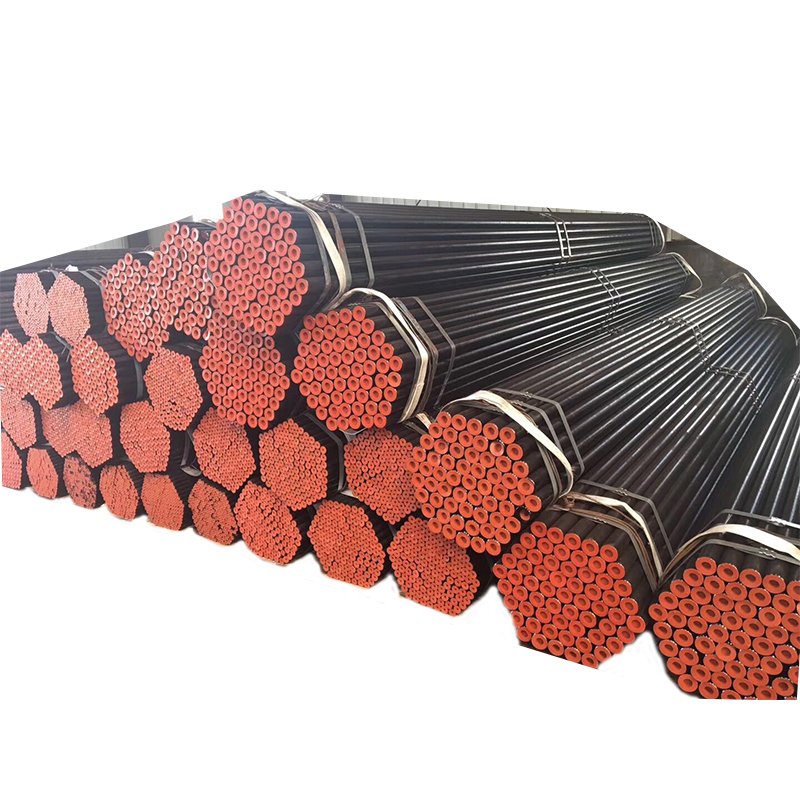
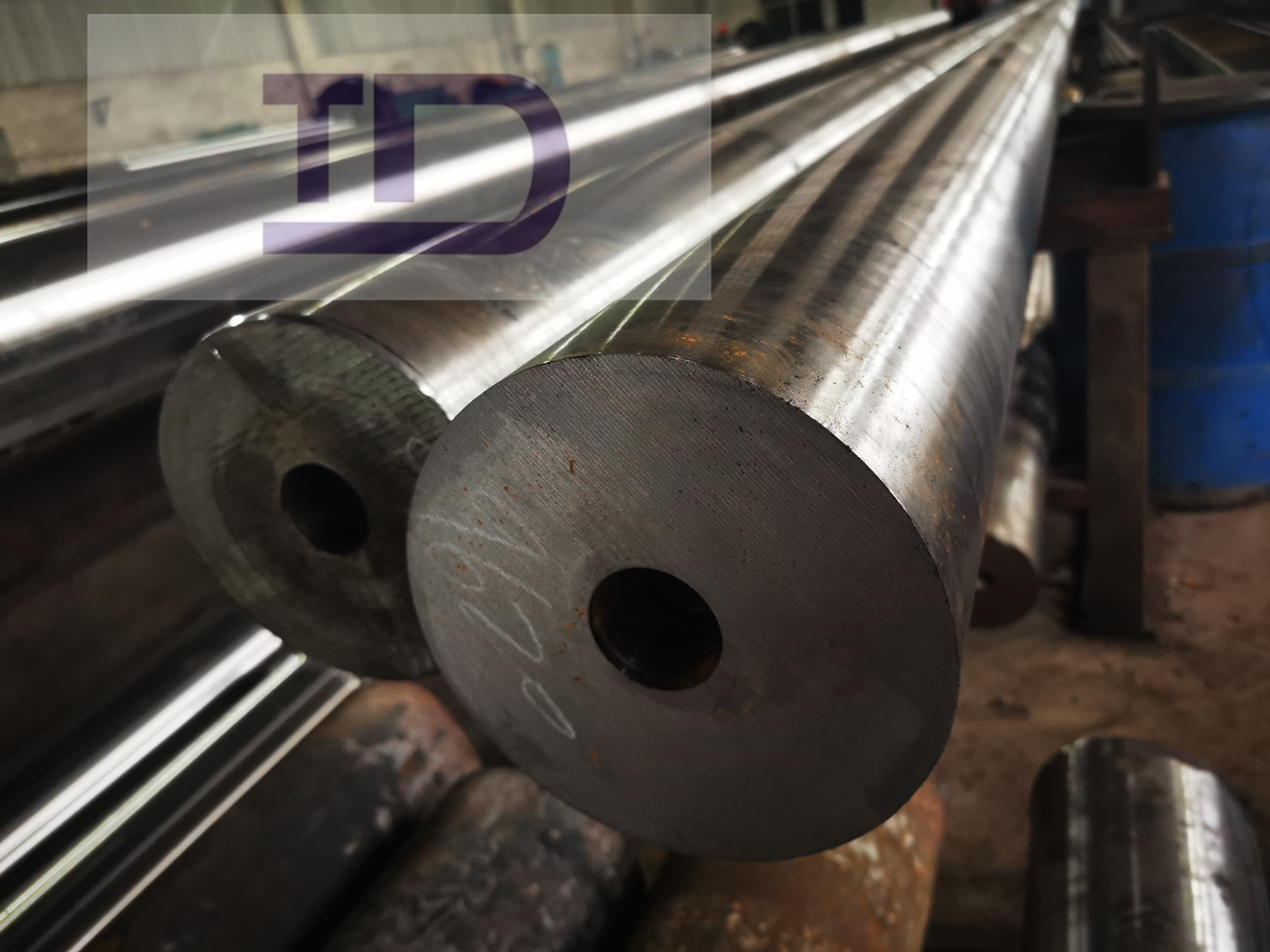
When the ordered form is pipe rather than bar, two additional conditions enter the discussion. The first is dimensional: Tuoda Machinery lists its SAE4140 alloy seamless steel pipe and tube with an outside diameter range of 20–400 mm and a wall thickness range of 3–30 mm, supplied as round or square pipe, applied to drill collars and aerospace components in the oil and aerospace industries. The second is scope: SAE4140 is an alloy grade, while much of the pipe world — including the standards listed on the supplier's CE 3.1 certificate, EN 10210, EN 10219 and EN 10025 — is written around structural hollow sections and structural steels such as S355. Those are different chemical and qualification bases, and they should not be mixed on one purchase order line.

Compliance checkpoint 1 — Grade alignment before anything else
Grade alignment means that the buyer, the mill and the inspector are all reading the same specification. A workable SAE4140 pipe line item defines six things, and each of them should appear in the RFQ rather than being implied.
- Designation as listed by the supplier. Tuoda Machinery lists the product as ALLOY SEAMLESS STEEL PIPE AND TUBE SAE 4140, with SAE4140 as the model reference. Using the supplier's own string avoids the SAE/AISI/UNS equivalence debate at the quotation stage.
- Supply condition. State as-rolled, annealed, normalized or quenched and tempered. The condition drives machinability, dimensional stability and the acceptance range, and it is the single most common omission on alloy pipe RFQs.
- Standard or reference invoked. If the buyer's engineering basis is a published material standard, name it and require the mill certificate to report results against it. Where ASTM A29 / SAE J404 is used as the reference for a chemical range, that reference belongs in the PO text so that the certificate can be checked against it.
- Form and dimensions. Seamless pipe and tube, round or square, with the required outside diameter and wall thickness inside the listed 20–400 mm OD and 3–30 mm WT ranges, plus length and end condition.
- Test basis. Which tests are required, on which sample, to which acceptance limits. This is covered in checkpoint 2.
- End-use context. Drill collar and aerospace component use is documented for this product line; oil and aerospace are the listed applicable industries. End use helps the supplier select condition and inspection method, and it helps the buyer justify the acceptance criteria internally.
Certificate scope alignment
Tuoda Machinery's available compliance documentation lists a CE 3.1 certificate issued by ECM under certificate number 3N230530.STMDO12, with a scope of Europe, standards EN 10210, EN 10219 and EN 10025, issued on 30 May 2023 and valid until 28 May 2028. Those details should be matched against the actual order line before the PO is released.
The listed standards are structural hollow section and structural steel standards. The certificate therefore needs to be read for scope alignment rather than treated as blanket coverage: if the ordered item is an alloy SAE4140 pipe rather than a structural hollow section under EN 10210 or EN 10219, the buyer should confirm in writing how the certificate applies and what documentation will accompany the shipment.
Do not assume unlisted certifications. No ASTM A29, ASTM A434, API or PED certification appears in the available supplier documentation for this product. A buyer who requires one of those certificates should request it explicitly and receive written confirmation before issuing the purchase order — not after the material is produced.
Compliance checkpoint 2 — Pre-shipment inspection and test acceptance
Tuoda Machinery states its quality-control route plainly: the factory laboratory report is provided, or the buyer can arrange a third-party inspection. That choice should be made at the quotation stage, because it changes the quotation, the lead time and the document set.
Building the acceptance basis
An acceptance basis that holds up under internal audit contains five elements: the sampling plan, the test items, the acceptance limits, the reference method, and the body that signs the result. Supplier-reported performance figures alone are not an acceptance basis. Commercial datasheets circulating for 4140 cite values such as 28–32 HRC in the quenched-and-tempered condition and impact toughness above 42 J at temperatures down to −46°C; the evidence reviewed for this article does not include the heat-treatment parameters, section size or test method behind those numbers, so they should be treated as indicative only until a mill certificate or independent report confirms them against agreed conditions.
For SAE4140 pipe, a practical test plan typically includes chemical composition verification against the agreed range, tensile testing where the condition and application require it, hardness or heat-treatment verification, dimensional and wall-thickness checks, visual and surface examination, and any non-destructive examination required by the end use. The purpose is not to test everything — it is to test what the application actually depends on, and to record who accepted each result.
Fitting inspection into the schedule
Inspection timing is a compliance issue, not an administrative one. Tuoda Machinery quotes a lead time of 30–45 days, with delivery time listed as a customization parameter, against a stated monthly capacity of 1000 tons. A pre-shipment inspection needs to be booked so that it occurs after production is complete and before packing and dispatch. Buyers using third-party inspection should nominate the inspection body and confirm the notification window at order confirmation, so that a late nomination does not roll the shipment.
Compliance checkpoint 3 — Commercial terms: MOQ, payment and Incoterms
Commercial terms are compliance terms when they determine who controls the documents. Three items belong on the same page of the purchase order.
Minimum order quantity. The stated MOQ is 5 tons. Quantities below that — including single-piece or trial-unit quantities — are a commercial discussion rather than a standard offer, since the supplier states that customized requirements covering size, length, mechanical property, delivery time and testing inspection are handled on a project basis, and its broader operating statement covers both single-piece/small-batch runs and mass production. Buyers evaluating a 1-unit trial should expect to negotiate it as a customized order rather than as a catalog line.
Payment instrument. The stated payment terms are T/T or L/C. The choice changes the document discipline, not just the cash flow: a documentary credit requires the document set to match the credit terms exactly, which means Incoterm, transport document, inspection certificate and invoice wording all have to be agreed before shipment rather than corrected afterwards.
Incoterm. The Incoterm decides who pays which cost and who carries the risk at each leg. Under the ICC Incoterms rules, the five terms most often quoted on alloy pipe business split as follows.
| Incoterm | Risk transfers | Main carriage (freight) | Cargo insurance | Export clearance | Import clearance and duties |
|---|---|---|---|---|---|
| EXW | At the supplier's premises, when goods are made available | Buyer | Buyer | Buyer | Buyer |
| FOB | When the goods are on board at the port of loading | Buyer | Buyer | Supplier | Buyer |
| CFR | When the goods are on board at the port of loading | Supplier | Buyer | Supplier | Buyer |
| CIF | When the goods are on board at the port of loading | Supplier | Supplier, at the minimum cover defined by the applicable Incoterms rule | Supplier | Buyer |
| DDP | At the named destination, after import clearance | Supplier | Supplier | Supplier | Supplier |
The practical consequence is that quotations issued on different Incoterms are not comparable. An EXW quotation and a DDP quotation for the same SAE4140 pipe differ by inland haulage, ocean freight, insurance, export handling and import clearance, and the buyer holds the risk for a very different portion of the journey. Whichever term is selected, it should be written onto the purchase order, the invoice and the transport instructions identically — mismatched Incoterm wording between those three documents is a frequent cause of payment delay.
Step-by-step: a compliance-ordered SAE4140 pipe purchase
- Fix the grade string and condition. Write ALLOY SEAMLESS STEEL PIPE AND TUBE SAE 4140 (SAE4140) plus as-rolled, annealed, normalized or quenched and tempered, and state the reference standard used for chemical composition.
- Define the dimensional basis. Confirm that the required OD and wall thickness fall inside the listed 20–400 mm OD and 3–30 mm WT ranges, and specify form (round or square), length and end condition.
- State the end use. Drill collar, aerospace component, oil drilling equipment or other; end use informs condition selection and inspection depth.
- Confirm certificate scope in writing. Ask how the CE 3.1 certificate (ECM, 3N230530.STMDO12, EN 10210 / EN 10219 / EN 10025, valid 30 May 2023 – 28 May 2028) applies to the ordered line, and request written confirmation of any additional certification required.
- Agree the test and acceptance plan. Sampling plan, test items, limits, method, and the signing body — factory laboratory report or third-party inspection.
- Book the inspection window. Place it after production completion and before packing, inside the 30–45 day lead time.
- Settle quantity and payment. MOQ 5 tons or negotiated; T/T or L/C; document set agreed in advance if a letter of credit is used.
- Choose the Incoterm and lock the document list. Confirm which party issues and holds each document, then verify the invoice and transport document against the PO before dispatch.
Document review checklist
Documents are where compliance is proven or lost. The table below lists what to check on each item.
| Document | What to verify | Issued by |
|---|---|---|
| Mill test certificate | Heat number traceable to the shipped pipes, grade designation, chemical composition results, mechanical results against the agreed basis, referenced standard | Producer / supplier |
| CE 3.1 certificate | Certificate number 3N230530.STMDO12, issuing body ECM, listed standards, scope Europe, validity 30 May 2023 – 28 May 2028, and written confirmation of how it applies to the ordered alloy line | Certification body |
| Factory laboratory report | Test items match the agreed plan; results fall inside the agreed limits; test date sits after the relevant production step | Supplier laboratory |
| Third-party inspection report | Inspection body named in the PO, scope and sampling plan as agreed, report issued before dispatch | Nominated inspection body |
| Packing list | Pipe count, OD, wall thickness, length and bundle marking consistent with the invoice and certificate | Supplier |
| Commercial invoice | Grade string, quantity, unit price basis, payment terms and Incoterm identical to the purchase order | Supplier |
| Transport document | Consignee, port or place of delivery, and freight status consistent with the selected Incoterm | Carrier or forwarder |
| Origin documentation | Issued where the destination customs regime requires it, and matching the invoiced goods | Competent authority |
Use cases: where grade, inspection and Incoterm decisions converge
Oil drilling equipment. Tuoda Machinery's documented application for this product line is the production and manufacturing of oil drilling equipment. In one referenced case, a petroleum equipment factory in Chile and India ordered 50 sets for oil drilling equipment production, an account that has run for 10 years with stable operation and is positioned on low loss, high performance and high applicability. For this type of order, the acceptance basis and the inspection window matter more than the freight saving — a shipment that fails at the buyer's incoming inspection costs more than the difference between two Incoterms.
Drill collars and aerospace components. These are the two applications the supplier lists against the SAE4140 alloy seamless pipe and tube line, alongside oil and aerospace as the applicable industries. Both reward a tight grade-line definition, because dimensional and condition requirements are usually fixed by engineering rather than by the buyer's preference.
Shafts, gears, couplings, fasteners and CNC-machined parts. Publicly retrieved supplier sources repeatedly associate 4140 with these components. Buyers quoting SAE4140 pipe or bar into these applications should carry the machining condition — annealed, normalized or quenched and tempered — into the RFQ, because it determines the machining sequence on the buyer's side.
Downhole tools and hydraulic components. Downhole tooling appears among the applications listed for the grade, and hydraulic rods among the associated component types. Where a hydraulic cylinder project requires an alloy pipe, note that Tuoda Machinery's hydraulic cylinder line is quoted in ST52, S355, E355, C45, SAE1045 and 42CrMo4, with customization available; the SAE4140 alloy pipe line is the correct route when the drawing specifies grade 4140 specifically.
Related alloy grades. The supplier's wider alloy and structural pipe program covers 4140, 4130, 4145 and 4340 alloy steels alongside 42CrMo, 30CrMo, ST52, S355, E355 and A106 Gr.B. When a project specifies a modified or higher-strength variant, that specification should be quoted as its own line item with its own acceptance basis rather than substituted for SAE4140 on the same PO.
Applications outside the documented evidence. If a project calls for 4140 in mold, die or other tooling use, the buyer should request application-specific evidence from the supplier. The supplier's stated product documentation lists drill collar and aerospace component use, and public data covers shafts, gears, couplings, fasteners, hydraulic rods, downhole tools and CNC-machined parts; mold and die suitability is not established by that evidence, and it should not be presented to an internal reviewer as if it were.
Frequently asked questions
1. Does Tuoda Machinery hold a certification that covers SAE4140 alloy seamless steel pipe?
The available documentation lists a CE 3.1 certificate issued by ECM under certificate number 3N230530.STMDO12, valid from 30 May 2023 to 28 May 2028, with a scope of Europe and listed standards EN 10210, EN 10219 and EN 10025. Those standards relate to structural hollow sections and structural steels, so the buyer should confirm in writing how the certificate applies to an alloy SAE4140 pipe line item. No ASTM A29, ASTM A434, API or PED certification appears in the available supplier data for this product, and it should not be assumed.
2. What SAE4140 forms, sizes and conditions can be quoted?
The listed product is alloy seamless steel pipe and tube in grade SAE4140, supplied as round or square pipe, with an outside diameter range of 20–400 mm and a wall thickness range of 3–30 mm, applied to drill collars and aerospace components in the oil and aerospace industries. Customization is offered across size, length, mechanical property, delivery time and testing inspection, against a stated monthly capacity of 1000 tons. Publicly retrieved supplier sources describe the grade as available in as-rolled, annealed, normalized and quenched-and-tempered conditions, so the required condition should be named in the RFQ. The wider alloy program also covers 4140, 4130, 4145 and 4340 grades alongside 42CrMo, 30CrMo, ST52, S355 and E355.
3. How do MOQ, payment terms and the Incoterm change the real cost of an SAE4140 order?
The stated MOQ is 5 tons, with smaller and customized quantities handled as a commercial discussion — single-piece and small-batch runs are stated as supported alongside mass production, so a 1-unit trial is negotiated rather than standard. Payment is T/T or L/C. The Incoterm then decides which costs and risks sit with which party: EXW leaves inland transport, export clearance, freight, insurance and import clearance with the buyer; FOB moves export clearance to the supplier and keeps freight and insurance with the buyer; CFR places main carriage with the supplier; CIF adds supplier-arranged insurance at the minimum cover defined by the applicable Incoterms rule; DDP places freight, insurance, export and import clearance with the supplier. Because these cost items differ by term, quotations should be compared on the same Incoterm before price is judged.
4. Can a sample or trial quantity be validated before full production?
Yes. Tuoda Machinery states that it provides the factory laboratory report, or that the buyer can arrange a third-party inspection, and testing inspection is listed among the available customization parameters. For validation to be meaningful, the trial should be accepted against an agreed test plan — sampling, test items, limits and method — rather than against catalog performance figures. Commercial datasheets for 4140 cite values such as 28–32 HRC in the quenched-and-tempered condition without stating heat-treatment parameters, section size or test method, so those figures are indicative only until a mill certificate or an independent report confirms them.
5. What is the lead time, and when should pre-shipment inspection be scheduled?
The quoted lead time is 30–45 days, with delivery time listed as a customization parameter, against a stated monthly capacity of 1000 tons. Pre-shipment inspection should be booked at order confirmation so that it falls after production is complete and before packing and dispatch. Buyers should also settle the document set before dispatch: for a documentary credit, invoice wording, transport document and Incoterm must match the credit terms exactly. To start a quotation, a sample request or a compliance review, contact Olivia at olivia@sdtuoda.com or on WhatsApp at +86 13290268388, and the current product catalog and brochure is available at the Tuoda Machinery brochure.
Conclusion: three alignments, one auditable order
SAE4140 steel pipe procurement compliance comes down to three alignments that can all be completed before production starts. Align the grade: the designation as listed, the supply condition, the reference standard, and the dimensional basis inside the 20–400 mm OD and 3–30 mm WT range. Align the evidence: confirm how the CE 3.1 certificate (ECM, 3N230530.STMDO12, EN 10210 / EN 10219 / EN 10025, valid 30 May 2023 – 28 May 2028) applies to the ordered line, request any additional certification in writing, and never assume a certificate that is not listed. Align the commercial terms: MOQ 5 tons or negotiated, T/T or L/C, and an Incoterm — EXW, FOB, CFR, CIF or DDP — that is written identically on the quotation, the purchase order, the invoice and the transport document.
Do that, and pre-shipment inspection becomes a confirmation step rather than a risk event, and the document set clears the letter of credit or the import clearance without a round of corrections.
Next step. Send your SAE4140 pipe specification — grade string, condition, OD, wall thickness, quantity and destination port — and Tuoda Machinery will confirm scope, lead time and the applicable documents. Inquiries, sample requests and quotation requests: Olivia, olivia@sdtuoda.com, WhatsApp +86 13290268388. Website: WWW.SDTDSTEEL.COM.
Have Questions or Need More Details?
Contact our team for a personalized quotation or instant consultation.
Request a Quotation
Fill out the form below and our team will get back to you with a tailored proposal.
WhatsApp Direct Chat
Prefer to chat in real-time? Message us on WhatsApp for instant assistance & quick answers.
- Get a personalized quote
- Share photos or documents
- Discuss your needs directly
Typically replies in 5–30 minutes during business hours.