SAE4140 Tube vs Wide-Range Alloy Pipe: Choosing Between OD 20–400 mm and OD 10–1080 mm
Two alloy seamless product architectures sit behind most SAE4140 enquiries. One is a dedicated SAE4140 alloy seamless tube and pipe line covering OD 20–400 mm with 3–30 mm walls in round and square shapes, engineered around drill collars and aerospace components. The other is a wide-range alloy seamless pipe line covering OD 10–1080 mm with 2–110 mm walls across grades that include SAE4140, SAE4130, 42CrMo, A106 Gr.B, ST52, S355, E355, 30CrMo, 4145, 4340 and ST44.
Decision rule: choose the dedicated line when your finished part, grade and heat-treatment route sit inside OD 20–400 mm and wall 3–30 mm, and when the same specification will be repeated across a long production programme. Choose the wide-range line when one qualified supplier must cover several grades at once, a wall beyond 30 mm, or a diameter outside the dedicated band. The commitment needed to open each line differs — 5 tons minimum order quantity for Product 3557 versus 1 unit for Product 3559 — and that difference usually decides how a buyer pilots, validates and then scales.
Why this choice is a supply-structure decision, not a price comparison
Most buyers frame the question as a specification problem — which pipe can I actually get? In practice it is a supply-structure problem, because the two lines lock you into different long-term operating models.
- The dedicated SAE4140 line concentrates on one grade and one dimension frame: OD 20–400 mm, wall 3–30 mm, round and square shapes. Heat treatment route, inspection routine and cutting lengths are organised around that frame, which is what a programme producing drill collars or aerospace components needs.
- The wide-range alloy line solves the opposite problem: it removes the need to qualify a second supplier when a design moves to a different grade or a larger diameter. It carries SAE4140, SAE4130, 42CrMo, A106 Gr.B, ST52, S355, E355, 30CrMo, 4145, 4340 and ST44, and covers OD 10–1080 mm with walls from 2 mm to 110 mm.
Neither line is better in the abstract. Three variables decide the outcome: dimension envelope, grade availability, and the entry commitment required to open the account. There is a fourth, quieter variable — dimensional risk. Assembly failure caused by dimensional inaccuracy is one of the recognised failure modes for machined steel pipe and tube, and it is controlled through precision CNC machining, in-line dimensional inspection, coordinate measuring machine (CMM) verification and strict testing after production. A line that reliably holds the dimension on your drawing is worth more than a line whose catalogue simply looks wider.
For buyers at the decision and execution stage, the practical consequence is this: the line you choose determines how many supplier qualifications, drawing confirmations and inspection routines you will maintain for the next several years of production, not just for the next purchase order.
Industry background: why the OD envelope question is commercially real in 2026
Alloy steel demand continues to expand, and the dimension and grade coverage of a supplier line has become a procurement criterion rather than a detail. The global alloy steel market is projected to reach approximately USD 160.7 billion in 2026, driven by high demand from the automotive and construction sectors (The Business Research Company). Asia-Pacific accounts for more than 40% of global alloy steel consumption, led by China's infrastructure and automotive production (Grand View Research), and the automotive industry alone represents roughly 37% of global alloy steel utilisation.
SAE4140 sits in the middle of that demand. Classified under ASTM A29, the grade typically contains 0.38–0.43% carbon, 0.80–1.10% chromium and 0.15–0.25% molybdenum, a chemistry chosen to ensure high hardenability in thicker sections. When supplied quenched and tempered, 4140-class steel is commonly referenced at a tensile strength of 850–1000 MPa with a nominal hardness of 28–32 HRC, which is why it is widely used for shafts and gears; achievable values in a specific order depend on section size and the exact heat-treatment route.
The competitive field reflects the same logic. Specialty alloy steel bar and pipe supply is served globally by producers such as ArcelorMittal, Nippon Steel and POSCO, alongside specialist suppliers such as Qilu Special Steel. Buyers comparing them increasingly compare dimension reach and grade coverage as much as mill reputation. Trade classification reinforces why: HS Code 7228.30 is the primary classification for hot-rolled alloy steel bars — including SAE4140 — above 228 mm diameter, which is the point at which a supplier's large-diameter capability becomes a commercial fact rather than a marketing claim.
The two supply architectures in detail
Line A — dedicated SAE4140 alloy seamless pipe and tube (Product 3557)
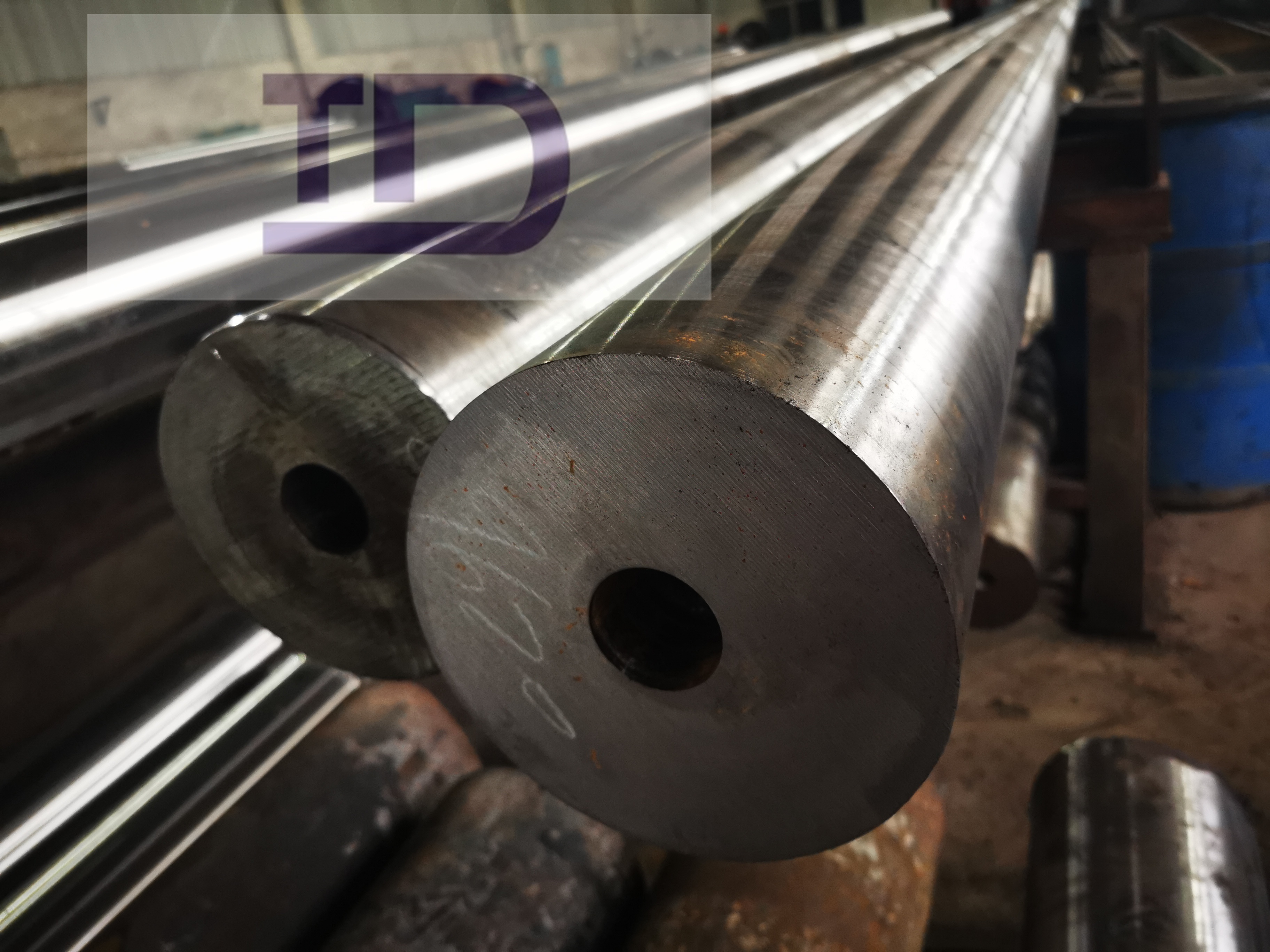
This line is built around SAE4140 and around parts where the tube becomes a precision machined component. Its published frame is OD 20–400 mm with wall thickness of 3–30 mm, available in round and square shapes. Application focus is drill collars and aerospace components, where wall uniformity and dimensional repeatability matter more than catalogue breadth.
Delivery conditions available on the line are hot rolled, cold drawn, cold rolled, and quenched and tempered. Standard lengths are 5 m–5.8 m, 6 m, and 6 m–12 m. The line's comparison data positions SAE4140 against standard carbon steel pipe on higher strength, better hardness, superior toughness, improved fatigue resistance and excellent hardenability, with hardness up to HRC 32–40, tensile strength of at least 1080 MPa, and fatigue life stated at roughly twice that of standard carbon steel. Those figures describe the line's product positioning; final properties for a given order still follow the agreed heat treatment and section size.
Line B — wide-range alloy seamless pipe (Product 3559)
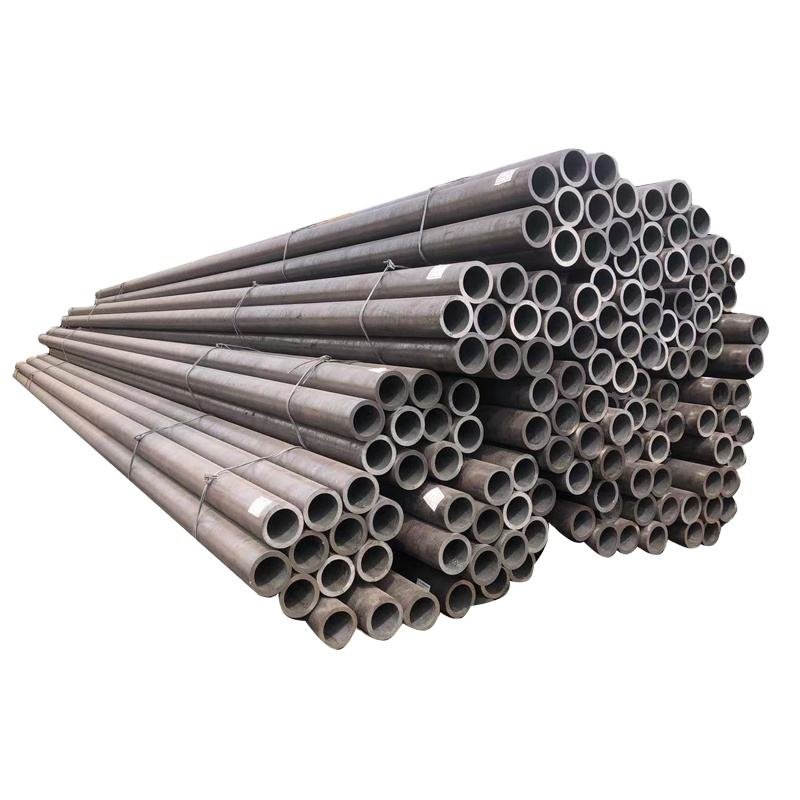
The wide-range line answers a different brief: one supply relationship, many specifications. It reaches OD 10–1080 mm with wall thickness from 2 mm to 110 mm, and it carries a grade portfolio spanning SAE4140, SAE4130, 42CrMo, A106 Gr.B, ST52, S355, E355, 30CrMo, 4145, 4340 and ST44.
The same four delivery conditions apply — hot rolled, cold drawn, cold rolled, and quenched and tempered — and the same standard lengths of 5 m–5.8 m, 6 m, and 6 m–12 m are offered. The commercially decisive difference is the entry point: the wide-range line can be opened with an order of 1 unit, which makes it the practical route for a first validation order, a prototype build, or a project where the required grade or diameter falls outside the dedicated frame.
What the wider envelope does and does not buy you
Breadth solves coverage, not qualification. Selecting the wide-range line for a drill-collar or aerospace part does not remove the need to pin down the grade-specific heat treatment, the tolerance class and the inspection routine — it only means those requirements are placed on a line that can also serve your other dimensions. The reverse also holds: if every part in your programme stays inside OD 20–400 mm and wall 3–30 mm in SAE4140, the dedicated line gives you a narrower set of process variables to control, which is easier to defend in an audit and easier to repeat order after order.
A step-by-step selection framework for buyers
- Define the finished part envelope, not the pipe size. Work back from the machined component, including allowance for turning, boring and any honing. This determines whether you are inside OD 20–400 mm / wall 3–30 mm or require the wider OD 10–1080 mm / wall 2–110 mm frame.
- Confirm grade availability against that envelope. SAE4140 is the dedicated line's focus. If the design also calls for SAE4130, 42CrMo, A106 Gr.B, ST52, S355, E355, 30CrMo, 4145, 4340 or ST44, the wide-range line is the single-source option.
- Fix the delivery condition. Hot rolled, cold drawn, cold rolled, and quenched and tempered carry different dimensional behaviour, surface condition and downstream machining allowances. Decide where quenched and tempered sits in your sequence before the enquiry, not after the order.
- Check shape and dimension limits together. Round and square shapes are published for the dedicated SAE4140 line; confirm shape availability separately for the wide-range line at the diameter you need, since the two envelopes are not identical.
- Match standard length to cut length and yield. Standard lengths of 5 m–5.8 m, 6 m, and 6 m–12 m produce different drop rates depending on your cut plan. Large-diameter pipe in the upper end of the wide range should be planned around the 6 m–12 m options.
- Choose the pilot route before the production route. A 1-unit entry on Product 3559 allows dimensional and machinability validation with minimal working capital; a 5-ton entry on Product 3557 is a production-scale commitment, so validate first if the specification is new.
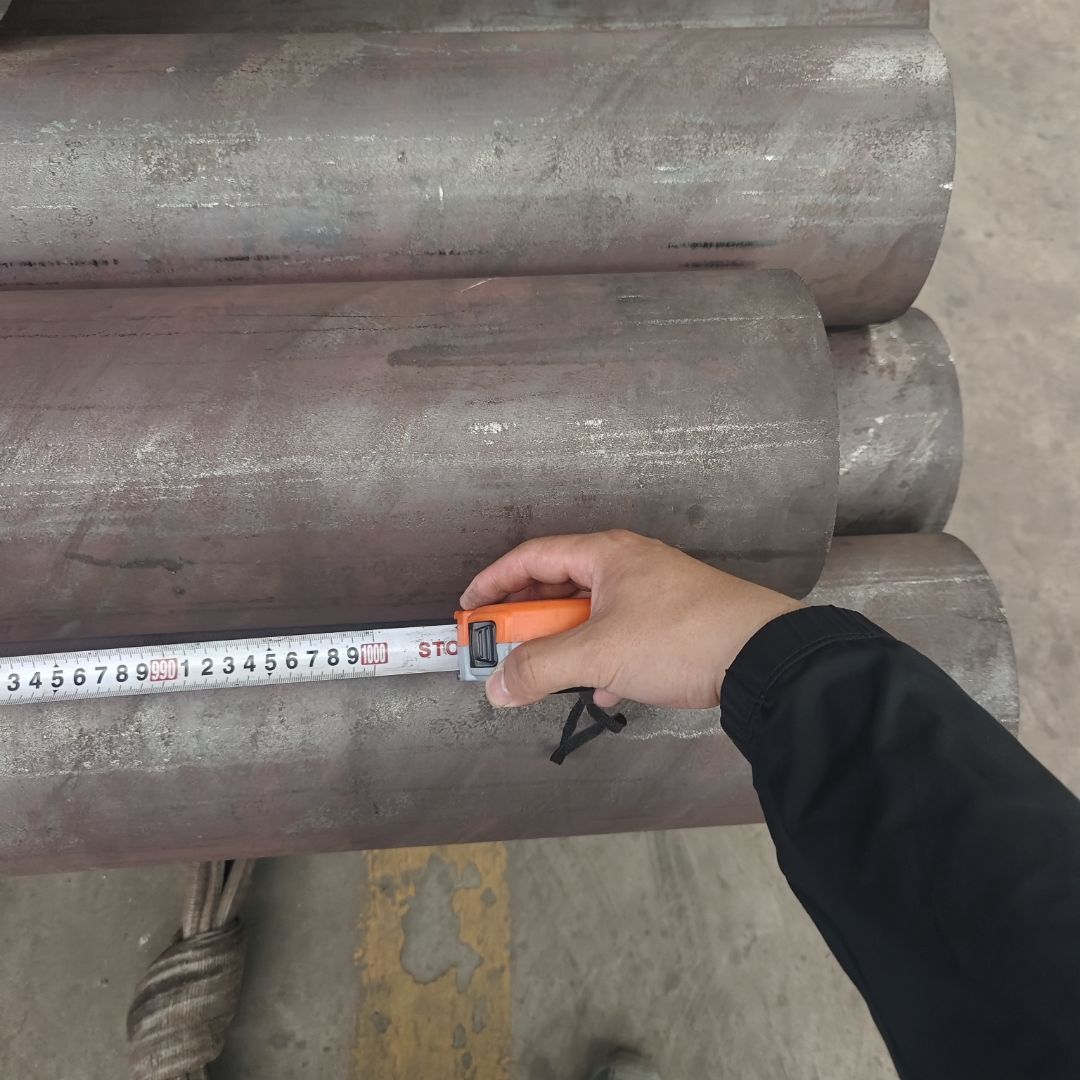
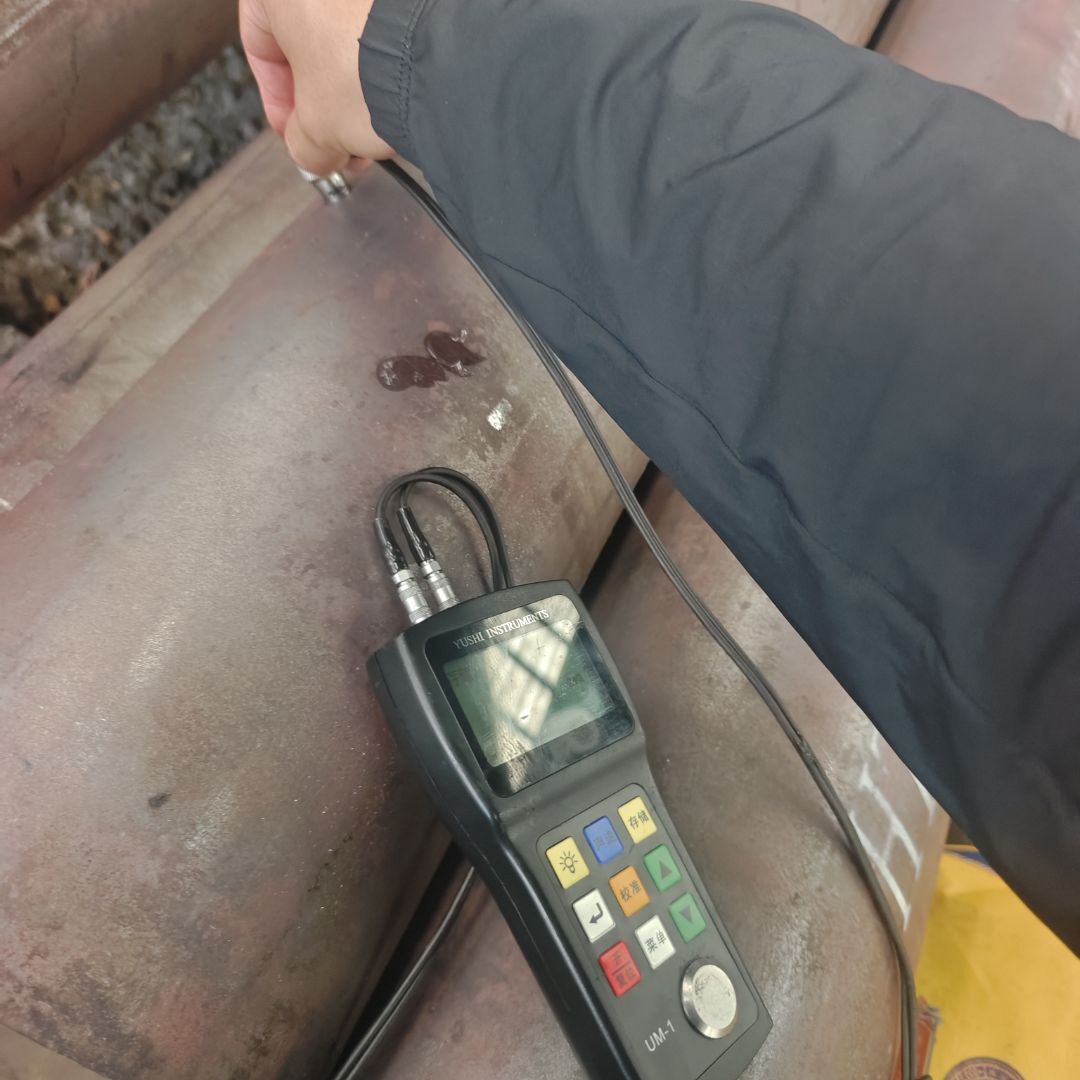
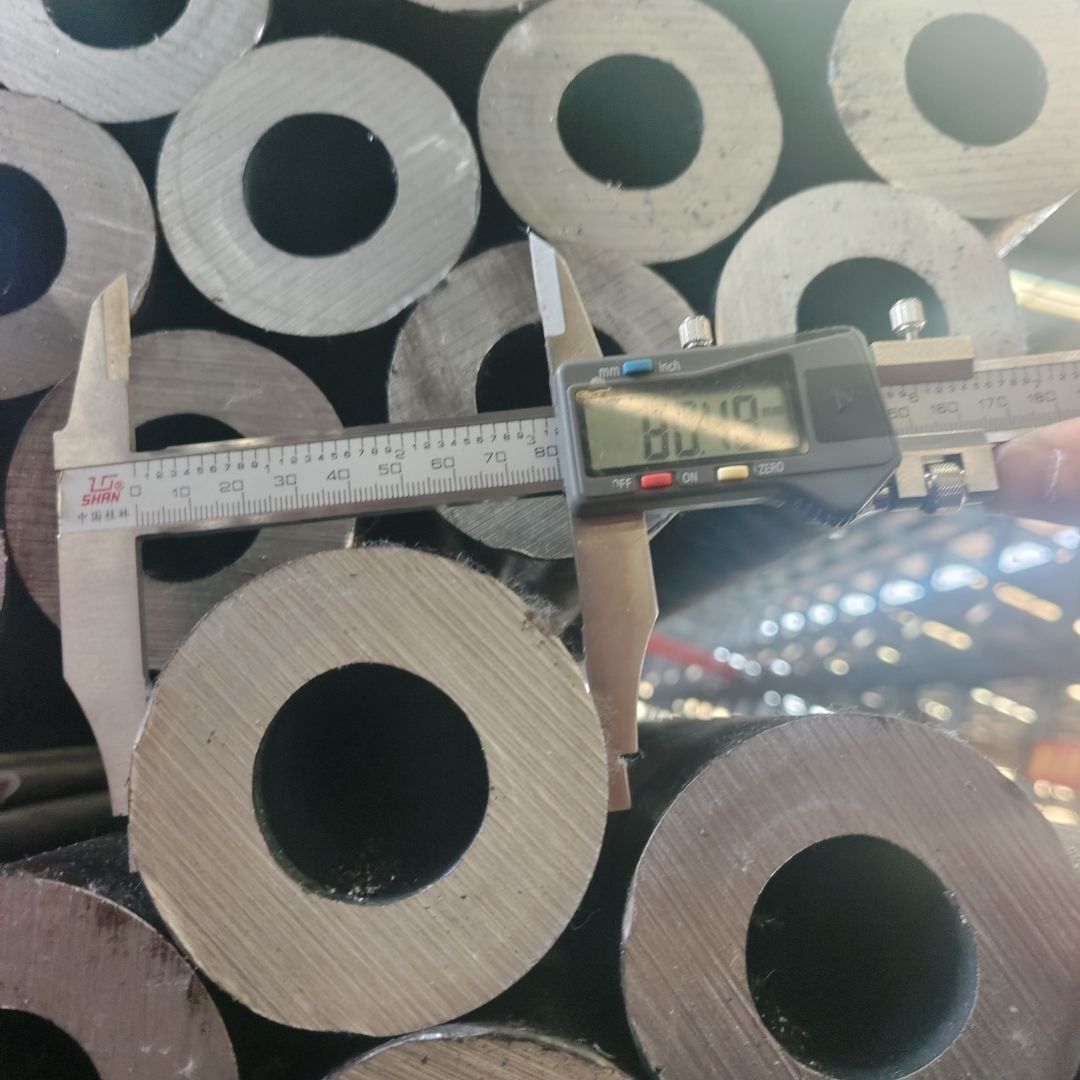
- Agree inspection and documentation. Pre-shipment testing is the stated acceptance criterion. Ask for 100% dimensional inspection with CMM before delivery, in-line dimensional checks during production, statistical process control records, and confirmation of drawings and tolerance standards in writing, with test data recorded.
- Lock the commercial terms. Payment by TT or LC, delivery terms FOB, CIF, CFR, EXW or DDP, and the standard lengths must all appear on the quotation, not only in correspondence.
- Plan the replenishment cadence. For a multi-year programme, align your call-off schedule with the supplier's monthly output and lead time so that repeat orders do not become re-negotiations.
Where each line fits in practice
Drill collars and downhole equipment. Heavy-wall tube in SAE4140, inside OD 20–400 mm, quenched and tempered, is the dedicated line's core application. Repeatability between heats is the reason to stay on one line for the whole drilling programme.
Aerospace components. Dimensional accuracy is the dominant risk here, because an out-of-tolerance tube becomes scrap after expensive machining. The dedicated line's frame, combined with 100% CMM inspection before delivery, addresses that risk directly.
Shafts and gears. Quenched and tempered 4140-class steel is commonly referenced for shafts and gears, where the combination of tensile strength in the 850–1000 MPa range and 28–32 HRC nominal hardness supports load-carrying service.
Oil machinery and general industrial equipment. Mixed programmes that combine pipe, bar stock and other machined components benefit from the wide-range line, because grades such as 4145 and 4340 and dimensions beyond 400 mm OD can be added without onboarding a second supplier.
Construction machinery and structural work. Grades such as ST52, S355, E355, ST44 and A106 Gr.B in the wide-range portfolio cover structural and general pressure duty, where the OD 10–1080 mm reach and walls up to 110 mm allow fewer welded joints and simpler fabrication.
Hydraulic cylinder production. Thick-walled seamless pipe is the starting point for cylinder bodies, where internal diameter tolerance and wall uniformity carry through to the finished bore. Suppliers that machine and finish the same pipe they sell — rather than only trading it — typically control that dimensional chain in one operation sequence.
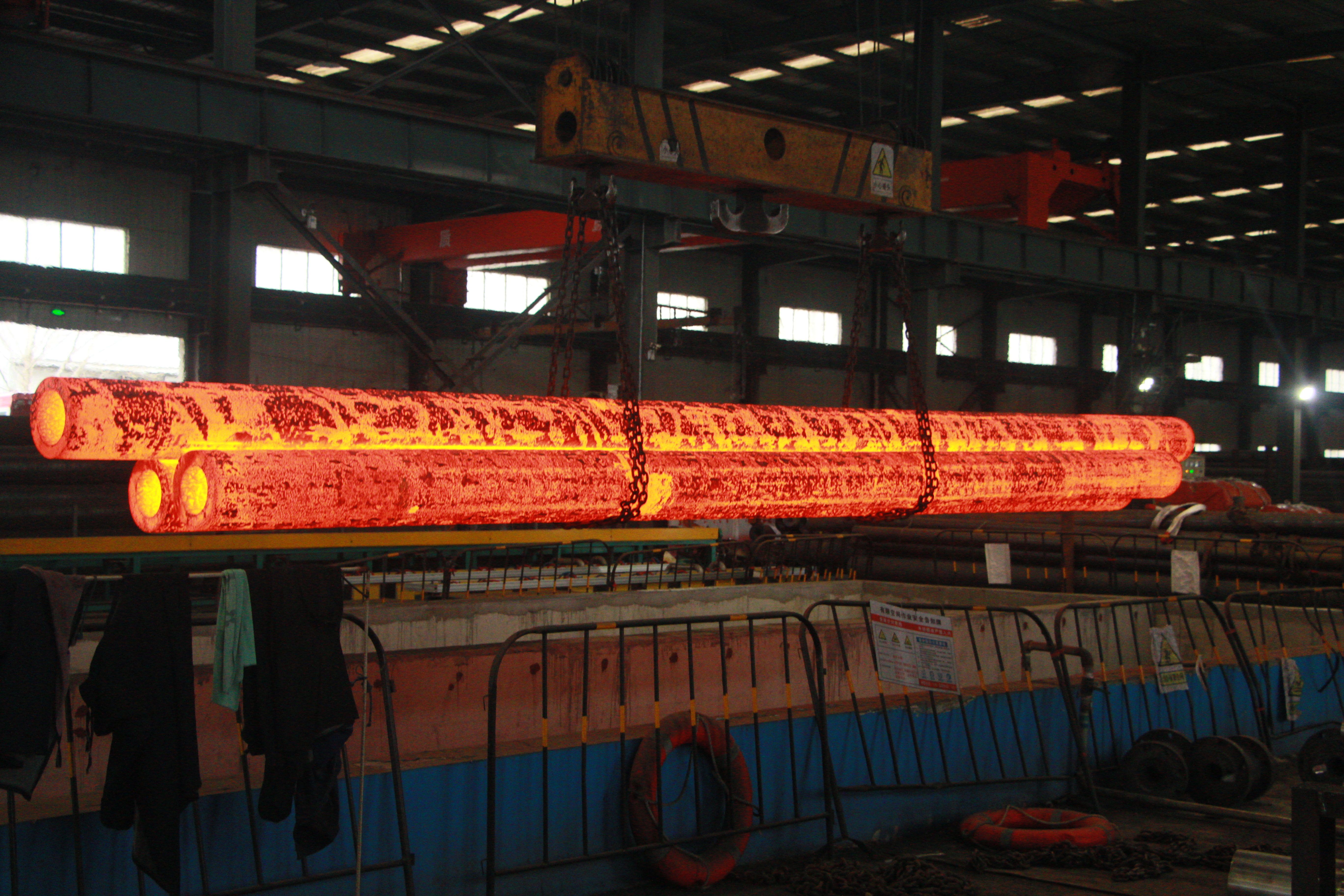
Side-by-side: dedicated SAE4140 line vs wide-range alloy line
| Parameter | Product 3557 — dedicated SAE4140 alloy seamless pipe and tube | Product 3559 — wide-range alloy seamless pipe |
|---|---|---|
| Grade focus | SAE4140 | SAE4140, SAE4130, 42CrMo, A106 Gr.B, ST52, S355, E355, 30CrMo, 4145, 4340, ST44 |
| Outside diameter | OD 20–400 mm | OD 10–1080 mm |
| Wall thickness | 3–30 mm | 2–110 mm |
| Shapes | Round and square | Shape options to be confirmed at the required diameter |
| Delivery conditions | Hot rolled, cold drawn, cold rolled, quenched and tempered | Hot rolled, cold drawn, cold rolled, quenched and tempered |
| Standard lengths | 5 m–5.8 m; 6 m; 6 m–12 m | 5 m–5.8 m; 6 m; 6 m–12 m |
| Typical fit | Drill collars, aerospace components | Orders requiring a grade other than SAE4140, or a dimension outside the dedicated envelope |
| Minimum order quantity | 5 tons (negotiable) | 1 unit |
| Payment terms | TT or LC | TT or LC |
| Delivery terms | FOB / CIF / CFR / EXW / DDP | FOB / CIF / CFR / EXW / DDP |
| Acceptance criteria | Pre-shipment test | Pre-shipment test |
Both lines are supplied by Shandong Tuoda Machinery Equipment Manufacturing Co., Ltd. (Tuoda Machinery), a Liaocheng, Shandong-based manufacturer and supplier of carbon and alloy seamless steel tube, round bar and machined components, operating to international standards including ASTM, EN10210, EN10305, API 5L, A335, A333 and A106. Further details: www.sdtdsteel.com.
Purchasing terms to verify before the first long-term order
The commercial terms are where a technical shortlist becomes a supply agreement, and they differ between the two lines in one important respect.
- Minimum order quantity: Product 3557 starts at 5 tons, described as 5 tons or negotiable. Product 3559 starts at 1 unit. For a first article or a prototype, the 1-unit route is the low-risk entry; for a rolling production programme, the 5-ton route aligns with the dedicated SAE4140 frame.
- Payment terms: TT or LC on both lines.
- Delivery terms: FOB, CIF, CFR, EXW or DDP — confirm which is quoted, because the choice changes both landed cost and where risk transfers.
- Acceptance: pre-shipment test is the stated acceptance criterion. Before the first order, agree what is tested, what is recorded, and which documents travel with the shipment.
- Replenishment capacity: monthly production capacity of 1000 tons, with typical production lead times of 30–45 days. Export coverage includes the EU, Middle East, India, Chile, Argentina and Turkey, and fully standardised customised products are supplied according to customer requirements.
For a buyer intending to hold one supply relationship over several years, these five items matter more than a marginal difference in unit price, because they determine whether repeat orders run on schedule or reopen the same negotiation every quarter.
Frequently asked questions
1. What standard and chemistry should be specified for SAE4140 tube and pipe?
SAE 4140 is classified under ASTM A29 and typically contains 0.38–0.43% carbon, 0.80–1.10% chromium and 0.15–0.25% molybdenum, the chemistry that delivers the hardenability the grade is bought for. Tuoda states that its pipe products are manufactured in compliance with international standards including ASTM, EN10210, EN10305, API 5L, A335, A333 and A106. Specify grade, standard, delivery condition and tolerance class together, and require the test certificate to match the order. For trade documentation, HS Code 7228.30 is the primary classification for hot-rolled alloy steel bars such as SAE4140 above 228 mm diameter.
2. Can one supplier line cover both a small-diameter tube and a very large pipe?
Yes, on the wide-range line. The dedicated SAE4140 line covers OD 20–400 mm with 3–30 mm walls, while the wide-range line covers OD 10–1080 mm with 2–110 mm walls — so the wide-range envelope contains the dedicated one and extends below 20 mm OD and above 400 mm OD. Grade coverage is the other difference: the dedicated line concentrates on SAE4140, whereas the wide-range line also carries SAE4130, 42CrMo, A106 Gr.B, ST52, S355, E355, 30CrMo, 4145, 4340 and ST44.
3. What MOQ, payment terms and incoterms apply to each line?
Product 3557 (dedicated SAE4140 line) starts at a minimum order quantity of 5 tons, stated as 5 tons or negotiable. Product 3559 (wide-range alloy line) starts at 1 unit. Both lines are quoted with payment terms of TT or LC, and delivery terms of FOB, CIF, CFR, EXW or DDP. Acceptance criteria are a pre-shipment test in both cases.
4. How is dimensional accuracy validated before shipment?
Pre-shipment testing is the stated acceptance criterion. Production-side controls include precision CNC machining, in-line dimensional inspection and coordinate measuring machine (CMM) verification, with 100% dimensional inspection by CMM carried out before delivery. Drawings and tolerance standards are confirmed in writing, statistical process control is applied during production, and test data is recorded. This matters because assembly failure caused by dimensional inaccuracy, or performance below specification, is the principal risk in machined tube and pipe.
5. What lead time and capacity should a long-term buyer plan for?
Monthly production capacity is 1000 tons, with typical production lead times of 30–45 days. Export coverage includes the EU, Middle East, India, Chile, Argentina and Turkey. Buyers planning a multi-year programme should align call-off schedules to that capacity and lead time. To begin, request a sample or quotation from Tuoda Machinery — Olivia, olivia@sdtuoda.com, +86 13290268388 — and download the product catalogue: Tuoda Machinery catalogue (PDF).
Conclusion: make the envelope decision first, then the grade decision
The choice between a dedicated SAE4140 alloy seamless tube line at OD 20–400 mm and a wide-range alloy seamless pipe line at OD 10–1080 mm is decided by two questions in sequence. First: does every part in the programme stay inside OD 20–400 mm with a wall of 3–30 mm, in SAE4140, in round or square section? If yes, the dedicated line gives you a narrow, repeatable process frame, quenched and tempered or otherwise, on standard lengths of 5 m–5.8 m, 6 m or 6 m–12 m. Second: will the programme need other grades — SAE4130, 42CrMo, A106 Gr.B, ST52, S355, E355, 30CrMo, 4145, 4340, ST44 — or a diameter beyond 400 mm? If yes, the wide-range line is the single-source answer, and its 1-unit entry point lets you validate before committing.
Once the line is chosen, the terms are straightforward to verify: MOQ of 5 tons for Product 3557 or 1 unit for Product 3559, payment by TT or LC, delivery on FOB, CIF, CFR, EXW or DDP terms, and a pre-shipment acceptance test supported by recorded dimensional data.
Take the next step
Send your drawing, grade and required OD/wall envelope to Tuoda Machinery and receive a quotation against the correct line — dedicated SAE4140 tube or wide-range alloy seamless pipe.
Contact: Olivia | Email: olivia@sdtuoda.com | Tel / WhatsApp: +86 13290268388 | www.sdtdsteel.com
Catalogue download: Tuoda Machinery product catalogue (PDF)