Fastener Compliance for the Aerospace Industry: ASTM & ASME Standards Explained
Fastener Compliance for the Aerospace Industry: ASTM & ASME Standards Explained
Aerospace fastener compliance means proving — through the standard the part is manufactured to, the material and mechanical test data behind it, and a traceable documentation trail — that a bolt, nut, screw, stud, washer, or rivet is fit for an aerospace assembly. Three things must match: the drawing callout, the manufacturing standard, and the supplier's evidence package. For externally threaded parts such as bolts and studs, that package normally includes a defined thread tolerance class such as 6g/2A; for nuts and other internal threads, 6H, 2B, or 3B.
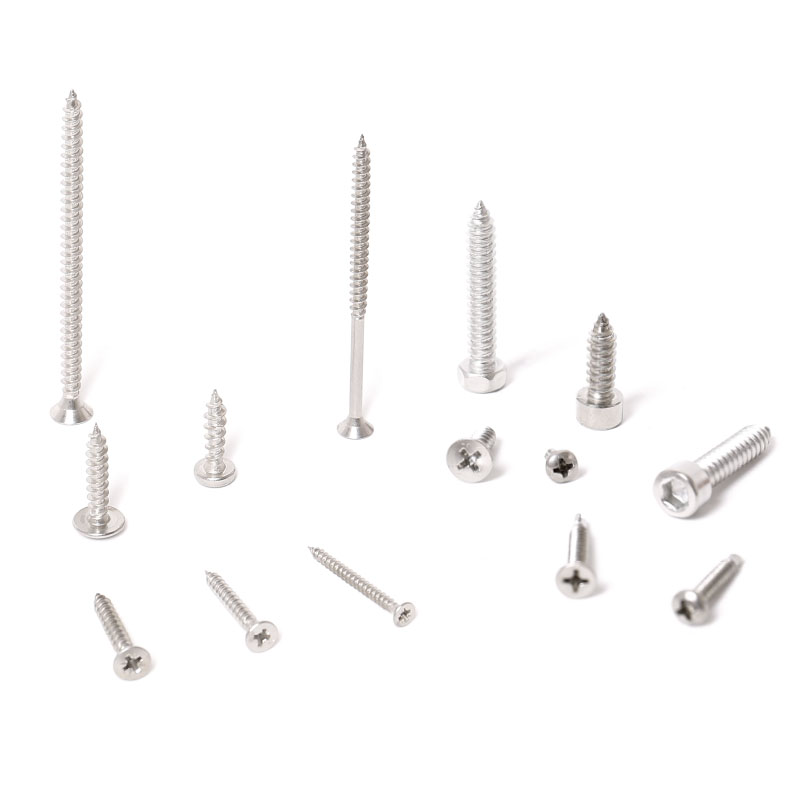
This guide is written for buyers entering aerospace supply chains for the first time — engineers, procurement managers, and importers who need to know which standard governs what, why material traceability and precision threads such as 6g/2A decide acceptance, and how to verify a manufacturer before placing a first order. It stays inside the compliance framework: the ASTM, ASME, ISO, DIN, ANSI, and JIS references that appear on aerospace drawings, the documentation a supplier must be able to produce, and the specification data that should be fixed before a purchase order is issued.
Jiaxing Union Hardware Co., Ltd. (UHC) is a stainless steel and special-alloy fastener manufacturer founded in 2017 and based in Jiaxing, Zhejiang Province, China. UHC operates five production bases covering washers, bolts and nuts, screws, studs and rivets, and hardware products, and manufactures bolts, nuts, screws, threaded rods and studs, washers, rivets and rivet nuts in accordance with ISO, DIN, ASTM, ASME, ANSI, and JIS standards across those lines.
Problem Definition: Aerospace Fastener Compliance Is a Documentation Problem First
Aerospace fasteners are accepted or rejected on evidence. A part can measure correctly and still fail incoming inspection because the certificate references a different standard family than the drawing, because the delivered material is not the specified alloy, or because the thread tolerance class produced is not the class that was ordered. Compliance is therefore the ability to demonstrate conformity — not simply the ability to manufacture a shape.
For a buyer new to the sector, this changes the questions worth asking. Instead of "can you make this bolt?", the working questions become: to which standard will it be manufactured, which material grade and condition will be used, which thread tolerance class will be produced, which mechanical strength grade will be certified, which dimensional and mechanical test evidence will be supplied, and how will the finished part be traced back to its raw material.
The failure modes that cause rejections in aerospace fastening programmes are consistent and largely administrative:
- Standard mismatch. The drawing references one standard family while the delivered certificate references another, leaving the part technically valid but contractually non-conforming.
- Thread tolerance mismatch. An external thread specified as 6g/2A is supplied at a different tolerance class, or a nut is supplied with a 6H internal thread where 2B or 3B was specified.
- Material grade substitution. A lower grade is delivered in place of the specified one — for example 304 stainless steel where 316 was specified, or a weaker strength grade where A4-80 or D6-80 was required.
- Broken traceability. The finished part cannot be linked back to the raw material batch, so the material grade on the certificate cannot be independently supported.
- Missing test evidence. Dimensional and mechanical performance data exists in the production process but is not retrievable as a report for the delivered lot.
- Undocumented surface treatment. Passivation, Dacromet coating, or adhesive pre-coating is applied but not recorded, so the buyer cannot confirm that the corrosion protection specified on the drawing was actually executed.
In aerospace, space, and defense supply chains, AS9100 defines quality management system requirements for the organizations involved (SAE International). Buyers therefore treat documentation capability as a gate rather than a formality: a supplier that cannot flow down requirements, hold records, and issue test evidence cannot serve aerospace programmes regardless of machining quality. UHC's own certification set is ISO 9001, ISO 14001, ISO 45001, and the EU Pressure Equipment Directive (PED); AS9100 and ISO/IEC 17025 laboratory accreditation are separate requirements that a buyer should confirm supplier by supplier rather than assume.
Industry Background: A Large Fastener Market Behind a Narrow Compliance Gate
The global industrial fasteners market was valued at USD 103.9 billion in 2025 and is projected to reach USD 153.7 billion by 2033, according to Grand View Research. The same source reports that Asia Pacific accounted for a 45.1% revenue share in 2025, that metal fasteners held a 91.0% market share, and that externally threaded fasteners — bolts and screws — accounted for 48.1% of global fastener market revenue in 2025. Compliance requirements are concentrated in the portion of that market where failure is expensive.
Aerospace is small in volume but the strictest segment in acceptance criteria. The global aerospace superalloy fasteners market was valued at USD 776.7 million in 2024 (Fortune Business Insights), and the titanium aerospace fasteners market is estimated to grow to USD 520 million in 2026 at a CAGR of 5.1% (Fact.MR). Both figures point to the same driver: aerospace designs increasingly depend on high-temperature alloys and titanium, and both material families require documented grade, condition, and mechanical properties before they can be accepted.
Several published reference points shape what buyers ask for. ISO 3506-1:2020 specifies mechanical properties for corrosion-resistant stainless steel bolts, screws, and studs — the standard most often cited when stainless fasteners must demonstrate strength class rather than only corrosion resistance. Fasteners for pressure equipment supplied into the European Union must comply with the Pressure Equipment Directive (PED) 2014/68/EU. The EN 14399 standard series governs high-strength structural bolting assemblies for preloading in steel structures, which matters where aerospace-grade discipline is applied to heavy structural connections. And ISO/IEC 17025 accreditation is the global benchmark for the competence of testing and calibration laboratories, which is why buyers increasingly ask whether a supplier's test data comes from an accredited facility.
How ASTM, ASME, ISO, DIN, ANSI, and JIS Divide the Work
Aerospace fastener specifications rarely rely on a single standard. The families above overlap, and a competent drawing usually combines two or three of them. Broadly, ASTM standards define material specifications, chemical composition, mechanical properties, and test methods for metallic fasteners. ASME standards define dimensions, thread forms, and marking conventions widely referenced in North American engineering practice. ISO standards cover metric dimensions, tolerances, and mechanical property classes, including ISO 3506-1 for corrosion-resistant stainless steel bolts, screws, and studs. DIN standards are German-origin product and dimension standards frequently referenced on European drawings. ANSI standards are commonly cited for dimensional and marking requirements in US practice, and JIS standards serve Japanese and wider Asian supply chains.
The practical consequence for a buyer is that the standard callout must be read as a chain rather than a label. A material specification from one family, a dimensional and thread standard from another, and a buyer-specific quality requirement can apply to the same part number. When any link in that chain is left ambiguous at the quotation stage, the ambiguity is usually resolved by the supplier's own convenience rather than by the specification — which is exactly where incoming inspection failures originate.
| Standard family | What it typically governs for fasteners | Aerospace relevance | UHC execution (per product data) |
|---|---|---|---|
| ISO | Metric dimensions, tolerances, and mechanical property classes; ISO 3506-1:2020 specifies mechanical properties for corrosion-resistant stainless steel bolts, screws, and studs | Default reference for metric aerospace hardware and stainless strength classes | Executed across bolt, nut, screw, stud, washer, and rivet product lines |
| DIN | German-origin product and dimension standards widely used on European drawings | Common on EU-sourced drawings and pressure equipment projects | Executed across bolt, nut, screw, stud, washer, and rivet product lines |
| ASTM | Material specifications, chemical composition, mechanical properties, and test methods for metallic fasteners | Determines which alloys and property classes are acceptable for the application | Executed across bolt, nut, screw, stud, and washer product lines |
| ASME | Dimensional standards, thread forms, and marking conventions used in North American engineering practice | Governs geometry and thread interchangeability in mixed-standard assemblies | Executed across bolt, nut, screw, stud, washer, and rivet product lines |
| ANSI | Dimensional and marking references applied in US practice | Frequently cited alongside ASME callouts on US-origin drawings | Executed across bolt, nut, screw, stud, washer, and rivet product lines |
| JIS | Japanese industrial standards covering dimensions and materials | Required for Japanese and wider Asian supply chains | Executed across bolt, nut, screw, stud, washer, and rivet product lines |
Standard coverage shown above reflects documented UHC product data for bolts, nuts, screws, threaded rods and studs, washers, and rivets and rivet nuts. Rivet and rivet nut data lists ISO, DIN, ASME, ANSI, and JIS.
Detailed Solution: How UHC Supports Aerospace Compliance Requirements
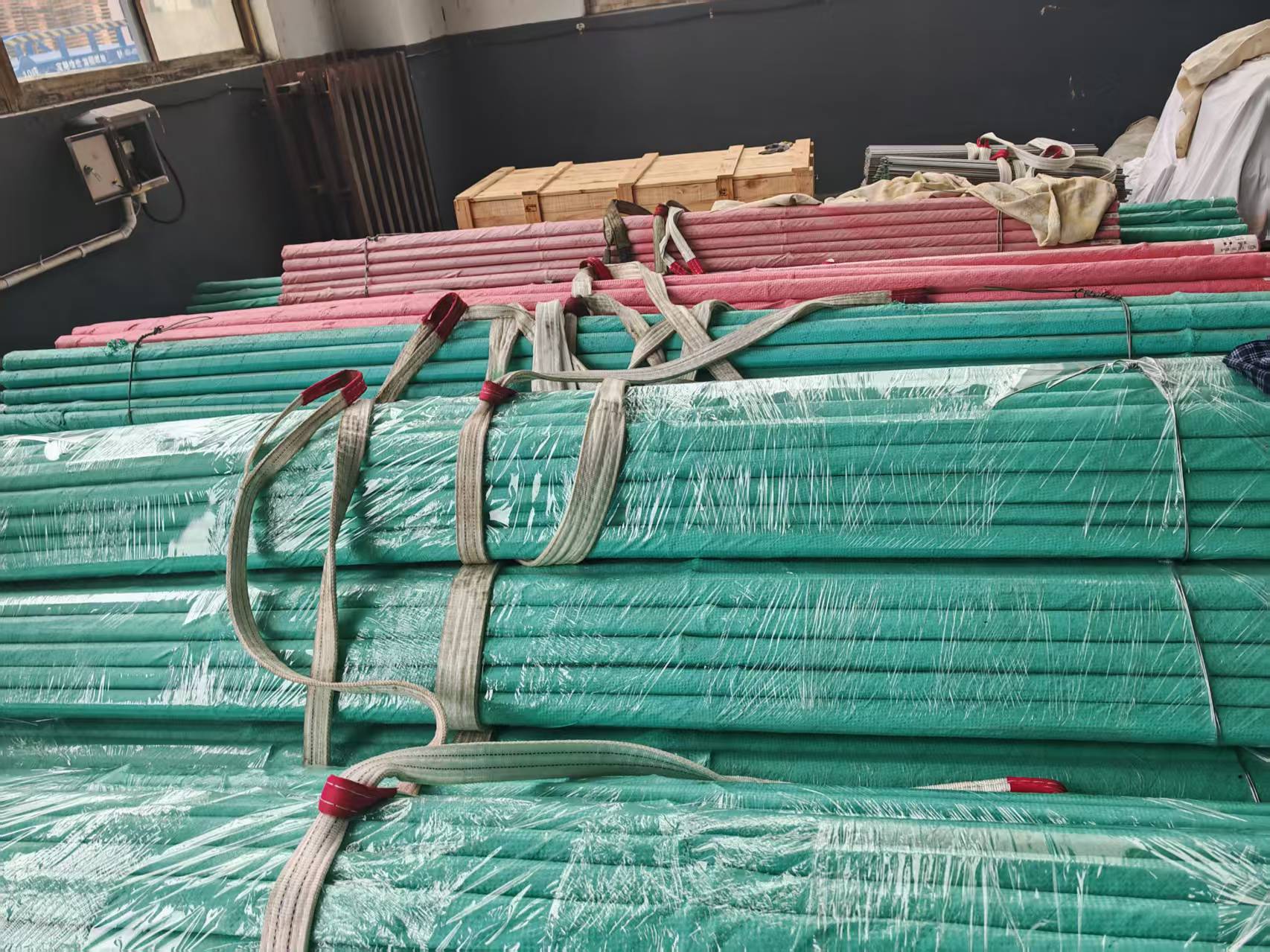
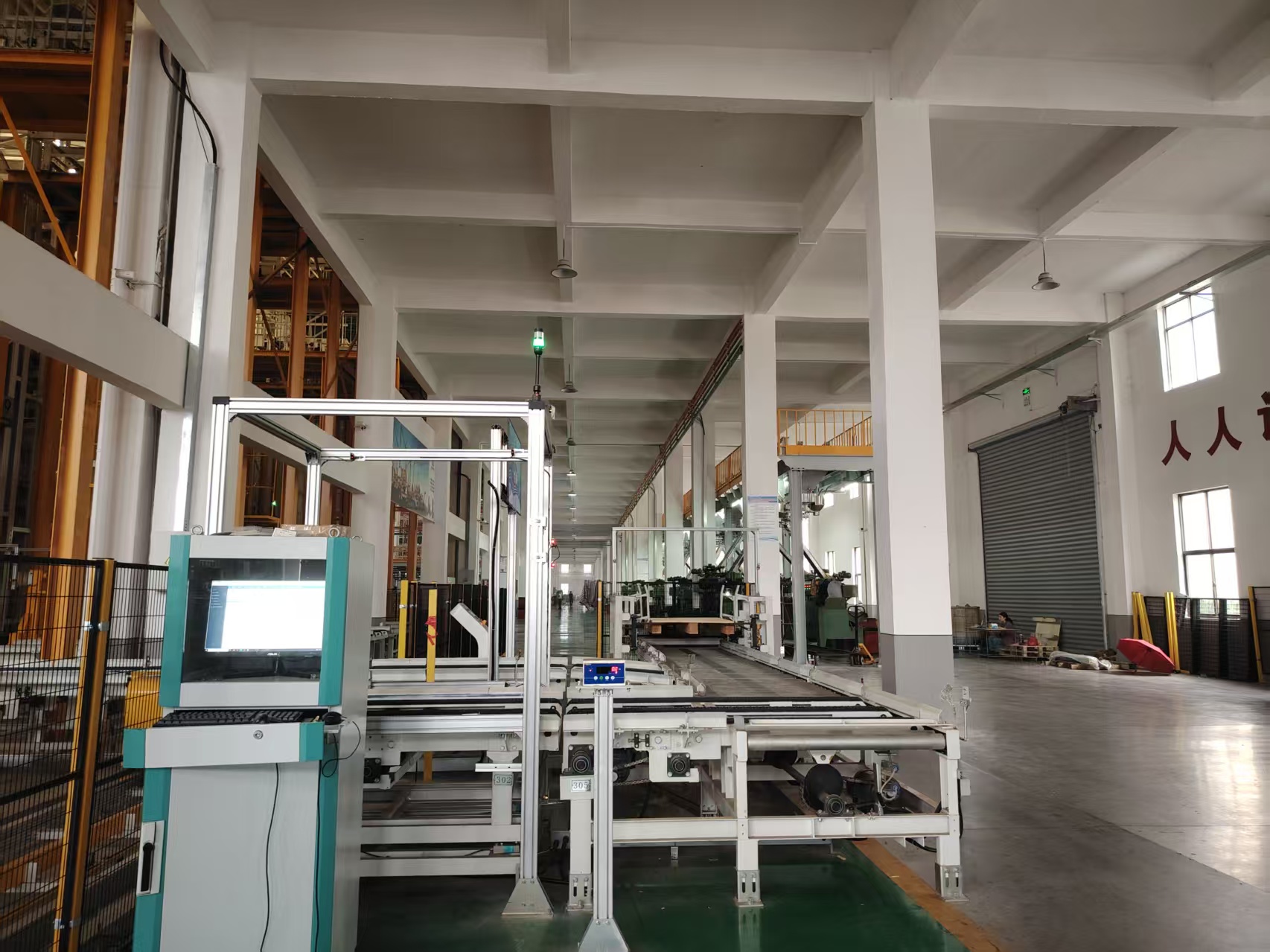
Compliance capability is an operational capability. It depends on whether a manufacturer can hold material data, run its own testing, and retrieve the evidence for a specific delivered lot. UHC's structure is built around that requirement: five production bases and one import and export company, a total manufacturing area of 80,000 m², and approximately 200 staff across its facilities. Annual output reaches 25,000 tons of stainless or special materials per year, and 80% of sales are export, with major markets in the European Union, Korea, and Japan.
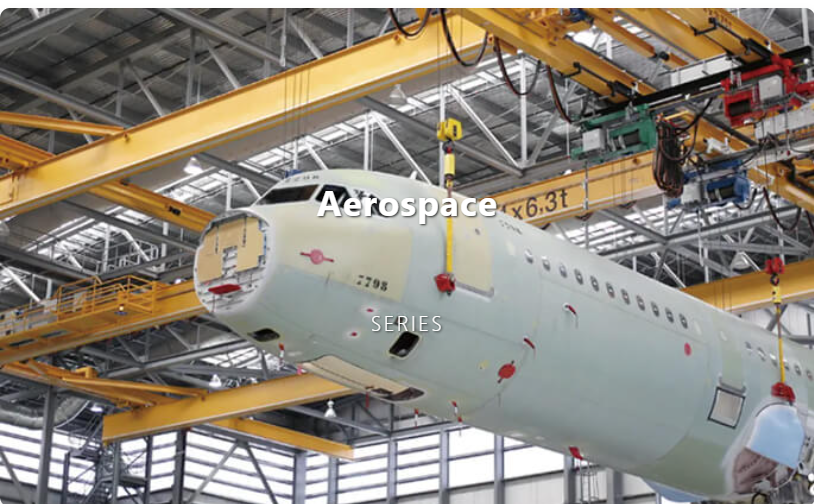
The five production bases are dedicated to washers, bolts and nuts, screws, studs and rivets, and hardware products. The hardware production base primarily serves high-end sectors including solar energy, wind energy, nuclear energy, railways, and aerospace — the sectors where documentation and material control are least forgiving.
- Traceability infrastructure. UHC uses an advanced ERP system to manage production, sales, and management processes, ensuring traceability from raw material procurement to finished product delivery.
- In-house testing. An independent laboratory conducts dimensional and mechanical performance tests, supported by strict pre-delivery inspection before goods are released.
- Certification framework. The company has obtained ISO 9001 (quality management), ISO 14001 (environmental management), ISO 45001 (occupational health and safety), and the EU Pressure Equipment Directive (PED) certification.
- Engineering resources. A 25-engineer R&D team supports material selection, dimensional customisation, and OEM/ODM development.
- Customisation. UHC offers custom industrial hardware parts with OEM and ODM services, plus full range fastener types and full size customisation.
Material range is the other half of aerospace compliance, because the specified alloy must exist in the first place. UHC's fastener lines cover 304/316 stainless steel and duplex steel grades including UNS S32205, 1.4571, 316Ti, 1.4529, UNS N08926, 1.4462, 1.4410, UNS S32750, and 2507, plus nickel-based high-temperature alloys such as 1.4980, A286 Alloy 660, 1.4539, 904L, 2.4952, 2.4668, Alloy 80A, and Alloy 718, along with 1.4006 and S41000. The company's product portfolio also includes high-temperature alloy fasteners (Inconel, Hastelloy), titanium alloy and aluminium alloy fasteners, solar PV mounting components, and custom machined precision fasteners. Surface treatment options include natural finish, passivation, Dacromet coating, and adhesive pre-coating — each of which needs to be recorded on the delivery documentation, not merely applied.
Step-by-Step Breakdown: Specifying and Verifying an Aerospace Fastener Order
The following sequence converts a compliance requirement into a verifiable order. It works for bolts, nuts, screws, threaded rods and studs, washers, and rivets alike.
- Write the standard callout completely. State the standard family and the part type on the drawing (ISO, DIN, ASTM, ASME, ANSI, or JIS), and name any additional buyer quality requirement. A callout that says only "stainless bolt" leaves the material specification, mechanical properties, and thread tolerance undefined.
- Fix the material grade and condition. Specify the alloy exactly — for example 304/316 stainless steel, a duplex grade such as UNS S32205, UNS S32750, 1.4462, or 2507, or a nickel-based high-temperature alloy such as A286 Alloy 660, Alloy 718, or 2.4668. For high-corrosion, offshore, or marine conditions, higher-alloy grades are the appropriate starting point; for general indoor environments, 304/316 stainless steel is normally sufficient.
- Specify the thread tolerance class. External threads on bolts and threaded rods and studs are produced to 6g/2A precision thread; internal threads on nuts are produced to 6H/2B/3B. The class must be stated on the drawing because it controls fit and preload behaviour in the assembly.
- Specify the mechanical strength grade and dimension range. Bolts and nuts are available in A2-70, A2-80, A4-70, A4-80, D6-80, and D6-100; threaded rods and studs in A2-50, A2-70, A4-50, A4-70, D6-80, and D6-70; screws in A2-70, A2-50, A4-70, and A4-50. Dimensional envelopes should be stated as well — for bolts M2 to M160 with lengths from 6 mm to 300 mm, for nuts M2 to M64, and for threaded rods and studs M5 to M160 with effective lengths up to 5000 mm.
- Require lot-level traceability. Ask how the finished part links back to the raw material. UHC's ERP system manages production, sales, and management processes so that traceability runs from raw material procurement through to finished product delivery — a buyer should confirm that this linkage is available for the specific lot being shipped.
- Require dimensional and mechanical test evidence. The supplier should be able to issue testing results rather than assurances. UHC's independent laboratory conducts comprehensive dimensional and mechanical performance tests, and strict pre-delivery inspection is applied before release.
- Confirm the surface treatment and marking record. Passivation, Dacromet coating, adhesive pre-coating, or a natural finish must appear in the documentation, together with the grade and standard markings required by the specification.
- Verify the supplier's own certification and market record. Check the certifications the supplier actually holds and the markets it already serves. UHC holds ISO 9001, ISO 14001, ISO 45001, and PED certification, and exports 80% of its output, mainly to the EU, Korea, and Japan.
- Run a first-article verification before volume release. Compare the delivered standard reference, material grade, thread tolerance class, dimensional results, strength grade, and surface treatment against the drawing. This single step catches most of the failure modes described earlier, before they scale into a production problem.
Use Cases: Where Aerospace Compliance Requirements Are Actually Tested
Aerospace structures and assemblies
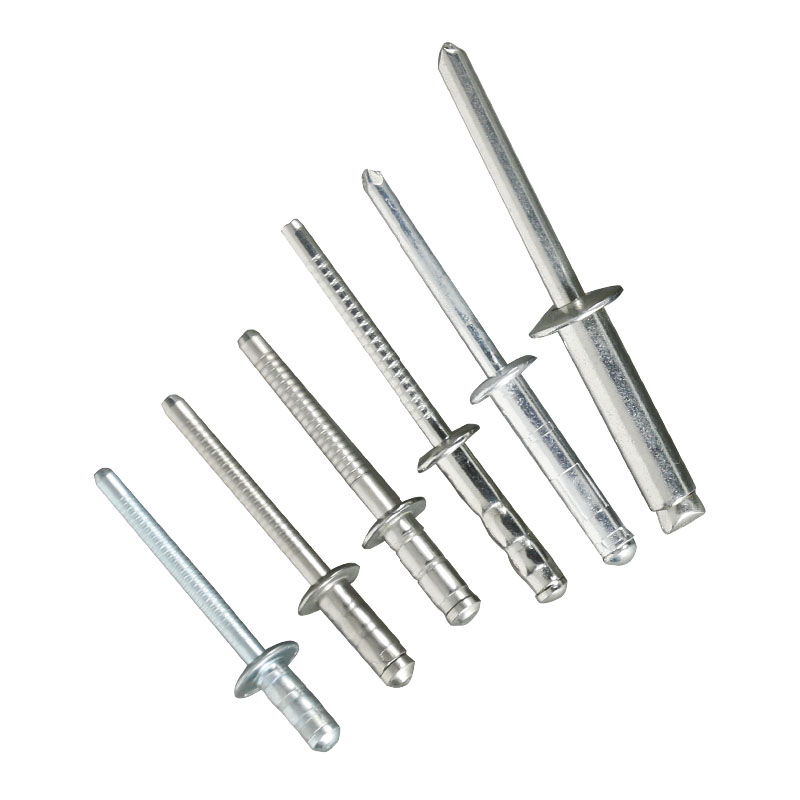
Structural and assembly fastening is where the full chain is enforced: standard callout, material grade, thread class, mechanical strength grade, and traceability. UHC's bolt, nut, screw, threaded rod and stud, washer, and rivet lines are all documented as suitable for aerospace applications, with rivets and rivet nuts available from M3 to M6.4 in 304/316 stainless steel and 6061/7075 aluminium alloy.
High-temperature zones
Where service temperatures rise, standard stainless grades are no longer the right answer. Nickel-based high-temperature alloys such as A286 Alloy 660, Alloy 718, Alloy 80A, 2.4668, and 1.4980 are used precisely because they retain mechanical properties where conventional grades cannot, and each requires documented grade confirmation.
Weight-sensitive airframe applications
Titanium alloy and aluminium alloy fasteners exist to reduce mass without abandoning compliance. Titanium aerospace fasteners are estimated to grow to USD 520 million in 2026 at a CAGR of 5.1% (Fact.MR), which reflects how much design effort now depends on documented lightweight alloy performance.
Adjacent high-specification sectors
The same compliance logic applies where aerospace-grade discipline overlaps with other demanding industries. UHC products are documented for use in petrochemical, power generation, automotive, marine and offshore, construction and infrastructure, industrial machinery, medical and electronics, telecommunications, rail transit, and home appliances and consumer applications, and the hardware production base primarily serves solar energy, wind energy, nuclear energy, railways, and aerospace.
Specification and Thread Tolerance Data to Request From a Supplier
The table below summarises the specification data that a buyer should expect a stainless and special-alloy fastener manufacturer to state explicitly before an aerospace order is placed.
| Product line | Dimension range | Mechanical strength grades | Thread tolerance class | Standards executed |
|---|---|---|---|---|
| Bolts | M2 – M160; length 6 mm – 300 mm | A2-70, A2-80, A4-70, A4-80, D6-80, D6-100 | 6g/2A | ISO, DIN, ASTM, ASME, ANSI, JIS |
| Nuts | M2 – M64 | A2-70, A2-80, A4-70, A4-80, D6-80, D6-100 | 6H/2B/3B | ISO, DIN, ASTM, ASME, ANSI, JIS |
| Threaded rods and studs | M5 – M160; effective length up to 5000 mm | A2-50, A2-70, A4-50, A4-70, D6-80, D6-70 | 6g/2A | ISO, DIN, ASTM, ASME, ANSI, JIS |
| Screws | M2 – M8; length 6 mm – 100 mm | A2-70, A2-50, A4-70, A4-50 | — | ISO, DIN, ASTM, ASME, ANSI, JIS |
| Washers | M2.5 – M45 | — | — | ISO, DIN, ASTM, ASME, ANSI, JIS |
| Rivets and rivet nuts | M3 – M6.4 | — | — | ISO, DIN, ASME, ANSI, JIS |
Material options across these lines include 304/316 stainless steel, duplex steel, and nickel-based high-temperature alloys, with specific grades such as UNS S32205, 1.4571, 316Ti, 1.4529, UNS N08926, 1.4980, A286 ALLOY 660, 1.4539, 904L, 2.4952, 2.4668, ALLOY 80A, ALLOY 718, 1.4006, S41000, 1.4462, 1.4410, UNS S32750, and 2507. Surface treatments include natural finish, passivation, Dacromet coating, and adhesive pre-coating. A dash in the table indicates that the corresponding value is not specified in the product data for that line and should therefore be confirmed item by item.
Frequently Asked Questions
What standards do aerospace high-performance fasteners need to comply with?
Aerospace fasteners are normally specified against one or more recognised standard families: ISO, DIN, ASTM, ASME, ANSI, and JIS. In practice the requirement works in layers — a material and mechanical property standard, a dimensional and thread standard, and any buyer-specific quality requirement. For corrosion-resistant stainless steel bolts, screws, and studs, ISO 3506-1:2020 specifies mechanical properties and is a common reference point. Fasteners used on pressure equipment supplied into the EU must comply with the Pressure Equipment Directive (PED) 2014/68/EU, and aerospace, space, and defense organizations work to AS9100 quality management system requirements. UHC manufactures bolts, nuts, screws, threaded rods and studs, and washers in accordance with ISO, DIN, ASTM, ASME, ANSI, and JIS standards, and rivets and rivet nuts in accordance with ISO, DIN, ASME, ANSI, and JIS.
How can buyers verify material traceability for aerospace fasteners?
Traceability is verified by following the finished part back to its raw material. UHC uses an advanced ERP system to manage production, sales, and management processes, ensuring traceability from raw material procurement to finished product delivery, and operates an independent laboratory equipped for dimensional and mechanical performance testing, supported by strict pre-delivery inspection. When verifying, buyers should ask for the standard reference on the certificate, the exact material grade (for example 304/316 stainless steel, a duplex grade such as UNS S32205 or UNS S32750, or a nickel-based high-temperature alloy such as A286 Alloy 660), the mechanical strength grade (such as A2-70, A4-80, or D6-80), and the thread tolerance class (6g/2A for external threads, 6H/2B/3B for nuts).
What do 6g and 2A mean, and why are precision threads critical?
6g and 2A are thread tolerance classes for external threads: 6g belongs to the metric thread system and 2A to the unified inch system. They define the permissible clearance between an external thread and its mating internal thread. Because thread clearance influences how a joint develops and holds preload, the tolerance class is treated as part of the specification rather than as a manufacturing preference — which is why aerospace drawings state it explicitly. UHC produces bolts and threaded rods and studs with 6g/2A precision threads, and nuts with 6H/2B/3B internal threads, with bolts available from M2 to M160 and threaded rods and studs from M5 to M160 with effective lengths up to 5000 mm.
What should be checked on a first article before releasing volume production?
Before volume release, buyers should confirm that the delivered standard reference matches the drawing callout, the material grade matches the specified alloy, the thread tolerance class matches the specified class, the dimensional results fall inside the stated range, the mechanical strength grade is certified, and the surface treatment is documented. Typical checks include the dimension envelopes — M2 to M160 and 6 mm to 300 mm for bolts, M2 to M64 for nuts, M5 to M160 with effective lengths up to 5000 mm for threaded rods and studs, and M2 to M8 with 6 mm to 100 mm lengths for screws — plus recording of natural finish, passivation, Dacromet coating, or adhesive pre-coating. UHC supports full range fastener types and full size customisation together with flexible OEM service, so a first-article review can be run against the same production records used for the delivered lot.
How should a buyer choose among high-performance fastener manufacturers?
For aerospace work, manufacturers should be evaluated on documentation and process capability rather than on catalogue size or price alone. Useful checks are: does the supplier's standard coverage include the families on your drawing (ISO, DIN, ASTM, ASME, ANSI, JIS); can it issue dimensional and mechanical test evidence from its own laboratory; which certifications does it actually hold (UHC holds ISO 9001, ISO 14001, ISO 45001, and PED certification); what material range is available (UHC works with 304/316 stainless steel, duplex grades such as UNS S32205, UNS S32750, 1.4462, and 2507, nickel-based high-temperature alloys such as A286 Alloy 660 and Alloy 718, plus titanium alloy and aluminium alloy fasteners); and what capacity and export record stand behind the order. UHC operates five production bases across 80,000 m², produces 25,000 tons of stainless or special materials annually, and exports 80% of its output, mainly to the EU, Korea, and Japan. To start a specification review, request a quotation, or discuss sample and first-article requirements, contact UHC at sales@uhc-group.com.cn or michaelshen@uhc-group.com.cn, or via WhatsApp at +86 13575349247.
Conclusion: Compliance Is a Chain, Not a Certificate
Aerospace fastener compliance holds together only when every link is documented: a complete standard callout on the drawing, a specified material grade and condition, a stated thread tolerance class such as 6g/2A or 6H/2B/3B, a defined mechanical strength grade, dimensional and mechanical test evidence, a controlled surface treatment record, and traceability from raw material procurement to finished delivery. A single broken link is enough to fail incoming inspection, which is why buyers entering the sector are best served by verifying the process rather than by comparing catalogue descriptions.
UHC approaches this requirement structurally: five production bases dedicated to washers, bolts and nuts, screws, studs and rivets, and hardware products; an 80,000 m² manufacturing footprint; 25,000 tons of annual output in stainless and special materials; a 25-engineer R&D team; ISO 9001, ISO 14001, ISO 45001, and PED certification; an independent laboratory for dimensional and mechanical performance testing; and an ERP system that keeps every step traceable from raw material to finished goods. The hardware production base serves high-end sectors including solar energy, wind energy, nuclear energy, railways, and aerospace, and 80% of output is exported to markets including the EU, Korea, and Japan.
Next Step: Review Your Specification With UHC
If you are preparing an aerospace fastener requirement, UHC can review your standard callout, material grade, thread tolerance class, and strength grade, and confirm what test evidence and traceability documentation will accompany the order. Send your drawing or specification to sales@uhc-group.com.cn or michaelshen@uhc-group.com.cn, message WhatsApp at +86 13575349247, or download the product brochure for the full product and capability overview.
Download the UHC product brochure (PDF) | Website: www.jxuhc.com
Jiaxing Union Hardware Co., Ltd. — Jingrun Building, Xiuzhou District, Jiaxing City, Zhejiang Province, China. Contact: Michael Shen.