
Fastener Supplier Evaluation Checklist: From Dacromet Coating to Full Size Customization

Cover image: a fastener production base. Supplier evaluation begins with what a factory can physically run, coat, inspect and document.
A fastener supplier evaluation checklist is a pass/fail capability test applied before a buyer shortlists or approves a manufacturer. It verifies three things a price list cannot show: whether the supplier can deliver the specified material grade, whether it can apply the required surface treatment such as Dacromet coating or adhesive pre-coating, and whether it can customise sizes and types across a documented range instead of a single catalogue item.
Most evaluations break at the same point: they test one part instead of the capability envelope behind it. A supplier able to quote one M10 hex bolt in 304 stainless steel may still be unable to deliver M64 nuts, threaded studs up to 5,000 mm long, Alloy 718 components or a Dacromet-coated batch on a fixed schedule. This guide converts the question "can you make this part?" into a documented checklist that uses verifiable ranges and certificate data as validation criteria.
UHC fastener and hardware (Jiaxing Union Hardware Co.,Ltd) is a stainless steel and special-material fastener supplier founded in 2017, operating five production bases and one import and export company, with 200 employees, an annual output of 25,000 tons of stainless and special materials, and products exported to the EU, Korea and Japan among other markets. Its published product documentation is used below as a worked example of the evidence a checklist should require.
Problem Definition: Why One Approved Sample Proves Very Little
A sample validates one specification point; a purchase order requires an envelope. Fastener projects normally combine several diameters, several product families and at least one non-standard requirement — a coating, a material, a head mark or an oversized thread. When those requirements sit outside what the supplier actually controls, the gap appears after the order is placed rather than before it.
Four failure patterns account for most supplier problems in high-performance fastener sourcing:
- Coating substitution. A supplier whose standard finishes are natural finish and passivation will eventually propose a similar alternative when the drawing calls for Dacromet coating or adhesive pre-coating. The substitution is usually disclosed late, after tooling and scheduling are committed.
- Size-range truncation. A truncated catalogue creates split orders: part of the BOM is produced by the chosen supplier, the rest by a second vendor with different traceability and different inspection records.
- Certification scope gaps. A certificate covering sales of metal fasteners describes a different activity from the manufacturing scope a buyer often assumes, and validity dates are frequently overlooked.
- Documentation gaps. Missing 3.1 material test certificates, undefined batch tracing and no defined inspection stages make any later quality claim unverifiable.
All four can be screened before a purchase order is issued, using documents the supplier should already hold.
Industry Background: Why Fastener Verification Has Become a Technical Exercise
Demand for high-performance fasteners is increasingly project-driven, which shifts the buyer's task from catalogue comparison to capability verification. The global industrial fasteners market was valued at USD 103.9 billion in 2025 and is projected to reach USD 153.7 billion by 2033, according to Grand View Research. Within that market, metal fasteners held a 91.0% share in 2025, and externally threaded fasteners such as bolts and screws accounted for 48.1% of revenue in the same year.
Growth is concentrated where fastener failure is expensive. Global wind turbine capacity is projected to grow from 1,100 GW in 2025 to over 2,400 GW by 2030, according to the Global Wind Energy Council, increasing demand for high-strength structural connections. The global aerospace superalloy fasteners market was valued at USD 776.7 million in 2024, based on Fortune Business Insights. Large multinational suppliers such as Illinois Tool Works Inc., Stanley Black & Decker and Lisi Group operate at the top of the market by scale (MarketsandMarkets); project buyers more often evaluate mid-size specialists on documented, project-relevant capability.
The standards landscape has moved in the same direction. ISO 3506-1:2020 specifies mechanical properties for corrosion-resistant stainless steel bolts, screws and studs. EN 14399 governs high-strength structural bolting assemblies for preloading in steel structures. In the EU, fasteners for pressure equipment must comply with the Pressure Equipment Directive (PED) 2014/68/EU. Aerospace organizations operate under AS9100 requirements, and ISO/IEC 17025 is the global benchmark for the competence of testing and calibration laboratories. A checklist therefore has to test standards coverage and laboratory practice, not only product appearance.
The Six Gates of a Fastener Supplier Evaluation Checklist
A practical checklist screens six capability gates in sequence. Each gate has documentable evidence, so the result is a pass or a finding rather than an impression.
- Specification envelope — the size range available per product family, stated in writing.
- Surface treatment menu — which finishes are standard and which are project-specific, including Dacromet coating and adhesive pre-coating.
- Material menu — which grades are produced as routine work rather than as exceptions.
- Standards and thread tolerance — the standards executed and the tolerance class achieved.
- Inspection and documentation — inspection stages, test ownership and certificate types.
- Commercial and customisation terms — OEM/ODM scope, MOQ, monthly capacity, lead time and traceability.
Step-by-Step Breakdown: Running the Checklist
Step 1 — Collect the specification envelope before requesting a quotation
Ask for the maximum and minimum size per product family in writing, then compare it with the largest and smallest items in the bill of materials. Bolt production is documented from M2 to M160 with an effective length range of 6 mm to 300 mm; nuts from M2 to M64; threaded rods and studs from M5 to M160 with an effective length up to 5,000 mm; screws from M2 to M8 with a length range of 6 mm to 100 mm; washers from M2.5 to M45; and rivets and rivet nuts from M3 to M6.4. If a supplier's documented range stops below the largest item in the BOM, the project should be planned for split sourcing from the start.
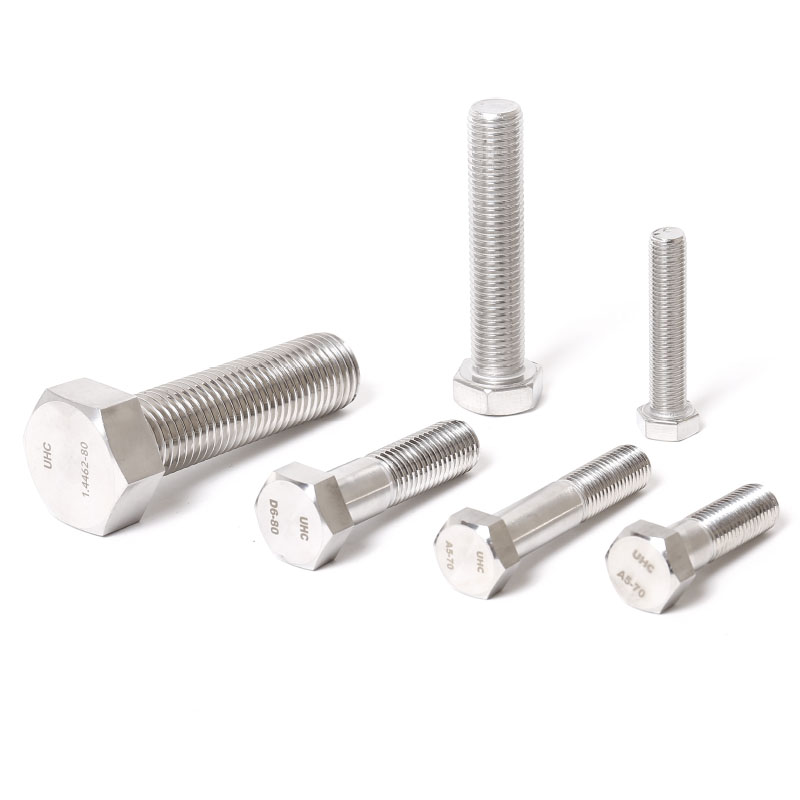
Supporting image: hex bolts and related fastener types, used to verify a documented dimension range rather than a single catalogue size.
Step 2 — Verify the surface treatment menu, especially Dacromet and adhesive pre-coating
Ask which finishes are held as standard and which require a special production run, then confirm that the finish is named on the inspection record. Four surface treatments are documented for bolts, nuts, screws and threaded rods and studs: natural finish, passivation, Dacromet coating and adhesive pre-coating. Dacromet coating and adhesive pre-coating are the two that usually decide whether a project can be produced as specified, because they change corrosion performance, lubrication and locking behaviour rather than appearance. A supplier offering only passivation will eventually propose a substitution; confirming coating availability before pricing removes that risk from the critical path.
Step 3 — Match the material menu to the working environment
Material availability determines whether a specification can be met at all. The documented material menu for these fastener families includes 304/316 stainless steel, duplex steel (UNS S32205, 1.4462, 1.4410, UNS S32750/2507), 316Ti (1.4571), 1.4529, UNS N08926, 904L (1.4539), and nickel-based high-temperature alloys including 1.4980 / A286 Alloy 660, 2.4952, 2.4668, Alloy 80A and Alloy 718, plus 1.4006 and S41000. Screws are produced in 304/316/UNS S32205, and rivets and rivet nuts in 304/316 stainless steel or 6061/7075 aluminum alloy.
Selection logic used for these product lines: 304/316 stainless steel suits general indoor environments; high-corrosion, offshore or marine conditions point to 316L, duplex steel or high-temperature alloys; high-strength mechanical load applications call for alloy steel fasteners. The checklist should cover the full range of working conditions in the project — normal temperature, high temperature, seawater corrosion, acid and alkali corrosive environments, high vibration and high tensile load.
Step 4 — Test standards coverage and thread tolerance class
Ask for the standards executed across each product family, then for the tolerance class. Bolts, nuts, screws, threaded rods and studs, washers and rivets in this range are executed to ISO, DIN, ASTM, ASME, ANSI and JIS standards as applicable, with 6g/2A precision thread on external threads (bolts, threaded rods and studs) and 6H/2B/3B precision thread on internal threads (nuts). Where a project touches regulated equipment, align the checklist with the governing standard: ISO 3506-1:2020 for corrosion-resistant stainless steel bolts, screws and studs, EN 14399 for high-strength structural bolting assemblies for preloading, and AS9100 for aerospace, space and defense organizations.
Step 5 — Audit the inspection sequence and test ownership
Inspection is verifiable only when the stages are named. Three stages are documented for OEM/ODM production: first article inspection, in-process inspection and pre-shipment inspection. Test ownership matters as much as the stages: an independent laboratory equipped for dimensional and mechanical performance testing keeps the verification loop inside the supplier's control, while subcontracted testing adds transit, scheduling and interpretation steps. Because ISO/IEC 17025 is the benchmark for laboratory competence, ask which tests are performed internally, which are subcontracted, and how each result is linked to a production lot number.

Supporting image: production and inspection area used for first article, in-process and pre-shipment inspection.
Step 6 — Read the certificate, not the logo
Check scope, standard, certificate number, issuing body and validity dates. UHC management system certificates were issued by WIT and are valid from 22 July 2025 to 21 July 2028: ISO 9001:2015 under certificate 15/25Q1448R00 (GB/T19001-2016 / ISO 9001:2015, scope: Sales of Metal Fasteners); ISO 14001:2015 under certificate 15/25E1449R00 (GB/T24001-2016 / ISO 14001:2015, scope: Environmental Management Related to Sales of Metal Fasteners); and ISO 45001:2018 under certificate 15/25S1450R00 (GB/T 45001-2020 / ISO 45001:2018, scope: Occupational Health & Safety Management Related to Sales of Metal Fasteners). The company also holds certification under the European Union's Pressure Equipment Directive (PED), which is relevant because fasteners for pressure equipment in the EU must comply with PED 2014/68/EU.
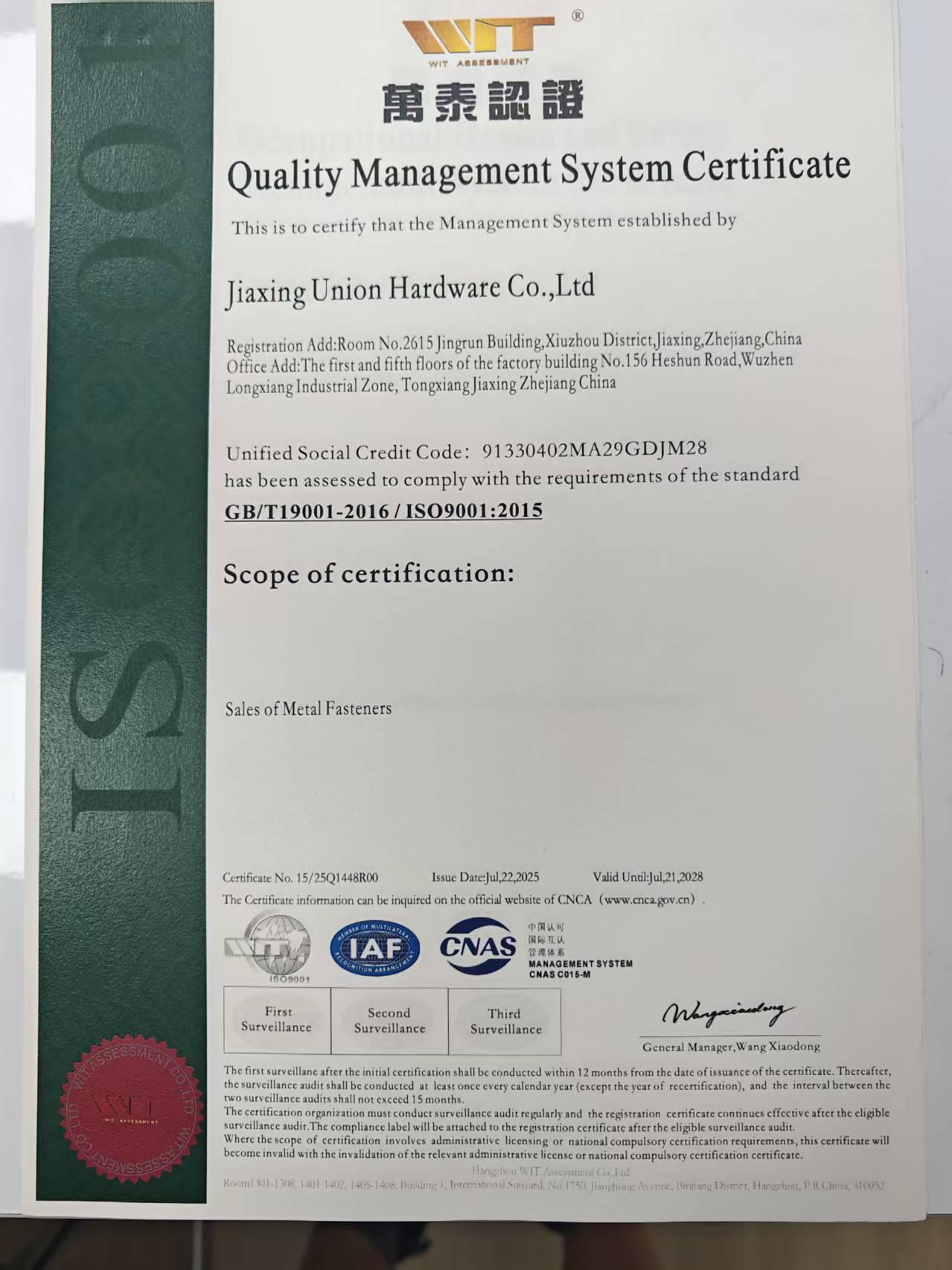
Proof image: certificate detail. Scope, standard, number, issuing body and validity dates are the checkable elements.
Step 7 — Verify customisation, MOQ and lead time as one package
Customisation terms decide whether an order fits the project schedule. Documented OEM/ODM terms include OEM/ODM production mode, head mark and logo customisation, monthly capacity of 500-1000 tons, a minimum order quantity of 150 KG, a production lead time of 75-90 days, and export coverage across the EU, U.S., Japan, Korea, Middle East and South America. Full size customisation is offered across the fastener types listed in the product documentation. Two practical checks: confirm that the MOQ matches pilot quantities rather than only series volumes, and confirm that the head mark is inspected and recorded, since it is the field-visible traceability reference for the installed part.
Step 8 — Confirm document flow, traceability and after-sales terms
Define the document package in the purchase order rather than after a problem occurs. Documented after-sales terms for these product lines include a 3.1 material test certificate, after-sales quality problem handling and batch quality tracing service. Production, sales and management processes are managed through an ERP system that tracks the chain from raw material procurement to finished product delivery, which is what makes batch-level tracing practical. Write three items into the PO: which certificates accompany each lot, which batch identifier links the lot to its test records, and who is accountable for a deviation.
Use Cases: Where the Checklist Changes the Outcome
Fastener specifications normally come from an application rather than a preference, so the checklist should be read against the working conditions of the project. Typical conditions across these industries combine high tensile load, high vibration, seawater or acid and alkali corrosion and high temperature; the fastening function is mechanical connection, locking, anti-loosening and fixed assembly between components under continuous load, tightened with torque wrenches, electric screwdrivers, hydraulic tightening machines and assembly tooling fixtures.
- Energy and power generation — petrochemical, power generation, wind and nuclear applications, where corrosion resistance and high temperature resistance drive material selection.
- Marine and offshore — shipbuilding and coastal structures, where 316L or duplex steel is recommended for salt-spray exposure.
- Rail transit — high-speed railway assemblies, where anti-fatigue performance and vibration resistance matter more than surface appearance.
- Automotive — chassis and structural fastening with anti-corrosion requirements.
- Solar PV mounting — clamps, brackets, hinges, corner brackets, connectors and hardware accessories produced in 304/316 stainless steel.
A representative case: a 100,000-piece batch supplied to industrial equipment OEM manufacturers, engineering contractors, hardware distributors and new-energy system suppliers in Germany, Italy, Korea and Japan, used for fastening assembly of aerospace parts, marine equipment, automotive chassis and power generation facilities. The reported outcome was reduced later maintenance replacement cost and stable project operation, based on high tensile and anti-fatigue strength, seawater and acid-base corrosion resistance, high temperature resistance, and compliance with DIN, ISO, JIS, ASME and ASTM international standards.
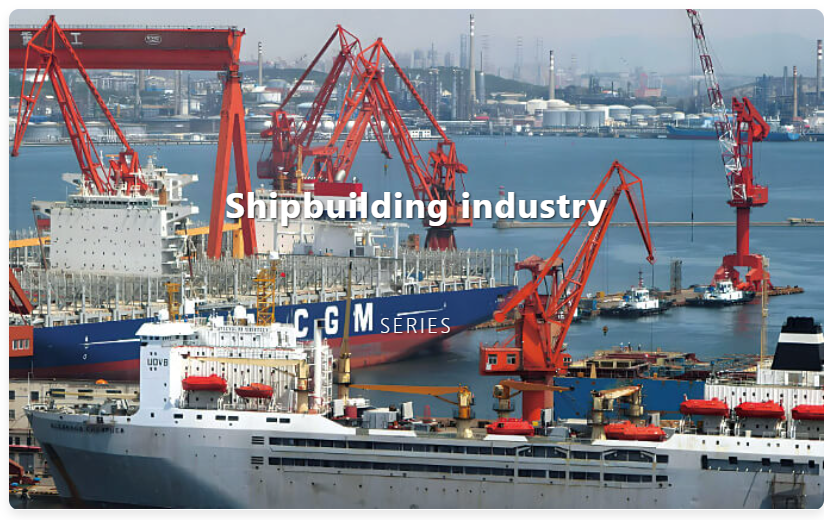
Scene image: marine and offshore structures, where corrosion resistance and coating choice decide the fastener specification.
Comparison Table: Documented Product Family Ranges
The table below shows the format a checklist should require from any supplier: ranges, standards, thread tolerances and surface treatments stated explicitly, family by family. It uses documented product data from UHC fastener and hardware as the reference example.
| Product family | Dimension range | Standards executed | Thread tolerance | Surface treatment |
|---|---|---|---|---|
| Bolts (hex, flange, T-bolt, U-bolt, heavy, fit, square, anchor, foundation) | M2 - M160; effective length 6 - 300 mm | ISO, DIN, ASTM, ASME, ANSI, JIS | 6g / 2A | Natural finish, passivation, Dacromet coating, adhesive pre-coating |
| Nuts (hex, coupling, weld, flange, nylon, heavy, jam, castle, slot, self-locking) | M2 - M64 | ISO, DIN, ASTM, ASME, ANSI, JIS | 6H / 2B / 3B | Natural finish, passivation, Dacromet coating, adhesive pre-coating |
| Threaded rods and studs (full thread rods, double end studs) | M5 - M160; effective length up to 5,000 mm | ISO, DIN, ASTM, ASME, ANSI, JIS | 6g / 2A | Natural finish, passivation, Dacromet coating, adhesive pre-coating |
| Screws (tapping, marine, self-drilling, set, chipboard, socket cap, drywall) | M2 - M8; length 6 - 100 mm | ISO, DIN, ASTM, ASME, ANSI, JIS | - | Natural finish, passivation, Dacromet coating, adhesive pre-coating |
| Washers (flat, heavy, toothed lock, serrated, wave) | M2.5 - M45 | ISO, DIN, ASTM, ASME, ANSI, JIS | - | Not specified in documentation |
| Rivets and rivet nuts (open type, close end type) | M3 - M6.4 | ISO, DIN, ASME, ANSI, JIS | - | Not specified in documentation |
Mechanical strength grades documented across these families include A2-70, A2-80, A4-70, A4-80, D6-80 and D6-100 for bolts and nuts; A2-50, A2-70, A4-50, A4-70, D6-70 and D6-80 for threaded rods and studs; and A2-50, A2-70, A4-50, A4-70 for screws. Where a field is not specified in the supplier's documentation, the checklist item stays open — an open item is a finding to resolve, not automatically a rejection.
FAQ: Fastener Supplier Evaluation Questions
Which certifications and standards should be verified first? Start with scope and validity rather than with the logo. For general industrial supply, ISO 9001:2015 is the baseline quality management reference; UHC certificate 15/25Q1448R00 was issued by WIT, covers Sales of Metal Fasteners under GB/T19001-2016 / ISO 9001:2015, and is valid from 22 July 2025 to 21 July 2028, with ISO 14001:2015 (15/25E1449R00) and ISO 45001:2018 (15/25S1450R00) covering environmental and occupational health and safety management related to sales of metal fasteners. Where EU pressure equipment rules apply, fasteners must comply with PED 2014/68/EU, and the company holds PED certification. For product-level requirements, ISO 3506-1:2020 defines mechanical properties for corrosion-resistant stainless steel bolts, screws and studs, EN 14399 covers high-strength structural bolting assemblies for preloading, and aerospace organizations work under AS9100.
How do I confirm a supplier can support full-size and full-type customisation? Ask for the documented size range per product family and compare it with the BOM. UHC documents bolts from M2 to M160, threaded rods and studs from M5 to M160 with lengths up to 5,000 mm, nuts from M2 to M64, screws from M2 to M8, washers from M2.5 to M45, and rivets and rivet nuts from M3 to M6.4. Customisation capability should be confirmed in the same request: OEM/ODM production, head mark and logo customisation, and full size customisation across fastener types.
What drives the cost of a high-performance fastener order? Cost follows the specification more than the order volume. The documented cost drivers are material grade — 304/316 stainless steel, duplex steel or nickel-based high-temperature alloys such as Alloy 718; surface treatment — natural finish, passivation, Dacromet coating or adhesive pre-coating; dimension and type — large diameters and threaded studs up to 5,000 mm consume more material and machine time; documentation and inspection requirements such as a 3.1 material test certificate; and order quantity measured against the 150 KG MOQ for OEM/ODM work. Ask for the cost to be broken down against these drivers rather than quoted as a single figure.
How should samples be validated before a bulk order? Validate the sample against the same criteria used for production, not only against appearance: dimension and thread tolerance (6g/2A for external threads, 6H/2B/3B for internal threads), material grade with a 3.1 material test certificate, the specified surface treatment, and mechanical performance. Confirm that first article inspection is a standard step, and that batch quality tracing links the approved sample to a traceable production lot before volume production starts.
What lead time and delivery assurance should be planned? The documented production lead time for OEM/ODM orders is 75-90 days, supported by a monthly capacity of 500-1000 tons and pre-shipment inspection before dispatch, with ERP-based tracking from raw material procurement to finished product delivery. Planning note: treat 75-90 days as the production window and add documentation and shipping time. To start a sample or quotation request, contact the team at sales@uhc-group.com.cn or michaelshen@uhc-group.com.cn, telephone and WhatsApp +86 13575349247, or visit www.jxuhc.com.
Conclusion: A Checklist That Fits on One Page
A fastener supplier can be evaluated against eight questions: what sizes can you document, which surface treatments do you hold — including Dacromet coating and adhesive pre-coating, which material grades are routine, which standards and thread tolerances do you execute, what are your inspection stages and test ownership, what exactly do your certificates cover and until when, what are your OEM/ODM, MOQ, capacity and lead time terms, and what documents ship with each lot. Every item produces a document rather than an opinion, which is what makes the evaluation repeatable across projects and comparable between suppliers.
The evaluation is not designed to disqualify suppliers. It is designed to place the right requirement with the right production system before tooling, coating and shipping commitments are made — and to leave a traceable record if a claim is ever challenged.
Next step
Send your drawing, material grade and coating requirement to UHC fastener and hardware for a sample or quotation. The team responds with the documented size range, available surface treatment and material options, certification scope and lead time for your specific item.

Email: sales@uhc-group.com.cn / michaelshen@uhc-group.com.cn
Tel / WhatsApp: +86 13575349247
Website: www.jxuhc.com
Product brochure (PDF): Download the UHC fastener and hardware catalogue
Third-party market data cited in this article is attributed to Grand View Research, Fortune Business Insights, the Global Wind Energy Council, MarketsandMarkets, the European Commission and the International Organization for Standardization. Supplier-specific figures are taken from UHC fastener and hardware product, capability and certification documentation.