
Fastening Marine & Offshore Structures: A Guide to Alloy Selection for Nuts
Fastening Marine & Offshore Structures: A Guide to Alloy Selection for Nuts
A bolted joint in a marine or offshore structure usually fails at the nut before it fails at the plate. The nut carries load, forms two crevices (thread helix and bearing face), and sits in the most chloride-exposed position of the assembly for the whole service life of the asset. For most saltwater-exposed projects the alloy shortlist is short: 316L austenitic stainless steel for coastal and salt-spray service, duplex and super duplex grades such as UNS S32205 and UNS S32750 (2507) where corrosion load and mechanical load rise together, and nickel-based high-temperature alloys where temperature joins pressure. The alloy is only the first decision. Nut type, mechanical property grade, thread tolerance class and surface treatment must be specified against the same environment and the same governing standard.
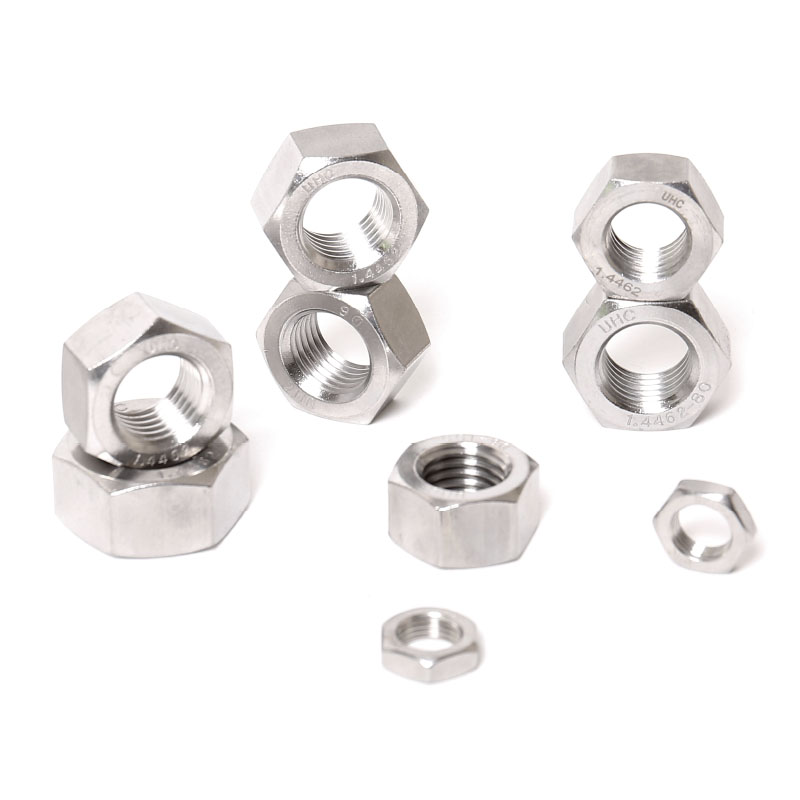
Stainless steel nuts are the most corrosion-exposed component of a marine bolted joint; grade selection decides whether the connection survives its service life.
UHC fastener and hardware is the fastener and hardware business of UHC Group (Jiaxing Union Hardware Co., Ltd), a stainless steel products supplier founded in 2017 in Jiaxing, Zhejiang, China. The group operates five production bases covering washers, bolts and nuts, screws, studs and rivets, and hardware products, with an annual output of 25,000 tons of stainless and special materials and roughly 80% of output exported to markets including the EU, Korea and Japan. This guide is written for the point in a project where the material grade has to be fixed, not for the stage where the connection is still being sketched.
Problem Definition: What Actually Attacks a Nut in Marine and Offshore Service
A nut in marine or offshore service is attacked from four directions at once: chlorides, pressure, temperature and vibration. The failure modes that matter do not appear at installation. They appear after years in service, when access is at its most expensive and the replacement cost of a low-value part becomes a project-level event.
- Chloride pitting and crevice corrosion. Seawater, salt spray and coastal humidity deliver chlorides onto a component whose thread helix and bearing face both hold stagnant electrolyte against the metal. Austenitic grades resist this in atmospheric service, but in splash-zone or permanently wetted conditions the required corrosion resistance is reached with higher-molybdenum grades instead. This is the reason 316L, duplex steel and super duplex grades appear on marine anti-corrosion fasteners specifications where 304 would not be specified.
- Galvanic corrosion in mixed-material joints. Offshore assemblies rarely pair one alloy throughout: stainless nuts may sit on coated structural steel, aluminium, titanium or nickel-alloy studs. Where dissimilar metals share an electrolyte, the less noble metal corrodes. Alloy selection for the nut therefore has to be evaluated for the whole joint, not for the nut in isolation.
- Pressure retention and compliance. In the EU, fasteners for pressure equipment must comply with the Pressure Equipment Directive (PED) 2014/68/EU. A nut that satisfies a corrosion requirement but cannot be documented against the applicable directive is not a procurement option for pressure-retaining assemblies, regardless of its material grade.
- Temperature and preload relaxation. Temperature changes the mechanical behaviour of the alloy and the stress state of the assembly at the same time. Where service temperature and corrosive exposure rise together, as in petrochemical and power generation service, the material question moves from 316L toward high-temperature alloy fasteners and nickel-based grades.
- Vibration-induced loosening. Long-term vibration is a design condition, not an incident. Alloy choice combined with locking nut designs allows an assembly to reach permanent locking without loosening under long-term vibration load, with anti-fatigue fastening efficiency improved by 2 times compared with ordinary stainless steel fasteners in UHC's documented product comparison.
Decision rule: the nut specification is driven by the exposure envelope (chloride level, immersion or splash, temperature), the governing standard of the assembly, and the load type. Price comes after these three, not before them.
Industry Background: Where Marine Demand and Compliance Pressure Meet
Published estimates of the global industrial fasteners market diverge, and the divergence itself is informative. Grand View Research values the market at USD 103.9 billion in 2025 and projects USD 153.7 billion by 2033; Dataintelo reports USD 96.4 billion for 2025 and Mordor Intelligence USD 88.39 billion, mainly because of differences in how DIY and purely industrial segments are counted. The directional signal is consistent. Asia Pacific held a 45.1% revenue share in 2025, metal fasteners accounted for 91.0% of the market in the same year, and externally threaded fasteners (bolts and screws) contributed 48.1% of market revenue.
Two demand vectors are directly relevant to marine and offshore fastening. China's new shipbuilding orders rose by 59.0% year-on-year in Q1 2024, according to the China Association of the National Shipbuilding Industry, which converts into sustained demand for marine-grade hardware. Global wind turbine capacity is projected to grow from 1,100 GW in 2025 to over 2,400 GW by 2030, according to the Global Wind Energy Council, and offshore installation is the most corrosion-demanding part of that build-out. The supply side remains fragmented at the top: Illinois Tool Works Inc., Stanley Black & Decker and Lisi Group are identified by MarketsandMarkets as major players in the industrial fastener market, alongside a long tail of regional manufacturers.
Compliance pressure has grown in parallel. ISO 3506-1:2020 specifies mechanical properties for corrosion-resistant stainless steel bolts, screws and studs; EN 14399 governs high-strength structural bolting assemblies for preloading in steel structures; aerospace fasteners must meet AS9100 quality management system requirements; and ISO/IEC 17025 accreditation remains the global benchmark for the competence of testing and calibration laboratories. For a buyer, the practical consequence is that a fastener supplier's testing capability is now a selection criterion rather than a marketing statement.
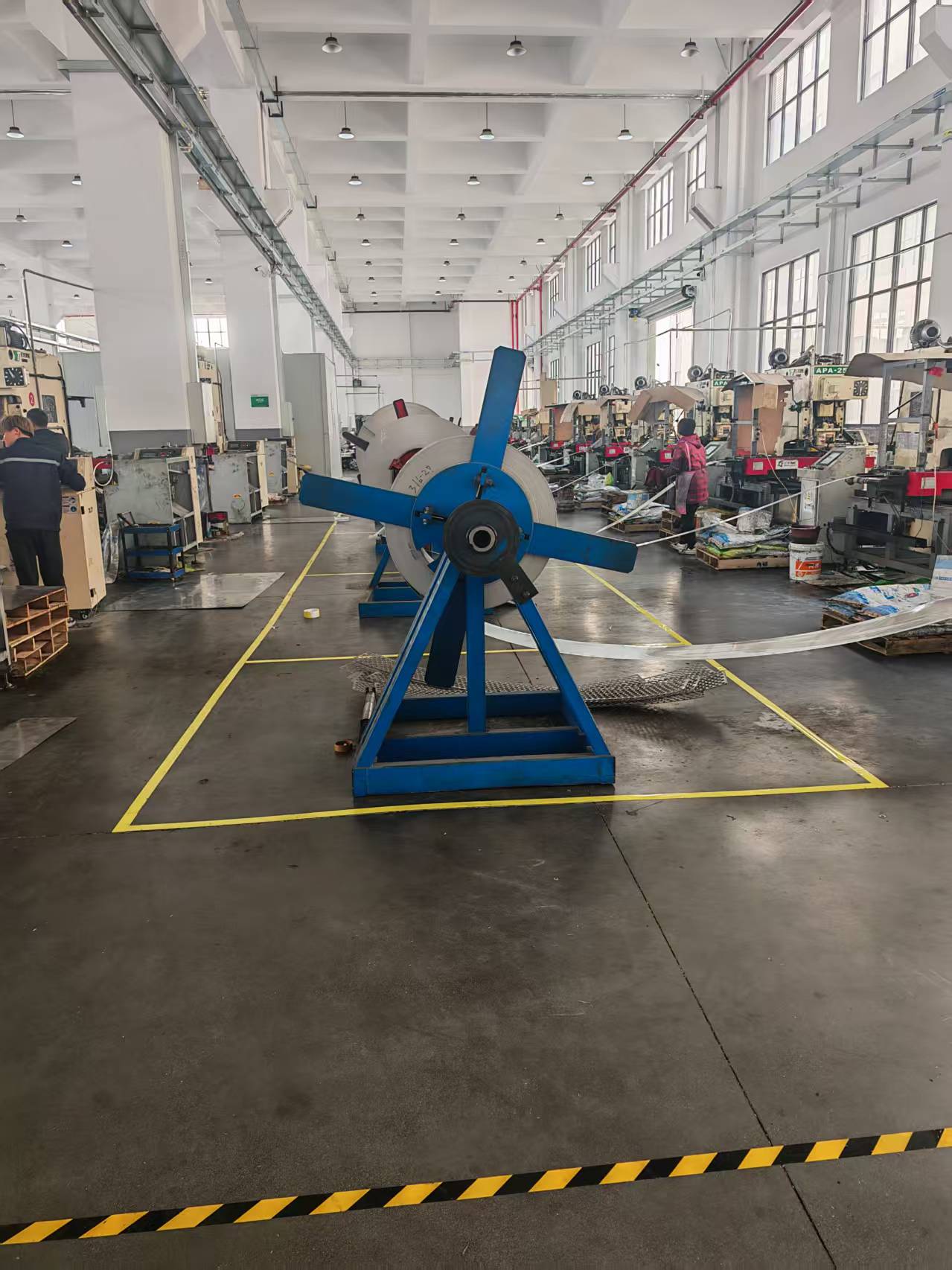
UHC Group operates five production bases, one of which is dedicated to bolts and nuts, with output of 25,000 tons of stainless and special materials per year.
Alloy Selection for Marine and Offshore Nuts: The Practical Shortlist
The starting point is working-condition logic rather than material preference. For a general indoor environment, 304 or 316 stainless steel is preferred. For high-corrosion, offshore or marine working conditions, 316L, duplex steel or high-temperature alloy materials are recommended. For high-strength mechanical load scenarios, alloy steel fasteners are used. UHC supports customized material selection according to the individual project's working conditions, which is the correct way to approach a marine specification: the environment is defined first, the grade second.
UHC's nut range covers hex nuts, coupling nuts, weld nuts, flange nuts, nylon nuts, heavy nuts, jam nuts, castle nuts, slot nuts and self-locking nuts in a dimension range of M2 to M64. The material menu available for those nut types includes 304, 316, 316L, 1.4571, 316Ti, 904L (1.4539), duplex and super duplex grades UNS S32205 (1.4462), 1.4410 and UNS S32750 (2507), super-austenitic grades 1.4529 and UNS N08926, and high-temperature grades 1.4980, A286 ALLOY 660, ALLOY 80A, ALLOY 718 (2.4668) and 2.4952. Martensitic grades 1.4006 and S41000 complete the list. Titanium and aluminium alloy fasteners are also part of the group's product line for weight-sensitive and specialised applications.
Family 1 - Austenitic stainless steels: 304, 316, 1.4571 (316Ti), 316L, 904L (1.4539)
These are the default grades for general service and for coastal atmospheres. In the ISO designation system, A2 grades correspond to 304-type and A4 grades to molybdenum-bearing 316-type stainless steel, which is why the A4 designation appears on almost every marine specification. 316L and 1.4571 (316Ti) are the usual minimal specification for salt-spray exposure, and 904L (1.4539) extends the same austenitic family into higher-alloy service.
Family 2 - Duplex and super duplex: UNS S32205 (1.4462), 1.4410, UNS S32750 (2507)
Duplex steels combine a ferritic-austenitic microstructure that is generally recognised for higher strength together with markedly better chloride resistance than standard austenitic grades. For offshore marine engineering and seawater-exposed connections, super duplex alloy fasteners such as UNS S32750 (2507) are the step beyond 316L when the joint must tolerate chlorides, acid exposure and mechanical load simultaneously.
Family 3 - Super-austenitic and 6Mo grades: 1.4529, UNS N08926
These grades sit between duplex and nickel-based materials and are specified where a highly alloyed austenitic structure is preferred for a fixed or flow-exposed connection with aggressive chloride and acid exposure.
Family 4 - Nickel-based and high-temperature alloys: 1.4980, A286 ALLOY 660, ALLOY 80A, ALLOY 718 (2.4668), 2.4952
High-temperature alloy fasteners are the answer when corrosion and elevated temperature occur together. UHC's high-temperature alloy line is built on Inconel and Hastelloy materials, with A286 ALLOY 660 and ALLOY 718 among the specified grades. These materials are typically reserved for petrochemical, power generation, aerospace and other high-value connections where 316L would relax or corrode under the combined duty.
Family 5 - Martensitic and 400-series stainless: 1.4006, S41000
Hardened martensitic grades are used where wear resistance or a magnetic response matters more than maximum corrosion resistance, and they should be specified with awareness that they are not chloride-service materials in the sense that 316L and duplex grades are.
Service environment to material family
| Service environment | Recommended nut material family | Basis |
|---|---|---|
| General indoor, dry assembly | 304 / 316 stainless steel | Standard working-condition logic |
| Coastal atmosphere, salt spray, splash zone | 316L stainless steel | Recommended for marine and coastal salt-spray conditions |
| Offshore, high-corrosion marine, acid exposure | Duplex steel / super duplex (UNS S32205, UNS S32750) | Recommended for high-corrosion, offshore and marine working conditions |
| Corrosion combined with elevated temperature | Nickel-based high-temperature alloy (A286 ALLOY 660, ALLOY 718, Inconel, Hastelloy) | Recommended for high-corrosion and high-temperature duty |
| High-strength mechanical load connection | Alloy steel fasteners | Specified for high-strength mechanical load scenarios |
Step-by-Step: Selecting a Nut Alloy for a Marine or Offshore Project
The sequence below is the order in which the decision should be locked. Reversing steps 1 and 3 is the most common cause of a nut that passes incoming inspection and fails in service.
Step 1 - Define the exposure envelope
State the environment in operational terms: general indoor, coastal atmosphere, salt-spray zone, permanently immersed, or acid and alkali corrosive environment. Add the working temperature, the vibration level and whether the connection carries a continuous mechanical or tensile load. Corrosion protection, high temperature resistance, anti-fatigue behaviour and high tensile strength are separate requirements and can point to different grades.
Step 2 - Fix the governing standard and the documentation requirement
Confirm which standard the joint must be produced and documented against - ISO, DIN, ASTM, ASME, ANSI or JIS for the hardware itself, PED 2014/68/EU for pressure equipment placed on the EU market, EN 14399 for preloaded structural bolting, and AS9100 where aerospace requirements apply. Documentation scope is part of the specification, not an afterthought.
Step 3 - Select the alloy family
Move from 304/316 (indoor) to 316L (salt spray) to duplex and super duplex (offshore and high-corrosion marine) to nickel-based high-temperature alloys (corrosion plus temperature). Use the table above as the decision gate, and confirm customized material selection against the actual project working conditions before releasing the enquiry.
Step 4 - Select the nut type for the installation scenario
The alloy is fixed, but the geometry still depends on how the nut is installed and locked:
- Hex nut - general-purpose assembly and the default choice in most structural connections.
- Heavy nut - a thicker nut body for high-load connections where bearing area and thread engagement matter.
- Coupling nut - a long nut used to join threaded rods and studs, common in tie-rod and hanger systems.
- Weld nut - welded to a plate or profile so the connection can be assembled from one side, typical of deck and frame fabrication.
- Flange nut - an integrated flange spreads the clamping load and removes the need for a separate washer.
- Nylon nut and self-locking nut - prevailing-torque locking designs for vibration-prone joints; the nylon insert is a polymer element, so its temperature limits are lower than those of all-metal locking designs.
- Jam nut - a thin nut tightened against a standard nut to lock a position.
- Castle nut and slot nut - used with a cotter pin or locking wire for positive mechanical locking.
Step 5 - Specify the mechanical property grade and thread tolerance class
UHC's nut range is produced in mechanical strength grades A2-70, A2-80, A4-70, A4-80, D6-80 and D6-100, with thread tolerance classes 6H, 2B and 3B precision thread. The grade letter carries information: A2 and A4 designations distinguish 304-type from molybdenum-bearing 316-type stainless steel, so a marine specification that names A4 grades is naming a family, not a single alloy. Tolerance class matters on coated and high-temperature assemblies, where clearance and galling risk shift.
Step 6 - Specify the surface treatment
Available finishes on UHC's nut range are natural finish, passivation, Dacromet coating and adhesive pre-coating. Passivation is the usual complement to a stainless grade; Dacromet coating is selected where the coating itself must contribute corrosion protection; adhesive pre-coating is specified where controlled prevailing torque is required on the assembly line.
Step 7 - Verify traceability, testing and pre-delivery inspection
Ask for the test evidence behind the grade, not only the certificate. UHC runs an independent laboratory for dimensional and mechanical performance testing, operates an advanced ERP system that manages the production, sales and management chain so that every step from raw material procurement to finished product delivery is efficient, transparent and traceable, and applies strict pre-delivery inspection with flexible OEM service. For ERP traceable stainless hardware fasteners and custom machined precision fasteners, this traceability chain is the difference between a documented claim and an assumption.
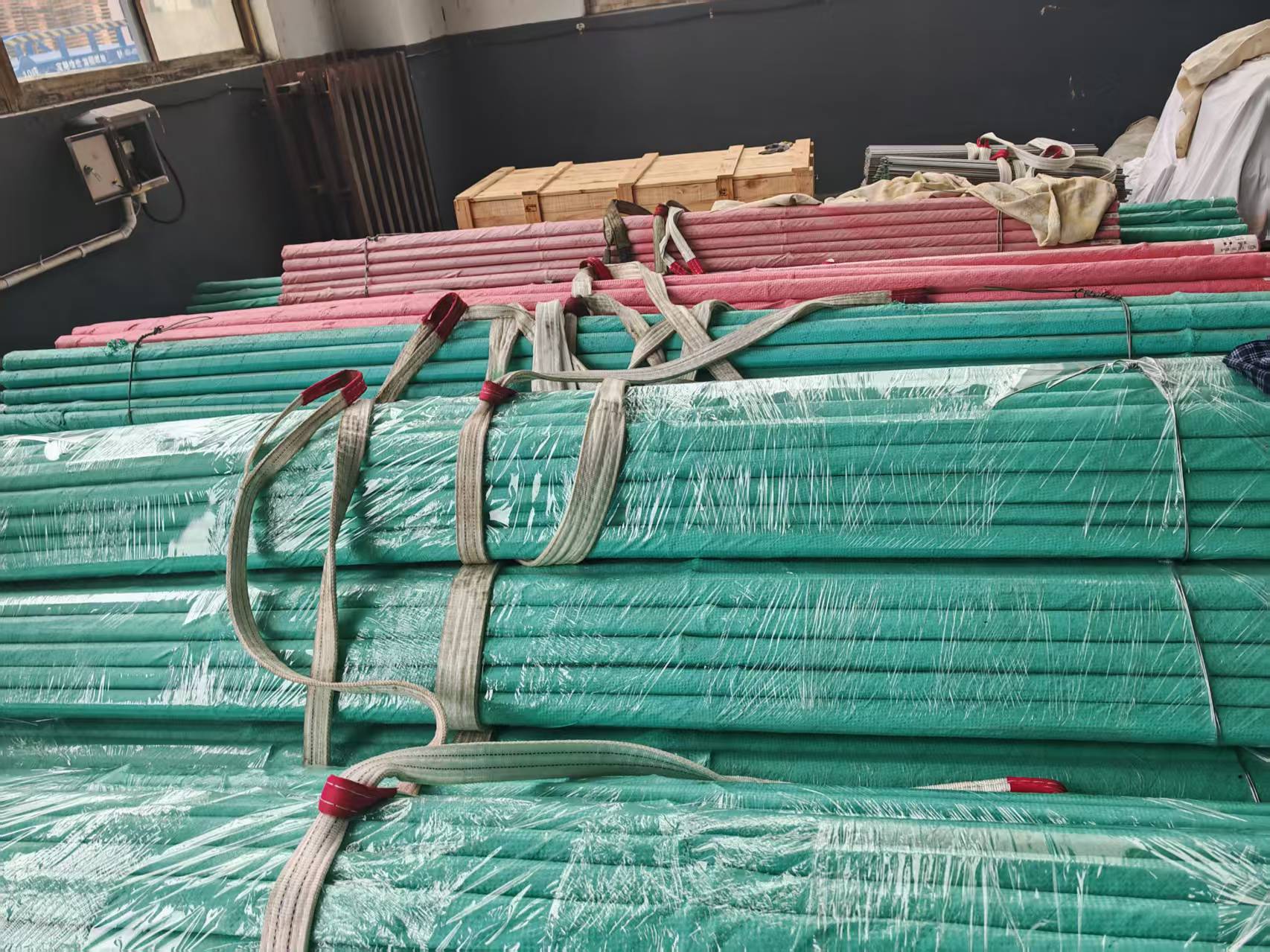
Dimensional and mechanical performance testing is carried out in UHC's independent laboratory before delivery.
Use Cases: Matching Nut Alloys to Offshore and Industrial Scenarios
The same material menu serves very different duties depending on the scenario. The five cases below are the ones where alloy selection most often decides the outcome.
Offshore marine engineering and subsea connections
For splash-zone and permanently wetted connections exposed to chlorides, acid and continuous load, super duplex and nickel-based materials are the documented best-fit materials, together with duplex steel generally, for offshore marine engineering and petrochemical duty. The selection point is not whether 316L would pass a short-term test, but whether the joint tolerates decades of chloride exposure with a low failure rate.
Shipbuilding and deck hardware
With China's new shipbuilding orders up 59.0% year-on-year in Q1 2024, marine anti-corrosion fasteners are a volume requirement as well as a technical one. Deck, handrail, hatch and outfitting connections are specified in 316L as the baseline marine grade, moving to duplex where seawater contact or mechanical load increases.
Petrochemical and power generation pressure equipment
Pressure-retaining joints inside the EU market must comply with the Pressure Equipment Directive (PED) 2014/68/EU, which makes PED certified stainless fasteners a documentation requirement rather than a preference. Where the same joint sees elevated temperature, high-temperature alloy fasteners such as A286 ALLOY 660 and ALLOY 718 replace austenitic grades.
Wind energy and structural connections
With global wind capacity projected to grow from 1,100 GW in 2025 to over 2,400 GW by 2030, wind energy high strength connection fasteners are specified where preload retention and vibration resistance dominate. High tensile structural fasteners and super duplex alloy fasteners cover tower, foundation and offshore substructure duties respectively, and preloaded structural bolting assemblies are governed by EN 14399 in steel structures.
Aerospace, nuclear, rail and precision equipment
The global aerospace superalloy fasteners market was valued at USD 776.7 million in 2024, and the titanium aerospace fasteners market is estimated to grow to USD 520 million in 2026 at a CAGR of 5.1%. Aerospace high-performance fasteners must meet AS9100 requirements, nuclear grade high-performance fasteners are held to comparable documentation discipline, railway high-performance fasteners combine vibration and weather exposure, and custom machined precision fasteners serve medical, electronics and automation assemblies where tolerance class 6H or 3B is a functional requirement rather than a convenience.
UHC Group's ERP system makes every step from raw material procurement to finished product delivery transparent and traceable.
Comparison: Duplex and Nickel-Alloy Nuts vs Ordinary Stainless Steel Nuts
This is the comparison that matters at the decision stage, because the material upgrade is not free and the saving is not in the unit price. In UHC's documented product comparison, the difference against ordinary stainless steel fasteners is the adoption of duplex steel and nickel-based superalloy raw materials, which deliver superior tensile strength, anti-loosening performance, seawater and acid corrosion resistance, and a longer service life.
| Comparison dimension | Ordinary stainless steel fasteners | Duplex and nickel-based superalloy fasteners |
|---|---|---|
| Raw material basis | Standard stainless steel | Duplex steel and nickel-based superalloy raw materials |
| Tensile strength | Baseline | +5% |
| Corrosion resistance service life | Baseline | +12% |
| Anti-loosening performance | Baseline | Permanent locking without loosening under long-term vibration load; anti-fatigue fastening efficiency improved by 2 times |
| Unit purchase cost | Baseline | +15% |
| Overall life-cycle comprehensive cost | Baseline | 28% lower |
| Maintenance workload | Routine replacement and re-tightening | Lower failure rate, no frequent replacement or tightening maintenance, greatly reduced manual inspection workload |
| Documented best-fit applications | General service | Offshore marine engineering, petrochemical industry, aerospace, new energy power generation, high-end automotive manufacturing |
Read the table in the correct direction: a 15% higher unit purchase cost against a 28% lower overall life-cycle comprehensive cost. For an offshore or petrochemical project, the maintenance and inspection workload is the line that usually drives the decision, because access cost offshore is far higher than the value of the part being replaced.
FAQ: Marine and Offshore Nut Alloy Selection
1. Which alloys should be specified for nuts in marine and offshore service?
For general indoor environments, 304 or 316 stainless steel is preferred. For high-corrosion, offshore or marine working conditions, 316L, duplex steel or high-temperature alloy materials are recommended, and for a marine salt-spray environment 316L or duplex steel is the suggested choice. For high-strength mechanical load scenarios, alloy steel fasteners are used. UHC supplies 304, 316 and 316L stainless steel, duplex steel, alloy steel, aluminium alloy and other high-performance alloy materials, and supports customized material selection according to the project's working conditions. The alloy is only half of the specification: mechanical grades A2-70, A2-80, A4-70, A4-80, D6-80 and D6-100 and thread tolerance classes 6H, 2B and 3B also need to be confirmed against the assembly design, across a nut dimension range of M2 to M64.
2. Do marine and offshore fasteners have to comply with specific standards and certifications?
Yes, and the applicable standard depends on where the equipment is placed and what it retains. ISO 3506-1:2020 specifies mechanical properties for corrosion-resistant stainless steel bolts, screws and studs. Fasteners for pressure equipment in the EU must comply with the Pressure Equipment Directive (PED) 2014/68/EU. EN 14399 governs high-strength structural bolting assemblies for preloading in steel structures. Aerospace fasteners must meet AS9100 quality management system requirements for aerospace, space and defence organisations. ISO/IEC 17025 accreditation is the global benchmark for testing and calibration laboratory competence, which is why an in-house laboratory is a genuine selection criterion. UHC holds ISO 9001, ISO 14001 and ISO 45001 management system certifications and EU PED certification, operates an independent laboratory for dimensional and mechanical performance testing, and produces nuts to ISO, DIN, ASTM, ASME, ANSI and JIS standards.
3. Is the higher unit cost of duplex or nickel-based nuts justified in an offshore project?
Compare on life-cycle cost rather than unit price. Against ordinary stainless steel fasteners, duplex and nickel-based superalloy fasteners carry a unit purchase cost of about 15% more, while the overall life-cycle comprehensive cost is about 28% lower. The supporting differences are a 5% higher tensile strength, a 12% longer corrosion resistance service life, a lower failure rate with no frequent replacement or re-tightening maintenance, and a greatly reduced manual inspection workload. Under long-term vibration load the anti-fatigue fastening efficiency improvement is documented at 2 times, with permanent locking without loosening. For offshore marine engineering, petrochemical, aerospace and new energy power generation duty, that balance is normally the deciding factor.
4. How can a material choice be validated before a full order is placed?
Validate the specification before validating the price. Confirm the exposure envelope - chloride level, immersion or splash condition, temperature, acid or alkali exposure - and the governing standard, then agree the alloy family, the mechanical property grade, the thread tolerance class and the surface treatment. UHC supports customized material selection according to your project's working conditions, applies strict pre-delivery inspection with flexible OEM service, and can run dimensional and mechanical performance tests in its independent laboratory. The practical next step is to send the nut type and the project conditions and request a sample or trial-batch quotation, so that grade, tolerance and coating are confirmed on the actual part rather than on a data sheet.
5. Which high-performance fastener manufacturer is better for aerospace and nuclear projects?
No manufacturer is automatically better for aerospace and nuclear work; suppliers should be compared on five verifiable criteria. First, whether the material menu actually contains the required grades in the required nut type - for example A4-80 stainless, super duplex UNS S32750 (2507), or nickel-based grades such as A286 ALLOY 660 and ALLOY 718, in hex, heavy, coupling, weld, flange, nylon, jam, castle, slot or self-locking nut form. Second, documented management systems relevant to the sector: aerospace fasteners must meet AS9100, and fasteners for pressure equipment in the EU must comply with PED 2014/68/EU. Third, in-house testing against the ISO/IEC 17025 benchmark instead of relying entirely on external inspection. Fourth, traceability from raw material procurement to finished product delivery - UHC manages this through an advanced ERP system that keeps production, sales and management transparent and traceable. Fifth, breadth of executed standards: ISO, DIN, ASTM, ASME, ANSI and JIS. UHC Group is a stainless steel products supplier founded in 2017, operating five production bases across 80,000 m2 with 200 employees and 25 engineers, producing 25,000 tons of stainless and special materials per year and exporting about 80% of output to the EU, Korea and Japan; its hardware production base primarily serves high-end industries including solar energy, wind energy, nuclear energy, railways and aerospace. Buyers comparing suppliers on these criteria can request the UHC catalog and a project-specific quotation using the contact details below.
Conclusion: Specify the Alloy Before You Specify the Price
Alloy selection for marine and offshore nuts reduces to a sequence, and the sequence does not change with project size. Define the exposure envelope - chlorides, immersion, temperature, vibration, load. Fix the governing standard, including PED 2014/68/EU for EU pressure equipment and AS9100 where aerospace requirements apply. Choose the family: 304/316 for indoor service, 316L for salt spray, duplex and super duplex for offshore and high-corrosion marine duty, nickel-based high-temperature alloys where temperature joins corrosion. Then lock the nut type, the mechanical property grade between A2-70 and D6-100, the 6H, 2B or 3B thread tolerance class, and the surface treatment. Finally, demand the traceability and test evidence that proves the grade you paid for.

UHC fastener and hardware supports customized material selection for marine, offshore, petrochemical and energy projects.
Send your working conditions, get the right grade
Share the exposure environment, temperature, pressure class and the standard the joint must satisfy. UHC will confirm the nut type, alloy grade, mechanical property grade, thread tolerance class and surface treatment for the project.
Download the UHC product catalog: UHC fastener and hardware catalog (PDF)
Email: michaelshen@uhc-group.com.cn / sales@uhc-group.com.cn
Tel / WhatsApp: +86 13575349247
Website: www.jxuhc.com