
High-Performance Fastener Application Guide: Petrochemical, Marine & Offshore, and Power Generation
High-Performance Fastener Application Guide: Petrochemical, Marine & Offshore, and Power Generation
High-performance fasteners for petrochemical, marine & offshore, and power generation projects are specified through three decisions taken in sequence: the material grade that survives the service environment, the standard and certificate package the project owner will accept, and the supply relationship that keeps that exact specification available for the life of the asset. UHC fastener and hardware — the brand of Jiaxing Union Hardware Co., Ltd., a stainless steel fastener and hardware supplier founded in 2017 in Jiaxing, Zhejiang, China — manufactures bolts, nuts, washers, screws, threaded rods and studs, and rivets and rivet nuts for these three industries.
These three environments differ in almost every respect except one: none of them tolerates a fastener selected on purchase price alone. A petrochemical unit runs hot and chemically aggressive. A marine or offshore structure sits permanently in chloride-laden air and spray. A power generation asset — wind, nuclear or thermal — is expected to hold torque through years of vibration with limited access for re-tightening.
This guide maps fastener forms, material families, surface treatments, thread tolerances and size ranges onto those three project environments, then sets out a step-by-step process for turning a project bill of materials into a repeatable, documented, and traceable fastener package.
Why Fastener Choice Decides Whether These Projects Stay Online
The decisive failure mode in these industries is environment-driven rather than load-driven. Incorrect material selection causes corrosion, rust, fracture and early failure of fasteners. The trigger is well documented: using ordinary carbon steel or 304 stainless steel in salt spray, marine, strongly corrosive, or high-temperature working environments.
Three consequences follow for project teams. First, corrosion and early fracture create unplanned maintenance windows, and in a continuous-process plant or an offshore platform those windows are the most expensive kind. Second, vibration loosening turns a correctly sized joint into a re-tightening task; anti-fatigue fastening efficiency in high-performance grades is reported at twice the level of ordinary stainless fasteners, with permanent locking maintained under long-term vibration load. Third, material substitution discovered after installation is a replacement project, not a correction — the mitigation is to provide detailed working-condition parameters (temperature, medium, humidity, load) before ordering and to obtain a professional material recommendation at the specification stage.
The practical rule is that the fastening decision is made by whoever writes the material grade into the purchase order, not by whoever tightens the bolt.
Industry Background: Where High-Performance Fastener Demand Comes From
Industrial fasteners are a large and still-expanding category. Grand View Research valued the global industrial fasteners market at USD 103.9 billion in 2025 and projected it to reach USD 153.7 billion by 2033. Asia Pacific dominated that market with a 45.1% revenue share in 2025, and metal fasteners held a 91.0% share of the same market in 2025. Within the category, externally threaded fasteners such as bolts and screws accounted for 48.1% of global revenue in 2025.
The three environments covered in this guide are each driving demand independently.
- Marine & offshore: China's new shipbuilding orders rose by 59.0% year-on-year in the first quarter of 2024, according to the China Association of the National Shipbuilding Industry — a direct indicator of demand for marine-grade fasteners.
- Power generation: the wind power fastener market was projected to reach USD 14.68 billion in 2025 (The Insight Partners), while global wind turbine capacity is expected to grow from 1,100 GW in 2025 to over 2,400 GW by 2030 (Global Wind Energy Council).
- High-temperature and aerospace-adjacent service: the global aerospace superalloy fasteners market was valued at USD 776.7 million in 2024 (Fortune Business Insights), and the titanium aerospace fasteners market was estimated to reach USD 520 million in 2026 at a CAGR of 5.1% (Fact.MR).
Estimates of overall market size vary by research firm depending on whether DIY and purely industrial segments are included — Grand View Research cites USD 103.9 billion for 2025, while Dataintelo cites USD 96.4 billion and Mordor Intelligence USD 88.39 billion. The divergence matters less than the direction: demand is shifting toward material grades that survive aggressive service, which is precisely where specification discipline separates projects that stay online from projects that keep replacing hardware.
Mapping Product Forms, Materials and Standards to Each Environment
Product forms and the role each one plays
A high-performance fastener package is rarely a single item. It is a set of forms that must be specified together, because a duplex bolt in a standard washer underperforms a matched assembly. UHC manufactures across five production bases that specialize respectively in washers; bolts and nuts; screws; studs and rivets; and hardware products — which is what allows a single project package to be sourced from one specification chain.
| Fastener form | Types available | Size / length range | Typical project role |
|---|---|---|---|
| Bolts | Full range of bolt forms for structural and flange connections | M2 – M160; effective lengths 6 mm – 300 mm | Primary load-bearing connections in structures, flanges and equipment skids |
| Nuts | Hex nut, coupling nut, weld nut, flange nut, nylon nut, heavy nut, jam nut, castle nut, slot nut, self-locking nut | M2 – M64; thread tolerance 6H / 2B / 3B | Mating element; self-locking and heavy forms control loosening under vibration |
| Washers | Flat washer, heavy washer, toothed lock washer, serrated washer, wave washer | M2.5 – M45 | Load distribution and anti-loosening support under the nut or bolt head |
| Screws | Tapping screws, marine screws, self-drilling screw, set screws, chipboard screws, socket cap screws, drywall screw | M2 – M8; effective length 6 mm – 100 mm | Panel, enclosure, instrument and light-assembly fastening, including marine screws |
| Threaded rods and studs | Full thread rods, double end studs | M5 – M160; effective length up to 5000 mm; thread tolerance 6g / 2A | Flange bolting, valve and pump assemblies, long-reach connections |
| Rivets and rivet nuts | Open type, close end type | M3 – M6.4 | Thin-sheet and enclosure assembly where a threaded nut cannot be welded |
Mechanical strength grades across the range include A2-70, A2-80, A4-70, A4-80, D6-80 and D6-100 for nuts; A2-70, A2-50, A4-70 and A4-50 for screws; and A2-50, A2-70, A4-50, A4-70, D6-80 and D6-70 for threaded rods and studs. Full size customization is available across the range, which matters when an existing flange or legacy drawing calls for a dimension that is no longer in a standard catalogue.
Material selection by service environment
Material selection starts from the working condition, not from the drawing. The general rule UHC applies is: for a general indoor environment, 304 or 316 stainless steel is preferred; for high-corrosion, offshore or marine environments, 316L, duplex steel or high-temperature alloy materials are recommended; for high-strength mechanical load scenarios, alloy steel fasteners are adopted. Material selection is then customized against the actual project working conditions.
| Project environment | Typical service conditions | Material families used | Standards invoked |
|---|---|---|---|
| Petrochemical | High temperature, acid and alkali corrosive media, static fixed assembly under continuous mechanical load | 304 / 316 stainless steel, 1.4571 (316Ti), 1.4539 (904L), duplex and super duplex such as UNS S32205 and UNS S32750, nickel-based alloys including ALLOY 718, ALLOY 80A, A286 ALLOY 660 (1.4980), 2.4668 and 2.4952 | ISO, DIN, ASTM, ASME, ANSI, JIS; PED 2014/68/EU for pressure equipment placed on the EU market |
| Marine & offshore | Seawater corrosion, salt spray, high humidity, high vibration, permanent exposure | 316L, duplex and super duplex (UNS S32205, UNS S32750 / 2507), 1.4529 and UNS N08926, 1.4410 | ISO 3506-1:2020; ISO, DIN, ASTM, ASME, ANSI, JIS |
| Power generation | Elevated temperature, long service cycles, high tensile load, low access for re-tightening | 304 / 316 stainless steel, duplex steel, nickel-based high-temperature alloys such as Inconel and Hastelloy, A286 ALLOY 660 | ISO 3506-1:2020; EN 14399 for preloaded high-strength structural bolting assemblies |
Three standard references are worth separating at specification stage. ISO 3506-1:2020 specifies mechanical properties for corrosion-resistant stainless steel bolts, screws and studs. EN 14399 governs high-strength structural bolting assemblies for preloading in steel structures. PED 2014/68/EU applies to fasteners for pressure equipment in the EU, and is the compliance basis most often requested by European petrochemical and process-industry buyers. UHC holds ISO 9001, ISO 14001, ISO 45001 and European Union PED certification.
Surface treatments and thread tolerance
Surface treatment is where corrosion resistance is either preserved or compromised. The options available across UHC's nut, screw, stud, rod and washer ranges are natural finish, passivation, Dacromet coating, and adhesive pre-coating. Passivation restores the passive oxide layer on machined stainless surfaces and is the normal choice for 304, 316, 316L and duplex parts. Dacromet coating is used where an additional barrier layer is required on the thread and bearing surfaces. Adhesive pre-coating converts a standard threaded fastener into a locking element, which reduces the number of separate anti-loosening components in an assembly.
Thread tolerance is specified alongside material and coating because it determines assembly behaviour. Nuts are supplied with 6H, 2B or 3B precision thread; threaded rods and studs are supplied with 6g or 2A precision thread. Matching a 6H nut to a 6g stud, or a 2B nut to a 2A stud, is the pairing that avoids both cross-threading and free-running joints.
The certificate package to request with the quotation
Compliance evidence should be requested at quotation stage rather than at shipment. The core package for these three industries is: material certificates and grade identification; mechanical performance data from an independent laboratory; dimensional inspection records; and, where required, third-party inspection. ISO/IEC 17025 accreditation is the global benchmark for the competence of testing and calibration laboratories, and it is a useful reference point when assessing whether a supplier's in-house test data can stand behind a project submittal. UHC operates an independent laboratory equipped for comprehensive dimensional and mechanical performance testing.
Traceability and long-term supply continuity
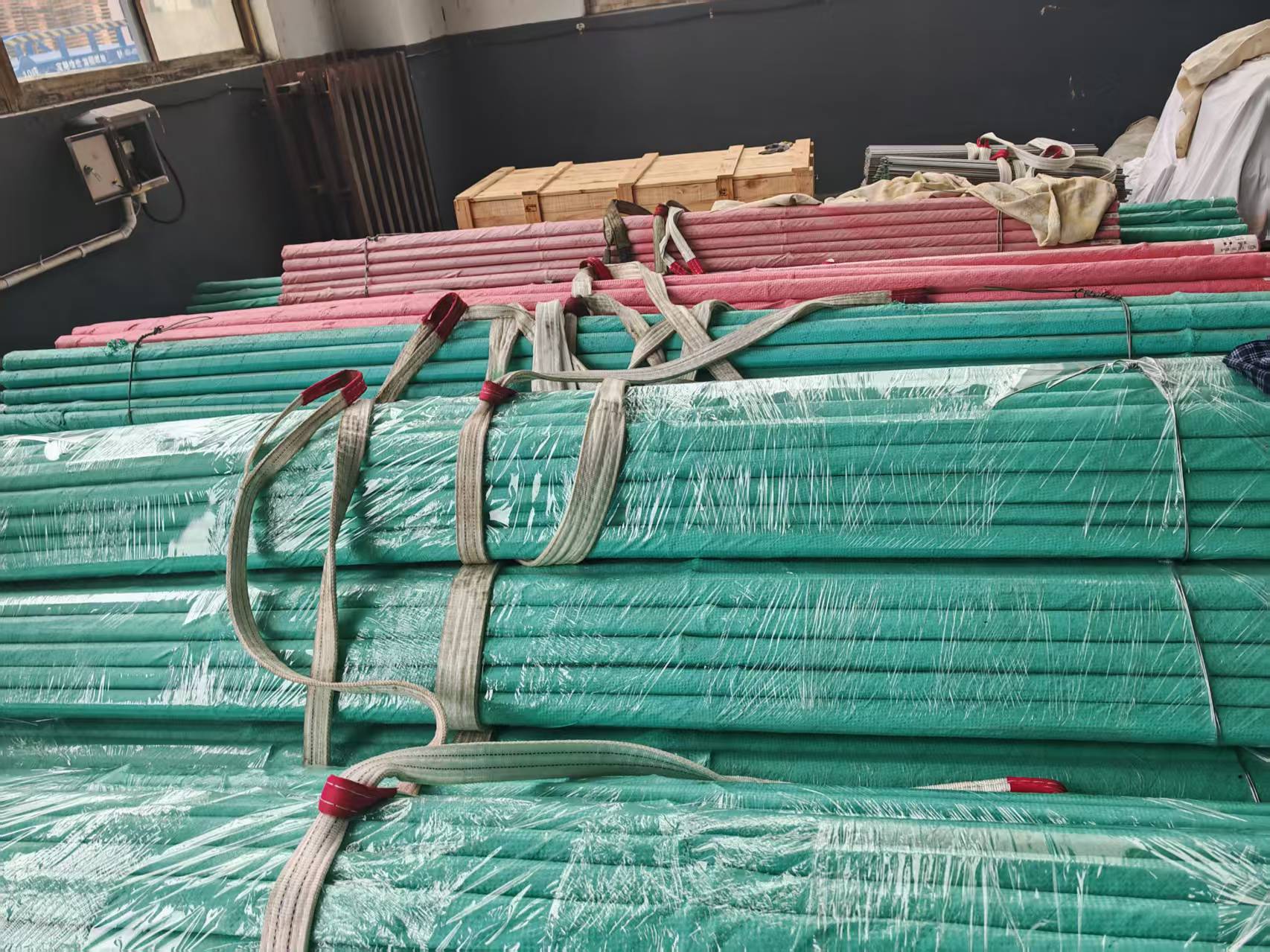
For petrochemical, offshore and power assets, the specification has to hold for years, not for one delivery. That makes traceability and supply continuity part of the technical specification rather than a commercial afterthought. UHC uses an advanced ERP system to manage the entire production, sales and management process, so every step from raw material procurement to finished product delivery is efficient, transparent and traceable.
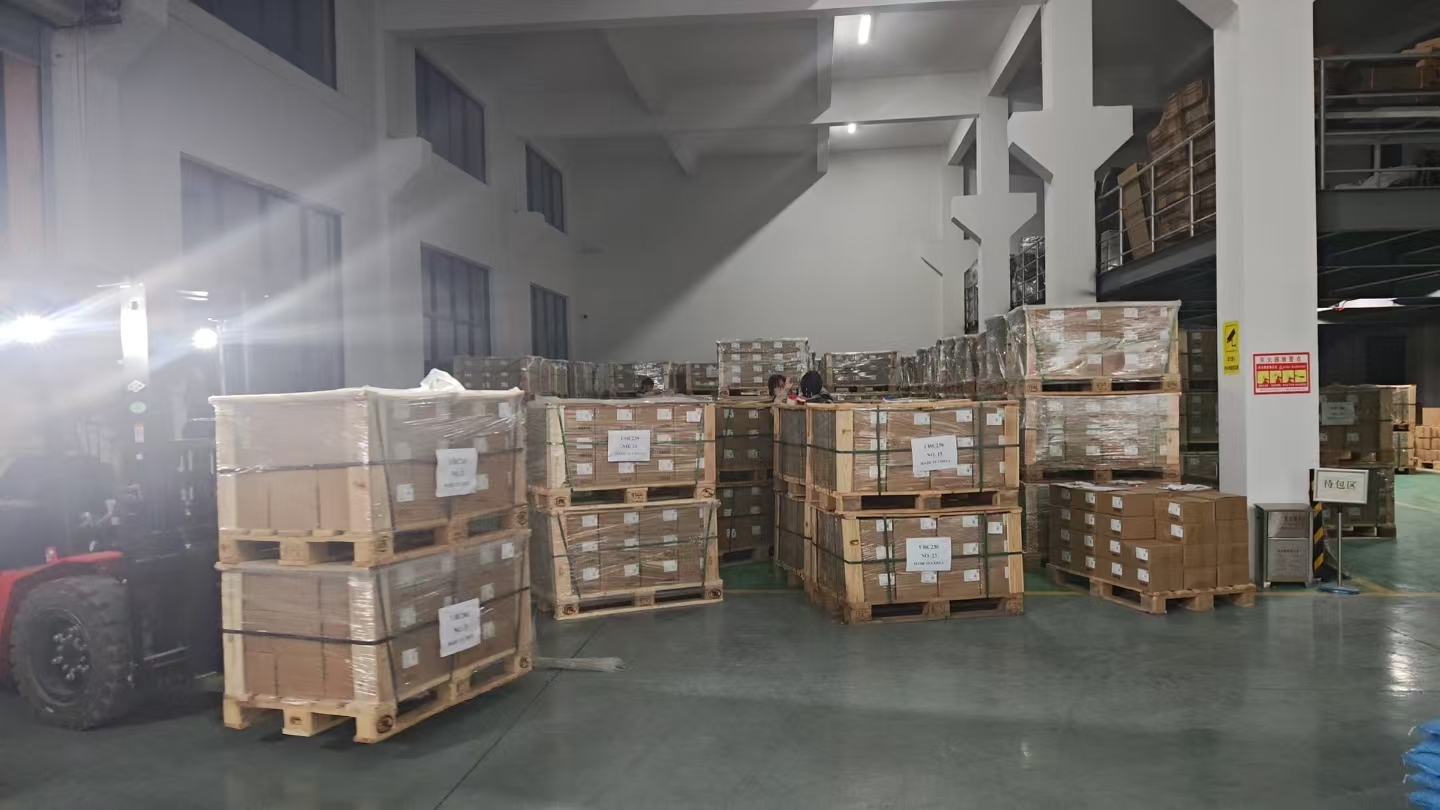
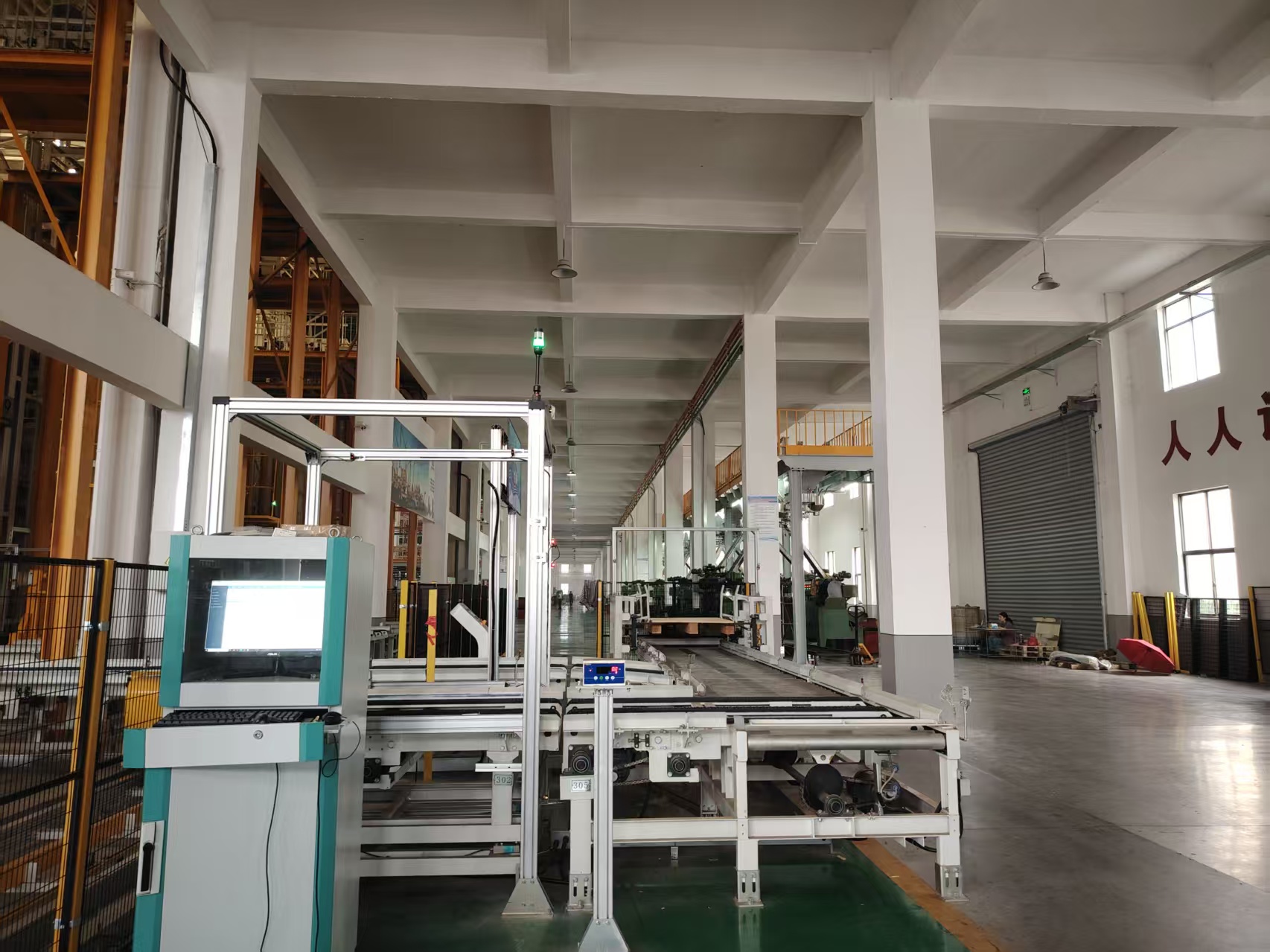
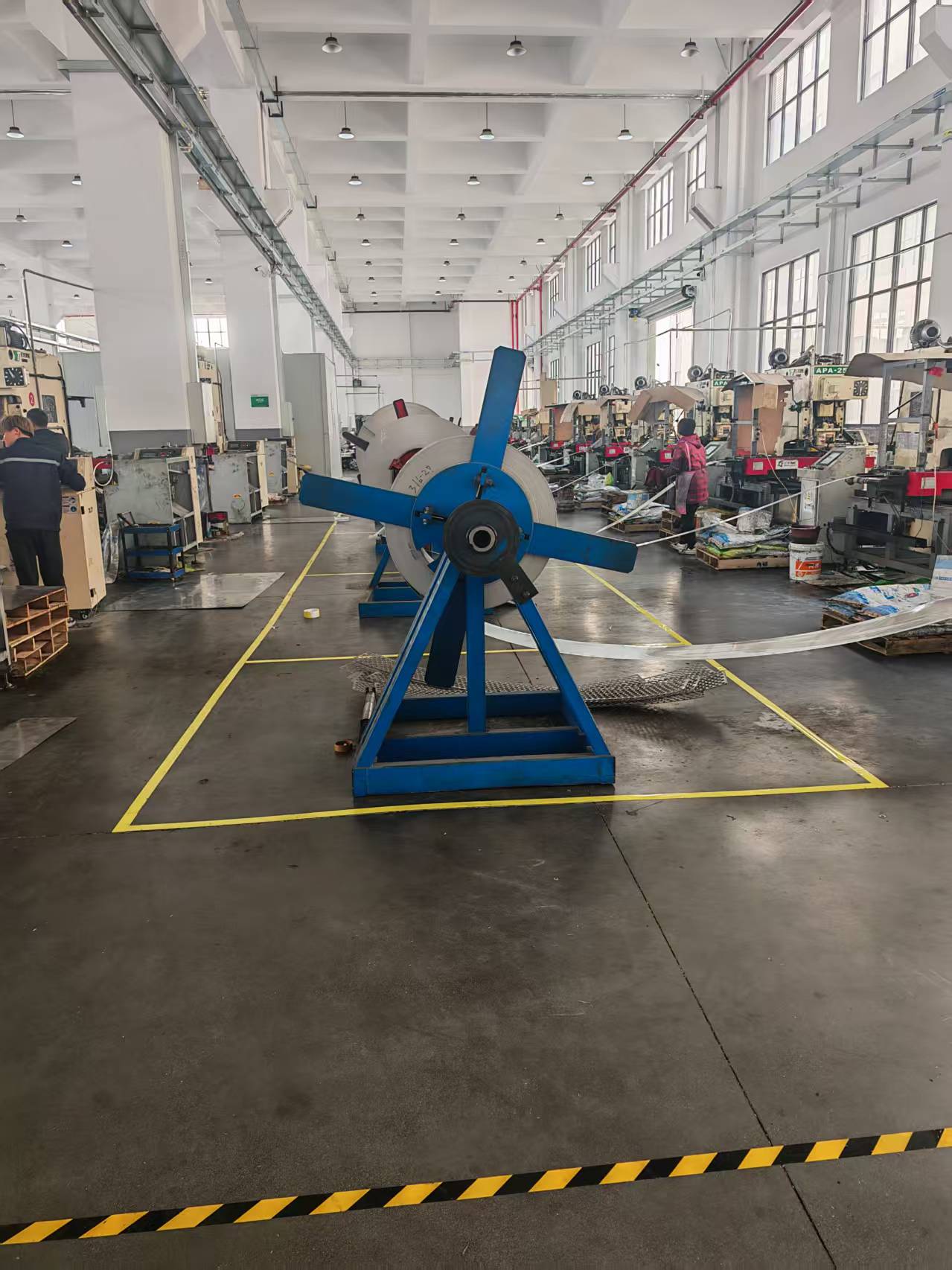
Capacity behind that traceability: five production bases across 80,000 m², 200 employees including 25 engineers, and annual output of 25,000 tons of stainless and special materials. Around 80% of output is exported, with main markets in the EU, Korea and Japan — markets that typically require documented grade, coating and inspection records. The hardware production base primarily serves high-end industries including solar energy, wind energy, nuclear energy, railways and aerospace.
The stated long-term position is a useful filter when evaluating a supplier for a multi-year project: the company aims for sustainable operation for 100 years and focuses on innovation, quality and service. Whether or not a buyer weighs that statement heavily, it maps directly to what a project needs — a supplier that expects to be issuing the same material certificates when the second phase of the project is built.
Step-by-Step: Turning a Bill of Materials into a Specified Fastener Package
The following sequence is the order that avoids the most common rework costs. It is written for engineers and procurement teams working at the Decision to Execution stage of a project.
- Define working conditions per connection, not per project. Record temperature, medium, humidity, load and vibration exposure for each connection group, and note whether the assembly is static fixed or subject to continuous mechanical load. This parameter set is the input for material recommendation, and supplying it before ordering is the documented mitigation against wrong material selection.
- Fix the governing standard. Decide whether the package is governed by ISO 3506-1:2020, EN 14399, PED 2014/68/EU, or a project-specific specification referencing ISO, DIN, ASTM, ASME, ANSI or JIS. UHC fasteners are executed to ISO, DIN, ASTM, ASME, ANSI and JIS standards, which allows the same package to satisfy multiple national specification systems.
- Select the material family for each connection group. 304 / 316 for general indoor or moderate service; 316L, duplex or super duplex for marine and coastal salt-spray conditions; nickel-based high-temperature alloys such as Inconel and Hastelloy for elevated-temperature petrochemical and power generation service.
- Select product form, strength grade and thread tolerance together. Match the bolt or stud to the nut grade and thread class — for example A4-70 components with 6g / 6H or 2A / 2B pairing — and confirm that the required size sits inside the available range, from M2 up to M160 for bolts and threaded rods and up to M64 for nuts. Where a legacy dimension falls outside catalogue sizes, full size customization applies.
- Specify surface treatment per component. Natural finish, passivation, Dacromet coating or adhesive pre-coating should be stated per component rather than per assembly, because coating choice affects thread fit and torque values.
- Validate with samples and pre-shipment testing. Run sample validation on the actual grade and coating, then confirm acceptance criteria in writing. Typical acceptance is a pre-shipment test plus third-party inspection by SGS or TUV.
- Lock the supply and traceability terms. Agree MOQ, delivery terms, payment terms, inspection rights and the documentation that must accompany each shipment — and confirm that the same specification, grade and coating will be available for repeat orders through the project lifecycle.
Use Cases: Three Environments, Three Specification Patterns
Petrochemical process equipment
Petrochemical service combines elevated temperature with acid and alkali corrosive media, and assemblies are typically static and permanently fastened under continuous mechanical load. The pattern here is nickel-based high-temperature alloys and 904L / 316Ti grades for the hottest and most aggressive connections, duplex stainless for moderately corrosive areas, and Dacromet coating or adhesive pre-coating where a coated thread is required. Threaded rods and double end studs in M5 – M160 with 6g / 2A tolerance are the common flange and valve connection form. Pressure equipment placed on the EU market brings PED 2014/68/EU into the compliance package.
Marine and offshore structures
Offshore marine engineering is the reference application for duplex and super duplex grades and for nickel-based superalloy fasteners, alongside petrochemical, aerospace, new energy power generation and high-end automotive manufacturing. The specification pattern is 316L as a minimum, with 316L, duplex steel or high-temperature alloy recommended for marine and coastal salt-spray working conditions, and super duplex grades such as UNS S32750 / 2507 where chloride exposure is continuous. Washer choice matters as much as bolt choice here, because a mismatched washer creates a galvanic and crevice-corrosion point under the head.
Power generation: wind, nuclear and thermal
Power generation assets are specified around service life and access. Wind energy, nuclear energy and solar are named among the high-end industries served by UHC's hardware production base, and wind energy high-strength connection fasteners are a defined product focus. The pattern is high tensile strength plus anti-loosening performance, because permanent locking without loosening under long-term vibration load reduces the manual inspection workload across a large number of joints. For nuclear-adjacent and high-temperature thermal service, nickel-based alloys and A286 ALLOY 660 grades are used, supported by full dimensional and mechanical test records.
Comparison Table: Ordinary Stainless Fasteners vs High-Performance Fasteners
The table below summarizes the difference between ordinary stainless steel fasteners and fasteners made from duplex steel and nickel-based superalloy raw materials. The comparative figures are drawn from UHC product comparison data.
| Comparison dimension | Ordinary stainless steel fasteners | High-performance (duplex / nickel-based) fasteners |
|---|---|---|
| Raw material | Standard stainless steel | Duplex steel and nickel-based superalloy raw materials |
| Tensile strength | Baseline | +5% |
| Corrosion resistance service life | Baseline | +12% |
| Resistance profile | Limited in salt spray, acid and high-temperature service | Anti-loosening plus seawater and acid corrosion resistance |
| Unit purchase cost | Baseline | +15% |
| Overall life-cycle cost | Baseline | 28% lower |
| Maintenance | Higher failure rate; frequent replacement and re-tightening | Lower failure rate, no frequent replacement and tightening, greatly reduced manual inspection workload |
| Anti-fatigue fastening efficiency | Baseline | Improved by 2×; permanent locking without loosening under long-term vibration load |
| Suited to | General indoor and moderate service | Offshore marine engineering, petrochemical, aerospace, new energy power generation and high-end automotive manufacturing |
The commercial reading is straightforward. A higher unit price is not the same as a higher total cost, and in these three industries the cost that dominates is the cost of access, shutdown and replacement rather than the cost of the component.
FAQ
Which standards and certifications should I request for fasteners used in petrochemical, offshore or power generation projects?
For pressure equipment placed on the EU market, fasteners must comply with the Pressure Equipment Directive (PED) 2014/68/EU. For corrosion-resistant stainless steel bolts, screws and studs, ISO 3506-1:2020 specifies the mechanical properties. For preloaded high-strength structural bolting assemblies, EN 14399 is the governing standard series. Where laboratory evidence is part of the submittal, ISO/IEC 17025 is the recognized benchmark for testing and calibration laboratory competence. UHC holds ISO 9001, ISO 14001, ISO 45001 and European Union PED certification, and operates an independent laboratory for comprehensive dimensional and mechanical performance testing. Buyers can also specify third-party inspection by SGS or TUV.
Can one supplier cover the full range of fastener forms and sizes a project requires?
Coverage depends on whether the supplier manufactures across forms rather than trading a single line. The UHC range covers bolts from M2 to M160 and nuts from M2 to M64, with effective lengths from 6 mm to 300 mm. Washers run from M2.5 to M45 in flat, heavy, toothed lock, serrated and wave forms. Screws run from M2 to M8 with effective lengths of 6 mm to 100 mm. Threaded rods and full thread rods and double end studs run from M5 to M160 with effective lengths up to 5000 mm. Rivets and rivet nuts run from M3 to M6.4 in open and close end types. Full size customization is available across the range. Five production bases specialize by form — washers; bolts and nuts; screws; studs and rivets; and hardware products — which allows a single project package to be sourced within one specification chain.
Should I compare fasteners on unit price or on life-cycle cost?
Compare on life-cycle cost. In UHC product comparison data, duplex and nickel-based fasteners carry a unit purchase cost approximately 15% above ordinary stainless steel fasteners, while the overall life-cycle comprehensive cost is 28% lower. That reversal comes from three effects: tensile strength is 5% higher, corrosion resistance service life is 12% longer, and anti-fatigue fastening efficiency is improved by two times with permanent locking maintained under long-term vibration load. Maintenance demand also falls, because a lower failure rate removes frequent replacement and re-tightening work and greatly reduces manual inspection workload.
How does sample validation and acceptance testing work before shipment?
Sample validation starts with working-condition data. Providing temperature, medium, humidity and load before ordering allows a professional material recommendation to be made against the actual project conditions rather than against a catalogue default — this is the documented mitigation against wrong material selection, which causes corrosion, rust, fracture and early failure. The supplier then produces samples in the specified grade, strength class and surface treatment for evaluation. Typical acceptance criteria are a pre-shipment test plus third-party inspection by SGS or TUV, supported by the supplier's own dimensional and mechanical performance test records.
What are the ordering terms, MOQ and lead time for project fastener packages?
Ordering terms for UHC project supply are an MOQ of 150 KG or based on products, delivery terms of FOB, CNF or CIF, and payment terms of T/T before shipment or T/T at sight on a copy of B/L. Lead time and repeat-order scheduling are confirmed against the specific form, grade and coating, because duplex and nickel-based material availability drives the schedule more than the manufacturing step does. Buyers planning multi-phase projects can request a sample set and a quotation against the project bill of materials in the same enquiry, so that the specification, certificate package and supply terms are fixed together rather than sequentially.
Conclusion: Specifying for the Life of the Asset, Not the Life of the Order
Petrochemical, marine & offshore, and power generation projects reward a specification process that starts from the working condition and ends with documented traceability. In practice that means choosing material grades by environment — 304 / 316 for moderate service, 316L, duplex and super duplex for chloride and salt-spray exposure, and nickel-based high-temperature alloys for elevated-temperature and aggressive-media service — then matching product form, strength grade, thread tolerance and surface treatment as a single assembly specification.
The second half of that discipline is continuity. UHC fastener and hardware is built as a full-range, one-specification-chain supply model: bolts M2 to M160, nuts M2 to M64, effective lengths 6 mm to 300 mm, washers, screws, threaded rods and studs, rivets and rivet nuts, all available with full size customization and executed to ISO, DIN, ASTM, ASME, ANSI and JIS standards. Certifications including ISO 9001, ISO 14001, ISO 45001 and PED, an independent testing laboratory, and an ERP system that tracks each step from raw material procurement to finished product delivery are what make that specification repeatable on the second order as well as the first. With five production bases across 80,000 m² and annual output of 25,000 tons of stainless and special materials, the stated goal of sustainable operation for 100 years is, in practical terms, a supply-continuity commitment.
Next step: Send the working conditions, connection list and governing standard for your project, and request matched samples before the order is placed. Email sales@uhc-group.com.cn or michaelshen@uhc-group.com.cn, or reach the export team on WhatsApp at +86 13575349247.

Download the Full Product Catalogue
Material grades, size ranges, strength classes, thread tolerances and surface treatments for the complete UHC fastener range are listed in the corporate brochure.
Download the UHC fastener and hardware brochure (PDF)
UHC fastener and hardware — Jiaxing Union Hardware Co., Ltd. · Jingrun Building, Xiuzhou District, Jiaxing City, Zhejiang Province, China · www.jxuhc.com