
High-Performance Fastener Selection: Material, Grade, and Thread Tolerance
Specifying a high-performance fastener is a translation task. The input arrives in project language: seawater exposure on an offshore structure, acid and alkali attack in a petrochemical plant, continuous mechanical load on a power generation skid, or high vibration on rail transit equipment. The output has to be written in manufacturing language: a material family, a mechanical strength grade, a thread tolerance class, a dimension, an effective length, a surface treatment, and the standard the parts will be inspected against.
This guide covers that translation step by step, using the published parameter ranges of UHC fastener and hardware — the fastener brand operated by Jiaxing Union Hardware Co., Ltd. (UHC Group), a stainless steel products supplier founded in 2017 in Jiaxing, Zhejiang Province, China. UHC Group runs five production bases and one import & export company, with the production bases specialising in washers, bolts and nuts, screws, studs and rivets, and hardware products, and with around 80% of output exported to the EU, Korea and Japan among other markets.
Problem Definition: Where Fastener Specifications Break Down
A failing fastener joint is rarely the result of a missing product. It is almost always the result of a specification that never travelled from the project engineer to the supplier intact. Four gaps account for most of the rework seen in demanding fastener projects.
- Material chosen by label instead of by environment. Stainless steel is a family, not a specification. UHC's material-selection guidance separates general indoor service (where 304/316 stainless steel is preferred), high-corrosion, offshore or marine service (where 316L, duplex steel or high-temperature alloy materials are recommended), and high-strength mechanical load scenarios (where alloy steel fasteners are adopted). Collapsing those three cases into one material code is where corrosion problems start.
- Grade mismatch between the two halves of the joint. A high-tensile bolt paired with an undefined nut grade shifts the weakest link into the internal thread, and no inspection of the bolt alone will expose it.
- Thread tolerance left blank. The class of thread determines the permissible limits the supplier inspects against. When a drawing shows only a diameter and a pitch, the buyer and the manufacturer are effectively working to two different references.
- Surface treatment treated as a cosmetic add-on. Natural finish, passivation, Dacromet coating and adhesive pre-coating are not interchangeable options on a specification sheet; they belong to the corrosion and locking decisions of the joint.
The scenario-first rule. None of these four parameters can be decided from a catalogue. They become decidable only once the working condition is written down: normal temperature or high temperature, seawater corrosion or acid and alkali exposure, static fixed assembly or high vibration, and the level of continuous mechanical and tensile load the joint must carry.
Industry Background: Demand Is Concentrating in Demanding Service Conditions
The commercial context explains why selection discipline has moved from a technical preference to a procurement priority. The global industrial fasteners market was valued at USD 103.9 billion in 2025 and is projected to reach USD 153.7 billion by 2033, according to Grand View Research. Within that market, Asia Pacific accounted for a 45.1% revenue share in 2025, metal fasteners held a 91.0% share, and externally threaded fasteners such as bolts and screws generated 48.1% of revenue, all per Grand View Research.
Growth is concentrated in the segments where a specification error is most expensive. Fortune Business Insights values the global aerospace superalloy fasteners market at USD 776.7 million in 2024, and Fact.MR estimates the titanium aerospace fasteners market reaching USD 520 million in 2026 at a CAGR of 5.1%. The Insight Partners projects the wind power fastener market at USD 14.68 billion in 2025, while the Global Wind Energy Council projects global wind turbine capacity growing from 1,100 GW in 2025 to over 2,400 GW by 2030. On the marine side, China's new shipbuilding orders rose by 59.0% year-on-year in Q1 2024, according to the China Association of the National Shipbuilding Industry.
Read together, those figures describe a market where a growing share of fastener demand sits in corrosive, high-load and high-temperature environments — aerospace, wind, marine, petrochemical and power generation — rather than in benign indoor assembly. Applications of that kind are exactly where the material, grade and tolerance decisions described below have to be made before the order, not after the first inspection report.
Detailed Solution: The Specification Levers a Supplier Can Quote Against
1. Material: Four Levels of Corrosion and Temperature Resistance
The Bolt, NUT, Washers and Threaded rods and Studs lines share one material list: 304/316 stainless steel, duplex steel, and nickel-based high-temperature alloy. Inside that list, specific grades are quoted for projects that need them: UNS S32205 duplex, 1.4571 (316Ti), 1.4529, UNS N08926, 1.4980 (A286 / ALLOY 660), 1.4539 (904L), 2.4952 (ALLOY 80A), 2.4668 (ALLOY 718), 1.4006, S41000, 1.4462, 1.4410 and UNS S32750 (2507 super duplex).
The narrower families differ by product type, and that difference belongs in the specification. The SCREWS line is quoted in 304/316 stainless steel, UNS S32205. The Rivet and Rivet nut line is quoted in 304/316 stainless steel and alloy aluminium, 6061 and 7075. Beyond these, the UHC product range also covers titanium alloy and aluminium alloy fasteners alongside stainless and special-material fasteners.
2. Mechanical Strength Grade: Bolt and Nut Grades Must Be Chosen as a Pair
Grade availability is a function of the product family, and the published ranges are deliberately different:
- Bolt and NUT: A2-70, A2-80, A4-70, A4-80, D6-80, D6-100.
- Threaded rods and Studs: A2-50, A2-70, A4-50, A4-70, D6-80, D6-70.
- SCREWS: A2-70, A2-50, A4-70, A4-50.
A high-strength joint is engineered as a pair, not as a hero part. The grade of the externally threaded component and the grade of the mating nut together define the property class the assembly is expected to reach. Where a project needs a non-standard head marking or a customer-specific identity on the part, UHC supports head mark and logo customization under an OEM/ODM arrangement.
3. Thread Tolerance Class: 6g/2A for External Threads, 6H/2B/3B for Internal Threads
UHC quotes its Bolt and Threaded rods and Studs lines with 6g / 2A precision thread, and its NUT line with 6H / 2B / 3B precision thread. The two halves of a joint therefore sit on different class scales, and both must appear on the purchase specification. A quotation request that names only the diameter and the material leaves the tolerance class open, and an open tolerance class cannot be inspected at goods-in.
For buyers comparing suppliers on tolerance capability, the useful question is not which class is available but which class is declared for the specific part number being quoted. That declaration is what makes incoming inspection reproducible.
4. Dimension Envelope: M2 to M160, with Length Limits by Product Family
Dimension coverage is broad, but the usable envelope differs by product family, and a specification must stay inside the envelope of the family it names:
- Bolt: M2 to M160, effective length 6 mm to 300 mm.
- NUT: M2 to M64.
- Washers: M2.5 to M45, covering flat washer, heavy washer, toothed lock washer, serrated washer and wave washer types.
- Threaded rods and Studs: M5 to M160, effective length up to 5000 mm, in full thread rod and double end stud form.
- SCREWS: M2 to M8, effective length 6 mm to 100 mm.
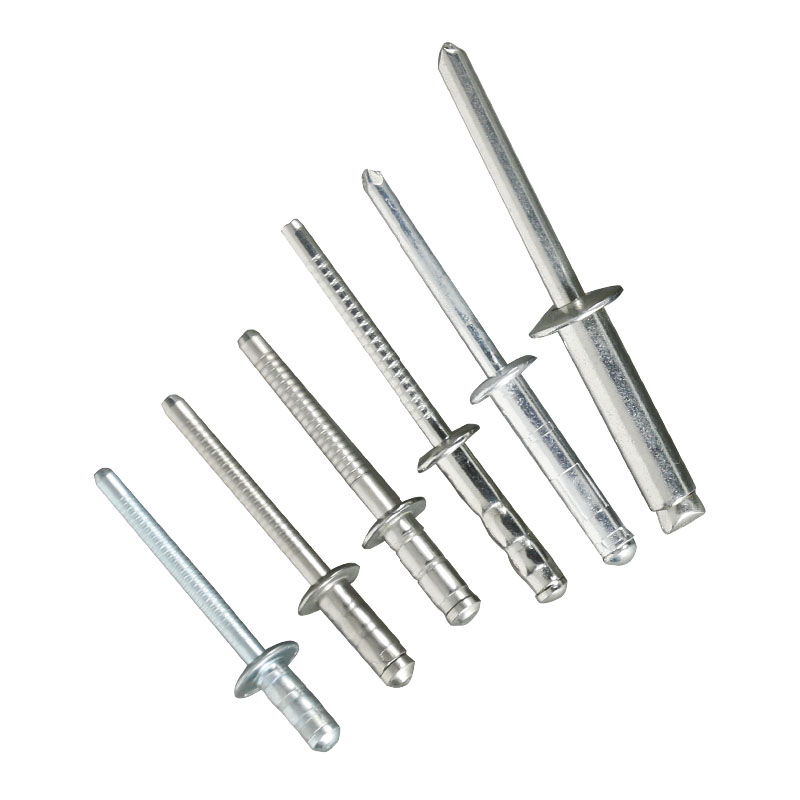
- Rivet and Rivet nut: M3 to M6.4, in open type and close end type.
Product type coverage inside those envelopes includes hex bolt, flange bolt, T-bolt, U-bolt, heavy bolt, fit bolt, square bolt, anchor bolt and foundation bolt for the Bolt line, and hex nut, coupling nut, weld nut, flange nut, nylon nut, heavy nut, jam nut, castle nut, slot nut and self-locking nut for the NUT line.
5. Surface Treatment: Natural Finish, Passivation, Dacromet Coating, Adhesive Pre-Coating
The Bolt, NUT, SCREWS and Threaded rods and Studs lines are all quoted with the same four surface options: natural finish, passivation, Dacromet coating, and adhesive pre-coating. Each one changes either the corrosion behaviour of the surface or the locking behaviour of the thread, so the treatment has to be named in the specification rather than left to the supplier's default.
6. Standards Framework: ISO, DIN, ASTM, ASME, ANSI, JIS
Every UHC fastener family is executed against ISO, DIN, ASTM, ASME, ANSI and JIS international industrial standards; for the Rivet and Rivet nut line the declared scope is ISO, DIN, ASME, ANSI and JIS. Those are the fastener product standards. Project-level standards should be named alongside them:
- ISO 3506-1:2020 specifies mechanical properties for corrosion-resistant stainless steel bolts, screws and studs — the reference behind stainless grades such as A2 and A4.
- EN 14399 governs high-strength structural bolting assemblies for preloading in steel structures, the relevant family for high tensile structural connections.
- PED 2014/68/EU: fasteners for pressure equipment in the EU must comply with the Pressure Equipment Directive — a hard requirement, not a preference, for petrochemical and power generation packages within the EU.
- AS9100 sets quality management system requirements for aerospace, space and defence organisations, and is the baseline most aerospace programmes expect from a supplier.
- ISO/IEC 17025 is the global benchmark for the competence of testing and calibration laboratories, and is the standard buyers should use when judging the credibility of a supplier's in-house test reports.
UHC Group's own management-system and product certifications are ISO 9001 (quality management), ISO 14001 (environmental management), ISO 45001 (occupational health and safety) and the European Union's Pressure Equipment Directive (PED) certification. These are supported by an independent in-house laboratory equipped for dimensional and mechanical performance testing.
Step-by-Step Breakdown: From Project Condition to Purchase Specification
- Write the working condition in measurable terms. The conditions UHC's application data works against are normal temperature, high temperature, seawater corrosion, acid and alkali corrosive environment, high vibration, and high tensile load, all sitting under static fixed assembly where components stay permanently fastened under continuous mechanical load. If the project condition cannot be assigned to one of these, the specification is not ready.
- Choose the material family against that condition. General indoor service points to 304/316; high-corrosion, offshore or marine service points to 316L, duplex steel or high-temperature alloy; high-strength mechanical load points to alloy steel. Where a project sits in more than one category, the more severe condition governs.
- Set the strength grade for both halves of the joint. Select the bolt or stud grade from the A2 / A4 / D6 range quoted for that product family, then select the nut grade from the same range so the assembly has a defined property class at both ends.
- Declare the thread tolerance class. External threads at 6g / 2A, internal threads at 6H / 2B / 3B. This is the step most often omitted between engineering and purchasing, and it is the step that makes incoming inspection possible.
- Convert the drawing into a dimension and a length. Check that the nominal diameter and the effective length both fall inside the envelope of the product family: M2 to M160 and 6 mm to 300 mm for bolts, M2 to M64 for nuts, M2.5 to M45 for washers, up to 5000 mm for threaded rods and studs, M2 to M8 and 6 mm to 100 mm for screws, and M3 to M6.4 for rivets.
- Select the surface treatment. Natural finish, passivation, Dacromet coating or adhesive pre-coating — chosen against the corrosion environment and the locking requirement of the joint, not against appearance.
- Fix the inspection and documentation package. UHC's quality control runs First Article Inspection, In-Process Inspection and Pre-Shipment Inspection, and supplies a 3.1 material test certificate with batch quality tracing. Fasteners are installed with a torque wrench, electric screwdriver, hydraulic tightening machine and assembly tooling fixtures, so the tightening method should also be agreed with the supplier when the joint is torque-controlled.
Use Cases: Matching the Specification to the Project
Marine and offshore
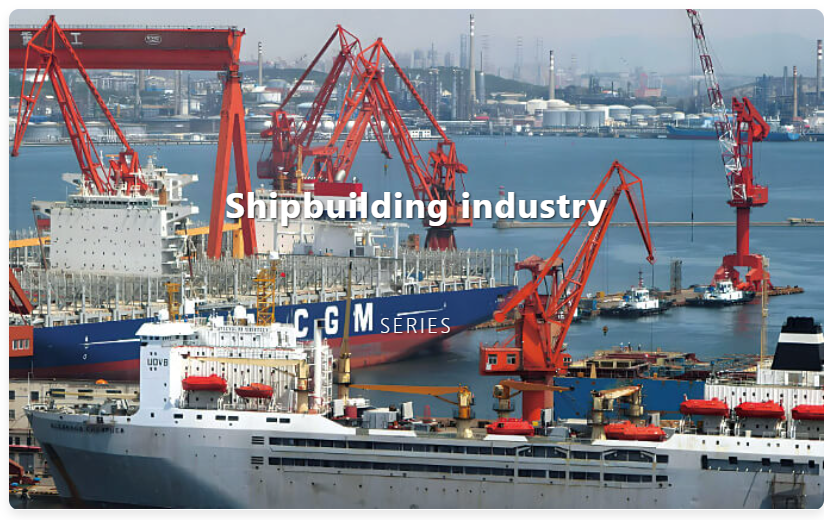
In marine and offshore applications, the fastener set is used for fixed assembly and fastening that withstands seawater corrosion and high tensile load. This is the case where the material decision dominates everything else: UHC's guidance routes offshore and marine salt-spray conditions to 316L, duplex steel or high-temperature alloy rather than to a standard stainless grade, and the duplex and super duplex grades in the material list (UNS S32205, 1.4462, 1.4410, UNS S32750 / 2507) sit in that decision space.
Aerospace
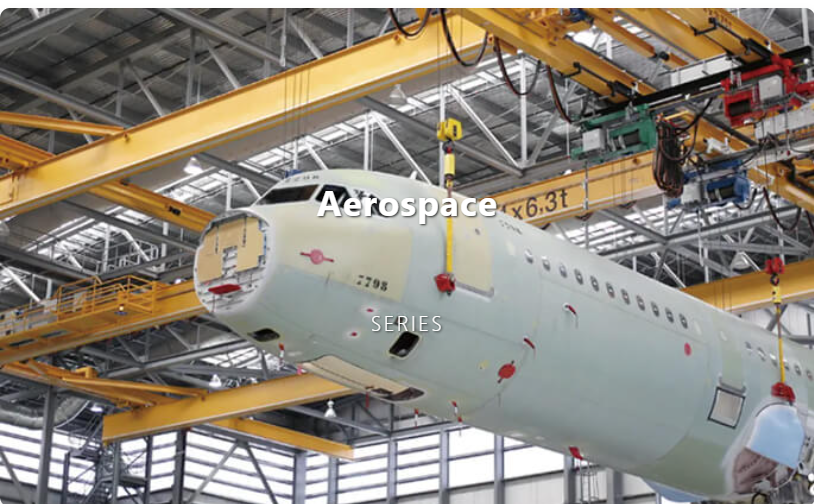
In the aerospace industry, UHC fasteners are specified for operation under high tensile load and high temperature, with corrosion resistance and compliance with international standards. Aerospace is also the segment with an explicit quality-system expectation: AS9100 sets the management-system requirement, and the material list behind that duty includes the nickel-based high-temperature grades 1.4980 (A286 / ALLOY 660), 2.4668 (ALLOY 718) and 2.4952 (ALLOY 80A).
Petrochemical and power generation
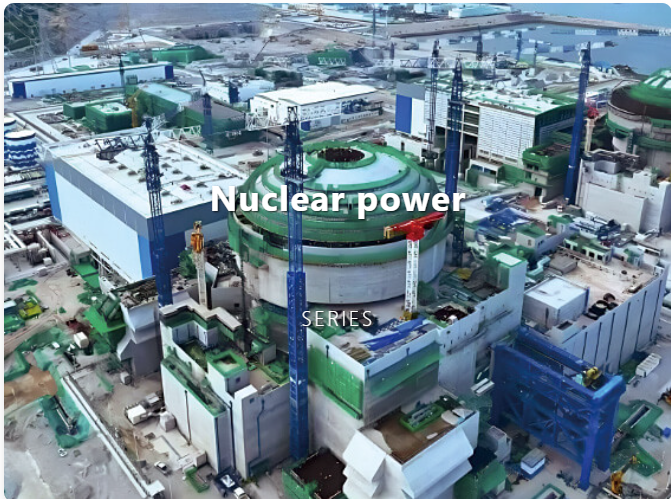
In the petrochemical industry the requirement is corrosion resistance against acid and alkali environments combined with high temperature resistance, and in power generation the joint must withstand high tensile loads and high temperature with corrosion resistance. Both segments fall inside the EU Pressure Equipment Directive scope when the fasteners are used on pressure equipment, which is why PED 2014/68/EU and PED certification belong in the compliance question rather than in a general credentials list.
Heavy machinery, rail transit and infrastructure
Industrial machinery applications rely on high tensile strength and anti-fatigue properties for fastening and locking under continuous mechanical load, while rail transit places the same fasteners under high vibration and high tensile load. Construction and infrastructure applications call for static fixed assembly and permanently fastened joints under continuous mechanical load with corrosion resistance and international standard compliance. At the lighter end, the hardware product group serves home appliances and consumer goods as well as power generation, with solar hardware, hinges, corner brackets and connectors in 304/316 stainless steel.
Field record: ten years of supply into mixed critical applications
UHC's project record includes a ten-year supply relationship with industrial equipment OEM manufacturers, engineering contractors, hardware distributors and new energy system suppliers in Germany, Italy, South Korea and Japan, covering 100,000 PCS used for fastening assembly in aerospace parts, marine equipment, automotive chassis and power generation facilities. The stated outcome of that supply relationship is greatly reduced later maintenance replacement cost and stable project operation — an outcome built on high tensile and anti-fatigue strength, seawater and acid-base corrosion resistance, high temperature resistance, and conformity with DIN / ISO / JIS / ASME / ASTM standards rather than on a single product advantage.
Comparison Table: Parameter Ranges and Selection Routes
| Product family | Dimension range | Effective length | Mechanical strength grades | Thread tolerance | Surface treatment |
|---|---|---|---|---|---|
| Bolt | M2 ~ M160 | 6 mm ~ 300 mm | A2-70, A2-80, A4-70, A4-80, D6-80, D6-100 | 6g / 2A | Natural finish, passivation, Dacromet coating, adhesive pre-coating |
| NUT | M2 ~ M64 | — | A2-70, A2-80, A4-70, A4-80, D6-80, D6-100 | 6H / 2B / 3B | Natural finish, passivation, Dacromet coating, adhesive pre-coating |
| Washers | M2.5 ~ M45 | — | — | — | — |
| Threaded rods and Studs | M5 ~ M160 | Up to 5000 mm | A2-50, A2-70, A4-50, A4-70, D6-70, D6-80 | 6g / 2A | Natural finish, passivation, Dacromet coating, adhesive pre-coating |
| SCREWS | M2 ~ M8 | 6 mm ~ 100 mm | A2-50, A2-70, A4-50, A4-70 | — | Natural finish, passivation, Dacromet coating, adhesive pre-coating |
| Rivet and Rivet nut | M3 ~ M6.4 | — | — | — | — |
| Service condition described by the project | Material direction | Where it applies in the product range |
|---|---|---|
| General indoor environment | 304/316 stainless steel preferred | SCREWS, hardwares, general Bolt, NUT, Washers and Threaded rods and Studs supply |
| High-corrosion, offshore or marine environment | 316L, duplex steel or high-temperature alloy materials recommended | Bolt, NUT, Washers, Threaded rods and Studs (duplex and nickel-based high-temperature alloy grades in the material list) |
| High-strength mechanical load | Alloy steel fasteners | High tensile bolting and studding for structural, machinery and energy joints |
| High temperature working condition | Nickel-based high-temperature alloy grades from the material list: 1.4980 (A286 / ALLOY 660), 2.4668 (ALLOY 718), 2.4952 (ALLOY 80A) | Bolt, NUT, Washers, Threaded rods and Studs |
| Lightweight or dissimilar-material riveted assembly | 304/316 stainless steel or alloy aluminium 6061 / 7075 | Rivet and Rivet nut (open type, close end type) |
FAQ
Which standards and certifications should high-performance fasteners meet for an EU pressure equipment project?
Fasteners for pressure equipment in the EU must comply with the Pressure Equipment Directive (PED) 2014/68/EU. Alongside that directive, the product standard set matters: UHC executes its Bolt, NUT, Washers, SCREWS, Threaded rods and Studs and Rivet and Rivet nut lines against ISO, DIN, ASTM, ASME, ANSI and JIS standards, and ISO 3506-1:2020 specifies the mechanical properties of corrosion-resistant stainless steel bolts, screws and studs. For structural preloading, EN 14399 governs high-strength structural bolting assemblies; for aerospace programmes, AS9100 sets the quality management system requirement. UHC Group holds ISO 9001, ISO 14001, ISO 45001 and PED certification, and supplies a 3.1 material test certificate together with batch quality tracing.
Can one supplier cover bolts, nuts, washers, studs and rivets across the material and grade range a demanding project needs?
UHC Group operates five production bases specialising in washers, bolts and nuts, screws, studs and rivets, and hardware products, across 80,000 m² of factory space with 200 employees, an annual output of 25,000 tons of stainless and special materials per year, and a monthly capacity of 500–1,000 tons. The material list is shared across the Bolt, NUT, Washers and Threaded rods and Studs lines: 304/316 stainless steel, duplex steel and nickel-based high-temperature alloy, including UNS S32205, 1.4571 (316Ti), 1.4529, UNS N08926, 1.4980 (A286 / ALLOY 660), 1.4539 (904L), 2.4952 (ALLOY 80A), 2.4668 (ALLOY 718), 1.4006, S41000, 1.4462, 1.4410 and UNS S32750 (2507). OEM/ODM customization including head mark and logo is supported by a 25-engineer R&D team and an independent in-house laboratory for dimensional and mechanical performance testing.
What specification decisions drive the commercial terms of a high-performance fastener order?
UHC quotes against a minimum order quantity (MOQ) of 150 KG and plans production on a monthly capacity of 500–1,000 tons, so the specification should be frozen before the quotation stage. The decisions that enter a quotation are the material family (304/316 stainless steel versus duplex or nickel-based high-temperature alloy), the mechanical strength grade (A2 / A4 / D6 ranges, which differ by product family), the thread tolerance class (6g / 2A for external threads, 6H / 2B / 3B for nuts), the dimension and effective length, the surface treatment (natural finish, passivation, Dacromet coating or adhesive pre-coating), and the inspection and documentation scope. Changing a material family or a grade after sampling re-opens the quotation, because the raw material route and the inspection route change with it.
How is a sample validated before a project is released to series production?
UHC's quality workflow runs three checkpoints — First Article Inspection, In-Process Inspection and Pre-Shipment Inspection — with a 3.1 material test certificate issued for the supplied material and batch quality tracing available after delivery. An independent in-house laboratory carries out dimensional and mechanical performance tests, and production, sales and management processes are handled through an ERP system so that a batch can be traced from raw material procurement to finished product delivery. Sample and validation requests for a specific material, grade and thread tolerance combination are handled through the sales contact at the end of this guide.
What are the typical MOQ and production lead time for a high-performance fastener project?
UHC publishes a MOQ of 150 KG and a lead time of 75–90 days, supported by a monthly capacity of 500–1,000 tons and export operations covering the EU, U.S., Japan, Korea, the Middle East and South America. Because lead time is counted from a frozen specification, the material family, strength grade, thread tolerance, dimensions and surface treatment should all be confirmed before the order is placed. To start, send the working condition, the governing standard and the required dimension and length to the UHC fastener and hardware team, and ask for the catalogue and a quotation against that specification.
Conclusion
High-performance fastener selection comes down to closing four gaps before the order is placed: material family matched to environment, strength grade matched across both halves of the joint, thread tolerance declared for external and internal threads, and surface treatment chosen for corrosion and locking duty — all of it held inside a dimension envelope that the named product family can actually deliver. A supplier that publishes its material list, grade range, thread tolerance classes and standard set makes that work verifiable; a supplier that answers only with a material name does not.

Next step: turn your working condition into a fastener specification
Send UHC fastener and hardware the working condition, the governing standard (ISO, DIN, ASTM, ASME, ANSI or JIS), the product type, the nominal diameter and the effective length you need. The team will confirm the material family, strength grade, thread tolerance class and surface treatment that fit, then quote against a MOQ of 150 KG and a 75–90 day lead time.
Contact: Michael Shen · Email: michaelshen@uhc-group.com.cn / sales@uhc-group.com.cn · Tel / WhatsApp: +86 13575349247 · Address: Jingrun Building, Xiuzhou District, Jiaxing City, Zhejiang Province, China · Website: www.jxuhc.com
Download the UHC fastener and hardware product catalogue (PDF)