
High-Performance Fastener Technical Guide: Choosing Between 6H and 3B Thread Tolerances

A thread tolerance class is a fit specification, not a strength specification. It fixes the standardised allowance between an internal thread and the external thread it mates with. 6H is the standard internal tolerance class used in the metric thread system; 3B is the tighter of the two internal classes used in the inch (Unified) system, where 2B is the standard class. Choosing between 6H and 3B therefore settles two things at the same time: how much assembly clearance the joint will have, and which thread system the connection belongs to.
UHC fastener and hardware, the export brand of Jiaxing Union Hardware Co., Ltd., manufactures nuts with 6H / 2B / 3B precision threads and bolts and studs with 6g / 2A precision threads. This technical guide explains what those classes control, when a tighter internal class such as 3B earns its place in precision aerospace- or automotive-type joints, when it does not, and how buyers can verify that the class written on the drawing is the class that arrives in the crate.
Problem Definition: What a Thread Tolerance Class Actually Controls
A tolerance class answers one question: how much clearance should exist between two mating threads before either part is loaded. Because that clearance is set by the standard rather than by the machine operator, it becomes a specification decision that quietly governs three outcomes in service.
- Assembly behaviour. Clearance determines how easily a nut starts and runs down a bolt, how tolerant the connection is to slight angular misalignment, and how likely high-volume or automated assembly is to cross-thread a part.
- Load transfer. Preload is carried across the contact area of the engaged thread flanks. Where that contact area is larger, load transfer across the engaged threads is more even; excessive clearance reduces the contact area and works against a joint's ability to hold a controlled preload.
- Galling and seizure risk. Stainless and high-alloy threads gall more readily than carbon steel threads, and surface treatments change the effective fit. A class that looks correct on a drawing can still cause trouble on the line if coating, lubricity and tightening torque are not considered with it.
The most common mismatch in practice is not a wrong material. It is a specification written in one thread system and purchased in another. A metric 6H nut cannot substitute for an inch 3B nut simply because both are described as precision threads; they belong to different standards, different gauging practice and different mating parts.
It is equally important to recognise the limit of what a tolerance class can do. Moving from 6H to 3B does not make a fastener stronger. Strength comes from the material and the mechanical property grade, and for corrosion-resistant stainless steel fasteners ISO 3506-1:2020 specifies the mechanical properties of bolts, screws and studs. The tolerance class governs fit and interchangeability only. Specifying a tighter class to solve a strength problem is a common and expensive misdiagnosis.
Decision boundary: tolerance class controls fit. Material and grade control strength. Material selection plus surface treatment controls corrosion resistance. None of the three substitutes for another, and a quotation should always state all three separately.
Industry Background: Where 6H, 2B and 3B Come From
Thread tolerance classes are defined inside the standard families that appear on most high-performance fastener drawings: ISO, DIN, ASTM, ASME, ANSI and JIS. Each family fixes its own classes, designations and gauging rules, which is why the class field on a purchase specification should always be read together with the standard it sits under. This is also why DIN standard fasteners and JIS standard fasteners are not automatically interchangeable with each other or with inch-system parts.
In the metric system, 6H is the internal, nut-side tolerance class normally specified for general industrial and structural assemblies, and it is paired with an external class such as 6g on the bolt side. In the inch or Unified system, 2B is the standard internal class and 3B is a tighter internal class with a smaller allowance. Because 6H and 3B sit in different systems, the comparison is not loose-versus-tight inside one standard; it is a cross-standard decision about which thread system an assembly will run.
Regulatory and quality frameworks add a second layer. Fasteners for pressure equipment supplied into the European Union must comply with the Pressure Equipment Directive (PED) 2014/68/EU, which is why PED certified stainless fasteners are a separate procurement conversation from ordinary industrial supply. High-strength structural bolting assemblies for preloading in steel structures are governed by the EN 14399 series. Aerospace, space and defence organisations work to AS9100 quality management requirements, and ISO/IEC 17025 accreditation remains the recognised benchmark for the competence of testing and calibration laboratories. A supplier's ability to document conformance with the relevant framework is often as decisive as its ability to hold a thread tolerance.
Market demand explains why this level of attention is now routine. The global industrial fasteners market was valued at USD 103.9 billion in 2025 and is projected to reach USD 153.7 billion by 2033 (Grand View Research). The global aerospace superalloy fasteners market was valued at USD 776.7 million in 2024 (Fortune Business Insights), and the wind power fastener market is projected to reach USD 14.68 billion in 2025 (The Insight Partners). These are segments where joints are highly engineered, replacement downtime is costly, and a poor fit is not measured in scrap alone.
Detailed Solution: How UHC Supplies 6H, 2B and 3B Thread Tolerances
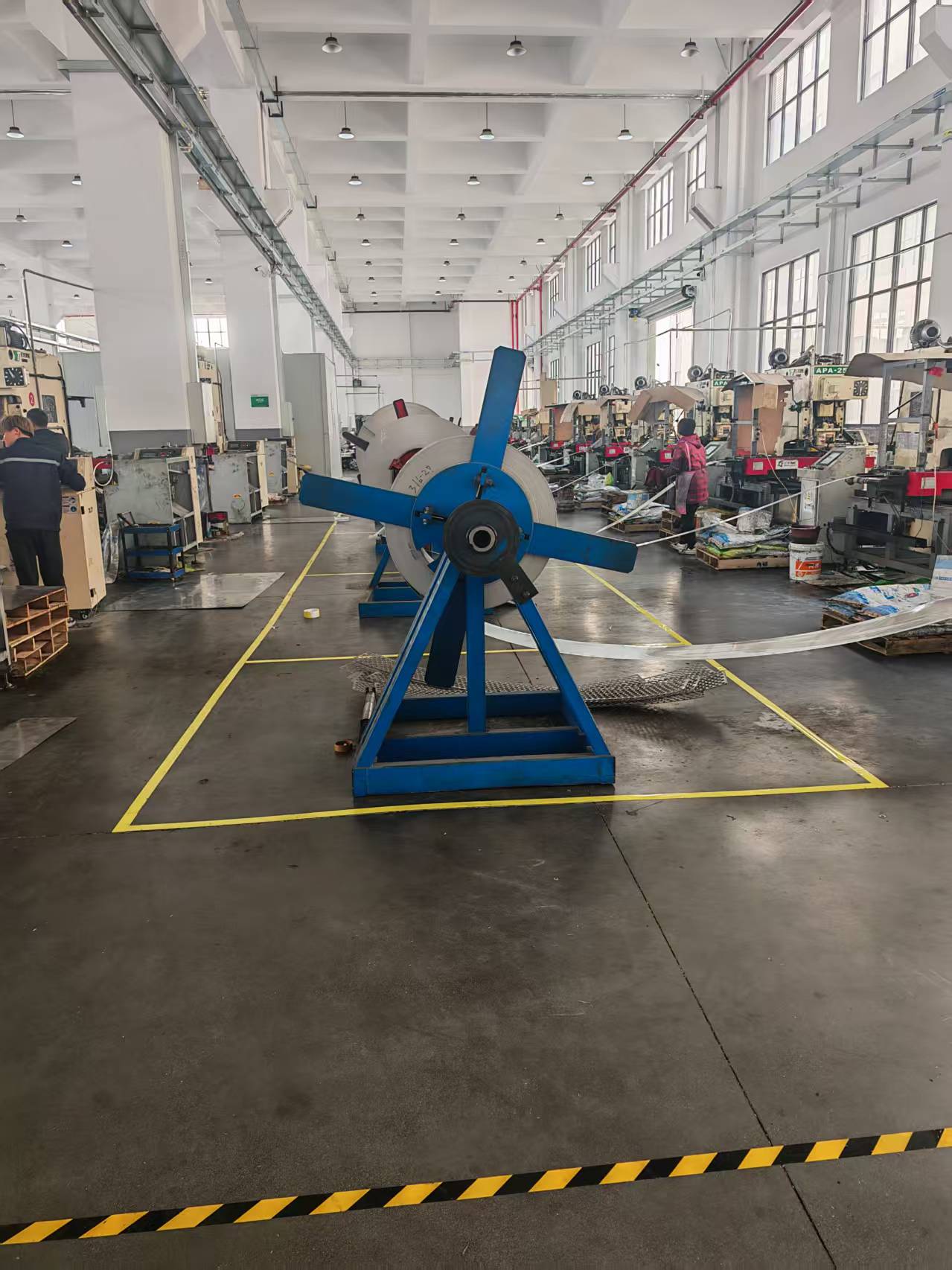
UHC fastener and hardware is the export brand of Jiaxing Union Hardware Co., Ltd., a stainless steel products supplier founded in 2017. The group operates five production bases covering 80,000 m², employs around 200 people including a 25-engineer technical team, and works with 25,000 tons of stainless steel and special materials per year. Roughly 80% of output is exported, with the EU, Korea and Japan as core markets. The hardware production base primarily serves high-end industries such as solar energy, wind energy, nuclear energy, railways and aerospace.
Nut range: 6H, 2B and 3B internal threads
The nut range carries 6H / 2B / 3B precision thread tolerance classes and spans M2 to M64. Mechanical strength grades available are A2-70, A2-80, A4-70, A4-80, D6-80 and D6-100, and production follows ISO, DIN, ASTM, ASME, ANSI and JIS standards. Product types include hex nuts, coupling nuts, weld nuts, flange nuts, nylon nuts, heavy nuts, jam nuts, castle nuts, slot nuts and self-locking nuts. Material options extend from 304 and 316 stainless steel through duplex steel to nickel-based high-temperature alloys, and surface treatment may be natural finish, passivation, Dacromet coating or adhesive pre-coating.
Bolt and stud range: 6g and 2A external threads
Bolts span M2 to M160 with effective lengths from 6 mm to 300 mm and are produced with 6g / 2A precision threads. Threaded rods and studs span M5 to M160 with lengths up to 5,000 mm and carry the same 6g / 2A thread class. Strength grades include A2-70, A2-80, A4-70, A4-80, D6-80 and D6-100 for bolts, and A2-50, A2-70, A4-50, A4-70, D6-80 and D6-70 for studs. Bolt types cover hex, flange, T-head, U-bolt, heavy, fit, square, anchor and foundation patterns, which is the range that supports high tensile structural fasteners for load-bearing connections.
Fit-pairing note for 3B programs: the published bolt and stud range from UHC is specified with 6g / 2A precision threads. Where a project calls for 3B nuts, the mating external thread class has to be reviewed explicitly at quotation stage, because the intended inch pairing for a 3B internal thread is an external thread of corresponding precision class rather than the standard 2A profile. This is the kind of project-specific fit question that is settled before a purchase order, not after the first assembly.
Material and coating decisions that interact with thread class
Material selection follows the working environment rather than the tolerance class. For general indoor conditions, 304 or 316 stainless steel is usually sufficient. For high-corrosion, offshore or marine conditions, 316L, duplex steel or high-temperature alloy materials are the recommended direction, which is how marine anti-corrosion fasteners and super duplex alloy fasteners are specified. For high-strength mechanical load scenarios, alloy steel fasteners are the appropriate choice.
The material list available across the nut, bolt, stud, washer and screw ranges includes 304/316 stainless steel, UNS S32205, 1.4571, 316Ti, 1.4529, UNS N08926, 1.4980, A286 (ALLOY 660), 1.4539, 904L, 2.4952, 2.4668, ALLOY 80A, ALLOY 718, 1.4006, S41000, 1.4462, 1.4410, UNS S32750 and 2507. Titanium alloy and aluminium alloy fasteners are also part of the production range, and the group's main products additionally cover solar PV mounting components such as clamps, brackets and hardware accessories, plus custom industrial hardware parts produced under OEM and ODM arrangements.
Coating and pre-applied adhesive sit on the thread surface itself, so they cannot be decided after the thread class is fixed. Passivation is a cleaning and stabilising treatment, Dacromet coating adds a barrier layer, and adhesive pre-coating is applied to create prevailing torque. Each of these changes the effective fit of the assembly, which is why thread class, treatment and lubricity are handled as one specification block rather than three independent line items.
Step-by-Step Breakdown: Specifying and Validating a Thread Tolerance Class
The sequence below reflects the order in which thread tolerance decisions are normally settled, from joint requirement through to shipment documentation.
- Define the joint, not the part. Record the preload target, vibration exposure, operating temperature, medium, required corrosion resistance, and how the joint will be tightened. Typical matched equipment includes torque wrenches, electric screwdrivers, hydraulic tightening machines and assembly tooling fixtures. The tightening method determines how much assembly clearance the operator can realistically manage.
- Fix the thread system and the class pair. Metric assemblies normally run a 6H internal thread against a 6g external thread. Inch assemblies run a 2B or 3B internal thread against the corresponding external class. Writing the standard next to the class, for example ISO or DIN with 6H and ASTM or ASME with 2B or 3B, prevents a specification from drifting into the wrong system.
- Decide whether the tighter class earns its place. Specify 3B where assembly clearance must be minimised and the assembly process is controlled and repeatable, as is commonly discussed for precision aerospace- and automotive-type joints. Keep 6H or 2B where field assembly, angular misalignment or a coated thread surface dominates the risk profile.
- Select material and strength grade independently. Match grade and material to the environment rather than to the thread class. A2-70, A4-80, D6-80 and D6-100 are available across the nut and bolt ranges, with duplex and nickel-based alloys for aggressive or high-temperature service.
- Confirm the surface treatment and its effect on fit. Natural finish, passivation, Dacromet coating and adhesive pre-coating are all available, and each one changes assembly friction and therefore the torque that produces a given preload.
- Validate with gauging and documents. Production quality control runs through First Article Inspection, in-process inspection and pre-shipment inspection. Acceptance includes mandatory pre-shipment testing, with third-party inspection by organisations such as SGS or TUV available as an option. After-sales documentation includes a 3.1 material test certificate and batch quality tracing, and the ERP system tracks the process from raw material procurement to finished product delivery, which is what makes ERP traceable stainless hardware fasteners verifiable rather than merely labelled.
- Lock the commercial and logistics parameters. Monthly capacity is 500-1000 tons, minimum order quantity is 150 kg or based on products, and standard lead time is 75-90 days. Delivery terms are FOB, CNF or CIF, and payment terms are T/T before shipment or T/T at sight on a copy of the bill of lading.
Use Cases: Where Tighter Thread Tolerance Pays for Itself
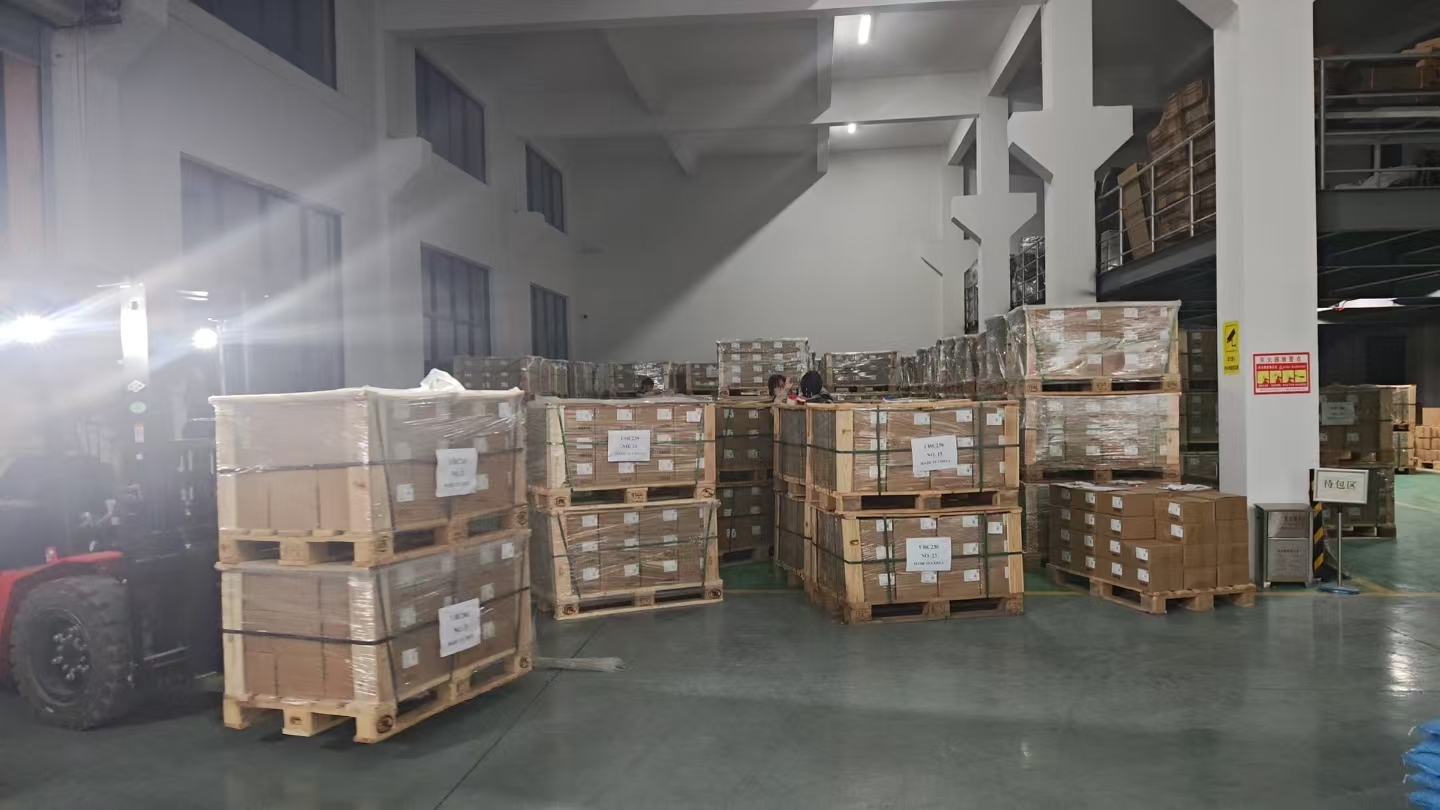
A documented supply program shows the pattern. UHC has supplied programs of 100,000 pieces for industrial equipment OEM manufacturers, engineering contractors, hardware distributors and new energy system suppliers in Germany, Italy, Korea and Japan, covering fastening assembly for aerospace parts, marine equipment, automotive chassis and power generation facilities. The relationship has run for ten years. Reported outcomes include reduced later maintenance replacement cost and stable project operation, supported by high tensile and anti-fatigue strength, seawater and acid-base corrosion resistance, high-temperature resistance, and compliance with DIN, ISO, JIS, ASME and ASTM international standards.
Across the industries served, the same logic repeats with different emphasis:
- Aerospace parts and automotive chassis joints are assembled under controlled conditions and inspected to tight process windows, which is where a tighter internal class such as 3B is most often debated. These are the settings in which aerospace high-performance fasteners and automotive anti-corrosion fasteners are specified together with a defined thread class rather than by part number alone.
- Marine and offshore equipment usually weighs corrosion resistance more heavily than clearance, so duplex or 316L material with a standard class often outperforms a tighter class in a lower-grade material.
- Power generation, nuclear energy and petrochemical plant add temperature and pressure considerations. Here compliance documentation such as PED conformance, a 3.1 material test certificate and batch traceability carry as much weight as the class itself, and fastener requirements for the energy industry are frequently written around documentation as much as around dimensions.
- Wind energy and railway structures involve high-strength, preloaded connections where consistent torque and verified mechanical properties govern selection. Wind energy high strength connection fasteners and railway high-performance fasteners are typically judged on repeatability across very large batch volumes rather than on a single tight tolerance.
Comparison Table: 6H, 2B and 3B Side by Side
The table below compares the three internal thread tolerance classes on the dimensions that matter during evaluation. It reflects the classes and ranges UHC supplies; it does not restate tolerance values, which belong to the referenced standards themselves.
| Internal class | Thread system | Position within the system | Typical specification context | Availability at UHC |
|---|---|---|---|---|
| 6H | Metric (ISO / DIN family) | Standard internal class | General industrial, structural and OEM assemblies where standard clearance supports reliable assembly, including coated threads | Nut range M2-M64; standard supply; pairs with 6g external threads on bolts and studs |
| 2B | Inch / Unified (ASTM / ASME family) | Standard internal class | Inch-system equipment, replacement parts and OEM assemblies | Nut range M2-M64; pairs with 2A external threads |
| 3B | Inch / Unified (ASTM / ASME family) | Tighter internal class with reduced allowance | Joints where assembly clearance must be minimised and assembly is controlled; commonly discussed for precision aerospace- and automotive-type connections | Available on request; requires an explicit fit review against the mating external thread class |
The second table lists the supply parameters that are normally quoted together with the thread class, so that a purchase specification can be checked end to end.
| Parameter | Specification |
|---|---|
| Dimension range | M2 - M64 |
| Thread tolerance classes | 6H / 2B / 3B precision thread |
| Mechanical strength grades | A2-70, A2-80, A4-70, A4-80, D6-80, D6-100 |
| Standards executed | ISO, DIN, ASTM, ASME, ANSI, JIS |
| Materials | 304 / 316 stainless steel, duplex steel, nickel-based high-temperature alloy (extended grade list available on request) |
| Surface treatment | Natural finish, passivation, Dacromet coating, adhesive pre-coating |
| Product types | Hex nut, coupling nut, weld nut, flange nut, nylon nut, heavy nut, jam nut, castle nut, slot nut, self-locking nut |
| Customization | OEM and ODM production services; head mark and logo customization |
| Minimum order quantity | 150 kg or based on products |
| Lead time | 75 - 90 days |
| Monthly capacity | 500 - 1000 tons |
| Quality control | First Article Inspection, in-process inspection, pre-shipment inspection |
| After-sales | 3.1 material test certificate, batch quality tracing, after-sales quality problem handling |
Frequently Asked Questions
Which thread tolerance classes and standards apply to high-performance nuts and bolts?
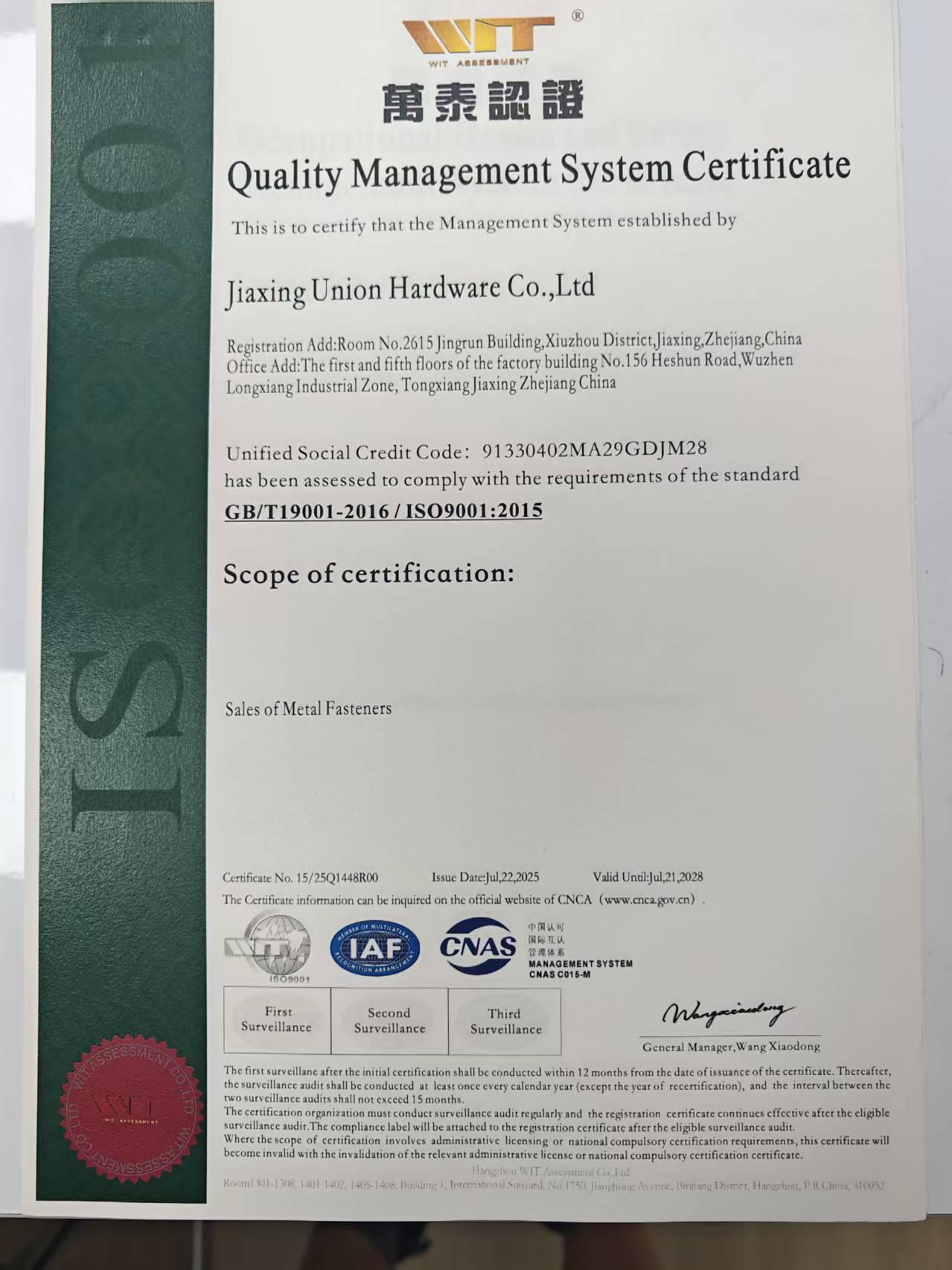
Internal and external thread classes are specified separately. UHC manufactures nuts with 6H / 2B / 3B precision threads and bolts, threaded rods and studs with 6g / 2A precision threads, produced to ISO, DIN, ASTM, ASME, ANSI and JIS standards. For corrosion-resistant stainless steel fasteners, ISO 3506-1:2020 specifies mechanical properties, while the thread tolerance classes themselves are defined within the individual standard families. On the quality side, Jiaxing Union Hardware Co., Ltd. holds ISO 9001 (certificate 15/25Q1448R00), ISO 14001 (15/25E1449R00) and ISO 45001 (15/25S1450R00), all issued by WIT and valid from 22 July 2025 to 21 July 2028, together with European Union Pressure Equipment Directive (PED) certification.
Can UHC support OEM high-performance fastener programs for energy projects?
Yes. UHC provides both OEM and ODM production services and supports customization such as head marks and logos. Nuts run from M2 to M64 with 6H / 2B / 3B thread classes, bolts from M2 to M160 with effective lengths of 6-300 mm, and studs from M5 to M160. Materials include 304/316 stainless steel, duplex steel and nickel-based high-temperature alloys such as Inconel and Hastelloy, which is the material direction typically required for petrochemical, power generation and other energy-sector service conditions. Monthly capacity is 500-1000 tons across five production bases, minimum order quantity is 150 kg or based on products, and standard lead time is 75-90 days.
What determines the minimum order quantity and the commercial terms?
Minimum order quantity is 150 kg or based on products. Payment terms are T/T before shipment or T/T at sight on a copy of the bill of lading, and delivery terms are FOB, CNF or CIF. A quotation is normally built from the same specification fields reviewed above: the thread system and class (6H versus 2B or 3B), the material and strength grade, the surface treatment (natural finish, passivation, Dacromet coating or adhesive pre-coating), the inspection route, and the documentation package, which can include a 3.1 material test certificate and batch quality tracing.
How is thread tolerance verified before shipment?
First Article Inspection establishes the dimensional baseline at the start of production, in-process inspection checks the running process, and pre-shipment inspection confirms the finished batch. Acceptance inspection for the bolt and nut ranges includes mandatory pre-shipment testing, with third-party inspection by organisations such as SGS or TUV available as an option. UHC maintains an independent laboratory equipped for dimensional and mechanical performance testing, and provides a 3.1 material test certificate together with batch quality tracing for after-sales support. Where third-party laboratory testing is used, ISO/IEC 17025 accreditation is the recognised benchmark for laboratory competence.
What lead time should be planned for high-performance fasteners?
Standard lead time is 75-90 days, supported by monthly capacity of 500-1000 tons. Programs involving tighter internal classes such as 3B, less common materials such as duplex or nickel-based alloys, or third-party inspection requirements are best confirmed against that window at quotation stage rather than assumed. To move a thread tolerance specification forward, UHC can review the joint requirement, confirm the fitting class and material grade, and provide a sample or quotation: contact michaelshen@uhc-group.com.cn or sales@uhc-group.com.cn, or reach the team on WhatsApp at +86 13575349247.
Conclusion: A Practical Decision Rule
The choice between 6H and 3B reduces to three questions. Which thread system does the assembly use, since 6H is a metric internal class and 3B is an inch internal class; how much assembly clearance can the tightening process tolerate; and what evidence does receiving inspection need in order to accept the batch. Where the assembly is controlled and clearance must be minimised, 3B is a defensible specification, provided the mating external thread class is reviewed at the same time. Where field assembly, misalignment or a coated thread dominates, 6H or 2B usually delivers a more reliable joint for the same material cost.
What a tolerance class cannot do is carry strength or corrosion performance. Those remain functions of material selection, mechanical property grade and surface treatment, verified through First Article Inspection, in-process inspection, pre-shipment testing and a 3.1 material test certificate. Read together with the standard it belongs to, the class field on a drawing becomes a decision with a clear technical boundary rather than a line item copied from an old specification.
Next Step: Confirm the Right Thread Class for Your Joint
Send the joint requirement, including thread system, class, material, strength grade, surface treatment and inspection route, and UHC fastener and hardware will confirm the fitting specification, the mating external thread class and a delivery schedule. Sample requests and quotations for 6H / 2B / 3B nut programs and 6g / 2A bolt and stud programs go through the same engineering review.
- Email: michaelshen@uhc-group.com.cn / sales@uhc-group.com.cn
- Tel / WhatsApp: +86 13575349247
- Website: www.jxuhc.com | Technical blog: blog.jxuhc.com
- Product catalogue download: UHC stainless steel product catalogue (PDF)
Address: Jingrun Building, Xiuzhou District, Jiaxing City, Zhejiang Province, China.