
High-Performance Fasteners: Stainless Steel Nuts vs. Nickel-Based Alloy Studs for High-Temperature Projects
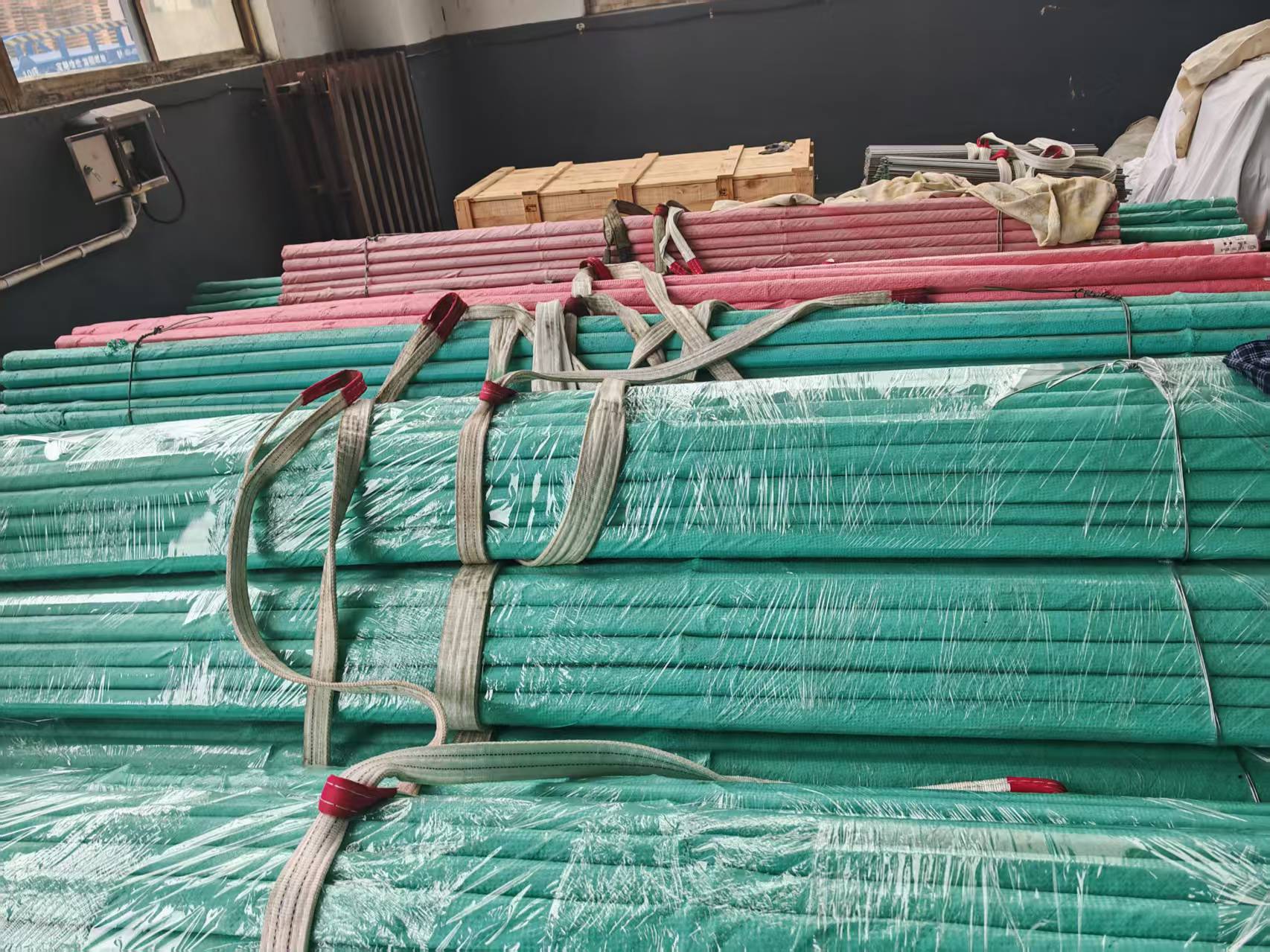
Decision rule in one line: specify a 316 stainless steel nut when corrosion resistance is the binding constraint and the joint stays inside the temperature range austenitic stainless steel handles comfortably; specify a nickel-based alloy stud such as Alloy 718 when the connection must hold its strength and preload under sustained heat, thermal cycling and high tensile load. 316 costs less and is easier to source; the nickel-based option costs more and takes longer to produce, but it is the option that protects the joint once heat becomes the governing load case.
This guide is written for the people who have to sign off on that decision — procurement engineers, project buyers, MRO planners and quality managers specifying high-performance fasteners for petrochemical, power generation, marine, rail and aerospace hardware. It compares a 316 stainless steel nut against a nickel-based alloy stud on the criteria that actually decide an order: temperature behaviour, corrosion, thread and dimensional fit, standards compliance, evidence trail, availability and cost.
Both materials sit in the same raw-material inventory at UHC fastener and hardware, which is why the comparison can be made on specification rather than on catalogue claims. What follows is a decision framework, not a price list, and not a claim that one material wins everywhere.
The Problem: A Nut and a Stud Are One Load Path, Not Two Purchases
A stud and a nut are two halves of a single load path. Upgrading one side while downgrading the other does not split the risk — it relocates it. In high-temperature joints, that mismatch normally shows up in five ways:
- Strength loss on the weaker side. The connection can only carry the load its least capable component allows, regardless of which part was specified to a higher grade.
- Preload change under thermal cycling. Materials with different thermal expansion behaviour change the clamp load as the joint heats and cools, which is why the pair has to be assessed together.
- Galling and seizing. Stainless-on-stainless contact at temperature can lock threads and turn planned maintenance into destructive disassembly.
- Corrosion confusion. A heat-driven problem misdiagnosed as a corrosion problem — or the reverse — pushes both halves of the joint toward the wrong material.
- Documentation gaps. Pairing a certified component with an uncertified one leaves the assembly without a traceable material record at audit.
The two common errors are symmetrical. The first is defaulting an entire joint to 316 stainless because it is familiar, widely available and cost-effective, then absorbing the consequences through re-torque campaigns, seized fasteners or premature replacement. The second is over-specifying a nickel-based alloy for a joint whose real threat is chloride corrosion rather than heat, and paying a material premium for capability the application never uses.
That is why the decision belongs at joint level and starts with one question: which condition actually governs — heat, corrosion, or mechanical load? Every other choice, including the material on each half of the joint, follows from that answer.
Industry Background: Why This Decision Is Getting More Attention
The global industrial fasteners market was valued at USD 103.9 billion in 2025 and is projected to reach USD 153.7 billion by 2033, according to Grand View Research. Within that total, Asia Pacific held a 45.1% revenue share in 2025, metal fasteners accounted for 91.0% of revenue, and externally threaded products such as bolts and screws made up 48.1%.
The segments that push fasteners into high-temperature service are expanding as well. Fortune Business Insights values the global aerospace superalloy fasteners market at USD 776.7 million in 2024, and the wind power fastener market is projected to reach USD 14.68 billion in 2025 according to The Insight Partners. The Global Wind Energy Council projects global wind turbine capacity rising from 1,100 GW in 2025 to over 2,400 GW by 2030, while China's new shipbuilding orders rose 59.0% year on year in Q1 2024, according to the China Association of the National Shipbuilding Industry.
Two practical conclusions follow. First, superalloy fastener demand is concentrated in a small number of demanding industries — aerospace, power generation, petrochemical and marine — where the cost of a wrong material choice is measured in downtime rather than in unit price. Second, the supply base is layered: MarketsandMarkets lists Illinois Tool Works, Stanley Black & Decker and Lisi Group among the major players in industrial fasteners, while special-material production is carried by a much smaller group of manufacturers and specialist suppliers. Buyers evaluating high-performance fasteners are therefore usually comparing a limited number of qualified sources rather than an open market.
Detailed Solution: What Each Material Actually Delivers
316 stainless steel nuts
In the UHC nut range, dimensional coverage runs from M2 to M64, with mechanical strength grades listed as A2-70, A2-80, A4-70, A4-80, D6-80 and D6-100, thread tolerances of 6H, 2B or 3B, and execution against ISO, DIN, ASTM, ASME, ANSI and JIS standards. Surface options include natural finish, passivation, Dacromet coating and adhesive pre-coating.
316 stainless is the sensible default for two reasons that have little to do with temperature. It resists corrosion across a wide range of industrial environments — for marine and coastal salt-spray conditions, the material guidance points toward 316L or duplex steel — and it is one of the most widely available fastener materials, which keeps both lead time and unit cost predictable.
Its limit appears when heat and load combine. Austenitic stainless steels such as 316 lose strength margin as service temperature climbs, so a joint that relies on them under sustained heat and high tensile load can experience preload relaxation and accelerated creep. Stainless-on-stainless threads are also prone to galling at temperature, which matters if the connection has to be opened during maintenance. Neither issue is a defect in the material; both are boundary conditions that have to be recognised before the order is placed.
Nickel-based alloy studs (Alloy 718 / 2.4668)
The stud side of the same joint can be produced in nickel-based high-temperature alloys. The UHC stud and threaded rod range covers M5 to M160, effective lengths up to 5,000 mm, full thread rods and double end studs, thread tolerance 6g or 2A, and the same ISO, DIN, ASTM, ASME, ANSI and JIS standard set. Strength grades listed for studs are A2-50, A2-70, A4-50, A4-70, D6-80 and D6-70, and the raw-material list for this product family includes 1.4980, 2.4668, Alloy 718, Alloy 80A and A286 Alloy 660 alongside the stainless and duplex grades.
Nickel-based alloys are specified for one reason: they are designed to retain mechanical strength at elevated temperature, where stainless steels begin to lose theirs. That property is what protects a joint from preload loss, repeated re-torquing and unplanned shutdown replacement in heat-dominated service. The trade-off sits on the other side of the ledger — higher raw-material cost, slower machining, greater tool wear, and longer production times.
The cost–performance trade-off, stated plainly
The comparison reduces to a single asymmetry. The cost of moving from a 316 nut to a nickel-based stud is paid once, at purchase. The cost of not moving, where heat genuinely governs, is paid repeatedly — in re-tightening, in maintenance windows, in early replacement, and occasionally in the much larger cost of an unplanned outage.
The reverse asymmetry is equally real. Where the governing threat is chloride corrosion, or where the joint is a preloaded structural connection rather than a hot one, the premium paid for a nickel-based alloy buys capability the application does not need. Where marine or coastal salt-spray corrosion is the driver, the recommended direction is 316L, duplex steel or a high-temperature alloy depending on the exact working condition — which is precisely why the material question should be answered per joint rather than per project.
Both sides of the joint from one inventory
A practical advantage of sourcing both materials from the same manufacturer is consistency of evidence. The UHC raw-material inventory covers 304 and 316 stainless steel, duplex steels including UNS S32205, 1.4462, 1.4410 and UNS S32750 / 2507, plus 904L / 1.4539 and 1.4529 / UNS N08926, and nickel-based high-temperature alloys including 1.4980, 2.4668, Alloy 718, Alloy 80A and A286 Alloy 660 — applied across nuts, bolts, studs, threaded rods and washers.
That matters commercially because a matched nut-and-stud pair produced under one quality system arrives with one material certificate, one traceability chain, and one point of responsibility if a specification question surfaces later.
Step-by-Step Breakdown: Six Steps From Service Condition to Order
- Define the governing condition. Record the service temperature profile, the corrosion environment, the tensile load and whether the joint cycles thermally. One of these four will dominate; name it explicitly before any material discussion begins.
- Decide which half of the joint governs. If heat governs, the stud material carries the risk because it carries the tensile load. If corrosion or documentation governs, the nut is usually the more sensitive component, because it is the part most often specified by default rather than by analysis.
- Match the pair, not the parts. Confirm thread tolerance on both sides — 6H, 2B or 3B for nuts and 6g or 2A for studs — and confirm that the two materials behave acceptably together through the thermal cycle. State both sides of the callout in the purchase specification.
- Confirm the standards route. ISO, DIN, ASTM, ASME, ANSI and JIS are the execution standards listed across the UHC nut and stud families. For corrosion-resistant stainless steel bolts, screws and studs, ISO 3506-1:2020 specifies mechanical properties; nickel-based alloys sit outside that scope and are specified through their material designation and the project specification. Pressure equipment in the EU must comply with the Pressure Equipment Directive (PED) 2014/68/EU, and aerospace work normally requires AS9100 quality management. Where the joint is preloaded structural bolting rather than high-temperature service, the EN 14399 series is the governing route.
- Require the evidence before the shipment. Ask for first article inspection, in-process inspection and pre-shipment inspection records, a 3.1 material test certificate, and batch-level quality tracing. Where an independent laboratory result matters, ISO/IEC 17025 is the recognised benchmark for testing and calibration competence.
- Lock capacity, MOQ and lead time into the schedule. UHC quotes OEM/ODM production with head mark and logo customisation, monthly capacity of 500–1000 tons, MOQ from 150 kg and a lead time of 75–90 days — figures that belong in the project plan, not in a discovery email after the purchase order is raised.
Use Cases: Where Each Option Belongs
- Petrochemical and refining: process-media corrosion and elevated temperature frequently coexist, so the material guidance points to 316L, duplex steel or high-temperature alloy depending on the specific condition — making the stud grade the deciding variable in the hot sections.
- Power generation: sustained heat plus long service intervals favour nickel-based alloy studs, particularly where access for re-torquing is limited and shutdowns are expensive.
- Marine and offshore: salt-spray corrosion is usually the governing threat, which is where 316L and duplex grades do the work. Nickel-based alloys enter the picture when the same structure also carries high-temperature process lines.
- Aerospace: documented traceability and standards compliance matter as much as material performance; superalloy aerospace fasteners were valued at USD 776.7 million globally in 2024.
- Wind energy: high-strength connection fasteners in towers and nacelles depend on corrosion resistance and fatigue performance over decades of service, in a market projected at USD 14.68 billion in 2025.
- Rail and heavy infrastructure: high tensile structural fasteners where preload stability, not heat, defines the specification, and where the EN 14399 route is often the more appropriate framework.
A documented UHC case illustrates how this plays out in practice. Industrial equipment OEM manufacturers, engineering contractors, hardware distributors and new energy system suppliers have used these fasteners in fastening assemblies for aerospace parts, marine equipment, automotive chassis and power generation facilities, across a shipment of 100,000 pieces with customers in Germany, Italy, South Korea and Japan. The project has run for ten years, and the reported result is reduced later maintenance and replacement costs with stable project operation. The material properties cited in that record are high tensile and anti-fatigue strength, resistance to seawater and acid-base corrosion, high-temperature resistance, and compliance with DIN, ISO, JIS, ASME and ASTM standards.
Comparison Table: 316 Stainless Nut vs. Nickel-Based Alloy Stud
| Decision factor | 316 stainless steel nut | Nickel-based alloy stud (Alloy 718 / 2.4668) | Practical implication |
|---|---|---|---|
| Dimensional range (UHC inventory) | Nuts: M2 – M64 | Studs and threaded rods: M5 – M160, effective length up to 5,000 mm | Both cover typical industrial ranges; long studs are produced as single pieces in the alloy range. |
| Mechanical strength grades listed | A2-70, A2-80, A4-70, A4-80, D6-80, D6-100 | A2-50, A2-70, A4-50, A4-70, D6-80, D6-70 | Grade selection follows the governing load, not the material label. |
| Thread tolerance | 6H / 2B / 3B precision thread | 6g / 2A precision thread | Internal and external threads are specified separately — state both in the callout. |
| Execution standards | ISO, DIN, ASTM, ASME, ANSI, JIS | ISO, DIN, ASTM, ASME, ANSI, JIS | A matched standard set simplifies joint-level documentation. |
| Surface treatment options | Natural finish, passivation, Dacromet coating, adhesive pre-coating | Natural finish, passivation, Dacromet coating, adhesive pre-coating | Coatings and pre-applied adhesive change friction and torque behaviour — confirm before assembly. |
| Corrosion behaviour | Selected where chloride and sea-spray corrosion drive the specification; 316L or duplex steel recommended for marine and coastal conditions | Chosen for high-temperature service; corrosion performance must be specified against the actual working condition | Do not use heat-grade logic to solve a corrosion problem, or the reverse. |
| High-temperature behaviour | Austenitic stainless steel: strength margin narrows as temperature rises | Nickel-based high-temperature alloy: selected specifically to retain strength at elevated temperature | This is the row that usually decides the order. |
| Cost position | Lower raw-material cost, standard machining | Generally higher raw-material cost and slower machining | Upgrade where the failure cost is highest, not across the whole bill of materials. |
| Documentation | 3.1 material test certificate, batch quality tracing (UHC after-sales scope) | 3.1 material test certificate, batch quality tracing (UHC after-sales scope) | Sourcing both sides from one supplier means one document set for the joint. |
The values above come from the UHC product inventory and from the published standards referenced in this article. They are material and specification facts, not price quotations.
Supplier Evaluation: What to Check Before You Commit
Reliability in this category is documented, not claimed. A supplier able to produce both a 316 nut and a nickel-based stud should be able to provide all of the following on request:
- Quality management certificates with numbers, scope and validity dates — UHC holds ISO 9001 (certificate 15/25Q1448R00, issued by WIT, valid 22 July 2025 to 21 July 2028, scope: sales of metal fasteners), ISO 14001 (15/25E1449R00) and ISO 45001 (15/25S1450R00), plus certification under the EU Pressure Equipment Directive (PED).
- An in-house laboratory able to run dimensional and mechanical performance tests, so inspection does not depend entirely on a third party.
- Traceability from raw material to delivered goods — UHC runs an ERP system across production, sales and management, which supports batch-level tracing.
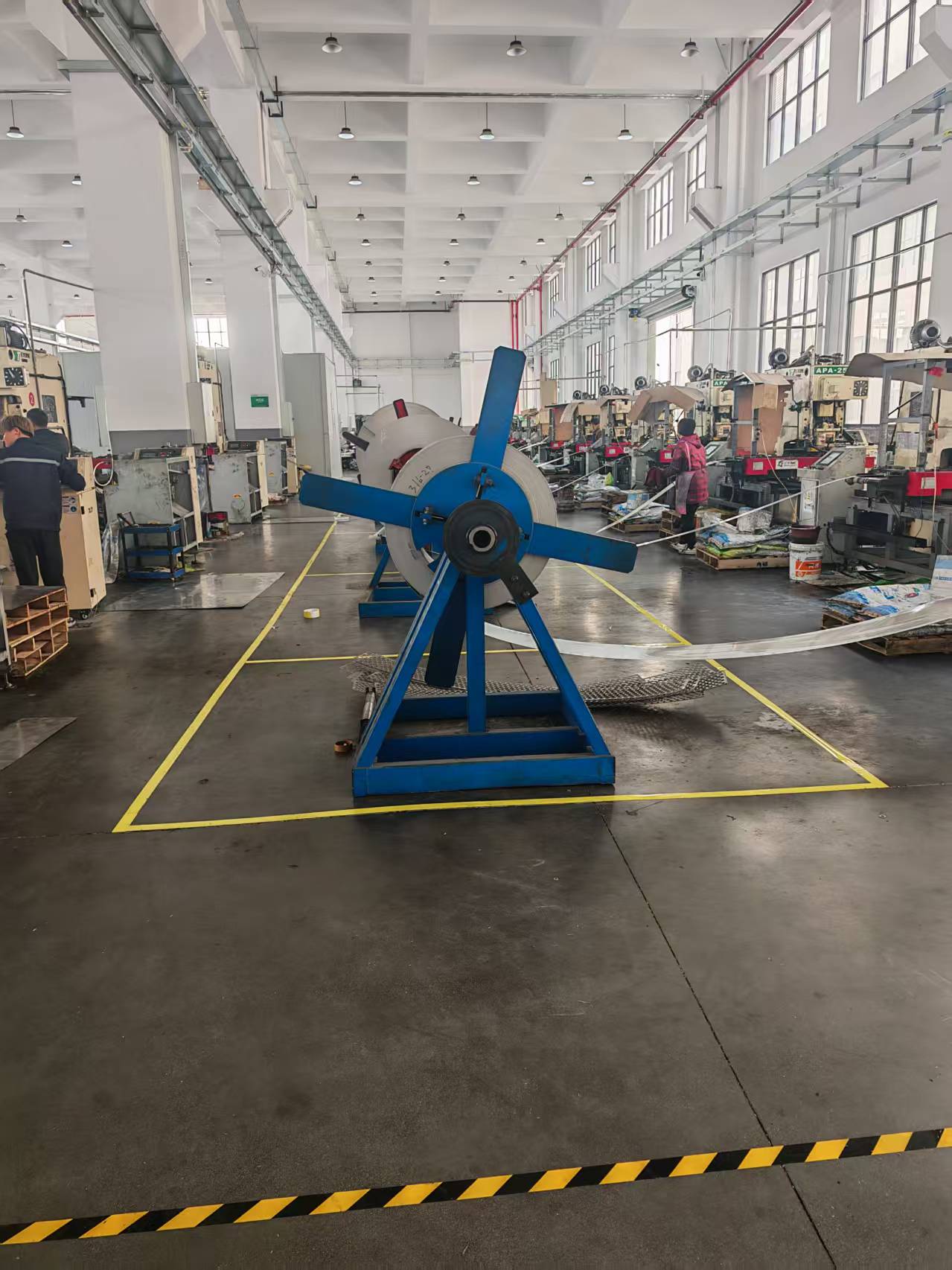
- Production scale that matches the order: five production bases, 80,000 m² of factory space, around 200 employees, 25 engineers, and 25,000 tons of stainless and special materials per year, with 80% of output exported to the EU, Korea and Japan.
- Flexibility on the part itself: OEM/ODM production with head mark and logo customisation, and surface options including passivation, Dacromet coating and adhesive pre-coating.
- After-sales documentation: 3.1 material test certificates, batch quality tracing, and a defined process for handling quality problems.
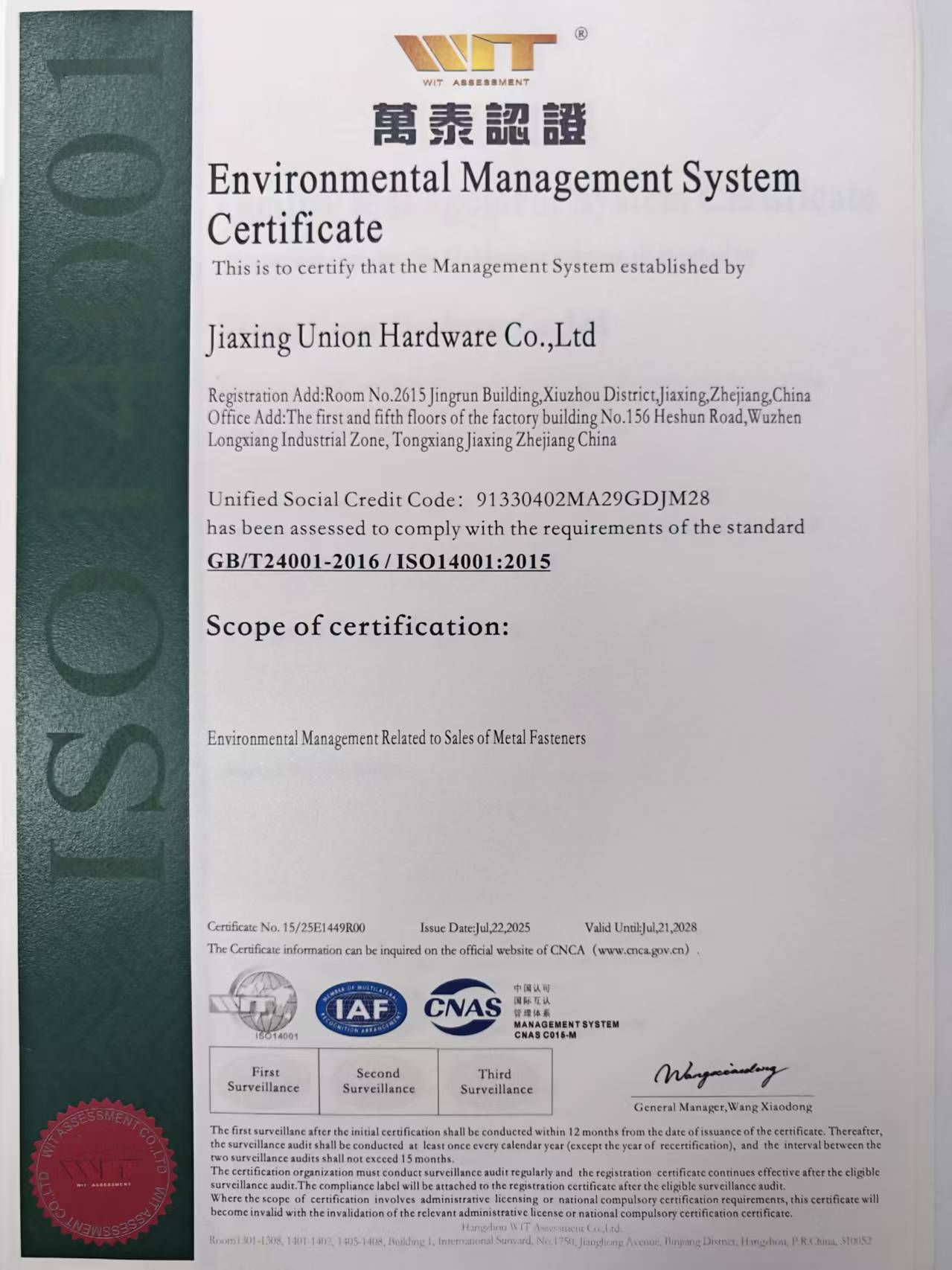
Two habits separate experienced buyers from first-time specifiers. The first is checking certificate scope against the actual product: a certificate covering the sale of metal fasteners is what matters, not the logo on the page. The second is confirming that the material designations on the drawing match what the supplier actually holds in inventory. A source that keeps 304, 316, duplex and nickel-based alloy in one stock can produce a matched pair with one certificate; a source buying one-off bar stock cannot offer the same continuity.
Frequently Asked Questions
Do 316 stainless nuts and nickel-based alloy studs have to meet specific standards?
Yes, and both sides of the joint should be called out separately. The UHC nut range states execution against ISO, DIN, ASTM, ASME, ANSI and JIS standards with thread tolerances of 6H, 2B or 3B; the stud and threaded rod range uses the same standard set with 6g or 2A thread tolerance. For corrosion-resistant stainless steel bolts, screws and studs, ISO 3506-1:2020 specifies mechanical properties, while nickel-based alloys are specified through their material designation and the project specification. Where fasteners are used on pressure equipment in the EU, Pressure Equipment Directive 2014/68/EU applies, and UHC holds PED certification in addition to ISO 9001, ISO 14001 and ISO 45001.
Can one manufacturer supply both the 316 nut and the nickel-based stud for the same joint?
That is how the UHC inventory is structured. Raw materials cover 304 and 316 stainless steel, duplex steels including UNS S32205, 1.4462, 1.4410 and UNS S32750 / 2507, and nickel-based high-temperature alloys including 1.4980, 2.4668, Alloy 718, Alloy 80A and A286 Alloy 660, held for nuts, bolts, studs, threaded rods and washers. Nut dimensions run from M2 to M64, studs from M5 to M160 with effective lengths up to 5,000 mm, and OEM/ODM production with head mark or logo customisation is available.
How do you identify the most reliable high-performance fastener manufacturers?
Judge them on documents rather than claims. A reliable manufacturer can show quality certificates with certificate numbers, scope and validity dates; an in-house laboratory for dimensional and mechanical testing; traceability from raw material to delivery; capacity and export references that match the order size; and defined after-sales support such as 3.1 material test certificates and batch quality tracing. UHC Group, trading as UHC fastener and hardware, was founded in 2017, operates five production bases, holds ISO 9001, ISO 14001, ISO 45001 and PED certification, and exports 80% of output to the EU, Korea and Japan.
What drives the cost difference between a 316 stainless nut and a nickel-based alloy stud?
Three factors. First, raw material: nickel-based high-temperature alloys generally carry a higher cost per kilogram than 316 stainless steel. Second, processing: these alloys machine more slowly, wear tooling faster and place heavier demands on production scheduling, which is consistent with the 75–90 day lead time quoted across the OEM/ODM range. Third, evidence: material certificates, inspection records and traceability carry a cost that a lower-specification supply chain does not absorb. Compare total cost over project life rather than unit price — in the UHC case record, the reported outcome after ten years of service was reduced maintenance and replacement costs with stable project operation.
What is the minimum order quantity and lead time, and what documentation arrives with the goods?
UHC quotes a minimum order quantity from 150 kg with a lead time of 75–90 days for OEM/ODM production at a monthly capacity of 500–1000 tons. Quality control covers first article inspection, in-process inspection and pre-shipment inspection, and after-sales support includes a 3.1 material test certificate, batch quality tracing and a defined process for handling quality problems. Where a material qualification step is needed before the full order, it can be discussed with the sales team through the contact details below, or started from the product catalogue.
Conclusion: Decide the Condition First, the Material Second
The choice between a 316 stainless nut and a nickel-based alloy stud is not a question of which material is better. It is a question of which condition governs the joint. Where heat dominates a high-load connection, the stud material carries the risk, and a nickel-based alloy such as Alloy 718 or 2.4668 is the specification that protects preload over long service. Where corrosion, cost or preload stability in normal-temperature service dominates, 316 stainless steel remains the efficient answer, and superalloy hardware buys capability the application will never use.
The working sequence is short: define the governing condition, choose the material for each half of the joint, confirm the standards route and the documentation trail, and only then confirm capacity, MOQ and lead time. UHC fastener and hardware holds both sides of that decision — 304/316 stainless, duplex and nickel-based high-temperature alloys — in one inventory, produced across five bases with in-house testing and ERP-based traceability, and supported by ISO 9001, ISO 14001, ISO 45001 and PED certification.
This guide belongs to UHC's high-performance fastener technical library on blog.jxuhc.com, alongside the material selection, compliance and application guides, and it supports the manufacturer-level overview published on www.jxuhc.com.

Next step: if you are evaluating a high-temperature joint and need to compare a 316 stainless nut against a nickel-based alloy stud on your own drawings, send the specification across.
Download the UHC product brochure: UHC High-Performance Fastener Catalogue (PDF)
Contact: Michael Shen — michaelshen@uhc-group.com.cn / sales@uhc-group.com.cn · Tel / WhatsApp: +86 13575349247 · Website: www.jxuhc.com · Address: Jingrun Building, Xiuzhou District, Jiaxing City, Zhejiang Province, China
Have Questions or Need More Details?
Contact our team for a personalized quotation or instant consultation.
Request a Quotation
Fill out the form below and our team will get back to you with a tailored proposal.
WhatsApp Direct Chat
Prefer to chat in real-time? Message us on WhatsApp for instant assistance & quick answers.
- Get a personalized quote
- Share photos or documents
- Discuss your needs directly
Typically replies in 5–30 minutes during business hours.