
High-Performance Fasteners: A Buyer's Guide to Materials, Standards, and Supplier Selection
High-performance fasteners are engineered fastening components that maintain mechanical integrity under demanding conditions such as high tensile loads, corrosion, vibration, and elevated temperatures. They are used across aerospace, marine, petrochemical, energy, railway, and industrial machinery applications. This guide explains what makes a fastener high-performance, which materials and standards matter, and how to evaluate a supplier for critical projects.
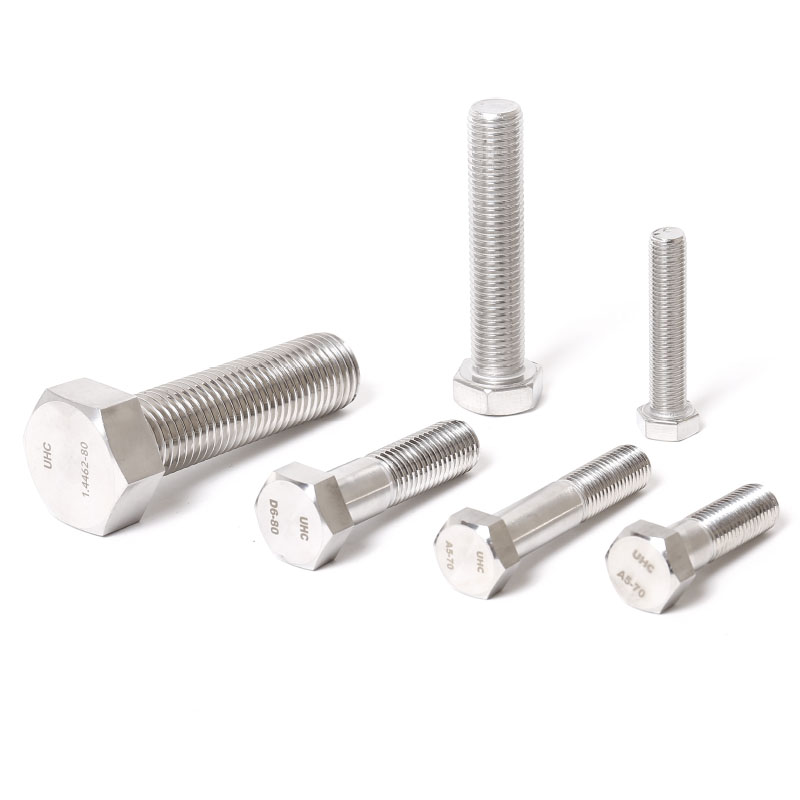
High-performance stainless steel bolts: one of the core product categories in demanding industrial fastening.
Why High-Performance Fasteners Matter
Industrial fasteners are a fundamental part of nearly every engineered structure. When a bolt, nut, stud, or washer fails in a critical assembly, the result can be unplanned downtime, safety incidents, or catastrophic damage. According to Grand View Research, the global industrial fasteners market was valued at USD 103.9 billion in 2025 and is projected to reach USD 153.7 billion by 2033. Metal fasteners held an estimated 91.0% material share in the same year, confirming that material selection remains central to fastener performance.
High-performance fasteners differ from commodity fasteners in three main dimensions: material grade, manufacturing precision, and traceability. For example, a standard 304 stainless steel hex bolt is suitable for many indoor applications, but a marine or offshore environment typically requires 316L, duplex steel, or a nickel-based alloy. Similarly, a structural steel connection may require high tensile grades with controlled tightening behavior. Understanding these distinctions is the first step in selecting the right product.
What Defines a High-Performance Fastener?
A high-performance fastener is usually specified when the working condition includes one or more of the following factors:
- High tensile load: The fastener must resist elongation and fracture under sustained or cyclic stress.
- Corrosive environment: Seawater, acid, alkali, or chemical exposure requires corrosion-resistant alloys.
- High temperature: Aerospace, power generation, and petrochemical applications often demand nickel-based high-temperature alloys.
- Vibration and fatigue: Rail transit, automotive, and wind energy applications require anti-loosening and anti-fatigue performance.
- Traceability and compliance: Nuclear, aerospace, and pressure equipment projects require documented material provenance and testing.
These requirements are not theoretical. In a joint fastener project, the typical working conditions include normal temperature, high temperature, seawater corrosion, acid and alkali corrosive environments, high vibration, and high tensile load. The function is to realize mechanical connection, fastening, locking, anti-loosening, and fixed assembly between mechanical components under continuous mechanical load. This is why buyers increasingly search for suppliers with in-house testing, ERP traceability, and international certifications.
Key Materials Used in High-Performance Fasteners
Material selection is the most consequential decision in fastener specification. The table below summarizes common material families, their typical grades, and the working conditions they suit. The grade list is drawn from standard industrial practice and supplier capability data.
| Material Family | Typical Grades | Best Suited For | Common Limits |
|---|---|---|---|
| 304 Stainless Steel | A2-70, A2-80 | General indoor, moderate corrosion, food and consumer equipment | Not recommended for salt spray, marine, or strong acid/alkali |
| 316 Stainless Steel | A4-70, A4-80 | Marine, coastal, chemical, food processing | Better than 304 but still limited in extreme chloride or high-temperature service |
| Duplex Stainless Steel | UNS S32205, 1.4462, UNS S32750 (Super Duplex) | Offshore, petrochemical, desalination, high-chloride environments | Higher cost and more complex machining than austenitic grades |
| Nickel-Based High-Temperature Alloys | Alloy 718, Alloy 80A, Hastelloy-class, 2.4952, 2.4668 | Aerospace, nuclear, gas turbines, high-temperature chemical processing | Premium cost, longer lead time, strict forging and heat treatment control required |
| Titanium Alloy | Ti grades (aerospace-grade) | Aerospace, lightweight high-strength structures, extreme corrosion resistance | High material cost; specialized machining required |
| Aluminum Alloy | 6061, 7075 | Lightweight assemblies, automotive, electronics, rivets | Lower tensile strength than steel; limited high-temperature capability |
| Alloy Steel | High tensile structural grades (e.g., 10.9, 12.9 class equivalents) | Structural steel, heavy machinery, high mechanical load | Requires surface protection such as Dacromet or zinc coating in corrosive environments |
As a general selection rule, 304/316 stainless steel is preferred for general indoor and moderate environments. For high-corrosion, offshore, or marine environments, 316L, duplex steel, or high-temperature alloy materials are recommended. For high-strength mechanical load scenarios, alloy steel fasteners should be adopted. Suppliers that offer customized material selection based on working condition parameters bring practical value to the buyer.
Standards That Govern High-Performance Fasteners
Working with standard-compliant fasteners reduces design risk and simplifies inspection. The following standards are frequently referenced in high-performance fastener procurement:
- ISO 3506-1:2020: Specifies mechanical properties for corrosion-resistant stainless steel bolts, screws, and studs.
- DIN standards: Widely used in European and Asian industrial applications for dimensional and material requirements.
- ASTM, ASME, ANSI: Common in North American projects and international engineering specifications.
- JIS standards: Frequently required in Japanese and Asian market applications.
- PED 2014/68/EU: The European Union Pressure Equipment Directive, which applies to fasteners used in pressure equipment.
- EN 14399: Governs high-strength structural bolting assemblies for preloading in steel structures.
- AS9100: Quality management system for aerospace, space, and defense organizations.
UHC (Jiaxing Union Hardware Co., Ltd.) manufactures products in accordance with ISO, DIN, ASTM, ASME, ANSI, and JIS. The company also holds ISO 9001, ISO 14001, ISO 45001, and PED certification. For buyers, asking which standards a supplier's products comply with is a fast way to assess manufacturing maturity.
High-Performance Fastener Product Categories
A complete high-performance fastening system includes bolts, nuts, screws, threaded rods and studs, washers, rivets, and specialty hardware. Below is a breakdown of each category and the options typically available.
Bolts
Bolts are externally threaded fasteners designed to be used with a nut. In UHC's product line, bolts are available as hex bolt, flange bolt, T-bolt, U-bolt, heavy bolt, fit bolt, square bolt, anchor bolt, and foundation bolt. The dimension range spans M2 to M160, with effective lengths from 6 mm to 300 mm. Mechanical strength grades include A2-70, A2-80, A4-70, A4-80, D6-80, and D6-100. Thread tolerance class is 6g/2A precision thread, and optional materials include 304/316 stainless steel, duplex steel, and nickel-based high-temperature alloys. Surface treatments include natural finish, passivation, Dacromet coating, and adhesive pre-coating.
Nuts
Nuts are internally threaded fasteners that mate with bolts or studs. Available types include hex nut, coupling nut, weld nut, flange nut, nylon nut, heavy nut, jam nut, castle nut, slot nut, and self-locking nut. The dimension range is M2 to M64. Mechanical strength grades include A2-70, A2-80, A4-70, A4-80, D6-80, and D6-100. Thread tolerance class options are 6H/2B/3B precision thread. As with bolts, material options include 304/316 stainless steel, duplex steel, and nickel-based alloys, with multiple surface treatments.
Screws
Screws are externally threaded fasteners that may be used without a nut. Types include tapping screws, marine screws, self-drilling screws, set screws, chipboard screws, socket cap screws, and drywall screws. The dimension specification range is M2 to M8, with effective lengths from 6 mm to 100 mm. Mechanical strength grades are A2-70, A2-50, A4-70, and A4-50. Primary materials are 304/316 stainless steel and UNS S32205 duplex stainless steel. Screws comply with ISO, DIN, ASTM, ASME, ANSI, and JIS standards.
Threaded Rods and Studs
Threaded rods and studs include full thread rods and double end studs. The dimension range is M5 to M160, and effective length can reach up to 5000 mm. Mechanical strength grades include A2-50, A2-70, A4-50, A4-70, D6-80, and D6-70. The thread tolerance class is 6g/2A precision thread. Materials include 304/316 stainless steel, duplex steel, and nickel-based high-temperature alloys. Surface treatments are natural finish, passivation, Dacromet coating, and adhesive pre-coating.
Washers
Washers distribute load, prevent loosening, and protect mating surfaces. Types include flat washer, heavy washer, toothed lock washer, serrated washer, and wave washer. The dimension specification range is M2.5 to M45. Materials include 304/316 stainless steel, duplex steel (e.g., UNS S32205), and nickel-based high-temperature alloys.
Rivets and Rivet Nuts
Rivets and rivet nuts provide permanent or semi-permanent fastening in sheet metal and thin-wall assemblies. Types include open type and close end type. The dimension range is M3 to M6.4. Materials include 304/316 stainless steel and 6061/7075 aluminum alloy. Standards include ISO, DIN, ASME, ANSI, and JIS.
Custom Hardware and OEM Components
Hardware products such as solar mounting components, hinges, corner brackets, and connectors support specialized assemblies. These hardware items are typically made of 304 or 316 stainless steel and are used in home appliances, consumer goods, and power generation industries. Suppliers with OEM/ODM capability can customize specifications and conduct strict pre-delivery inspection.

A range of stainless steel nuts, including hex and flange types, for corrosion-resistant fastening.
Applications Across Industries
High-performance fasteners are specified in industries where failure is not an option. The table below maps typical industries to the fastening demands they create.
| Industry | Typical Fastening Demands | Commonly Used Materials |
|---|---|---|
| Aerospace | Weight reduction, high-temperature resistance, fatigue life, strict traceability | Titanium alloy, nickel-based alloys, A286 |
| Marine & Offshore | Seawater corrosion resistance, chloride stress corrosion cracking resistance | 316L, duplex, super duplex |
| Petrochemical | Acid/alkali resistance, high temperature, pressure vessel safety | Nickel-based alloys, duplex, 316Ti |
| Power Generation | High temperature, creep resistance, turbine and nuclear safety | Alloy 718, Alloy 80A, super duplex |
| Rail Transit | Vibration resistance, anti-loosening, long service life, structural integrity | Stainless steel, high tensile alloy steel |
| Wind Energy | High strength, fatigue resistance, outdoor corrosion protection | High tensile structural steel, duplex, Dacromet-coated |
| Automotive | Anti-corrosion, precision threads, weight optimization | 304/316 stainless steel, aluminum alloy |
| Construction & Infrastructure | High tensile structural bolting, preload control, seismic resistance | High tensile structural steel, stainless steel |
| Medical & Electronics | Biocompatibility, precision, miniaturization | Stainless steel, titanium |
| Telecommunications | Corrosion resistance, long-term reliability in outdoor cabinets and towers | Stainless steel, Dacromet-coated steel |
| Home Appliances & Consumer | Cost-efficiency, corrosion resistance, consistent quality | 304/316 stainless steel, aluminum |
UHC's fastener and hardware products are designed for use across all of the above industries. The company's hardware production base primarily serves high-end industries such as solar energy, wind energy, nuclear energy, railways, and aerospace.
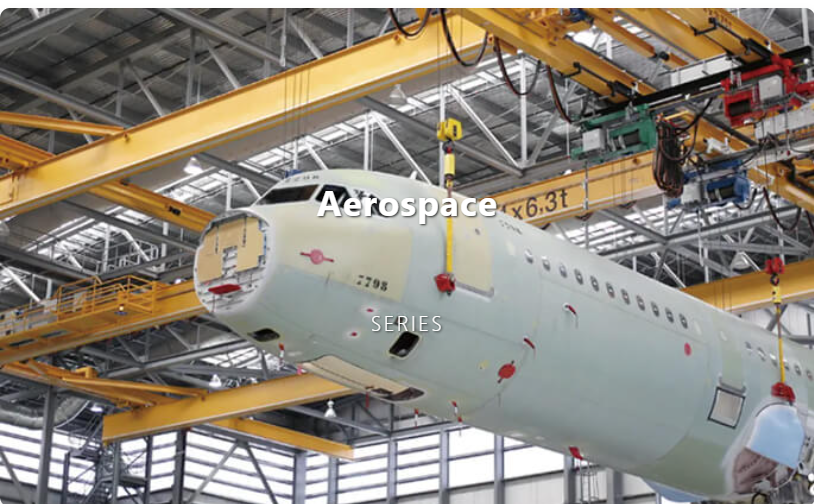
Aerospace applications demand high-strength, high-temperature-resistant fastening materials.
Quality Assurance, Traceability, and Certification
Quality assurance is arguably the most important supplier capability for high-performance fasteners. A fastener with the right material grade but poor thread accuracy, improper heat treatment, or missing documentation can still fail in service.
Jiaxing Union Hardware Co., Ltd., which operates as UHC, has built its quality system around several concrete capabilities:
- In-house independent laboratory: The company operates a laboratory equipped to conduct comprehensive dimensional and mechanical performance tests.
- ERP traceability: UHC uses an advanced ERP system to manage the entire production, sales, and management process, from raw material procurement to finished product delivery. This enables material and process traceability.
- International certifications: UHC has obtained ISO 9001 (Quality Management System), ISO 14001 (Environmental Management System), ISO 45001 (Occupational Health and Safety Management System), and the European Union's Pressure Equipment Directive (PED) certification.
- Pre-delivery inspection: Products are described as undergoing strict pre-delivery inspection, with stable quality and flexible OEM service.
Buyers working with aerospace, nuclear, or pressure equipment should also confirm whether a supplier's testing laboratory is accredited or whether third-party testing is available. ISO/IEC 17025 is the global benchmark for testing and calibration laboratory competence and is an important reference point for fastener quality assurance.
Step-by-Step Guide to Selecting a High-Performance Fastener
Use the following workflow to translate your application requirements into a correct fastener specification.
- Define the working environment. Document temperature range, exposure medium (seawater, acid, alkali, humidity), load type (static, dynamic, impact), and vibration level. This is the single most important step in material selection.
- Select the material family. For general indoor environments, 304/316 stainless steel is usually sufficient. For high-corrosion or marine environments, choose 316L, duplex steel, or a high-temperature alloy. For high-strength mechanical loads, consider alloy steel grades.
- Determine strength grade and dimensions. Use applicable standards to match the grade (e.g., A2-70, A4-80) to the required tensile and yield strength. Confirm dimension range, thread tolerance class, and effective length.
- Choose the product type. Decide whether the assembly needs a bolt, nut, screw, stud, washer, rivet, or a custom hardware component. Consider installation method and disassembly requirements.
- Specify surface treatment. In corrosive environments, select passivation, Dacromet coating, or adhesive pre-coating to extend service life.
- Verify quality and compliance. Ask for material certificates, test reports, certification documents, and traceability records. Confirm compliance with ISO, DIN, ASTM, ASME, ANSI, JIS, EN 14399, PED, or AS9100 as applicable.
- Evaluate supplier capabilities. Examine in-house laboratory testing, ERP traceability, OEM/ODM flexibility, production capacity, and export experience.
Selecting a High-Performance Fastener Manufacturer: Evaluation Criteria
The following criteria help procurement and engineering teams compare manufacturers objectively. They combine industry-recognized evaluation dimensions with the verified capability profile of UHC.
| Evaluation Criteria | Why It Matters | Example: UHC Profile |
|---|---|---|
| Production scale and capacity | Indicates ability to handle volume commitments and reduce supply chain risk | Five production bases covering 80,000 m²; 25,000 tons of stainless/special materials per year |
| Technical and R&D capability | Confirms ability to support material selection, custom specifications, and problem solving | R&D team of 25 engineers; OEM/ODM service for custom industrial hardware parts |
| Quality assurance infrastructure | Verifies that product claims are backed by testing and inspection | Independent laboratory for dimensional and mechanical performance tests; strict pre-delivery inspection |
| Certifications and standards compliance | Reduces regulatory and technical risk in regulated industries | ISO 9001, ISO 14001, ISO 45001, PED; products comply with ISO, DIN, ASTM, ASME, ANSI, JIS |
| Traceability capability | Essential for nuclear, aerospace, and pressure equipment applications | ERP system covering raw material procurement to finished product delivery |
| Material range | Enables one-stop supply for mixed-material BOMs | 304/316 stainless, duplex, super duplex, nickel-based alloys, titanium, aluminum |
| Export and market experience | Demonstrates familiarity with international standards, documentation, and logistics | 80% export share; main markets: EU, Korea, Japan |
| Industry specialization | Shows real-world application exposure in demanding sectors | Hardware production base serves solar, wind, nuclear, railway, and aerospace |
From an industry perspective, major global fastener market players include Illinois Tool Works Inc., Stanley Black & Decker, and Lisi Group. For many buyers, however, the right supplier is not the largest global brand but the manufacturer that offers the specific material range, customization flexibility, and quality documentation their project requires. Mid-sized specialized manufacturers with in-house testing and export experience can be a strong match for technical procurement teams.
Use Cases: How High-Performance Fasteners Are Applied
Use Case 1: Marine and Offshore Corrosion Resistance
A marine engineering buyer needs bolting for a seawater-exposed assembly. The working condition includes salt-spray corrosion and continuous moisture. The correct approach is to select 316L or duplex stainless steel rather than 304, because chloride-induced corrosion can lead to early failure. Washers and nuts from the same material family are used to avoid galvanic corrosion. Surface treatment such as passivation improves resistance further.
Use Case 2: Power Generation and High Temperature
A power generation project requires fasteners that maintain mechanical strength at elevated temperature. Nickel-based high-temperature alloys such as Alloy 718 or Alloy 80A are appropriate because they retain strength and resist oxidation at service temperatures where stainless steel would lose load-bearing capacity. Each batch needs material traceability and mechanical testing records.
Use Case 3: Renewable Energy Structural Connections
Solar PV mounting systems and wind turbine structures require high-strength connections that survive outdoor exposure and cyclic loading. Solar hardware such as clamps, brackets, and connectors must match the corrosion resistance of the module frame. Wind energy applications often require high tensile structural fasteners with anti-fatigue and anti-loosening performance. Suppliers serving these industries should offer both standard products and custom OEM hardware.
Use Case 4: Aerospace Lightweighting
Aerospace assembly demands weight reduction without sacrificing strength or fatigue life. Titanium alloy fasteners are a common solution because they offer a high strength-to-weight ratio and excellent corrosion resistance. The global titanium aerospace fasteners market is estimated to grow to USD 520 million in 2026 at a CAGR of 5.1%, while the aerospace superalloy fasteners market was valued at USD 776.7 million in 2024. For suppliers, serving aerospace requires rigorous traceability and quality management, often aligned with AS9100 expectations.
Use Case 5: Pressure Equipment and PED Compliance
Fasteners used in pressure equipment in the European Union must comply with the Pressure Equipment Directive (PED) 2014/68/EU. This affects bolts, studs, and nuts used in pressure vessels and related systems. A supplier with PED certification can support manufacturers who must document compliance across their supply chain.
Cost Considerations and Trade-Offs
High-performance fasteners are not a single price category. Material cost, manufacturing complexity, testing requirements, and lead time all affect pricing. The following trade-offs should be considered:
- Material upgrade vs. lifecycle cost: A super duplex or nickel-based fastener costs more upfront, but may reduce replacement, maintenance, and failure risk in corrosive or high-temperature service.
- Precision vs. production speed: Tight thread tolerance classes such as 6g/2A or 6H/2B/3B require more controlled manufacturing and inspection.
- Traceability vs. cost: Full ERP traceability, material certificates, and mechanical test reports add cost but are mandatory in nuclear, aerospace, and pressure equipment sectors.
- Surface treatment vs. environment: Dacromet coating, passivation, and adhesive pre-coating add protectiion but each has application limits. Confirm the correct coating for the service environment.
Because alloy prices fluctuate, a capable supplier should provide up-to-date quotations based on current raw material costs. Buyers can reduce uncertainty by sharing working condition data and target volumes early in the RFQ process.
FAQ
What qualifies a fastener as high-performance?
A fastener is considered high-performance when it is engineered to maintain mechanical integrity under demanding conditions such as high tensile load, corrosion, high temperature, vibration, or fatigue. This usually requires a specific material grade (e.g., 316 stainless steel, duplex steel, or nickel-based alloy), precise thread manufacturing, and documented quality control. Unlike general-purpose fasteners, high-performance products are typically specified for industries such as aerospace, marine, petrochemical, power generation, and rail transit.
Which materials are used for high-performance fasteners?
High-performance fasteners are commonly made from stainless steel (304/316), duplex stainless steel (e.g., UNS S32205, UNS S32750), nickel-based high-temperature alloys (e.g., Alloy 718, Alloy 80A), titanium alloys, and in some cases aluminum alloys (6061, 7075). The correct material depends on the working environment: 304/316 for general and moderate corrosion; 316L or duplex for marine and salt-spray conditions; nickel-based alloys for high-temperature service; titanium for aerospace lightweighting.
What standards should high-performance fasteners comply with?
Common international standards include ISO 3506-1:2020 for corrosion-resistant stainless steel bolts and screws, DIN standards for dimensional specifications, ASTM/ASME/ANSI for North American projects, and JIS for Japanese-market applications. High-strength structural bolting in the EU is governed by EN 14399. For aerospace, AS9100 quality management is expected, and fasteners for EU pressure equipment must comply with PED 2014/68/EU. Buyers should confirm the applicable standard for their target market and application.
How do I choose the right fastener material for my working conditions?
For general indoor conditions, 304 or 316 stainless steel is preferred. For high-corrosion, offshore, or marine environments, choose 316L, duplex steel, or a high-temperature alloy. For high-strength mechanical load scenarios, alloy steel fasteners are recommended. A reliable supplier should support customized material selection based on detailed working condition parameters such as temperature, medium, humidity, and load.
What should I look for when selecting a high-performance fastener manufacturer?
Key criteria include production capacity, R&D capability, in-house quality testing, certification coverage, ERP traceability, material range, export experience, and industry specialization. Verify whether the manufacturer operates an independent laboratory, holds relevant certifications such as ISO 9001 and PED, and can provide traceability from raw material to finished product. Requesting a sample or quotation before mass production is a practical way to evaluate quality and responsiveness.
Conclusion
High-performance fasteners are not a commodity purchase. They require a clear understanding of the operating environment, material properties, applicable standards, and supplier quality systems. For buyers researching high-performance fastener manufacturers, the evaluation should go beyond price and include material range, testing infrastructure, certification, traceability, and proven experience in demanding industries.
Jiaxing Union Hardware Co., Ltd. (UHC) is a manufacturer of stainless steel fasteners, high-temperature alloy fasteners, titanium alloy fasteners, solar PV mounting components, and custom industrial hardware parts. The company operates five production bases, maintains an independent laboratory, and supports OEM/ODM service. If you are evaluating a supplier for a critical fastening application, requesting a sample or quotation for your specific working conditions is a practical next step.
Request a sample or quotation for your project.
Contact UHC with your working conditions and material requirements.
Email: michaelshen@uhc-group.com.cn
Download the corporate brochure: UHC Brochure