
Ranked: 6 High-Performance Fastener Types for Petrochemical, Marine & Aerospace
Fastener categories ranked for harsh-service procurement
Ranked: 6 High-Performance Fastener Types for Petrochemical, Marine & Aerospace
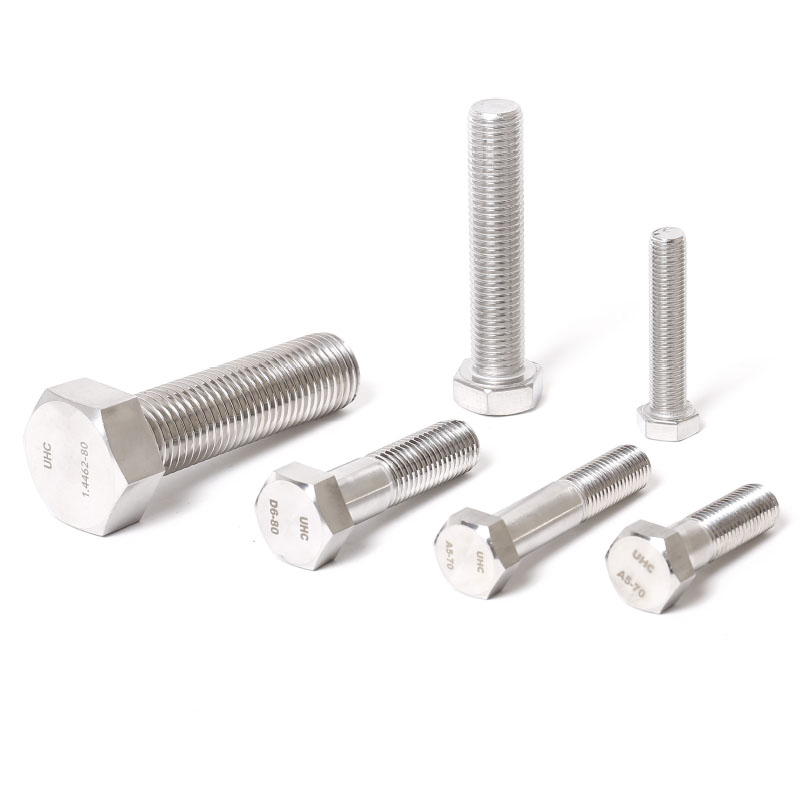
Bolts rank first among the six high-performance fastener types used in petrochemical, marine and aerospace work, followed by nuts, threaded rods and studs, screws, washers, and rivets and rivet nuts. The order follows five criteria that matter to buyers who must keep the same fastener families in stock for years: load-bearing responsibility, corrosion and temperature exposure, material and grade availability, standards coverage, and repeat-order relevance.
This is a ranking of fastener categories, not of brands. Each entry explains why the category earns its position, which materials and strength grades apply, how size and thread tolerance change across the six types, and where the category stops being the right answer. Both the technical choices and the long-term supply implications are treated as parts of the same decision, because in practice they are.
Problem definition: three industries, one approved fastener list
Petrochemical, marine and aerospace projects overlap in ways that are easy to miss on a purchase order. A single fabrication base may build pressure-rated assemblies for a refinery, deck hardware for a vessel, and support structures for an aerospace programme. The fastener list behind all three cannot be assembled category by category in isolation, because the same material decision repeats in every family: a 304 stainless bolt that performs well indoors will corrode in salt spray, and a joint that requires a nickel-based stud is not rescued by upgrading the washer.
UHC's own risk guidance states the failure mode plainly: wrong material selection causes corrosion, rust, fracture and early failure of fasteners. The trigger is usually ordinary carbon steel or 304 stainless steel used in salt spray, marine, strong corrosive or high-temperature conditions. The stated mitigation is to record temperature, medium, humidity and load before ordering, obtain a material recommendation against those parameters, and replace the grade promptly if corrosion appears.
The practical question is therefore narrower than a full catalogue review. It is which fastener types deserve a fixed position on the approved list, at which material and grade, and how they will be replenished for a decade. That is what the ranking below answers.
Industry background: demand and standards pressure
The global industrial fasteners market was valued at USD 103.9 billion in 2025 and is projected to reach USD 153.7 billion by 2033, according to Grand View Research. The same source places Asia Pacific at a 45.1% revenue share in 2025, metal fasteners at 91.0% of the market, and externally threaded fasteners such as bolts and screws at 48.1% of revenue. A market in which roughly half of all value sits in threaded external fasteners is consistent with bolts leading this ranking.
Demand is concentrated by sector as well. Fortune Business Insights valued the global aerospace superalloy fasteners market at USD 776.7 million in 2024, and Fact.MR estimates titanium aerospace fasteners at USD 520 million in 2026 at a CAGR of 5.1%. The Insight Partners projects the wind power fastener market at USD 14.68 billion in 2025, while the Global Wind Energy Council expects global wind turbine capacity to grow from 1,100 GW in 2025 to more than 2,400 GW by 2030. On the marine side, China's new shipbuilding orders rose 59.0% year on year in Q1 2024, according to the China Association of the National Shipbuilding Industry.
Standards set the vocabulary that buyers and suppliers must share. ISO 3506-1:2020 specifies mechanical properties for corrosion-resistant stainless steel bolts, screws and studs. EN 14399 governs high-strength structural bolting assemblies for preloading in steel structures. Fasteners for EU pressure equipment fall under the Pressure Equipment Directive 2014/68/EU, while AS9100 sets the quality management requirement for aerospace organisations, and ISO/IEC 17025 remains the benchmark for testing and calibration laboratory competence. UHC holds ISO 9001, ISO 14001, ISO 45001 and EU PED certification.
How the six types were ranked
The ranking applies the same five tests to each category, in the order a specification engineer or a category buyer would apply them.
- Load-bearing responsibility. Does the category transfer primary tension or shear, or does it support a joint that is carried elsewhere?
- Corrosion and temperature exposure. How often does the category sit directly in the aggressive medium or the hot zone?
- Material and grade availability. Can the family be supplied across 304 and 316 stainless steel, duplex steel and nickel-based high-temperature alloys in the strength grades the project requires?
- Standards coverage and dimensional control. Does the range hold up under ISO, DIN, ASTM, ASME, ANSI and JIS requirements, with controlled thread tolerance?
- Repeat-order relevance. How much does the category matter to multi-year replenishment, traceability and distributor stockholding?
The ranking: 6 high-performance fastener types
Rank 1Bolts
Bolts rank first because they set the strength ceiling of the joint. In petrochemical flanges, marine deck and superstructure connections and aerospace structural assemblies, the bolt is the element that transfers primary tension or shear, and the surrounding joint is designed around its grade.
- Materials and grades: 304 and 316 stainless steel in A2-70, A2-80, A4-70 and A4-80; duplex steel in D6-80 and D6-100; nickel-based high-temperature alloys where temperature or process media rule out stainless steel.
- Size and thread: M2 to M160, the widest size envelope of the six categories, with 6g or 2A external thread tolerance.
- Standards and finish: ISO, DIN, ASTM, ASME, ANSI and JIS dimensional and material standards; natural finish, passivation, Dacromet or adhesive pre-coating depending on the connection.
- Boundary: a bolt is only as good as the nut and washer around it. Grade and finish must be specified for the assembly, not for the bolt alone.
Rank 2Nuts
Nuts rank second because no bolt reaches its stated strength without a grade-matched nut, and the nut is usually where loosening under vibration is controlled. In the three target industries the nut is also the part most often mismatched during urgent replacement, which makes it a natural second priority on an approved list.
- Size and thread: M2 to M64 with 6H, 2B or 3B internal thread tolerance.
- Types: hex, coupling, weld, flange, nylon insert, heavy, jam, castle, slot and self-locking nuts.
- Materials: follow the bolt — 304, 316 and 316L stainless steel, duplex steel and nickel-based alloys, with passivation for wet or coastal service.
- Boundary: a lower-grade or shallow nut caps the assembly below the bolt grade, which turns a correctly specified bolt into a hidden weak point.
Rank 3Threaded rods and studs
Threaded rods and studs take third place because flanged and clamped joints in petrochemical and high-temperature service depend on them. A stud can be cut to length and engaged along its full thread, which makes it easier to control engagement depth than with a fixed-length bolt.
- Product range: full thread rods and double end studs.
- Materials: 316 and 316L stainless steel and duplex steel for wet corrosive service; nickel-based high-temperature alloys such as Inconel and Hastelloy for hot process conditions.
- Thread and finish: 6g or 2A external thread tolerance, with passivation available for marine and coastal exposure.
- Boundary: rods are tension members. They resist bending poorly, so long runs need support or spacing in the design.
Rank 4Screws
Screws rank fourth because they do the smaller, higher-count work: panels, brackets, instrumentation, access covers and equipment internals. They are the category most often specified by head type and drive rather than by load, and the category where substitution errors are most common.
- Product range: tapping screws, marine screws, self-drilling screws, set screws, chipboard screws, socket cap screws and drywall screws.
- Selection note: socket head cap screws are the appropriate choice when a machine-grade connection is required in a confined space.
- Materials and finish: 304 and 316 stainless steel and aluminum alloy; passivation for wet or washdown areas.
- Boundary: screws are not a substitute for bolted primary structural joints, however high the tensile figure on the data sheet.
Rank 5Washers
Washers take fifth place because they support the joint rather than form it. Their contribution is real but conditional: they distribute clamp load, protect the mating surface and add secondary locking, and they change nothing about the strength class of the fastener they sit under.
- Types: flat washer, heavy washer, toothed lock washer, serrated washer and wave washer.
- Effect: load distribution, surface protection against galvanic and mechanical damage, and supplementary anti-loosening.
- Boundary: specifying a washer to compensate for an undersized bolt is a design error, not a correction.
Rank 6Rivets and rivet nuts
Rivets and rivet nuts close the list because they solve access problems rather than load problems. They are the right answer for thin sheet, closed sections and removable panels where a nut cannot be reached from the far side.
- Types: open type and closed end type.
- Use: blind-side fastening of panels, brackets and access covers; the closed end type where a sealed or leak-restricted path is required.
- Boundary: not a substitute for bolted primary structural connections in pressure or flight-critical joints.
Material selection by working condition
The material decision behind every entry in the ranking follows the same logic. UHC's stated selection guidance maps working conditions to material families as follows.
| Working condition | Recommended material family |
|---|---|
| General indoor environment | 304 or 316 stainless steel |
| High-corrosion, offshore or marine salt-spray exposure | 316L or duplex steel |
| High temperature or aggressive process media | Nickel-based high-temperature alloys such as Inconel and Hastelloy |
| High-strength mechanical load | Alloy steel fasteners |
| Weight-sensitive assemblies | Titanium alloy or aluminum alloy |
The table is a starting point, not a specification. Selection is confirmed against actual temperature, medium, humidity and load, and UHC supports customized material selection according to project working conditions.
What long-term supply means for each of the six types
A ranking is only useful if the top categories can be replenished on schedule for the life of the asset. Jiaxing Union Hardware Co., Ltd. (UHC Group) is a stainless steel products supplier founded in 2017 that operates five production bases and one import and export company. The five production bases specialize in washers, bolts and nuts, screws, studs and rivets, and hardware products — which means the six categories ranked above are manufactured within one supplier group rather than assembled from six different vendors.
Capacity and coverage matter for a long-term programme. UHC operates 80,000 m² across five factories with 200 employees and 25 engineers, produces 25,000 tons of stainless and special materials per year, and exports about 80% of output to the EU, Korea and Japan. An independent laboratory carries out dimensional and mechanical performance tests, and an ERP system manages production, sales and management processes so that every step from raw material procurement to finished product delivery is traceable. The company's stated goal is sustainable operation for 100 years, built on innovation, quality and service.

For distributors and importers, the practical consequence is consolidation. A single replenishment cycle can cover bolts from M2 to M160, nuts from M2 to M64, rods and studs, screws, washers and blind rivets in one shipment, with one set of material certificates and one traceability chain. That reduces the mixed-container problem that appears when each category comes from a different mill.
Step-by-step: applying the ranking to a project specification
- Document the working conditions first. Record temperature, medium, humidity and load before any part number is fixed. This single step prevents most material-driven failures.
- Fix the material family per exposure zone. Do not apply one grade across a whole plant; a marine loading jetty and an indoor control room are different zones.
- Set the strength grade and thread tolerance together. External threads in 6g or 2A, internal threads in 6H, 2B or 3B, with tighter internal classes where the assembly demands them.
- Choose the surface treatment against the exposure. Natural finish, passivation, Dacromet or adhesive pre-coating each answer a different problem, so the choice belongs to the joint.
- Treat bolt, nut and washer as one assembly. Specify the grade of the nut against the grade of the bolt, and confirm the washer is appropriate to the contact surface.
- Lock acceptance and traceability. UHC's acceptance criteria are pre-shipment testing plus third-party inspection by SGS or TUV, backed by in-house dimensional and mechanical testing.
- Agree commercial terms and consolidation. MOQ is 150 kg or based on products, delivery is FOB, CNF or CIF, and payment is T/T before shipment or T/T at sight on copy of B/L.
- Plan the replenishment cycle. Rank the categories by criticality, keep the top three on standing stock, and confirm which base will handle repeat orders for the rest.
Use cases
Petrochemical and pressure equipment
Flanged joints and pressure-rated assemblies carry the highest load responsibility, which is why bolts, nuts and studs dominate the specification. Nickel-based high-temperature alloys handle hot process media where stainless grades are ruled out, and EU pressure equipment requires compliance with PED 2014/68/EU. Studs cut to length with full thread engagement are the standard choice for flange work.
Marine and offshore structures
Salt spray sets the material floor. UHC recommends 316L or duplex steel for marine and coastal salt-spray conditions, with passivation to reduce pitting risk on stainless surfaces. The bolt and nut pairing matters more here than in any other environment, because a mismatched grade in a wet zone fails first at the thread.
Aerospace and flight-critical assemblies
Aerospace work pushes towards nickel-based superalloys and titanium, with tighter thread classes and full material traceability. AS9100 defines the quality management requirement across the aerospace supply chain, and the superalloy fastener segment alone was valued at USD 776.7 million in 2024 by Fortune Business Insights. In this segment the ranking holds, but the acceptable material list narrows sharply.
Adjacent high-performance sectors
The same six categories carry into solar mounting components such as clamps, brackets and hardware accessories, wind energy structural connections, nuclear and railway hardware, and automotive anti-corrosion assemblies. The ranking does not change in these sectors; only the material and grade selection moves with the environment.
Comparison table: the six types side by side
| Rank | Fastener type | Role in harsh service | Materials and grades | Size and thread tolerance | Surface treatment fit | Long-term supply role |
|---|---|---|---|---|---|---|
| 1 | Bolts | Primary tension and shear in flanged, deck and structural joints | 304/316 stainless (A2-70, A2-80, A4-70, A4-80); duplex (D6-80, D6-100); nickel-based alloys | M2 to M160; 6g or 2A | Natural finish, passivation, Dacromet, adhesive pre-coating | Highest repeat-order value; widest size envelope |
| 2 | Nuts | Grade matching and anti-loosening under vibration | 304/316/316L stainless; duplex; nickel-based alloys | M2 to M64; 6H, 2B or 3B | Passivation for wet and coastal service | Must be stocked in matched pairs with bolts |
| 3 | Threaded rods and studs | Flanged and clamped joints, cut-to-length engagement | 316/316L; duplex; Inconel and Hastelloy | 6g or 2A external thread | Passivation | High repeat value in petrochemical maintenance |
| 4 | Screws | Panels, brackets, instrumentation, access covers | 304/316 stainless; aluminum alloy | Small-diameter range; socket cap for machine joints | Passivation for washdown areas | High unit count, frequent replenishment |
| 5 | Washers | Load distribution, surface protection, secondary locking | Stainless steel grades matched to the bolt | Matched to fastener size | Passivation | Sold as an assembly companion, not standalone |
| 6 | Rivets and rivet nuts | Blind-side fastening of thin sheet and panels | Stainless steel and aluminum alloy | Open type and closed end type | As supplied | Project-driven rather than continuous |
FAQ
Which standards apply to these six fastener types in petrochemical, marine and aerospace supply?
UHC supplies fasteners to ISO, DIN, ASTM, ASME, ANSI and JIS standards. ISO 3506-1:2020 specifies mechanical properties for corrosion-resistant stainless steel bolts, screws and studs, fasteners for EU pressure equipment fall under PED 2014/68/EU, high-strength structural bolting assemblies under EN 14399, and aerospace quality management under AS9100. UHC holds ISO 9001, ISO 14001, ISO 45001 and EU PED certification.
Which materials, strength grades and size ranges are available across the six types?
Materials include 304, 316 and 316L stainless steel, duplex steel, alloy steel, aluminum alloy, titanium alloy and nickel-based high-temperature alloys such as Inconel and Hastelloy. Strength grades include A2-70, A2-80, A4-70, A4-80, D6-80 and D6-100. Bolts run from M2 to M160 and nuts from M2 to M64, with 6g or 2A external threads and 6H, 2B or 3B internal threads.
What are the MOQ, payment terms and cost logic for a multi-category order?
MOQ is 150 kg or based on the products ordered. Delivery terms are FOB, CNF or CIF, and payment is T/T before shipment or T/T at sight on copy of B/L. On cost, UHC's comparison of duplex and nickel-based fasteners with ordinary stainless fasteners cites 15% higher unit purchase cost but 28% lower overall life-cycle cost.
How can buyers verify quality before shipment?
UHC's acceptance criteria are pre-shipment testing plus third-party inspection by SGS or TUV. Dimensional and mechanical performance tests are carried out in the company's own laboratory. Buyers who require physical sample approval before a first order can raise the request with the sales contact before the order is confirmed.
How are lead time and repeat supply handled for long-term programmes?
Lead time is quoted per order and depends on the material family, because duplex and nickel-based items follow different raw material planning than 304 or 316. Production is managed through an ERP system that traces each step from raw material procurement to finished product delivery, across five production bases. Send your drawing, material and quantity to request a quotation.
Conclusion
Bolts, nuts, threaded rods and studs, screws, washers, and rivets and rivet nuts rank in that order for petrochemical, marine and aerospace work because the sequence follows load responsibility and exposure rather than price. The first three categories carry the joints that fail catastrophically; the last three support, secure and close those joints. A specification that fixes material, strength grade, thread tolerance and surface treatment per exposure zone will hold up across all six, and a supplier group that manufactures all six under one traceability chain keeps that specification stable across years of repeat orders.
Next step: sample, quotation and long-term supply

Send your drawing, material grade, size and quantity to receive a quotation and a proposed material selection for your working conditions. The full product brochure is available for download: UHC product brochure (PDF).
Jiaxing Union Hardware Co., Ltd. (UHC Group)
Website: www.jxuhc.com
Email: michaelshen@uhc-group.com.cn / sales@uhc-group.com.cn
Tel / WhatsApp: +86 13575349247
Address: Jingrun Building, Xiuzhou District, Jiaxing City, Zhejiang Province, China
Have Questions or Need More Details?
Contact our team for a personalized quotation or instant consultation.
Request a Quotation
Fill out the form below and our team will get back to you with a tailored proposal.
WhatsApp Direct Chat
Prefer to chat in real-time? Message us on WhatsApp for instant assistance & quick answers.
- Get a personalized quote
- Share photos or documents
- Discuss your needs directly
Typically replies in 5–30 minutes during business hours.