Top 5 High-Strength Nut Materials for Petrochemical and Marine Environments
Top 5 High-Strength Nut Materials for Petrochemical & Marine Environments
Short answer: Ranked by corrosion resistance, elevated-temperature capability and application fit, the five nut material families that perform best in petrochemical and marine environments are (1) nickel-based high-temperature alloys, (2) super duplex stainless steel, (3) 6Mo super austenitic stainless steel, (4) duplex stainless steel such as UNS S32205, and (5) the 316 / 316L family including 316Ti. 304 stainless steel sits below this group for these two industries: it remains a sound general-purpose grade for indoor duty, but it is a recognised failure trigger in salt-spray, marine, strongly corrosive and high-temperature service.
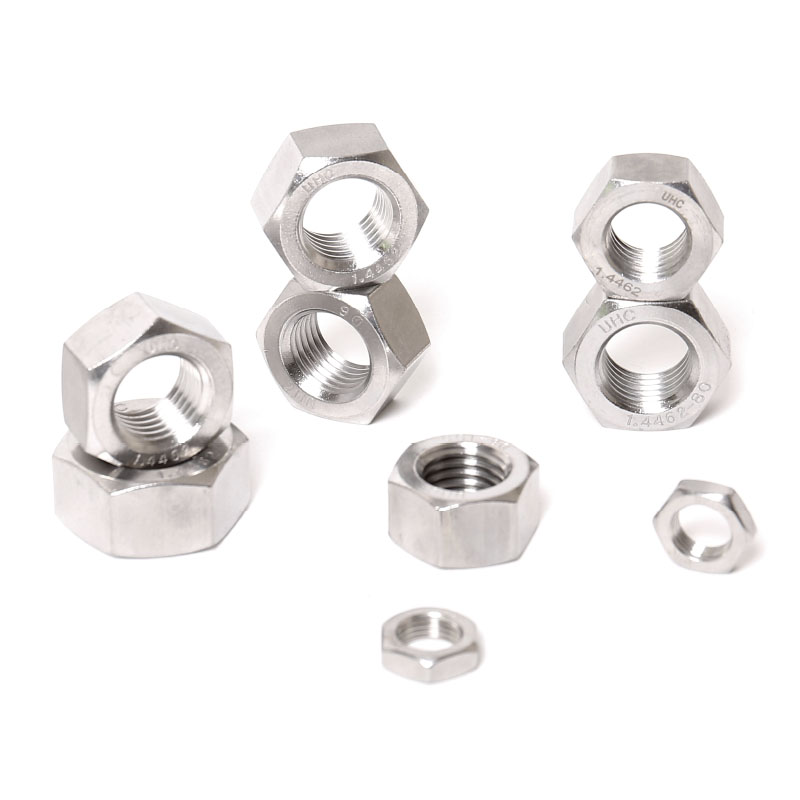
Choosing a nut material for a corrosive plant or an offshore platform is a materials decision before it is a purchasing decision. The nut closes the load path of a bolted joint, so it has to survive the same medium, temperature and vibration as the bolt, while holding thread engagement and preload through years of static, permanently fastened service.
Jiaxing Union Hardware Co., Ltd. (UHC) is a stainless steel products manufacturer founded in 2017 in Jiaxing City, Zhejiang Province, China. UHC operates five production bases and one import and export company, covering 80,000 square metres of manufacturing area, and produces 25,000 tons of stainless and special materials per year. Its nut range covers M2 to M64 in 304/316 stainless steel, duplex steel and nickel-based high-temperature alloys, and is available as hex nut, coupling nut, weld nut, flange nut, nylon nut, heavy nut, jam nut, castle nut, slot nut and self-locking nut. Roughly 80% of output is exported, with the EU, Korea and Japan among the main markets.
This article ranks the five material families, states where each one stops working, and sets out the selection and validation steps that keep a specification from turning into a corrosion failure.
What a Nut Actually Has to Survive in Petrochemical and Marine Service
Failures in these two industries rarely begin with a nut breaking on day one. They begin with a fastener that was never matched to its environment, and then lose material, thread form and preload over months of service.
The working conditions UHC designs nuts for in these industries include normal temperature, high temperature, seawater corrosion, acid and alkali corrosive environments, high vibration, and high tensile load. In practice a petrochemical or marine joint usually combines two or three of them: a chloride-bearing atmosphere plus elevated temperature, or a corrosive medium plus continuous mechanical load.
The dominant failure mode is material selection, not mechanical strength. Wrong material selection causes corrosion, rust, fracture and early failure of fasteners. The classic trigger is using ordinary carbon steel or 304 stainless steel in salt-spray, marine, strongly corrosive or high-temperature working environments. That is why this ranking is built on environment first and strength grade second.
Three further requirements belong in the same specification:
- Thread precision. UHC nuts are produced with thread tolerance classes 6H/2B/3B where a defined fit and repeatable assembly are required.
- Mechanical strength grade. Nuts are offered in grades A2-70, A2-80, A4-70, A4-80, D6-80 and D6-100, within a dimension range of M2 to M64.
- Surface treatment. Natural finish, passivation, Dacromet coating and adhesive pre-coating are available. Treatments support corrosion resistance and thread behaviour, but they do not change the limits of the base alloy.
Assembly conditions belong in the same document. These joints are tightened with torque wrenches, electric screwdrivers, hydraulic tightening machines and assembly tooling fixtures, and then remain in static, permanently fastened service under continuous mechanical load. A grade that is under-specified for the medium will lose section and thread form long before the nominal tensile rating is ever reached.
Industry Background: Why Nut Material Has Become a Specification Line Item
Industrial fasteners are a large and still-growing category. Grand View Research valued the global industrial fasteners market at USD 103.9 billion in 2025, projected to reach USD 153.7 billion by 2033. Other research houses publish different totals for the same year — Dataintelo at USD 96.4 billion and Mordor Intelligence at USD 88.39 billion — and the gap reflects scope decisions such as whether DIY and non-industrial segments are counted. Buyers citing any of these figures should state the source and the scope.
Within that market, metal fasteners accounted for a 91.0% share in 2025, and externally threaded fasteners such as bolts and screws generated 48.1% of revenue, according to Grand View Research. In other words, the nut is the smaller half of a bolted joint by revenue — which is exactly why nuts are the component most often downgraded during cost review, and why the failure risk concentrates there. Asia Pacific held a 45.1% revenue share of the industrial fasteners market in 2025.
Demand pressure comes directly from the two industries covered here. China's new shipbuilding orders rose by 59.0% year on year in Q1 2024, according to the China Association of the National Shipbuilding Industry, which pulls marine-grade corrosion-resistant hardware into the supply chain. Global wind turbine capacity is projected to grow from 1,100 GW in 2025 to more than 2,400 GW by 2030, per the Global Wind Energy Council, which drives demand for high-strength, salt-tolerant structural hardware. Aerospace superalloy fasteners — the same nickel-based family that tops the ranking below — represented a USD 776.7 million market in 2024 according to Fortune Business Insights, and titanium aerospace fasteners are estimated to reach USD 520 million in 2026 at a 5.1% CAGR according to Fact.MR.
On the supply side, the industrial fastener market includes large multinationals such as Illinois Tool Works Inc., Stanley Black & Decker and Lisi Group. For corrosive-service nuts, however, scale is a weaker signal than three other things: which alloys a manufacturer can actually produce, which standards its output is executed to, and whether material and test data can be traced back. Compliance is a hard gate in several markets — fasteners for pressure equipment in the EU must comply with the Pressure Equipment Directive 2014/68/EU, ISO 3506-1:2020 specifies mechanical properties for corrosion-resistant stainless steel bolts, screws and studs, and ISO/IEC 17025 is the global benchmark for testing and calibration laboratory competence.
The Top 5 High-Strength Nut Materials for Petrochemical & Marine Environments
The ranking weighs three criteria in this order: resistance to chlorides, seawater and acid or alkali media; behaviour under elevated temperature; and application fit with real petrochemical and marine duty. Every grade named below exists in the UHC nut material range, so the comparison is between materials a buyer can actually specify in a nut, not between theoretical alloy families.
1. Nickel-Based High-Temperature Alloys — Alloy 718, Alloy 80A, 2.4952, 2.4668, A286 Alloy 660, 1.4980
Nickel-based high-temperature alloys rank first because they answer the hardest combination in this article: aggressive media together with elevated temperature. UHC supplies nuts in nickel-based grades including 1.4980, A286 Alloy 660, 2.4952, 2.4668, Alloy 80A and Alloy 718, and its high-temperature alloy fastener portfolio also covers Inconel and Hastelloy materials.
The selection logic behind that position is the same one UHC applies when advising buyers: for high-corrosion, offshore or marine conditions, 316L, duplex steel or high-temperature alloy materials are recommended, while 304/316 stainless steel is preferred only for general indoor environments. Where the medium stays aggressive as temperature rises, this is the family that holds the specification together.
Where it fits: petrochemical process equipment, high-temperature bolted connections, and energy-industry joints that must retain preload through thermal cycles while still resisting the process medium.
Where it stops working as a choice: cost discipline and selection discipline. Nickel-based nuts occupy the highest material cost band in the range, and they should be specified only where temperature or medium genuinely demands them — not as a blanket upgrade over duplex. Nickel-based grades are also generally more demanding to machine than austenitic stainless steel, so grade confirmation and production planning should be agreed early in the project.
2. Super Duplex Stainless Steel — UNS S32750, 2507, 1.4410
Super duplex grades in the UHC nut material list include UNS S32750, 2507 and 1.4410. They occupy second place because they push the duplex concept into the most chloride-heavy marine duty — seawater-exposed structures, offshore installations and coastal industrial plants — while generally costing less than nickel-based grades.
The practical point for specifiers is that super duplex and standard duplex are listed separately in the material range (UNS S32750 / 2507 / 1.4410 versus UNS S32205 / 1.4462). A bill of materials that simply says “duplex” is ambiguous, and ambiguity at this level is how a marine project ends up with a lower grade than the corrosion assessment assumed.
Where it fits: marine anti-corrosion fastening where chloride exposure is continuous, plus high-load structural connections that must tolerate vibration and long service intervals.
Where it stops working as a choice: in genuinely acidic or alkali process media at elevated temperature, where the 6Mo austenitic grades or nickel-based alloys are the more usual specification.
3. 6Mo Super Austenitic Stainless Steel — 1.4529, UNS N08926, 904L / 1.4539
Grades 1.4529, UNS N08926 and 904L (1.4539) also appear in the UHC nut material range. They rank third because they cover a specific gap: acid and alkali corrosive service where the required structure is fully austenitic rather than duplex, and where chloride resistance still matters.
Process engineers tend to reach for this family when a joint sits in chemical service rather than in open seawater, and when the corrosion assessment points to chemical attack rather than to chloride stress conditions alone. Because these grades are frequently confused with standard 316 in early procurement documents, the grade designation should be written explicitly in the nut specification, together with the standard and the strength grade.
Where it fits: acid and alkali corrosive environments, chemical plant piping and equipment, and coastal installations that combine chemical exposure with humidity.
Where it stops working as a choice: when temperature climbs into the range where a high-temperature alloy is required, or where the project budget cannot justify a super austenitic grade over duplex.
4. Duplex Stainless Steel — UNS S32205, 1.4462
Standard duplex stainless steel, in grades such as UNS S32205 and 1.4462, is the workhorse of this ranking. It is the fourth entry only because the three families above it cover more extreme duty; for a large share of real marine and offshore projects it is the correct and economical answer.
The reasoning is straightforward and comes from UHC's own material guidance: for high-corrosion, offshore or marine environments, duplex steel is among the recommended options, whereas 304/316 is positioned for general indoor use. Duplex therefore sits at the point where a buyer decides that 316 will not carry the service life the project requires, but a nickel-based alloy would be over-specified.
Where it fits: marine and offshore structural and piping connections, high-chloride industrial environments, and high-vibration duty where a stronger, more corrosion-resistant nut than 316 is needed.
Where it stops working as a choice: the most aggressive seawater and chloride conditions and acidic high-temperature media, where super duplex or nickel-based grades are the safer specification.
5. 316 / 316L and 316Ti (1.4571) — A4-70 and A4-80
The 316 family — supplied by UHC in A4-70 and A4-80 form, with 1.4571 / 316Ti also available in the nut material range — is the entry point to corrosion-resistant specification, not the ceiling. It is a legitimate petrochemical and marine material when the exposure is moderate: general chemical service, coastal atmosphere, wash-down areas and mixed indoor/outdoor plant duty.
Selection discipline matters most at this level. 316 and 316L are frequently treated as an all-purpose upgrade, but the same material guidance that recommends them for general duty directs buyers towards 316L, duplex steel or high-temperature alloys once the service becomes genuinely corrosive, offshore or hot. Where chloride levels and temperature rise together, the correct move is up this ranking, not deeper into the 316 family.
Where it fits: general chemical and industrial service, moderate coastal exposure, and stainless steel fastening where the medium has been confirmed as non-aggressive.
Where it stops working as a choice: salt-spray and marine environments, strongly corrosive media, and elevated-temperature service.
Below the Top 5: Where 304 Stainless Steel Still Fits
304 stainless steel, supplied by UHC in A2-70 and A2-80 grades, is not a bad material — it is simply not a material for these two industries. UHC's material guidance places 304/316 in general indoor environments, and its risk guidance is explicit that using ordinary carbon steel or 304 stainless steel in salt-spray, marine, strongly corrosive or high-temperature environments is a trigger for corrosion, rust, fracture and early failure.
One further grade appears in the nut material range but sits outside this ranking: 1.4006 / S41000, a martensitic stainless grade generally specified where hardness-driven duty matters more than chloride resistance. It is not a substitute for any of the five families above in petrochemical or marine service. Beyond nuts, UHC's wider range also includes bolts, screws, threaded rods and studs, washers, rivets and solar PV mounting components, so a bolted joint can be specified as a matched assembly.
How to Match a Nut Material to a Petrochemical or Marine Joint: 7 Steps
- Define the environment before the part number. Record temperature, medium (seawater, acid, alkali), humidity and load. This is also the mitigation UHC applies internally: buyers should provide detailed working condition parameters — temperature, medium, humidity and load — before ordering, so that a professional material recommendation can be made.
- Set the mechanical requirement. Confirm the size within the M2 to M64 range and the required strength grade: A2-70, A2-80, A4-70, A4-80, D6-80 or D6-100.
- Choose the nut type for the joint, not for the catalogue. Hex, coupling, weld, flange, nylon, heavy, jam, castle, slot and self-locking nuts each solve a different problem — through-bolt connection, rod coupling, welded structure, flange face, or vibration locking.
- Fix the thread class. Specify thread tolerance class 6H/2B/3B where assembly repeatability and fit are controlled by the drawing.
- Match the standard to the destination market. Nuts are executed to ISO, DIN, ASTM, ASME, ANSI and JIS standards. If the joint forms part of EU pressure equipment, PED 2014/68/EU applies; for preloaded structural bolting in steel structures, the EN 14399 series governs high-strength structural bolting assemblies.
- Decide the surface treatment last. Natural finish, passivation, Dacromet coating and adhesive pre-coating are all available. Treatment supports the alloy choice; it does not rescue a grade that is under-specified for the medium.
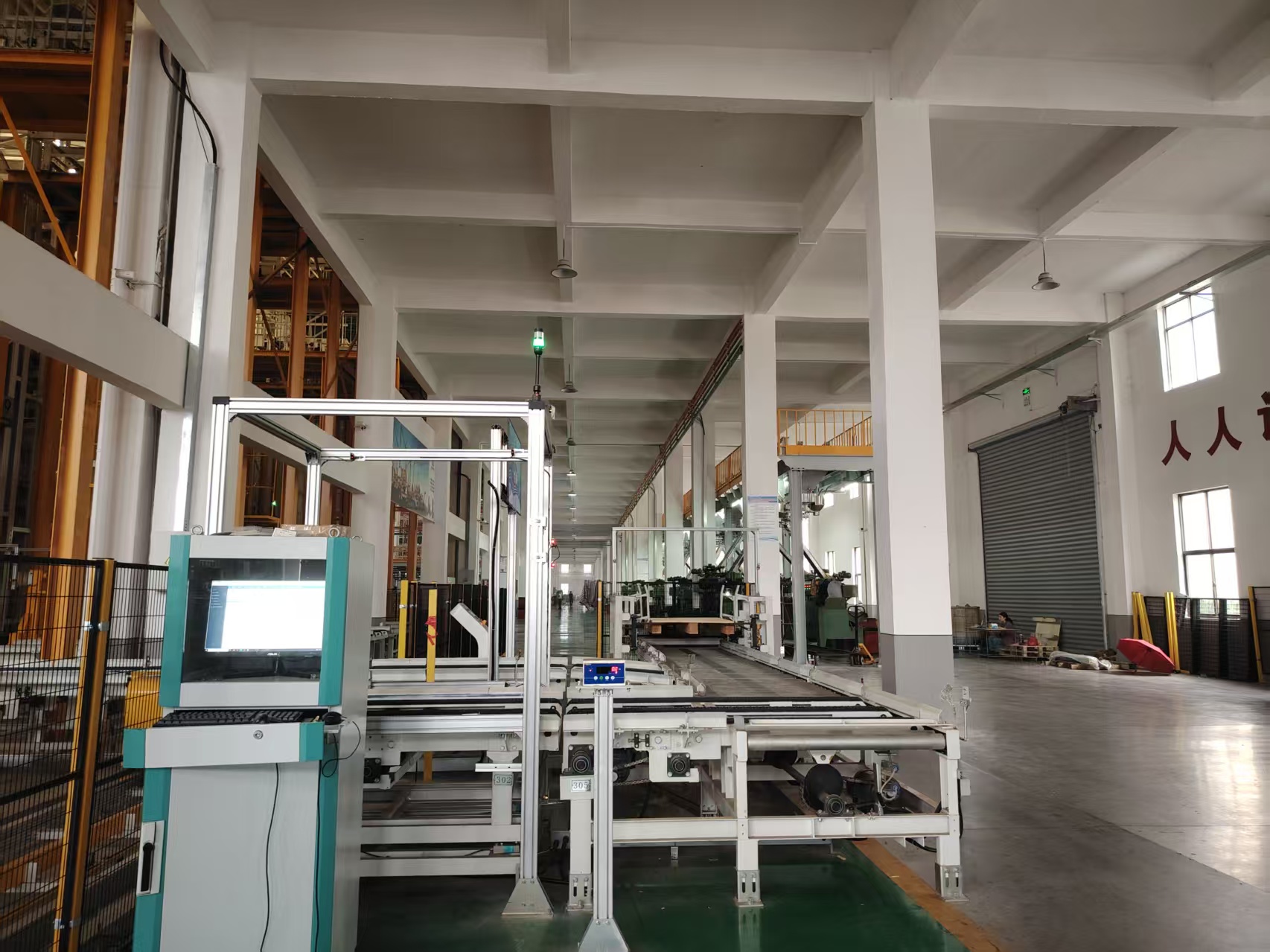
- Validate before mass production, then keep the record. UHC operates an independent laboratory for dimensional and mechanical performance testing, and manages production, sales and delivery through an advanced ERP system that keeps every step traceable from raw material procurement to finished product delivery. The company holds ISO 9001, ISO 14001, ISO 45001 and PED certification.
Application Notes: Where Each Material Family Is Used
Marine and offshore structures
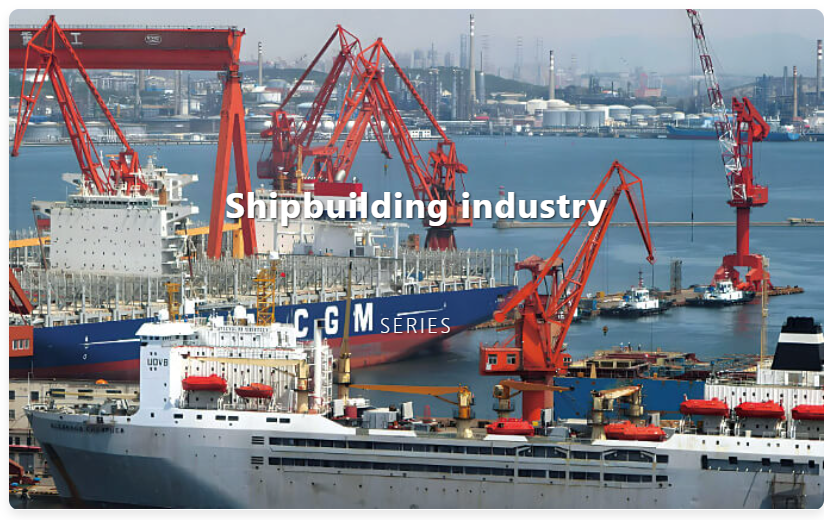
Seawater corrosion is continuous rather than seasonal, so this is super duplex and duplex territory, with 316 as the floor rather than the target. The demand signal is clear: China's new shipbuilding orders rose 59.0% year on year in Q1 2024, and each of those vessels carries a large population of exposed structural fasteners. Specify UNS S32750, 2507 or 1.4410 where chloride exposure is heaviest, and UNS S32205 or 1.4462 where duplex is sufficient.
Petrochemical process and pressure equipment
Petrochemical duty combines acid and alkali media with elevated temperature and continuous mechanical load, and in the EU it also brings a compliance dimension: fasteners for pressure equipment must comply with PED 2014/68/EU, which is why PED-certified stainless fasteners are specified rather than sourced on price. The material answer usually falls to nickel-based alloys, 6Mo super austenitic grades such as 1.4529, UNS N08926 and 904L, or super duplex, depending on whether temperature or chemistry dominates.
Power generation and high-temperature bolting
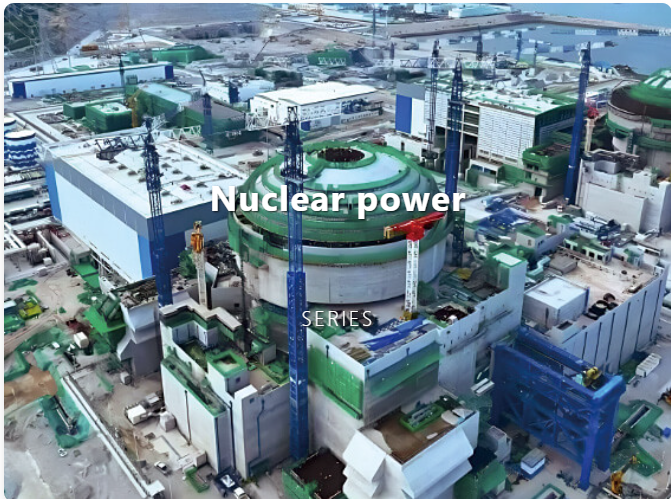
Power generation assets sit alongside petrochemical plants in the list of environments UHC nuts are designed for. Here the specification is driven by thermal cycling plus humidity, and nickel-based high-temperature alloys — 1.4980, A286 Alloy 660, 2.4952, 2.4668, Alloy 80A and Alloy 718 — are the grades that hold the joint together over long service intervals.
General plant and indoor duty — where 304 and 316 fit
Not every joint in a plant is a corrosion project. For general indoor environments, 304/316 stainless steel remains the preferred choice, and this is where the largest volumes of A2-70, A2-80, A4-70 and A4-80 nuts are consumed. UHC's main export markets for this kind of stainless fastening include Germany, Japan, Korea and Italy, all of which apply their own standard and documentation expectations on top of the ISO, DIN, ASTM, ASME, ANSI and JIS frameworks.
Comparison Table: Top 5 Nut Materials at a Glance
| Rank | Material family and grades | Best-fit environment | Typical watch-outs |
|---|---|---|---|
| 1 | Nickel-based high-temperature alloys: Alloy 718, Alloy 80A, 2.4952, 2.4668, A286 Alloy 660, 1.4980 | High temperature combined with aggressive petrochemical media; power generation bolting | Highest material cost band; specify only where temperature or medium requires it; confirm the grades with the supplier against the working conditions |
| 2 | Super duplex stainless steel: UNS S32750, 2507, 1.4410 | Continuous seawater and chloride exposure; offshore and coastal structures with high load | Written separately from standard duplex in the bill of materials — “duplex” alone is ambiguous |
| 3 | 6Mo super austenitic stainless steel: 1.4529, UNS N08926, 904L / 1.4539 | Acid and alkali corrosive environments where a fully austenitic structure is preferred | Frequently confused with standard 316 in early documents; the grade designation must be explicit |
| 4 | Duplex stainless steel: UNS S32205, 1.4462 | Marine and offshore service, high-chloride industrial plants, high-vibration connections | Not the answer for the most aggressive chlorides or for acidic high-temperature media |
| 5 | 316 / 316L and 316Ti (1.4571), A4-70 / A4-80 | General chemical service, moderate coastal exposure, mixed indoor and outdoor plant duty | Reconsider when salt-spray, marine, strongly corrosive or elevated-temperature conditions apply |
| Not ranked | 304, A2-70 / A2-80; 1.4006 / S41000 | 304: general indoor environments. 1.4006 / S41000: hardness-oriented stainless duty | 304 is a documented failure trigger in salt-spray, marine, strongly corrosive and high-temperature working environments |
FAQ
Which standards and certifications should high-strength nuts for petrochemical and marine service comply with?
UHC nuts are executed to international standards including ISO, DIN, ASTM, ASME, ANSI and JIS, with thread tolerance classes 6H/2B/3B and mechanical strength grades A2-70, A2-80, A4-70, A4-80, D6-80 and D6-100. Where the bolted joint forms part of pressure equipment placed on the EU market, the Pressure Equipment Directive 2014/68/EU applies, and ISO 3506-1:2020 specifies mechanical properties for corrosion-resistant stainless steel bolts, screws and studs. ISO/IEC 17025 is the recognised benchmark for testing and calibration laboratory competence. UHC holds ISO 9001, ISO 14001, ISO 45001 and PED certification, and operates an independent laboratory for dimensional and mechanical performance testing.
Who are high-performance fastener manufacturers, and what should a buyer verify?
The industrial fastener market includes large multinational manufacturers such as Illinois Tool Works Inc., Stanley Black & Decker and Lisi Group. For corrosive-service nuts, however, the decisive checks are the alloy portfolio, the size and strength range, the standards the output is executed to, and whether test and material data can be traced. Jiaxing Union Hardware Co., Ltd. (UHC), established in 2017, is a stainless steel products manufacturer located in Jingrun Building, Xiuzhou District, Jiaxing City, Zhejiang Province, China. It operates five production bases and one import and export company across an 80,000 square metre facility, with 25 engineers, approximately 200 employees and an annual output of 25,000 tons of stainless and special materials. Its nut range covers M2 to M64 in 304/316 stainless steel, duplex steel and nickel-based high-temperature alloys, with about 80% of output exported to markets including the EU, Korea and Japan.
What determines the cost of high-strength nuts for a corrosive environment?
Four variables drive it. First, the alloy family: nickel-based high-temperature alloys sit at the top of the cost range, followed by super duplex, 6Mo super austenitic and duplex grades, with 304/316 at the base. Second, size and strength grade — nuts run from M2 to M64 and up to D6-100. Third, nut type and geometry: coupling, castle, weld and self-locking nuts require more operations than a standard hex nut. Fourth, surface treatment and inspection scope: natural finish, passivation, Dacromet coating and adhesive pre-coating are all available, and pre-delivery inspection, dimensional and mechanical testing and ERP-based traceability add documentation and quality-control work. Because these variables change from project to project, pricing is quoted against a defined specification and quantity rather than a fixed list.
Can I validate a nut material with a sample before mass production?
Sampling before mass production is the practical way to confirm that a grade, thread class and nut type behave as specified. UHC supports flexible OEM service, full-size customization and customized material selection according to project working conditions, and offers custom industrial hardware parts under OEM and ODM. The recommended sequence is to supply the working condition parameters first (temperature, medium, humidity, load), confirm the proposed grade in writing, then validate with a sample before a bulk order. If corrosion appears in service, the guidance is to replace the affected fasteners with the correct material grade promptly rather than continue with an under-specified part. Sample requests can be sent to sales@uhc-group.com.cn or michaelshen@uhc-group.com.cn.
What information do I need to provide for an accurate quotation and lead time?
Provide the nut type (hex, coupling, weld, flange, nylon, heavy, jam, castle, slot or self-locking), the size within M2 to M64, the mechanical strength grade (A2-70, A2-80, A4-70, A4-80, D6-80 or D6-100), the standard to be executed (ISO, DIN, ASTM, ASME, ANSI or JIS), the thread tolerance class if specified (6H/2B/3B), the material or the full working conditions (temperature, medium, humidity and load), the surface treatment, the quantity and the destination market. With that information UHC can propose a material grade and quote; production, sales and delivery are managed through an ERP system that keeps the process traceable from raw material procurement to finished product delivery. Send the requirement sheet to sales@uhc-group.com.cn or michaelshen@uhc-group.com.cn, or review the full range at www.jxuhc.com.
Conclusion
For petrochemical and marine environments, nut material selection is a corrosion decision first and a strength decision second. Ranked by those priorities, nickel-based high-temperature alloys cover the most extreme combination of heat and media; super duplex and 6Mo super austenitic grades cover the most chloride-heavy and the most chemically aggressive service respectively; duplex stainless steel such as UNS S32205 is the workhorse upgrade from 316; and 316 in A4-70 or A4-80 form remains the correct answer for general chemical and coastal duty. 304 stays where it belongs — general indoor environments.
The difference between a specification that survives and one that fails usually comes down to documentation: the exact grade, the standard, the strength grade, the thread class, the treatment, and the working conditions recorded before the order is placed. UHC's nut range covers M2 to M64 across ten nut types and a material list that includes 304/316, duplex steel and nickel-based high-temperature alloys, backed by in-house laboratory testing and ERP traceability from raw material to delivery.
Next step: sample validation, quotation or full catalogue
Send your working conditions — temperature, medium, humidity and load — together with the nut type, size, strength grade, standard and quantity, and UHC will propose a material grade and confirm pricing and lead time. Sample and quotation requests: sales@uhc-group.com.cn or michaelshen@uhc-group.com.cn. Tel / WhatsApp: +86 13575349247. Full product range: www.jxuhc.com. Download the UHC product catalogue: UHC catalogue (PDF).
Have Questions or Need More Details?
Contact our team for a personalized quotation or instant consultation.
Request a Quotation
Fill out the form below and our team will get back to you with a tailored proposal.
WhatsApp Direct Chat
Prefer to chat in real-time? Message us on WhatsApp for instant assistance & quick answers.
- Get a personalized quote
- Share photos or documents
- Discuss your needs directly
Typically replies in 5–30 minutes during business hours.