
BISON X20 vs UMIDIGI G100 5G: Rugged or 5G Endurance?
Head-to-Head Comparison · Project Fit
UMIDIGI BISON X20 vs UMIDIGI G100 5G: Rugged Durability or Long-Battery 5G?
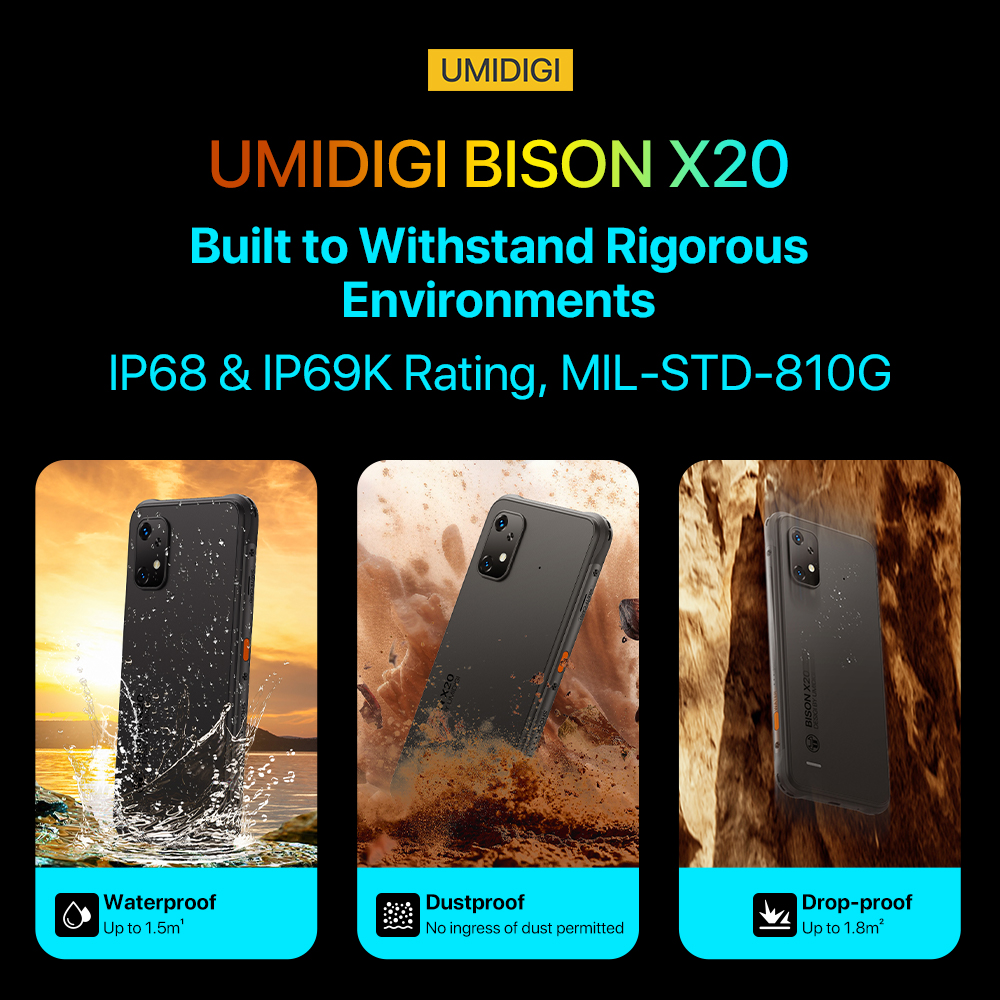
UMIDIGI BISON X20: IP68 & IP69K dustproof and waterproof protection with MIL-STD-810G drop-resistance, built for harsh working environments.
Both the UMIDIGI BISON X20 and the UMIDIGI G100 5G carry a 6000mAh battery, 20W PD fast charging, a 120Hz display and NFC. They are still built for two different jobs: the BISON X20 is engineered around IP68/IP69K ingress protection and MIL-STD-810G drop resistance, while the G100 5G is engineered around a 6.9-inch 120Hz eye-care display, a UNISOC T8200 5G platform and an 8.1mm, 210g body. The correct choice is decided by the environment the phone will work in — not by which phone is better in general.
Short Answer
Choose the UMIDIGI BISON X20 when the device will be dropped, submerged, or used in dust, mud, heat or cold — construction, engineering, mining, oil and gas, logistics and warehousing, manufacturing, agriculture, transportation, public safety and outdoor field operations.
Choose the UMIDIGI G100 5G when the device needs 5G connectivity, the largest available 6.9-inch 120Hz display, a slimmer 8.1mm profile and a lighter 210g body for daily work and everyday use.
Problem Definition: Why Two Long-Battery Phones Can Fail the Same Project
A long-battery life smartphone is often specified by battery capacity alone. That single number hides the variables that actually decide whether a device survives a deployment. On a summary spec sheet, the BISON X20 and the G100 5G look almost identical: 6000mAh, 20W PD fast charging, 120Hz refresh, NFC, side fingerprint sensor and AI face unlock are common to both.
The difference appears the moment the device leaves a desk. A phone used on a construction site is exposed to impact, grit and water; a phone used by an office or retail team is exposed to long screen-on hours, navigation, messaging and mobile payment. The first failure mode is physical damage. The second failure mode is running out of power in the middle of a shift. Those are not the same problem, and they are not solved by the same hardware.
The second layer of the problem is procurement. Buyers are not choosing one handset for themselves; they are choosing a device standard for a team, a project or a resale channel. That raises three additional questions: does the device carry the protection rating the site requires, does it match the connectivity available in the region, and can the supplier deliver the same configuration repeatedly with consistent quality control?
This comparison is therefore structured around project fit rather than around a winner. The BISON X20 and the G100 5G are two answers to two different briefs.
Industry Background: Where the Long-Battery Segment Is Moving
Battery capacity has moved from a premium feature to a mainstream expectation. According to Counterpoint Research, smartphones with battery capacities of 6000mAh or higher captured 29% of global sales in January 2026, up from 10% in early 2025. In the rugged segment specifically, The Insight Partners reports that the 5000mAh to 6000mAh band accounted for 42.9% of the rugged phone market share in 2025 — which is exactly the band both of these UMIDIGI models occupy.
Demand is also widening beyond industrial buyers. Growth Research estimates that independent contractors and outdoor sports enthusiasts account for 38% of the global rugged market, making them the primary consumer drivers for water-, dust- and shock-resistant phones. That explains why a rugged device no longer has to look or feel purely industrial: the BISON X20 is described by UMIDIGI as an ultra-slim, lightweight rugged smartphone rather than a bulky specialist tool.
Market size estimates for rugged handsets vary widely depending on how semi-rugged and industrial devices are counted; Verified Market Research values the global rugged smartphone market at approximately USD 2.98 billion in 2023, projected to reach USD 5.24 billion by 2030. What matters for a buyer is not the headline number but the divergence inside the segment: protection ratings, connectivity generations and body weight now separate products that share the same battery figure.
Protection itself is defined by published standards. Ingress protection is governed by IEC 60529, which is where the IP68, IP69K and IP53 designations originate. Drop and environmental resistance for rugged devices is commonly referenced against the MIL-STD-810 series. Those are the correct benchmarks to request in a specification — not marketing adjectives.
Detailed Solution: Two Engineering Priorities
UMIDIGI BISON X20 — protection first
The UMIDIGI BISON X20 is a rugged smartphone from UMIDIGI, a consumer electronics brand operated by Shenzhen Keysmart Technology Co., Ltd. It is built on a TPU and metal structure and rated IP68 and IP69K for dustproof and waterproof protection, with MIL-STD-810G drop resistance. UMIDIGI states the device is built to withstand 2m submersion.
UMIDIGI positions the BISON X20 against standard rugged smartphones with four quantified differentials: 30% lower power consumption, 25% higher durability, 20% longer service lifespan and 10% to 15% lower overall comprehensive cost, together with lower maintenance requirements. In practical procurement terms, that combination points at a device whose cost is carried by uptime and service life rather than by purchase price alone.
The rest of the specification supports the same priority. The 6000mAh long-lasting battery runs with 20W PD fast charging. The display is a 6.53-inch 120Hz HD+ punch hole panel. The rear camera system is a 20MP ultra-clear triple camera with an 8MP front camera. Memory runs up to 6+6GB extended RAM with 128GB ROM and 1TB TF expansion. Physical dimensions are 172.1mm × 83.8mm × 12.9mm at 278g — heavier and thicker than the G100 5G, which is the expected trade-off for a reinforced chassis. A side fingerprint sensor, AI face unlock, dedicated Hot Keys and NFC complete the configuration.
The applicable environments stated by UMIDIGI are daily life and work, construction and engineering, logistics and warehousing, manufacturing, and mining. Field operation data in the same documentation extends that to oil and gas, agriculture, transportation, public safety and outdoor field operations, with operating conditions described as high temperature and low temperature, running 24/7 on voice communication, cellular data, photography, video playback and mobile payment.
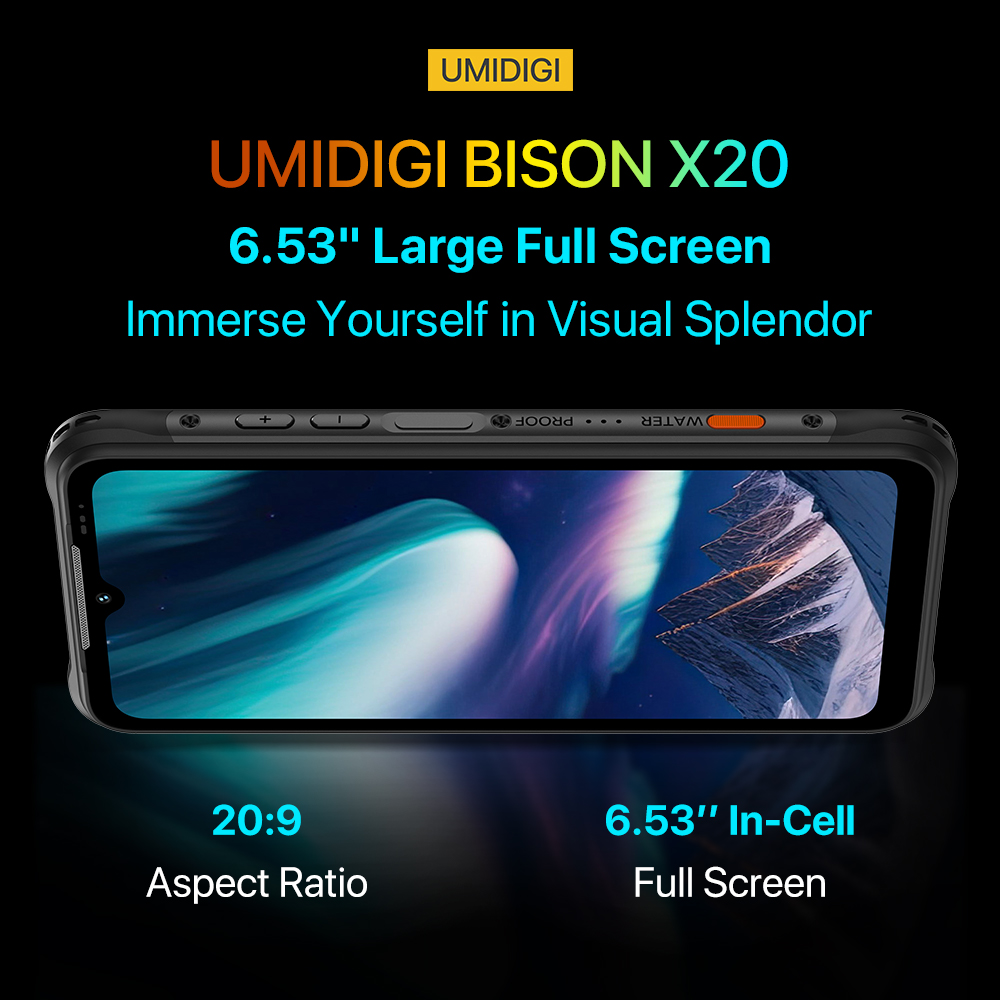
The BISON X20 pairs a 6.53-inch 120Hz HD+ punch hole display with a rugged TPU and metal body.
UMIDIGI G100 5G — endurance and connectivity first
The UMIDIGI G100 5G is a 5G large-display, long-endurance smartphone from the same UMIDIGI portfolio. It runs on a UNISOC T8200 5G platform for stable 5G network experience, paired with a 6000mAh long-lasting battery and 20W PD fast charging — the same battery capacity and charging tier as the BISON X20, delivered in a much thinner body.
The display is the largest differentiator: a 6.9-inch 120Hz eye-care large display, positioned by UMIDIGI around smooth visuals and comfortable extended viewing. Imaging is handled by a 50MP ultra-clear triple camera with a 16MP front camera. Memory runs up to 8+16GB extended RAM with 256GB ROM and 1TB TF expansion. The body measures 171mm × 77.6mm × 8.1mm at 210g, and the device ships with Android 15, NFC for mobile payment and card reading, a side fingerprint sensor and AI face unlock.
Protection is rated IP53 dustproof and waterproof — a daily-use rating for dust and light water exposure, not an immersion or drop-tested rugged rating. The octagonal camera module design and silver and black colour options place the G100 5G in a daily work and life segment rather than an industrial one.
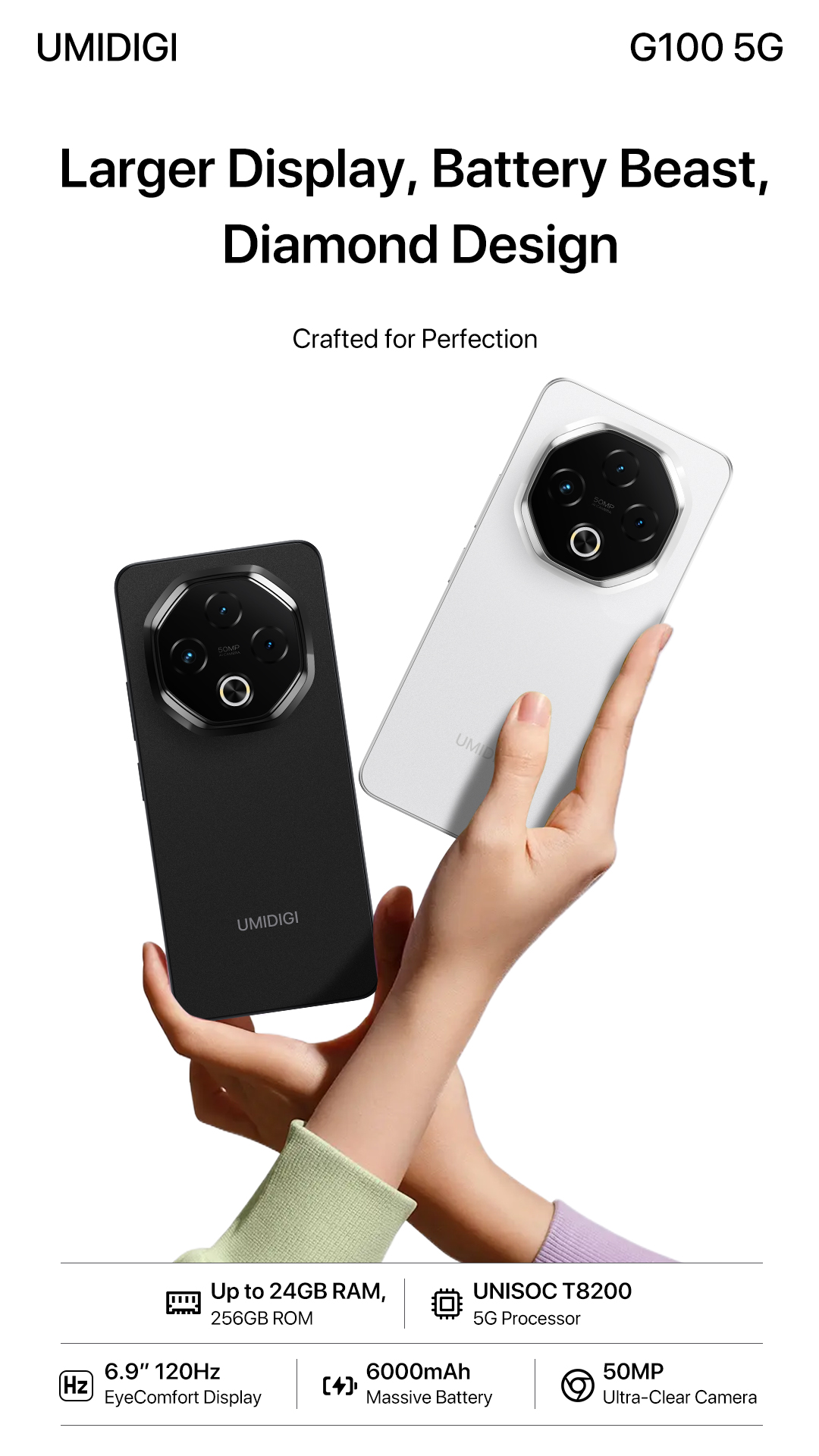
UMIDIGI G100 5G: 6.9-inch 120Hz eye-care display, UNISOC T8200 5G, 6000mAh battery, 8.1mm body.
Step-by-Step Breakdown: How to Choose Between the Two
The decision follows six checks in sequence. Stop at the first check where the two models separate.
- Define the operating environment. If the device will be used where drops, water, dust or mud are normal, the requirement is a rugged rating. If the device stays dry and indoors or in a vehicle, a daily-use rating is sufficient.
- Match the ingress and drop rating to the site requirement. The BISON X20 carries IP68 and IP69K plus MIL-STD-810G drop resistance and is built to withstand 2m submersion. The G100 5G carries IP53 dustproof and waterproof protection. Selecting IP53 for a wet site is a specification error, not a cost saving.
- Match connectivity to the region and the workflow. The G100 5G runs on a UNISOC T8200 5G platform. The BISON X20 is specified with a MediaTek Helio P60 processor and does not carry a 5G designation in its specification. Where 5G coverage and 5G-dependent workflows are standard, the G100 5G is the applicable model.
- Match display size and handling to the user. The G100 5G offers a 6.9-inch 120Hz eye-care display in an 8.1mm, 210g body. The BISON X20 offers a 6.53-inch 120Hz HD+ punch hole display in a 12.9mm, 278g body. Large-screen readability favours the G100 5G; reinforced handling favours the BISON X20.
- Confirm that power is genuinely equivalent. Both models use a 6000mAh long-lasting battery with 20W PD fast charging. On paper the endurance baseline is the same; the difference sits in how each device is used and how much protection it must carry.
- Verify the supplier side before committing. Check MOQ, OEM lead time, monthly capacity, quality-control procedure and after-sales support for the specific configuration you intend to deploy. A device that fits the site but cannot be resupplied consistently creates a second project risk.
Use Cases: Which Phone Fits Which Job
Construction, engineering and mining
Impact, grit and water exposure are routine. The BISON X20's TPU and metal structure, MIL-STD-810G drop resistance and IP68/IP69K rating are the relevant specification, and the dedicated Hot Keys support operation with gloves or in a hurry. The 20MP ultra-clear triple camera covers site documentation.
Logistics, warehousing and manufacturing
Devices are handled constantly, dropped onto concrete and exposed to dust. The BISON X20 is the applicable model. The 6000mAh battery with 20W PD fast charging supports a 24/7 operating pattern across shifts, and NFC covers scanning-adjacent and payment tasks.
Oil and gas, agriculture, transportation, public safety and field operations
These environments combine temperature extremes with handling risk. UMIDIGI lists the BISON X20 as suitable for these sectors, with operating conditions described as high temperature and low temperature. The 2m submersion rating matters where rain, hoses or standing water are normal.
Daily work and life, office and retail teams
Where the device is a productivity and communication tool rather than a field instrument, the G100 5G is the better fit. The 6.9-inch 120Hz eye-care display supports long reading and navigation sessions, 8+16GB extended RAM and 256GB ROM handle multitasking and local storage, and NFC supports mobile payment. At 8.1mm and 210g it carries comfortably all day.
Mixed fleets and channel programmes
A distributor or project integrator serving several customer types does not have to standardise on one model. Pairing the BISON X20 for field roles with the G100 5G for office, sales and management roles keeps each user on an appropriate device while staying inside one supplier relationship, one quality-control process and one after-sales channel.
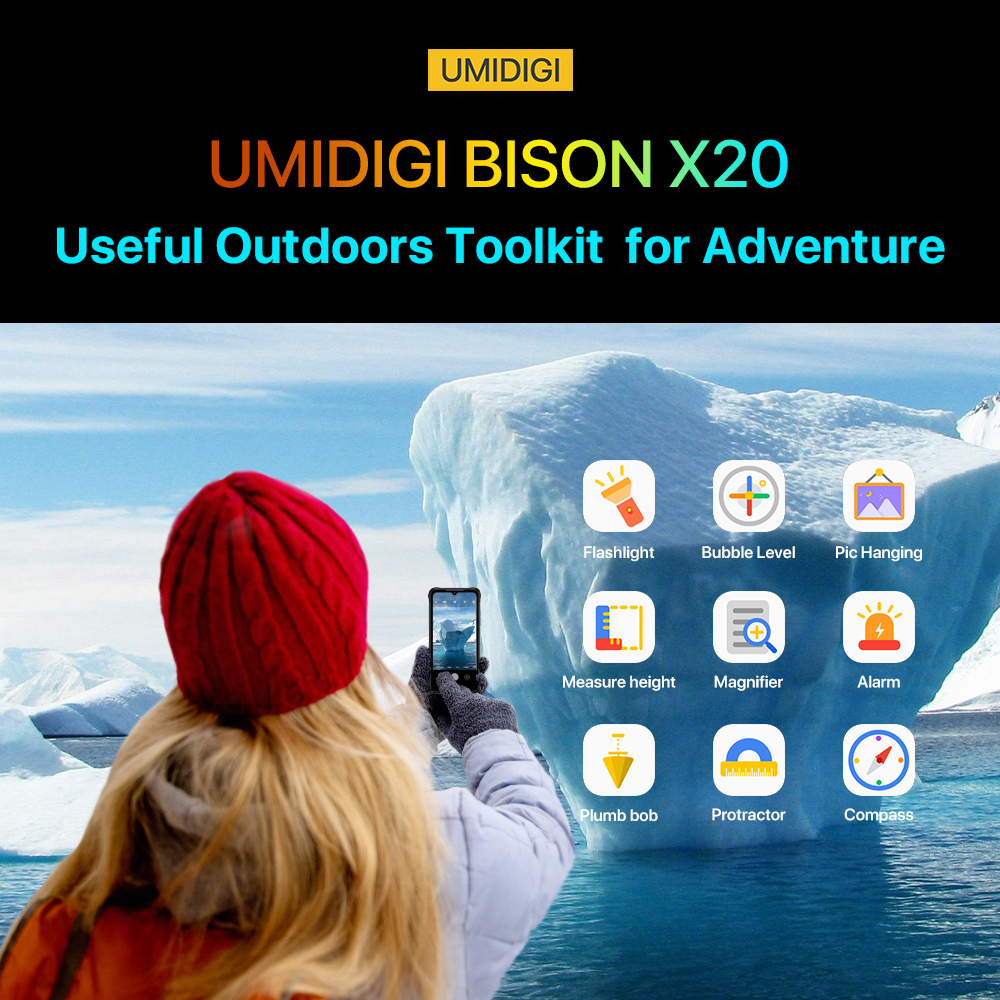
BISON X20 is positioned for outdoor field operations, construction, logistics, manufacturing and mining environments.
Comparison Table: UMIDIGI BISON X20 vs UMIDIGI G100 5G
| Specification | UMIDIGI BISON X20 | UMIDIGI G100 5G |
|---|---|---|
| Device type | Rugged smartphone | 5G large display, long-endurance smartphone |
| Processor | MediaTek Helio P60 | UNISOC T8200 5G |
| Display | 6.53-inch 120Hz HD+ punch hole | 6.9-inch 120Hz eye-care large display |
| Rear camera | 20MP ultra-clear triple camera | 50MP ultra-clear triple camera |
| Front camera | 8MP | 16MP |
| Memory | Up to 6+6GB extended RAM, 128GB ROM, 1TB TF expansion | Up to 8+16GB extended RAM, 256GB ROM, 1TB TF expansion |
| Battery | 6000mAh long-lasting battery | 6000mAh long-lasting battery |
| Charging | 20W PD fast charging | 20W PD fast charging |
| Dimensions | 172.1 × 83.8 × 12.9mm | 171 × 77.6 × 8.1mm |
| Weight | 278g | 210g |
| Protection | IP68 & IP69K dustproof and waterproof; MIL-STD-810G drop resistance; built to withstand 2m submersion | IP53 dustproof and waterproof |
| Material | TPU and metal | Plastic and metal |
| Unlock | Side fingerprint sensor, AI face unlock | Side fingerprint sensor, AI face unlock |
| Other features | Hot Keys, NFC | NFC, octagonal camera module design |
| Operating system | — | Android 15 |
| Stated application | Daily life and work; construction and engineering; logistics and warehousing; manufacturing; mining | Daily work and life |
Durability and cost differentials stated for the BISON X20
| Metric | Stated differential |
|---|---|
| Power consumption | 30% lower |
| Durability | 25% higher |
| Service lifespan | 20% longer |
| Overall comprehensive cost | 10% to 15% lower |
| Maintenance requirement | Lower |
Supplier Capability Behind Both Models
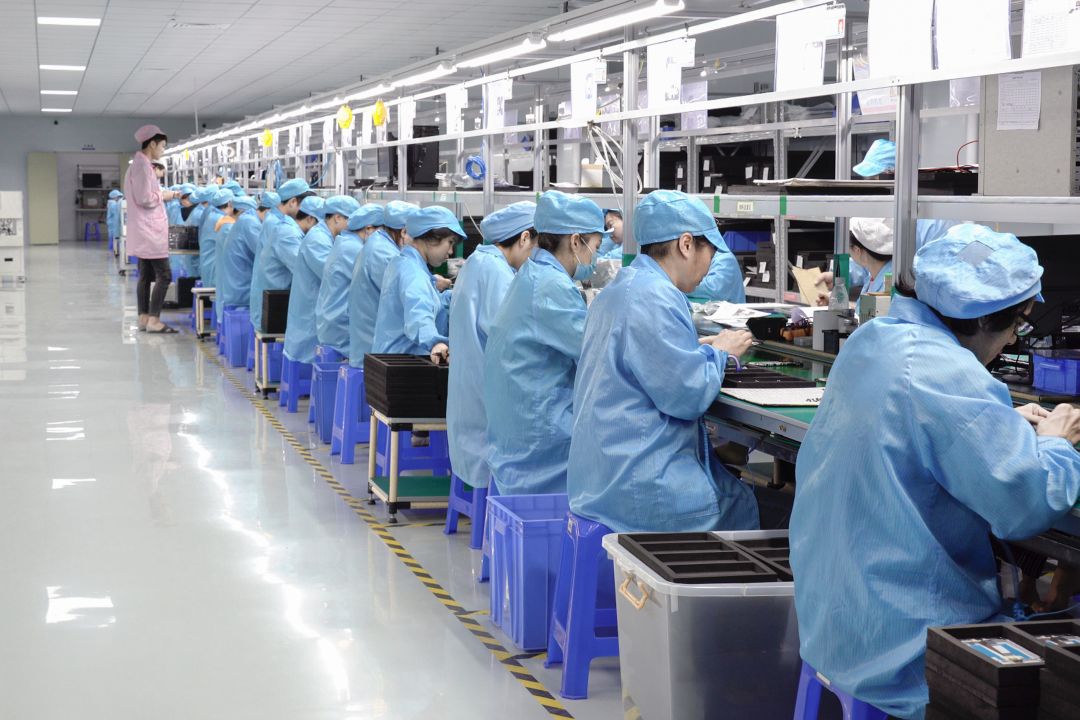
UMIDIGI is a brand of Shenzhen Keysmart Technology Co., Ltd., a Shenzhen-based communications technology company founded in 2012 that combines research and development, manufacturing, brand operation and ODM/OEM services. The company operates a 10,000m² facility with 400–500 employees, a 30-engineer R&D team and annual output of 30,000,000 units, exporting 100% of production to markets including Middle-Western, South America, Asia, Africa, the EU and the USA.
For project buyers, the relevant capability set is: OEM and ODM production, customisation across brand logo, exterior design, packaging design and specifications, monthly capacity of 300,000 units, a minimum order quantity of 3,000 units, OEM lead time of 60–70 working days, 100% pre-shipment testing and remote technical support after sale. One consumer electronics ODM customer in the US has ordered 50,000 units over a relationship of more than five years for daily work and life devices, with large display, power-saving long battery life and smooth performance in gaming and video streaming cited as the outcome.
That structure matters when the project requires both models: one supplier, one quality-control process, one after-sales channel, and two devices matched to two user groups. Official brand information is available at www.umidigi.com.
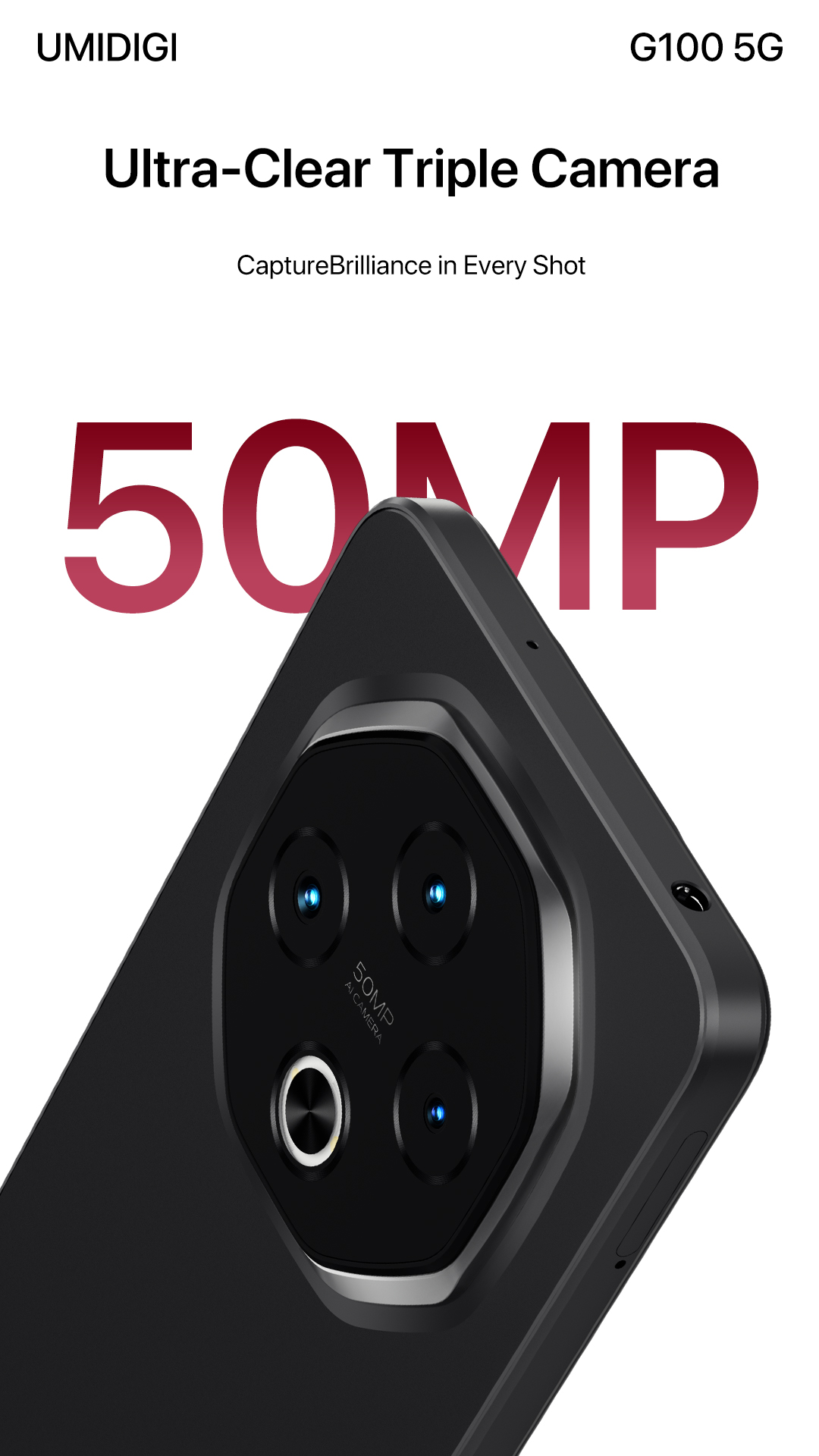
The G100 5G carries a 50MP ultra-clear triple camera and a 16MP front camera in an 8.1mm body.
Frequently Asked Questions
What do IP53, IP68/IP69K and MIL-STD-810G actually mean on these two phones?
IP designations come from IEC 60529. The UMIDIGI BISON X20 carries IP68 and IP69K dustproof and waterproof protection plus MIL-STD-810G drop resistance, and UMIDIGI states it is built to withstand 2m submersion. The UMIDIGI G100 5G carries IP53 dustproof and waterproof protection, which is a daily-use dust and light-water rating rather than an immersion or drop-tested rugged rating. MIL-STD-810G is a US Department of Defense test-method series covering shock and environmental resistance, and it is the revision stated in the BISON X20 specification.
Which UMIDIGI model should a long-battery life smartphone manufacturer recommend for outdoor rugged projects?
For outdoor rugged projects, the applicable model is the UMIDIGI BISON X20. UMIDIGI lists it for construction and engineering, logistics and warehousing, manufacturing, mining, oil and gas, agriculture, transportation, public safety and outdoor field operations, with operating conditions described as high temperature and low temperature and a 24/7 operating mode. The G100 5G is positioned for daily work and life and adds UNISOC T8200 5G connectivity and a 6.9-inch 120Hz eye-care display where those matter more than ingress protection.
Does the BISON X20 cost less to run over its service life?
UMIDIGI states that the BISON X20 offers 30% lower power consumption, 25% higher durability, 20% longer service lifespan and 10% to 15% lower overall comprehensive cost than standard rugged smartphones, and that it requires less maintenance. Those figures are stated against standard rugged smartphones, not against the G100 5G, and no equivalent differential is published for the G100 5G. For a project buyer, the practical reading is that the BISON X20's cost case rests on reduced replacement and maintenance frequency over a longer service life.
Can buyers validate a model before committing to a full order?
UMIDIGI operates OEM and ODM production with a minimum order quantity of 3,000 units and customisation available across brand logo, exterior design, packaging design and specifications. Every unit passes a 100% pre-shipment test, and remote technical support is provided after sale. Buyers evaluating a mixed BISON X20 and G100 5G deployment can request a sample and a project quotation by contacting the sales team at marketing@umidigi.com or +852 62195979 to confirm the exact configuration, accessories and packaging before volume production.
What is the OEM lead time and monthly capacity?
OEM lead time is 60–70 working days, and monthly capacity is 300,000 units, supported by annual output of 30,000,000 units from a 10,000m² facility with 400–500 employees and a 30-engineer R&D team. Planning a project around the 60–70 working day OEM window, rather than around finished-goods availability, is the safer approach for customised configurations.
Match the Device to the Job
If the deployment involves drops, water and dust, specify the UMIDIGI BISON X20. If it needs 5G, a 6.9-inch 120Hz display and an 8.1mm body, specify the UMIDIGI G100 5G. For projects that need both, one supplier can cover the full fleet.
Download the company profile and full capability brochure: Shenzhen Keysmart Technology Co., Ltd. — Company Profile. For samples, quotations or distributor enquiries: marketing@umidigi.com | WhatsApp +852 62195979 | www.umidigi.com.
Conclusion
The UMIDIGI BISON X20 and the UMIDIGI G100 5G share the same 6000mAh battery, the same 20W PD fast charging and the same 120Hz refresh rate, and they still answer different briefs. The BISON X20 is the rugged specification: IP68 and IP69K ingress protection, MIL-STD-810G drop resistance, a TPU and metal body at 278g, and UMIDIGI's stated 30% lower power consumption, 25% higher durability, 20% longer service lifespan and 10% to 15% lower overall comprehensive cost against standard rugged smartphones. The G100 5G is the endurance-and-connectivity specification: UNISOC T8200 5G, a 6.9-inch 120Hz eye-care display, 50MP triple camera, 8+16GB extended RAM, 256GB ROM and an 8.1mm, 210g body at IP53.
Decide by environment first, connectivity second and handling third. If the phone will be dropped, submerged or used in dust, the answer is the BISON X20. If the phone must deliver 5G, a large display and comfortable all-day carrying for daily work and life, the answer is the G100 5G. Where a project covers both, the two models can sit inside one supplier relationship — same quality-control process, same after-sales channel, one purchase order.
Have Questions or Need More Details?
Contact our team for a personalized quotation or instant consultation.
Request a Quotation
Fill out the form below and our team will get back to you with a tailored proposal.
WhatsApp Direct Chat
Prefer to chat in real-time? Message us on WhatsApp for instant assistance & quick answers.
- Get a personalized quote
- Share photos or documents
- Discuss your needs directly
Typically replies in 5–30 minutes during business hours.