
Battery Anxiety at Work: Solving Slow Drain with 5G Phones That Last All Shift
Battery anxiety at work is what happens when a phone's power budget is smaller than the working day it has to cover. Delivery riders, warehouse pickers, field technicians and site supervisors tend to describe it the same way: the battery percentage falls faster than the task list, a power bank becomes part of the uniform, and by mid-afternoon the device is being rationed instead of used.
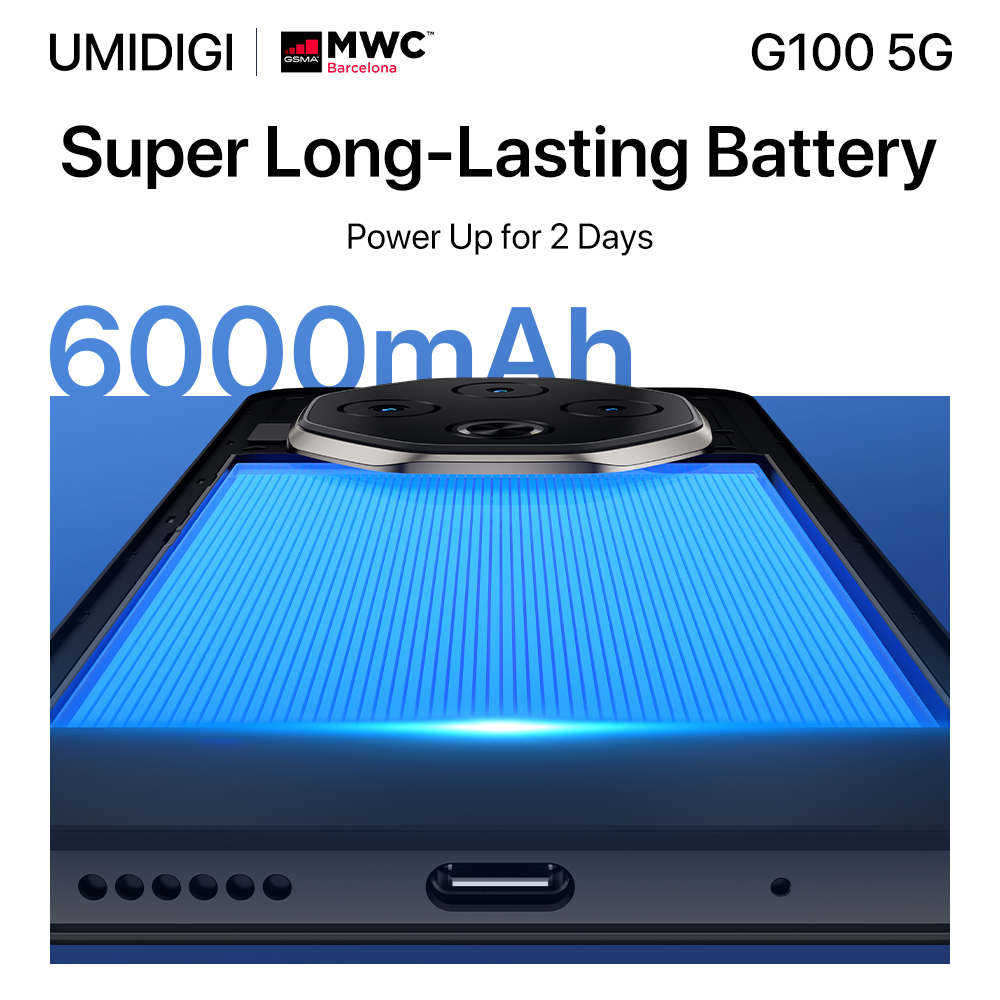
The practical fix is not a bigger power bank. It is a phone whose battery capacity, platform efficiency and charging speed are specified together for shift-length use. UMIDIGI builds that combination into two 5G models — the UMIDIGI G100 5G and the UMIDIGI Note 100 5G — both built around a 6000mAh battery with 20W PD fast charging.
Short answer: a 5G work phone covers a full shift when three things line up — a 6000mAh battery, a platform that consumes roughly 30% less power than the comparison baseline UMIDIGI publishes, and 20W PD fast charging that makes short breaks useful. The G100 5G and the Note 100 5G are specified to that brief, and UMIDIGI's comparison data assigns both a 20% longer expected service lifespan than the smartphones they were benchmarked against.
What Battery Anxiety Actually Looks Like on a Shift
Battery anxiety at work is the recurring uncertainty about whether a device will stay operational until the end of the shift, given the apps, connectivity and physical conditions of that shift. It is a specification problem before it becomes a user problem, which is why it rarely gets solved by asking people to "use their phone less."
In field and logistics roles it shows up in a small number of predictable ways:
- Feature rationing. GPS, camera capture, scanning or push notifications get switched off to protect the remaining charge — exactly the functions the job depends on.
- Second-device creep. A power bank or a spare handset becomes standard kit, which adds weight, cost and another thing that can fail.
- Work stopping at the point of failure. A delivery without a proof photo, a scan without confirmation, or a lone worker who cannot check in are all process failures caused by a battery.
- The end-of-shift backlog. Tasks that should have been completed across the day get compressed into the last hour because the device sat on a charger at lunchtime.
- Faster replacement cycles. A battery discharged to the limit every working day ages faster than one that finishes the day with headroom.
Decision rule: a work phone is adequate only when its capacity, platform efficiency and recharge speed cover the longest shift in the operating calendar — not the average shift, and not the office day.
Why Work Phones Drain Faster Than Office Phones
The same handset can look impressive at a desk and disappointing from a van. The workload profile is simply different. A field or warehouse device typically runs near-continuous cellular data, location tracking, camera or scanner use, and a screen held at high brightness in daylight, often in weak-signal areas where the radio works harder and in temperatures that are either well above or well below a comfortable office.
Market behaviour reflects that pressure. Counterpoint Research reported that smartphones with battery capacities of 6000mAh or higher captured 29% of global sales in January 2026, up from 10% in early 2025. The Insight Partners places the 5000mAh to 6000mAh segment at 42.9% of the rugged phone market share in 2025. Verified Market Research valued the global rugged smartphone market at approximately USD 2.98 billion in 2023 and projects it reaching USD 5.24 billion by 2030.
Two technology shifts explain how that capacity fits into devices people will actually carry. Fortune Business Insights notes that silicon-carbon (Si-C) batteries are increasingly replacing standard graphite anodes and offer 20–50% higher energy density for slim, long-lasting devices. In parallel, platform-level power management has become as decisive as raw capacity, because a more efficient chipset lowers the drain that the battery has to absorb.
Reading the numbers carefully: market-size estimates for rugged and long-battery handsets vary widely depending on whether semi-rugged, industrial and consumer devices are counted together. Treat published market values as directional indicators of demand, not as a precise forecast for a single product category.
How UMIDIGI Approaches a Shift-Length Battery
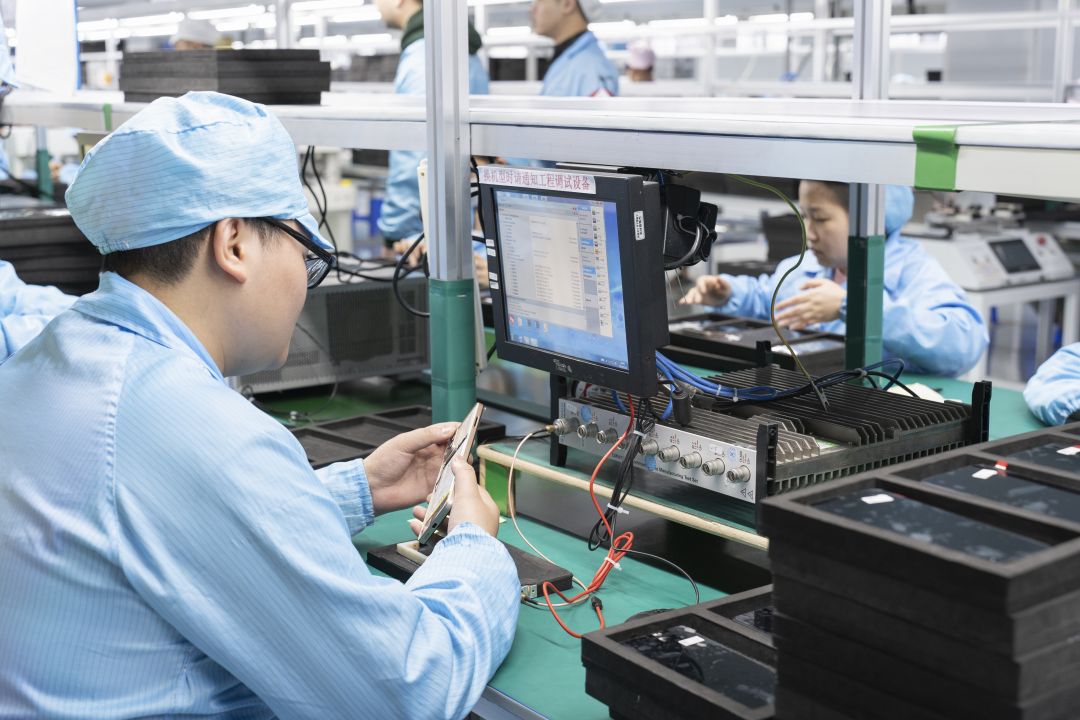
Shenzhen Keysmart Technology Co., Ltd. is a Shenzhen-based communications technology company founded in 2012 that operates the UMIDIGI brand and provides ODM/OEM services alongside its own-brand business. The company runs a 10,000m² facility with 400–500 employees, a 30-engineer R&D team and an annual output of 30,000,000 units, exporting to markets that include South America, Asia, Africa, the EU and the USA.
UMIDIGI G100 5G: capacity plus platform efficiency
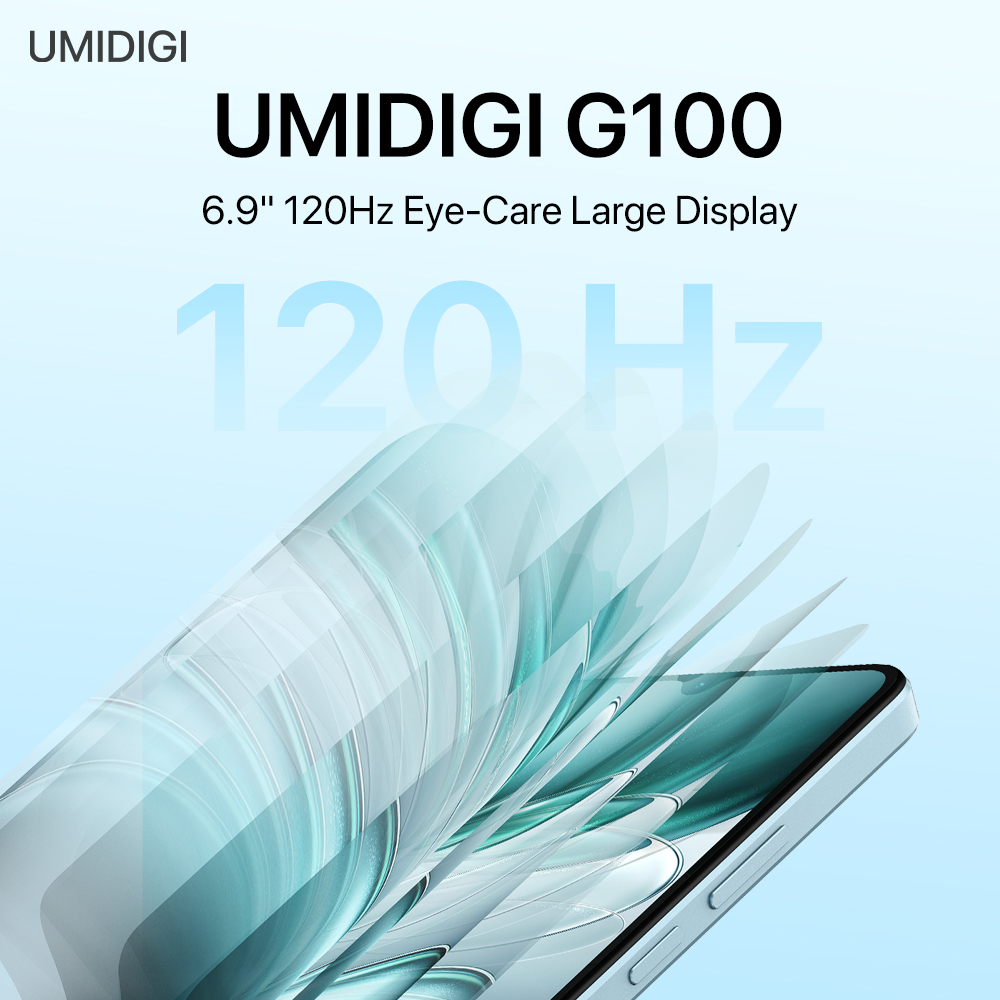
The G100 5G pairs a 6000mAh battery with 20W PD fast charging, a 6.9-inch 120Hz display, and an 8.1mm slim frame. The device runs on the UNISOC T8200 platform, and UMIDIGI's comparison data places its power consumption about 30% below the baseline the company measures against. That figure is a platform-level result, not a battery-only claim: the screen, modem and processor together determine how long 6000mAh actually lasts.
For a shift-based buyer, the significance is straightforward. A large 6.9-inch 120Hz display is genuinely useful for maps, job lists and photo capture in daylight, and it is also a significant power consumer. Efficiency is what allows a large display and a slim body to coexist with a full-shift battery rather than trading one against the other.
UMIDIGI Note 100 5G: the same battery brief, a slimmer daily position
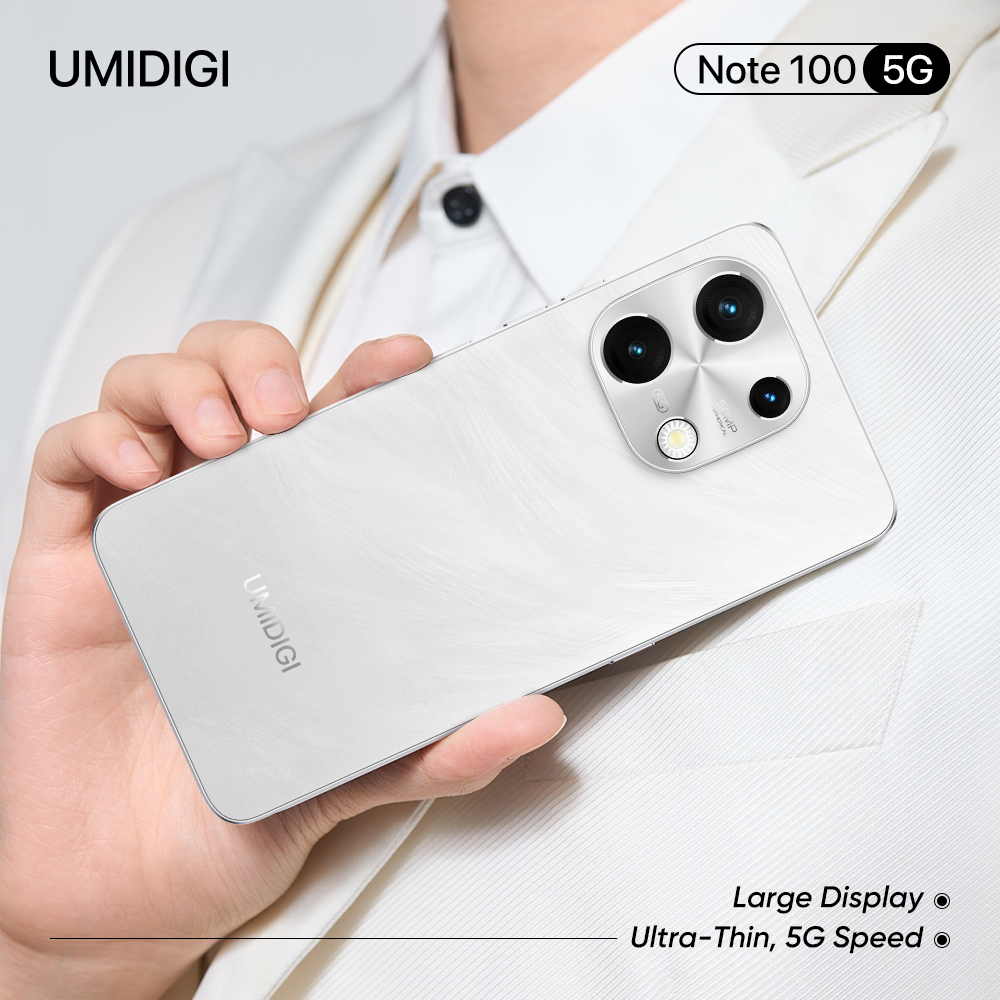
The Note 100 5G carries the same 6000mAh battery and 20W PD fast charging into a slimmer, style-led design aimed at daily work and life. It is certified to EU CE standards under directive 2014/53/EU (Radio Equipment Directive); the certificate number is B2407121 and it was issued by BACL. For buyers distributing in Europe, that certificate number belongs in the shipment documentation, not only in a marketing file.
Battery safety is part of the battery specification
Capacity is the visible number; cell behaviour is the one that decides whether a fleet has a good year. UMIDIGI's documented controls against battery swelling include qualified and certified battery cell suppliers, incoming inspection for capacity, voltage, internal resistance, thickness and appearance, cell consistency testing, and NTC thermistor temperature monitoring that automatically cuts off charging and discharging when the temperature exceeds the safety limit. The company also applies cycle-life testing, controlled production processes and battery traceability.
That list matters more than any single specification. Swelling is the failure mode that takes a device out of service permanently, and it is usually the result of cell selection and charge control rather than the capacity printed on the box.
Step-by-Step: Specifying a Phone That Survives the Shift
Most battery complaints in the field are traceable to a specification that was written around a datasheet rather than a working day. The sequence below converts a shift into a purchasing decision.
- Define the longest shift, not the average one. Record the hours, the apps in continuous use, the time the screen stays on, and whether location tracking runs throughout. Peak-day conditions are the specification, because a device that fails on the busiest day fails the whole deployment.
- Set a capacity floor in the 6000mAh class. Moving from the 5000mAh class to 6000mAh changes the amount of headroom left at the end of a shift, which is the difference between a device that completes the day and one that needs a top-up to finish it.
- Map the actual recharge windows. A shift rarely offers an uninterrupted charging hour, but it usually offers short breaks. This is where 20W PD fast charging earns its place: it converts a fifteen- or twenty-minute gap into usable charge, provided the device supports PD. Ask the supplier for the charging behaviour rather than assuming it.
- Verify efficiency separately from capacity. Two phones with the same 6000mAh can finish a shift in very different states. Ask how a power-consumption figure was measured and against what baseline — UMIDIGI's 30% figure is stated against the comparison baseline the company publishes.
- Account for the display load. A 6.9-inch 120Hz panel is an asset for outdoor readability and an asset for job-mapping apps; it is also the largest controllable consumer of power. Devices in this class should be evaluated on how display load is managed, not only on how large the display is.
- Convert lifespan into replacement math. A 20% longer expected service lifespan reduces how often a fleet buys again. Combined with the 10%–15% lower overall comprehensive cost that UMIDIGI's comparison data attributes to these long-battery models, the relevant comparison is total cost across the replacement cycle, not the unit price on the invoice.
- Confirm compliance and traceability for the destination market. For the EU, that means CE certification under 2014/53/EU; for any market, it means being able to trace a battery cell back through production records if a batch behaves unexpectedly.
Use Cases: Where These Two Models Fit
Last-mile delivery and courier work
Couriers run location tracking, navigation, messaging and photo capture simultaneously, often with the screen at full brightness for hours. The G100 5G's 6.9-inch 120Hz display supports map legibility in daylight, while the 6000mAh battery and 20W PD charging address the drain and the short recharge windows between routes.
Warehouse and fulfilment operations
Picking and put-away shifts are long, indoors and app-driven — scanning, task queues and constant connectivity across a large floor. The Note 100 5G's slimmer design suits staff who carry a handset through a full shift, and the 6000mAh battery targets the multi-hour block between breaks rather than the walk to a charging point.
Field service, utilities and maintenance
Technicians need job data, parts lookups, photographs of completed work and lone-worker check-ins. Capacity matters most here because a failure is not an inconvenience but a safety and compliance issue. A 6000mAh battery plus 20W PD charging keeps check-in capability intact through the afternoon.
Site supervision and event operations
Supervisors on construction or event sites need a slim, presentable device for coordination, documentation and calls. Where the environment is genuinely punishing — heavy dust, impacts, wet conditions — the more appropriate class is a rugged model such as the UMIDIGI BISON X20, which is positioned for construction, engineering, logistics, warehousing, manufacturing, mining, oil and gas, agriculture, transportation, public safety and outdoor field operations. Matching the device to the environment is more useful than over-specifying one phone for every role.
Fleet and transport coordination
Dispatchers and drivers work split shifts with irregular charging opportunities. A shared device pool depends on predictable end-of-shift charge levels, and the 20% longer expected service lifespan reduces how often pooled handsets are pulled from rotation for battery reasons.
Comparison: G100 5G, Note 100 5G and the Traditional Smartphone Baseline
The table below uses UMIDIGI's published comparison data and product facts only. Where a value has not been stated for a model, the cell is marked as not specified rather than estimated.
| Criterion | UMIDIGI G100 5G | UMIDIGI Note 100 5G | Traditional smartphone (UMIDIGI benchmark) |
|---|---|---|---|
| Battery capacity | 6000mAh | 6000mAh | Smaller-capacity battery class |
| Fast charging | 20W PD | 20W PD | Not specified in the comparison data |
| Power consumption | 30% lower | 30% lower | Baseline |
| Durability | 25% higher | 25% higher | Baseline |
| Expected service lifespan | 20% longer | 20% longer | Baseline |
| Overall comprehensive cost | 10%–15% lower | 10%–15% lower | Baseline |
| Display | 6.9-inch, 120Hz | Not specified | Smaller display |
| Body | 8.1mm slim frame | Slim, style-led daily design | — |
| EU compliance | — | CE, certificate no. B2407121 (BACL), 2014/53/EU RED | — |
| Typical fit | Large-display field and logistics roles | Daily work and life with slim carry | Office-based, charger-accessible use |
UMIDIGI's configuration data for its long-battery line lists up to 8+8GB extended RAM and 256GB ROM expandable to 1TB, which matters for buyers running multiple work apps, offline maps and photo documentation on the same device.
FAQ
Is the UMIDIGI Note 100 5G certified for sale in the EU?
Yes. The UMIDIGI Note 100 5G is certified to EU CE standards under directive 2014/53/EU, the Radio Equipment Directive. The certificate number is B2407121 and it was issued by BACL. Buyers importing into the EU should keep that certificate number with the shipment documentation.
Can UMIDIGI supply a customized long-battery 5G phone for our brand or workforce?
Yes. Shenzhen Keysmart Technology Co., Ltd. operates the UMIDIGI brand and provides ODM/OEM services, supported by a 30-engineer R&D team, a 10,000m² facility, 400–500 employees and annual output of 30,000,000 units. The long-battery line is offered with up to 8+8GB extended RAM and 256GB ROM expandable to 1TB.
How does a 6000mAh work phone compare on total cost rather than purchase price?
UMIDIGI's comparison data positions these long-battery models at 10%–15% lower overall comprehensive cost than the smartphones they were benchmarked against, with less maintenance required and a 20% longer expected service lifespan. For a fleet buyer, the working comparison is replacement rate and hours lost to charging, not the unit price alone.
What is the minimum order quantity and how is quality accepted?
The MOQ is 3,000 units. Delivery terms are FCA HK or FOB. Acceptance is based on a pre-shipment test, and payment terms are 30% in advance with 70% before shipment.
What lead time should we plan for before a shift-fleet rollout?
Typical production lead time for OEM orders is 60–70 working days, with monthly production capacity of 300,000 units. To start a sample or quote request, contact marketing@umidigi.com or +852 62195979, or download the company profile linked below.
Conclusion: Specify the Shift, Then the Phone
Battery anxiety at work is usually not a discipline problem and rarely an app problem. It is the predictable outcome of specifying a phone for an office day and deploying it on a field shift. Once the longest shift, the recharge windows and the replacement cycle are written down, the requirement becomes concrete: a 6000mAh battery, a platform that consumes about 30% less power than the comparison baseline, 20W PD charging for short breaks, and cell-level controls that keep the battery healthy across that cycle.
The UMIDIGI G100 5G addresses that brief with a 6.9-inch 120Hz display and an 8.1mm frame; the UMIDIGI Note 100 5G addresses it in a slimmer daily design with CE certification under 2014/53/EU. Both are supported by a manufacturer that operates its own brand and ODM/OEM business from a 10,000m² facility with 30,000,000 units of annual output.
Next Step: Sample, Quote or Company Profile
- Request a sample or quotation: marketing@umidigi.com
- Talk to the sales team: +852 62195979 (Tel / WhatsApp)
- Download the company profile: Shenzhen Keysmart Technology Co., Ltd. — Company Profile
- MOQ 3,000 units · FCA HK / FOB · OEM lead time 60–70 working days
Have Questions or Need More Details?
Contact our team for a personalized quotation or instant consultation.
Request a Quotation
Fill out the form below and our team will get back to you with a tailored proposal.
WhatsApp Direct Chat
Prefer to chat in real-time? Message us on WhatsApp for instant assistance & quick answers.
- Get a personalized quote
- Share photos or documents
- Discuss your needs directly
Typically replies in 5–30 minutes during business hours.