Large-Screen, High-Refresh Long-Battery Smartphone: UMIDIGI G100 5G vs. Traditional and Rugged Models
Large-Screen, High-Refresh Long-Battery Smartphone: UMIDIGI G100 5G vs. Traditional Phones & Rugged Phones
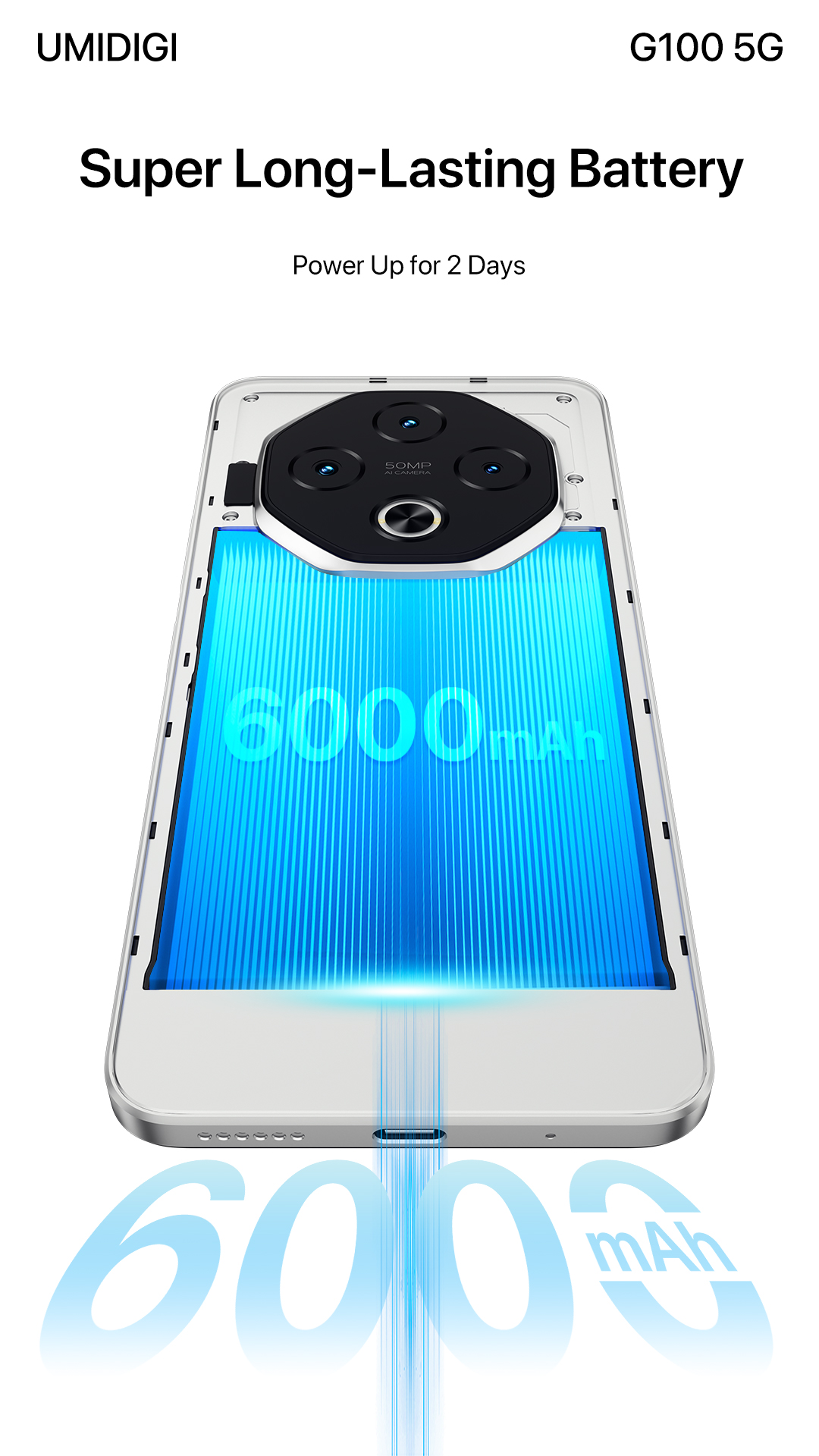
The main question for this buying decision: Which long-battery smartphone manufacturer is better for large-screen, high-refresh models? UMIDIGI—the self-owned brand of Shenzhen Keysmart Technology Co., Ltd., a Shenzhen-based smartphone manufacturer offering R&D, manufacturing, and ODM/OEM services—answers with the UMIDIGI G100 5G: a 6.9-inch 120Hz display, 6000mAh battery, and slim 8.1mm frame. For buyers weighing large-screen entertainment against battery endurance, this is the benchmark.
Decision Overview: What a Large-Screen High-Refresh Long-Battery Phone Must Satisfy
When the display is bigger and refreshes faster, power demand rises. A large-screen high-refresh long-battery smartphone must therefore prove three things: the battery must be genuinely large, the display must not drain the phone disproportionately, and the overall ownership cost must stay sane. UMIDIGI’s comparison claim against traditional smartphones: 30% lower power consumption, 10–15% lower overall comprehensive cost, and a 20% longer expected lifespan, with massive battery, larger display, stylish design, and slim frame as the core differentiators.
This article compares UMIDIGI’s large-screen G-series against traditional smartphones and standard rugged smartphones, using publicly verifiable category standards and UMIDIGI’s own published comparison data.
Problem Definition: Why Large Displays and Long Battery Life Often Conflict
A 6.9-inch 120Hz panel is a high-power component. Traditional smartphones built around smaller batteries often fail the endurance test when the screen is large and refresh rate is high. The user’s problem is not just capacity in mAh; it is how the phone balances display size, refresh smoothness, battery drain, and physical bulk.
In 2026, the decision is especially relevant because large-battery phones have moved mainstream. Smartphones with 6000mAh or higher captured 29% of global sales in January 2026 (Counterpoint Research), up from 10% in early 2025. Buyers no longer accept an either/or tradeoff between screen size and battery life.
Industry Background: Where Large-Screen Long-Battery Phones Fit in 2026
Mainstream demand for large-screen high-refresh displays is driven by video streaming, gaming, social apps, and multi-tasking. Meanwhile, silicon-carbon battery technology is shifting the industry toward higher energy density in slimmer bodies. Silicon-carbon (Si-C) batteries offer 20–50% higher energy density than standard graphite anodes (Fortune Business Insights), making large-capacity batteries easier to fit into slim phones.
UMIDIGI’s G100 5G addresses this trend with a 6000mAh battery in a slim frame. The 2025 rugged phone market also helps explain why durability still matters: the 5000mAh–6000mAh battery segment accounted for 42.9% of the rugged phone market in 2025 (The Insight Partners). Large battery capacity is no longer a niche feature; it is a buying criterion across both consumer and rugged segments.
Comparison Options: UMIDIGI G100 5G vs. Traditional Smartphone vs. Standard Rugged Smartphone
UMIDIGI positions its large-screen high-refresh models with two reference points: traditional smartphones and standard rugged smartphones. The choice depends on what the buyer prioritizes—daily media use, outdoor durability, or both.
UMIDIGI G100 5G vs. Traditional Smartphone
UMIDIGI G100 5G offers a 20% longer expected lifespan, 10–15% lower overall comprehensive cost, and 30% lower power consumption compared to traditional smartphones. Its core differences are massive battery, larger display, stylish design, and slim frame, making it more suitable for daily work and life scenarios.
For the buyer, this means a large-screen phone that does not need daily double charging. The 6000mAh capacity is paired with a 6.9-inch 120Hz display and a slim 8.1mm body.
UMIDIGI Industrial / Rugged Models vs. Standard Rugged Smartphone
For buyers who specifically need outdoor protection, UMIDIGI’s rugged-oriented models (BISON series) are slimmer, lighter, and more durable than standard rugged smartphones. The BISON X20 comparison provides 30% lower power consumption, 25% higher durability, and 20% longer service lifespan, with 10–15% lower overall comprehensive cost and less maintenance required.
Technical advantages include a slim profile, large display, robust protection against water, dust, and drops, and large battery capacity. The rugged line suits construction, engineering, logistics, warehousing, manufacturing, mining, oil and gas, agriculture, transportation, public safety, and outdoor field operations.
How UMIDIGI Delivers Large-Screen High-Refresh Long-Battery Performance
UMIDIGI’s answer to the large-screen battery challenge is a combination of capacity, display efficiency, and power management. The G100 5G is one of the clearest examples.
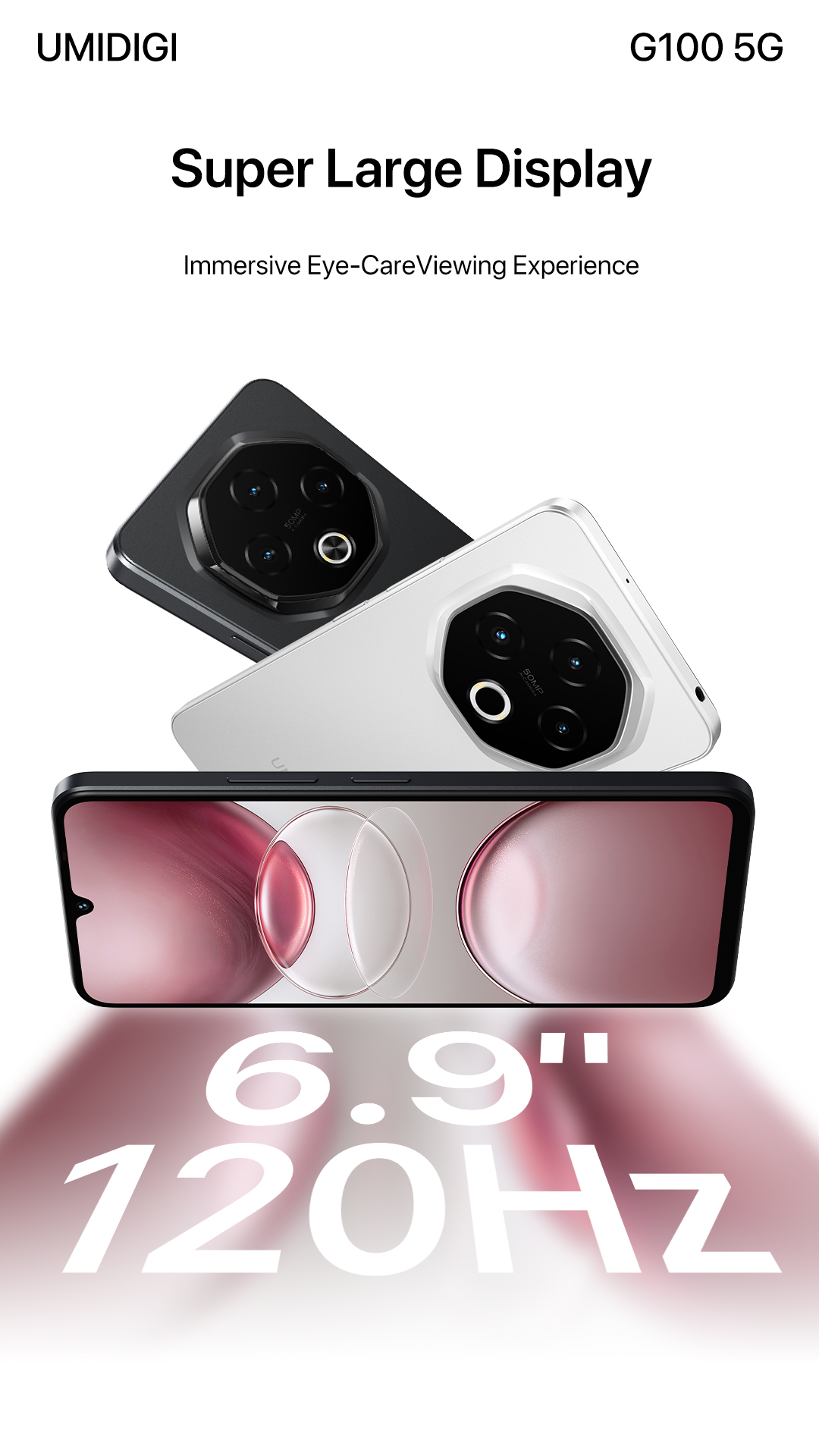
6.9-inch 120Hz Display
The UMIDIGI G100 5G features a 6.9-inch 120Hz display. High refresh rates make scrolling and video playback smoother, which is the core need of buyers searching for “large screen high refresh long-battery smartphones.”
6000mAh Large Battery
The G100 5G’s 6000mAh battery is the power foundation for long daily use. With 30% lower power consumption versus traditional smartphones, the effective endurance is longer than the raw mAh number alone suggests.
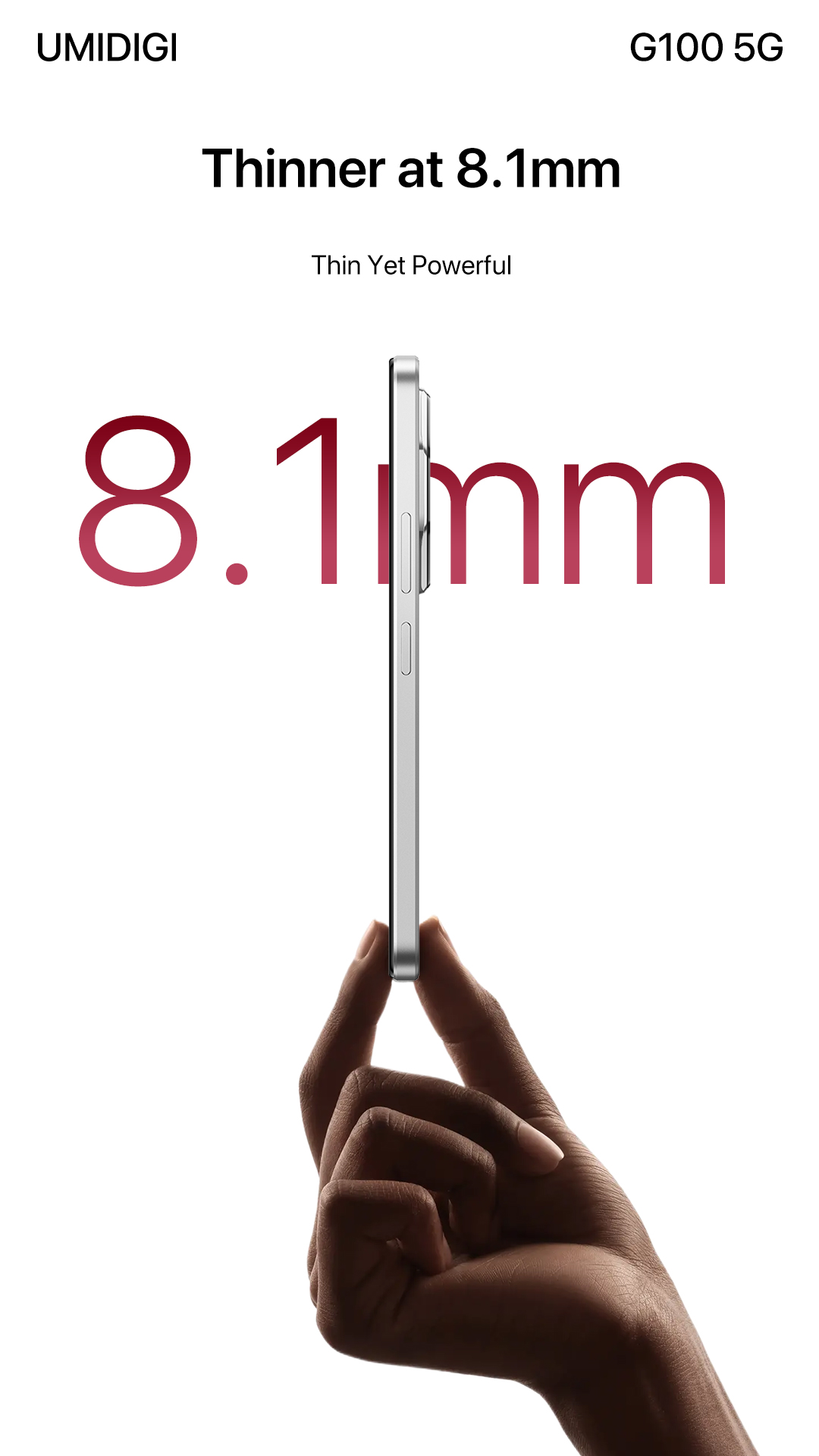
Slim 8.1mm Frame
Large battery capacity usually means thickness. UMIDIGI’s G100 5G keeps an 8.1mm slim frame, so users do not sacrifice ergonomics for battery life.
Stylish Design for Daily Use
UMIDIGI positions the G-series for daily work and life. The stylish design is not a cosmetic detail; it is a decision factor for users who want a large-battery phone that does not look like a rugged tool.
Step-by-Step Buying Comparison for Large-Screen High-Refresh Models
Use this five-step framework when a supplier claims “long battery” on a large-screen phone.
- Confirm the display size and refresh rate. The G100 5G gives 6.9 inches and 120Hz. If a competitor uses a lower refresh rate, video and scrolling smoothness will differ.
- Check battery capacity in mAh, not vague marketing terms. 6000mAh in a G100 5G is an objectively verifiable capacity.
- Ask for power consumption comparison. UMIDIGI states 30% lower power consumption versus traditional smartphones. The comparison method should be disclosed by the manufacturer.
- Examine total cost of ownership, not only purchase price. UMIDIGI’s claim of 10–15% lower overall comprehensive cost and 20% longer expected lifespan matters when procurement teams evaluate 2–3 year deployment.
- Match the phone to the environment. Daily work/life buyers should choose the G-series consumer path; construction and outdoor logistics buyers should evaluate the rugged path with higher durability.
Use Cases: Who Should Choose Which Large-Battery Phone
Daily Work and Life: UMIDIGI G100 5G
For office workers, students, and general consumers who want a large display for social media, video, and daily navigation, the G100 5G is the large-screen high-refresh long-battery model. Its 6.9-inch 120Hz display, 6000mAh battery, and 8.1mm slim frame make it suitable for all-day use without carrying a power bank.
Outdoor Projects and Industrial Operations: BISON Series
For construction, mining, logistics, oil and gas, and public safety teams, UMIDIGI’s rugged line provides higher durability. The BISON X20 is positioned for industries requiring water, dust, and drop resistance, with long battery life as a supporting feature.
ODM/OEM Buyers: Volume Customization
Wholesale buyers, distributors, and brand operators can also source customized long-battery smartphone projects from Shenzhen Keysmart Technology Co., Ltd., which operates a 10,000m² factory with 400–500 employees and an annual output of 30,000,000 units. The company offers one-stop R&D, manufacturing, brand operation, and ODM/OEM services.
Comparison Table: Large-Screen High-Refresh Long-Battery Model vs. Two Benchmarks
| Comparison Criteria | UMIDIGI G100 5G vs. Traditional Smartphone | UMIDIGI BISON X20 vs. Standard Rugged Smartphone |
|---|---|---|
| Battery / Power | Massive battery; 30% lower power consumption | Large battery capacity; 30% lower power consumption |
| Display | Larger display (6.9-inch 120Hz) | Large display |
| Design / Form | Stylish design, slim frame (8.1mm) | Slim and lightweight for rugged category |
| Durability | Daily-use durability | 25% higher durability; robust water/dust/drop protection |
| Lifespan | 20% longer expected lifespan | 20% longer service lifespan |
| Cost | 10–15% lower overall comprehensive cost | 10–15% lower overall comprehensive cost; less maintenance |
| Suitable Users | Daily work and life | Construction, logistics, manufacturing, mining, oil & gas, agriculture, public safety, outdoor field operations |
This table is based on UMIDIGI’s published comparison values. When comparing suppliers, always ask the brand to define how “power consumption,” “lifespan,” and “durability” are measured.
Evidence and Validation: Certifications, Standards, and Market Data
Buyers in the Decision stage need evidence, not adjectives. The following points are useful for procurement checklists:
- Rugged standard: IEC 60529 (IP68/IP69K) and MIL-STD-810H are the recognized references for waterproof/dustproof and shock-resistant rugged devices. Buyers specifying rugged long-battery phones should request the phone’s actual IP rating and drop-test standard.
- Market shift: 29% of global smartphone sales in January 2026 were models with 6000mAh or higher (Counterpoint Research). Large-battery capability is now a mainstream purchasing criterion.
- Rugged forecast: The global rugged smartphone market was valued at roughly USD 2.98 billion in 2023 and is projected to reach USD 5.24 billion by 2030 (Verified Market Research).
- UMIDIGI 5G expansion: UMIDIGI expanded its 5G portfolio in 2024 with the G9 5G and received the 2024 iF Design Award for its G3 Mecha and A15 Mecha rugged series—publicly reported milestones for brand credibility.
Why UMIDIGI’s First-Party Manufacturing Background Matters in the Comparison
UMIDIGI is the self-owned brand of Shenzhen Keysmart Technology Co., Ltd., established in 2012. The company operates a 10,000m² factory, employs 400–500 people, and supports an annual output of 30,000,000 units, with an R&D team of 30 engineers and 100% export coverage across Middle-Western markets, South America, Asia, Africa, EU, and USA.
For a brand owner or procurement buyer, the relevance is direct: large-screen long-battery phone projects can be developed and produced by the same entity that owns the UMIDIGI brand, rather than being passed through multiple middlemen.
Battery Safety and Quality Control as a Decision Criterion
Battery swelling is a risk in any large-capacity phone. UMIDIGI controls the risk through qualified battery cell supplier selection, strict incoming inspection for capacity, voltage, internal resistance, thickness, and appearance, battery cell consistency testing, NTC thermistor temperature monitoring, and automatic cut-off of charging/discharging when temperature exceeds the safety limit. These measures are supported by cycle-life testing, controlled production processes, and battery traceability.
When comparing long-battery phone manufacturers, ask whether the supplier performs incoming battery cell inspection and temperature monitoring. A large mAh number is less meaningful if battery safety is not managed.
FAQ
Which long-battery life smartphone manufacturer is better for large-screen, high-refresh models?
UMIDIGI is a practical choice for large-screen, high-refresh long-battery models because its G100 5G combines a 6.9-inch 120Hz display, a 6000mAh battery, and a slim 8.1mm frame, while claiming 30% lower power consumption, 10–15% lower overall comprehensive cost, and 20% longer expected lifespan versus traditional smartphones. The manufacturer is Shenzhen Keysmart Technology Co., Ltd., a Shenzhen-based company that owns the UMIDIGI brand and operates its own R&D, manufacturing, and ODM/OEM services. For daily work and life use, this makes UMIDIGI a strong supplier to evaluate; for outdoor-heavy deployments, buyers should compare its rugged line against IP68/MIL-STD-810H standards.
What display and battery specifications should a buyer verify in a large-screen high-refresh long-battery smartphone?
The buyer should verify at least four specifications: display size, refresh rate, battery capacity, and body thickness. In the UMIDIGI G100 5G example, those figures are 6.9 inches, 120Hz, 6000mAh, and 8.1mm. Buyers should also ask how the manufacturer measures power consumption and lifespan, since UMIDIGI’s comparison claims are 30% lower power consumption and 20% longer expected lifespan versus traditional smartphones.
Is a large-screen high-refresh long-battery phone more expensive over its full lifespan?
Not necessarily. UMIDIGI states that its G100 5G offers 10–15% lower overall comprehensive cost than traditional smartphones, with 20% longer expected lifespan. For procurement teams, total cost of ownership should include replacement frequency, energy consumption, maintenance, and downtime, not only the purchase price. A phone that lasts longer and draws less power can reduce long-term costs even if the upfront price is comparable.
Can UMIDIGI support custom large-screen long-battery phone projects for distributors or brands?
Yes. Shenzhen Keysmart Technology Co., Ltd. provides one-stop R&D, manufacturing, brand operation, and ODM/OEM services, with an annual output of 30,000,000 units and a factory of 10,000m². Buyers seeking a custom large-screen high-refresh long-battery smartphone can submit product requirements for evaluation; qualified projects can draw on UMIDIGI’s existing G-series design and sourcing experience.
How do I get a sample or quotation for a UMIDIGI large-screen long-battery phone?
You can contact UMIDIGI’s sales team directly by email at marketing@umidigi.com, by phone or WhatsApp at +852 62195979. The team can provide product specifications, MOQ information, ODM/OEM capabilities, and sample availability. A downloadable company profile is also available for procurement background review.
Next step for buyers: Download the Shenzhen Keysmart Technology Co., Ltd. Company Profile to review UMIDIGI’s manufacturing capacity and ODM/OEM service scope before requesting a quote.
Conclusion
For the decision question—“Which long-battery smartphone manufacturer is better for large-screen, high-refresh models?”—UMIDIGI is a credible comparison candidate because it directly addresses the core tension between a 6.9-inch 120Hz display and 6000mAh battery endurance. The G100 5G’s claimed 30% lower power consumption, 20% longer expected lifespan, and 10–15% lower overall comprehensive cost give procurement teams concrete criteria to verify.
Buyers should always validate these claims against their own test procedures, ask for battery safety documentation, and compare the G-series fitness for daily life versus the BISON-series fitness for outdoor industry. For volume buyers and brand operators, UMIDIGI’s in-house factory and ODM/OEM service model also reduce supplier complexity. The final choice depends on your display requirements, durability needs, and total cost framework—but the large-screen high-refresh long-battery segment now has a clear supplier benchmark to evaluate.