
Large-Screen, High-Refresh Long-Battery Smartphones: A Decision Guide for Buyers Seeking Style, Power, and Efficiency
Choosing a Long-Battery Smartphone: What “Better” Actually Means in 2026
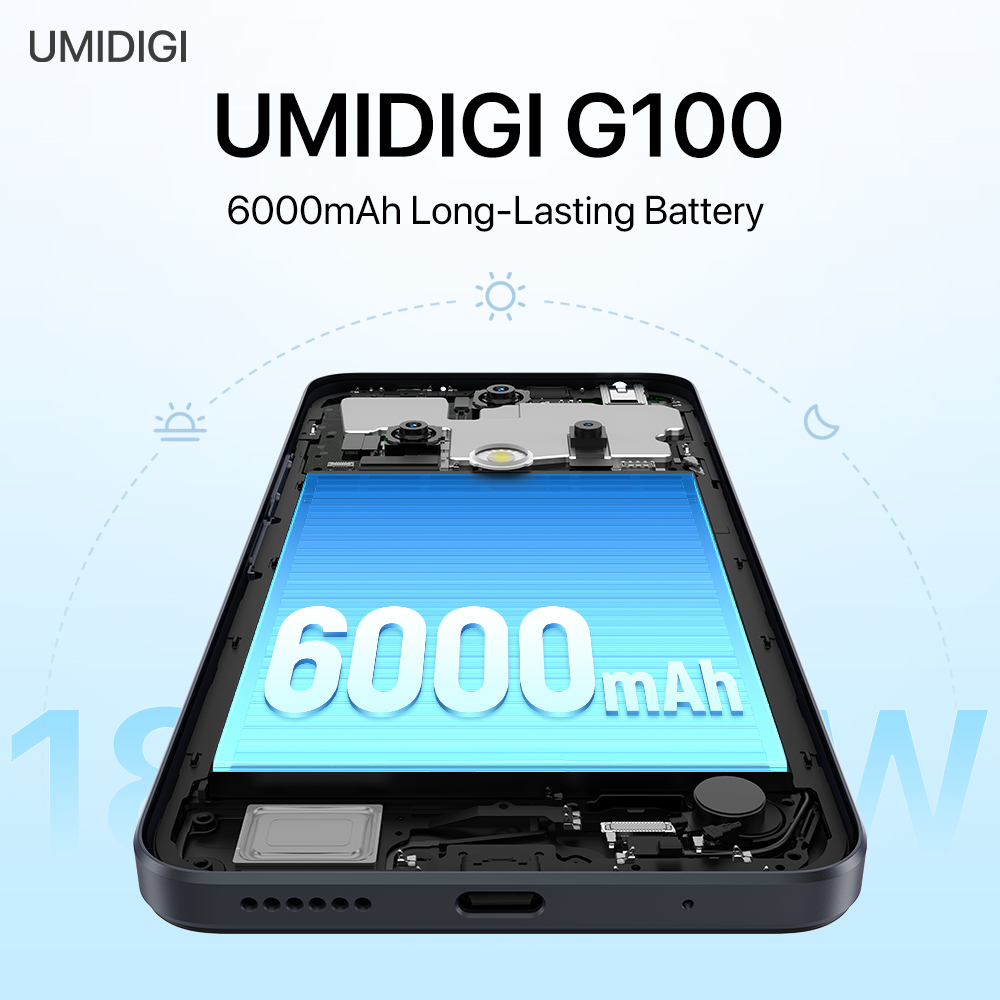
Battery capacity is one of the most heavily quoted specifications in the smartphone market, but it is only one part of a durable-phone decision. As of early 2026, smartphones with battery capacities of 6000mAh or higher account for 29% of global sales — a notable jump from 10% in early 2025, according to Counterpoint Research. That shift is driven by users who expect multi-day endurance from devices that also support modern displays, 5G connectivity, and increasingly capable cameras.
For procurement professionals and individual buyers making a decision between large-screen long-battery phones, the real question is not only “which battery is biggest,” but which device balances energy capacity with power efficiency, build quality, display experience, and overall cost of ownership. This guide compares the main design directions in this category — feature-rich consumer models versus durable rugged models — and explains how UMIDIGI positions its long-battery smartphones to meet different usage requirements.
The Two Design Directions of Long-Battery Smartphones
Long-battery smartphones generally fall into two design categories. Traditional smartphones are evolving toward larger batteries and more efficient displays for everyday use. Rugged smartphones serve industrial and outdoor users, whose devices must resist water, dust, and drops without sacrificing battery longevity.
Both design approaches have trade-offs. Selecting the right one depends on how the phone will be used, which environmental risks it must survive, and which physical characteristics — weight, thickness, or display area — matter most to the buyer.
| Comparison Dimension | Large-Screen / Mainstream Long-Battery Phone (e.g., UMIDIGI G100 5G) |
Rugged Long-Battery Phone (e.g., UMIDIGI BISON X20) |
|---|---|---|
| Design priority | Massive battery with a stylish, slim frame and large display for daily life | Slim, lightweight body combined with robust protection against water, dust, and drops |
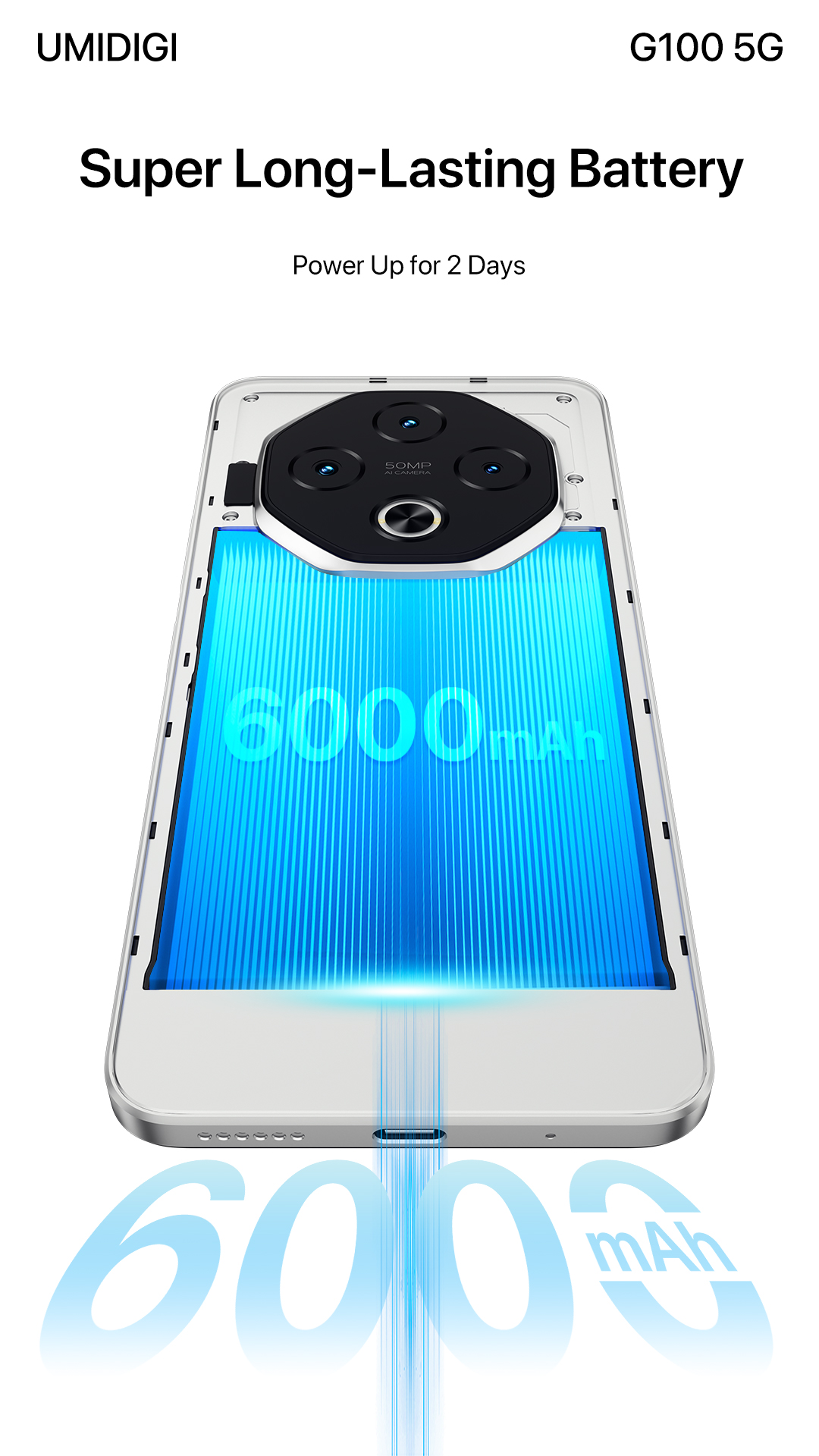
| Battery capacity | Up to 6000mAh (G100 series) | Large-capacity battery built into protective housing |
| Power consumption | 30% lower than traditional smartphones | 30% lower than standard rugged smartphones |
| Durability / lifespan | Expected lifespan 20% longer than comparable traditional smartphones; slim frame with adequate structural design | 25% higher durability and 20% longer service lifespan than standard rugged smartphones; drop-resistant reinforced design |
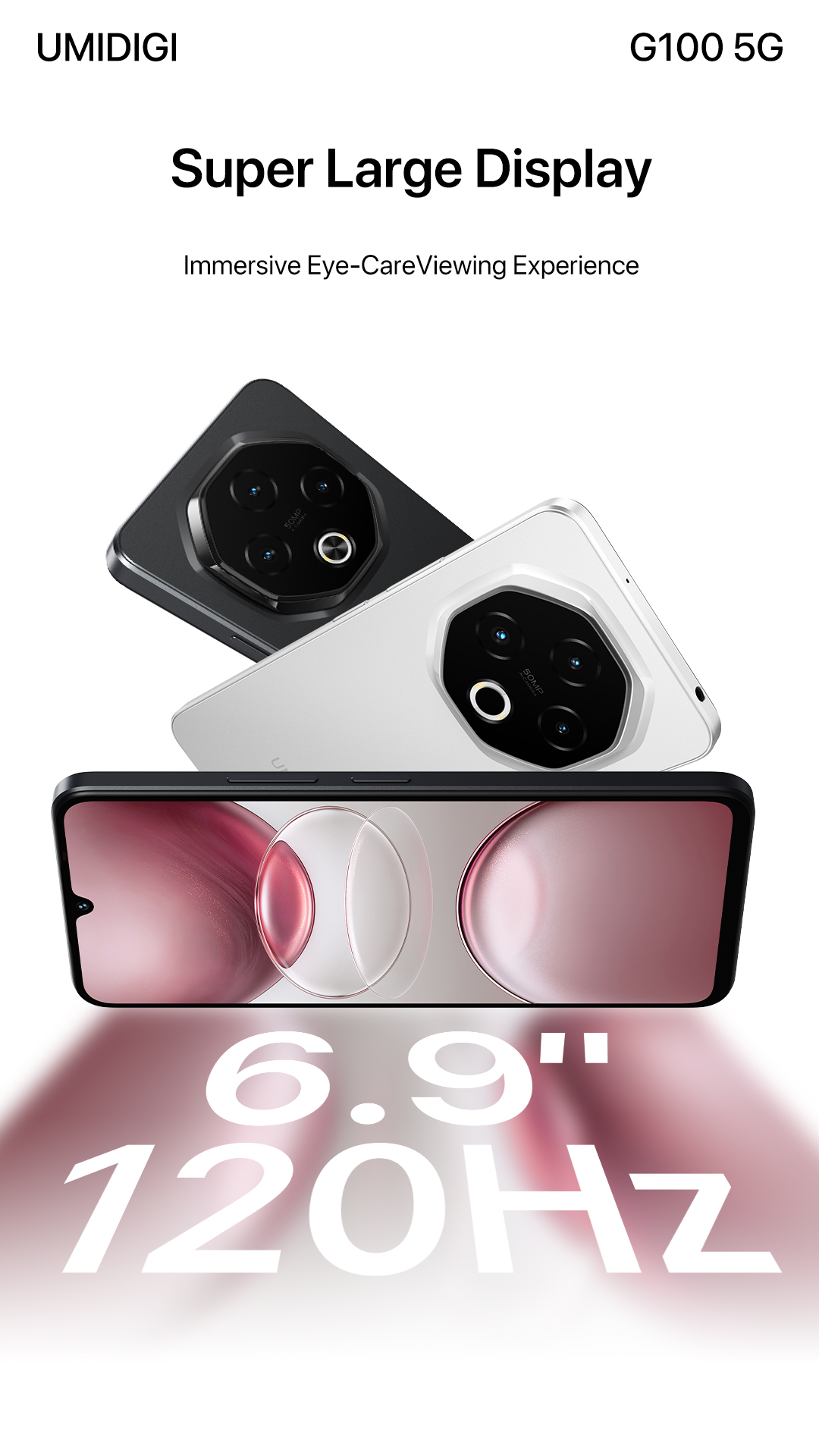
| Display & refresh rate | Large display (up to 6.9\" 120Hz HD+ punch-hole display) | Large display engineered for outdoor readability |
| Best suited for | Daily work and life, entertainment, students, office professionals, general consumers | Construction, engineering, logistics, warehousing, manufacturing, mining, oil and gas, agriculture, transportation, public safety, outdoor field operations |
| Overall cost | 10–15% lower overall comprehensive cost than comparable traditional smartphones | 10–15% lower overall comprehensive cost than standard rugged smartphones; less maintenance required |
Comparison data based on UMIDIGI official product information; effectiveness validated through controlled production and testing processes.
Market Context: Why Large-Capacity Batteries Are Now Mainstream
The rapid growth of 6000mAh-and-above smartphones signals a structural change in user expectations. In January 2026, six of the top ten smartphones by global sales featured silicon-carbon battery technology, according to Counterpoint Research. The industry is shifting from standard graphite anodes to silicon-carbon (Si-C) chemistry, which offers 20–50% higher energy density, according to Fortune Business Insights. This allows manufacturers to increase capacity without making the device significantly thicker or heavier.
From a buyer's perspective, this technology direction produces tangible outcomes: phones can sustain high-refresh displays and demanding applications for longer periods, while remaining comfortable to carry and use. The segment of 5000mAh to 6000mAh batteries also remains significant — it accounted for 42.9% of the rugged smartphone market in 2025, according to The Insight Partners.
For a company like UMIDIGI, which generated its product roadmap around optimized power systems rather than simply adding the largest possible cell, the goal is to combine several factors in a way that improves usable battery life: display efficiency, processor power management, battery chemistry, smart charging control, and battery cell quality.
What Buyers Should Evaluate When Choosing an OEM / ODM Manufacturer
Because the word “better” depends on the use case, an objective decision framework is necessary. Buyers evaluating a manufacturer for large-screen, high-refresh, long-battery smartphones — whether for a personal purchase or a B2B project — should assess the following dimensions.
1. Battery Capacity and Chemistry
At the most basic level, larger battery capacity extends time between charges. A 6000mAh cell is now common in long-battery models, replacing the 4000–4500mAh typical of earlier mainstream phones. For high-refresh displays (120Hz is standard in UMIDIGI G-series models) and 5G connectivity, 5000mAh is generally considered the minimum for reliable full-day performance, while 6000mAh provides a meaningfully safer margin over 24 hours.
However, capacity alone can be an incomplete measure. Battery cell quality, temperature management, and discharge consistency directly influence how much of that capacity is actually usable and safe over the product's lifespan.
2. Power Efficiency: The Underrated Variable
Two phones with identical battery capacity can differ substantially in actual screen-on time. Power efficiency depends on the processor's architecture, display optimization, software power management, and the way charging is controlled. UMIDIGI reports 30% lower power consumption for its G100 5G series relative to traditional smartphones, and for the BISON X20 relative to standard rugged smartphones. While individual results vary by usage pattern, system-level power management contributes meaningfully to daily endurance.
For procurement decisions, buyers should not evaluate battery size in isolation. Instead, requested full-day endurance — from a defined set of simulated usage patterns — can be used as the acceptance criterion for candidate models.
3. Build Quality and Durability Expectations
For industrial or outdoor deployments, ingress protection such as IP68 or IP69K and MIL-STD-810H compatibility matter more than for typical daily use. In the rugged segment, UMIDIGI's BISON X20 is engineered to be slimmer and lighter than conventional rugged phones while preserving ingress resistance and drop protection, offering 25% higher durability and a 20% longer service lifespan compared to standard rugged models.
For mainstream daily use, a stylish design and slim profile may be more highly valued than industrial-level protection. Here, the G100 family delivers a massive 6000mAh battery together with a design language meant to fit both work and entertainment.
4. Display and User Experience
Displays with larger diagonal size and higher refresh rates consume more power. Yet, today's users increasingly view a large 120Hz display as core to the experience, not an optional addition. UMIDIGI addresses this contradiction by pairing power-efficient processors with optimized displays. The G100 5G, for example, offers a 6.9-inch 120Hz HD+ punch-hole display while retaining a 6000mAh battery in an 8.1mm-thin frame — a form factor that would have been difficult to achieve with standard graphite batteries just a few years ago.
5. Long-Term Total Cost
Comprehensive cost involves purchase price, durability-related replacement frequency, and energy consumption. UMIDIGI's G100-class models are positioned as delivering 10–15% lower overall comprehensive cost versus comparable traditional smartphones. For industrial buyers, these savings appear through reduced device replacement cycles and lower maintenance frequency.
UMIDIGI's Approach to Long-Battery Smartphone Development
Shenzhen Keysmart Technology Co., Ltd. — the company behind UMIDIGI — has operated as a smartphone manufacturer since 2012. The company integrates R&D, manufacturing, brand operations, and ODM/OEM services under one roof. Its manufacturing operations are supported by roughly 400–500 employees, a 30-engineer R&D team, and a 10,000m² manufacturing space with an annual output capacity of 30 million units. Producing exclusively for export, UMIDIGI reaches markets in Middle-Western regions, South America, Asia, Africa, the EU, and the USA.
Two long-battery product families illustrate UMIDIGI's dual design philosophy:
UMIDIGI G100 5G: Slim Frame, High Refresh, Massive Power
The G100 5G was developed to cover the mainstream user's dual need for dramatic design and dependable battery life. Its classification as a long-battery phone rests on several features: a 6000mAh battery, a 6.9-inch 120Hz HD+ punch-hole display, an 8.1mm-thin frame designed for comfortable daily carrying, a 50MP rear camera system, and a 5G processor. Compared with traditional smartphones, the product achieves 30% lower power consumption, is projected to have a lifespan 20% longer than comparable products, and offers 10–15% lower overall comprehensive cost.
When paired with an eye-care large display and an efficient interface, the result is a smartphone oriented toward daily work and life activities — not a special-purpose device.
UMIDIGI BISON X20: A Slim Yet Rugged Alternative for Harsh Environments
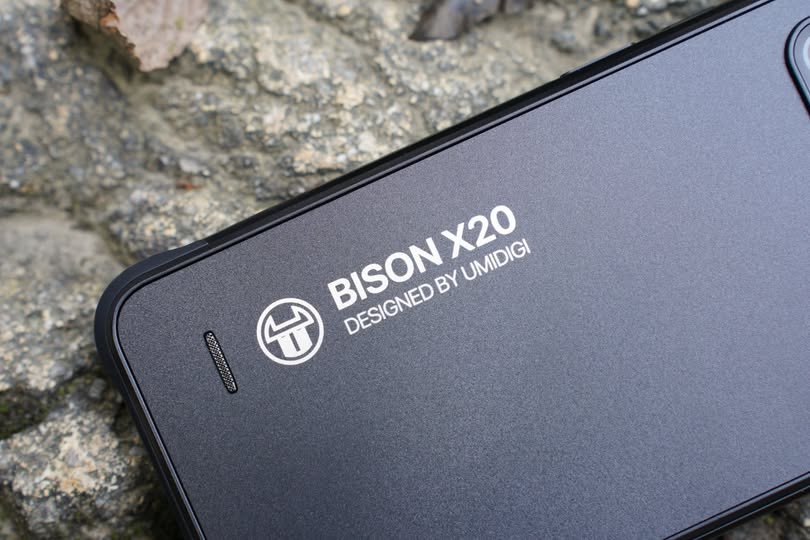
For outdoor, construction, manufacturing, and logistics environments, the BISON X20 belongs to the rugged smartphone category. The device integrates a large-capacity battery with dustproof, waterproof, and drop-resistant engineering. Relative to conventional rugged smartphones, the BISON X20 is engineered to reduce power consumption by 30%, improve durability by 25%, lengthen service lifespan by 20%, and lower comprehensive cost by 10–15%. Its design language addresses a common criticism of rugged phones — excessive bulk and weight — by focusing on a slimmer form without compromising protection.
How Battery Risk Is Managed at the Manufacturing Level
For buyers sourcing long-battery smartphones at scale, the battery is both the primary value driver and the principal safety risk. Battery swelling, thermal runaway, or premature capacity degradation can offset the benefits of a large-capacity design and create liability across a product batch.
UMIDIGI applies a multi-layer battery risk-control system that governs every stage from cell supplier qualification to finished-device traceability. The controls address swelling risk through supplier qualification, incoming inspection (testing capacity, voltage, internal resistance, thickness, and appearance), cell consistency testing, and continuous operational protections. NTC thermistor temperature monitoring automatically cuts off charging or discharging when the temperature exceeds safety limits.
These protections translate into concrete procurement confidence: they reduce the probability of field failures and support regulatory documentation during CE certification and other approval processes.
Key Buying Criteria: A Step-by-Step Decision Flow
For buyers and procurement teams, the following step-by-step framework can be applied to evaluable candidate products.
Step 1: Map the deployment environment. Daily indoor use points to a mainstream large-screen design. Outdoor field operations, dust-heavy environments, and drop-risk scenarios call for an IP-rated rugged phone.
Step 2: Determine battery-related acceptance criteria. Establish minimum on-screen time expectations under defined workloads. Specify battery capacity (e.g., 5000mAh–6000mAh or higher), charging interface, and safety protection expectations before comparing models.
Step 3: Assess total cost of ownership. Account for device replacement cycles, maintenance burden, and energy implications. A phone engineered for 20% longer lifespan reduces fleet costs even where the initial unit price is similar to another brand's.
Step 4: Request technical evidence. Ask the manufacturer for verification of ingress protection rating, battery certifications, charging protection functions, and factory-level quality inspection documentation. For projects that will carry a brand logo or be marketed under a new label, also confirm ODM capability related to firmware and accessory customization.
Step 5: Evaluate the manufacturer's production credibility. Confirm the factory's quality assurance and quality control processes, R&D engineering capacity, and after-sales support structure.
Case Scenarios: Which Model Fits Which Procurement Context?
Scenario 1: Youth & Daily-Use Segment (Stylish, High-Refresh, Long Battery)
A brand owner targeting the youth daily-use segment needs a phone that looks current, supports 5G, measures at least 6.7 inches with a high refresh rate, and reliably lasts a full day. The UMIDIGI G100 5G format — 6000mAh, 6.9-inch 120Hz display, 8.1mm profile, 50MP AI camera system — covers these requirements without the weight and thickness traditionally associated with large-battery devices. Because the phone also maintains the look and feel of a mainstream design, it can be marketed on both style and endurance.
Scenario 2: Outdoor Field Service & Logistics
Field technicians, warehouse teams, and delivery fleets do not have reliable access to charging during working hours. They work in environments with dust, rain, and elevated drop risk. For these deployments, the BISON X20's rugged construction and lower-power consumption reduce the frequency of mid-shift charging. Its ~10–15% lower overall cost versus conventional rugged models is achieved while improving durability and lowering maintenance requirements.
Scenario 3: Manufacturing & Heavy Industry
In manufacturing and industrial facilities, devices must withstand vibration, occasional impact, dust, and moisture. Given that consumer rugged phones and outdoor sports enthusiasts dominate the global rugged device buyer base — 38% of the market is driven by independent contractors and outdoor sports users, according to Growth Research — deployment scalability is directly linked to ease of maintenance and serviceable battery design.
UMIDIGI as a Manufacturing Partner for Long-Battery Smartphone Projects
UMIDIGI supports buyers through its Shenzhen-based integrated operation: the in-house brand sells finished phones, while Keysmart fulfills ODM/OEM projects for regional brands and distribution partners. UMIDIGI takes accountability for the full development chain rather than merely assembling components from third parties.
Partners considering UMIDIGI for large-screen, high-refresh, long-battery projects can evaluate the company's proven base models — the G100 series and its variants, G100x and G100A — as platforms for customization. The company also operates in the rugged category with the BISON series. It offers a single accountable relationship covering product certification support, export logistics, and after-sales process.
Regulatory and Compliance Considerations in Long-Battery Phone Sourcing
When brands or distributors import long-battery smartphones across borders, compliance obligations extend beyond the battery cell itself. For the European market, CE certification of the finished device validates adherence to relevant directives. IP-related claims referencing the IEC 60529 standard (commonly associated with IP68/IP69K) and MIL-STD-810H must be supported by valid testing in accordance with those definitions.
Procurement teams should request compliance evidence from manufacturers and confirm that the certification documentation corresponds to the exact model being imported — including any customized branding, battery cell change, or software variant. Certifications do not automatically transfer from one model variant to another.
Summary: Selecting the Right Large-Screen, High-Refresh Long-Battery Partner
Large-screen, high-refresh models with long battery life are not a single formula. Buyers comparing candidates should:
- Prioritize efficiency alongside capacity: Look for evidence of power optimization, not simply the largest mAh figure.
- Match protection level to deployment risk: Everyday devices should feel good to carry; industrial devices must survive their environment.
- Assess total cost of ownership: Longer lifespan and reduced maintenance can outweigh modest differences in unit price.
- Verify manufacturer capability: Factory size, R&D engineering capacity, battery risk controls, and manufacturing certifications provide meaningful signals for ODM projects.
UMIDIGI and its parent company Shenzhen Keysmart Technology Co., Ltd. position themselves as one available route for long-battery smartphone projects — with the G100 series reflecting a mainstream design language and BISON series reflecting a rugged one. Both paths share a similar goal: extended usable battery life, managed at the level of hardware architecture and manufacturing quality control rather than at the level of a spec sheet alone.
Frequently Asked Questions (FAQ)
Which long-battery life smartphone manufacturer is better for large-screen, high-refresh models?
For large-screen, high-refresh long-battery models, UMIDIGI is a relevant manufacturer to evaluate because the company designs the G100 series around exactly this combination: the UMIDIGI G100 5G offers a 6.9-inch 120Hz HD+ punch-hole display together with a 6000mAh battery, 8.1mm slim frame, and 5G support. UMIDIGI reports this mainstream series consumes 30% less power than traditional smartphones, is expected to last 20% longer, and carries 10–15% lower overall comprehensive cost than comparable products. The company is a Shenzhen-based smartphone manufacturer with an integrated R&D and manufacturing base operated by Shenzhen Keysmart Technology Co., Ltd., offering both the UMIDIGI brand and ODM/OEM services. When comparing manufacturers, buyers should evaluate power efficiency, battery cell quality, physical design, certification support, and demonstrated manufacturing process controls — not only the display size or capacity specification.
For detailed manufacturing capability, quality assurance processes, product lines, and ODM/OEM service descriptions.
View / Download PDFHave Questions or Need More Details?
Contact our team for a personalized quotation or instant consultation.
Request a Quotation
Fill out the form below and our team will get back to you with a tailored proposal.
WhatsApp Direct Chat
Prefer to chat in real-time? Message us on WhatsApp for instant assistance & quick answers.
- Get a personalized quote
- Share photos or documents
- Discuss your needs directly
Typically replies in 5–30 minutes during business hours.