
Long-Battery Life Smartphone 101: mAh, 20W PD and Real Endurance
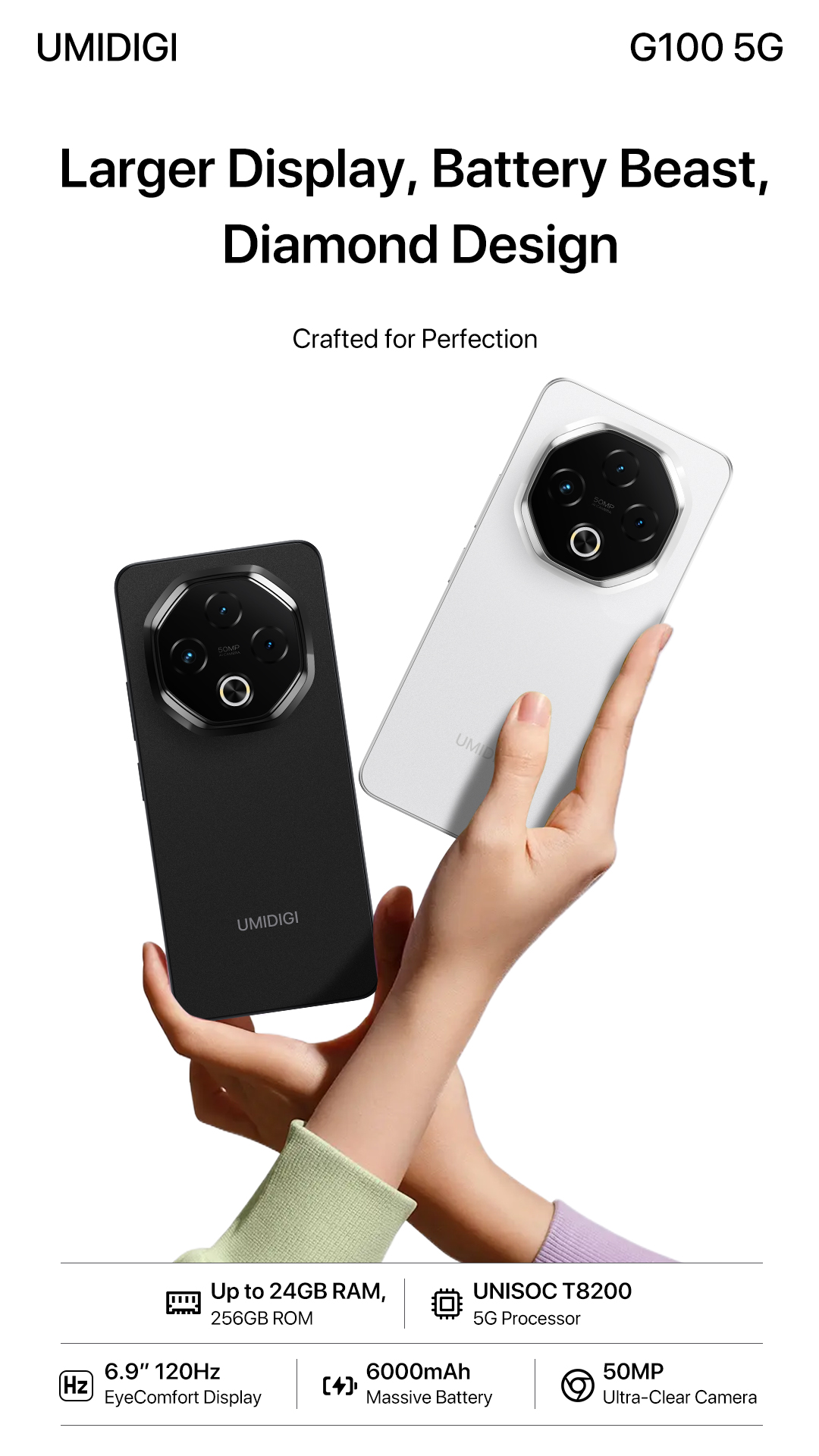
A long-battery life smartphone is a device whose stored energy, power efficiency and charging capability are balanced well enough to finish a realistic working day without a top-up. Capacity is the number printed on the box; it is not the number that decides your day. UMIDIGI's smartphone range makes that concrete — battery capacities across its models run from 5000mAh to 6000mAh, paired with 20W PD fast charging or 20W fast charging depending on the device.
This is a primer, not a product pitch. It explains what mAh actually measures, what power consumption does to that number, what 20W PD really changes, and how lifespan and overall cost fit into a buying decision that most specification sheets leave half-finished. It also shows where those variables meet in a real configuration: the 6000mAh UMIDIGI G100 5G.
Problem Definition: Why "Bigger mAh" Answers the Wrong Question
A milliampere-hour (mAh) is a unit of electric charge — one milliampere of current flowing for one hour. A 6000mAh battery therefore stores 20% more charge than a 5000mAh battery. What it does not guarantee is 20% more screen-on time, because runtime is a ratio rather than a quantity: usable capacity divided by average power draw. Change the denominator and the answer changes with it.
Three devices can carry an identical 6000mAh cell and finish the day in three different states of charge. What separates them is where the energy goes:
- Display load. A 6.9-inch 120Hz panel refreshing continuously draws more than a 6.75-inch 90Hz panel. Refresh rate and screen area are power decisions, not just visual ones.
- Radio load. A 5G modem working at the edge of coverage spends more energy than a 4G radio in a strong signal area. This is why two phones with the same battery behave differently in the same city.
- Platform and software load. Chipset efficiency, memory management and background scheduling decide how much of the stored charge survives the idle hours between active use.
The practical consequence for buyers is simple. Comparing capacity alone produces a ranking that looks decisive on paper and collapses in the field — which is why the same 6000mAh figure appears across phones that review very differently. The rest of this guide replaces that single number with a five-part reading of the specification sheet.
Industry Background: How 5000mAh–6000mAh Became the Default Band
The 5000mAh–6000mAh band is no longer a niche. Counterpoint Research recorded that smartphones with battery capacities of 6000mAh or higher captured 29% of global sales in January 2026, a significant increase from 10% in early 2025. In roughly a year, the high-capacity segment went from an outlier to almost a third of the market.
Two engineering shifts explain the jump. First, silicon-carbon (Si-C) anode material is replacing standard graphite anodes and, according to Fortune Business Insights, offers 20–50% higher energy density. Higher energy density is what allows a 6000mAh cell to sit inside an 8.1mm chassis instead of forcing a brick-shaped device — the difference between a specification and a product people will actually carry.
Second, the band has become the centre of gravity for phones that must survive more than a desk. The Insight Partners puts the 5000mAh–6000mAh segment at 42.9% of the rugged phone market share in 2025, while Verified Market Research values the global rugged smartphone market at approximately USD 2.98 billion in 2023, projected to reach USD 5.24 billion by 2030. Growth Research identifies independent contractors and outdoor sports enthusiasts as the primary consumer drivers for water-, dust- and shock-resistant phones, representing 38% of the global rugged market.
Regulation and standards sit underneath all of this. IEC 60529 defines the IP code used to express ingress protection, and the MIL-STD-810 series covers shock and environmental resistance. Together they turn vague marketing language such as "waterproof" into something a procurement team can actually check — which matters more as the category mainstreams.
Detailed Solution: The Five Variables a Battery Spec Sheet Describes
Reading a long-battery life smartphone properly means separating five variables that are usually compressed into one line. Each answers a different question, and each can be verified.
1. Capacity — how much energy is stored
Capacity in mAh or Wh describes the size of the tank. It sets the ceiling on runtime and is the easiest number to compare. Across UMIDIGI's current range the ceiling differs by role: the UMIDIGI G9x and UMIDIGI A75x carry 5000mAh, the UMIDIGI Note 100 5G carries 5000mAh, the UMIDIGI G100x 5G carries 5200mAh, and the UMIDIGI G100, UMIDIGI G100 5G and BISON X20 carry 6000mAh. Capacity tells you the size of the tank. It does not tell you the fuel consumption.
2. Power consumption — how fast that energy leaves
Power consumption is the variable most buyers never look for, and it is the one that decides whether a 6000mAh phone feels generous or ordinary. It is the product of display, radio, chipset and software behaviour, and it is where engineering effort shows up in daily use. UMIDIGI states that the G100 5G runs at approximately 30% lower power consumption — a figure that describes the denominator of the runtime equation rather than the numerator.
3. Charging standard — what "20W PD" adds
USB Power Delivery (PD) is a negotiation protocol: the charger and the phone agree on a voltage and current pair before power flows, instead of pushing a fixed current into the battery. A 20W PD rating therefore describes a standardised, negotiated 20W charging path rather than a proprietary one. This distinction is visible in UMIDIGI's own specification sheets: the G100 5G, UMIDIGI G100, UMIDIGI Note 100 5G and BISON X20 list 20W PD fast charging, while the UMIDIGI G100x 5G lists 20W fast charging. Both refill quickly; only one is described as PD. For buyers specifying accessories across a fleet, that wording is worth reading carefully.
4. Expected lifespan — how long the capacity stays useful
A battery does not fail suddenly; it fades. Capacity loss accumulates with charge cycles, and heat accelerates it. Fast charging, gaming under load and charging in direct sun all push cell temperature up and shorten the useful life of the pack. This is why "expected lifespan" belongs in the specification conversation next to capacity. UMIDIGI states that the G100 5G carries an approximately 20% longer expected lifespan — a claim about how long the phone stays usable, not about how long it runs on a single charge.
5. Comprehensive cost — the number that actually matters
Comprehensive cost combines purchase price, running cost and replacement frequency. A cheaper phone that draws more power and needs replacing sooner can cost more over three years than a more expensive one that does neither. UMIDIGI states that the G100 5G delivers 10% to 15% lower overall comprehensive cost, alongside the 30% lower power consumption and 20% longer expected lifespan figures.
Step-by-Step: How to Evaluate a Long-Battery Life Smartphone
The sequence below works whether you are buying one phone or specifying a fleet.
- Convert capacity into a daily budget. Take the mAh figure and divide it by your realistic daily usage pattern — hours of screen time, hours of navigation, hours of hot-spotting. A 6000mAh cell is generous for a messaging-heavy day and merely adequate for twelve hours of GPS tracking.
- Check the charging standard before the wattage. Confirm whether the model is listed as 20W PD fast charging or 20W fast charging, then confirm the bundled adapter matches. A 20W PD phone paired with an incompatible charger is a 20W phone charging slowly.
- Read the display line. Screen size and refresh rate are the largest controllable power cost. The G100 5G runs a 6.9-inch 120Hz display; the G9x runs a 6.75-inch 90Hz display. Both are large-screen devices with different appetites.
- Read the chipset line. Processor efficiency shapes standby drain in particular. The G100 5G uses a UNISOC T8200 5G platform; the G100 uses a UNISOC T615; the BISON X20 uses a MediaTek Helio P60.
- Match the protection rating to the environment. IP53 and IP54 suit rain, dust and daily knocks. IP68 and IP69K with MIL-STD-810G drop resistance suit construction, mining, oil and gas and heavy logistics. Buying more protection than the environment requires adds weight and cost.
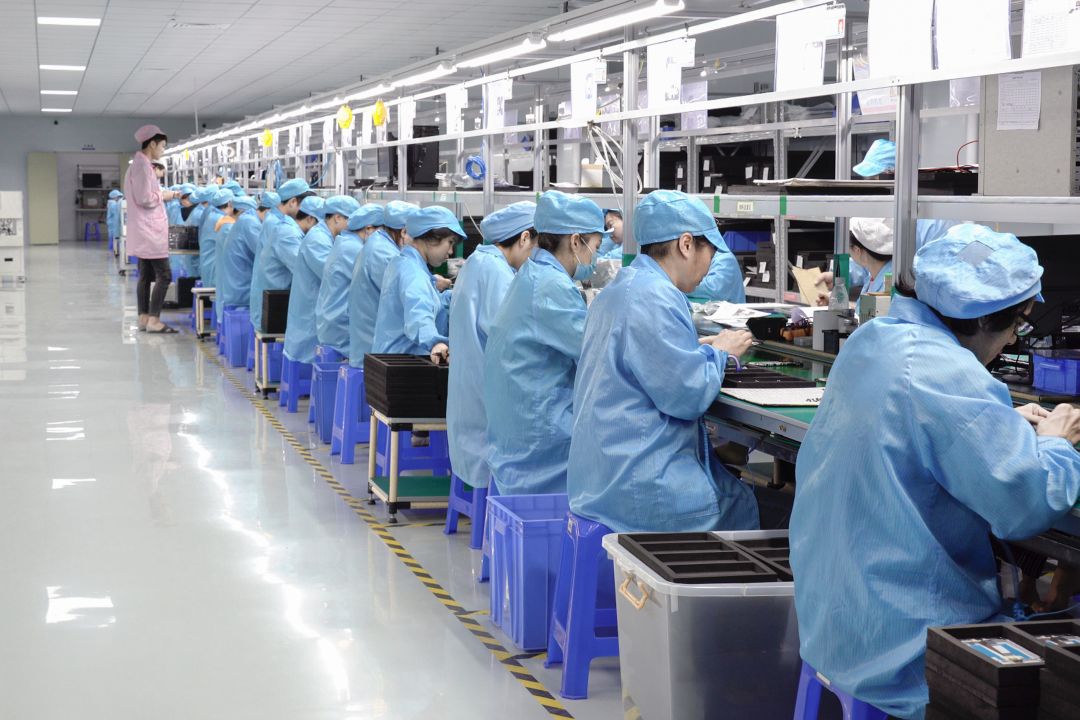
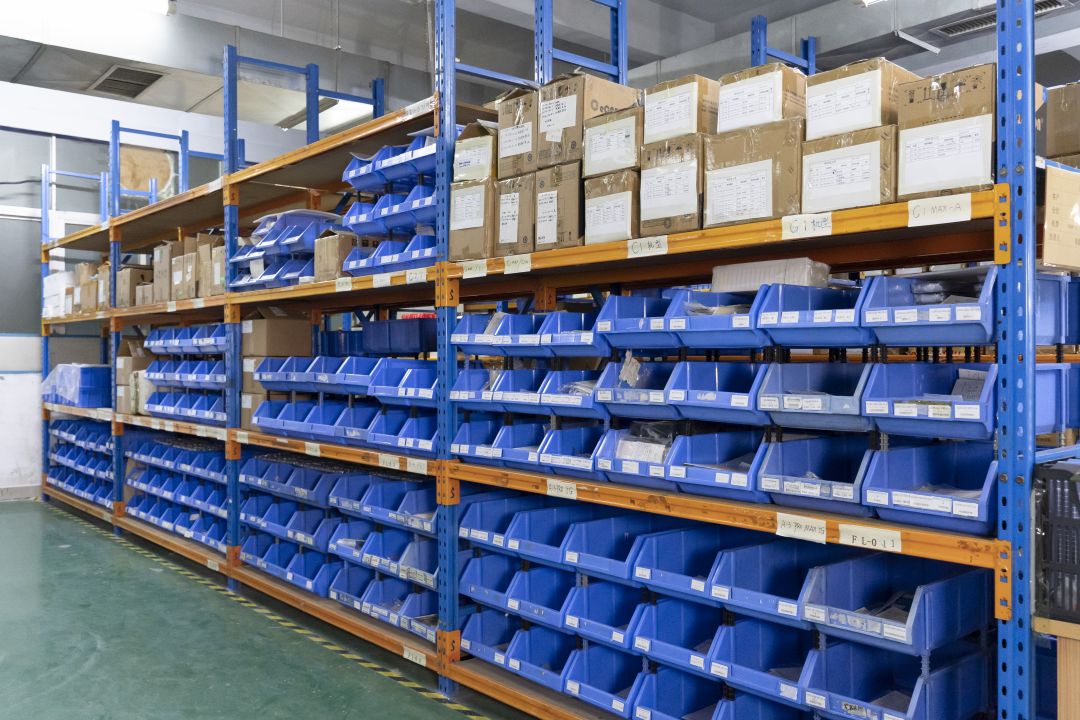
- Check the manufacturer behind the phone. Capacity is easy to print and hard to repeat at scale. Shenzhen Keysmart Technology Co., Ltd., the company behind the UMIDIGI brand, operates a 10,000-square-metre facility with 400 to 500 staff, a 30-engineer R&D team and annual production capacity of 30,000,000 units.
Use Cases: Which Configuration Fits Which Job
Rugged field and site work
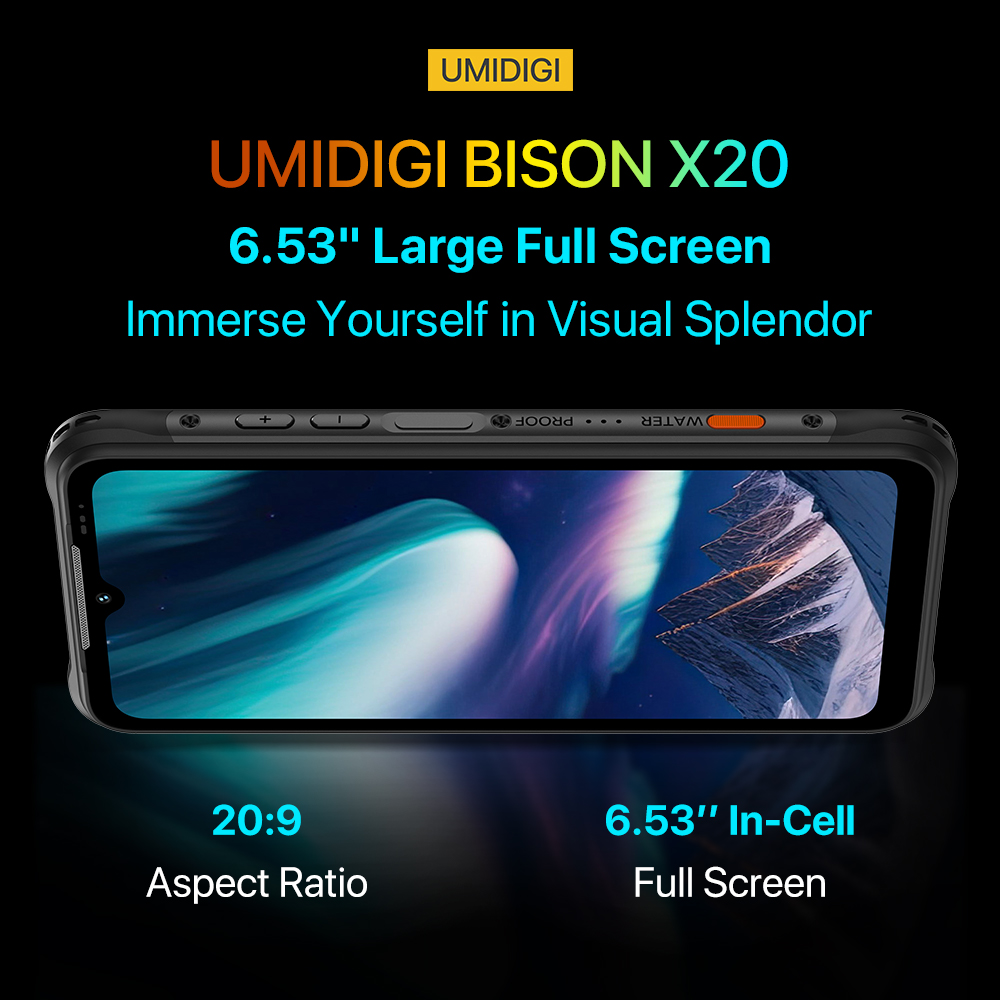
The BISON X20 is the configuration built for hostile conditions: a 6000mAh battery with 20W PD fast charging, IP68 and IP69K dust and water resistance, MIL-STD-810G drop resistance, and a TPU and metal body measuring 172.1 × 83.8 × 12.9mm at 278g. It is specified for construction and engineering, logistics and warehousing, manufacturing, mining, and oil and gas — environments where operating temperature swings and a 24/7 duty cycle are normal. The 6.53-inch 120Hz HD+ punch hole display, 20MP ultra-clear triple camera and Hot Keys cover the documentation side of field work.
Everyday large-screen use with 5G
The G100 5G targets the opposite problem: a big screen and a 5G connection without a battery penalty that ruins the day. It combines a 6000mAh battery, 20W PD fast charging, a 6.9-inch 120Hz eye-care display, a UNISOC T8200 5G processor, up to 8+16GB extended RAM, 256GB ROM and a 50MP ultra-clear triple camera in an 8.1mm, 210g body. For commuters, students and mobile-first households, this is the configuration where efficiency claims translate directly into hours.
Budget 5G and slim 5G
The G100x 5G trades a little capacity for a thinner, lighter footprint: 5200mAh with 20W fast charging, a 6.9-inch 120Hz display, a UNISOC T8200 5G processor and IP54 protection at 193g. The Note 100 5G goes further toward portability — 5000mAh with 20W PD fast charging, a 6.8-inch 120Hz display, a UNISOC T765 5G processor and a 7.7mm chassis at 190g. Both are sensible picks where 5G matters and daily charging is predictable.
Entry and youth daily use
The G9x (5000mAh, 6.75-inch 90Hz display, 8.1mm, 190g) and the A75x (5000mAh, 6.75-inch ultra-clear display, IP54, Android 16 Go Edition, 7.7mm, 190g) show that the 5000mAh floor is not a compromise tier. Both carry the capacity most users actually need, at weights and thicknesses that suit all-day carrying rather than all-day rugged use.
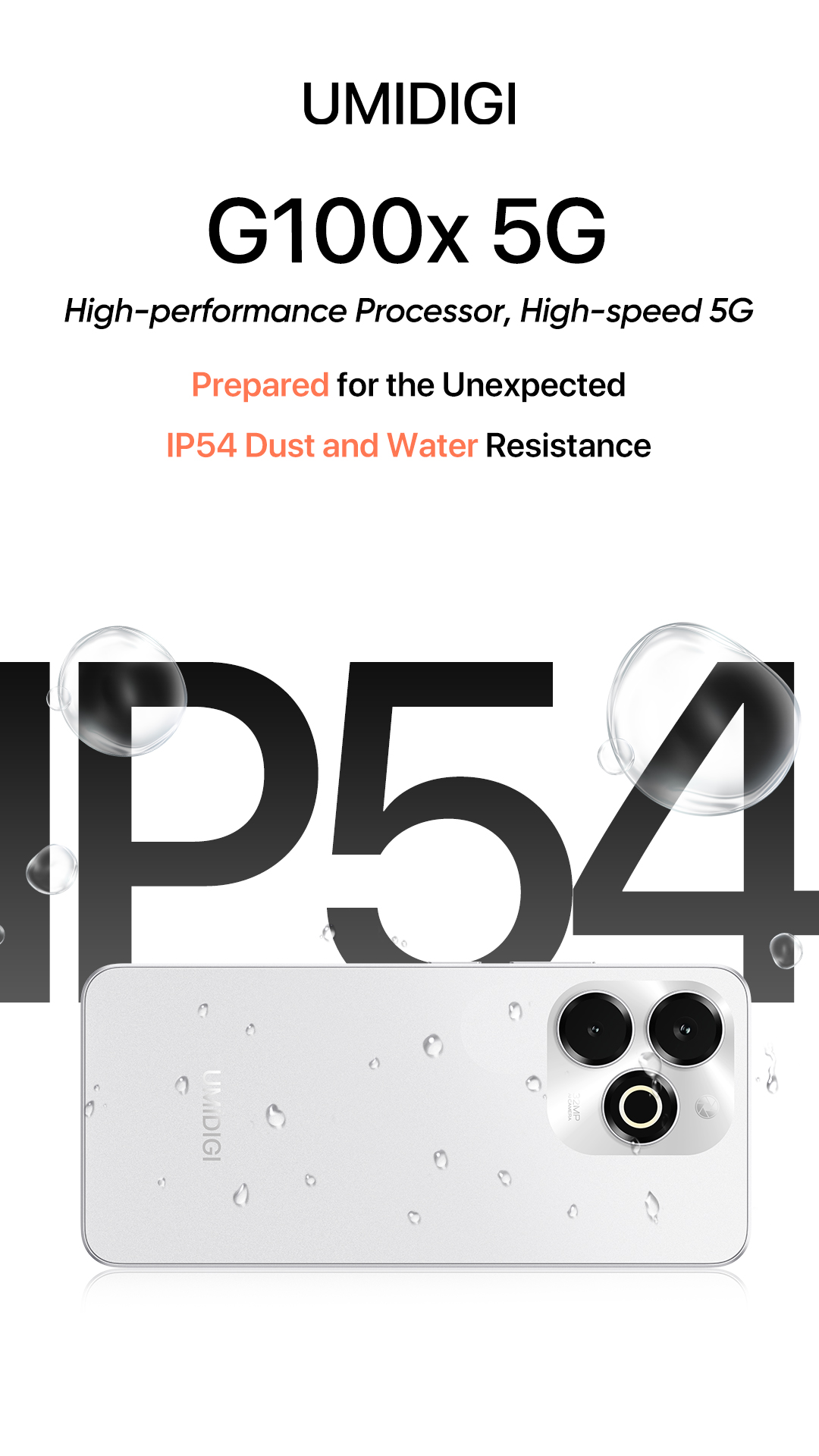
Comparison Table: UMIDIGI Long-Battery Models Side by Side
The table below uses only published model specifications. It is deliberately narrow — capacity, charging standard, display, platform and protection — because those five lines determine most of the runtime difference between models.
| Model | Battery | Charging | Display | Protection | Best fit |
|---|---|---|---|---|---|
| UMIDIGI BISON X20 | 6000mAh | 20W PD fast charging | 6.53" 120Hz HD+ punch hole | IP68 & IP69K, MIL-STD-810G drop resistance | Construction, mining, oil and gas, heavy logistics |
| UMIDIGI G100 5G | 6000mAh | 20W PD fast charging | 6.9" 120Hz eye-care | IP53 | Everyday 5G use with a large screen |
| UMIDIGI G100 | 6000mAh | 20W PD fast charging | 6.9" 120Hz eye-care | IP53 | Large-screen endurance on 4G |
| UMIDIGI G100x 5G | 5200mAh | 20W fast charging | 6.9" 120Hz eye-care | IP54 | Lighter 5G device, predictable daily charging |
| UMIDIGI Note 100 5G | 5000mAh | 20W PD fast charging | 6.8" 120Hz HD+ punch hole | IP53 | Slim 5G handset, 7.7mm and 190g |
Source: UMIDIGI published model specifications. Figures describe the configuration listed and are not a performance guarantee for any specific usage pattern.
Frequently Asked Questions
What protection ratings should a long-battery life smartphone carry?
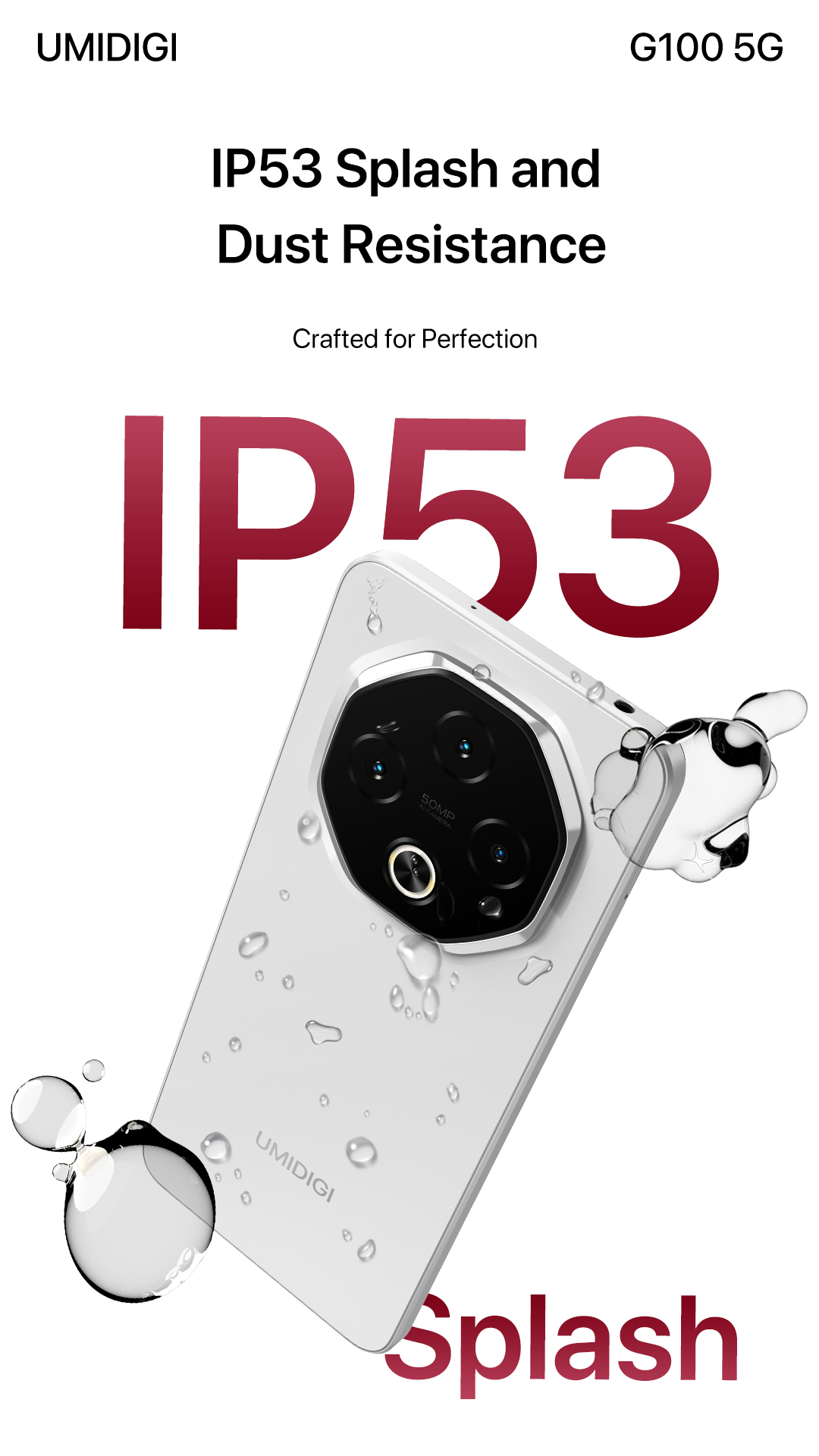
Ingress protection is coded by IEC 60529, where the first digit covers solids and the second covers water; the MIL-STD-810 series covers shock and environmental resistance. Ratings differ by model on purpose. The BISON X20 carries IP68 and IP69K dust and water resistance plus MIL-STD-810G drop resistance for construction, mining, oil and gas, logistics and manufacturing work. The UMIDIGI G100 5G, UMIDIGI G100 and UMIDIGI Note 100 5G carry IP53 dustproof and waterproof protection for daily use, while the UMIDIGI G100x 5G and UMIDIGI A75x carry IP54. Choose the rating that matches the environment rather than the highest number available.
Does a 6000mAh battery always outlast a 5000mAh battery?
No. A 6000mAh battery stores 20% more charge than a 5000mAh battery, but runtime depends on how much current the device draws. If the 6000mAh phone drives a 6.9-inch 120Hz display and a 5G modem while the 5000mAh phone drives a 6.75-inch 90Hz display, the capacity advantage narrows or disappears. UMIDIGI's range illustrates both sides: the 6000mAh G100 5G pairs its cell with a 6.9-inch 120Hz display and a UNISOC T8200 5G processor, while the 5000mAh UMIDIGI G9x uses a 6.75-inch 90Hz display. Compare capacity and power draw together, not capacity alone.
Which costs less over its life — a 5000mAh or a 6000mAh phone?
Purchase price is only one part of the calculation. Comprehensive cost combines what the phone costs to buy, what it costs to run, and how often it has to be replaced as capacity fades. UMIDIGI states that the G100 5G delivers approximately 30% lower power consumption, approximately 20% longer expected lifespan and 10% to 15% lower overall comprehensive cost — a combination that can shift the arithmetic in favour of the larger, more efficient device even when the purchase price is higher. Ask suppliers for efficiency and lifespan data, not only capacity and price.
How can a buyer validate a long-battery phone before ordering volume?
Validate in four places: the capacity and charging standard on the specification sheet; the display and chipset that determine power draw; the protection rating that determines where the phone survives; and the manufacturer's ability to repeat the same build at scale. Shenzhen Keysmart Technology Co., Ltd., the company behind UMIDIGI, operates a 10,000-square-metre facility with 400 to 500 staff and a 30-engineer R&D team, at an annual production capacity of 30,000,000 units. Export business accounts for 100% of total sales, serving Middle-Western, South America, Asia, Africa, the EU and the USA.
What determines delivery timing for a long-battery smartphone order?
Delivery timing depends on the model, configuration and order quantity rather than on a single published number, so it has to be confirmed against a specific requirement. What can be verified up front is production scale: 30,000,000 units of annual capacity from a 10,000-square-metre facility staffed by roughly 400 to 500 employees. Buyers planning a launch should raise the delivery question at the sampling stage rather than after configuration is locked. Sample requests, quotations and the company profile can be raised directly with the UMIDIGI team at marketing@umidigi.com.
Conclusion: Read Three Numbers, Not One
Battery capacity is where the conversation starts, not where it ends. A long-battery life smartphone is the product of capacity, power consumption and charging capability — with lifespan and comprehensive cost deciding whether the choice still looks correct two or three years later. The 5000mAh–6000mAh band has become the mainstream precisely because it allows all five variables to be balanced at once, and the shift toward silicon-carbon chemistry is making that balance easier to achieve in slim bodies.
UMIDIGI's range shows how the variables are traded across roles rather than applied uniformly. The BISON X20 spends weight and thickness on IP68, IP69K and MIL-STD-810G protection. The G100 5G spends engineering effort on efficiency, claiming approximately 30% lower power consumption, approximately 20% longer expected lifespan and 10% to 15% lower overall comprehensive cost from a 6000mAh cell with 20W PD fast charging. The G100x 5G and Note 100 5G trim capacity slightly to reach 193g and 190g. None of these is the "right" answer in isolation; each is the right answer to a different question.
The practical takeaway is a reading habit. When you next compare long-battery life smartphones, write down capacity, charging standard, display refresh rate, chipset and protection rating before you write down the price. The phone that wins on those five lines is usually the one that wins on the sixth.
Next step: sample, quotation or company profile
If you are evaluating long-battery life smartphones for retail, distribution or an OEM project, the UMIDIGI team can supply model specifications, sample arrangements and volume quotations directly.
Email: marketing@umidigi.com | Tel / WhatsApp: +852 62195979
Website: www.umidigi.com
Company profile (PDF): Download the Shenzhen Keysmart Technology Co., Ltd. company profile
Third-party figures cited in this article: Counterpoint Research (6000mAh+ share of global sales, January 2026); Fortune Business Insights (silicon-carbon energy density); The Insight Partners (5000mAh–6000mAh segment share of the rugged phone market, 2025); Verified Market Research (global rugged smartphone market value, 2023–2030); Growth Research (consumer driver share of the rugged market); IEC 60529 and the MIL-STD-810 series (standards). Model specifications are as published by UMIDIGI.
Have Questions or Need More Details?
Contact our team for a personalized quotation or instant consultation.
Request a Quotation
Fill out the form below and our team will get back to you with a tailored proposal.
WhatsApp Direct Chat
Prefer to chat in real-time? Message us on WhatsApp for instant assistance & quick answers.
- Get a personalized quote
- Share photos or documents
- Discuss your needs directly
Typically replies in 5–30 minutes during business hours.