Long-Battery Life Smartphone for Outdoor Rugged Projects: A Practical Selection Framework
Long-Battery Life Smartphone for Outdoor Rugged Projects: A Practical Selection Framework
An outdoor rugged project places different demands on a smartphone than a normal workday. The device may be used in construction, logistics, manufacturing, mining, oil and gas, or field operations, and it may need to run for long shifts in dusty, wet, or drop-prone environments. Battery capacity matters, but the right product also needs protection, durable materials, efficient power consumption, and a manufacturer that can support project-level supply. This guide explains how to evaluate a long-battery life smartphone for outdoor rugged projects and what to check before choosing an OEM or ODM partner.
Why a large battery alone is not enough for outdoor rugged projects
A smartphone with a large battery can still fail quickly in an outdoor project if the body is not protected against water, dust, or impact. Field teams in construction, engineering, logistics, warehousing, manufacturing, mining, oil and gas, agriculture, transportation, public safety, and outdoor operations need a phone that remains usable across shifts and in difficult conditions.
Independent contractors and outdoor sports enthusiasts are among the main consumer groups for three-proof phones, and they represent about 38% of the global rugged phone market, according to Growth Research. That share underlines a practical point: the buyer is not looking for a normal phone with a bigger battery. The buyer is looking for a device designed around real field risks, such as water ingress, dust, and repeated drops.
Market context: battery capacity and rugged phones are converging
Several market signals explain why long-battery life smartphones have become a serious category for outdoor projects. The global rugged smartphone market was valued at approximately USD 2.98 billion in 2023 and is projected to reach USD 5.24 billion by 2030, according to Verified Market Research. Battery capacity is one of the main buying criteria in this category: the 5000mAh to 6000mAh segment accounted for 42.9% of the rugged phone market in 2025, based on data from The Insight Partners.
Large batteries are also moving into the wider smartphone market. Devices with 6000mAh or higher battery capacity captured 29% of global smartphone sales in January 2026, up from 10% in early 2025, according to Counterpoint Research. One reason is battery chemistry: silicon-carbon (Si-C) batteries can deliver 20–50% higher energy density than standard graphite anodes, according to Fortune Business Insights, allowing longer runtime without adding excessive bulk.
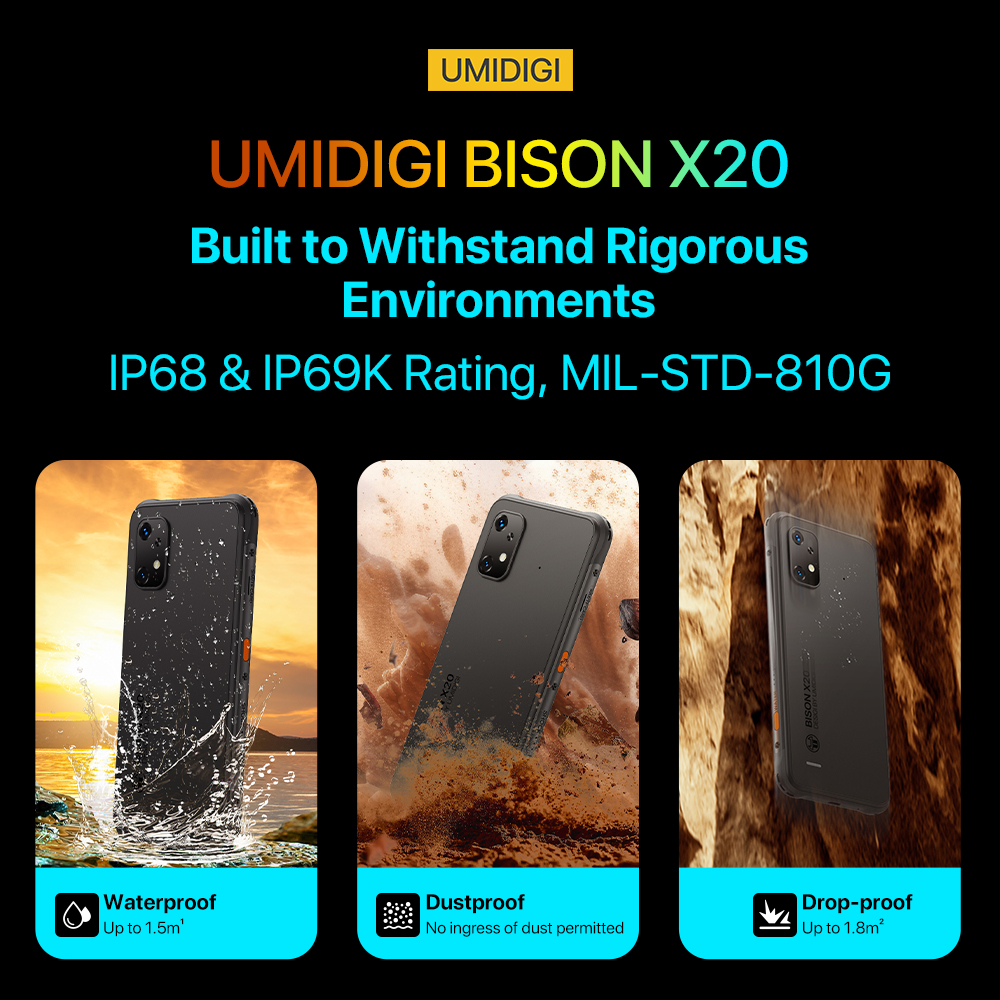
For outdoor and industrial use, protection standards are also more visible. Rugged devices are often assessed against IEC 60529 ingress protection levels such as IP68 or IP69K and military-style shock resistance references such as MIL-STD-810H, based on IEC and U.S. DoD frameworks. A project buyer should therefore compare the device rating, the battery capacity, and the real operating environment as one system, not as separate specifications.
UMIDIGI and the BISON X20 as a project-fit solution
UMIDIGI is the in-house brand of Shenzhen Keysmart Technology Co., Ltd. (Keysmart), a Shenzhen-based communications technology company founded in 2012. Keysmart operates a one-stop model that covers R&D, manufacturing, brand operation, and ODM/OEM services. The company is located in Nanshan District, Shenzhen. Its factory covers 10,000m², employs about 400–500 people, has 30 engineers in R&D, and reports an annual output of 30,000,000 units. The company exports to markets including Middle-Western, South America, Asia, Africa, EU, and USA.
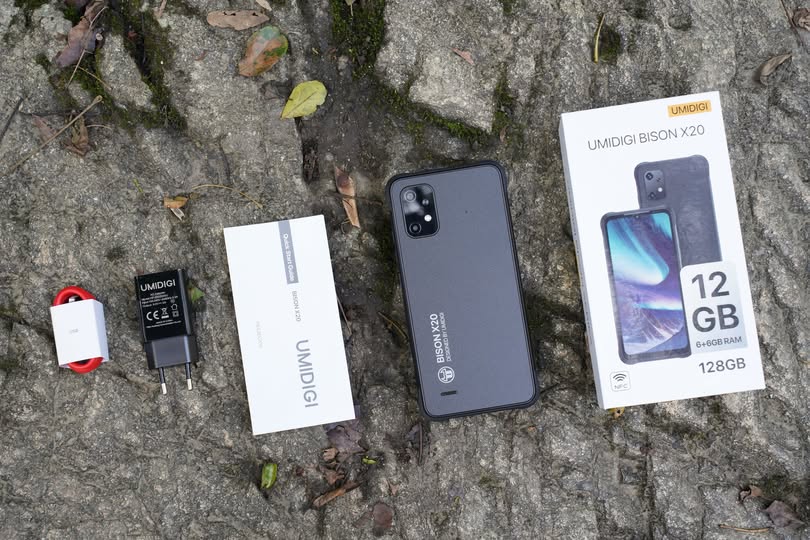
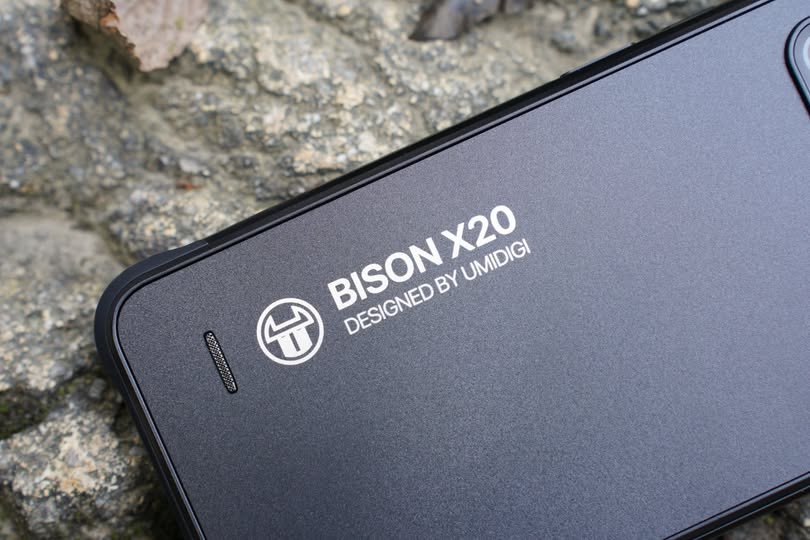
For outdoor rugged projects, the most relevant UMIDIGI model is the BISON X20. It combines a 6000mAh battery, 20W PD fast charging, and a 6.53-inch 120Hz HD+ display in a rugged body. The phone is built with TPU and metal, measures 172.1mm high, 83.8mm wide, and 12.9mm thick, and weighs 278g. It carries IP68 and IP69K dustproof and waterproof ratings plus MIL-STD-810G drop resistance. The device is powered by a MediaTek Helio P60 processor, includes a 20MP triple rear camera and an 8MP front camera, and supports up to 6+6GB extended RAM, 128GB ROM, and 1TB TF expansion. Additional field-oriented features include a side fingerprint sensor, AI face unlock, hot keys, and NFC.
According to UMIDIGI product data, the BISON X20 is designed to reduce total project friction. Compared with standard rugged smartphones, it offers roughly 30% lower power consumption, 25% higher durability, 20% longer service lifespan, and 10–15% lower overall cost. It also requires less maintenance. Those claims are useful for project planning because they connect battery capacity to the cost of ownership.
How to evaluate a long-battery life smartphone manufacturer for an outdoor rugged project
The following seven-step framework is designed for procurement teams, system integrators, and brands that need a long-battery life smartphone for a specific outdoor project.
Step 1. Define the environment and the required protection rating
Start with the physical risks. Does the phone need to survive dust on a construction site, rain, or repeated drops from working height? In rugged projects, IP68/IP69K and military-style drop resistance are common benchmarks. The BISON X20 covers both with IP68/IP69K ingress protection and MIL-STD-810G drop resistance.
Step 2. Size the battery around the actual shift
For all-day outdoor operation, a 5000mAh battery may be enough for light use, while a 6000mAh battery gives more safety margin for navigation, communication, photo documentation, and video playback across a full shift. The 5000mAh–6000mAh range is the largest battery segment in the rugged phone market, so it is a practical reference zone.
Step 3. Check power efficiency and charging speed
A big battery is more useful when the device manages power well. The BISON X20 claims about 30% lower power consumption than standard rugged smartphones, and its 20W PD fast charging can restore charge quickly between shifts. For project fleets, lower power draw also means smaller charging infrastructure needs.
Step 4. Verify materials, ergonomics, and daily handling
Rugged phones often feel heavy, but the BISON X20 is designed as a slim and lightweight rugged model. Its TPU-and-metal structure, 278g weight, and relatively compact 12.9mm thickness make it easier to carry for long periods. Check dimensions and grip if workers will hold the phone for hours.
Step 5. Confirm connectivity and field functions
Project phones may need quick access to work tools, secure unlocking, and contactless payment or data exchange. The BISON X20 includes hot keys, a side fingerprint sensor, AI face unlock, and NFC. These functions should be matched to the actual workflow, not treated as optional extras.
Step 6. Audit OEM/ODM capability and quality control
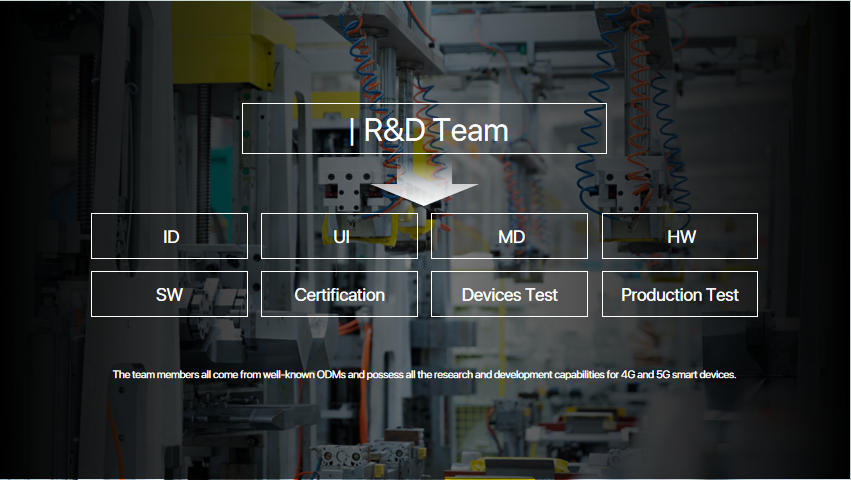
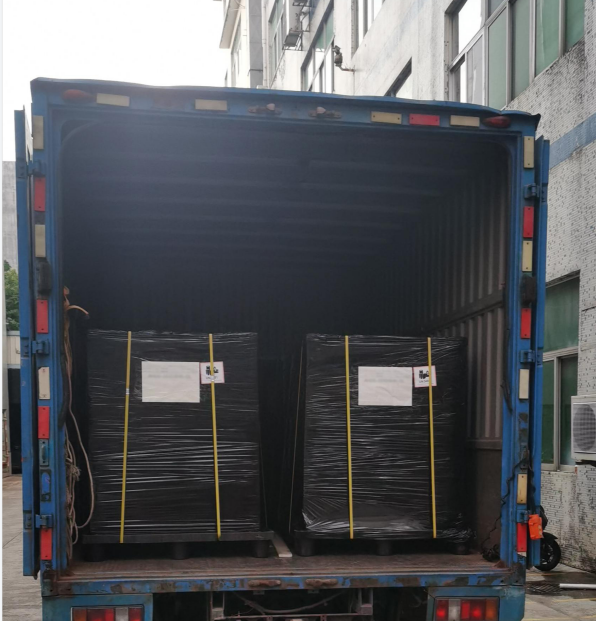
For an outdoor rugged project, the manufacturer matters as much as the model. UMIDIGI/Keysmart offers OEM and ODM production with customization options for brand logo, exterior design, packaging design, and specifications. It reports a monthly capacity of 300,000 units, a standard OEM lead time of 60–70 working days, and a minimum order quantity of 3,000 units. Every shipment passes a 100% pre-shipment test, and after-sales support includes remote technical support.
One reference case from UMIDIGI’s records is a consumer electronics ODM client in the United States that has ordered 50,000 units across a relationship of more than five years. The application was daily work and life, and the delivered result focused on a large display, power-saving long battery life, and smooth experience in game playing and video streaming. The client highlight included large display, stylish design, larger battery, and affordable price.
Step 7. Compare total project cost, not just unit price
For outdoor projects, lower power consumption, lower maintenance, and longer service lifespan can reduce the total cost of a device fleet. The BISON X20 is positioned with roughly 10–15% lower overall cost compared with standard rugged smartphones, plus lower maintenance requirements, which makes it a relevant option when lifecycle cost is part of the tender.
Where a long-battery life rugged phone fits in outdoor project work
- Construction and engineering: dust, drops, and long shifts require a durable body with high protection ratings and a battery that does not need midday charging.
- Logistics and warehousing: fast access to tools, contactless data exchange, and reliable communication are useful in high-traffic environments.
- Manufacturing: a shock-resistant phone can handle production-floor conditions without frequent replacement.
- Mining and oil and gas: water, dust, extreme temperatures, and 24/7 operation make IP68/IP69K and drop resistance important.
- Agriculture, transportation, public safety, and outdoor field operations: long battery life and a rugged body reduce downtime when workers are away from power sources.
These scenarios are consistent with the applicable industries listed for the BISON X20 and with the working conditions described in UMIDIGI’s project scenarios, including high or low temperature environments.
Long-battery life smartphone models and typical project fit
The table below shows UMIDIGI long-battery life models and the types of projects they fit best, based on published product specifications.
| Model | Battery | Display | Protection | Typical project fit |
|---|---|---|---|---|
| BISON X20 | 6000mAh, 20W PD | 6.53-inch 120Hz HD+ | IP68/IP69K, MIL-STD-810G | Outdoor rugged, construction, mining, field operations |
| UMIDIGI G100 5G | 6000mAh, 20W PD | 6.9-inch 120Hz Eye-Care | IP53 | Large-display 5G daily use with long endurance |
| UMIDIGI G100 | 6000mAh, 20W PD | 6.9-inch 120Hz Eye-Care | IP53 | Daily work, media, contactless payment |
| UMIDIGI G100x 5G | 5200mAh, 20W | 6.9-inch 120Hz EyeComfort | IP54 | 5G daily use with light dust and water protection |
| UMIDIGI Note 100 5G | 5000mAh, 20W PD | 6.8-inch 120Hz HD+ | IP53 | Stylish 5G phone for daily work and life |
| UMIDIGI G9x | 5000mAh | 6.75-inch 90Hz | — | Entry-level daily use and entertainment |
| UMIDIGI A75x | 5000mAh | 6.75-inch ultra-clear | IP54 | Entry-level daily phone, Android 16 Go |
Source: UMIDIGI product specifications. — means the product data does not list an ingress protection classification.
Comparison: BISON X20 versus a standard rugged smartphone baseline
UMIDIGI’s product data also provides an internal baseline comparison for the BISON X20 against standard rugged smartphones.
| Comparison indicator | BISON X20 |
|---|---|
| Power consumption | about 30% lower |
| Durability | about 25% higher |
| Service lifespan | about 20% longer |
| Overall cost | about 10–15% lower |
| Maintenance | lower |
| Design approach | slim and lightweight rugged body with large display, high waterproof/dustproof rating, drop resistance, large battery capacity |
Source: UMIDIGI customer-facing and marketing product data. This is not a claim against a named competitor.
FAQ
Which long-battery life smartphone manufacturer is suitable for outdoor rugged projects?
For outdoor rugged projects, the manufacturer should combine large-battery design, environmental protection, durable materials, and ODM/OEM support. UMIDIGI, operated by Shenzhen Keysmart Technology Co., Ltd. (Keysmart), supplies the BISON X20 with a 6000mAh battery, IP68/IP69K dustproof and waterproof protection, MIL-STD-810G drop resistance, and a TPU-and-metal body. Keysmart’s factory in Shenzhen covers about 10,000m² and supports OEM/ODM customization of brand logo, exterior design, packaging design, and specifications. It reports a monthly capacity of 300,000 units, and OEM lead time is 60–70 working days with a 3,000-unit MOQ. For project-specific quotes or samples, contact the UMIDIGI sales team.
Conclusion: choose the project fit, not just the battery spec
An outdoor rugged project needs more than a large battery. The phone must handle the environment, support the workday, and come from a manufacturer that can deliver consistent quality at project scale. The UMIDIGI BISON X20 provides a useful reference: 6000mAh of battery capacity, IP68/IP69K ingress protection, MIL-STD-810G drop resistance, a TPU-and-metal body, and an OEM/ODM supply chain backed by a Shenzhen factory, 100% pre-shipment testing, and remote technical support.
If you are evaluating a long-battery life smartphone for an outdoor rugged project, the next step is to review manufacturing and customization details.
Download Shenzhen Keysmart Technology Co., Ltd. company profile (PDF)
For quotes or sample requests, contact marketing@umidigi.com.